
Key Points
- The BMW i4 M60 delivers authentic BMW performance with 593 horsepower, playful handling, and refined comfort.
- Its 447-kilometer range, practical liftback, quality interior, and overnight charging support everyday usability.
- Despite impressive capabilities, expensive options, dated architecture, and strong combustion-powered alternatives weaken its value.
I must admit, I was pretty skeptical of the BMW i4 M60 before I had the chance to drive it. A six-figure “compact” BMW with no screaming straight-six soundtrack and a pair of buckteeth where its grille should be did not immediately ignite the enthusiast fire inside me. My personal benchmarks for the coveted M badge include the E46 M3 and the manual E60 M5—cars overflowing with noise, theatre and mechanical character. The electric i4 started from a deficit before I even pressed its start button. It took until roughly day two for that skepticism to start fading away.
Over just under 1,000 kilometers—about 620 miles—I drove the i4 M60 through Vancouver, British Columbia, along the storied Sea-to-Sky Highway, and throughout the twisty back roads surrounding Squamish. In mostly sunny, dry weather, I carried passengers, charged it at home, and discovered that its eccentricities didn’t detract from the fundamentally solid car underneath. The substance beneath all the surface-level extravagance was surprisingly convincing, and more importantly, the i4 M60 still looked, felt, and drove like an authentic BMW M Performance model. It simply happened to be powered entirely by electricity—it never once felt like its fully electric powertrain altered the underlying philosophy behind what makes a great BMW sport sedan—or, uh, “grand coupe”—so desirable in the first place.
Cole Attisha
2026 BMW i4 M60 specifications
| Specification | 2026 BMW i4 M60 xDrive Gran Coupe |
|---|---|
| Powertrain | Dual-motor all-wheel drive |
| Output | 593 hp in Sport mode; 586 lb-ft of torque |
| 0–60 mph | 3.6 seconds |
| Battery | 83.9 kWh gross; 81.2 kWh usable |
| U.S. estimated range | 232–278 miles, depending on configuration |
| Canadian range with 19-inch wheels | 447 km |
| DC charging | 10–80% in approximately 31 minutes |
| Level 2 charging | 0–100% in approximately 8–10 hours at 11 kW |
| U.S. starting MSRP | $70,700 |
| Canadian starting MSRP | C$82,900 |
| Canadian price as tested | C$104,250 |
Thinking about selling your car? Get an instant cash offer online now. Click here to get started.
Cole Attisha
Powertrain And Driving Experience: 9.7/10
BMW’s transformation of the i4 M50 into the M60 brought more than just a new badge. Output rises to 593 horsepower in Sport mode, with 586 lb-ft of torque and a claimed 3.6-second 0-60 mph time. Those figures are absurd for something that can otherwise behave like a finely polished commuter car. In ordinary Sport mode, power is abundant yet highly controllable. The accelerator provides enough progression that the i4 never feels eager to punish an imprecise ankle. Engage Sport Boost, however, and the experience changes from “wow, that’s fast” to the sort of acceleration that makes passengers reconsider their trust in you. “Holy hell, that was terrifying” became a fair summary from the other seats.
Straight-line speed, though, is the easy part of building a performance EV. More convincing is the i4 M60’s recognizably BMW personality once the road starts to bend. Its weight never disappears entirely, but the rear-biased all-wheel-drive system keeps it playful and predictable. The adaptive suspension offers intuitive body control without physically punishing every occupant, even in what is clearly a performance-focused model. The ride remained supple over Vancouver’s imperfect pavement yet disciplined on the fun roads around Squamish. The surprisingly small amount of road and wind noise also allowed the i4 to seamlessly alternate between a grand tourer and a ballistic backroad machine.
Its steering is distinctly BMW—for better or worse. It is somewhat disconnected, but the weighting and response remain familiar enough that I never mistook the i4 for another manufacturer’s interpretation of a sport sedan. The brake pedal is similarly well calibrated, blending regenerative and friction braking naturally. I still preferred the stronger, one-pedal-style B mode. Better yet, BMW’s automatic brake hold would activate after I stopped using regeneration alone. Many EVs still require a final press of the physical brake pedal before auto hold engages on non-flat surfaces, which turns an otherwise seamless one-pedal system into a mildly irritating two-pedal one. The BMW gets this small but important interaction right.
Cole Attisha
BMW IconicSounds Electric was a bit cringeworthy, but far more tolerable than some other faked engine sounds in electric vehicles (see Dodge Charger Daytona). Its synthetic soundtrack didn’t offend me, but it certainly didn’t replace the emotional pull of a straight-six or a high-revving V10, either. Thankfully, the rest of the car doesn’t rely on manufactured noise to make its case. This isn’t a full-fat M car, and BMW doesn’t claim that it is. Judged as an M Performance model, it is remarkably authentic: fast, refined, rear-biased, and capable of entertaining its driver even when its battery and two electric motors make it heavier and less growly than its coveted ancestors.
Shopping for a new car? Click here to get a great deal on your next vehicle. Powered by Carvana, no haggle pricing, 100% online.
Cole Attisha
Technology, Range, and Charging: 9.1/10
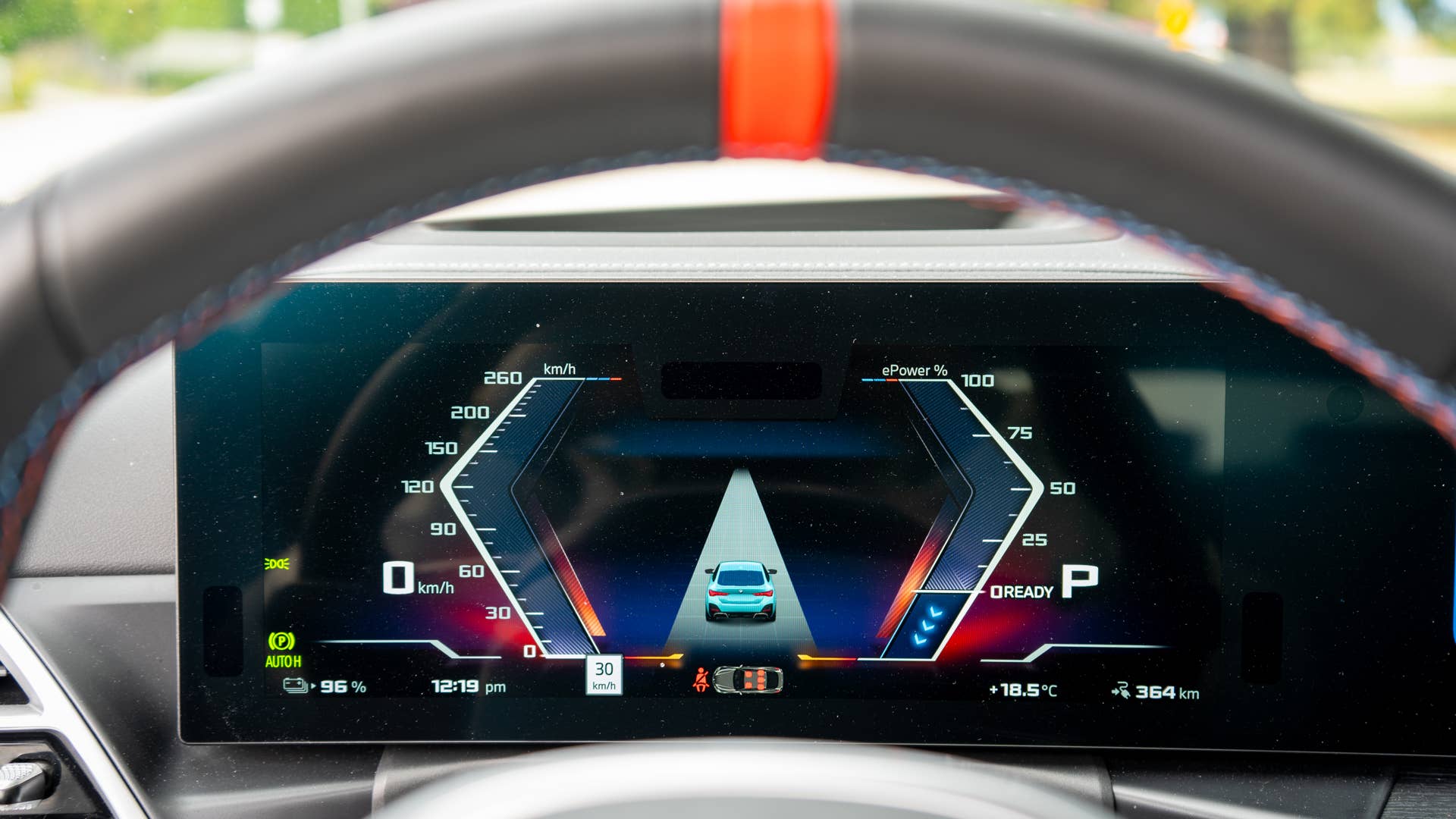
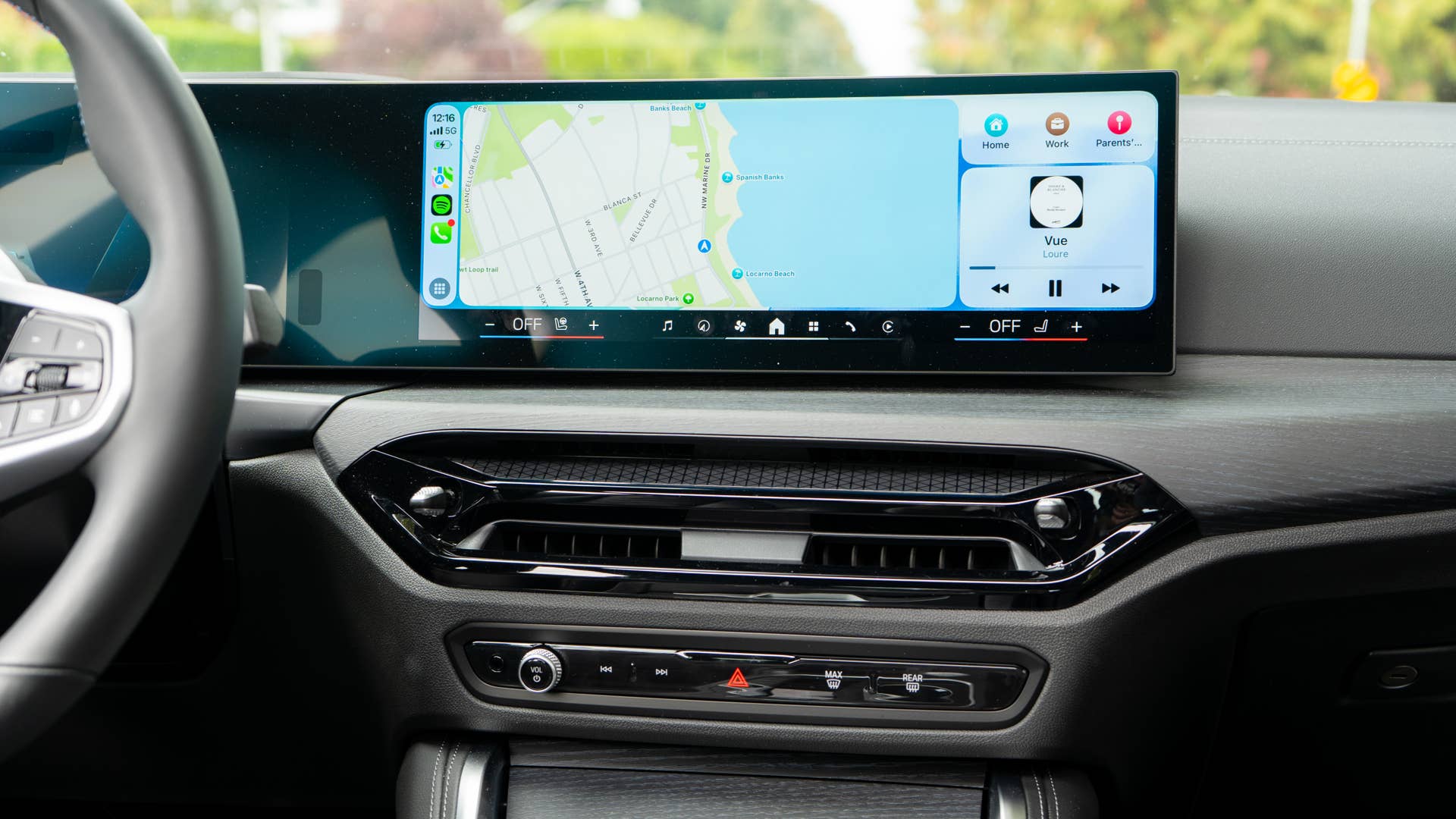
BMW’s curved display and Operating System 8.5 are no longer the newest ideas in the electric-car world, but they remain easy to live with. The menus are dense without becoming incomprehensible, responses are quick, and the head-up display presents useful information. The crisp surround-view cameras and augmented navigation feel properly integrated. My test car also carried the C$2,000 Advanced Driver Assistance Package, including adaptive cruise control, steering assistance, and automated lane changing. I did not use those systems enough to consider the package essential. Buyers who regularly face long highway commutes may disagree, but I would personally redirect that money elsewhere—or simply leave it in my bank account.
Cole Attisha
Cole Attisha
BMW rates the Canadian car at 447 kilometers of range with its 19-inch wheels, while the U.S. estimate ranges from 232 to 278 miles depending on configuration. My indicated range was roughly 400 kilometers, and nothing during the week suggested the official Canadian figure was fantasy. I did not record reliable consumption data, so I will stop short of making a precise efficiency claim. What mattered in practice was that range never dictated where or how I drove.
I charged at home using Level 2 equipment, where the i4 replenished its battery surprisingly quickly overnight. BMW quotes approximately 8-10 hours for a full 0–100% charge at 11 kW. At a suitable DC fast charger, it can go from 10–80% in about 31 minutes. That is useful rather than groundbreaking in the age of newer 800-volt rivals, but the combination of sufficient range and painless home charging made the older architecture easy to forgive over the course of my week.
Cole Attisha
Exterior Design: 9.4/10
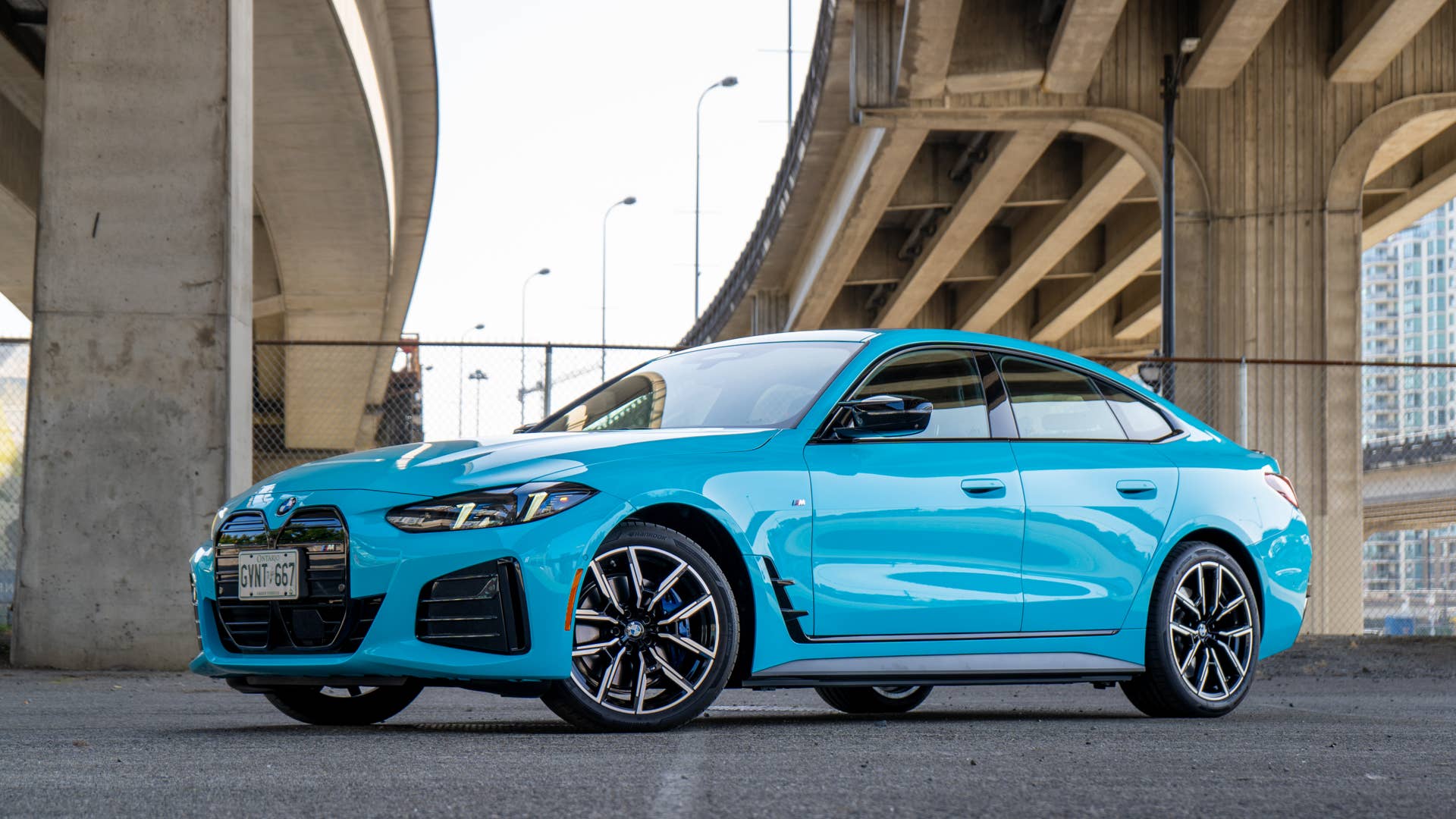
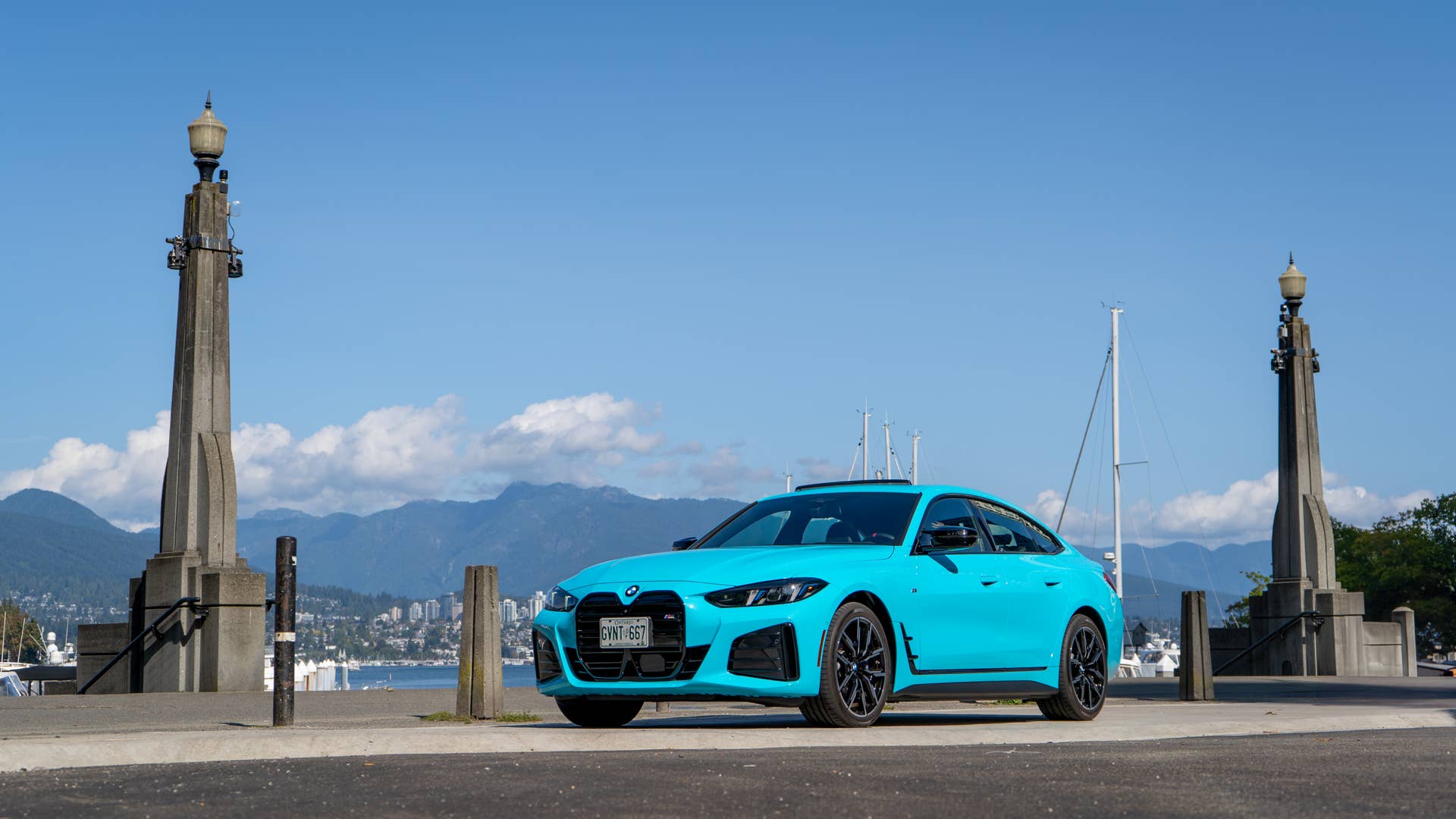
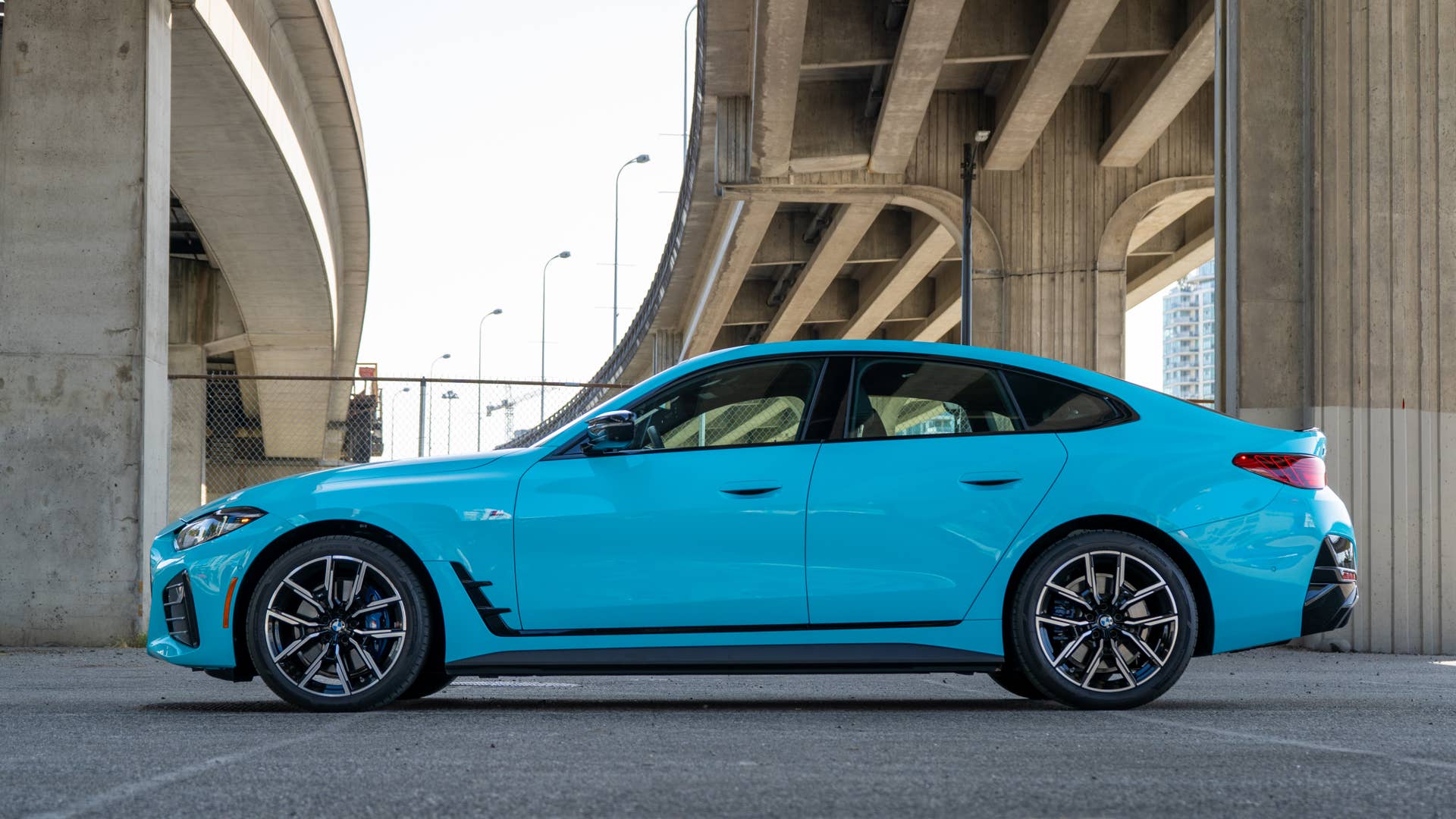
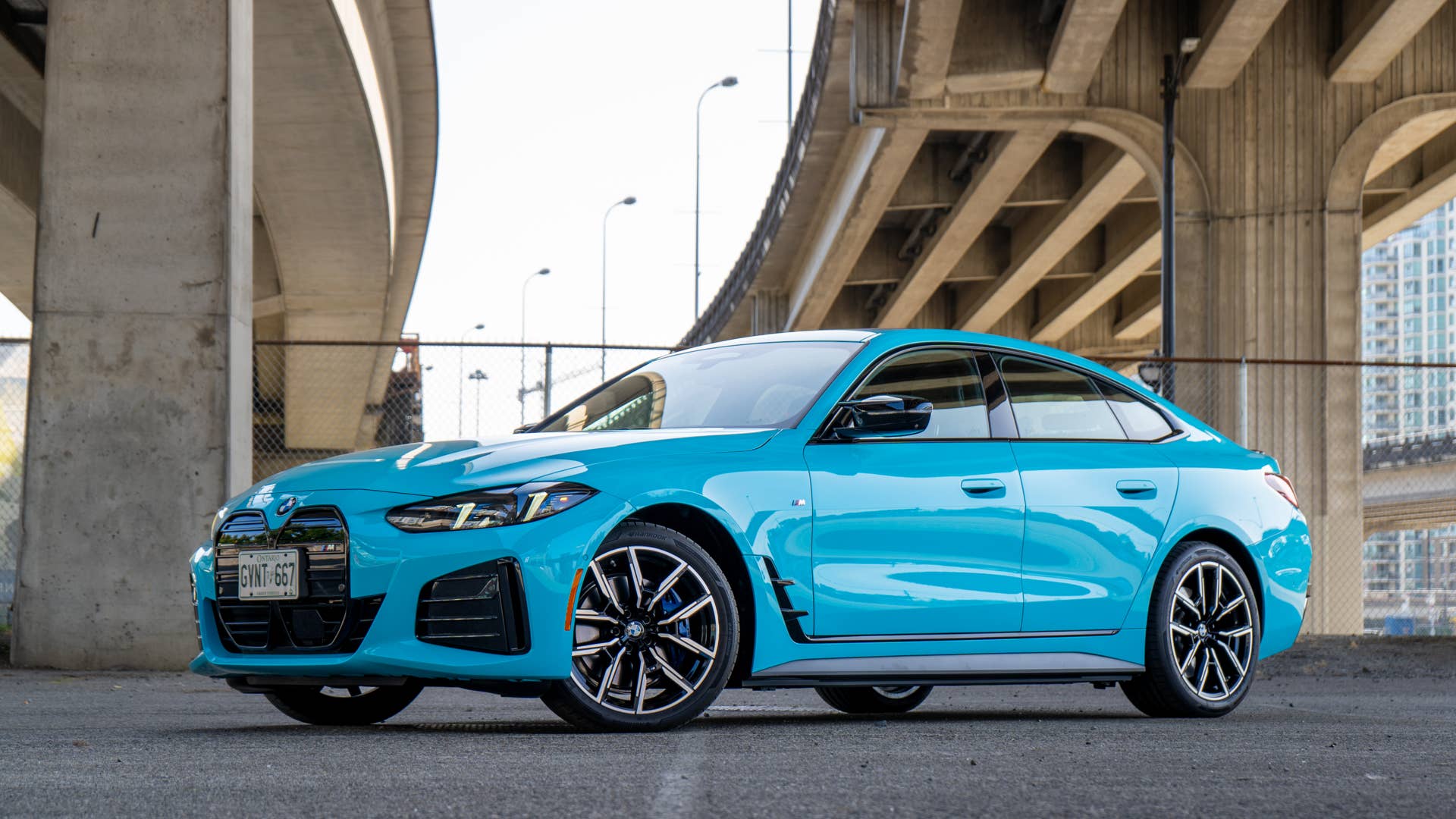
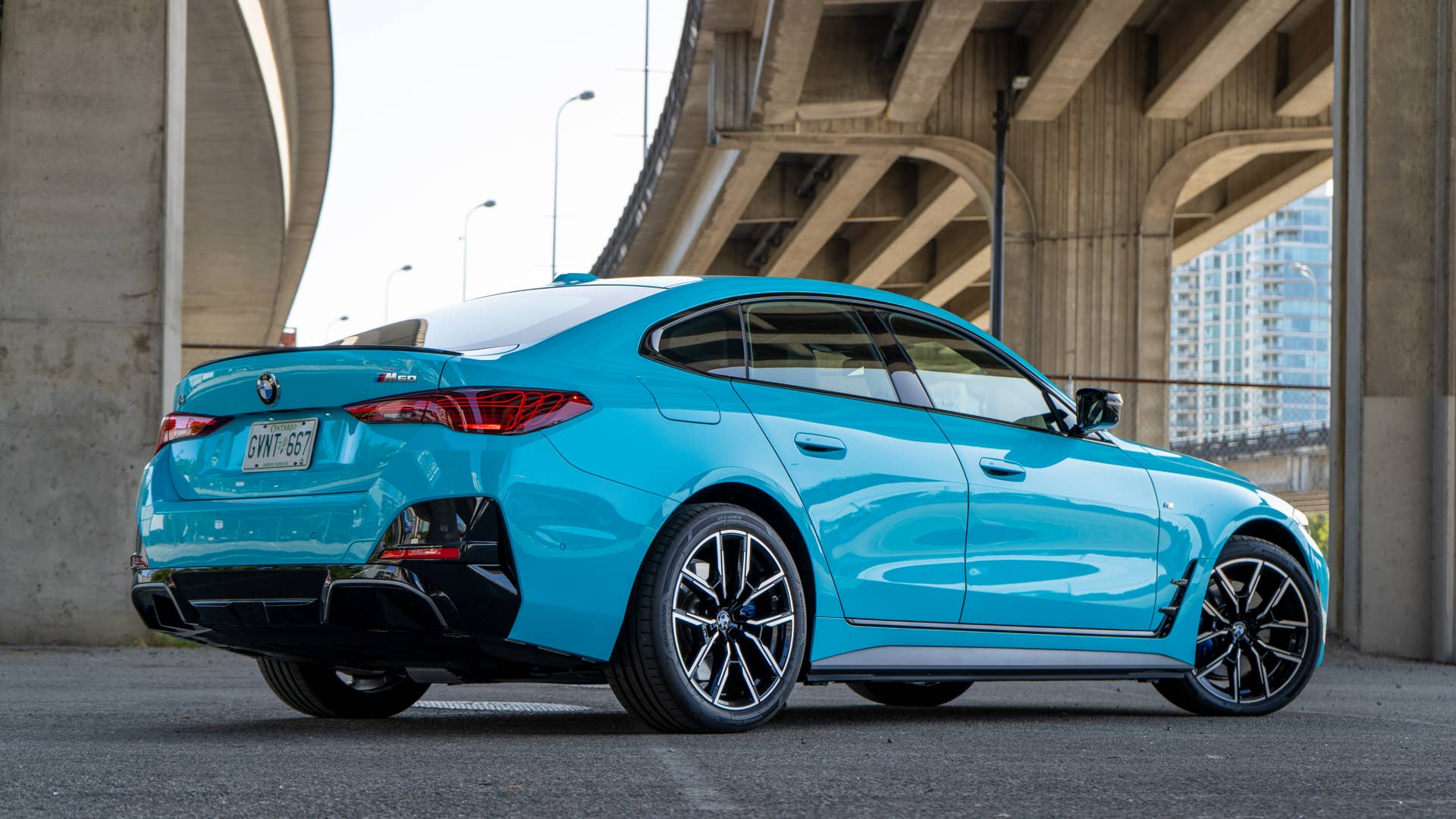
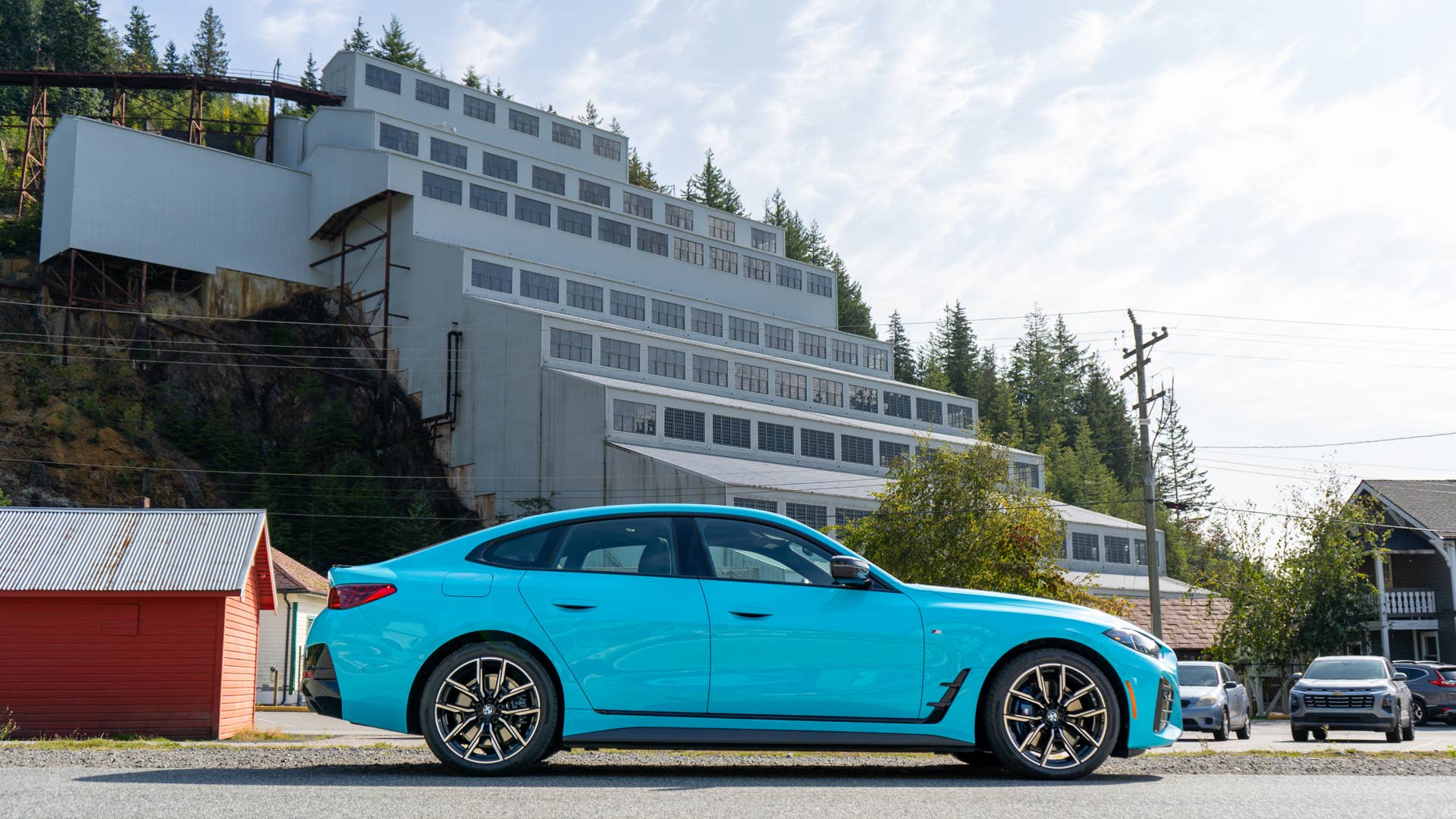
Especially when dressed in Borusan Turkish Blue, the i4 M60 resembles a dollop of toothpaste in both color and shape. I intended that quite critically at first, but by the end of the week, it had become a more affectionate observation. The C$5,000 BMW Individual paint is almost impossible to justify rationally, yet it transforms the car’s entire visual appeal. Reactions were mixed; some people loved it, while others appeared unsure whether BMW had merely painted an EV or launched an oral-care product. But nobody ignored it. Against Vancouver’s waterfront and mountains, the blue looked almost artificial in the best way.
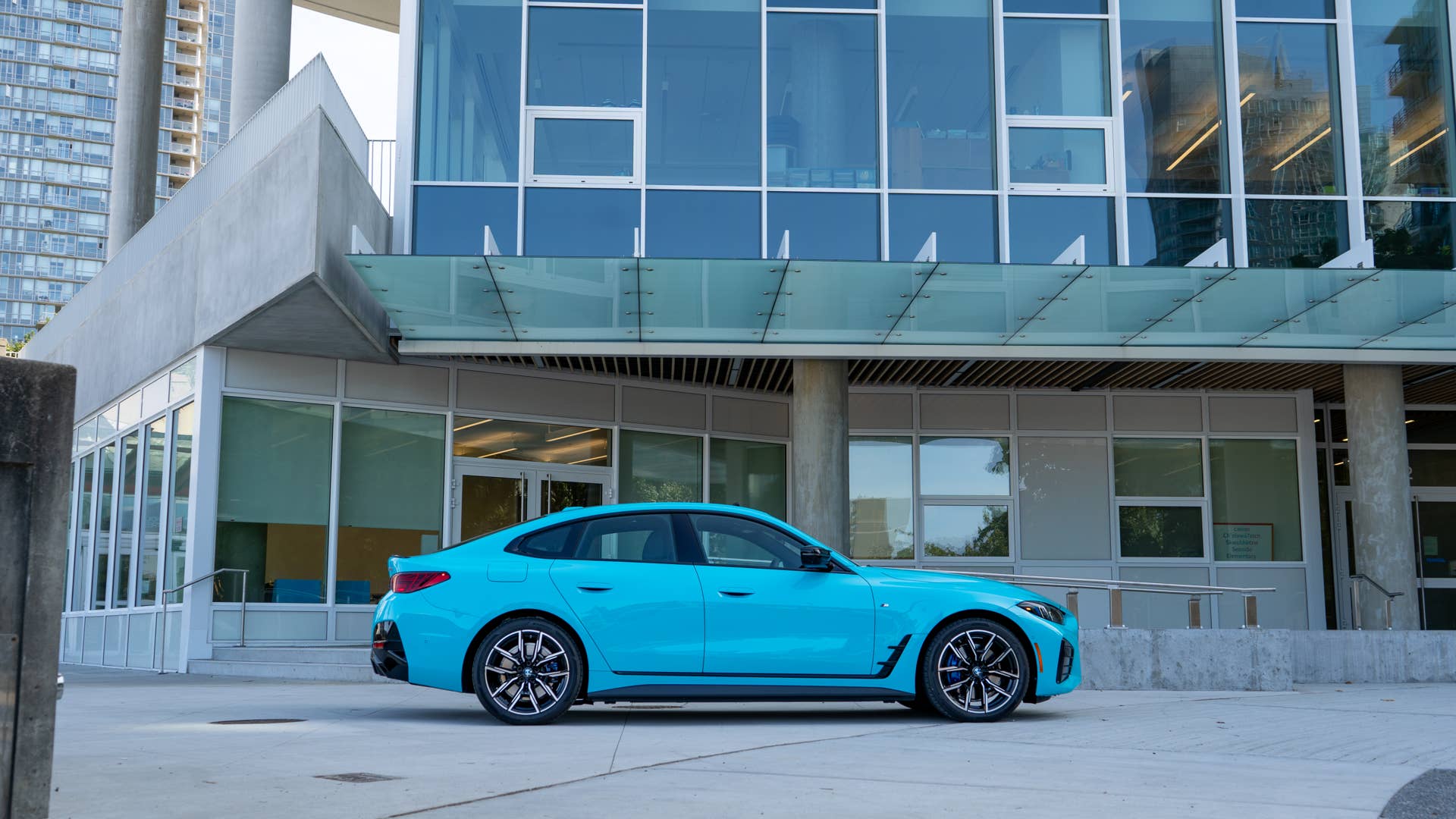
It also pushed the i4 closer to the optimistic, Frutiger Aero-stylized future that technology promised us decades ago. Its smooth Gran Coupe body, aerodynamic surfacing and intensely saturated color feel less like another anonymous luxury EV appliance and more like a machine from an alternate timeline in which the future actually looked fun. That has me immensely excited for the forthcoming Neue Klasse i3, which should carry that same idea considerably further.
Cole Attisha
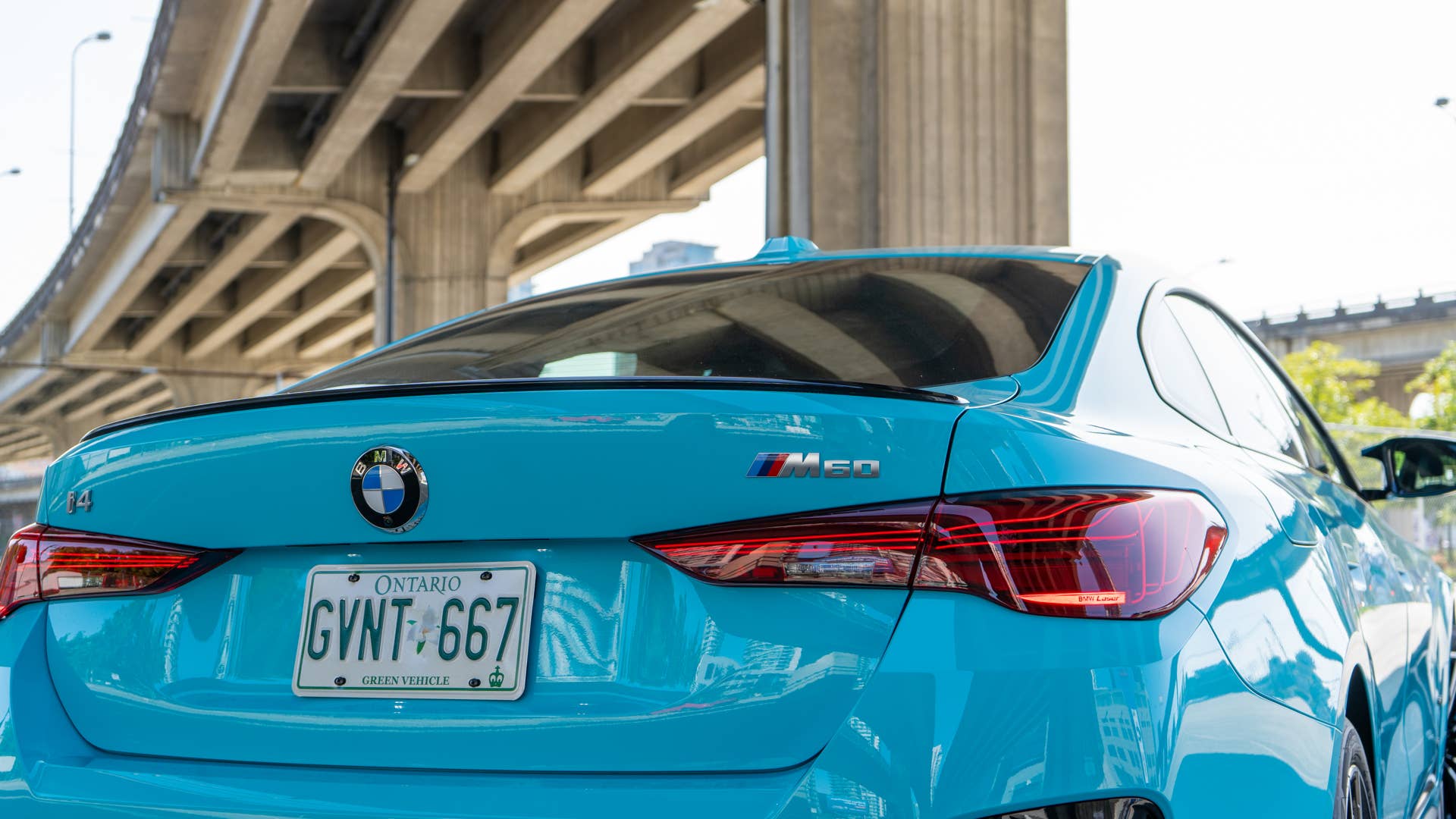
Even the enormous kidney grille grew on me. An EV doesn’t technically require such an expansive opening, but the shape contributes to the i4’s BMW-ness. Remove it, and the car might become more conventionally attractive, but also less distinctive. The front three-quarter view quickly became my favorite angle, while the intricate laser-technology taillights elevate the rear tremendously. The sloping roofline limits visibility through the rear glass, yet the view through the mirror made the i4 feel oddly luxurious without restricting sightlines as much as I expected.
The front windows, though, were especially strange. They didn’t retract fully into the doors when rolled down, leaving a small section of glass protruding above the sill. It reminded me of the moment the windows in my old E36 came off their tracks and looked suspiciously like shark fins—it’s not a catastrophic oversight, but it is the sort of unfinished detail BMW should have resolved before production. Still, that imperfection somehow fits the car—it did, for better or worse, remind me of an older BMW—one that, despite its many flaws, I adored tremendously. The i4 M60 is not beautiful by every conventional standard, but it is unusual, recognizable, and full of personality. Once the excellence beneath its surface became apparent, the same styling I initially questioned began to feel endearing.
Cole Attisha
Interior And Practicality: 9.3/10
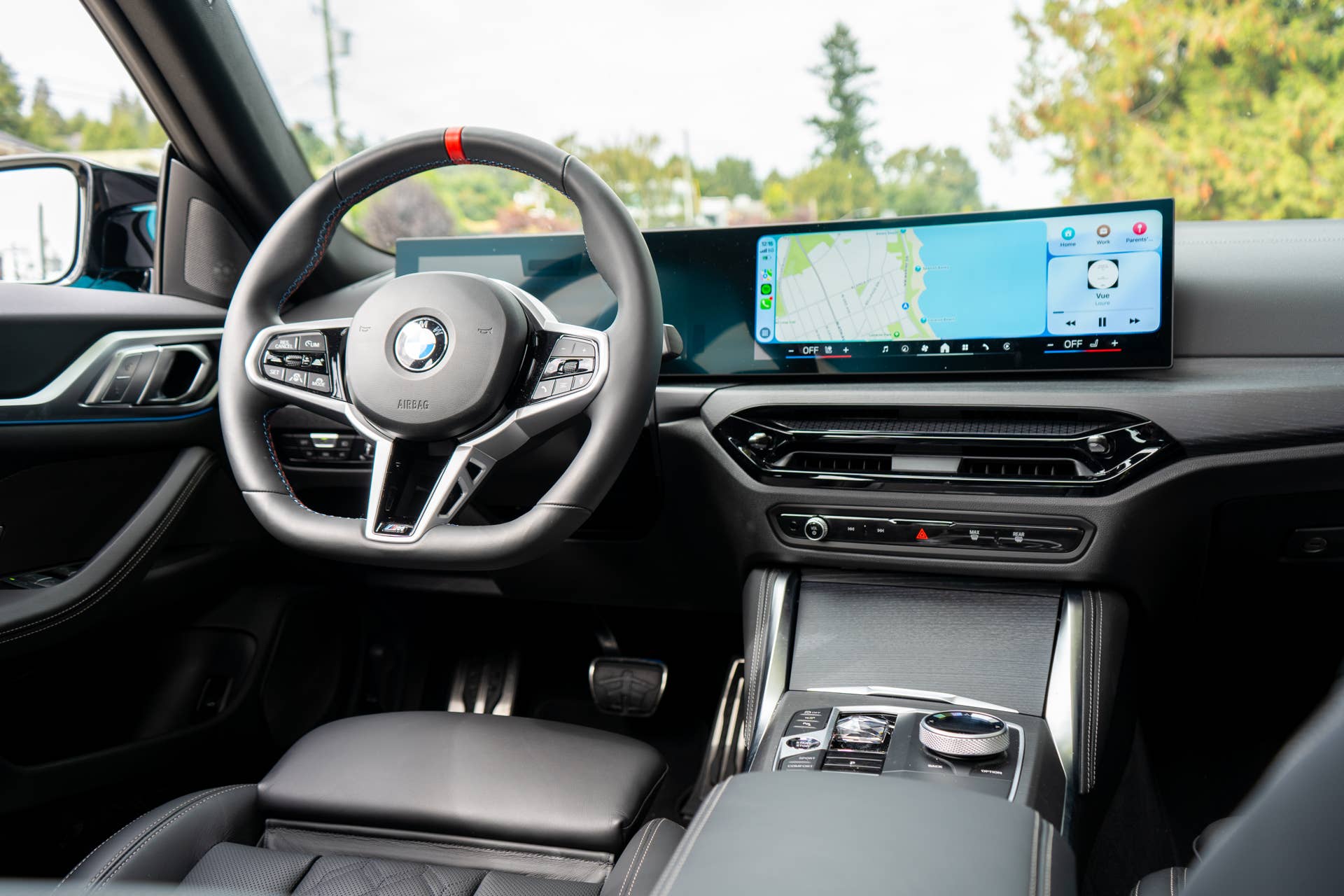
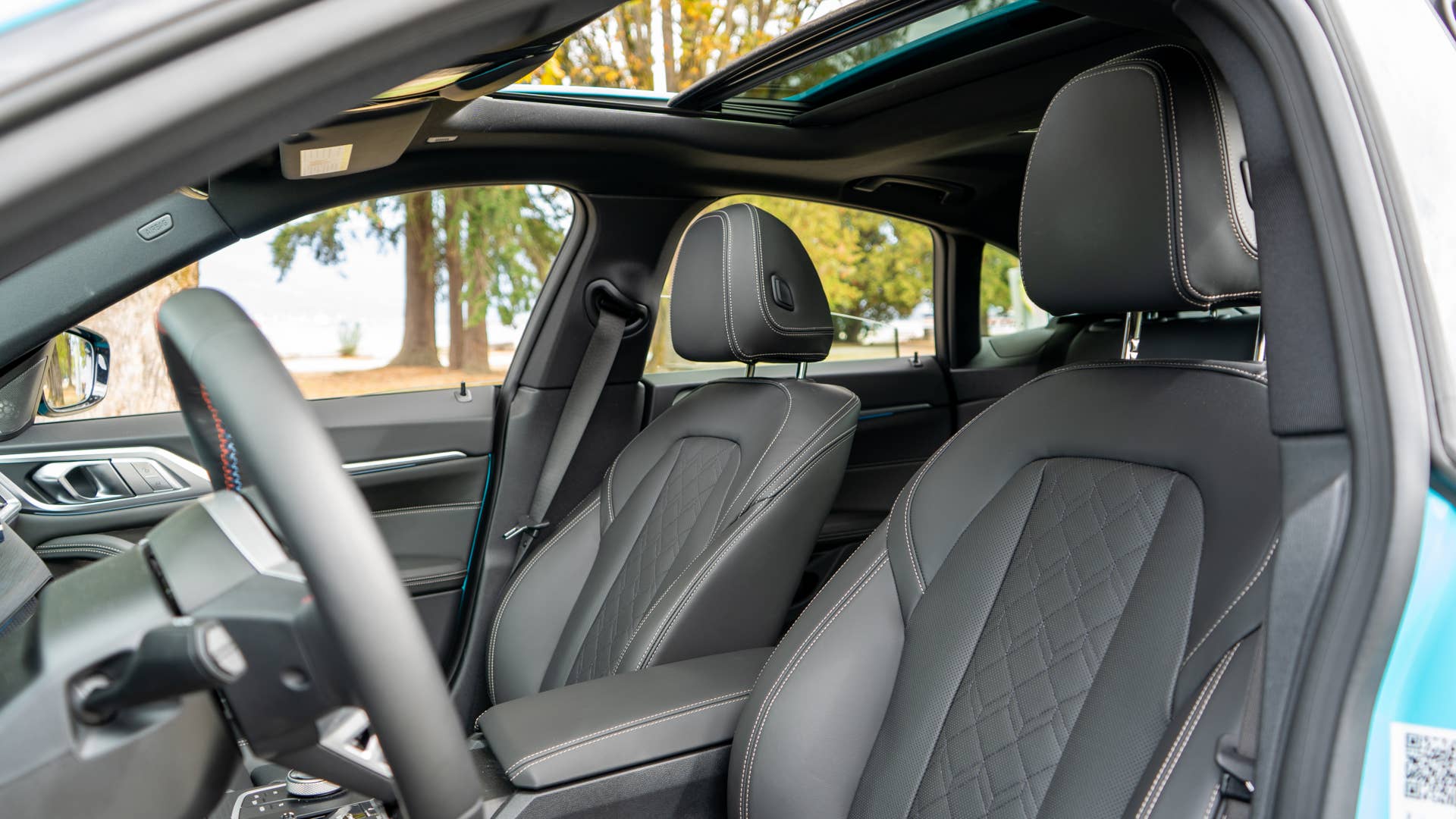
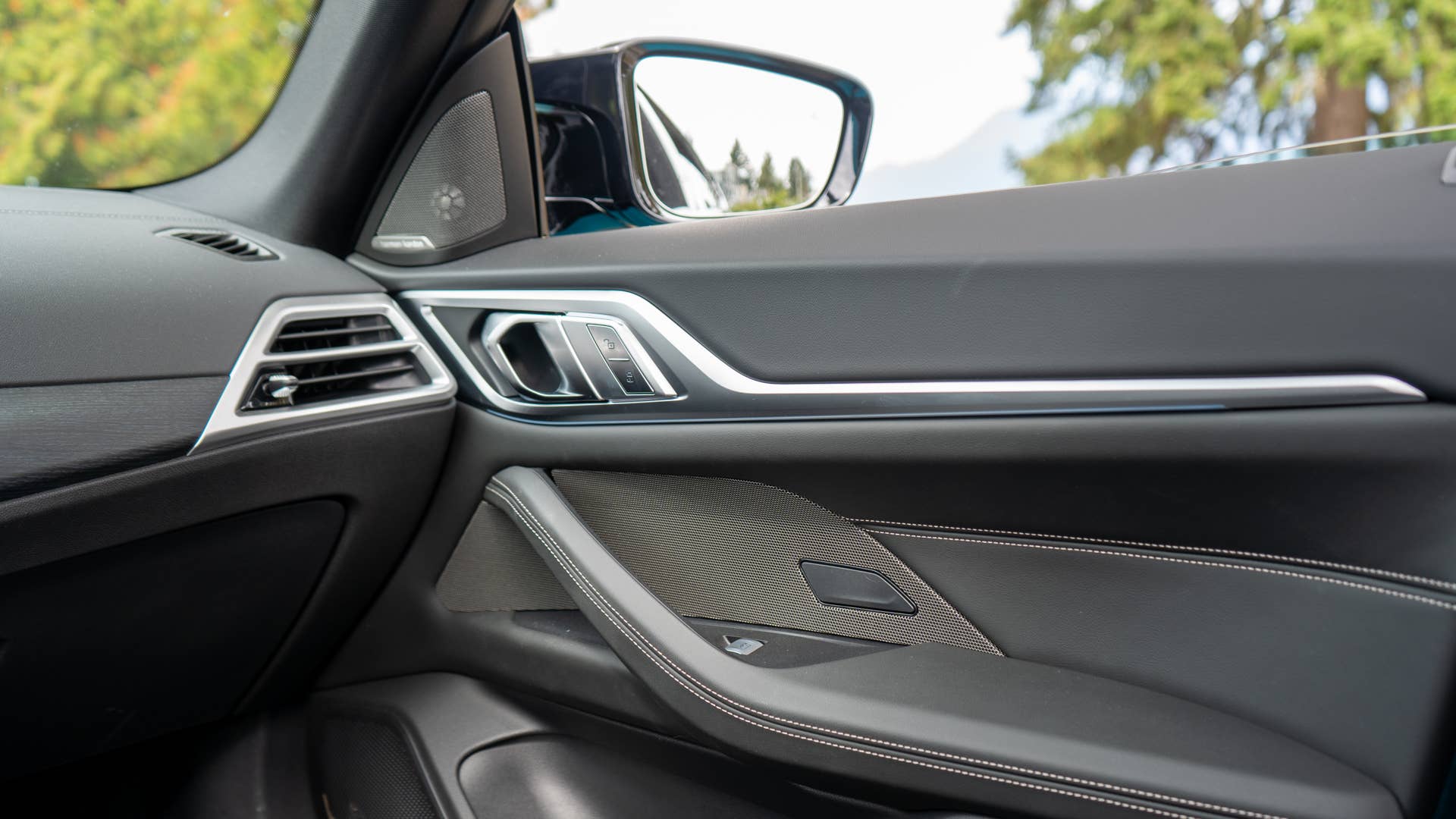
The cabin strongly affirms the argument that the i4 is a BMW first and an EV second. Its basic architecture remains familiar, if a bit dated, but the options fitted to my test car added a genuine sense of occasion. Black Merino leather cost C$4,250, while the upholstered dashboard, Ash Grey Blue open-pore wood, and C$900 glass controls gave the interior the tactility expected of a six-figure luxury car. More importantly, though, it all felt incredibly solid. The curved display didn’t creak or flex when pulled, and I found no significant build-quality faults elsewhere. That may sound like a low bar until one remembers how many expensive modern interiors use large screens mounted with all the structural confidence of a tablet produced in a developing country, held to the dash with adhesive from an Elmer’s glue stick.
Cole Attisha
Cole Attisha
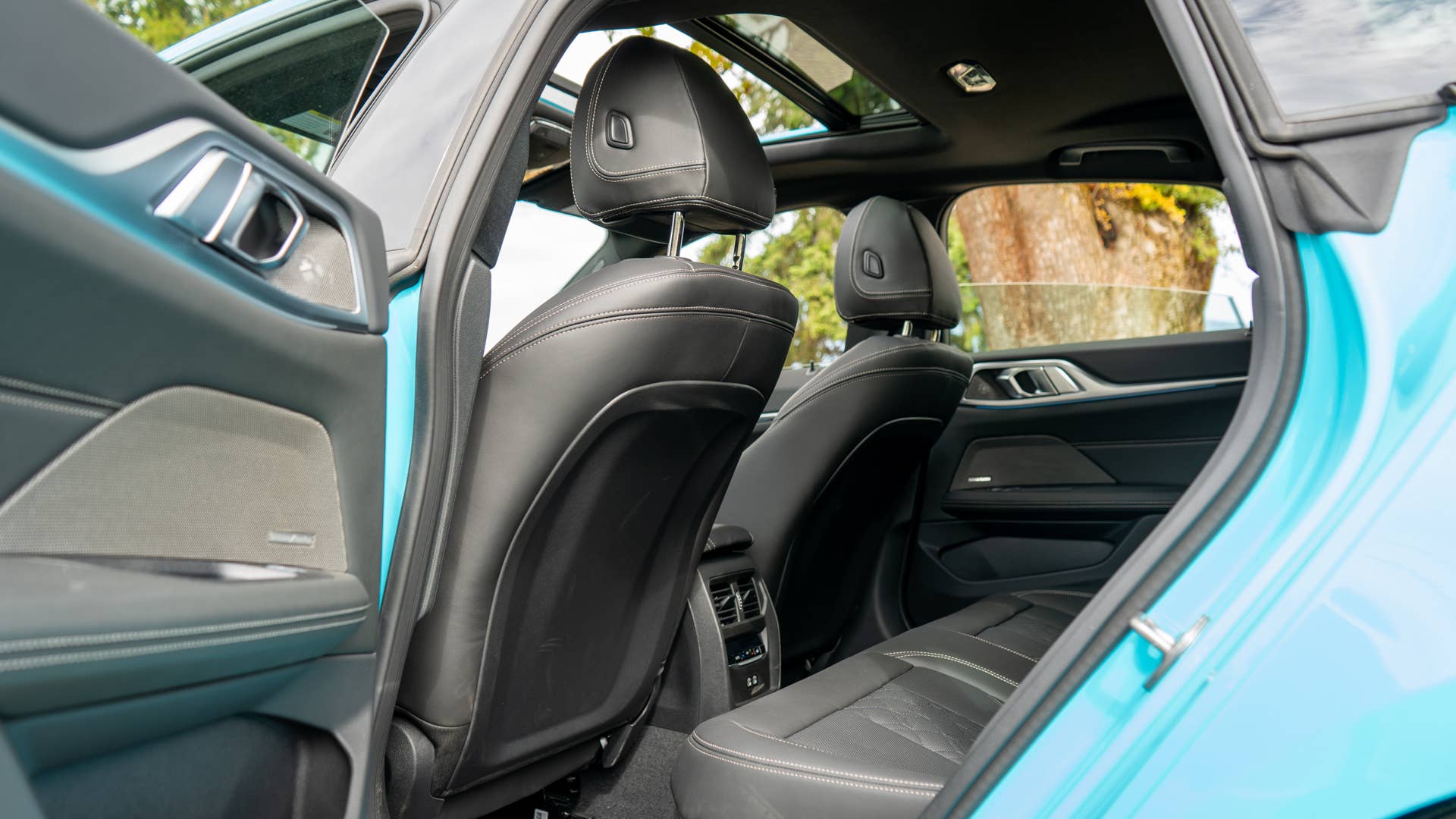
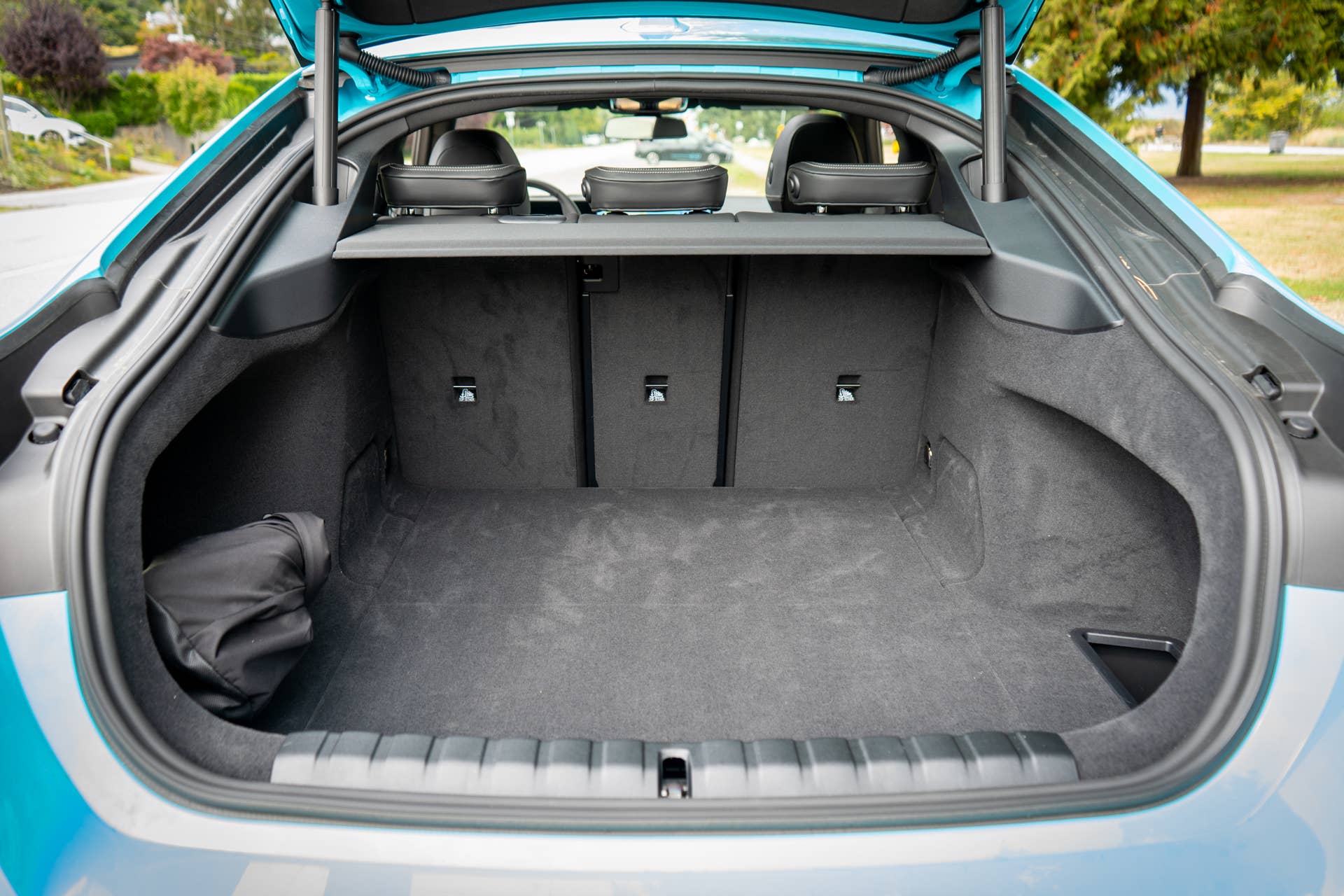
The front seats remained supportive and impressively comfortable over long distances. Their ventilation function was quite weak, although BMW permits the heating and ventilation to operate simultaneously—an unusual and surprisingly pleasant combination. The driving position was excellent, and the narrow rear window never became the visibility problem its appearance suggested. Rear accommodation is notably tight, but perfectly acceptable for a “four-door coupé”—passengers over six feet tall managed short journeys without complaint, but this is not the electric BMW to choose for chauffeuring adults every day. The liftback compensates for some of that compromise by providing a large, accessible cargo opening and substantially more flexibility than a conventional sedan trunk. The result is a cabin that feels sporty, luxurious, and usable without adopting the generic minimalism common to many EVs. It might be based on an aging layout, but it remains an excellent one.
Cole Attisha
Cole Attisha
Pricing And Value: 7.8/10
The 2026 i4 M60 starts at $70,700 in the United States and C$82,900 in Canada, and my Canadian test car reached C$104,250 after options. The C$6,250 Premium Enhanced Package and C$1,800 M Sport Pro Package contributed meaningfully to its luxurious and visual appeal, but several other additions are harder to defend. I would personally omit the Individual paint, Merino leather, and Advanced Driver Assistance Package, despite how much I loved the first two options on my specific tester. That is admittedly awkward after spending hundreds of words explaining how much the paint and richer interior contributed to the car’s personality. They made this particular i4 memorable; they just didn’t make it C$11,250 better, especially with the driver-assistance package included in that grouping.
Competition comes from nearly every direction. The Tesla Model 3 Performance delivers staggering acceleration for less. The Hyundai Ioniq 6 N adds more theatre and track aggression, while the Polestar 4 supplies Scandinavian style (while supplies last in America). The Porsche Taycan offers a richer chassis at a higher price; the Mercedes-AMG EQE emphasizes luxury, and BMW’s combustion-powered M340i and M440i retain the exquisite B58 straight-six. That internal competition would be the hardest for me to ignore, personally—I would struggle to choose the i4 over a lesser priced BMW powered by the B58—not because the EV is less competent, but because that engine is truly something special. If I were committed to buying an EV, however, the i4 M60 would be one of my most attractive options as a driving enthusiast who also values build quality and style.
Cole Attisha
Verdict: Authentically BMW, For Better And For Worse — 9.2/10
The impending Neue Klasse i3 makes the i4 M60 feel somewhat outdated. Strangely, perhaps, that didn’t sour my experience whatsoever. It made me more excited to see what BMW can accomplish when a thoroughly convincing electric powertrain is combined with a platform designed around it from the beginning. The i4 M60’s greatest strength and greatest weakness are ultimately the same: it is authentically BMW, at least in the contemporary sense. Its weight, steering isolation, controversial grille, expensive options, and occasional baffling detail all belong to the modern brand. So do its exceptional ride-and-handling balance, solid construction, familiar ergonomics, unmistakable styling, and ability to feel playful when its weight specifications suggest otherwise.
That combination makes it distinctive and legitimately inimitable—the mark of a truly great automobile. I began the week looking at a six-figure turquoise dollop of toothpaste and wondering why it existed at all. By day two, I adored it. Nearly 1,000 kilometers later, I still thought it was too expensive, still missed the sound of a great BMW engine, but still wanted to keep driving it. For an all-electric M Performance BMW, that might just be the most convincing result possible.
Autoblog aims to feature only the best products and services. If you buy something via one of our links, we may earn a commission.
About the author

Cole Attisha
Staff Writer, Autoblog