

Picking a favorite transmission for the 2025 Hyundai Elantra N is a tough one. Both transmission setups make the most out of the turbocharged engine and will provide plenty of pavement fun to anyone with a lead foot. That said, there was one metric I was able to use that helped me decide on a winner.
As for the car itself, the 2025 Hyundai Elantra N got a serious update last year, so there are no major changes for this model year. It still represents an excellent mix of performance, value, and fun in a sensible package. Priced between approximately $34,500 and $37,000, its overall performance feels more expensive.
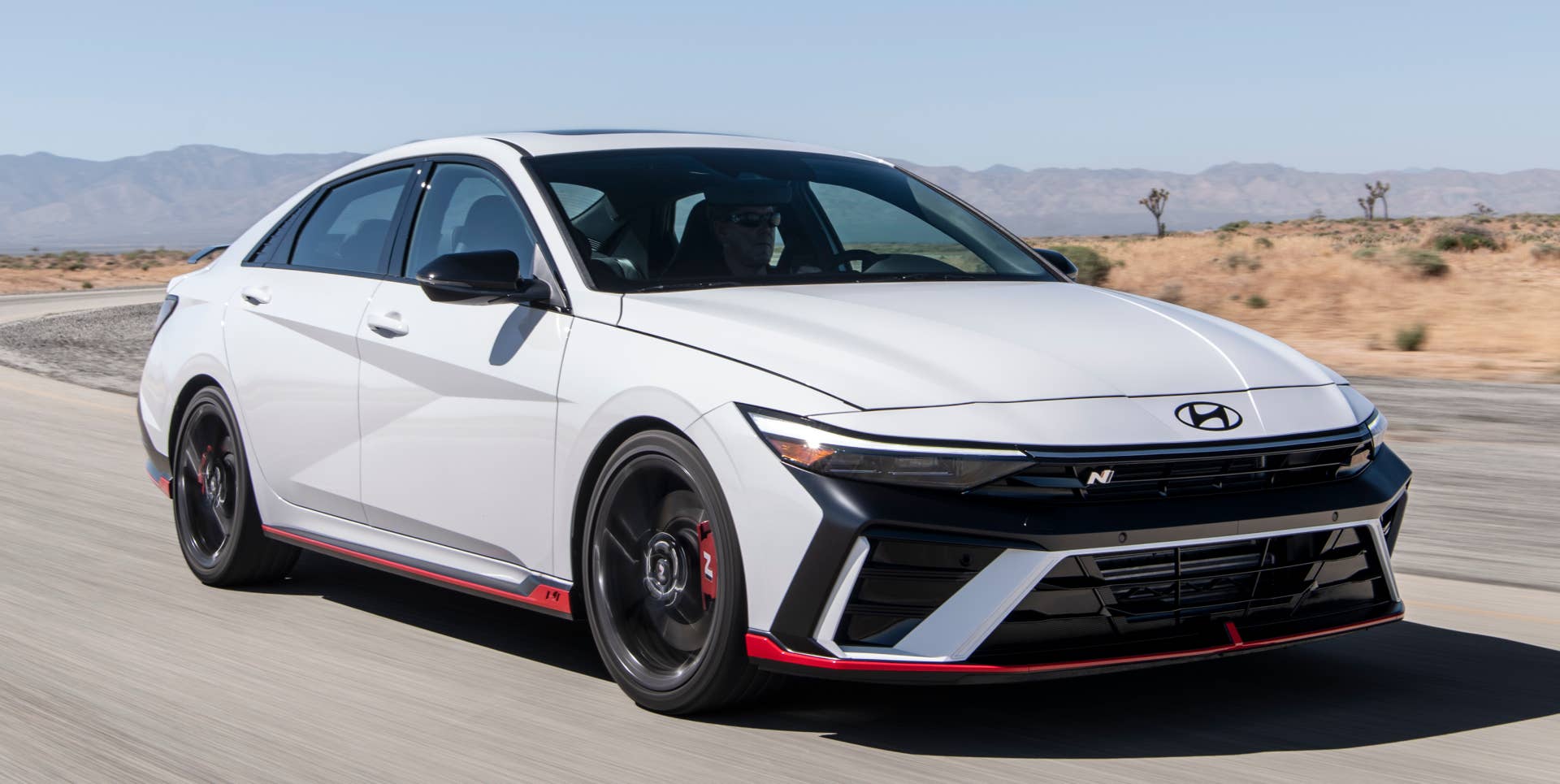
What is the Hyundai Elantra N?
Hyundai took its workhorse, the somewhat pedestrian Elantra, and gave it a serious overhaul. It wouldn’t be out of place to say that they augmented nearly every component that helps its performance, including suspension, brakes, chassis, tires, engine, and, yes, the gearboxes.
The Electronically Controlled Suspension (ECS) system works with the MacPherson Strut with coil springs up front and a multi-link rear suspension. Using ECS, the Elantra N’s performance system can activate servos mounted next to each wheel to aid in changing the vehicle’s performance character. Impressive tech for this price.
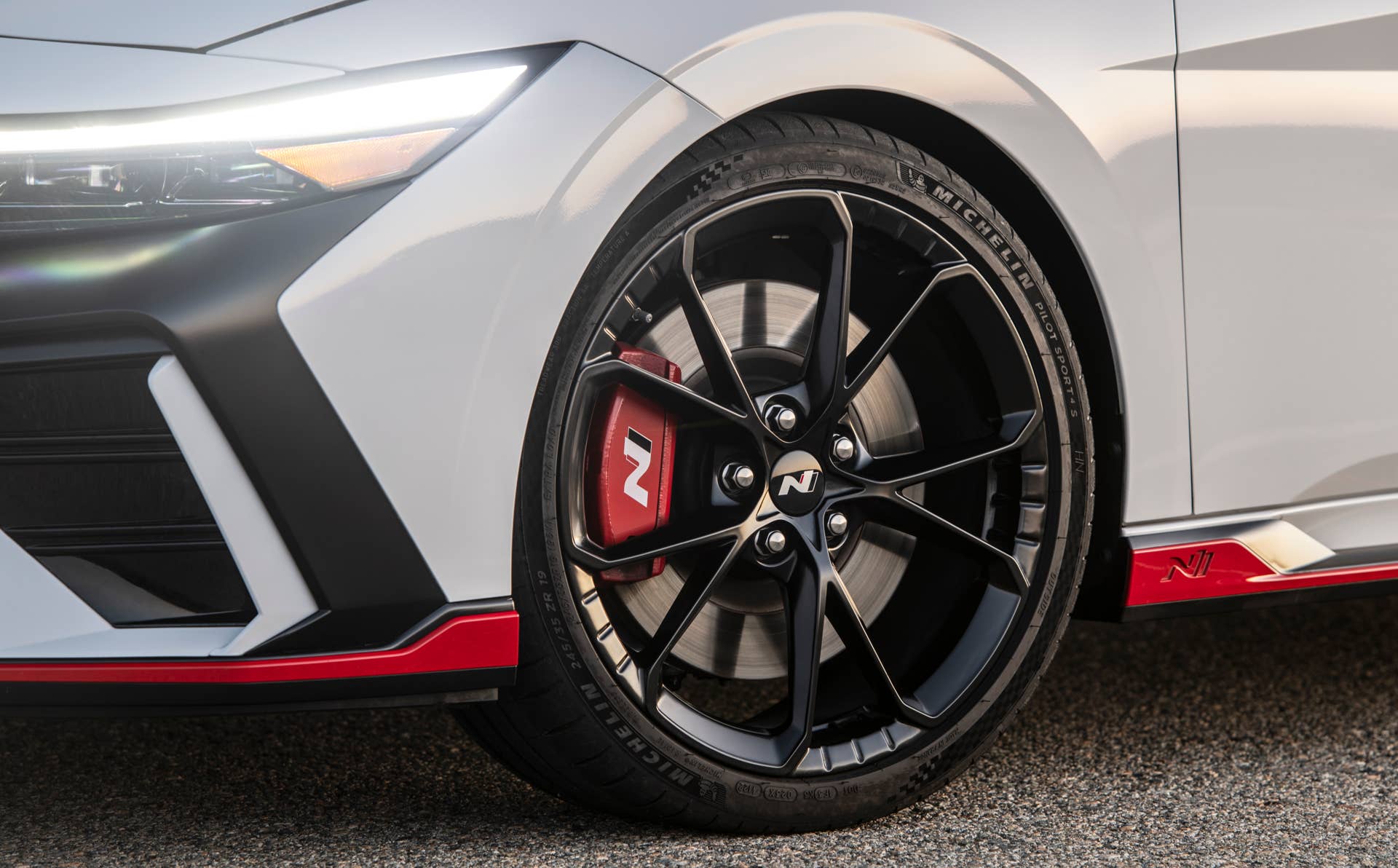
The stiffened chassis and beefed-up suspension all lead to the high-performance ventilated Brembo brakes measuring 14.2 inches up front and 12.4 inches in the back. The car rides on lightweight 19-inch wheels wrapped in 245/35R19 Michelin Pilot Sport 4S summer tires.
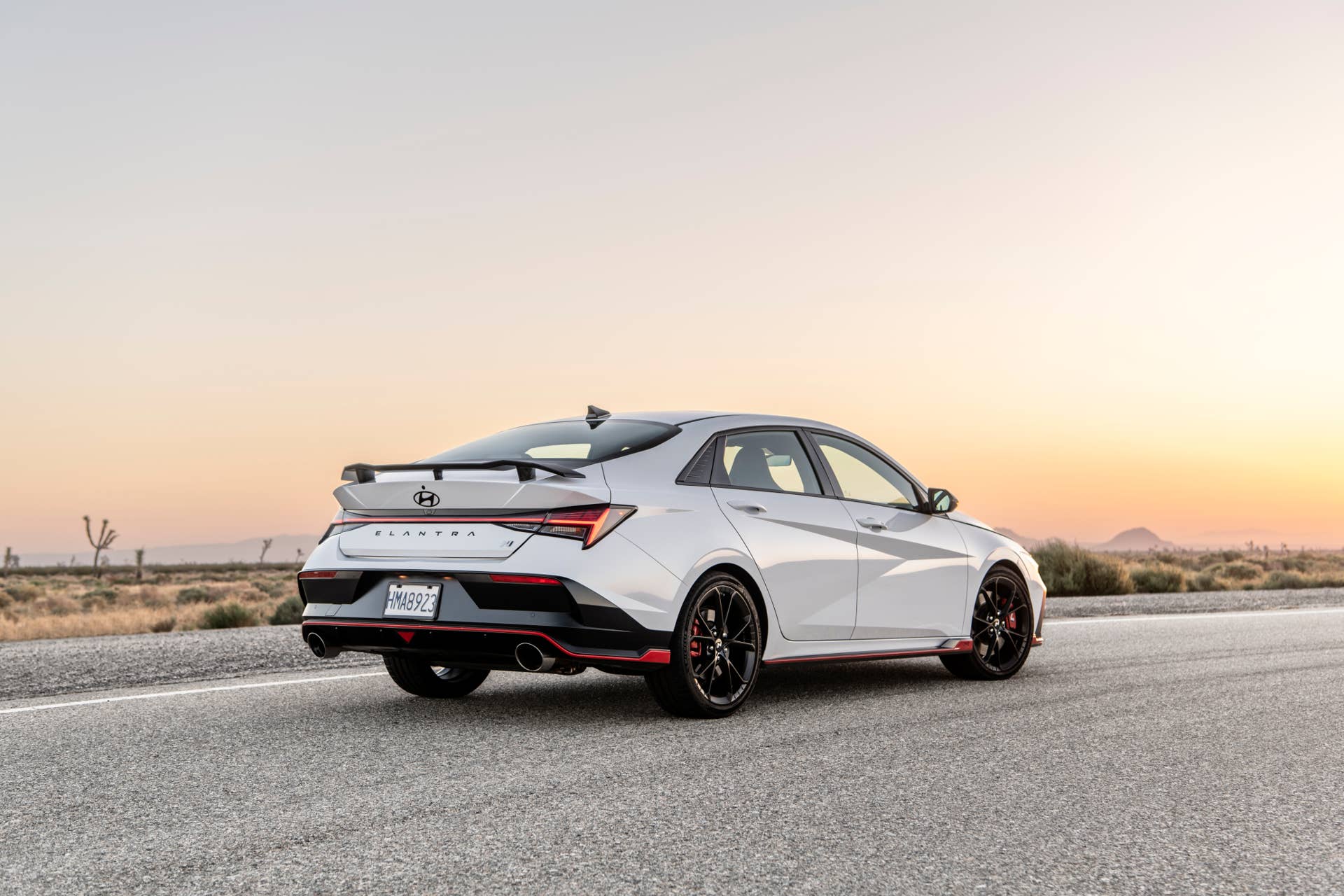
Hyundai
It’s up there with the Civic Si, WRX, and Jetta GLI
Hyundai updated the Elantra N’s cabin with racing-style seats, a meaty steering wheel, paddle shifters (for the DCT), and a few dashes of “N” badge garnish. Like the exterior, it looks a bit “boy-racer” to some, but you can’t deny it looks sporty.
Last but not least is the powertrain. Hyundai took the turbocharged 2.0-liter out of the Veloster N and stuck it inside the Elantra. It normally makes 275 horsepower and 289 lb-ft of torque, but push the “N Grin Shift” button, and you’re temporarily packing 286 hp. It’s a riot.
Finally, there are two transmission choices: the standard six-speed manual transmission or the eight-speed dual-clutch transmission (DCT). I’m happy to report that there’s an old-school handbrake that comes with both, so those who hoon will be pleased.
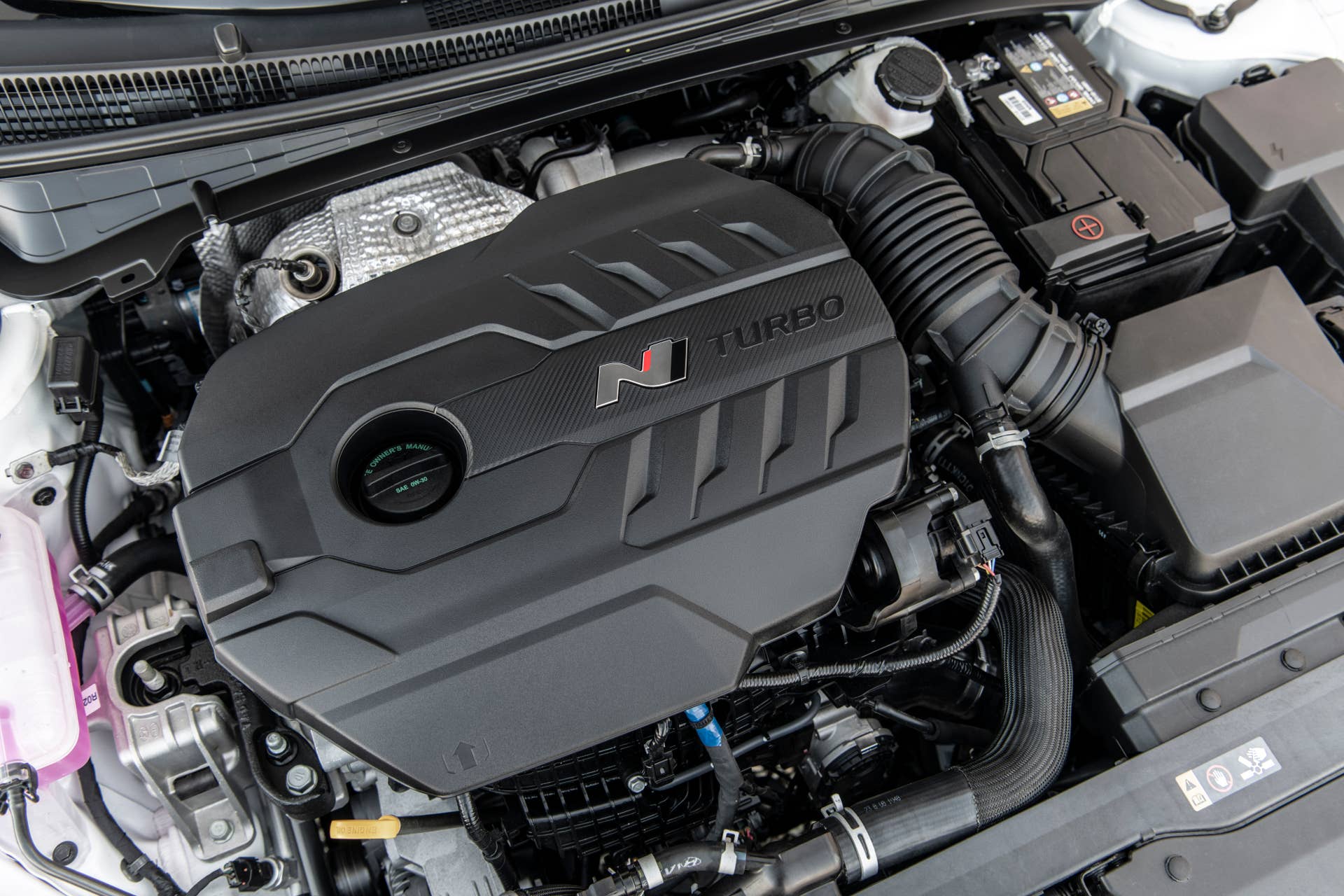
Hyundai
Deciding on the track
A few months ago, Hyundai invited me to Laguna Seca Raceway to sample a few vehicles, with the Elantra N and the Ioniq 5 N being among them. They had both the manual and DCT versions of the Elantra N set up on an autocross course, and it was impossible to say no to an offer like that.
Gathering a bunch of automotive journalists, many with real (or not-so-real) racing backgrounds, at an autocross is bound to be a spectacle. Egos were crushed, insults were made, and victors were announced at dinner.
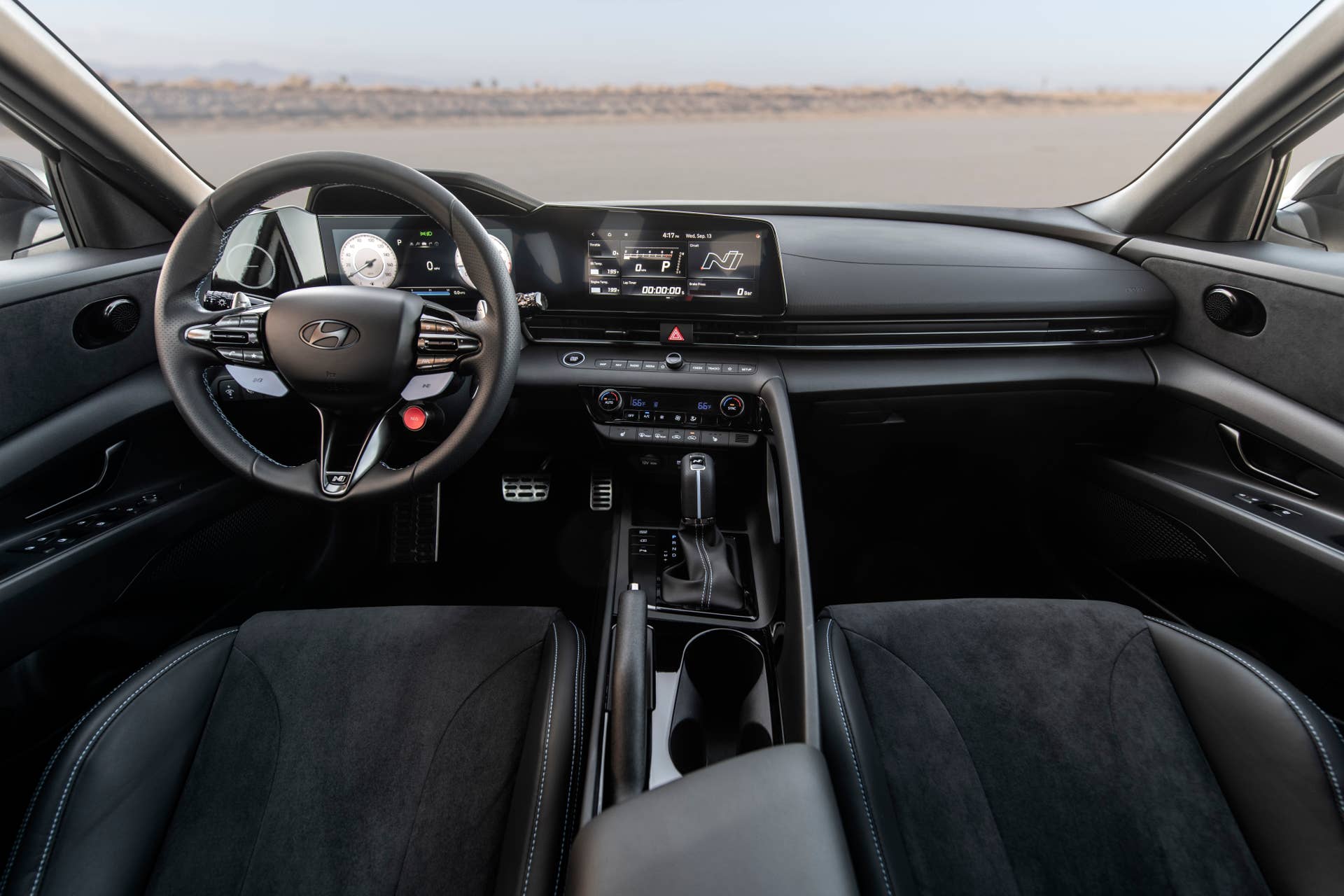
Hyundai
Some people prefer to stir their own coffee
It surprised me to see that many of the fastest times were achieved driving the manual. Many, including myself, felt that bouncing between second and third worked great on this tight course.
The DCT does weigh a bit more, but even at somewhere between 3,200 and 3,300 lbs, I don’t think that was a huge factor. In my own runs, I was indeed faster rowing my own gears and placed mid-pack on a good run (pride intact).
The winner is the six-speed manual! But wait…
I was later told that one of the fastest (if not the fastest) track times was with a DCT. If you have to commute at all, you’ll probably find that the DCT is a better choice. It’s more efficient, anyone can drive it, and it’s still extremely fast. Both gearboxes connect to the front wheels using an electronically limited slip differential (eLSD).
Still, it is SO much fun rowing your own gears! Many love the control and the connection to the car. It’s great to hear that exhaust burble when you mess around, too. Check out our previous review for a more in-depth look.
Final thoughts
Teen-idol looks aside, I think that the Elantra N manual was one of the quicker sedans I’ve driven on a tight course. It rivals rear-wheel drive and some all-wheel drive cars costing thousands more and sounds pretty cool, too.
Both transmission choices will still give you a lively car that’s faster than it looks. Few cars are as fun for this much money. If you would prefer the DCT over the manual, though, let me know in the comments below why.
Love reading Autoblog? Sign up for our weekly newsletter to get exclusive articles, insider insights, and the latest updates delivered right to your inbox. Click here to sign up now!
About the author

Nathan Adlen
Contributing Writer, Autoblog