
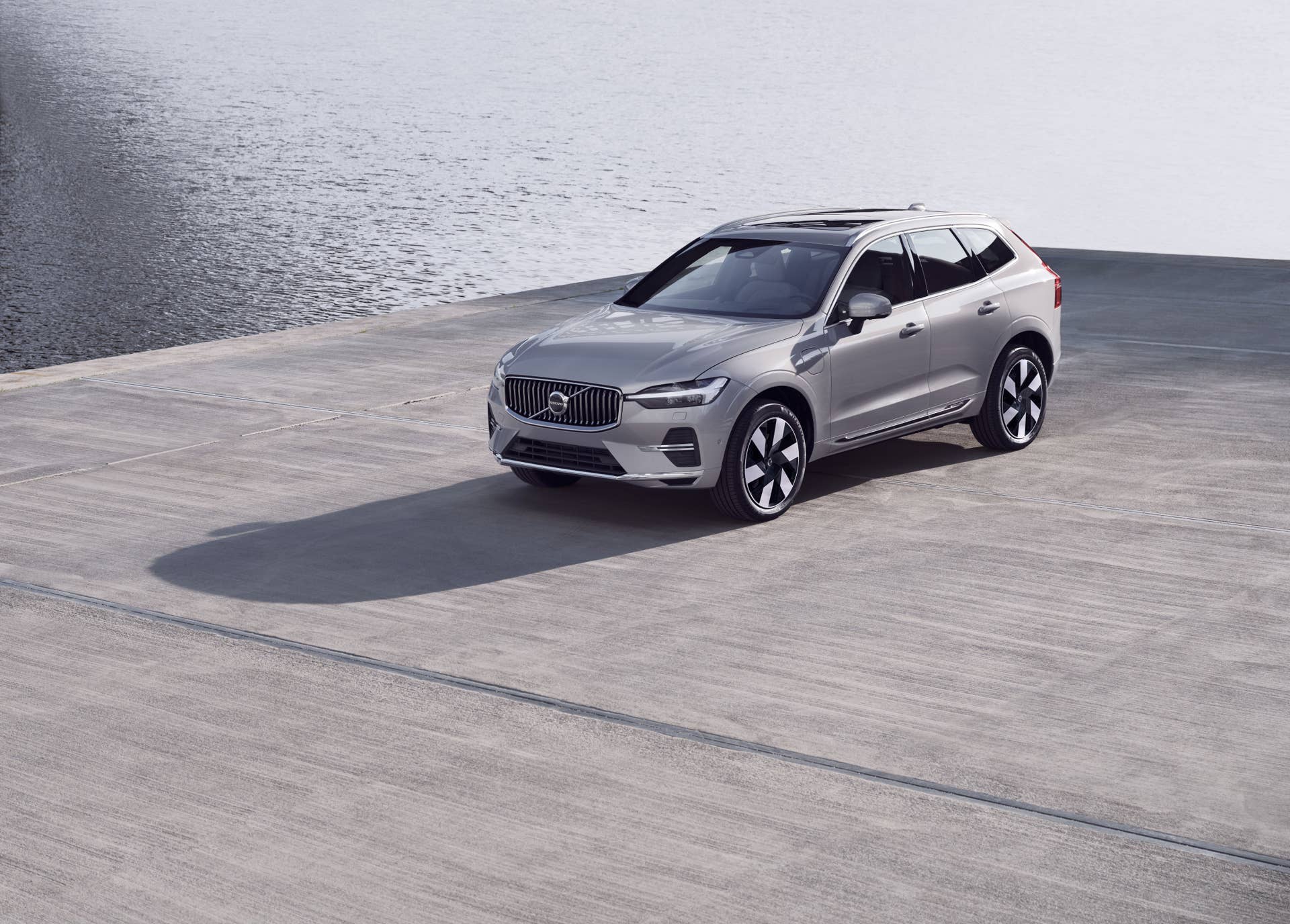
There are some fine alternatives for folks who are looking for luxury, utility, and a tiny bit of ruggedness in a mid-size crossover/SUV. These options offer just about as much, or in some cases more, luxury and technical goodies for less money than competitors from Lexus, Mercedes-Benz, BMW, and Audi.

Genesis
Volvo
The Genesis GV80 and Volvo XC60 bring completely different philosophies to the game, both in design and performance. While there are other worthy players from Acura, Lincoln, and Cadillac, I wanted to focus on the GV80 and XC60 because they are so unique.
The Volvo XC60 mixes performance with efficiency
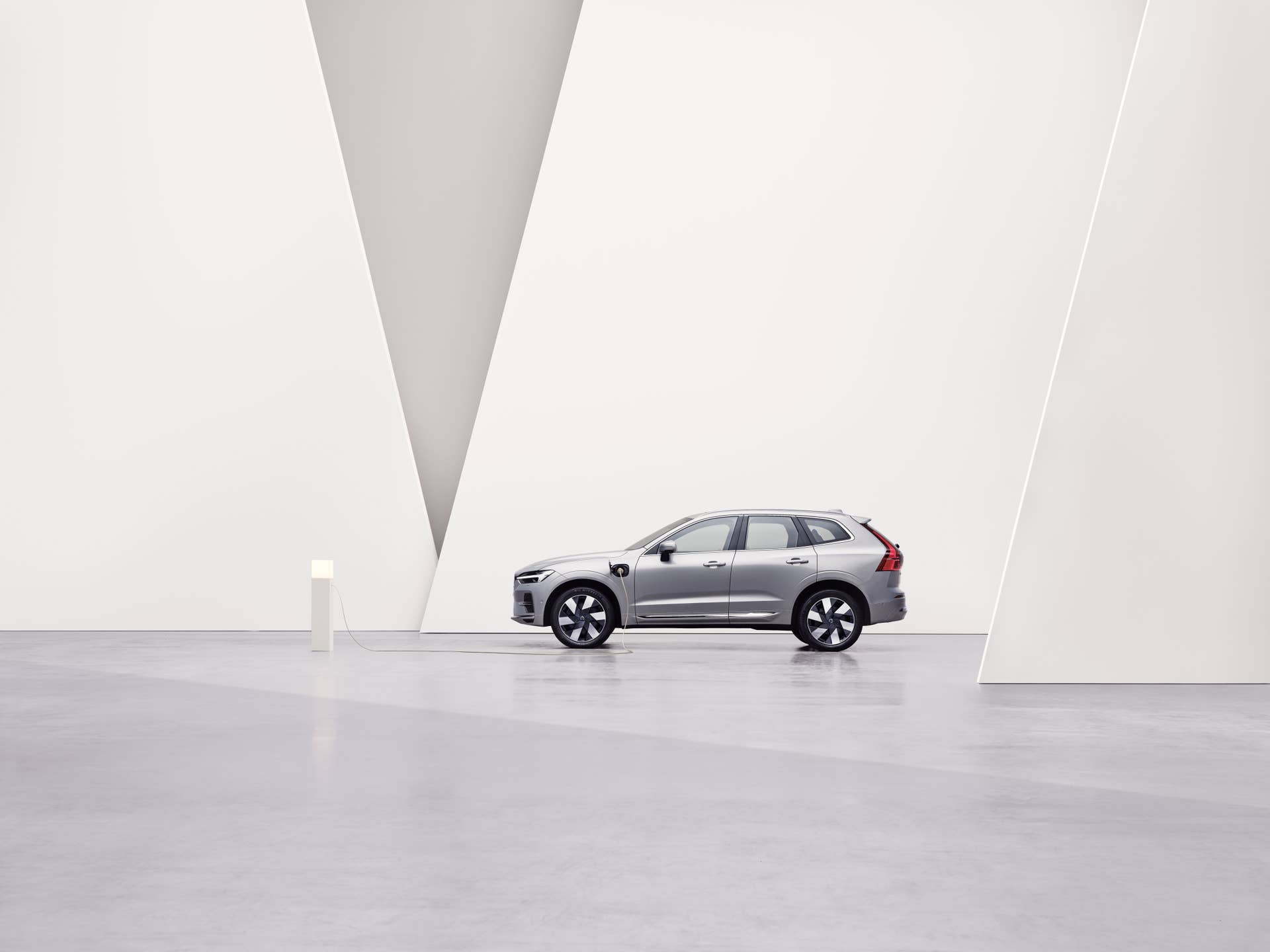
The Volvo XC60 sits somewhere between a small and midsize SUV/crossover. It is a bit smaller than the Genesis GV80, and it’s priced slightly less overall, but I’ve seen many buyers cross-shopping the XC60 against the GV80 over the smaller GV70, hence the comparison.
Like Genesis, Volvo offers two powertrains for the XC60. Unlike Genesis, Volvo’s powertrains are aimed at efficiency. The base powertrain is a turbocharged 2.0-liter four-cylinder paired with a 48-volt hybrid system that produces 247 horsepower and 266 lb-ft of torque. According to Volvo, it gets 26 mpg combined.
Volvo
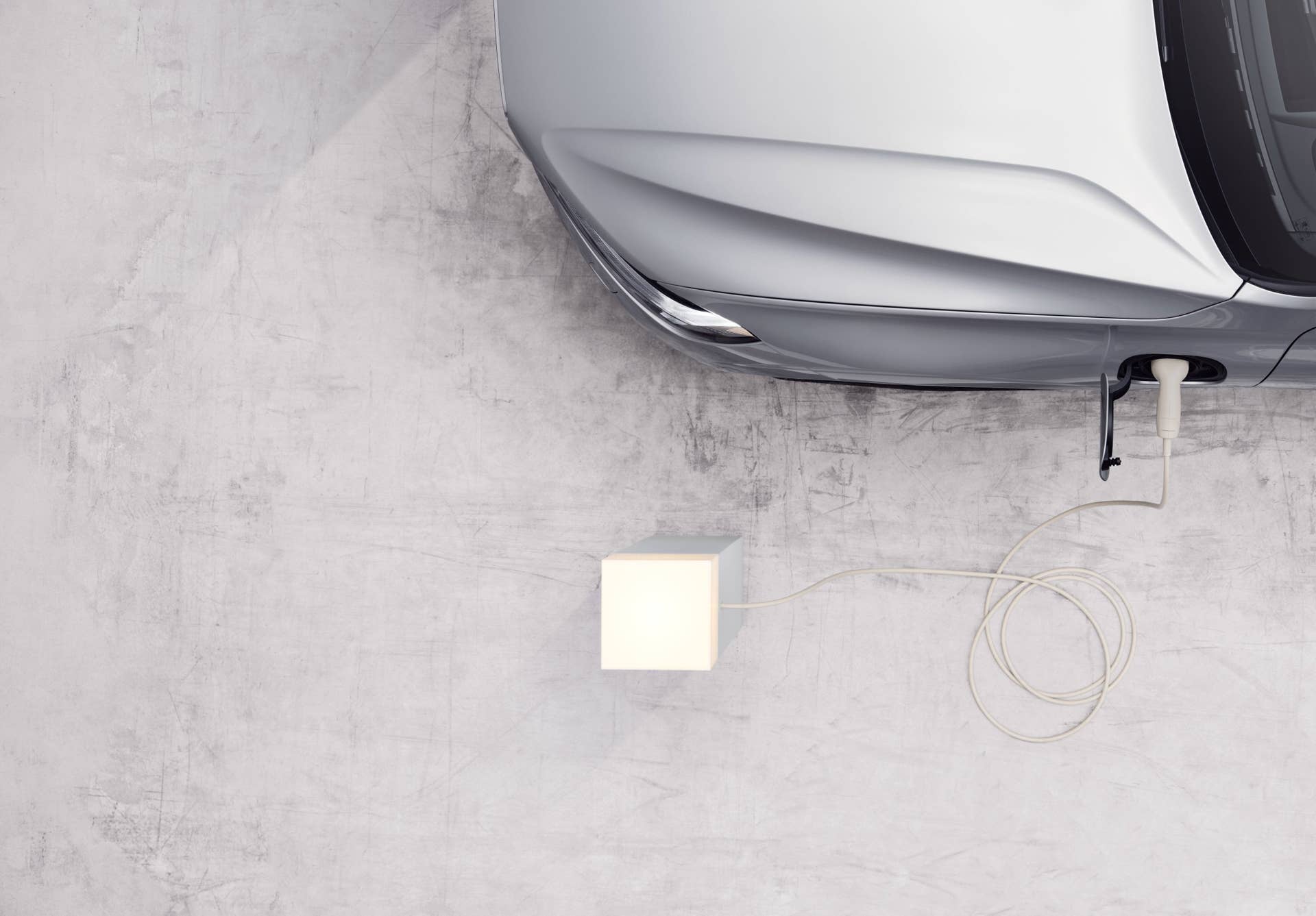
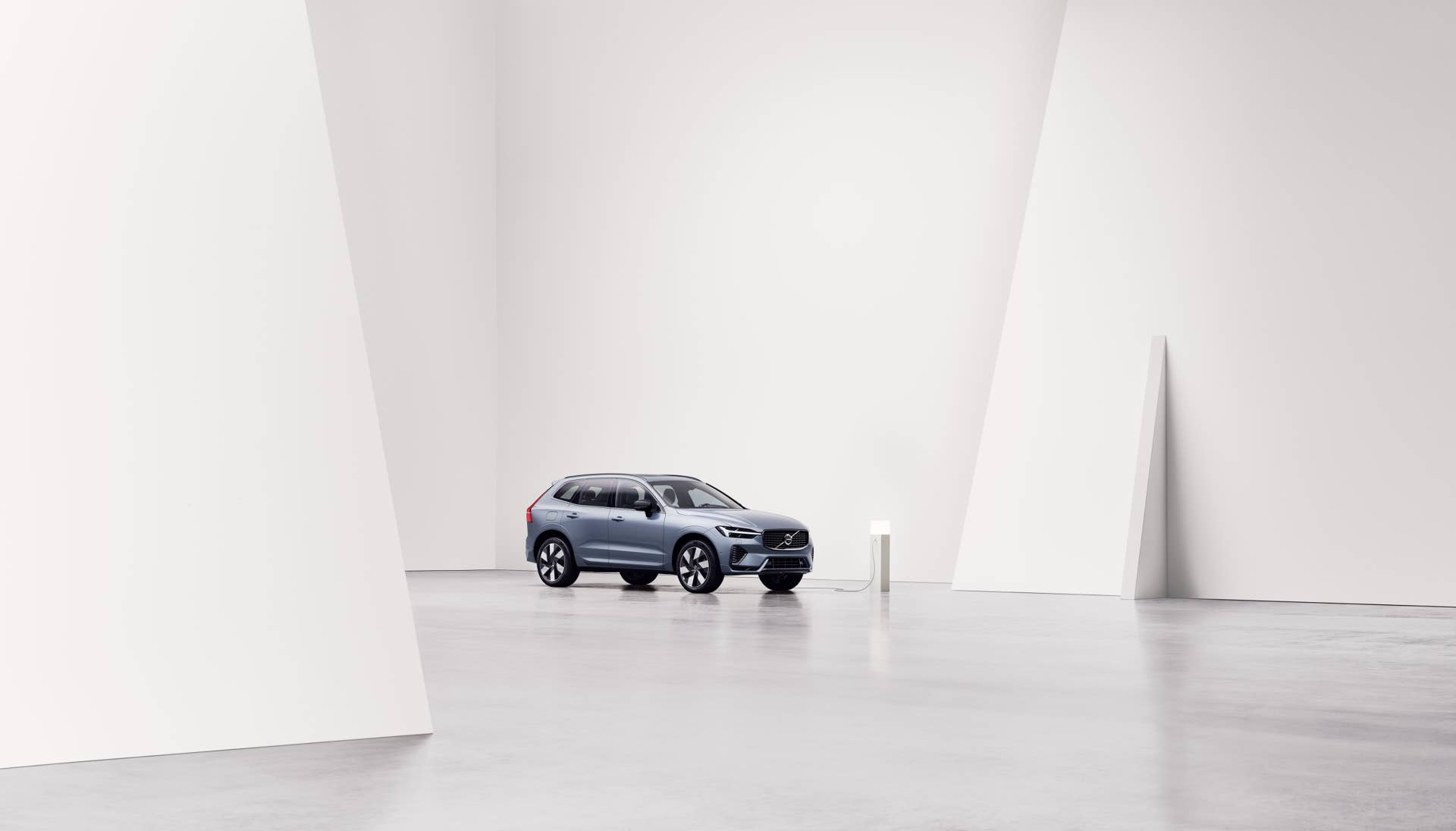
The second powertrain goes a step further: it’s a 2.0-liter turbocharged and supercharged four-cylinder engine paired with electric motors. Power is impressive, with 455 hp and 523 lb-ft of torque (combined). This plug-in hybrid electric vehicle (PHEV) can charge its 18.8 kWh lithium-ion battery at Level II, allowing up to 35 miles using just electric power. It can also achieve up to 68 mpg (gas and EV combined) and 28 mpg when only using the gas engine.
Both XC60s have impressive launch control, with less turbo-lag than some of their contemporaries. Both vehicles are paired with eight-speed automatic transmission, which is smooth and shifts efficiently, if not quickly. There is some lag in the base XC60, but it’s still quick. If you opt for the T8 PHEV, you get instant and brutal power if you’re so inclined, but driving normally, you’ll be hard-pressed to tell them apart.
Volvo
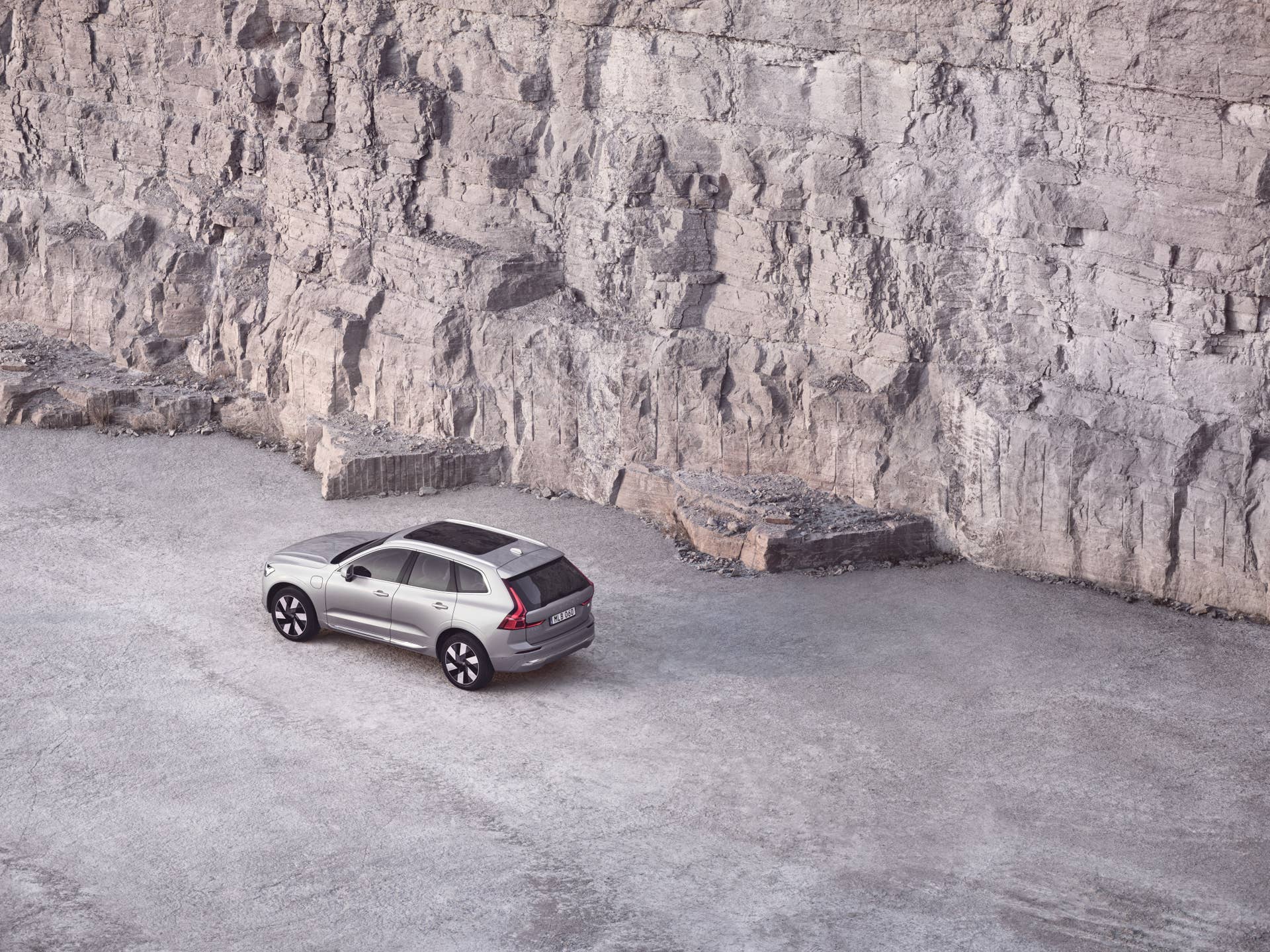
The same can’t be said for handling. They both have active all-wheel drive (AWD) systems that push over 70 percent of the power to the rear wheels when needed. However, they are calibrated differently, and thanks to the battery, the T8 is heavier. Both have excellent grip and go exactly where you point them, but the base model feels more relaxed to me, whereas the T8 is sportier.
The ride quality is a bit stiff, and this might have something to do with the 21-inch wheels and stiff rubber in one of my testers. The seats are on the stiff side as well, which doesn’t help the matter.
The Genesis GV80 gives you power and luxury
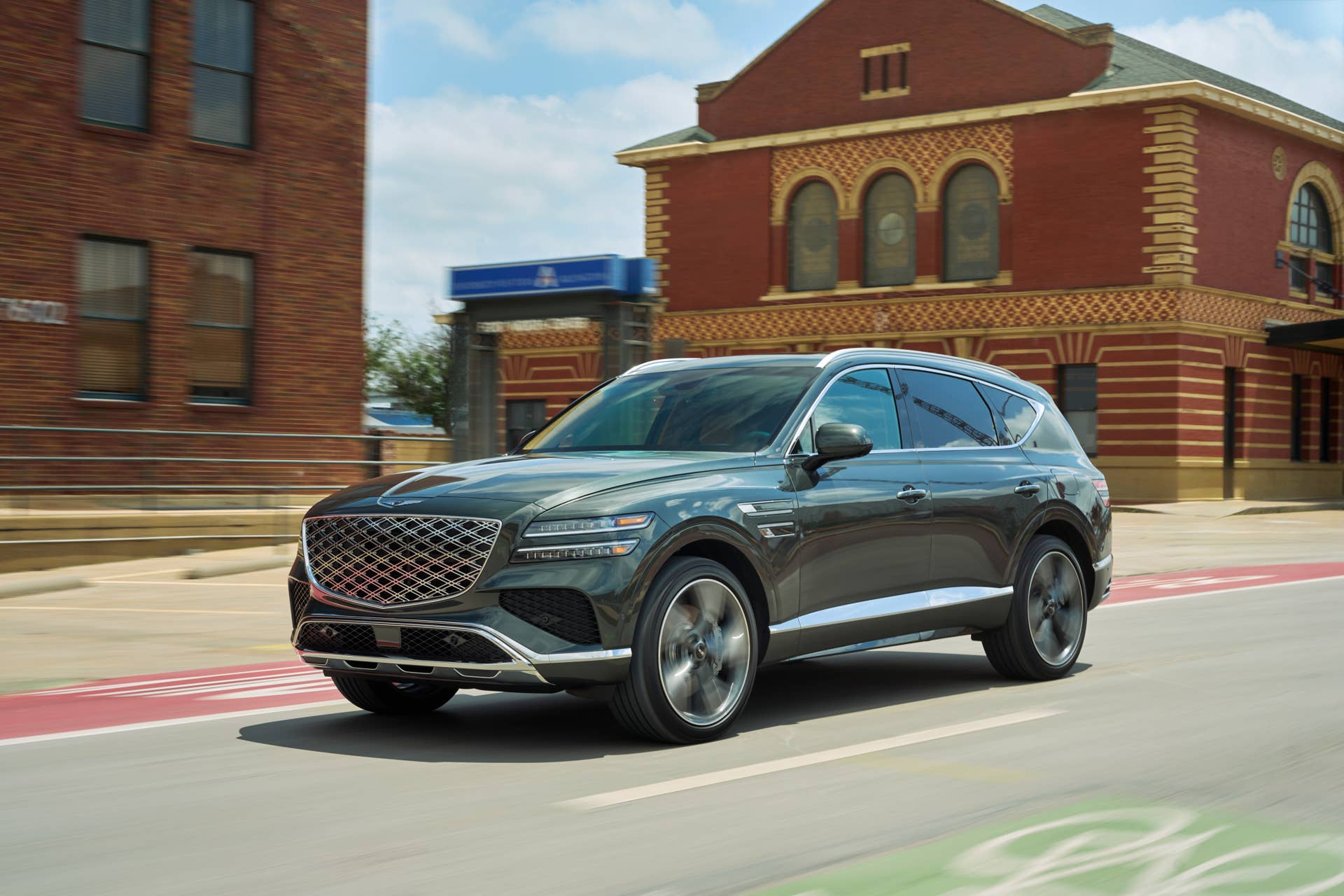
Genesis is a bit old school with their powertrains, at least on their internal combustion vehicles. The Genesis GV80 has two powertrains, and both are zingers for people who like thrust.
Genesis
The base engine is a turbocharged 2.5-liter four-cylinder that makes 300 hp and 311 lb-ft of torque. Torque is the name of the game with this gem, as it spools up quickly and gives you that max torque at under 1,700 rpm. Even a heavy vehicle like the GV80, weighing in at approximately 4,700 to 5100 lbs, moves with authority with that kind of power. The EPA estimates the 2.5T gets 21 mpg combined.
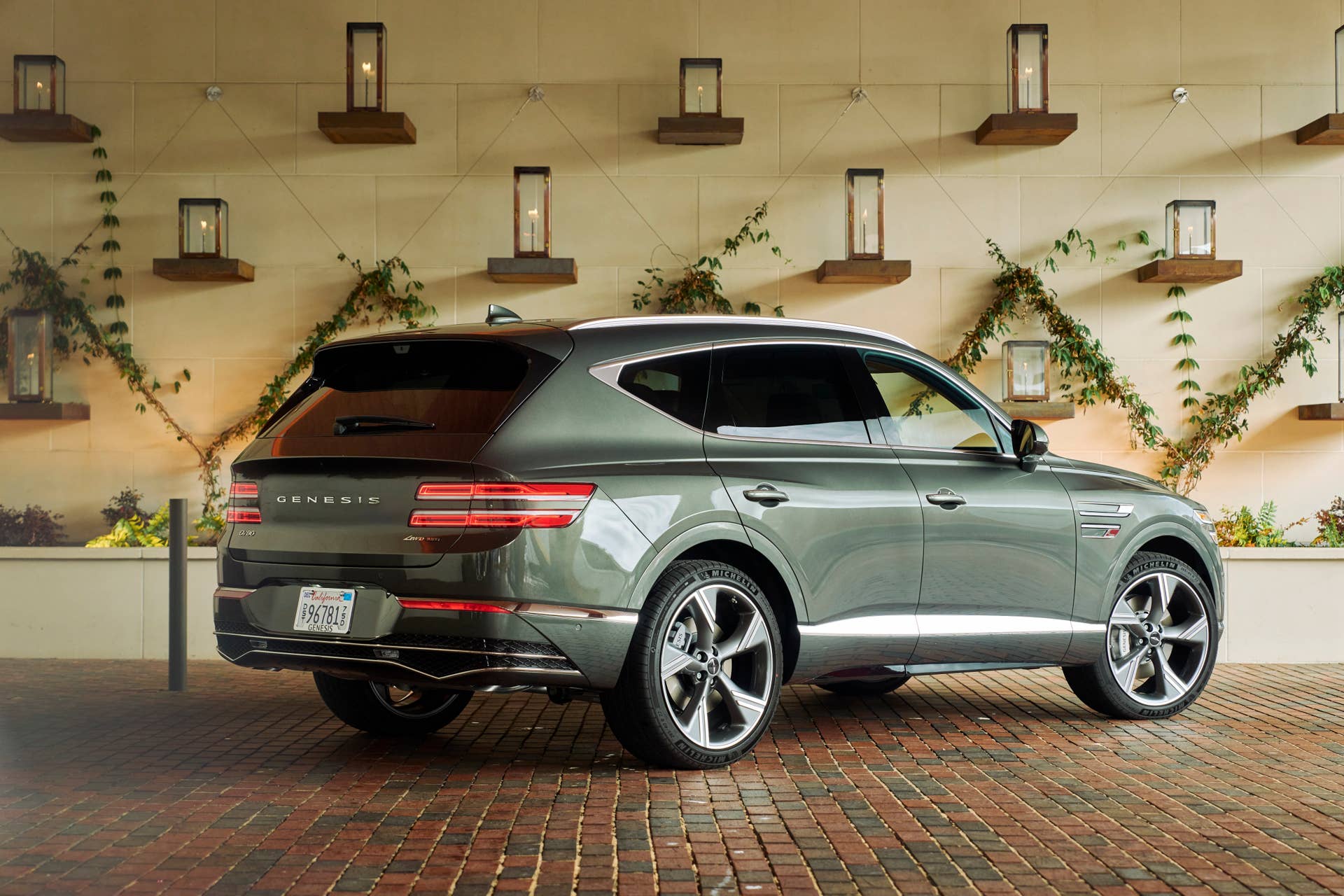
If you opt for the twin-turbocharged 3.5-liter V6, you get 375 hp and 395 lb-ft of torque but a woeful 19 mpg combined. Although it’s not as fast as the Volvo XC60 T8, it feels a bit more connected and athletic to me. At the same time, you get a much more luxurious ride out of both models. They are just a bit less firm but still hold corners with authority.
Genesis
Even its little brother, the GV70, has the mix of luxury ride and sporty capability baked in. The Genesis engineers did a great job tuning the GV80s suspension. The steering is impressive, too, and the overall experience is on par with the best in class.
External and internal design makes all the difference for Volvo
Volvo’s design aesthetic has always kept brand recognition at the forefront while sporting some slick and strong designs in every vehicle built.
The XC60, which is one of their best sellers, cannot be mistaken for any other vehicle. From the “Thor’s hammer” LED headlight design, soft curves, and rear LED design, it’s a Volvo through and through. There are also nifty upgrades like the Black Edition. which gives it a darker overall motif, but the Polestar is the most aggressive.
Volvo
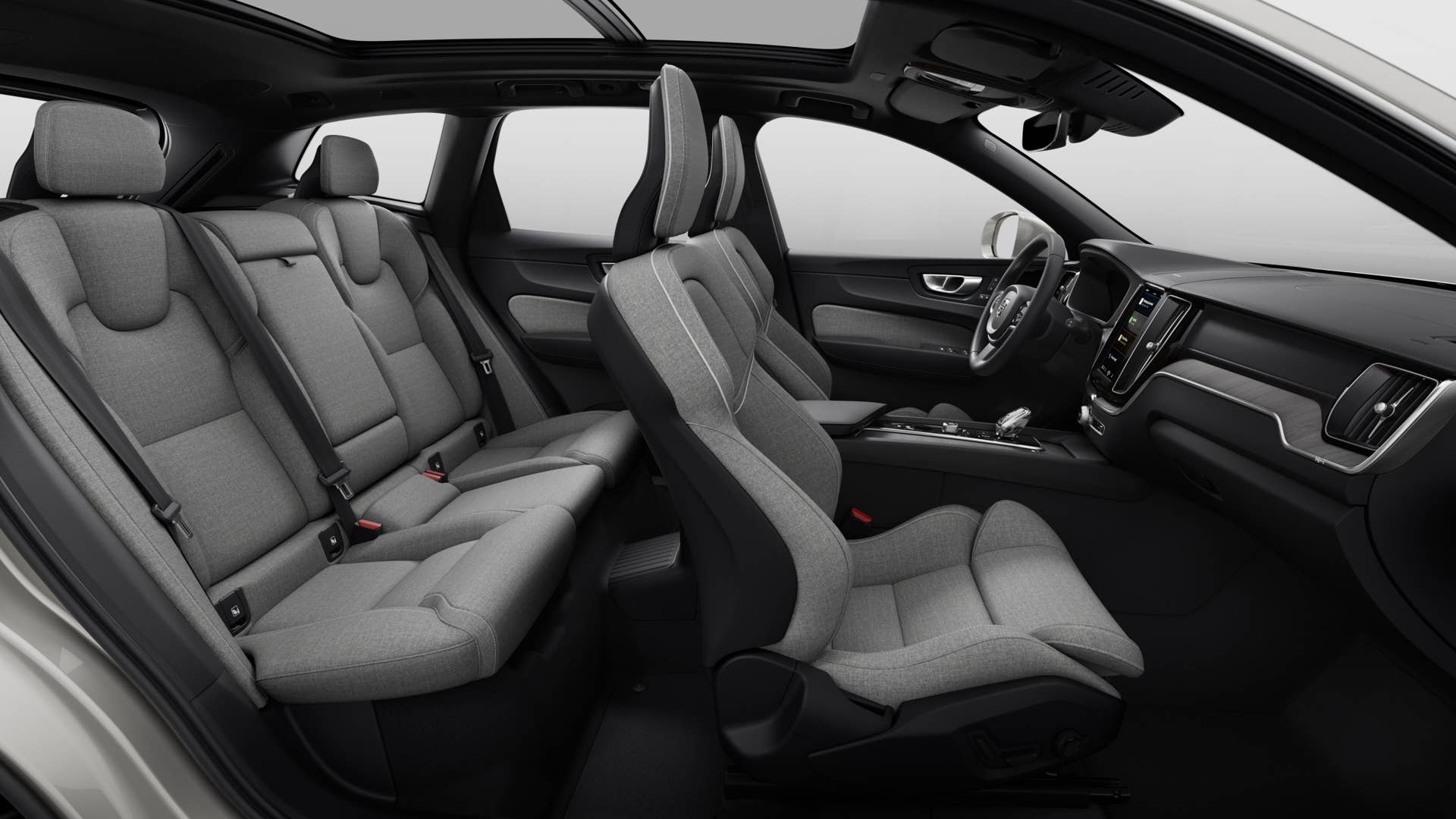
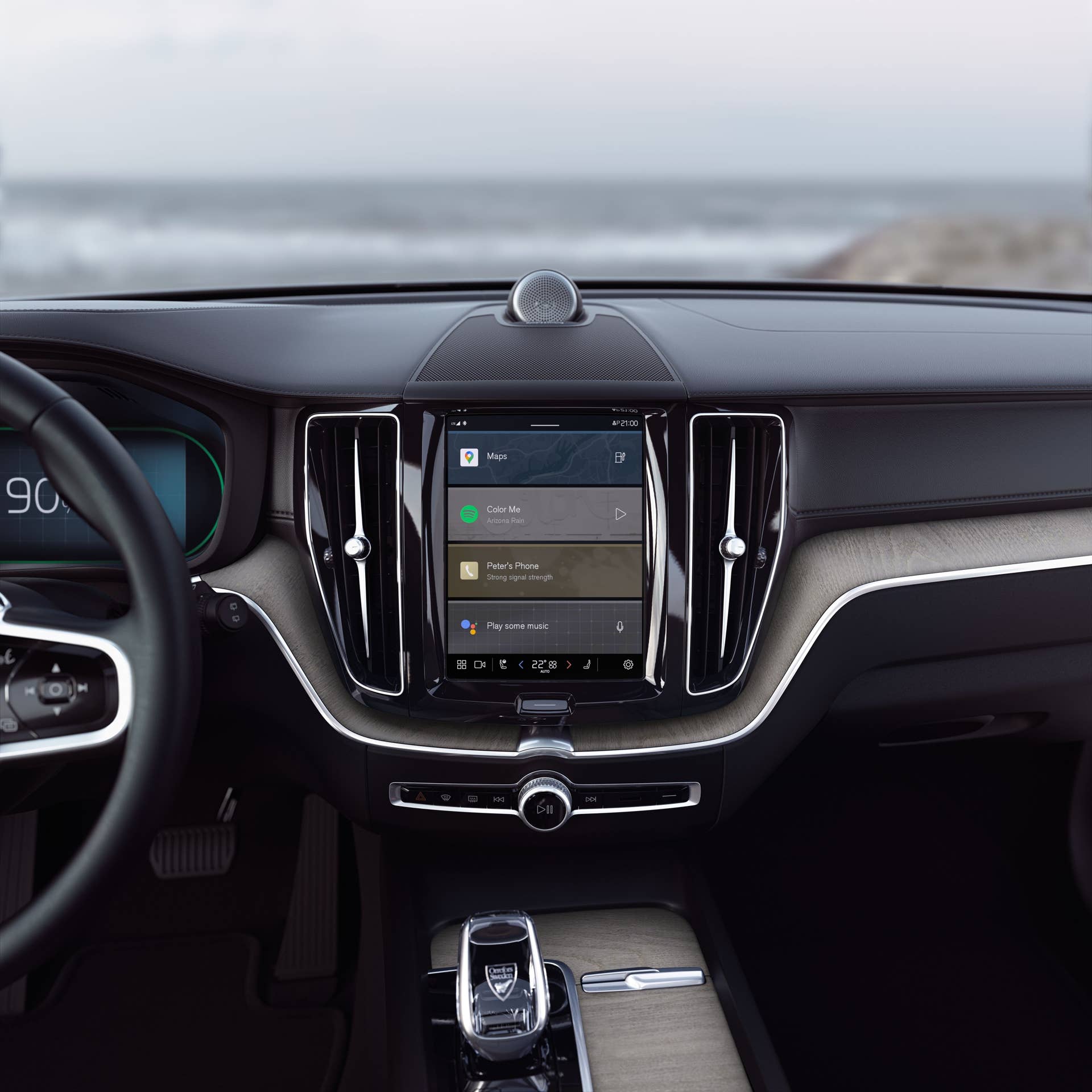
Internally, the Volvo XC60 pushes the elegant yet simple design language they’re known for a step further. Both XC60s have a 9.0-inch touchscreen infotainment system with Volvo’s latest Google-based software interface. An “Adaptive Digital Display” with a 12.3-inch screen allows for four screen themes, including Default, Minimalistic, Chrome, and Performance.
Volvo
The UX is a bit of a chore to use, and there are more intuitive systems out there. Scrolling and using the system efficiently takes practice, but I do like the way Volvo does their HUDs (Heads Up Displays), as they are sized well and easy to read.
The rest of the interior is a bit drab for some but contemporary for others. As I stated earlier, the padding in the seats is on the stiffer side, but they ease up a bit after some use. Most passengers seemed comfortable and at ease inside.
The Genesis GV80’s design ethic is completely different
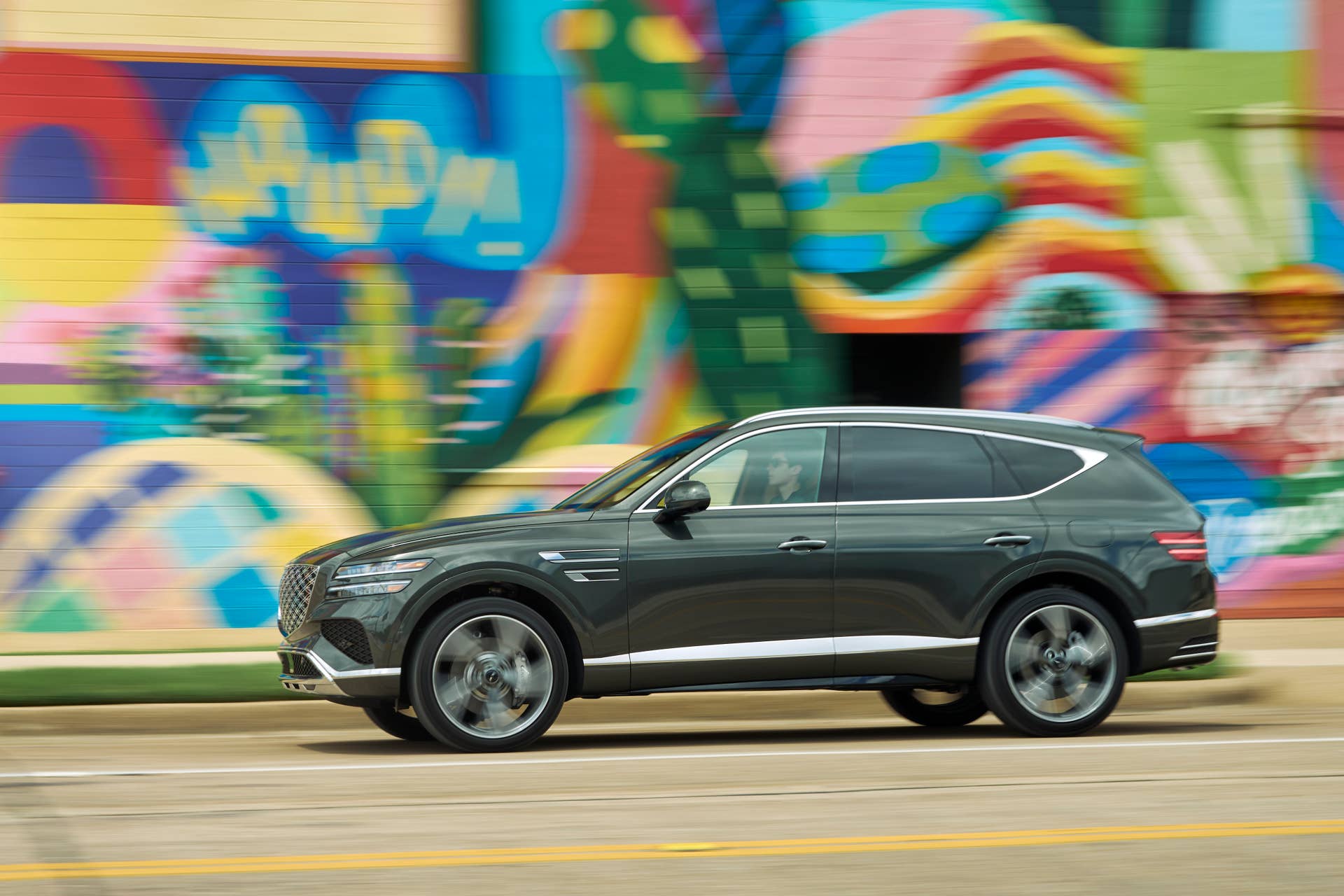
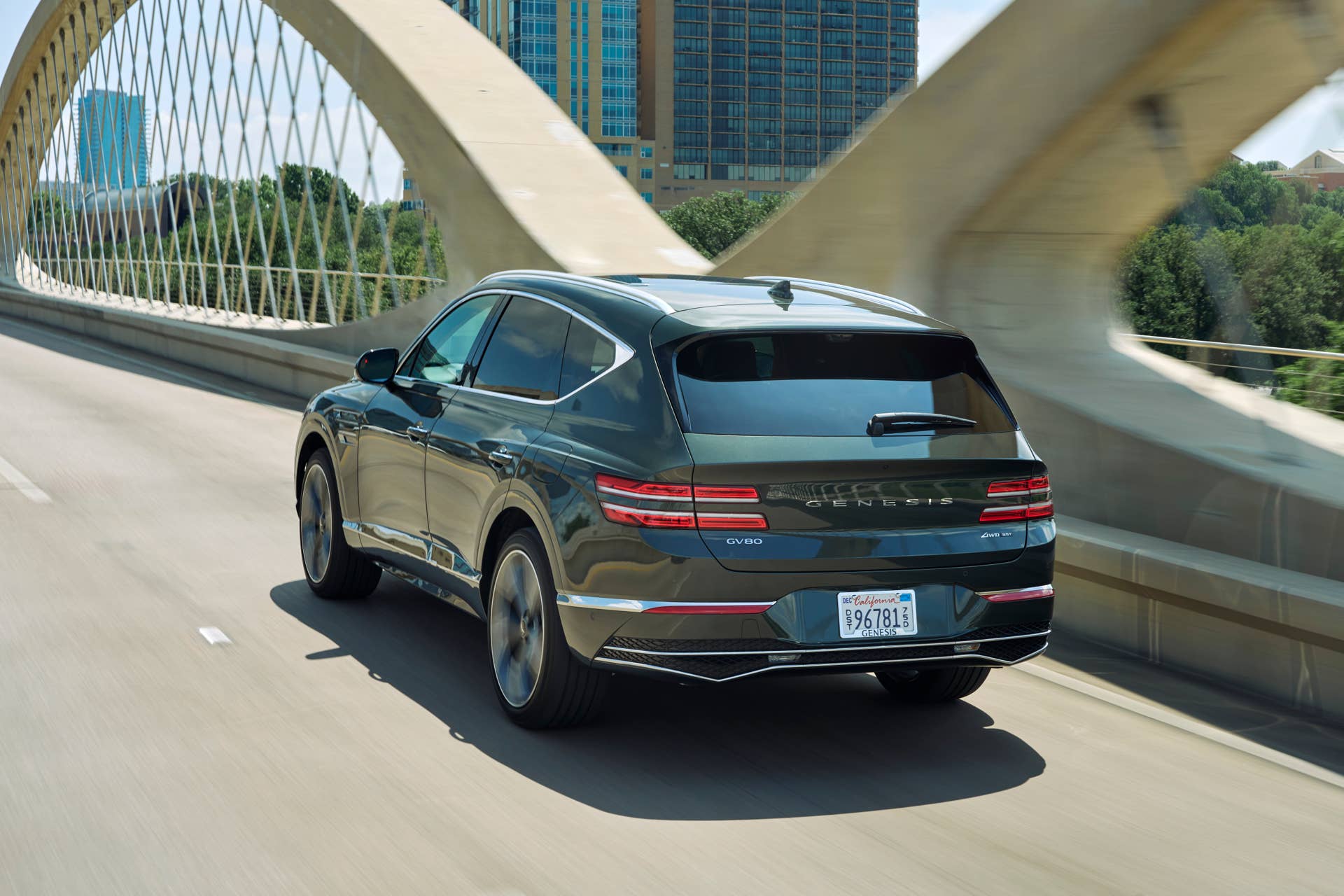
Externally, the Genesis GV80 gives you two choices: an SUV or a “Coupe” body design. The difference is in the rear of the vehicle, where the box-shaped rear cargo area can take on a sleeker fastback design. It looks cool to some, but it eats into interior space as well. The bold, sliced LED headlight and taillight designs remain the same on both body styles. Like Volvo, it’s hard to mistake the GV80 for any other automaker’s vehicle.
Genesis
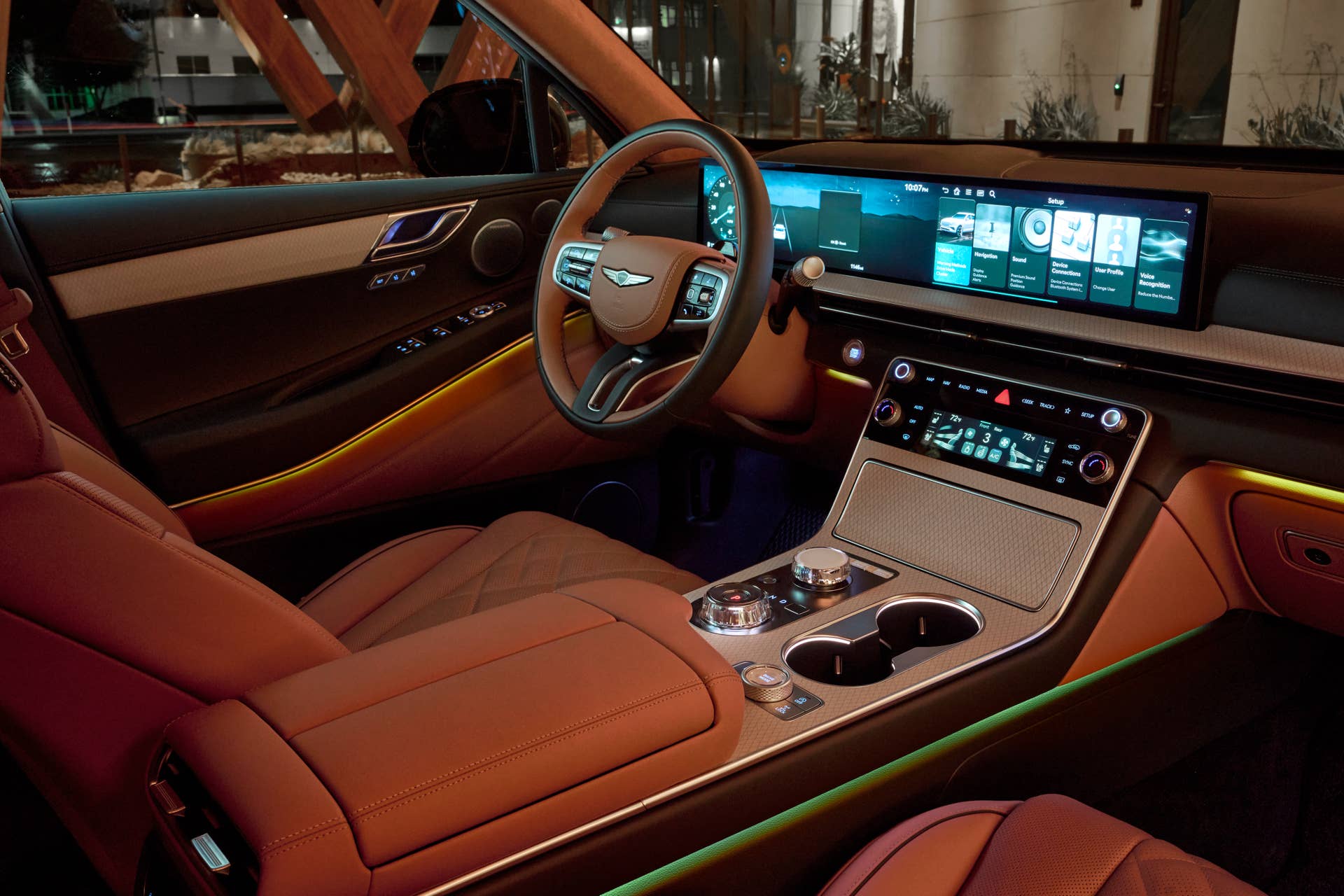
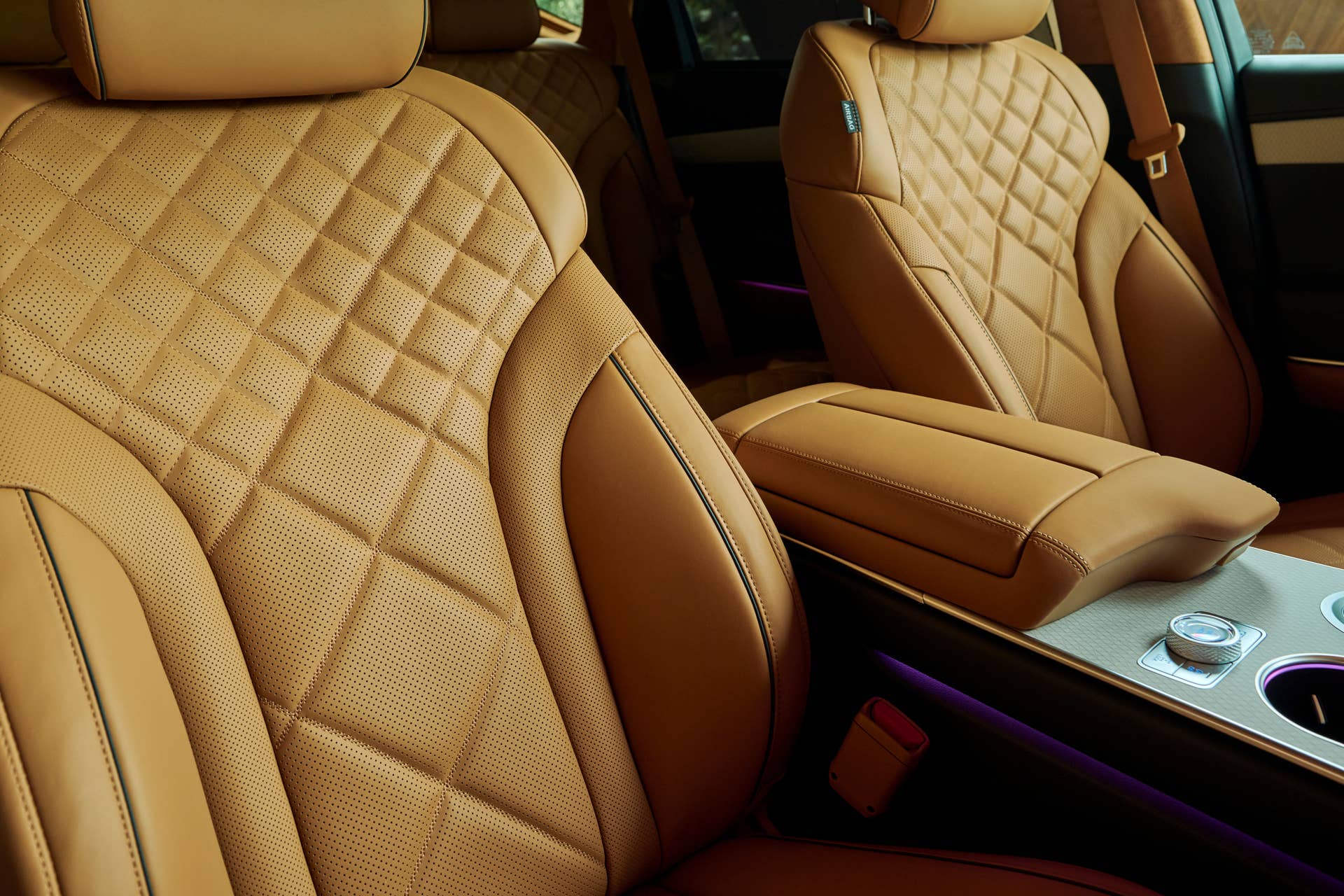
Internally, the GV80 went full luxury, and punches well above its weight class with the overall layout. The diamond-stitched patterns throughout, mixed in with lavish dashes of leather, chrome, and wood, give the GV80 one of the nicest interiors I’ve experienced in this class.
A massive 27-inch screen replaces the previous two-screen setup and stretches from the center cluster to the center of the vehicle. It acts like two screens but is uniform and incorporates just about all features. To be honest, I kind of preferred the two screen solution, as it was an easier interface to work with. Still, this huge screen makes the luxury interior feel contemporary.
Genesis
One additional thing I must mention is the GV80’s third-row seat option. It’s on the smaller side, but it does make the car more utilitarian for the family. If that’s your main goal, I would wait until the bigger GV90 hits the market before stuffing your family into the GV80.
The pricing truly makes all the difference
The base model 2025 Volvo XC60 starts at $48,345. Beef it up with options like the Black Edition, and you’re looking at a $60,000+ price tag. If you opt for the T8 PHEV XC60, starting prices hover at $59,345 or just over $70,000 with the fully loaded Black Edition.
Volvo
Genesis
The Genesis is pricier. The GV80 base model starts at $58,200 and goes over $82,000 for a 3.5-T Prestige package with the $1,500 Storr green matte finish. The “extremely limited” 2025 GV80 Coupe 3.5T E-SC MHEV (mild hybrid electric) AWD, which was not part of this comparison, can hit nearly $90,000 if fully loaded.
Final thoughts
I’m a huge fan of both vehicles. The Volvo XC60 gives you a lot of tech, performance, and an efficient powertrain, no matter the trim level. Sure, the T8 is fast as hell and super efficient, but the base model is fine for a majority of buyers. It’s solid.
Genesis
On the other hand, the Genesis GV80 offers swagger and luxury that is simply not baked into the DNA of many luxury competitors. It is a pricey vehicle, to be sure, and less efficient than many, too, but it undercuts the best from Germany, Japan, and others in terms of bang for the buck.
As alternatives go, both vehicles are packed with tech and performance that matches or bests the top dogs. I suppose that’s what makes them compelling: they are not quite as pretentious as others, yet offer luxury, tech, and design at a high level. They are definitely worth a look.
About the author

Nathan Adlen
Contributing Writer, Autoblog