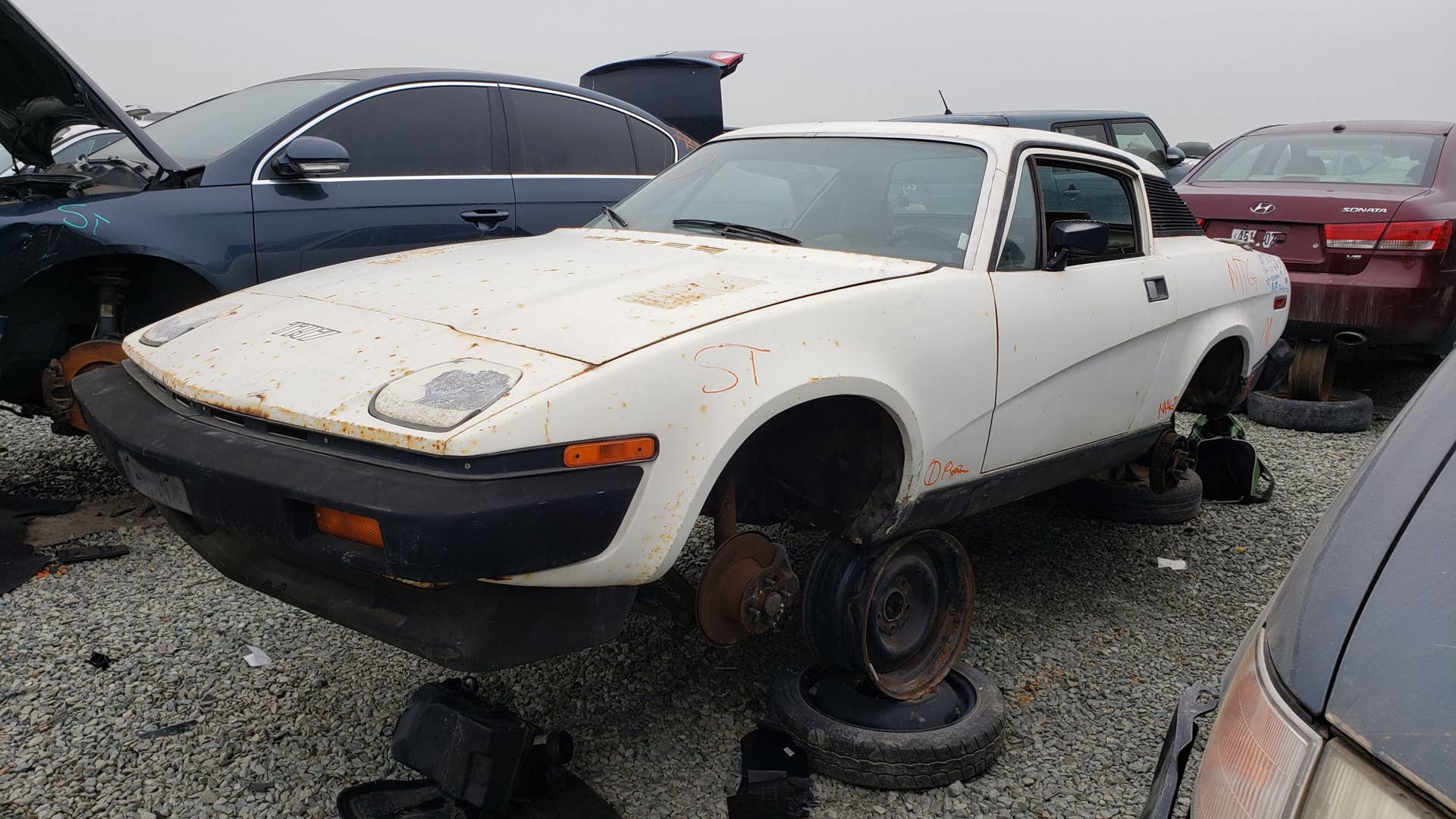
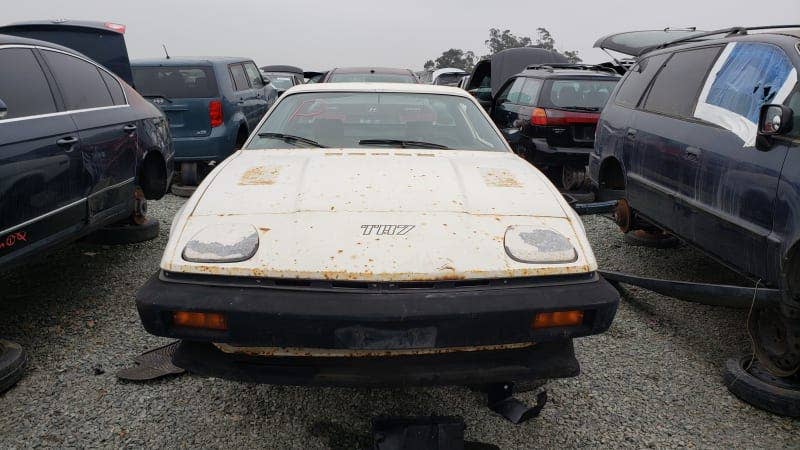
North American sales of the TR7 overlapped those of the TR6 into 1976, then continued through 1981. That was a year longer than new MGs were available here.
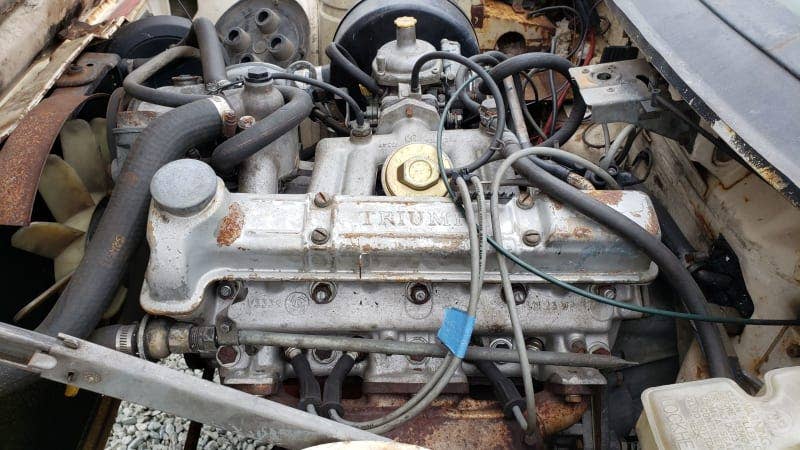
The TR7’s engine was a SOHC slant-four, developed in partnership with Saab and first installed in the Saab 99 and Triumph Dolomite. This one displaces 2.0 liters and was rated at 85.5 horsepower (British Leyland didn’t hesitate to claim half-horses).
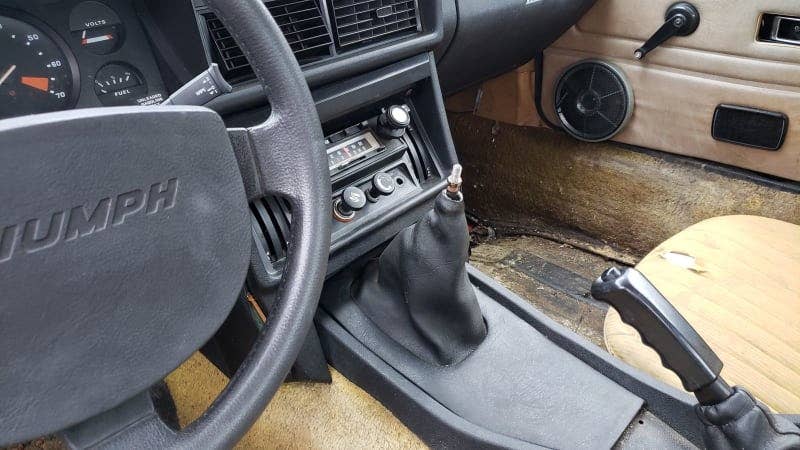
The transmission in this car is a five-speed manual. A three-speed automatic was available, but I’ve never seen a two-pedal TR7.
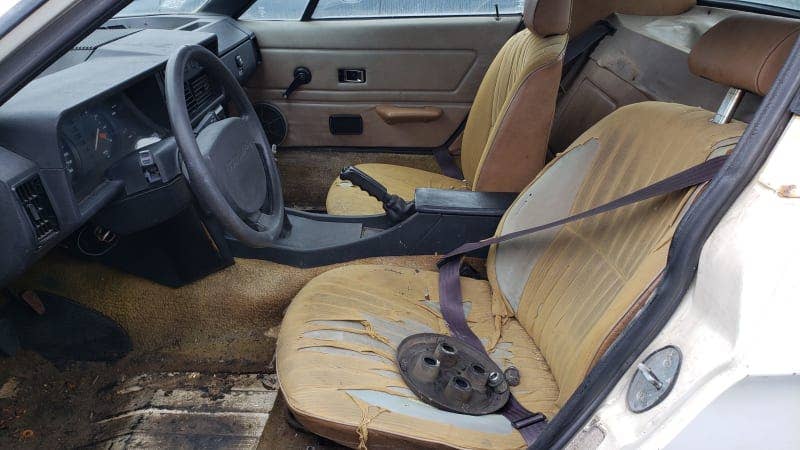
This one isn’t too badly trashed, by the standards of British cars that sat forgotten in driveways for decades.
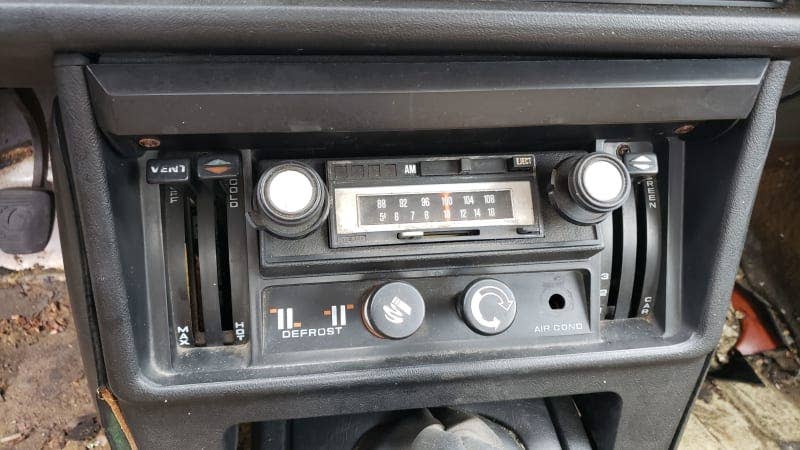
It has what appears to be a factory AM/FM/8-track player plus air conditioning. The radio cost $198 and the A/C was $500, which comes to $885 and $2,234 in 2023 dollars.
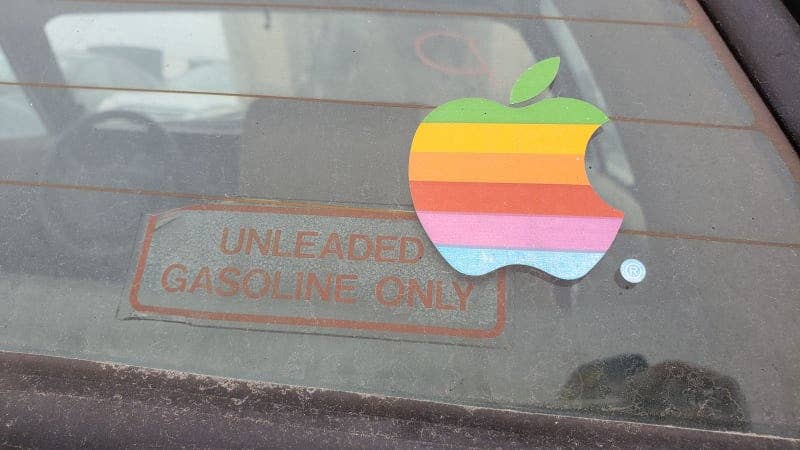
Since this car ends its life in the San Francisco Bay Area, it’s appropriate that it has a sticker bearing the Apple Computer logo that was used from 1977 through 1998.
By the late 1970s, most American car shoppers were wary of British Leyland products and their iffy build quality. Still, 12,733 Spitfires and TR7s were sold in the United States for the 1979 model year.
No other sports car looks like it. No other sports car drives like it.