
Even GM’s Workhorse Has a Match
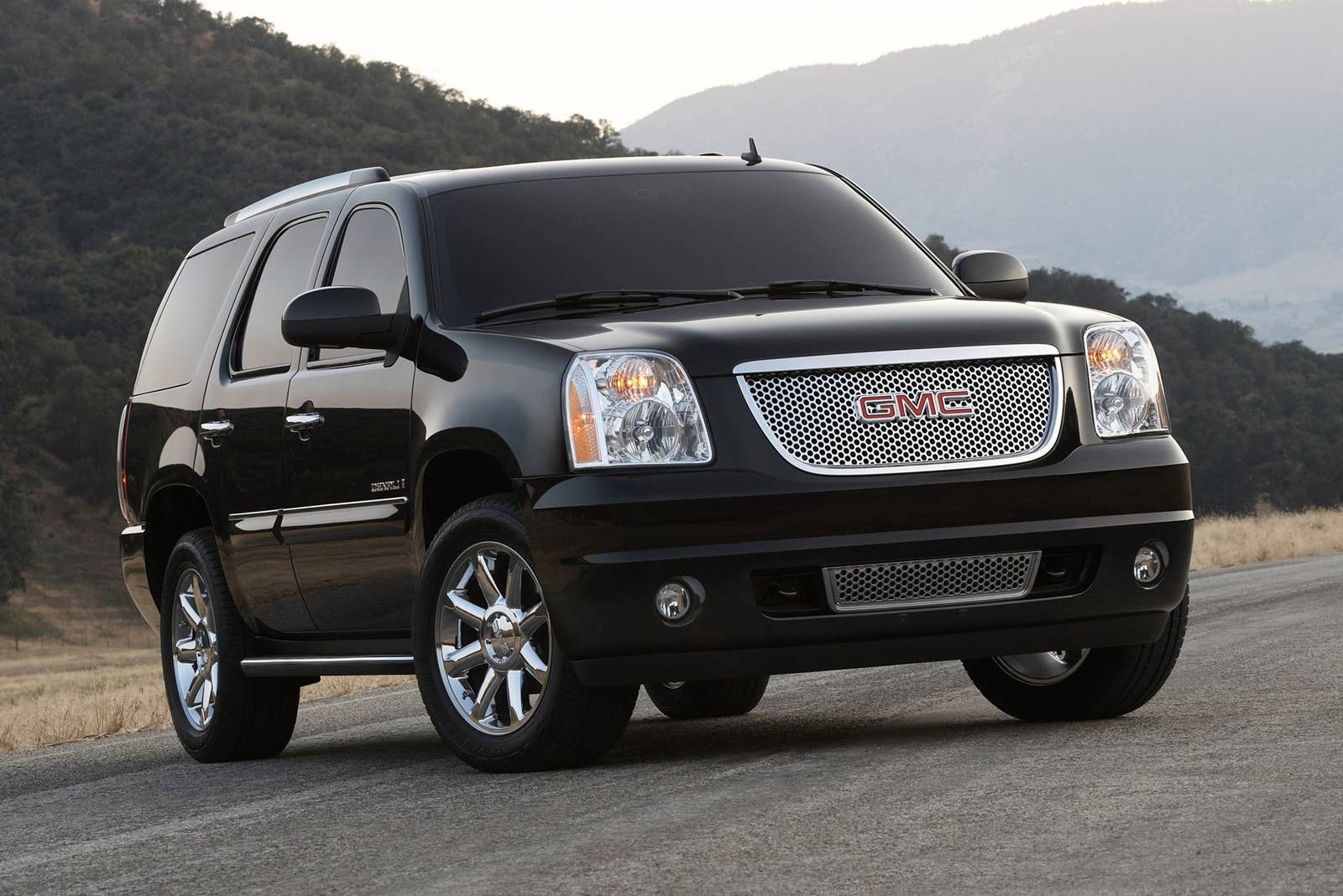
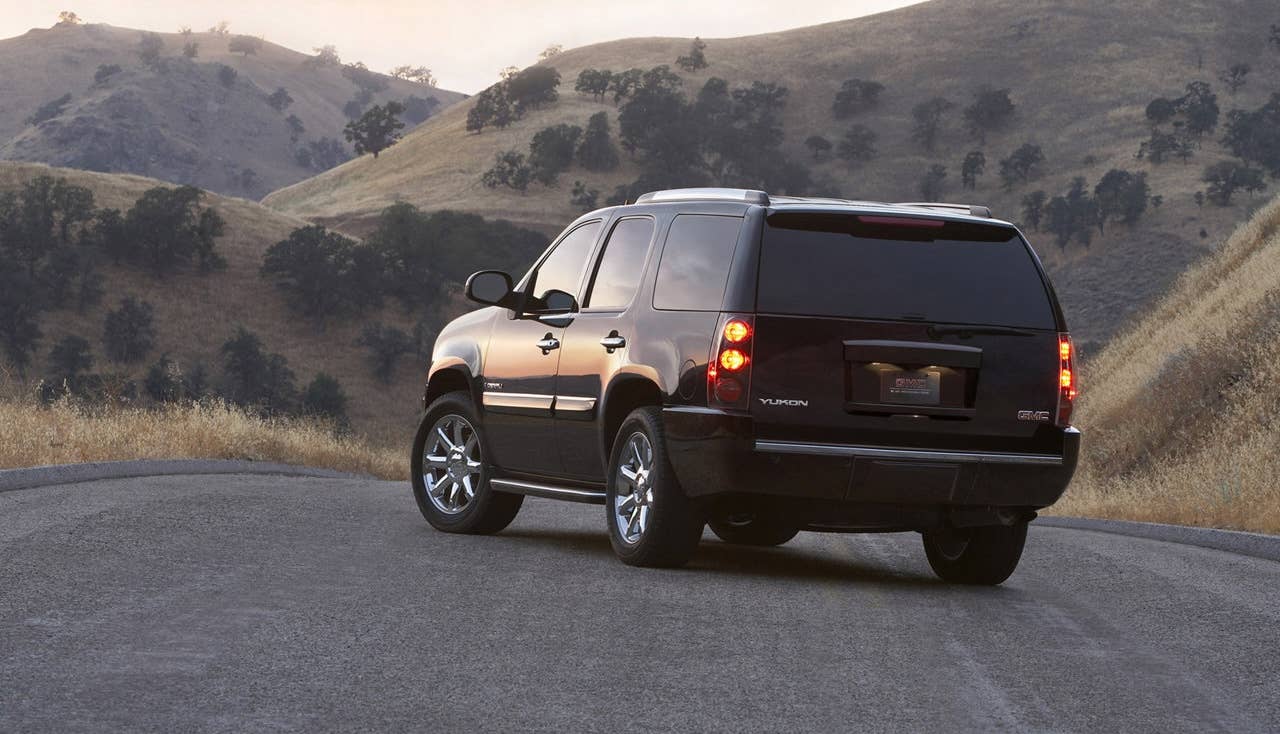
Based on the LS small block engine family, GM’s 6.2-liter L92 V8 was first used in the automaker’s line of SUVs and trucks in 2007, including premium models such as the Cadillac Escalade and GMC Yukon Denali. Its all-aluminum block, solid internals, and the absence of cylinder deactivation systems like Active Fuel Management (AFM) in later iterations made this version of the L92 a favorite among enthusiasts for its durability and straightforward reliability. In fact, it’s common to see these engines racking up hundreds of thousands of miles with minimal issues.
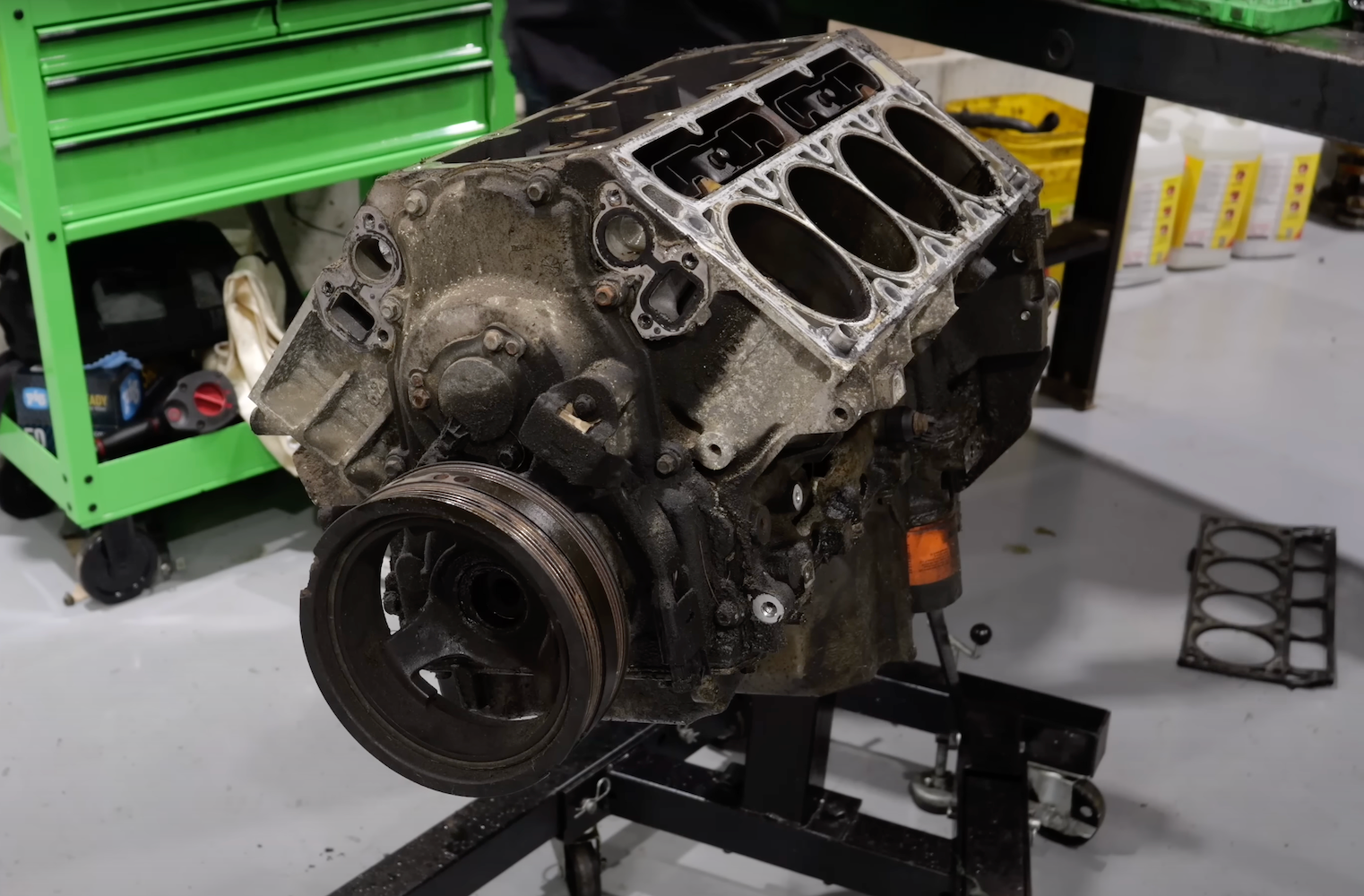
However, even the most dependable engines have their breaking points. Our favorite mechanical CSI, I Do Cars, got its hands on an L92, which came from a 2009 Yukon Denali that had reached 268,000 miles before catastrophic failure. The vehicle was abandoned and purchased with zero history, so it’s high time to discover what caused its demise.
What Caused This V8 to Bomb Itself
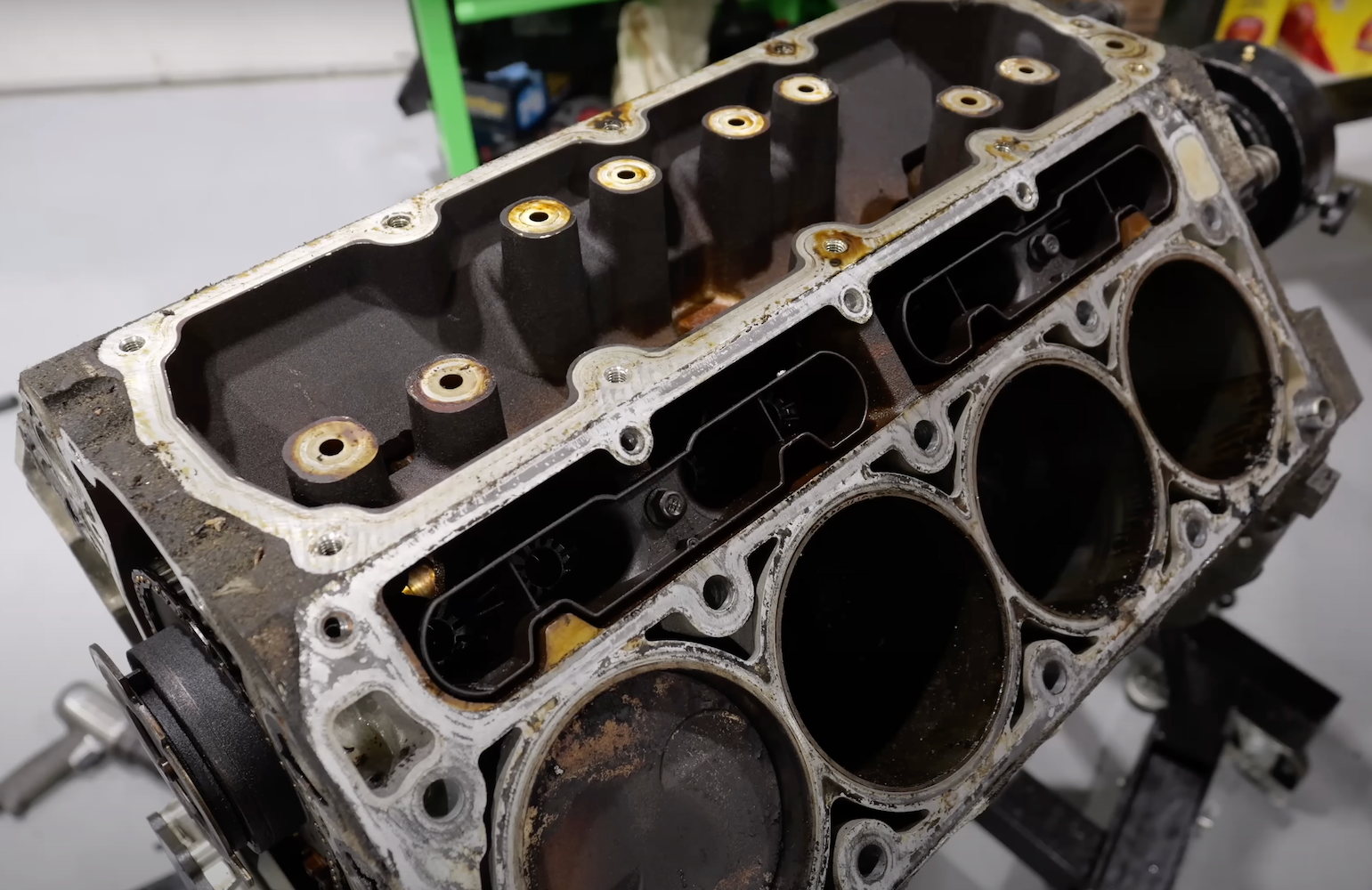
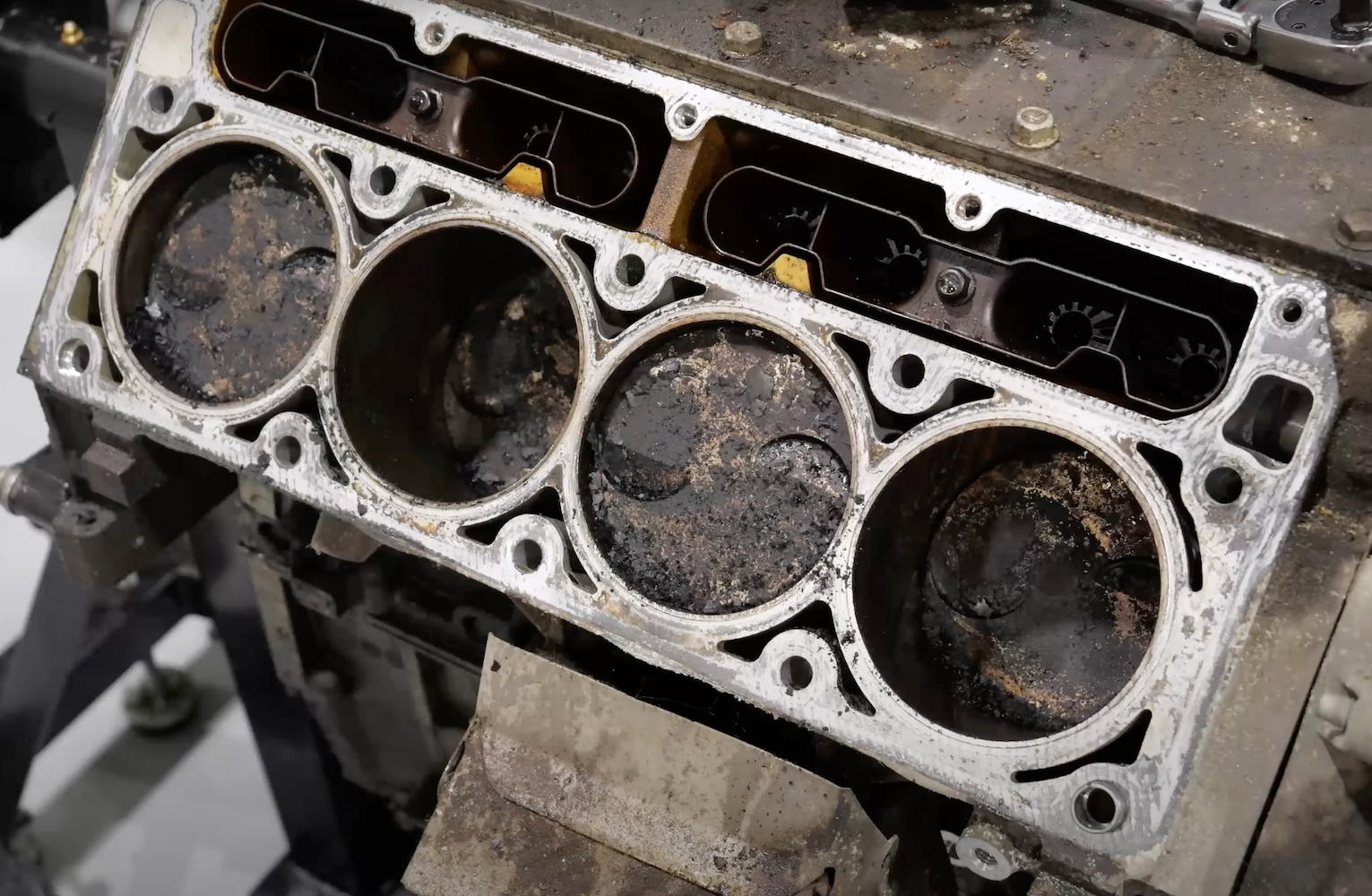
Things looked grim from the get-go. The engine had multiple holes in the block, a cracked oil pan, and was packed with carbon deposits. The spark plugs told nothing different – one was completely flattened, and the others exhibited evidence of extreme oil burning.
Internally, things only got worse. A piston had been obliterated, its connecting rod snapped, and debris had scattered throughout the oiling system and crankcase. The cylinder head showed deep pitting in the combustion chamber, and the valvetrain was bathed in varnish, clear-cut evidence of prolonged poor maintenance.
However, the most telling clue came in the form of a tiny fragment: a piece of a valve seat – a known, if uncommon, issue in GM’s rectangle-port LS heads like the L92’s. Once the seat dislodged, it held the valve open just long enough for the piston to strike it, shattering both and triggering a chain reaction that destroyed nearly everything inside.
I Do Cars/YouTube
I Do Cars/YouTube
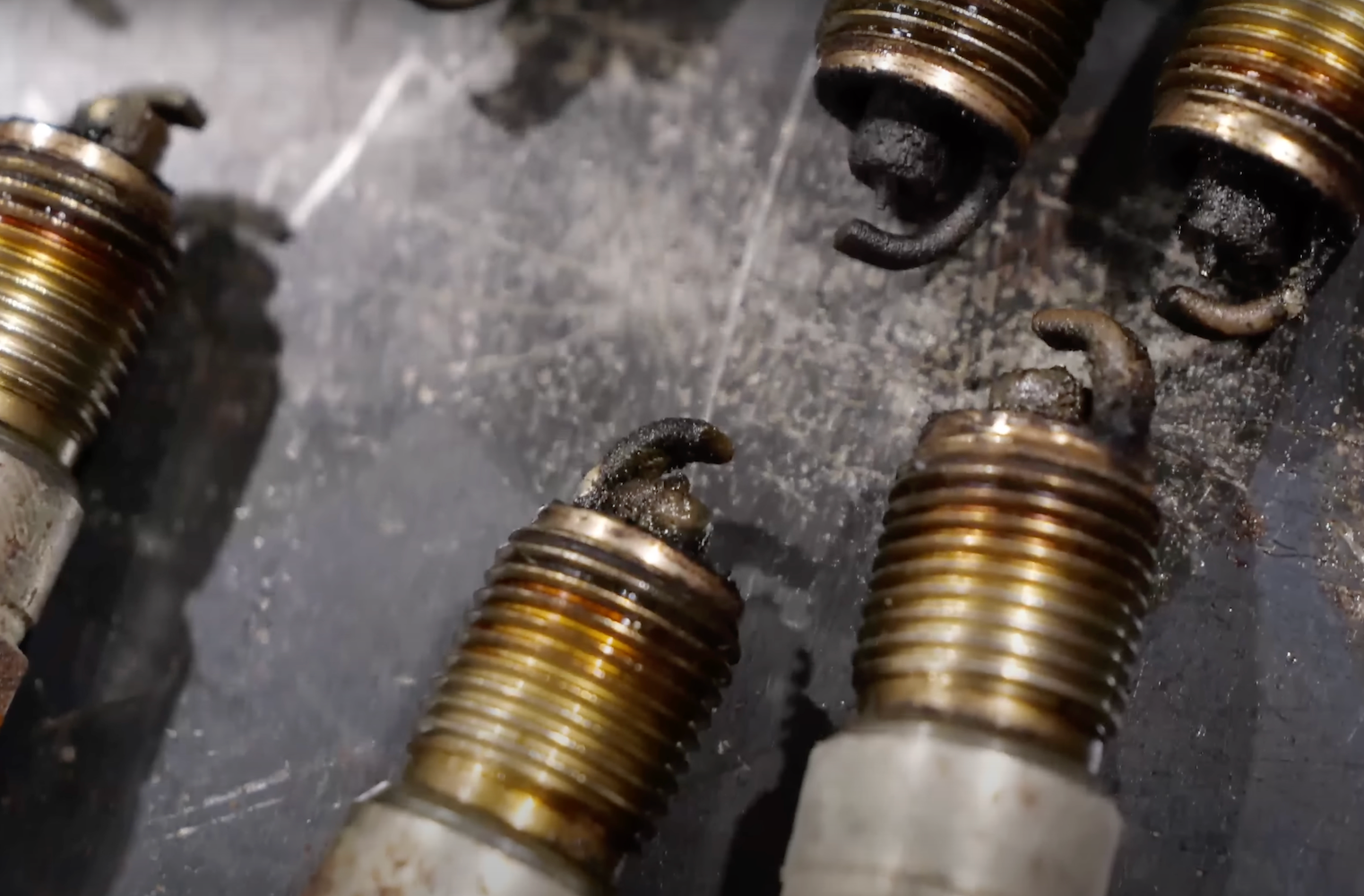
I Do Cars/YouTube
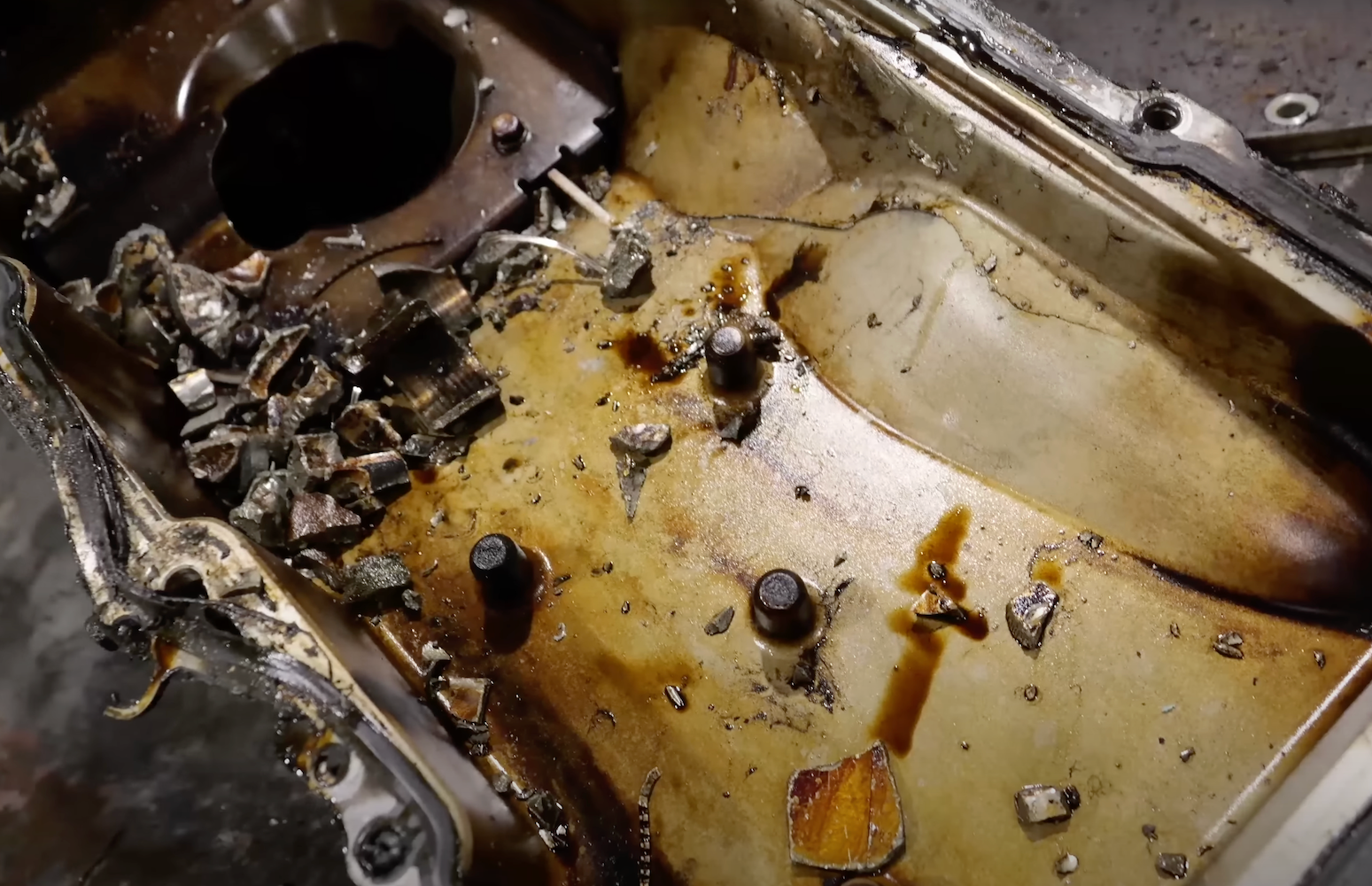
I Do Cars/YouTube
The Overheating Connection
So what causes valve seats to drop in the first place? Overheating. The aluminum cylinder heads and steel valve seats expand at different rates, and when temps spike – often from low coolant, poor airflow, or simply neglect – the seats can loosen. Once that happens, it’s only a matter of time.
I Do Cars notes that early detection can prevent total loss, but in this case, the signs were either ignored or went unnoticed. The L92 may be a tank, but even tanks are no match when the temperature goes excessively up.
GMC
GMC
Shop These Amazon Prime Day + Walmart Deals
Our editors scoured the very best deals on the web.











About the author

Jacob Oliva
Senior Editor, Autoblog