
WASHINGTON – Many motorists don’t know it, but it’s likely that every time they get behind the wheel, there’s a snitch along for the ride.
This week ended the public comment period on a proposed law that would put so-called black boxes in every new car sold by September 1, 2014. The thing is, most cars already have them unbeknownst to many drivers.
Automakers have been quietly tucking the devices, which automatically record the actions of drivers and the responses of their vehicles in a continuous information loop, into most new cars for years.
When a car is involved in a crash or when its airbags deploy, inputs from the vehicle’s sensors during the 5 to 10 seconds before impact are automatically preserved. That’s usually enough to record things like how fast the car was traveling and whether the driver applied the brake, was steering erratically or had a seat belt on. This data has been used recently, for example, to determine what was happening in cars before accidents when some Toyota owners were claiming their cars were accelerating out of control as they were driving.
The idea behind mandating black box data recorders is to gather information that can help investigators determine the causes of accidents and lead to safer vehicles. But privacy advocates say government regulators and automakers are spreading an intrusive technology without first putting in place policies to prevent misuse of the information collected.
Data collected by the recorders is increasingly showing up in lawsuits, criminal cases and high-profile accidents. Massachusetts Lt. Gov. Timothy Murray initially said that he wasn’t speeding and that he was wearing his seat belt when he crashed a government-owned car last year. But the Ford Crown Victoria’s data recorder told a different story: It showed the car was traveling more than 100 mph and Murray wasn’t belted in.
In 2007, then-New Jersey Gov. Jon Corzine was seriously injured in the crash of an SUV driven by a state trooper. Corzine was a passenger. The SUV’s recorder showed the vehicle was traveling 91 mph on a parkway where the speed limit was 65 mph, and Corzine didn’t have his seat belt on.
In this way, the black boxes can nail liars trying to blame their cars for bad driving.
There’s no opt-out. It’s extremely difficult for car owners to disable the recorders. Although some vehicle models have had recorders since the early 1990s, a federal requirement that automakers disclose their existence in owner’s manuals didn’t go into effect until three months ago. Automakers that voluntarily put recorders in vehicles are also now required to gather a minimum of 15 types of data.
Besides the upcoming proposal to put recorders in all new vehicles, the traffic safety administration is also considering expanding the data requirement to include as many as 30 additional types of data such as whether the vehicle’s electronic stability control was engaged, the driver’s seat position or whether the front-seat passenger was belted in. Some manufacturers already are collecting the information. Engineers have identified more than 80 data points that might be useful.
Privacy complaints have gone unheeded so far. The traffic safety administration says it doesn’t have the authority to impose limits on how the information can be used and other privacy protections. About a dozen states have some law regarding data recorders, but the rest do not.
“Right now we’re in an environment where there are no rules, there are no limits, there are no consequences and there is no transparency,” said Lillie Coney, associate director of the Electronic Privacy Information Center, a privacy advocacy group. “Most people who are operating a motor vehicle have no idea this technology is integrated into their vehicle.”
Part of the concern is that the increasing computerization of cars and the growing communications to and from vehicles like GPS navigation and General Motors‘ OnStar system could lead to unintended uses of recorder data.
“Basically your car is a computer now, so it can record all kinds of information,” said Gloria Bergquist, vice president of the Alliance of Automotive Manufacturers. “It’s a lot of the same issues you have about your computer or your smartphone and whether Google or someone else has access to the data.”
The alliance opposes the government requiring recorders in all vehicles.
Data recorders “help our engineers understand how cars perform in the real world, and we already have put them on over 90 percent of (new) vehicles without any mandate being necessary,” Bergquist said.
The National Transportation Safety Board has been pushing for recorders in all passenger vehicles since the board’s investigation of a 2003 accident in which an elderly driver plowed through an open-air market in Santa Monica, Calif. Ten people were killed and 63 were injured. The driver refused to be interviewed and his 1992 Buick LeSabre didn’t have a recorder. After ruling out other possibilities, investigators ultimately guessed that he had either mistakenly stepped on the gas pedal or had stepped on the gas and the brake pedals at the same time.
Some automakers began installing the recorders at a time when there were complaints that air bags might be causing deaths and injuries, partly to protect themselves against liability and partly to improve air bag technology. Most recorders are black boxes about the size of a deck of cards with circuit boards inside. After an accident, information is downloaded to a laptop computer using a tool unique to the vehicle’s manufacturer. As electronics in cars have increased, the kinds of data that can be recorded have grown as well. Some more recent recorders are part of the vehicle’s computers rather than a separate device.
Featured Gallery
Insure.com recently released results of a study that evaluated passenger safety in more than 750 vehicles. The study analyzed insurance rates for Personal Injury Protection (PIP) and Medical Payments (MedPay) – coverage that pays for injuries to your passengers in a crash. Simply put: The lower the rates, the safer the car for passengers.
Though the study doesn’t get into the nitty-gritty details about what makes some of the cars perform badly, all in all, the results showed that bigger is better when it comes to this type of safety.
“It’s not just the size, but also that there’s more room between the occupants and what they will interact with,” said Pete Leiss, head of crash practice at Lancaster, Pa.-based Robson Forensic.
Though small cars often perform well in crash tests, Insure.com said, sheer size of your car will ultimately go further in protecting your passengers. Click on through to see which vehicles are the best for passenger safety, and which are the worst.

Sticker Price: $46,335 – $65,680
Invoice Price: $43,092 – $61,082
Fuel Economy: 16 mpg City, 23 mpg Highway
Completely redesigned for the 2015 model year, theGMC Yukon can seat a lot of people both comfortably and safely. Safety features standard on all Yukons include four-wheel anti-lock brakes, StabiliTrak stability control system with rollover mitigation, seven airbags, including a new center mounted front airbag, tire pressure monitoring system, rear vision camera and OnStar with Automatic Crash Response.
The Yukon isn’t cheap, but you get a lot for your money, including all kinds of comfort and tech features.
Research the GMC Yukon
GMC Yukon Overview
GMC Yukon Photos & Video
GMC Yukon Local Dealer Price Quote

Sticker Price: $30,035 – $47,520
Invoice Price: $27,707 – $43,837
Fuel Economy: NA
The big, burlyF-250 is one of Ford’s heavy-duty truck offerings. It boasts loads of torque and a high towing capacity, as well as numerous safety features that help to keep passengers safe.
In addition to its large size, the F-250 works to ensure its occupants safety with traction control and electronic stability control, a hill launch assist feature and side curtain airbags. Available safety features include a reverse camera system and stolen vehicle tracking system.
Research the Ford F-250
Ford F-250 Overview
Ford F-250 Photos & Video
Ford F-250 Local Dealer Price Quote
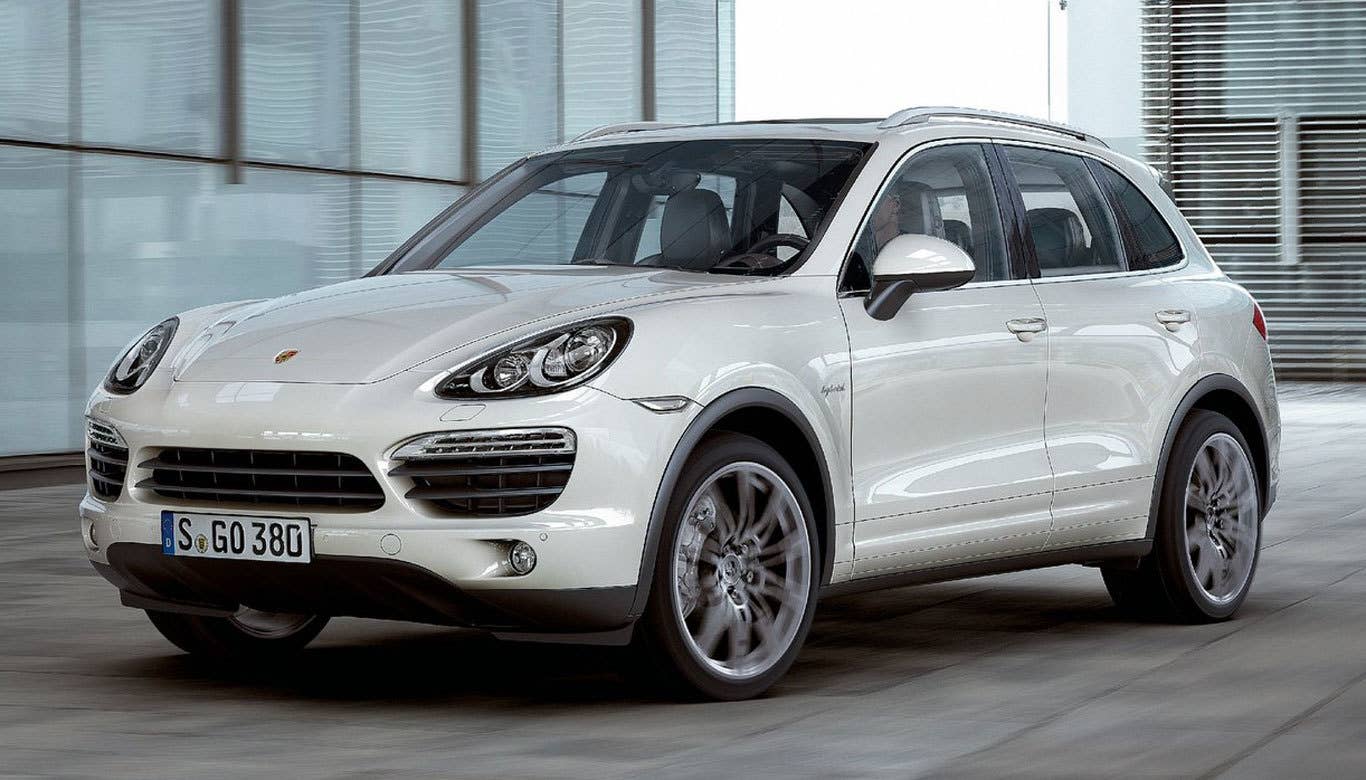
Sticker Price: $49,600 – $146,000Invoice Price: NAFuel Economy: 15 mpg City, 22 mpg Highway
Legendary Porsche driving prowess comes in SUV form with theCayenne. In addition to great driving dynamics and luxury, the Cayenne also benefits from having a wide range of safety features, including Porsche Stability Management (PSM), Porsche Active Suspension Management (PASM) and Porsche Dynamic Chassis Control (PDCC).Research the Porsche CayennePorsche Cayenne OverviewPorsche Cayenne Photos & VideoPorsche Cayenne Local Dealer Price Quote

Sticker Price: $31,565 – $53,740Invoice Price: $29,671 – $49,978Fuel Economy: NA
The big, burlySierra 2500 is available in a wide array of bed sizes, wheelbases, drive types and cab sizes, as well as a variety of trim levels. Stability control, hill start assist and a trailer sway control system are standard on the Sierra 2500 and its large size and sturdy construction make it very safe for passengers.
The Sierra is more expensive than the Chevrolet Silverado, which is a very similar truck, but it comes with a nicer interior and more features.Research the GMC Sierra 2500GMC Sierra 2500 OverviewGMC Sierra 2500 Photos & VideoGMC Sierra 2500 Local Dealer Price Quote
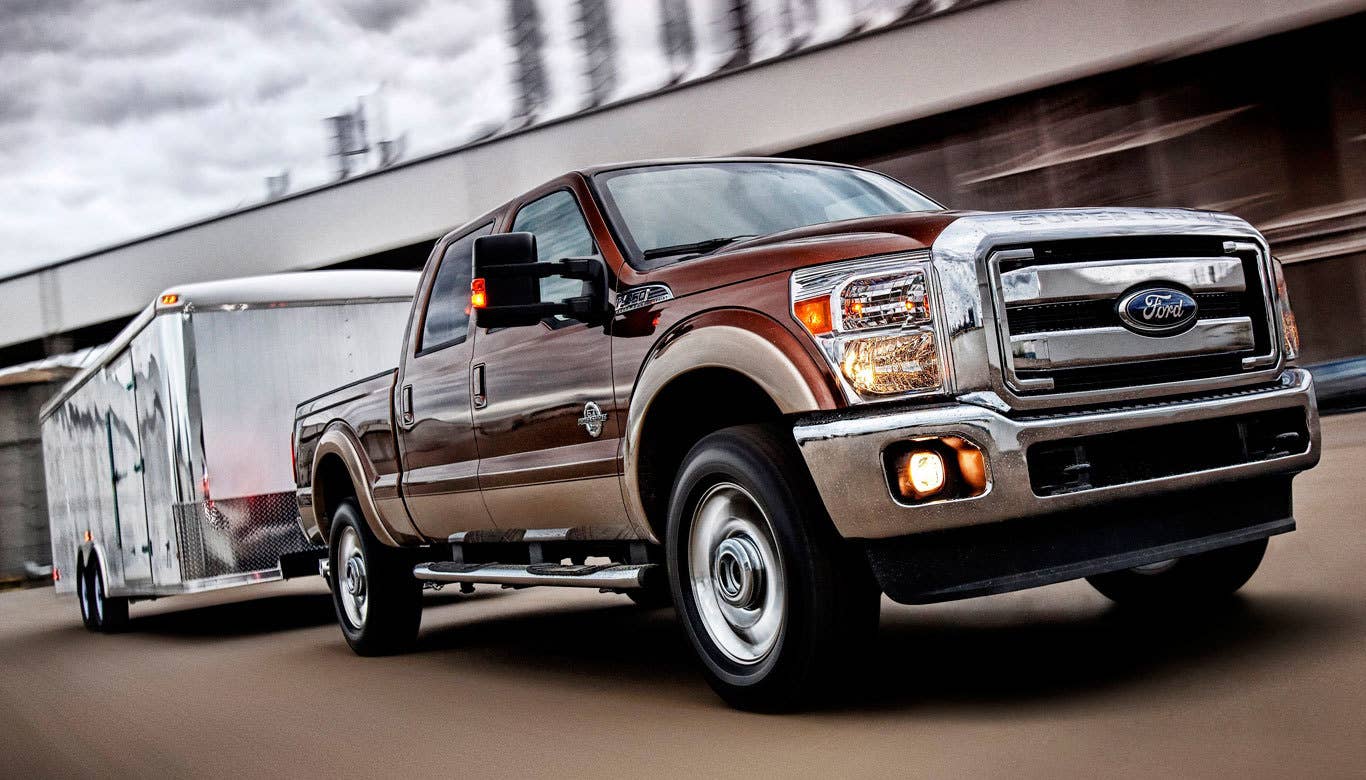
Sticker Price: $31,940 – $50,730
Invoice Price: $29,464 – $46,798
Fuel Economy: NA
The F-350, which is another Heavy Duty offering from Ford, topped the list as the safest cars for passengers, according to Insure.com. Its massive size is obviously an asset when it comes to safety, but the truck also comes numerous standard safety features (most of which can also be found on the F-250) such as traction control, electronic stability control, a hill launch assist feature and side curtain airbags.
Research the Ford F-350
Ford F-350 Overview
Ford F-350 Photos & Video
Ford F-350 Local Dealer Price Quote

Sticker Price: $11,990 – $16,890
Invoice Price: $11,703 – $16,465
Fuel Economy: 27 mpg City, 36 mpg Highway
In general, we’ve been pretty pleased with what we’ve seen from Nissan’s offering in the small sedan segment. TheVersa was recently redesigned with new styling and a new interior. Passenger safety, however, is not this car’s forte, according to Insure.com.
Research the Nissan Versa
Nissan Versa Overview
Nissan Versa Photos & Video
Nissan Versa Local Dealer Price Quote
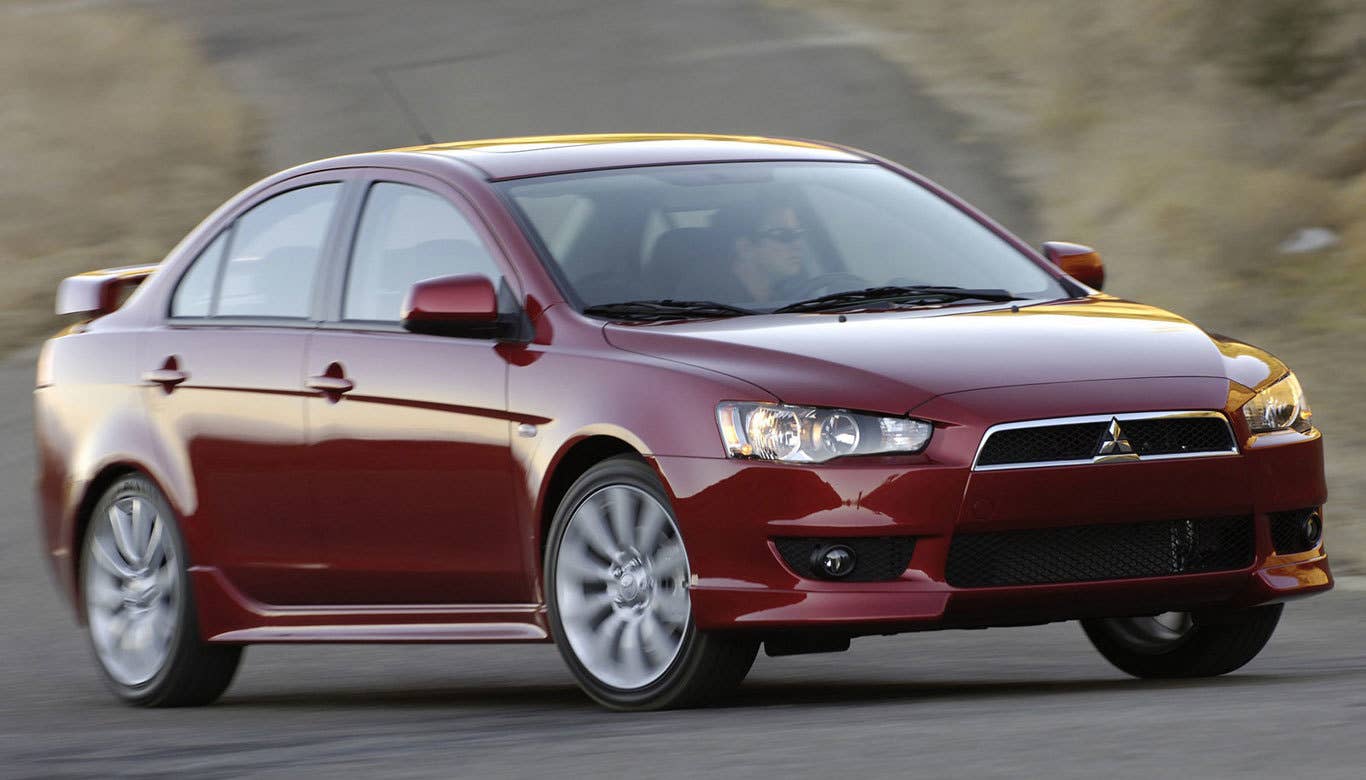
Sticker Price: $17,195 – $28,395
Invoice Price: $16,469 – $27,196
Fuel Economy: 25 mpg City, 34 mpg Highway
TheMitsubishi Lancer has hung around for quite some time now, in spite of slow sales and low name recognition. The car can be had in a couple of exciting trims and engine configurations, such as the Ralliart and Evolution, but it’s still at the bottom of the totem pole in this segment. Passenger safety is just one issue with this car.
Research the Mitsubishi Lancer
Mitsubishi Lancer Overview
Mitsubishi Lancer Photos & Video
Mitsubishi Lancer Local Dealer Price Quote
Sticker Price: $16,800 – $21,300
Invoice Price: $15,876 – $19,722
Fuel Economy: 28 mpg City, 37 mpg Highway
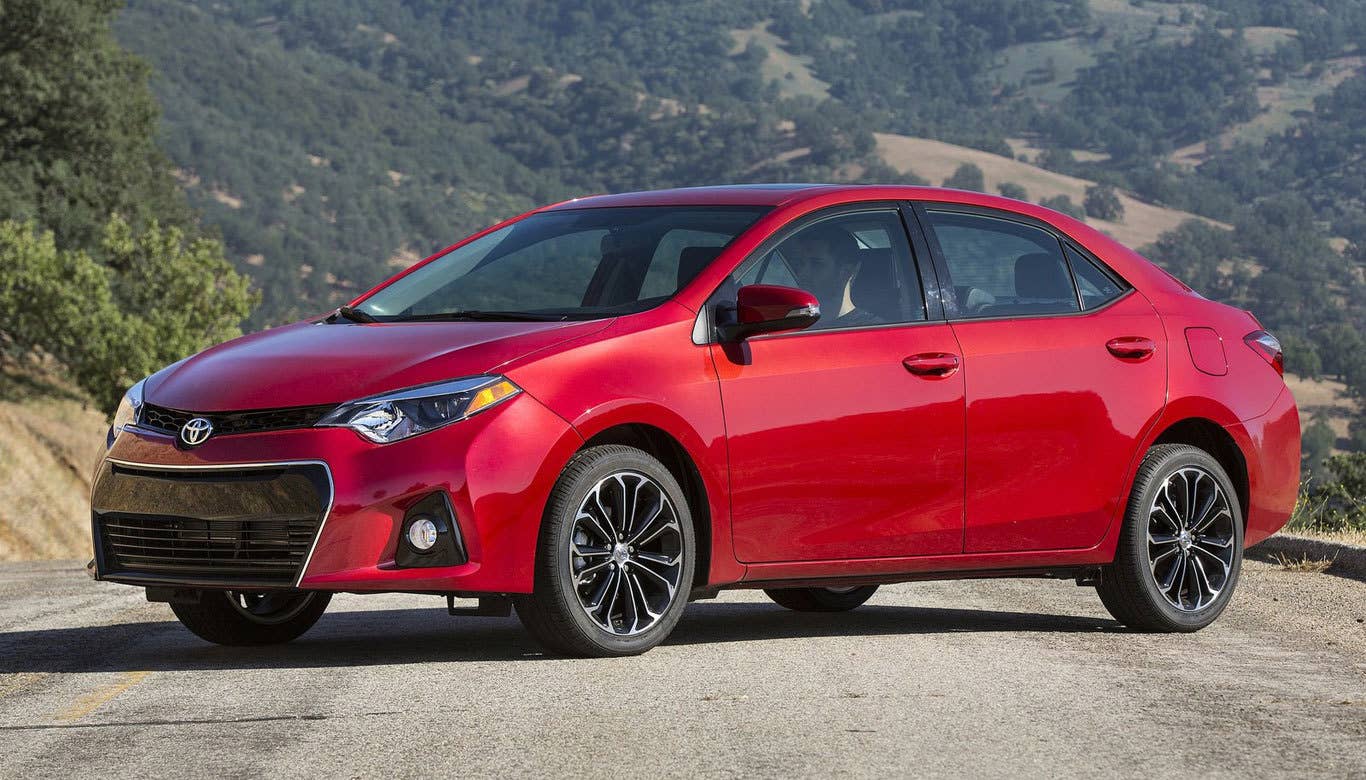
Toyota’s recent redesign of theCorolla helped its looks and its interior, but didn’t do much for passenger safety. This small sedan is the third-worst on Insure.com’s list, which is the exact same position the previous-generation Corolla was in last year.
Research the Toyota Corolla
Toyota Corolla Overview
Toyota Corolla Photos & Video
Toyota Corolla Local Dealer Price Quote

MSRP: $16,195 – $22,195Invoice: $15,801 – $21,381Fuel Economy: 31 mpg City, 40 mpg Highway
The second-worst car for passenger safety, according to the study, is theFiat 500. The little Italian hatchback boasts bold styling and great fuel economy, but passenger safety is a concern across all trim levels.
Occupants are protected by seven airbags, active front head restraints, electronic stability and traction control and a tire pressure monitoring system, but the reality is that this teeny car is going to lose almost every time it’s in a collision.Research the Fiat 500Fiat 500 OverviewFiat 500 Photos & VideoFiat 500 Local Dealer Price Quote
Sticker Price: $14,430 – $16,540
Invoice Price: $13,853 – $15,877
Fuel Economy: 30 mpg City, 37 mpg Highway
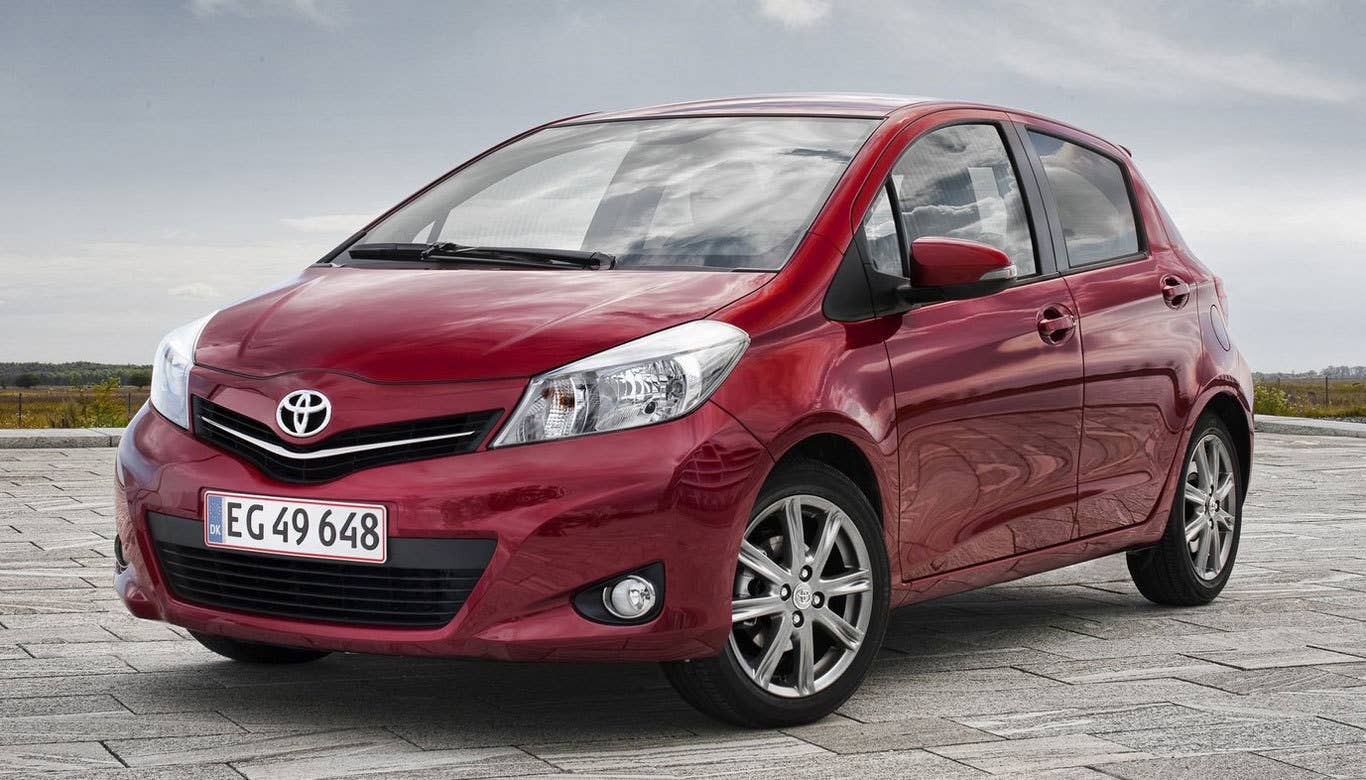
Toyota’s small hatchback is this year’s worst car for passenger safety, according to the study. TheYaris comes with safety features like anti-lock brakes with electronic brake-force distribution and brake assist, electronic stability and traction control, whiplash-lessening front seats, front seatbelt pretensioners and nine airbags. But the reality is this is a small, cramped car, much like the Fiat 500, making it a fundamentally more dangerous place to be a passenger.
Research the Toyota Yaris
Toyota Yaris Overview
Toyota Yaris Photos & Video
Toyota Yaris Local Dealer Price Quote