
Key Points
- W. Edwards Deming introduced quality management principles to Japan, emphasizing management responsibility for defects.
- Deming's ideas inspired the Toyota Production System, transforming global manufacturing through kaizen and waste elimination.
- Japan fully adopted Deming’s methods; America largely ignored them, ultimately falling behind in quality.
Quality Assurance
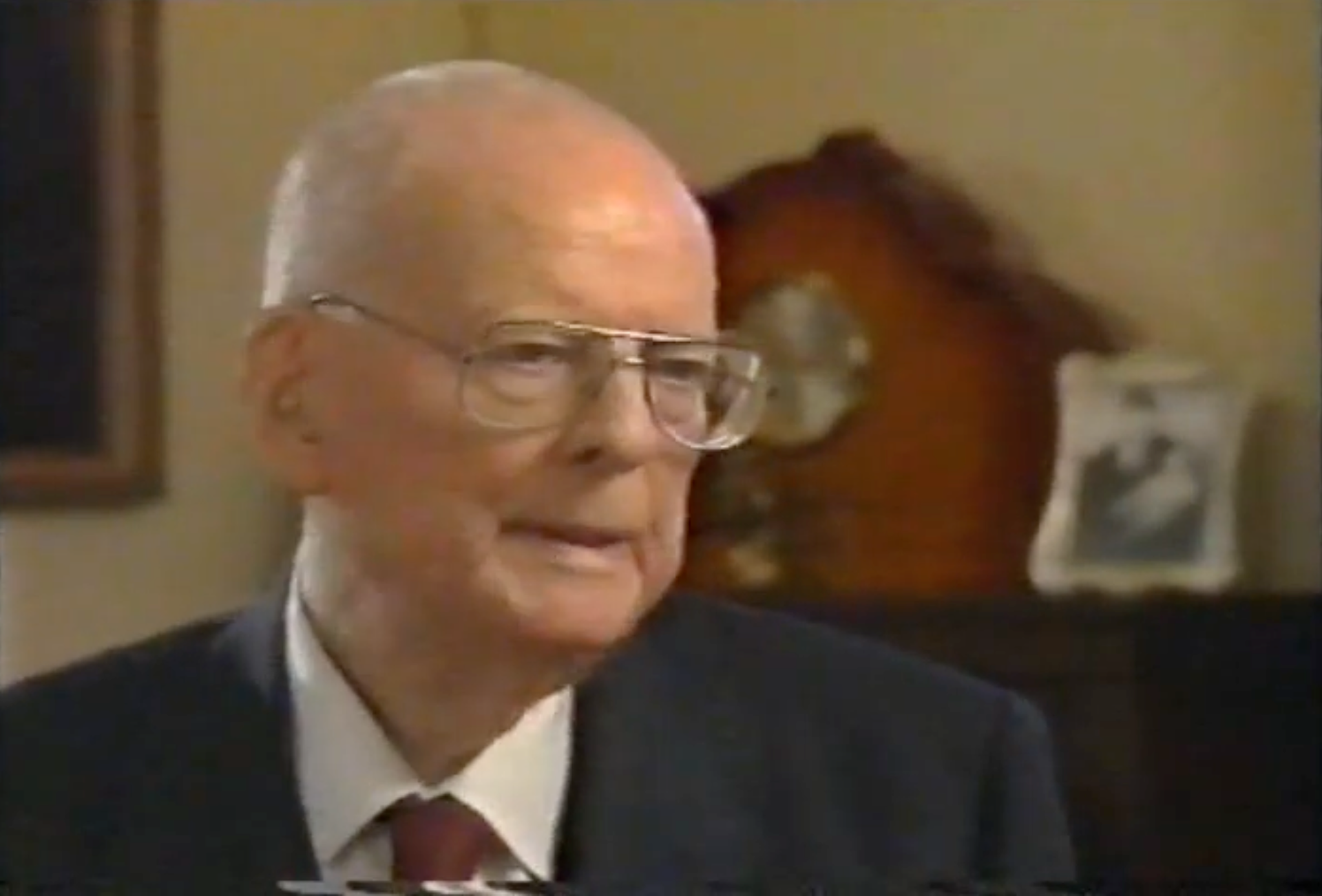
In the summer of 1950, an American statistician from Wyoming stood before a room full of Japan’s most powerful industrial executives at the Mount Hakone Conference Center and opened his remarks with an unusual declaration. He was not there, he told them, to deliver a sermon on statistical techniques. He was there to talk about the truly important problems of manufacturing and sales; problems that were, he believed, almost entirely the fault of management and almost entirely within management’s power to fix.
The man’s name was W. Edwards Deming. In the United States, almost no one had heard of him, but in Japan, things were different. Since he first visited in 1947 as part of General MacArthur’s postwar reconstruction effort, he had already begun to acquire a reputation that would eventually make him one of the most celebrated foreigners in the country’s modern history
The executives in that conference room were not there as a courtesy. They were there because Japan’s economy was in ruins and they were desperate, and Deming was the person who had convinced them there was a way out. What happened in that room, and in the years of teaching and consulting that followed, did not just rebuild Japanese manufacturing. It built the reputation of automakers like Toyota and Honda and it did so on the foundation of ideas that America’s own automakers had been offered and flatly refused.

FPG/Archive Photos/Getty Images
What Detroit Didn’t Want to Hear
Deming had spent the 1930s and 1940s developing and refining a theory of quality management that was, at its core, a frontal attack on how American factories worked. At the time, companies assumed that defects in manufacturing were essentially inevitable and an acceptable cost of doing business managed through inspection and tolerance rather than eliminated at the source. Defective products would be caught at the end of the line and were discarded or reworked, and the loss would be absorbed into the price of doing business at scale.
This was the logic of mass production as Henry Ford had designed it. Detroit had inherited it, but Deming thought it was not just wrong, but expensive. This way of building the cost of failure permanently into a system that could, with the right management approach, produce far less failure in the first place. His argument was statistical in method but managerial in conclusion: that variations in manufacturing quality was not random and not inevitable, that it had identifiable causes, and that those causes were caused by the system rather than individual cases.
Workers didn’t make defective products because they were careless. They made defective products because the systems they worked under were designed to produce defective products. Fix the system, Deming argued, and you fix the quality. Blame the worker, and nothing changes. After the war, he took this argument to American manufacturers and was largely ignored.

Nakada/Three Lions/Hulton Archive/Getty Images
British Broadcasting Corporation via YouTube
The Eight Days at Hakone
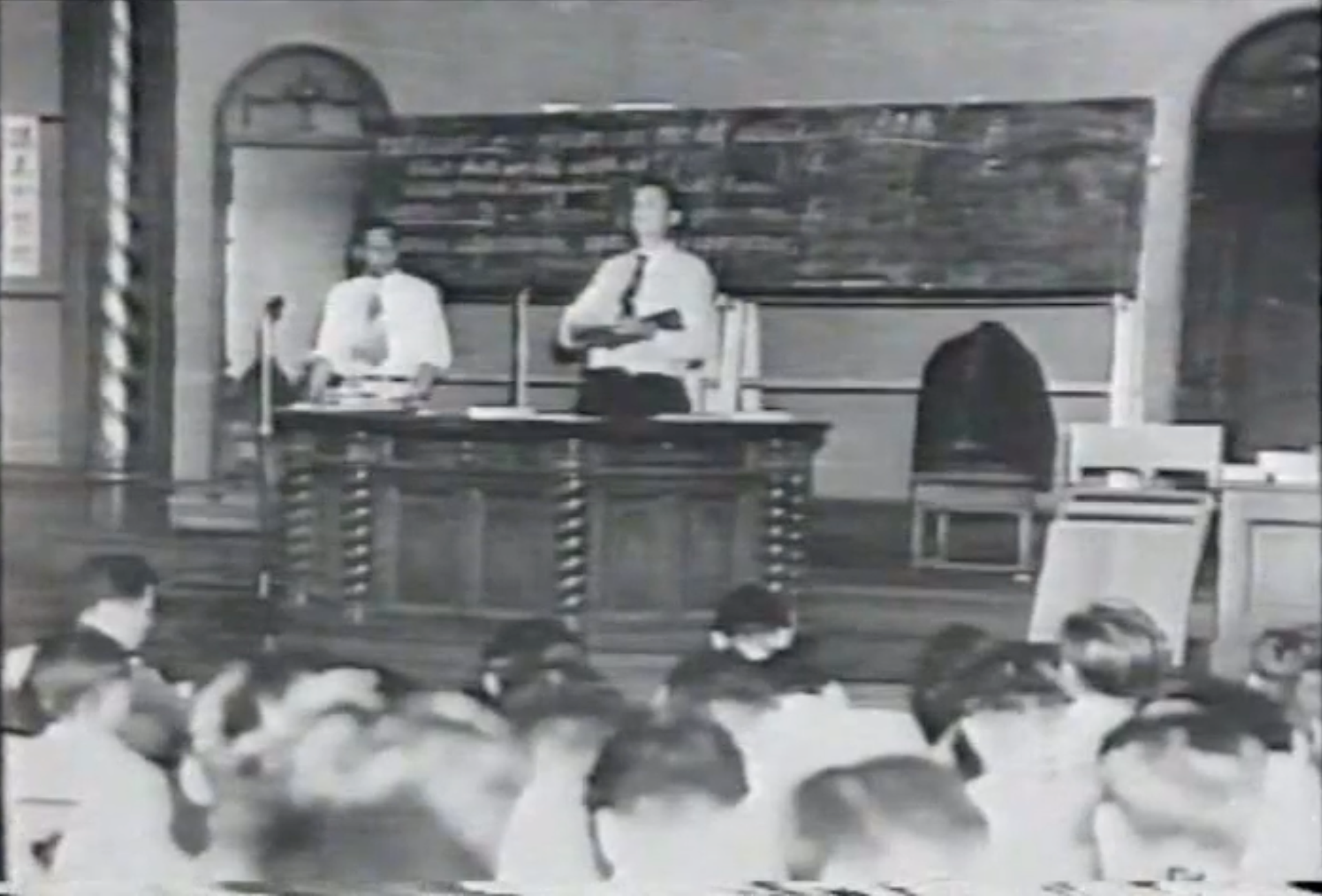
In comparison to the American industrial heartland, Japan in 1950 was a different kind of audience, as the country’s manufacturing base had been destroyed in the war. The factories that were still operating were producing goods so poor in quality that the phrase ‘made in Japan’ had become a byword with cheap and unreliable; an association that would take decades and an enormous collective effort to reverse. The Union of Japanese Scientists and Engineers, known as JUSE, had been founded in 1946 specifically to address this problem, and by 1950, its leadership had concluded that the answer was quality control methods being developed in the United States. They looked to Deming, whose reputation in statistical methodology had preceded him from his earlier visit, and invited him to teach.
The eight-day seminar Deming delivered that summer, and the subsequent lectures and consulting relationships that followed it, were not a gentle introduction. Deming taught hundreds of executives, managers, engineers, and scientists the same core argument he had been unable to sell in America. He donated the royalties from the published version of his lecture notes to JUSE, which it used to establish the Deming Prize, which is still awarded annually today to Japanese companies and individuals who make exceptional contributions to quality in manufacturing.
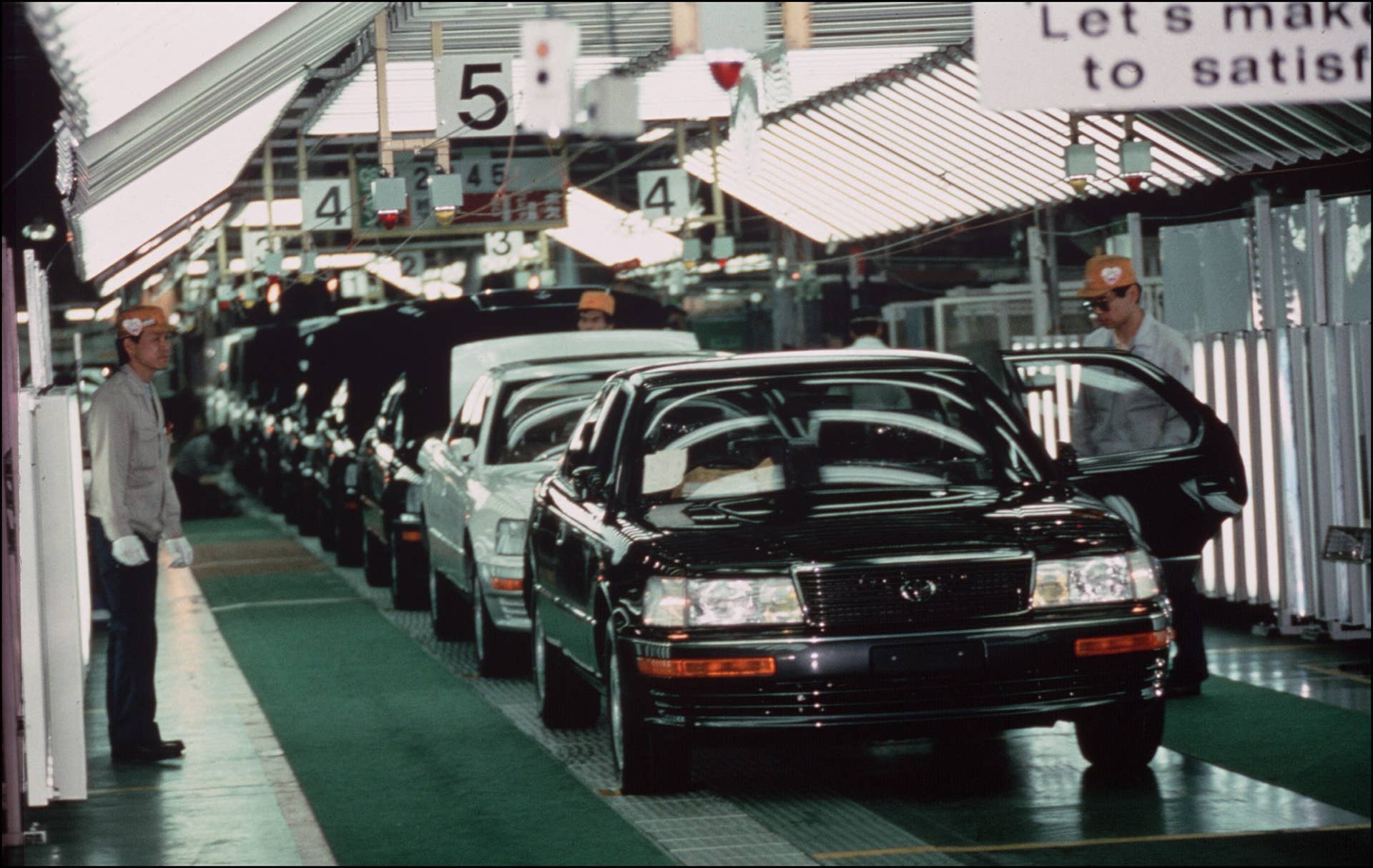
Toyota was among the companies that took Deming’s teachings most seriously and most completely. Principles that included continuous improvement, respect for the worker’s knowledge of the production process, the relentless identification and elimination of waste became the philosophical foundation of what would eventually be codified as the Toyota Production System; the manufacturing methodology that the rest of the world would spend the following half-century studying, copying, and trying to understand.
Kurita KAKU/Gamma-Rapho via Getty Images
Kaizen and the System That Changed Everything
The Toyota Production System did not fully emerge from Deming’s lectures, but it was developed over decades by Toyota engineers. Notably, Taiichi Ohno translated Deming’s statistical and managerial principles into specific production practices, but the origins are direct and acknowledged. The concept of kaizen: continuous improvement through small, incremental changes at every level of the organization, is a direct expression of Deming’s core teaching that quality improvement is never finished, that there is always variation to reduce and waste to eliminate, and that the people closest to the production process are the most valuable source of insight about how to improve it.
The just-in-time production system, which eliminates inventory waste by producing components only as they are needed rather than stockpiling them, derives from the same Deming principle that waste in any form is a defect in the system rather than an acceptable cost of doing business. The andon cord, the famous mechanism by which any Toyota assembly line worker can halt the entire production line to address a quality problem, is a physical embodiment of Deming’s argument that the worker, not the inspector, is the first and most important line of quality defense. These are not peripheral features of Toyota’s manufacturing approach. They are its load-bearing structure, and they rest on a foundation that an American statistician laid in a Japanese conference room in 1950.
By the time the Toyota Production System was being studied and imitated by manufacturers around the world in the 1970s and 1980s, most of the people studying it did not know Deming’s name. His methodology had been so thoroughly absorbed into Toyota’s culture, that it appeared to be something uniquely Japanese, perhaps rooted in cultural characteristics that couldn’t be exported. This misreading was convenient for American manufacturers who preferred to believe that Japan’s quality advantage was cultural, because a cultural advantage can be dismissed as untransferable while a methodological one demands a response; a wrong interpretation that American manufacturers found extremely convenient.

What America Chose to Learn
By the mid-1980s, American companies such as Ford had come to embrace Deming’s ideas, which produced real results for companies that committed to them fully. It also produced something else: a management consulting industry built around simplified, packaged versions of his principles that promised the outcomes without requiring the fundamental shift in organizational philosophy that Deming insisted was the only path to them. In short, Total Quality Management became a corporate buzzword, a certification program, a seminar series — a sanitized version of what he preached, which left Deming unimpressed.
The difference between Toyota’s adoption of his principles and Detroit’s was not, in his view, cultural. It was a matter of commitment. Emperor Hirohito awarded Deming Japan’s Second Order Medal of the Sacred Treasure in 1960, attributing Japan’s postwar industrial recovery directly to his influence. In America, Deming remained relatively obscure until the NBC documentary aired, when he was nearly eighty years old. He died aged ninety-three in 1993 still conducting seminars.
The car you are most likely thinking of when you think of a vehicle that simply does not break down, whether it be the Camry running strong at 200,000 miles, the Corolla that starts every morning without complaint or the Land Cruiser that works in conditions that defeat everything else, is the direct descendant of what was worked out between a Wyoming statistician and a room full of Japanese executives on a summer afternoon seventy-five years ago. The ideas were American, the application was Japanese and the car industry that ignored them spent the following half century trying to catch up.
About the author

James Ochoa
Senior Editor, Autoblog