
Key Points
- Five commercially unsuccessful cars anticipated mainstream trends, including crossovers, compact pickups, hybrid performance, and luxury trucks.
- The Pontiac Aztek, Subaru Baja, Honda CR-Z, Renault Avantime, and Chevrolet SSR challenged conventional vehicle categories.
- Their ideas gained relevance as automakers increasingly embraced lifestyle-focused, electrified, and category-blurring vehicles.
It’s Not a Phase, Mom.
There is a special category of cars that I observe becomes more and more interesting as time goes by. Some might liken this sort of phenomenon as being like a fine vintage wine, but I see that time has been a net benefit for these sorts of vehicles in a way that is fairly unique. Cars that were deemed “weird” during their time on the market get a bad rap for a statistical measure that isn’t recorded on a traditional instrumented test.
Beauty is in the eye of the beholder, and a car isn’t necessarily the fastest, fuel efficient, or the most beautiful, success is something that isn’t guaranteed in the broader auto market. In fact, many of them were commercial failures. Some were mocked mercilessly when they were new, while others were simply too strange for buyers who had been conditioned to expect their cars to look and behave a certain way.
But automotive history has a funny way of changing things with time. A car that looked ridiculous in 2002 can look perfectly normal or fairly stunning or unique when surrounded by today’s crossovers. A compact hybrid that seemed confused about its identity can suddenly look like an early attempt at combining efficiency with performance. A boxy utility vehicle or pickup that couldn’t find enough buyers can become exactly the kind of lifestyle product that automakers now spend millions trying to create.
These five cars weren’t all misunderstood masterpieces, and some really were flawed. But, each one carried subtle signs that would become more important later.
Pontiac Aztek
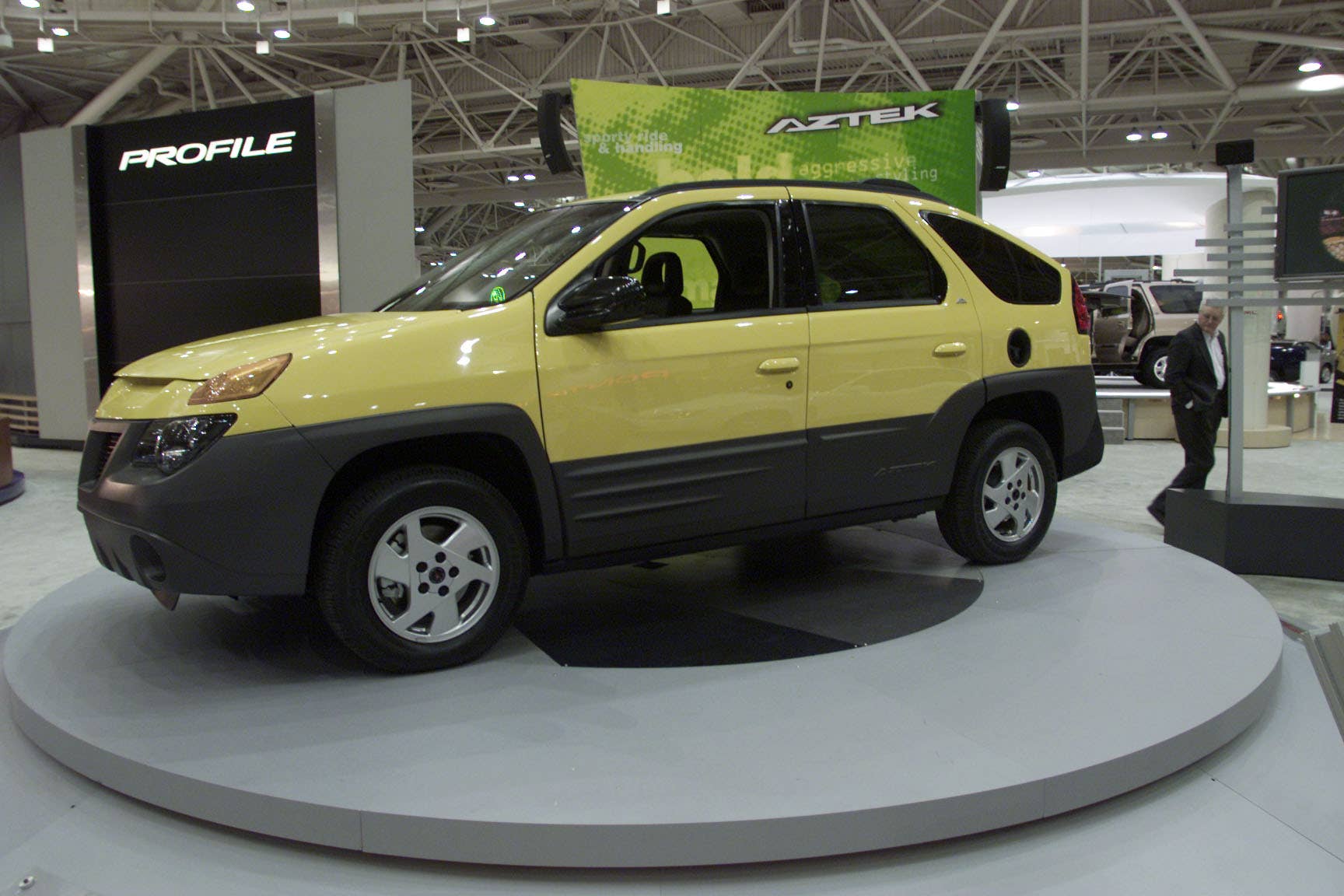
The Pontiac Aztek is one of those cars that leave a lasting legacy as an automotive punchline. It’s one of those cars with a legacy panned by both car enthusiasts and the general public alike, but its reputation precedes it. When it arrived for the 2001 model year, the Aztek’s awkward bodywork was almost universally criticized. Yet, underneath its controversial styling was a surprisingly thoughtful crossover concept. It offered a spacious cabin, flexible cargo area, a sliding rear cargo floor, and an available camping package with a tent and air mattress.
The important part is that the Aztek was trying to solve a problem that modern crossovers solve constantly: How do you give people the practicality of an SUV without asking them to drive a gigantic truck? The Aztek’s mistake wasn’t necessarily the idea, it was that it introduced the concept before consumers knew that crossovers were something they actually wanted.
Today, a showroom full of egg-shaped crossover SUVs makes the Aztek look less like an automotive mistake and more like an early draft of what the future of the auto industry would look like. Its tall body, flexible interior, and REI-lifestyle-oriented accessories now seem far less unusual than they did when Pontiac was trying to sell them. In fact, it’d be a marketable quirk if it was on the market today. The Aztek also understood something that many modern crossovers still struggle to communicate: utility is more convincing when it is built into the vehicle rather than simply suggested by aggressive styling.
It was designed for camping, hauling, and other weekend lifestyle activities worthy of showing off on Instagram. The problem was that its appearance made many buyers in the early 2000s question whether they wanted to be seen doing any of those things in it. However, time has been kinder to the concept than to the execution. Of course, any discussion of the Aztek’s legacy would be incomplete without mentioning Breaking Bad. Walter White famously drove a muted green Aztek throughout much of the series, cementing the unloved crossover as an iconic piece of modern pop culture history.
Subaru
Subaru Baja
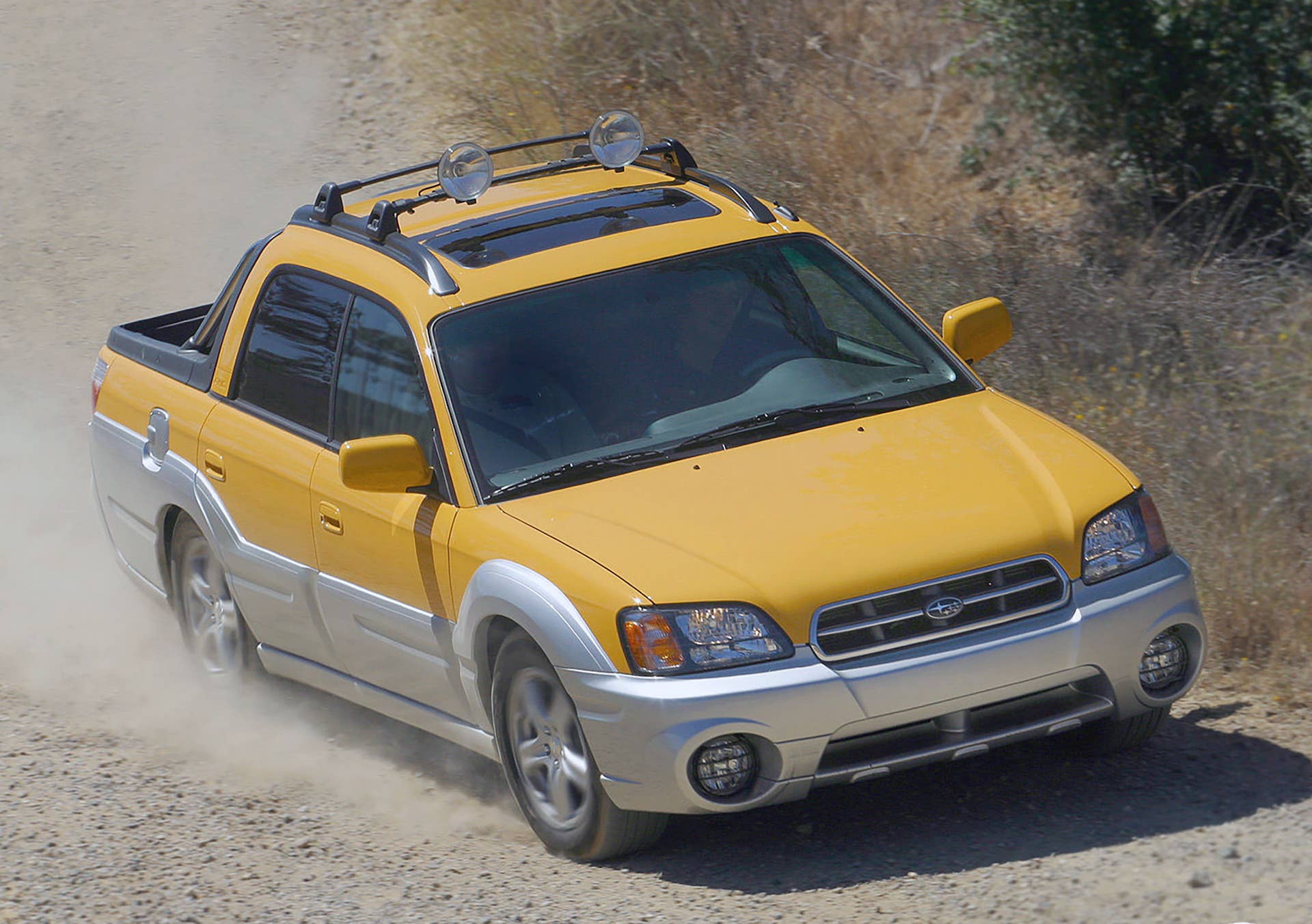
If someone asked me to describe the Subaru Baja in less than 60 seconds, I’d tell them to imagine someone took a Subaru Outback and made it into a pickup truck by slicing off the rear section of the roof behind the seats and replacing the trunk carpet with a bedliner. That was essentially the Baja.
Debuting in 2003 as the self-proclaimed “World’s First Multiple Choice Vehicle,” the Subaru Baja was designed as a versatile, four-passenger vehicle featuring an open cargo bed for light utility and outdoor gear. While it was the furthest thing from a heavy-duty work truck, it never actually intended to be one. Instead, it was a lifestyle vehicle that combined Subaru’s signature all-wheel drive with a smooth, carlike ride, offering a compact truck bed that gave it a practical edge over a standard station wagon.
Although it was known that Americans wanted cars that can function as a daily driver, but also as a vehicle for bikes, camping equipment, outdoor gear, and weekend projects, it wasn’t exactly the right execution. At the time, American buyers tended to divide vehicles into clear categories. A wagon was a wagon. A pickup was a pickup, and the Baja occupied an awkward middle ground, and many shoppers didn’t see why they should compromise on either side.
Today, the Baja is a piece of Subaru history that is cherished by its fans, while compact pickup has evolved into a legitimate category. The current-day Ford Maverick and Hyundai Santa Cruz build on the Baja’s legacy as small, car-based trucks that are both affordable and practical. The Subie Baja was trying to carve out that category more than two decades ago, but its biggest mistake might have been being too niche before niche vehicles became a thing.
Honda
Honda CR-Z
From 1983 to 1991, Honda sold something that would become nothing short of an icon for the automaker. The CR-X was a small, lightweight two-seat hatchback that was sold as an economical and sporty vehicle alongside the Civic. With over 400,000 made over its eight-year run, it is remembered fondly by enthusiasts for its nimble driving dynamics and Prius-rivaling fuel economy numbers. In non-fuel injected form, the first-generation CR-X was able to achieve an EPA fuel economy rating of 52 miles per gallon on the highway.
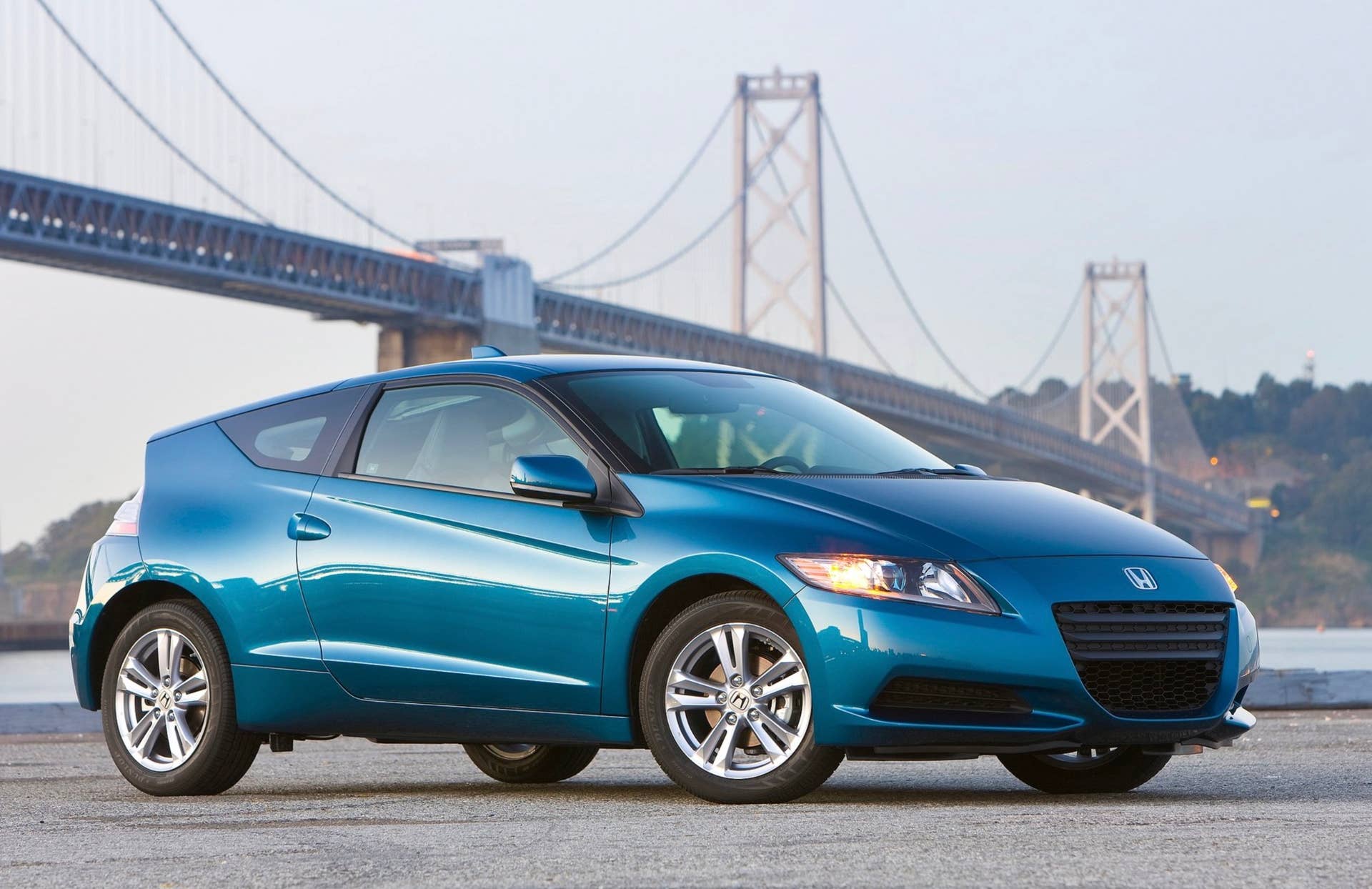
With this kind of legacy to back it up, Honda decided to showcase its tried-and-tested hybrid system with a new kind of vehicle that used the same formula as the original. Twenty years following its discontinuation, Honda introduced the CR-Z; a spiritual successor that echoed visions of the original CR-X in a new format. Honda took the hybrid concept and wrapped it in a small, Kammback sports-hatch body. It wasn’t a hardcore performance car, but it tried to make efficiency feel sporty rather than a compromise.
Though this vehicle tried to do two things at once, it failed at both things. At the time, sports-compact buyers at the time were looking for cars that were actually sporty, not hybrids. The CR-Z’s hybrid system added weight, and its combined 122 horsepower output wasn’t exactly the kind of performance many buyers expected. Additionally, the CR-Z’s EPA-estimated 36 city and 38 mpg highway fuel economy rating fell short compared to Honda’s other hybrid at the time — the four-door Insight, which got 40 miles city and 43 mpg highway for about a grand less than the two-door CR-Z.
Despite some aftermarket support from Honda tuners like Mugen and Honda’s own Honda Performance Development, buyers didn’t cling onto the CR-Z. Honda moved 5,249 CR-Zs in its first year, but a total of 35,040 CR-Zs were sold in America. However, the concept of a hybrid sports car does make some sense today. Today, many performance-oriented vehicles from Honda’s own Prelude to the Lamborghini Temerario and Ferrari 296 incorporate batteries and electric motors to provide immediate torque, responsiveness and fuel economy. The CR-Z was an imperfect prototype for today’s sports cars, but it is a placeholder for a new era of performance.
Renault Avantime
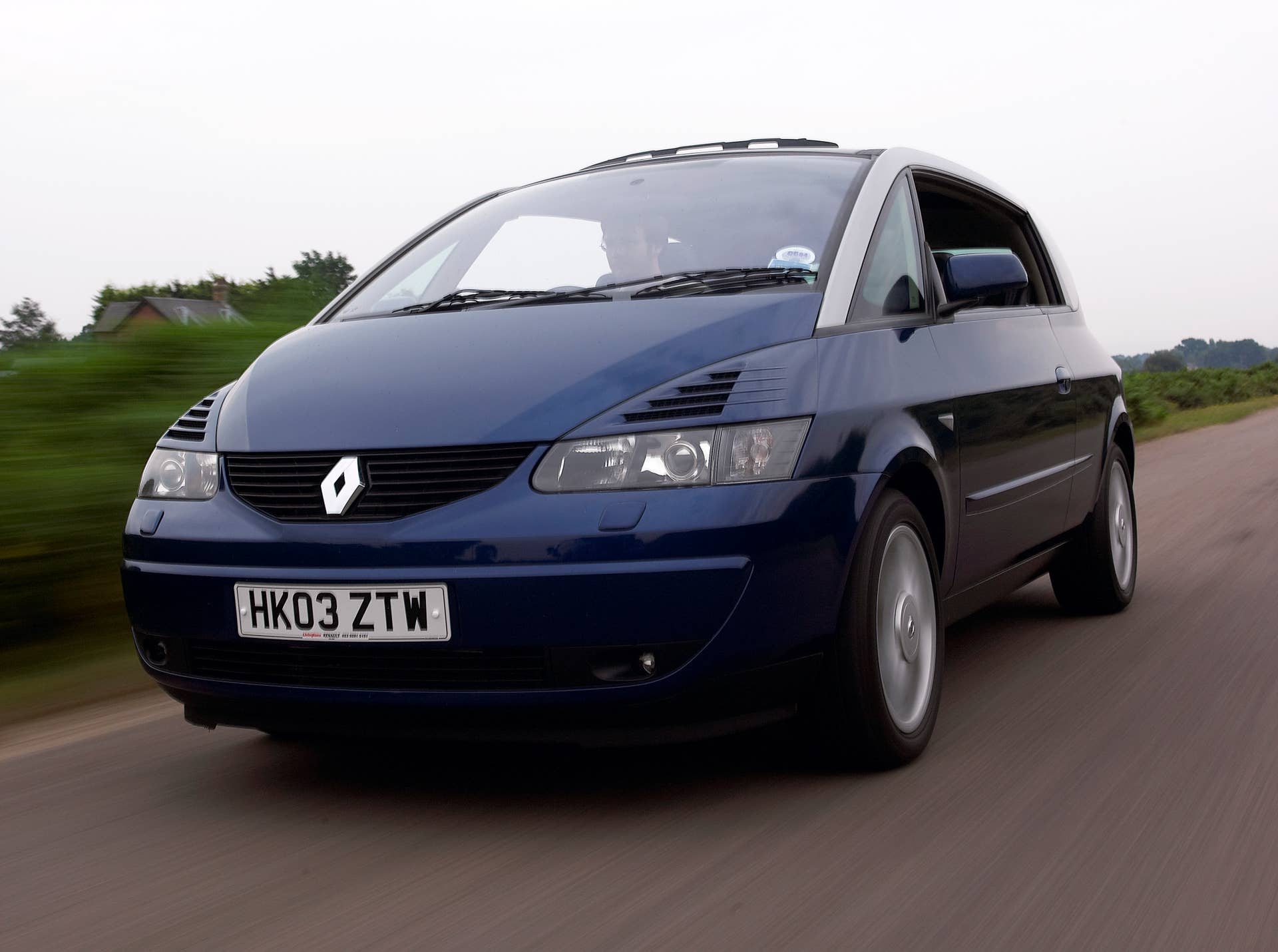
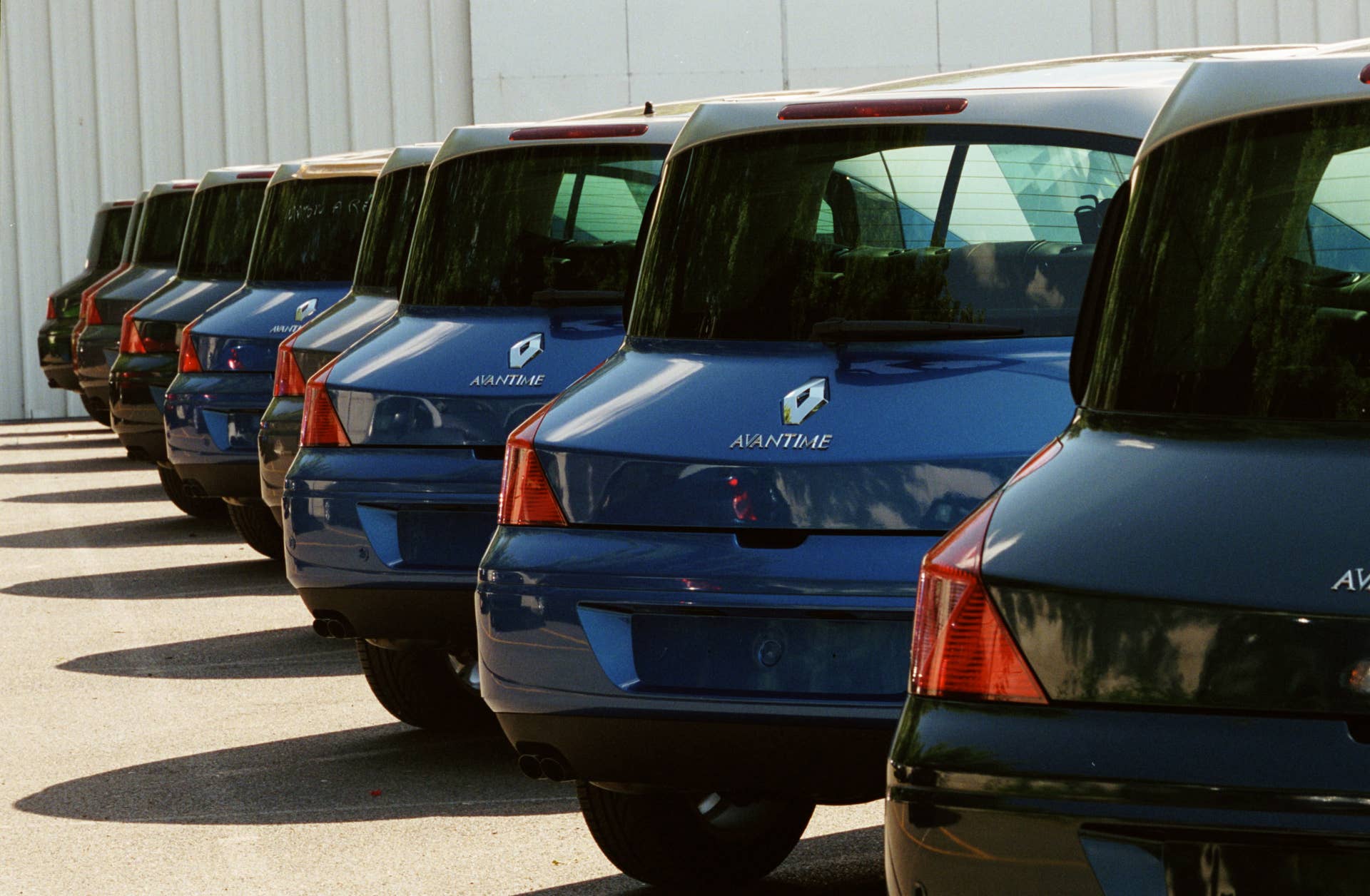
The Renault Avantime may be one of the best examples of a car being too weird for its own good. To put it simply, the French automaker attempted to merge two vastly different automotive genres: combining the high seating position and spacious interior of a minivan like the Espace with the grand touring style and sleek proportions of a two-door coupe. What emerged was a massive, pillarless “coupe” featuring enormous doors and unconventional styling that looked like nothing else on the road.
Back in the early 2000s, the minivan was accepted by car enthusiasts and some discerning buyers as a symbol of middle-age defeat; a family utility vehicle that sucked any ounce of fun and individuality out of you. The Avantine, as a result, was a vehicle designed around the premise that buyers might want the practicality of a family utility vehicle without settling for the dullness of a traditional minivan. That concept sounds considerably less strange today now that high-riding coupe-style crossover SUVs have become a major market segment, but back in 2001, it was a perplexing sell to the average consumer.
The Avantime’s massive doors were notoriously heavy and impractical in tight parking spaces, and its overall identity ambiguity was its defining feature. It was neither a conventional family vehicle nor a traditional sports coupe, leaving many shoppers uncertain about what to make of it. Naturally, that confusion was a major reason why so few buyers ultimately drove one home. Renault had planned to build 80,000 Avantimes, but the model was discontinued due to slow sales after it sold just 10% of its target from 2001 to 2004.
Modern car buyers, however, have grown far more comfortable with vehicles that blur traditional category lines. Today’s model lineups feature a diverse selection of coupe crossovers, four-door coupes, which are accepted staples of today’s auto industry. While the Avantime didn’t invent the formula that eventually succeeded, it certainly anticipated the industry’s appetite for vehicles that challenge tradition.
Chevrolet SSR
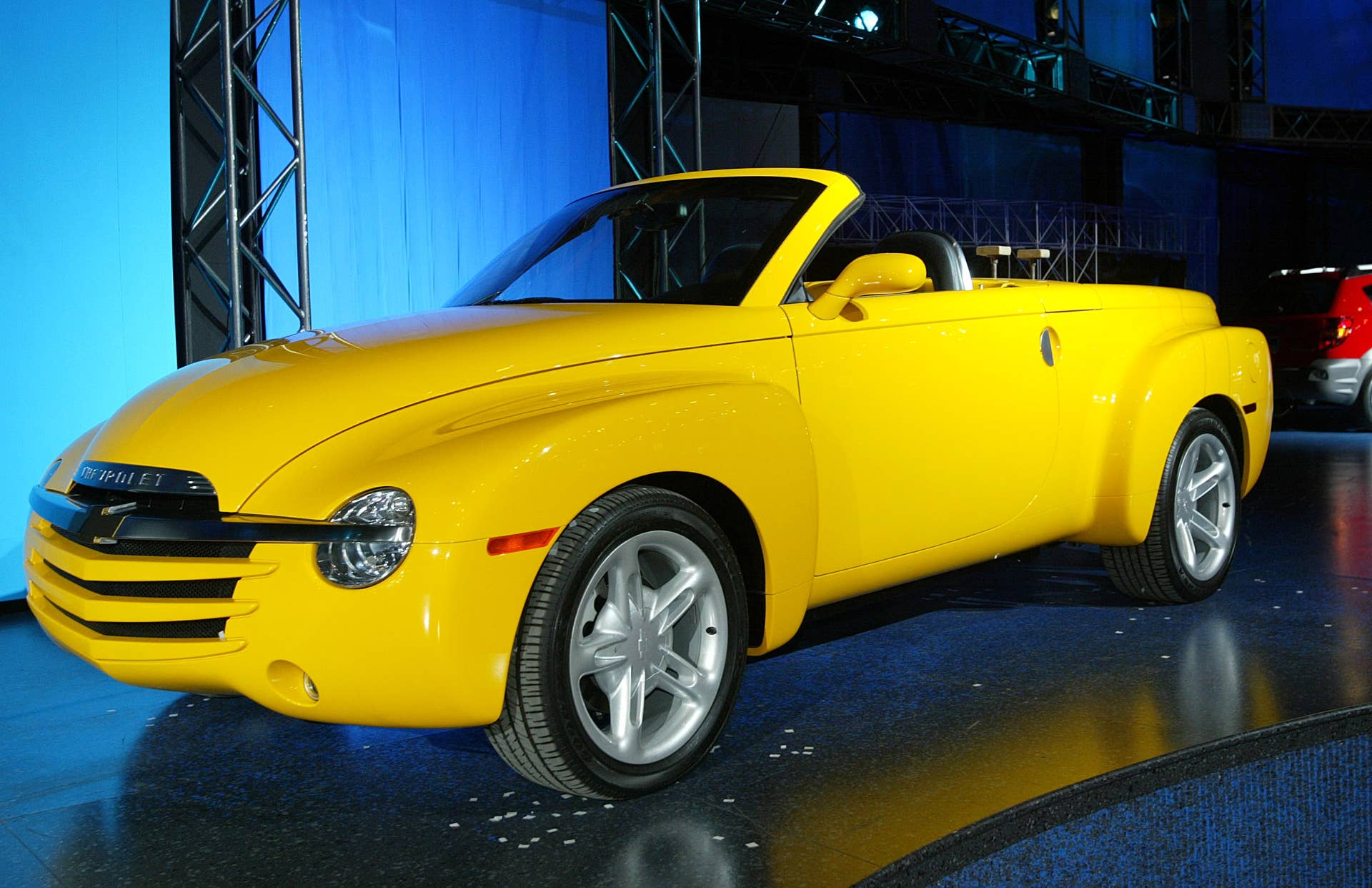
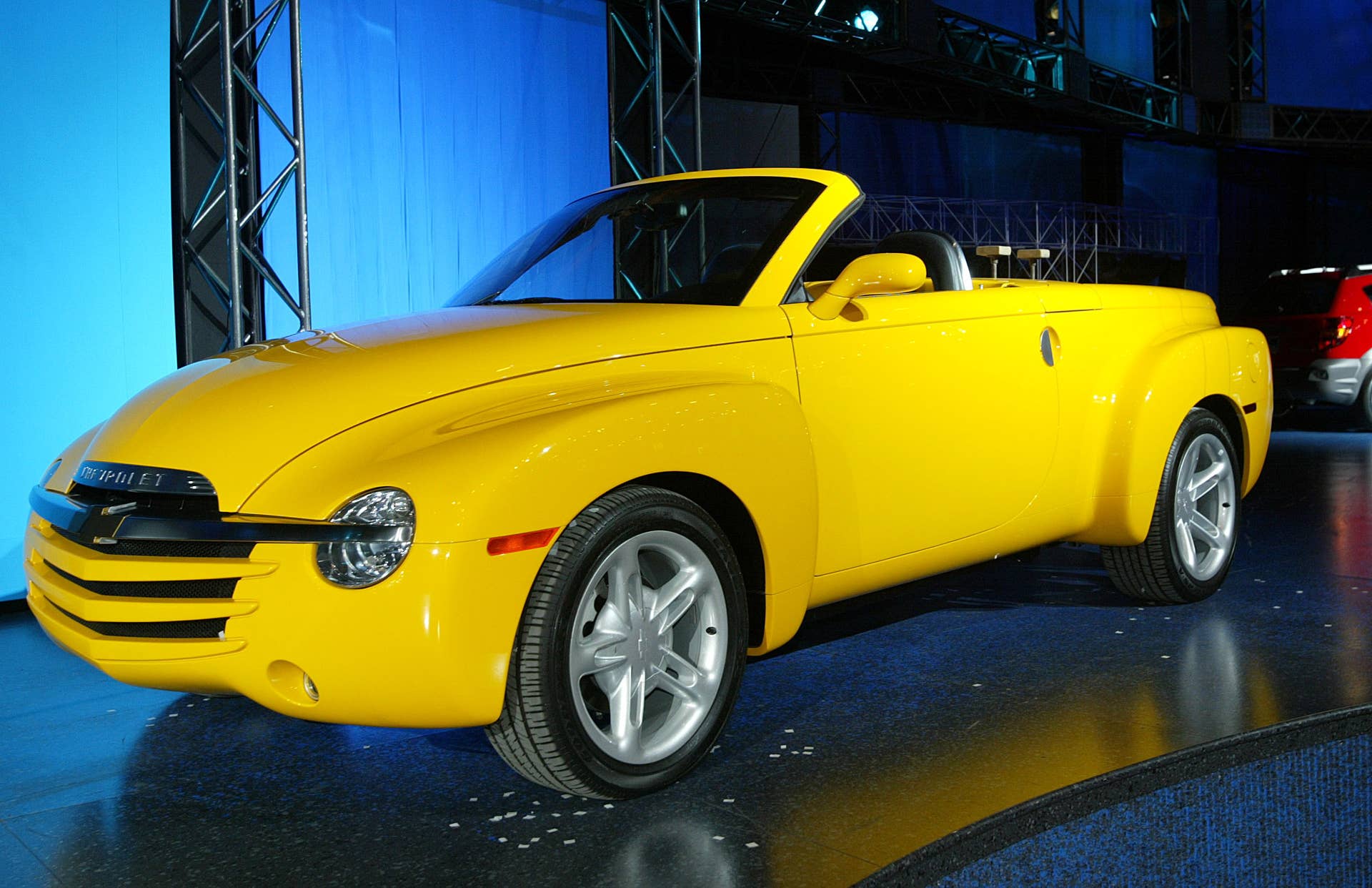
From a glance, the Chevrolet SSR looked like someone had blended a 1950s pickup with a modern convertible; that’s because it was, and it was intentional. Sold by Chevrolet from 2003 to 2006, the SSR was a hardtop convertible pickup truck that emulated the styling of the Chevrolet Advance Design trucks sold between 1947–1955, though it was made primarily for a different kind of utility.
Short for Super Sport Roadster, the sleek-styled SSR was built to perform like a sports car.. From 2002 to 2005, the SSR was fitted with a 5.3L LM4 Vortec 5300 shared with other GM mid-size SUVs like the Chevy Trailblazer, while later models got the 6.0-liter LS2 V8 from the Corvette. With a base price that flew dangerously close to the Corvette, the SSR fell far behind in actual sales versus projected. By the end of its run in 2006, Chevrolet moved close to 24,000 of them, which was far below expected sales of 48,000 units over four years.
While the SSR didn’t sell particularly well, it predicted where the truck market was going. Today, trucks are often designed as personal luxury vehicles first and work tools second, complete with premium interiors, massive wheels, powerful engines, and styling intended to stand out. As a result, pickup truck buyers buy the image of a particular lifestyle, even if they rarely use it for serious work. The SSR was built around that same idea, though it attempted to combine too many things at once. It looked like a hot rod, but was too heavy to behave like one. It also offered a pickup bed without utility, as well as a folding convertible hardtop. Yet, those contradictions are precisely what make it so memorable today.
Weirdness Is Sometimes a Feature
Today’s automotive industry tends to reward conformity. Companies share platforms, engines, components, suppliers and software. It makes sense economically, but it can also make new cars feel remarkably similar; it’s the reason why you see a million and one of the same shape crossover SUV.
These days, strange and unique cars are important. Companies need them to experiment. Some models fail because consumers genuinely don’t want what they’re offering and others fail because they arrive before the market is ready; but that’s okay. The Aztek anticipated the rugged crossover’s dominance decades before they became mainstream, and the Subaru Baja experimented with idea of the Outback as a pickup. The CR-Z explored the relationship between electrified efficiency and performance. The Avantime blurred the lines between family vehicle and coupe, while the SSR recognized that trucks could become emotional luxury products.
The auto industry may be defined by technological advancements and trends these days, but that’s what makes these cars from the past so interesting today. Looking back at them isn’t just nostalgia, it’s a reminder that some of the ideas that are normal today once looked completely ridiculous.
About the author

James Ochoa
Senior Editor, Autoblog