
Some automakers take sustainability to a new level
It’s no secret that cars tend to rot if they’re left in storage for too long, and while a barn find might be a goldmine, it can also be an absolute pain. In an attempt to tackle this issue, most automotive manufacturers have put an emphasis on sustainability in their vehicle designs over the past few decades. As a result, some parts of a vehicle, particularly those that use biodegradable materials, don’t stand the test of time. Rather than defy the natural order, however, some concept cars have embraced decay through a clever use of sustainable materials.
Mercedes-Benz delivers a futuristic vibe
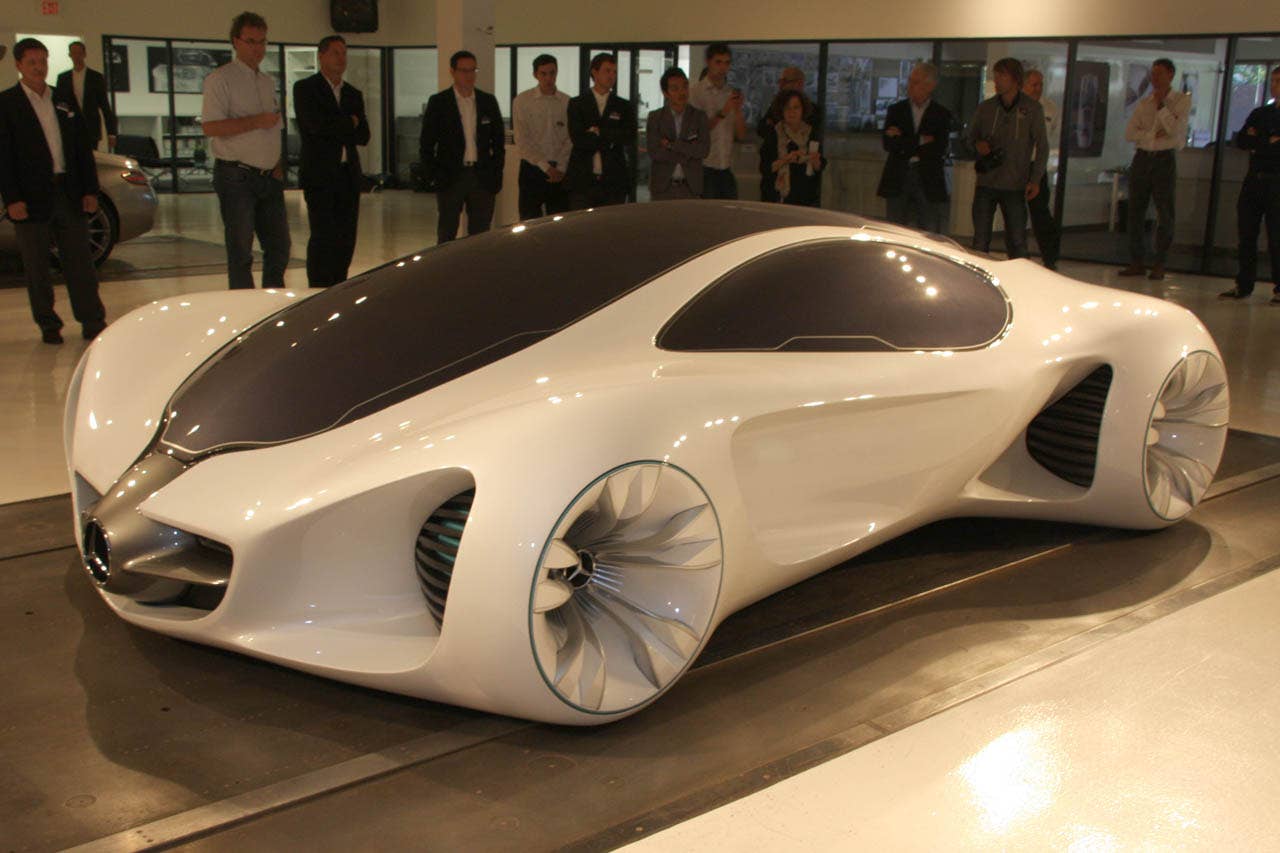
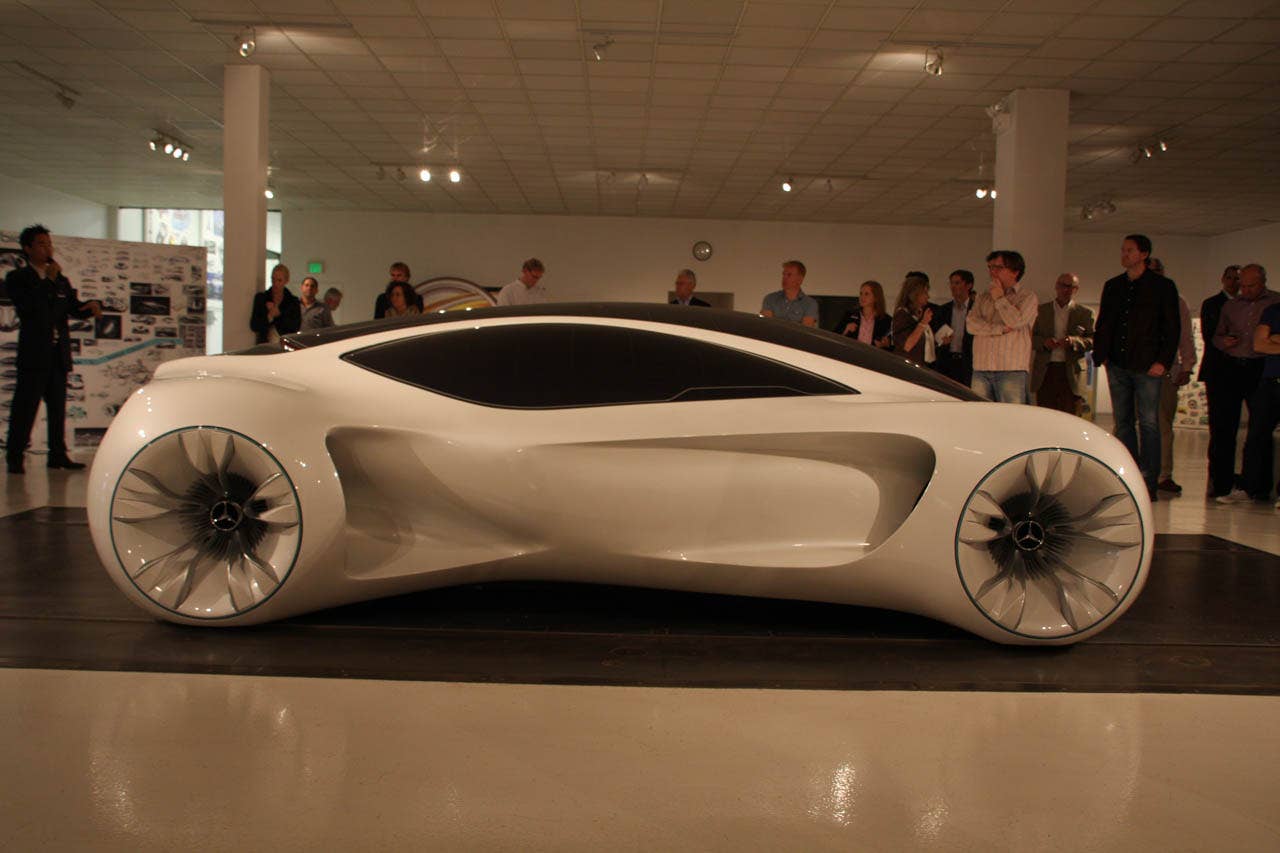
It’s one thing to build a vehicle out of sustainable materials, but growing one from a seed or two is even more bewildering. That’s exactly what Mercedes-Benz did, though. The German automaker showed up at the 2010 Los Angeles Auto Show with The Biome, a concept car designed to be sustainable from top to bottom.
Mercedes-Benz
The concept car’s body is grown from two seeds, one for the exterior and another for the interior. The seeds grow into an ultralight material, dubbed BioFibre, that’s harvested and knitted together to form the car. The tires are grown from another four seeds. Mercedes-Benz clearly decided to ride the crazy train all the way home, given that The Biome doesn’t run on gas. Instead, it runs on a futuristic fuel called BioNectar4534. Instead of a traditional tank, fuel is stored in the chassis, interior, and wheels.
Mercedes-Benz
The Biome’s only emission is oxygen, but what’s not clear is how exactly you’d refuel the concept car. Mercedes-Benz also created tech that allows trees to collect extra solar energy and make it into BioNectar4534. To top it all off, since The Biome is entirely organic, it simply falls back into the ecosystem at the end of its life.
Toyota keeps it simple
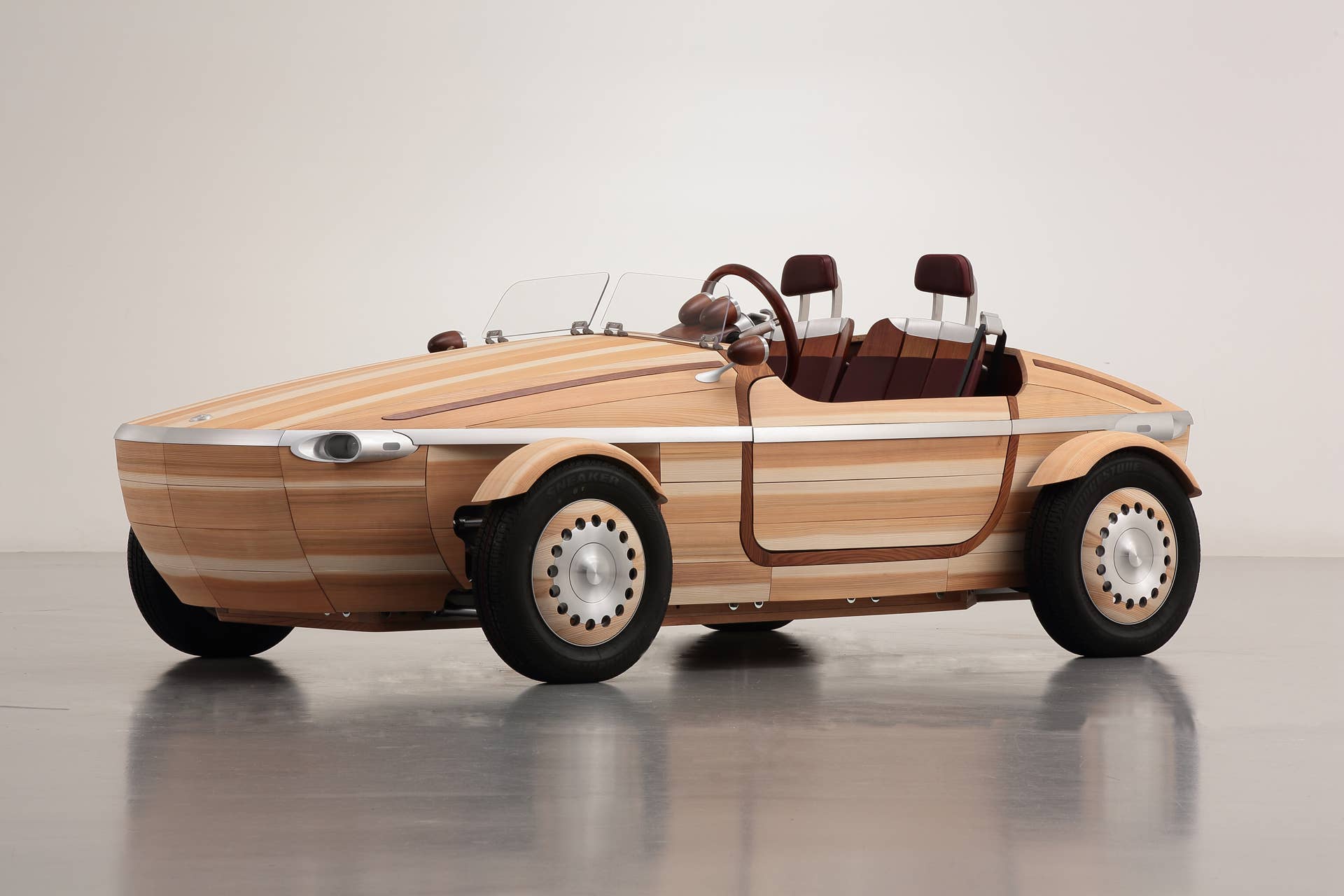
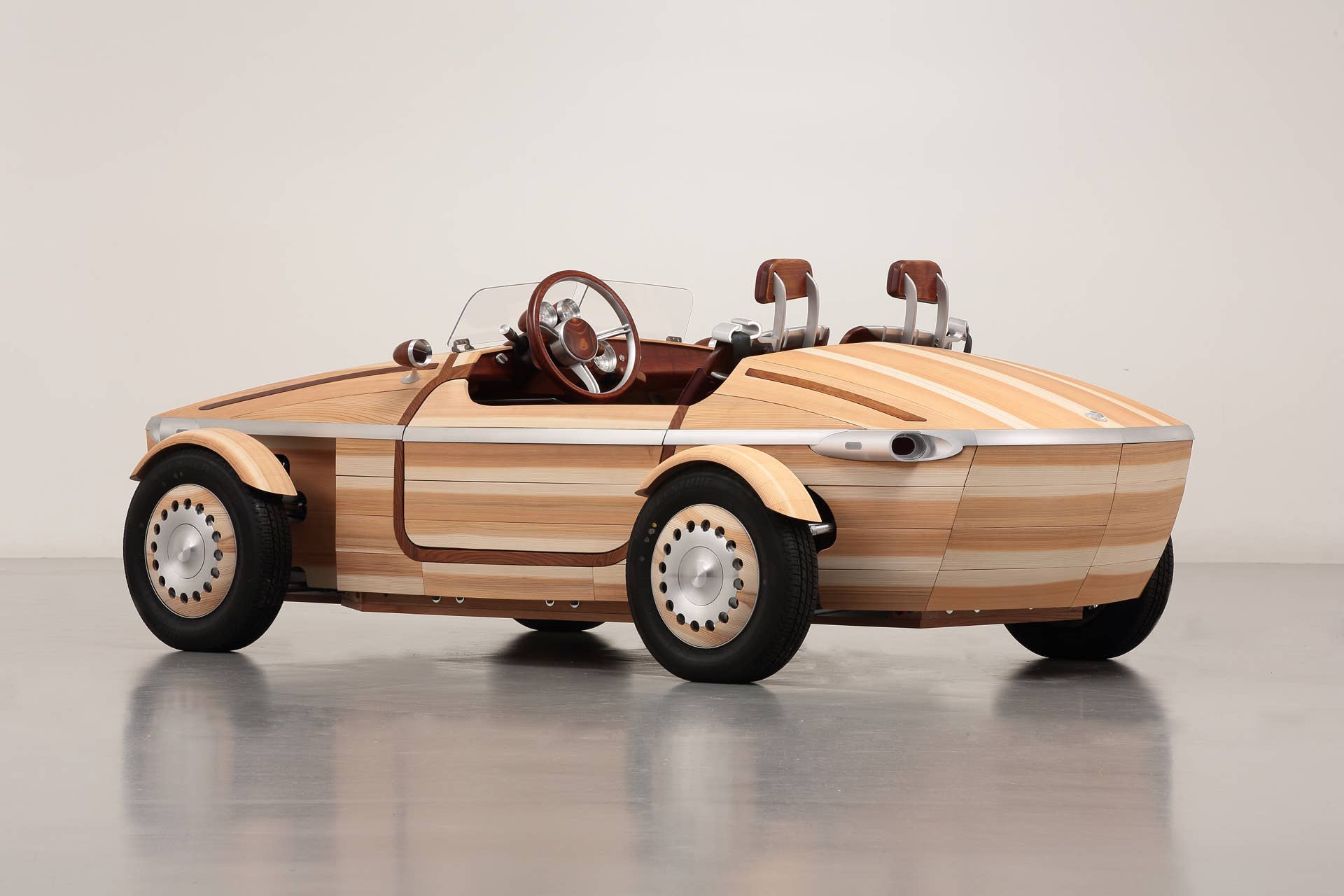
Toyota has always been a bit of an odd duck, what with its focus on hydrogen over electrification and simple refusal to follow market trends. Naturally, that means any concept designed with sustainability in mind would have a twist. The Toyota Setsuna didn’t disappoint when it arrived at the 2016 Milan Design Week with a near-all-wood design.
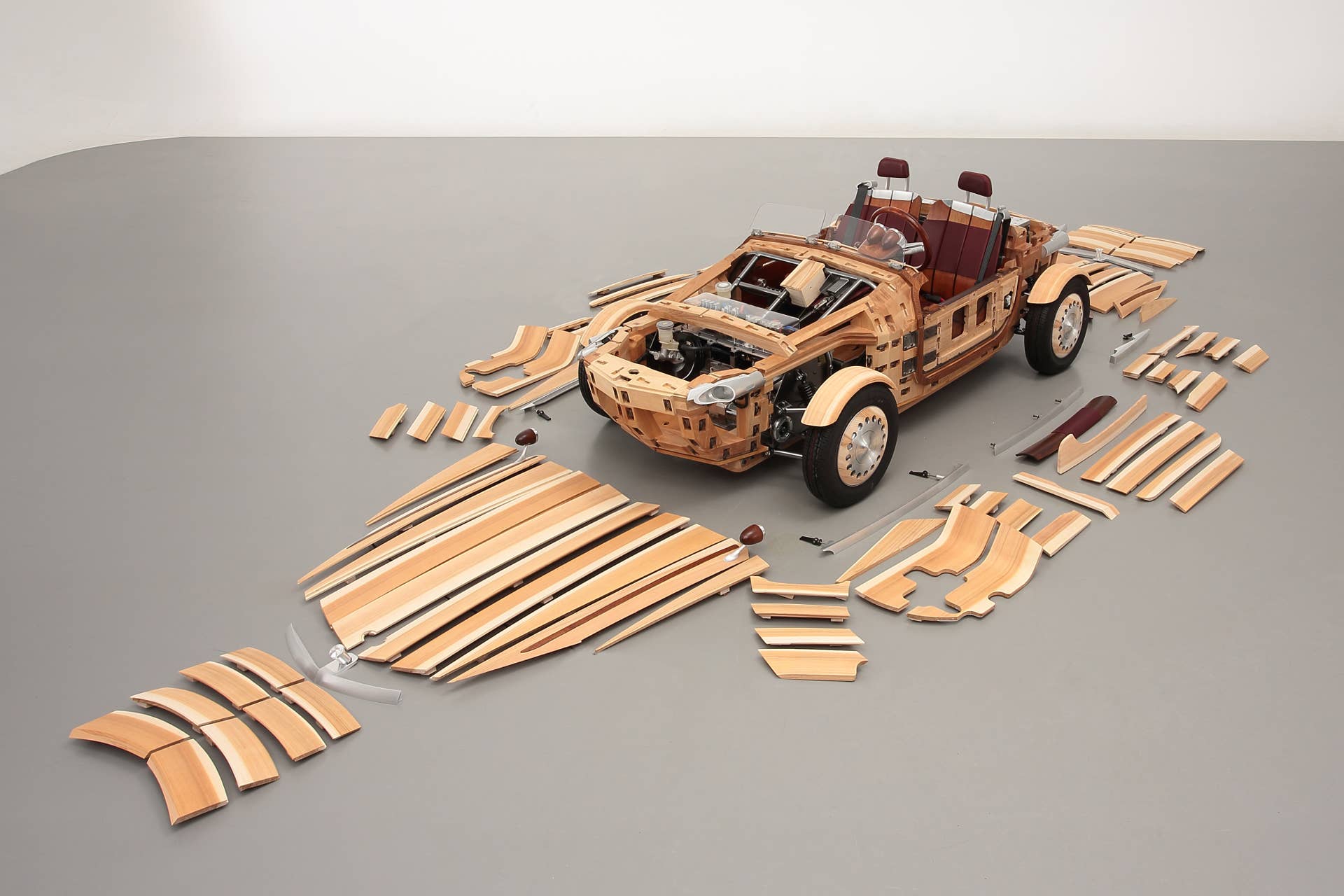
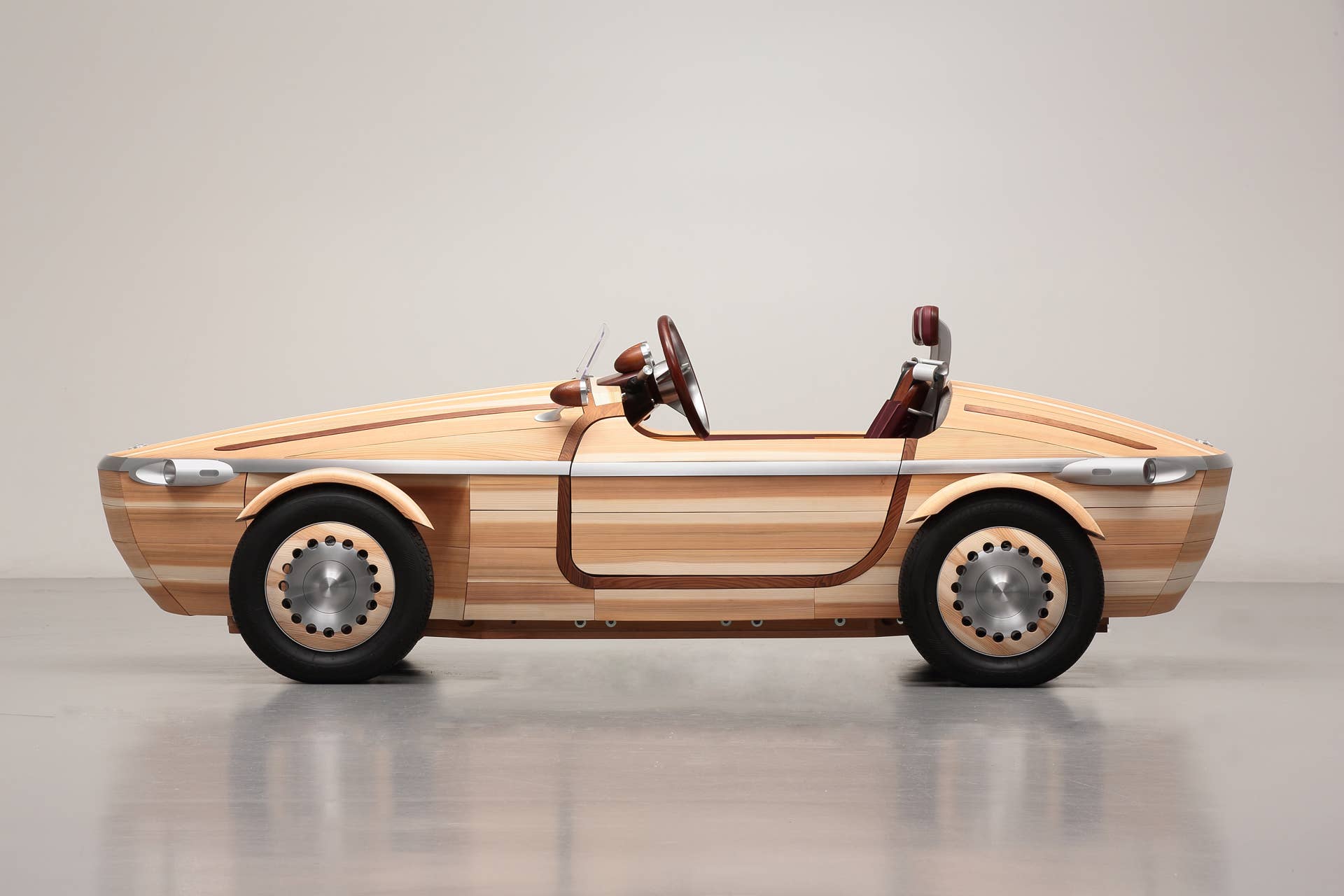
The Toyota Setsuna concept was certainly a unique model, with exterior panels made of Japanese cedar and a frame composed of Japanese birch. The automaker went the extra mile and used a traditional Japanese technique called okuriari to connect the pieces. The Setsuna, which means ‘moment’ in Japanese, featured wooden seats with leather seat covers. Inside, a meter tracks the vehicle’s age over 100 years. The wood will naturally change over time, depending on where the car is and how it’s used.
Toyota shelved its feelings towards electrification for the Setsuna. The concept car is powered by six lead-acid starter batteries. At full power, the wooden model can hit 28 mph with a 16-mile range. Naturally, a car made entirely of wood would be a little too out there, so the cabin features some aluminum here and there, while the tires are still made of rubber.

Sustainability meets practicality
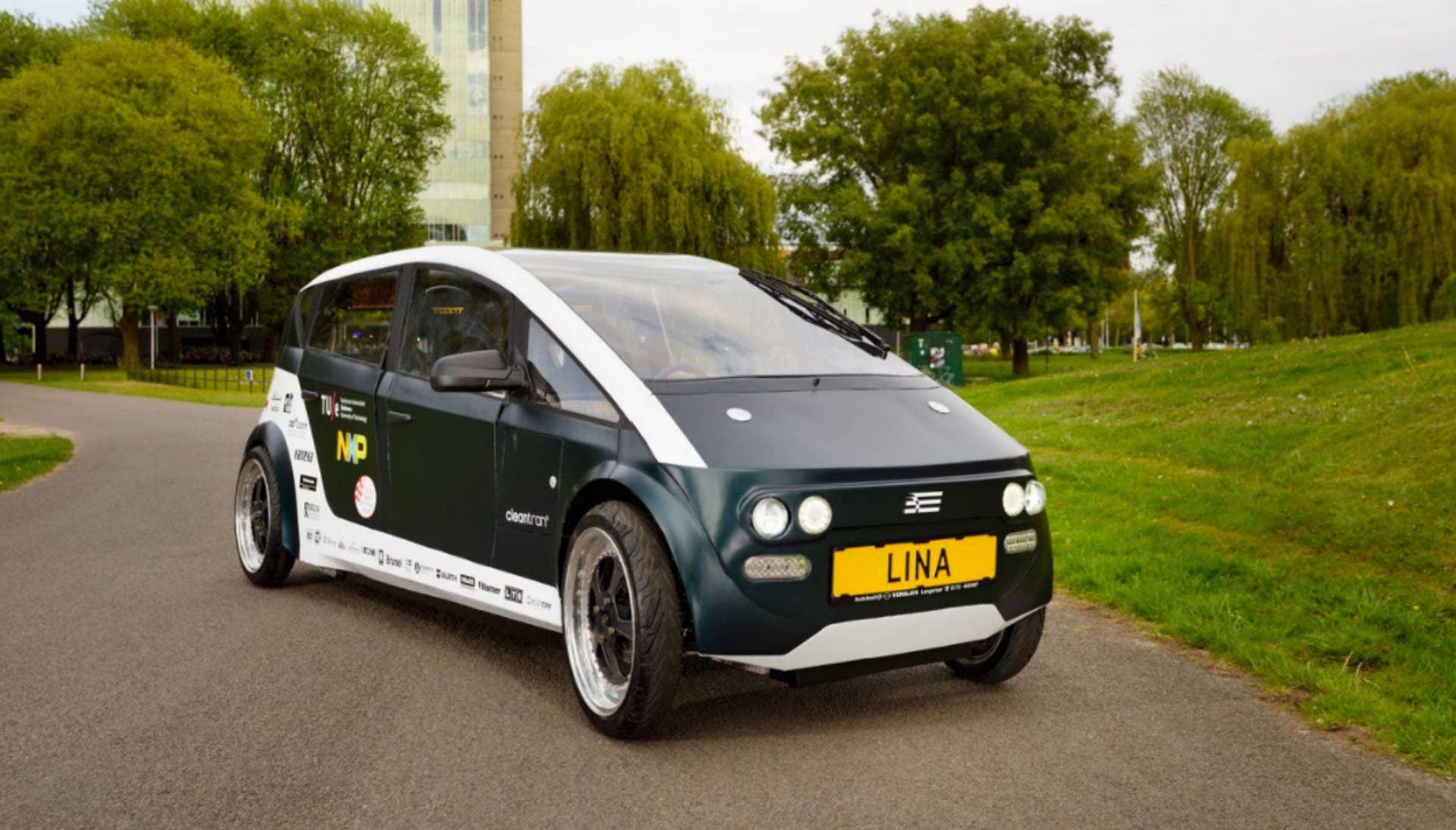
Students at Eindhoven University of Technology in the Netherlands built an electric car called Lina, and while that’s impressive on its own, it’s just the tip of the iceberg. The students challenged themselves to build a car that’s both fuel efficient and sustainable to enter in the Shell Eco-Marathon 2017. Thus, Lina, the world’s first bio-composite car made of flax, was born.
TU/ecomotive
Lina was a project in sustainability from conception to realization. While aluminum and carbon are lighter than steel, they take more energy to produce, neutralizing the energy that they save later on. Flax not only costs less to produce than aluminum and carbon, but it’s renewable, recyclable, and lightweight. Yasmin, a member of the student team, noted that Lina should have a low carbon footprint over its lifetime. That meant the material had to be strong and lightweight, as well as eco-friendly in its production. Flax, which grows throughout Europe, proved to be the simplest solution.

The car’s chassis is made of bio-composite and bioplastic materials, with a honeycomb structure derived from sugar beets as its core. That structure is then enclosed by two bio-composite sheets made of flax. In terms of strength, the bio-composite is similar to fiberglass. All in all, the car weighs in at 661 pounds and seats up to four passengers.
Interestingly, while the Mercedes-Benz and Toyota concept cars weren’t street legal, that’s not the case with Lina. The four-seat car has a top speed of around 52 mph and passed Dutch roadworthiness tests. As long as it has a license plate, it can be driven on public roadways.
Final thoughts
Longevity is a major part of car design today, but sometimes concepts as an art form can serve as proof of concept. While all three models are designed to decay in some way, shape, or form, Lina in particular proves sustainability doesn’t have to come at the cost of practicality. Personally, I’d like to drive the Toyota Setsuna, because who wouldn’t want to take a short trip in a wooden car?
About the author

Joseph Pudlewski
Contributing Writer, Autoblog