
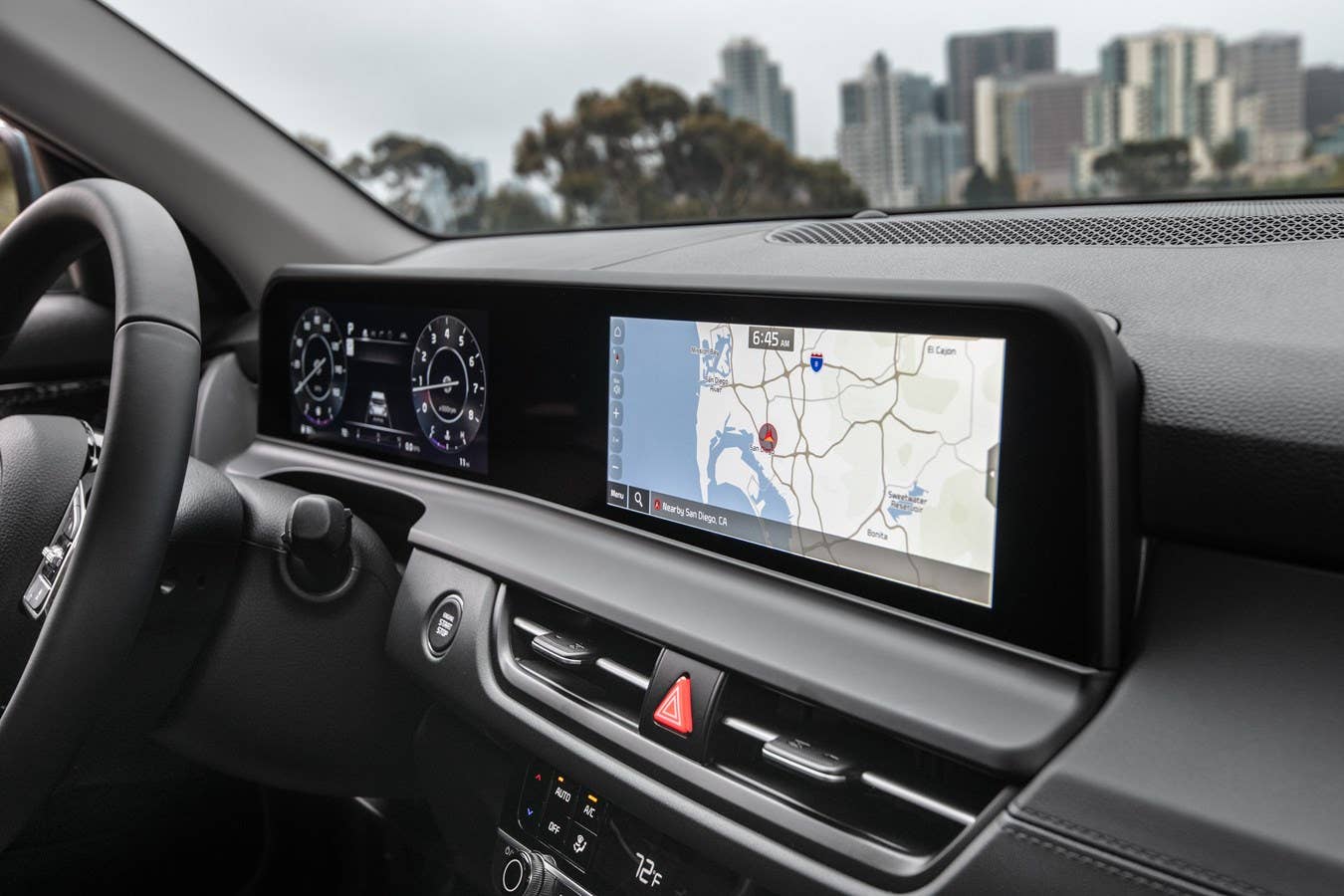
The Infrastructure Investment and Jobs Act was passed by Congress in 2021. It sounds unbelievably innocuous, as all big bills do. The One Big Beautiful Bill Act sounds similarly innocuous, for example. The two, however, were passed by different administrations with wildly different goals and beliefs. Worked into the Infrastructure Investment and Jobs Act is a new requirement, and one that stands to change cars forever, if only it could. The new requirement states that all new vehicles must be sold with technology that prevents “impaired” driving. It goes into effect next year.
The Act did a lot for the automotive landscape in the US over the last five years, investing billions into electric vehicle charging, a real sore point when it comes to the American EV experience. The problem is that those are real, achievable goals that have been laid out and have received investment, even if some of those same goals have since been challenged by President Trump, who attempted to defund those investments at the start of his term.
The stipulation that cars must have in-car monitoring technology, though, is a little bit different. The National Highway Traffic Safety Administration says it can’t be done.
What Kind Of Technology Does The Act Require?
Let’s back up and take a look at what kind of “impaired” detection technology we’re talking about here. This is how it appears in the text of the IIJA: “not later than 3 years after the date of enactment of this Act [November 15, 2021], the Secretary shall issue a final rule prescribing a Federal motor vehicle safety standard [FMVSS] under Section 30111 of Title 49, United States Code, that requires passenger motor vehicles manufactured after the effective date of that standard to be equipped with advanced drunk and impaired driving prevention technology.”
The act goes on to define the technology as technology that “can passively monitor the performance of a driver of a motor vehicle to accurately identify whether that driver may be impaired; and (ii) prevent or limit motor vehicle operation if an impairment is detected; (B) can (i) passively and accurately detect whether the blood alcohol concentration of a driver of a motor vehicle is equal to or greater than the blood alcohol concentration described in section 163(a) of title 23, United States Code.” Basically, if this hypothetical technology decides you’ve gone over the legal limit, it can “prevent or limit motor vehicle operation.”
Need New Tires? Save Up To 30% at Tire Rack
Find the perfect tires for your exact vehicle and driving style. Click here to shop all top-tier brands, including Michelin, Bridgestone, and more, directly at Tire Rack.
The Problem: NHTSA Says Drunk Driving Tech Doesn’t Exist
The bill lays responsibility for making all that work squarely at the feet of the NHTSA. But according to a February report to Congress, the NHTSA said that technologies needed to make this happen aren’t remotely close to ready. According to the NHTSA, “there are no in-vehicle technologies in production that can measure BAC [Blood Alcohol content] or BrAC [Breath Alcohol Content] above 0.08 g/dL passively.” Sensor-based monitoring systems like those needed for the new FMVSS “are not ready to be integrated into vehicles sold to the general public.”
The biggest hurdle is the simple fact that, like a person, the system cannot be 100 percent accurate. Even at 99.9% accuracy, the sheer number of Americans on the road means millions of false positives every year. That’s a real consequence when we’re talking about monitoring systems that can partially or wholly disable your vehicle.
The Other Problem: People Have A Reasonable Expectation Of Privacy
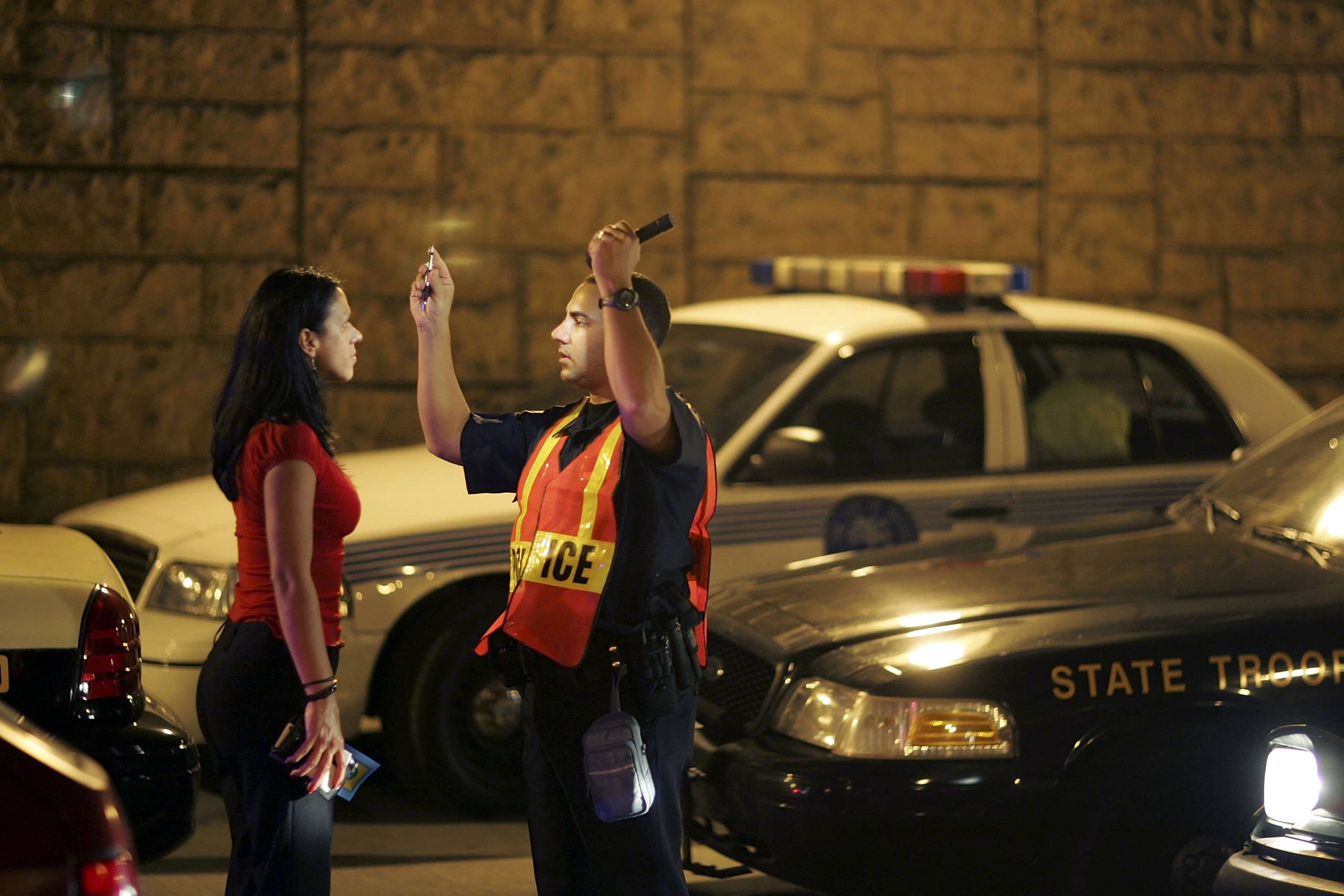
There’s one more huge elephant in the room. The Fourth Amendment. It gets a bit tricky when it comes to cars. Current precedent says that individuals inside a vehicle do not have the same reasonable expectation of privacy as they do in their homes, which is why we aren’t all passively monitored by the police or federal government. Loosely speaking, this and other legal precedent is also why the cops can’t just walk into your house, kinda like vampires.
But automotive stops and searches of a car by police are, within a limited scope, perfectly legal because this expectation of privacy doesn’t exist inside a car, and because the police must have a reason for stopping you. Passive monitoring by an entity that isn’t the police, though, creates another layer of Fourth Amendment hitches.
To even be pulled over by the police for drunk driving, there must be a reasonable suspicion you’re drunk, followed by a burden of proof that legally must be met. You’ve got to be swerving around on the road, tossing out beer cans, something to make that cop reasonably suspect you shouldn’t be driving. Then, the cop has to prove it on the roadside, usually with a breathalyzer test, and again in court. Only then do you face the consequences of that extra-tall double vodka soda.
Passive monitoring circumvents all of that and may potentially place liability in the hands of automakers. Who else is going to build the technology that’s supposed to watch this, after all? How will the system prove you were impaired weeks later in court? Will you have to go to court? Can they make you? It’s a big, sticky mess fraught with legal and privacy concerns most automakers wouldn’t want to touch with a 10-foot pole.
The NHTSA Just Kicked The Can Down The Road
Despite the numerous technological hurdles and litany of legal concerns, not the least of which is a huge shift in how we view a reasonable expectation of privacy outside the home, the NHTSA is still responsible for making this happen. Its decision, it seems, is to simply kick the can down teh road. In its Congressional report, the NHTSA provides an anticipated timeline for the FMVSS. Only, the timeline is entirely open-ended: “NHTSA continues its work
on critical and complex topics, including technology readiness, test procedure development, and consumer acceptance, as well as cybersecurity and privacy concerns. These issues must be addressed to enable NHTSA to propose a rule that could satisfy Section 24220 of IIJA and the requirements of the Safety Act. NHTSA will continue to provide annual reports to Congress and publish status updates in the Unified Agenda of Regulatory and Deregulatory Actions.”
Basically, the NHTSA has told Congress, “We’ll let you know when it can be done.” For now, that’s it. Until one day, it won’t be.
About the author

Chase Bierenkoven
Senior Editor, Autoblog