
Featured Gallery
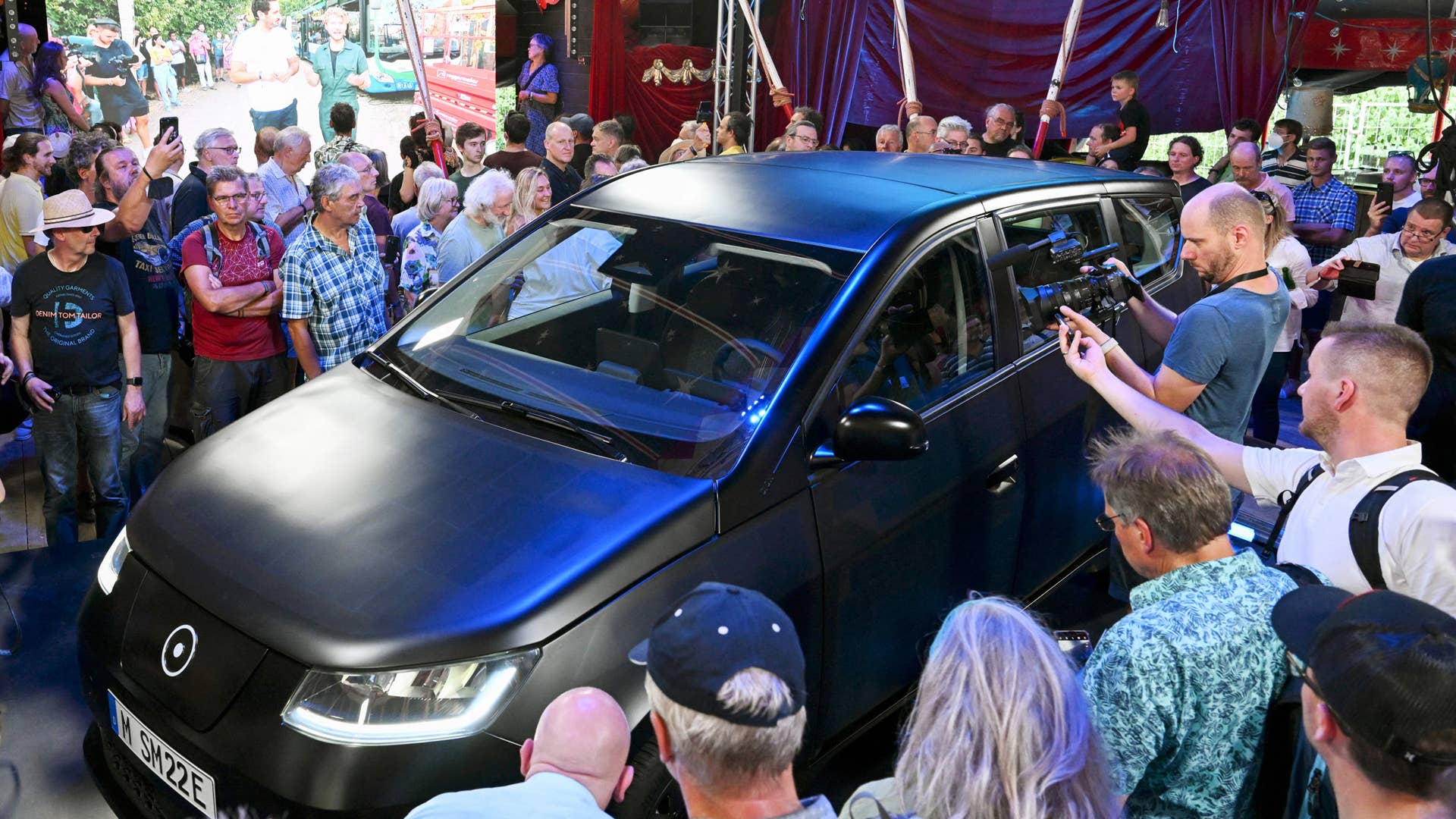
The Sion car, a solar electric vehicle (SEV) developed by Sono Motors, is surrounded by viewers in Munich, southern Germany, on July 25, 2022, during the unveiling of the final series production design. – The “Sion”, a family car covered entirely with solar panels, should go into mass production in the second half of 2023, the German startup that produces it said on July 25, 2022. With its black body, covered with 456 photovoltaic cells, and a range of 305 kilometres, the Sion promises to generate enough energy each week to travel 112 kilometres on average. (Photo by Christof STACHE / AFP) (Photo by CHRISTOF STACHE/AFP via Getty Images)

An employee of German solar car company Sono Motors drives the prototype car “Sion” across a compound near their office in Munich, Germany, August 1, 2018. Picture taken August 1, 2018. REUTERS/Andreas Gebert

Jona Christians, co-founder of German solar car company Sono Motors sits behind the steering wheel of their prototype car “Sion” in Munich, Germany, August 1, 2018. Picture taken August 1, 2018. REUTERS/Andreas Gebert
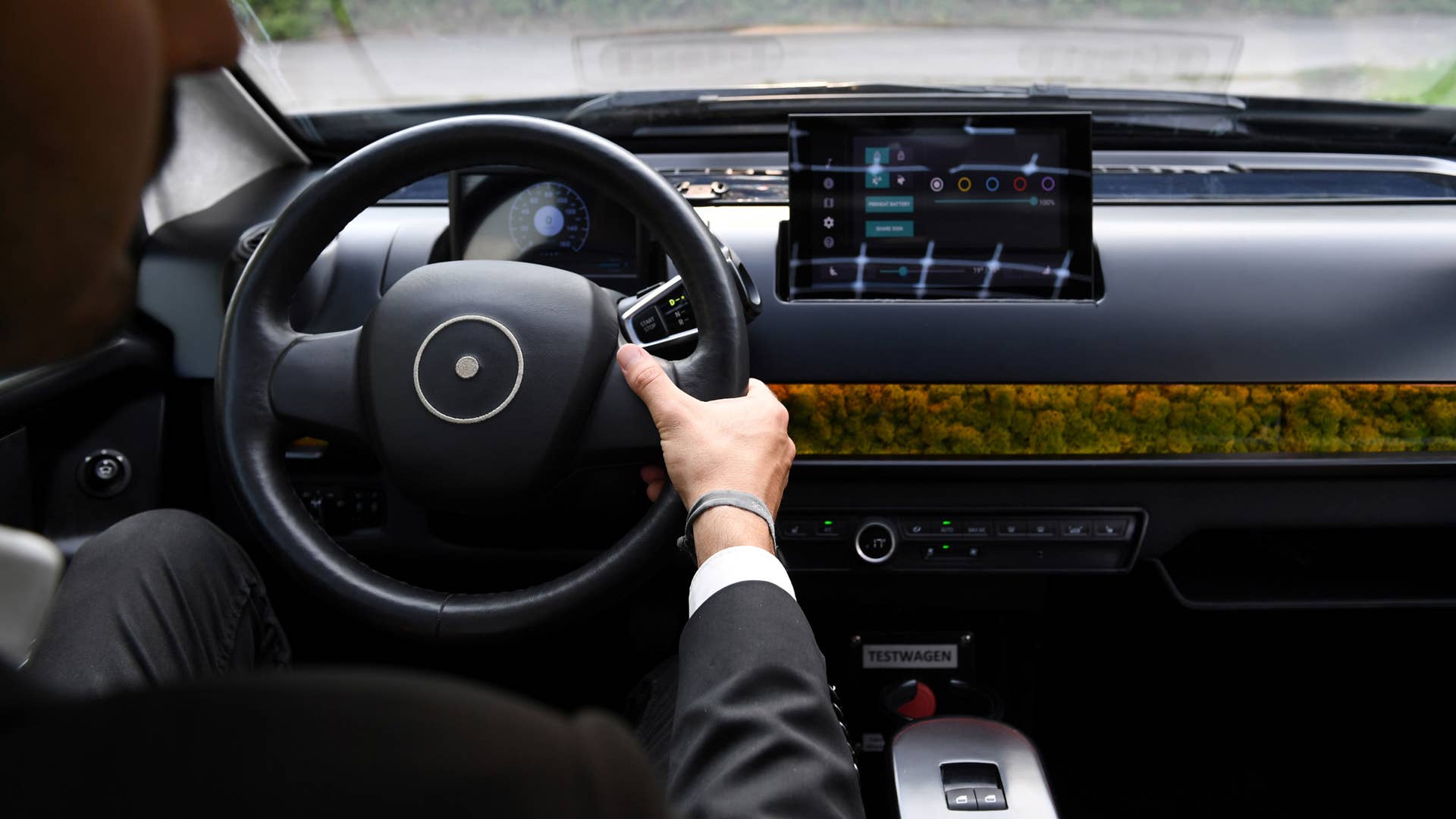
An employee of German solar car company Sono Motors holds the steering wheel of the prototype car “Sion” in Munich, Germany, August 1, 2018. Picture taken August 1, 2018. REUTERS/Andreas Gebert – RC1E4F545290

A moss for removing carbon dioxide from the air inside the car is seen inside German solar car company Sono Motors’ prototype car “Sion” in Munich, Germany, August 1, 2018. Picture taken August 1, 2018. REUTERS/Andreas Gebert – RC13EA2E2E30


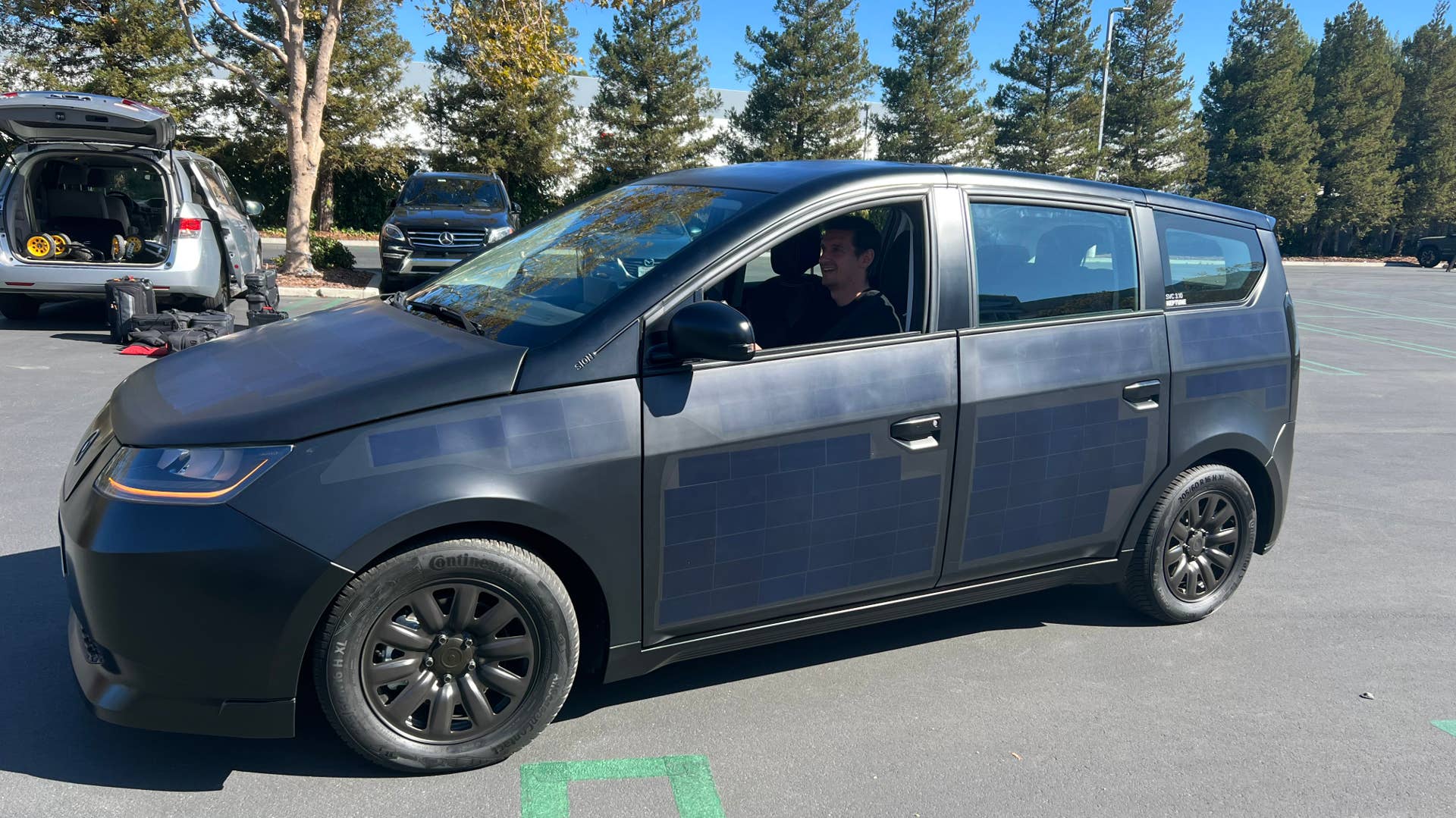

The front of the Sion car, a solar electric vehicle (SEV) developed by Sono Motors, is surrounded by viewers in Munich, southern Germany, on July 25, 2022, during the unveiling of the final series production design. – The “Sion”, a family car covered entirely with solar panels, should go into mass production in the second half of 2023, the German startup that produces it said on July 25, 2022. With its black body, covered with 456 photovoltaic cells, and a range of 305 kilometres, the Sion promises to generate enough energy each week to travel 112 kilometres on average. (Photo by Christof STACHE / AFP) (Photo by CHRISTOF STACHE/AFP via Getty Images)

Small solar panels and the grip are seen on the car door of the Sion, the solar electric vehicle (SEV) developed by Sono Motors, in Munich, southern Germany, on July 25, 2022, during the unveiling of the final series production design. – The “Sion”, a family car covered entirely with solar panels, should go into mass production in the second half of 2023, the German startup that produces it said on July 25, 2022. With its black body, covered with 456 photovoltaic cells, and a range of 305 kilometres, the Sion promises to generate enough energy each week to travel 112 kilometres on average. (Photo by Christof STACHE / AFP) (Photo by CHRISTOF STACHE/AFP via Getty Images)

The logo of the Sion car, a solar electric vehicle (SEV) developed by Sono Motors, is surrounded by viewers in Munich, southern Germany, on July 25, 2022, during the unveiling of the final series production design. – The “Sion”, a family car covered entirely with solar panels, should go into mass production in the second half of 2023, the German startup that produces it said on July 25, 2022. With its black body, covered with 456 photovoltaic cells, and a range of 305 kilometres, the Sion promises to generate enough energy each week to travel 112 kilometres on average. (Photo by Christof STACHE / AFP) (Photo by CHRISTOF STACHE/AFP via Getty Images)
And then there were none. Barely a month ago, Dutch solar car company Lightyear ceased manufacturing its Lightyear 0 solar car and then sent its production division into bankruptcy. That left Germany’s Sono Motors the last solar car company standing; now it’s gone, too. Sono announced it’s giving up on the five-seat, solar-powered Sion minivan and will focus on its solar panel division. The Munich firm, founded in 2016, says it wants to sell the entire Sion program from intellectual property to supplier contacts and assets to any third party wishing to see the project through.
In a December video update on the state of the company, the co-founders admitted initial failure and tried to launch a last rescue bid. The effort toured 13 cities trying to get 3,500 new reservations at €3,000 apiece to raise €10.5 million, on top of discussions with backers and investors. Planned to run until February 28, Sion shut it down before the deadline.
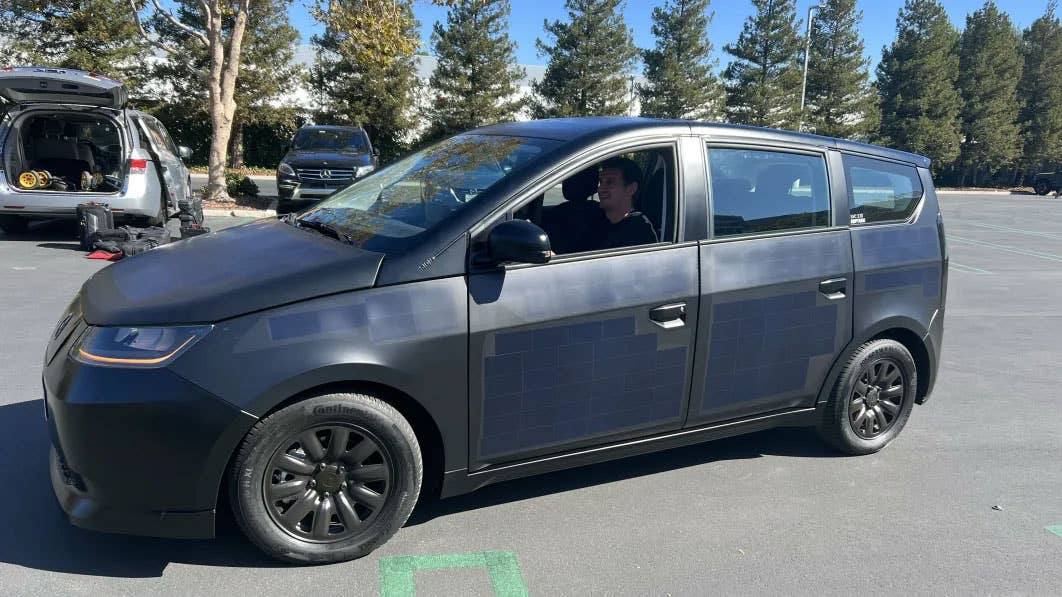
When we checked out the Sion last year, we called it “a boxy budget five-door hatch with 456 half-cut solar cells integrated into the exterior, giving it a bumpy, Bondo-like look that may not bother the green-car crowd but will likely trigger disdain among automotive-design aesthetes.” The car’s 54-kWh battery pack was good for a 190-mile range. The solar cells generate from 70 to 152 miles per week of range depending on the weather. Using less fickle methods, the liquid-cooled pack could go from 0% to 80% in about 35 minutes at a DC fast-charging station. With a Level 2 charger at 240 volts, it takes four hours to reach the same capacity. Sion planned to sell an 11-kWh wall box home charger with bi-directional capability, allowing the car’s battery to serve as power storage to run a home for up to five days, according to Sono. The Sion could also be used for portable juice while tailgating, camping or on a construction site or to charge other EVs at up to 11 kW.
A blog post on the Sono site explains those who put down reservations will have their money returned in installments over the next two years.
Reservation holders who want to help the company continue its green mission, however, can forgo getting some or all of their money refunded and help with the solar panel business. Sono will focus on fitting panels to fleets of trucks, buses, and cars, and already has 23 clients on three continents including Mitsubishi Europe and Volkswagen truck divisions MAN and Scania lined up. Sometime in Q2, the company expects to release a mass-market solar panel installation kit for buses.
Related video: