
Key Points
- Ford’s revived Bronco has reignited competition with Jeep’s Wrangler in the off-road vehicle market.
- Bronco matches Wrangler’s customization and trail hardware while offering smoother everyday driving, broader trims, and free training.
- Jeep retains an advantage on extreme rock crawling and unique trail-badge culture, but faces growing competitive pressure.
In case you didn’t know, the original 1966 Ford Bronco was built specifically to challenge the surging popularity of the Jeep CJ-5 and International Harvester Scout. World War II veterans had returned home with a deep affection for the indestructible military Willys MB, and civilian CJs (literally standing for Civilian Jeep) quickly proved that Americans loved rough-and-tumble four-wheelers—even if they were stiff, drafty, bouncy, and undeniably unsafe. Ford noticed that enthusiasm, saw an opening, and made a decision: build a 4×4 with the trail creds of a CJ, but add the civilizing space for the kids, the dog, and the groceries. Once drivers realized they didn’t have to sacrifice practicality or capability, the Bronco took off. For decades, Ford and Jeep battled for the same niche customer.
Kristen Brown
Jeep got some breathing room in the 1990s. Ford discontinued the compact Bronco II after rollover controversies, replacing it with the family-friendly Explorer in 1991, and quietly swept the full-size Bronco under the rug in 1996 to make way for the Expedition. For a quarter of a century, the Wrangler owned the open-air, solid-axle off-road throne with zero direct domestic competition.
Then came 2021. Ford resurrected the buckin’ cowboy, and the rivalry reignited overnight. We got a glorious “will-they, won’t-they” horsepower war—with Jeep revealing the 470-hp V8 Rubicon 392 the exact morning Ford pulled the sheet off the new Bronco, and Ford answered back with the Raptor. The sales chase has been relentless ever since; the Bronco has notched record quarters (even edging out the Wrangler in Q2 of this year), turning a one-sided reign into a legitimate, no-holds-barred dogfight.
Kristen Brown
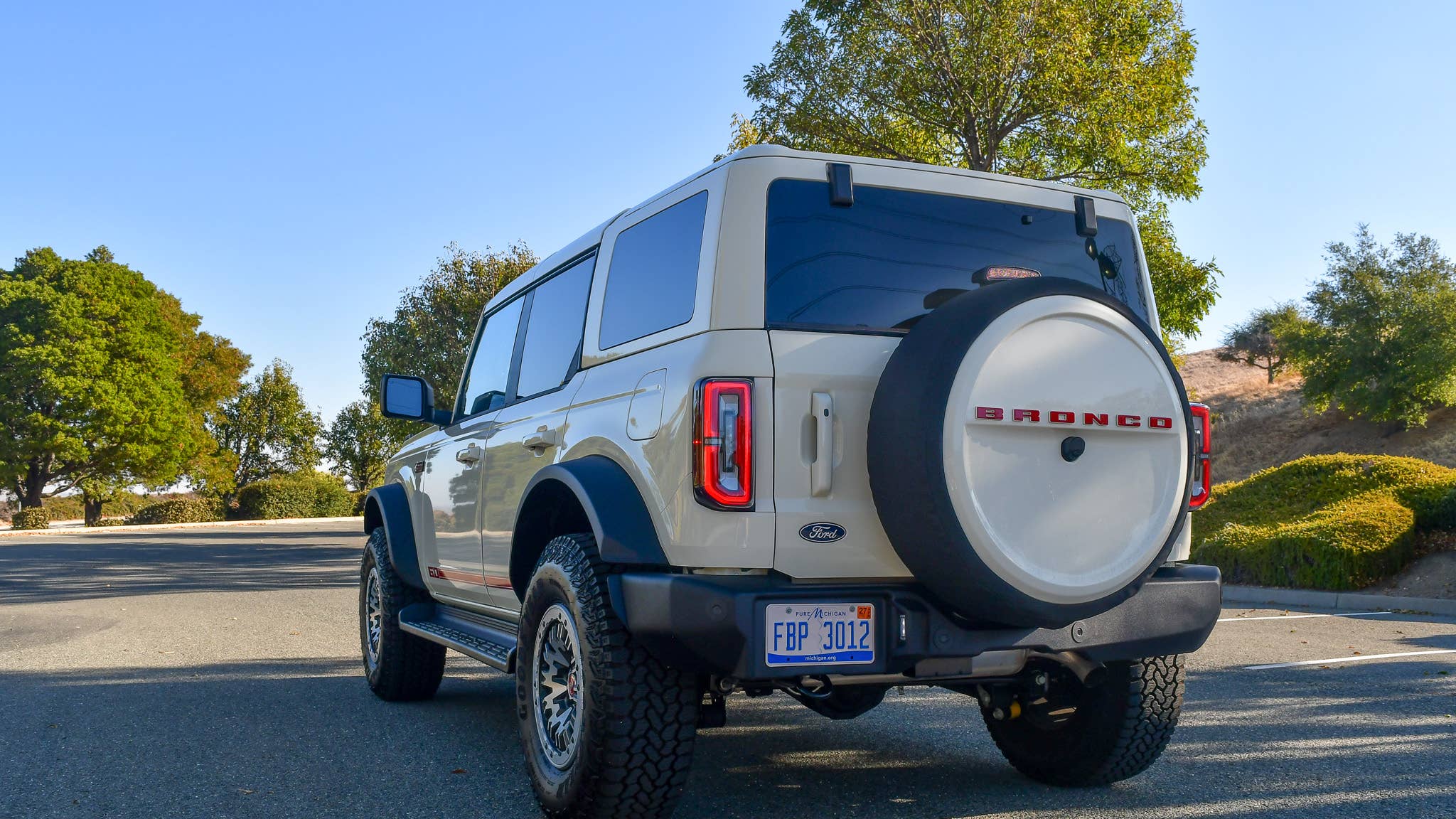
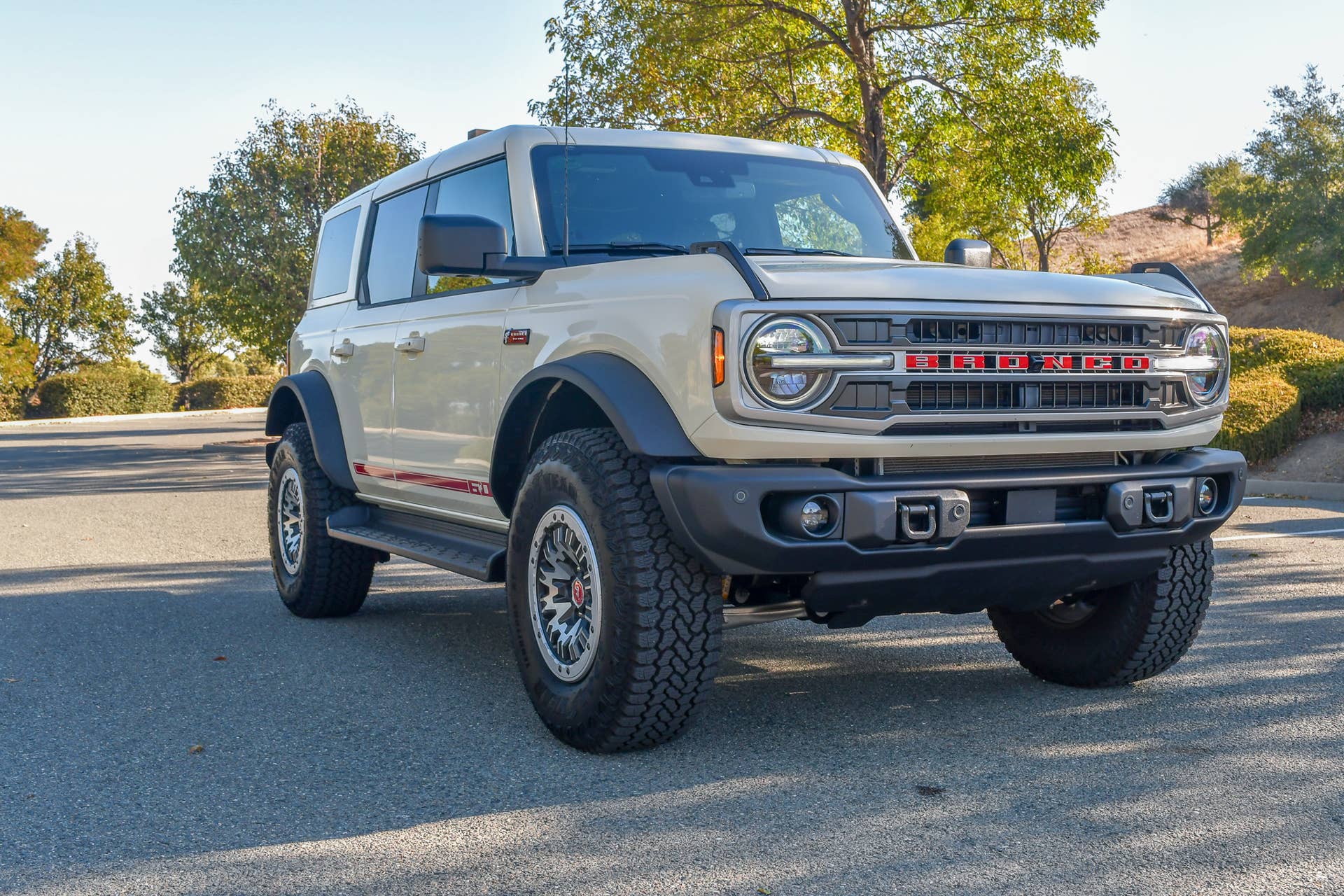
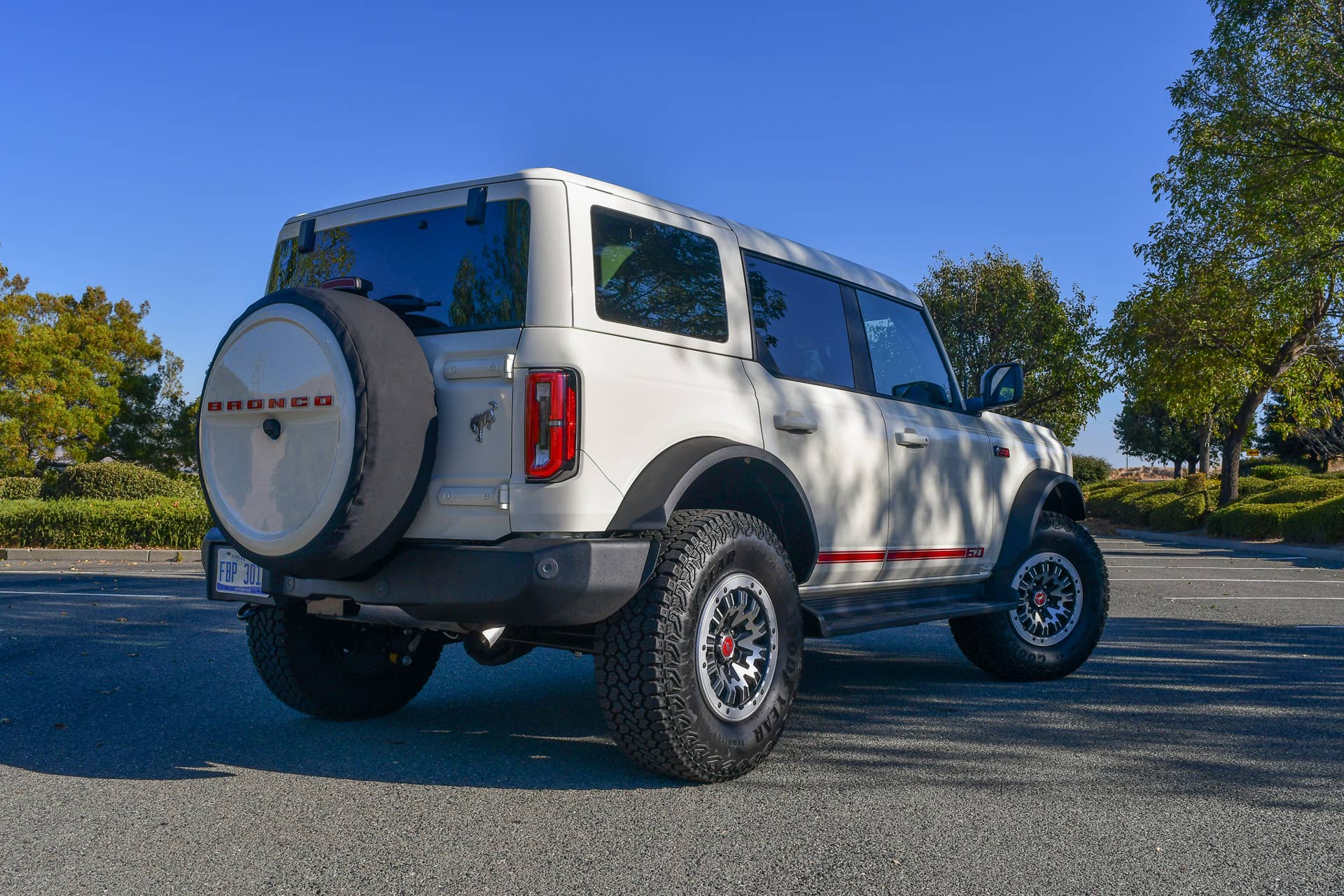
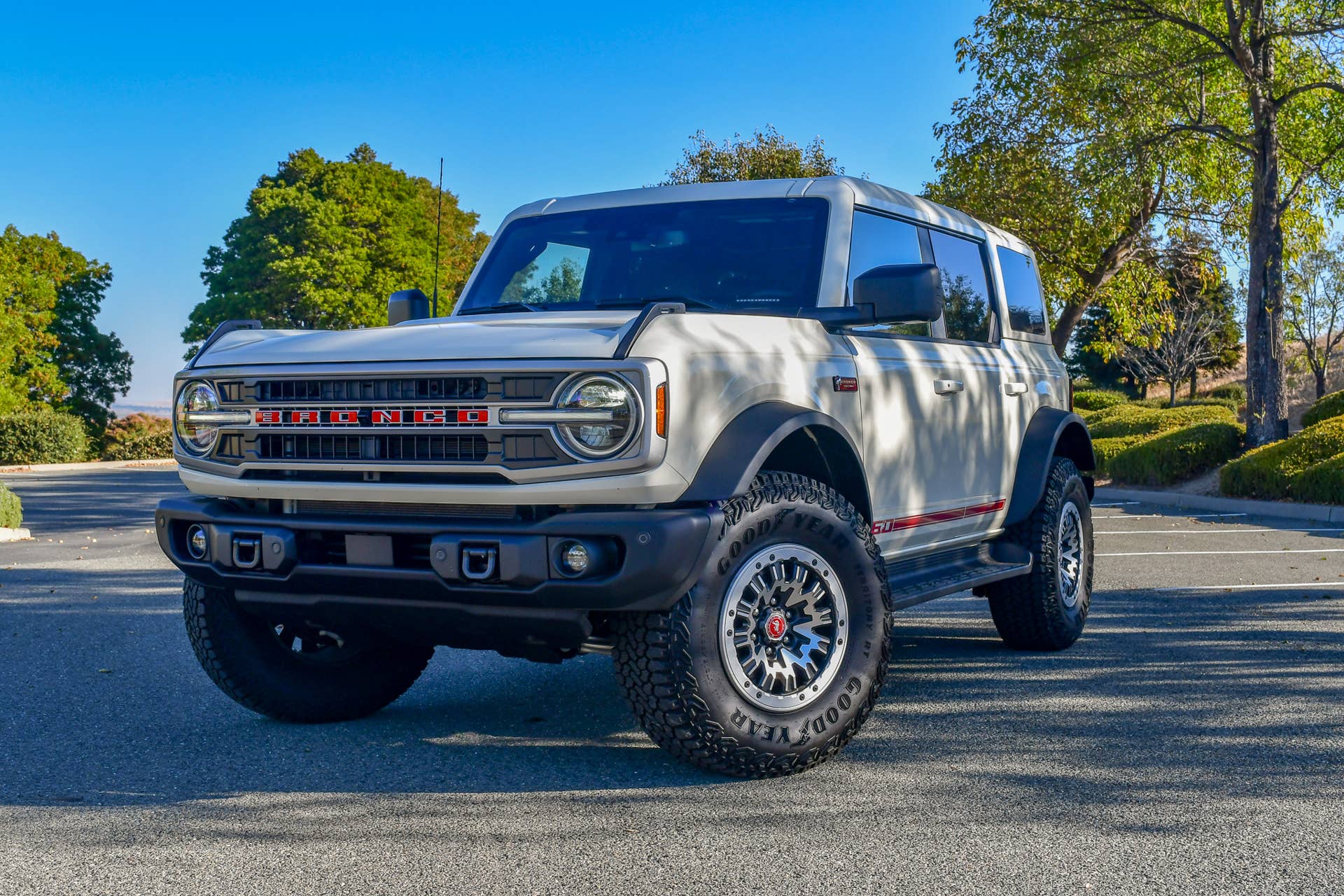
As a Wrangler owner, I’ll always have a soft spot for solid front axles, trail heritage, and the wave that comes with the badge. And yes, the ducks. Sue me. But after spending a week in a fully loaded Ford Bronco Outer Banks, I finally understand why Ford makes Jeep feel a bit uneasy. It’s good. Dangerously, conversion-worthy good. Having sat in both driver seats, here’s why Jeep has every reason to sweat.
The aftermarket support for the Ford is vast, and rapidly growing
One of the main arguments for going with Jeep over any other company was the seemingly endless aftermarket support. If you really wanted to (and a lot do), you could buy a 2-door Wrangler Sport, turn on your computer, and find upwards of a thousand different retailers selling parts to improve, tweak, or change nearly anything on your Jeep. Finding parts was easy because they were so mass-produced, and Jeep used the same engines and transmissions over several model years, and the forums were full of sage advice on how to fix common issues (like the dreaded cooling issues I faced with my own LJ…). There was an incredible amount of comfort in knowing that no matter what you needed or wanted, there were several choices available to you at a wide range of prices.
Kristen Brown
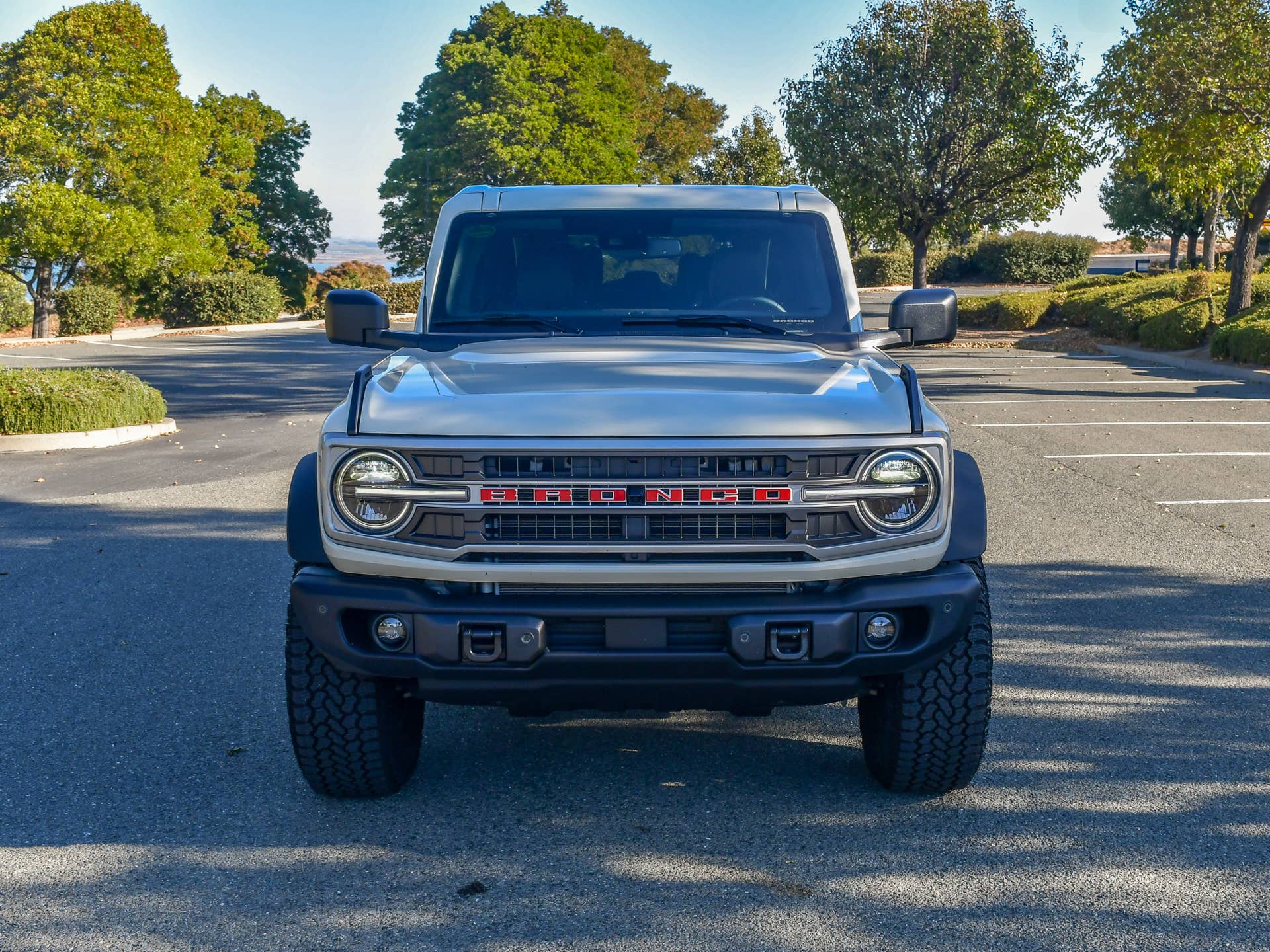
Five years into the Bronco’s resurrection, the Wrangler’s seat at the cool kids’ table is being challenged. The aftermarket didn’t just welcome the Bronco, it scrambled to build out a parallel universe for it. Dominant multi-brand giants like RealTruck and ExtremeTerrain—long considered holy grounds for Jeep parts and accessories—now give the 6th-gen Bronco equal top billing across suspension lifts, bumpers, recovery gear, and modular top choices. Legacy off-road staples that made their names on solid axles, like Bestop, WARN, and Rough Country, rolled out purpose-engineered Bronco lines almost immediately. Every time you look up parts and accessories for the Jeep, you see the same parts for the Bronco. And if not, you get a “coming soon!” message.
Kristen Brown
Add in dedicated enthusiast hubs like BroncoBuster addressing steering-rack reinforcement and Mabett dominating modular interior accessories, and buying a Bronco no longer feels like pioneering on an empty platform. The parts bin is deep, the catalogs are thick, and Jeep no longer owns the monopoly on endless customization.
Ford’s factory-built accessory options nearly mirror Jeep’s
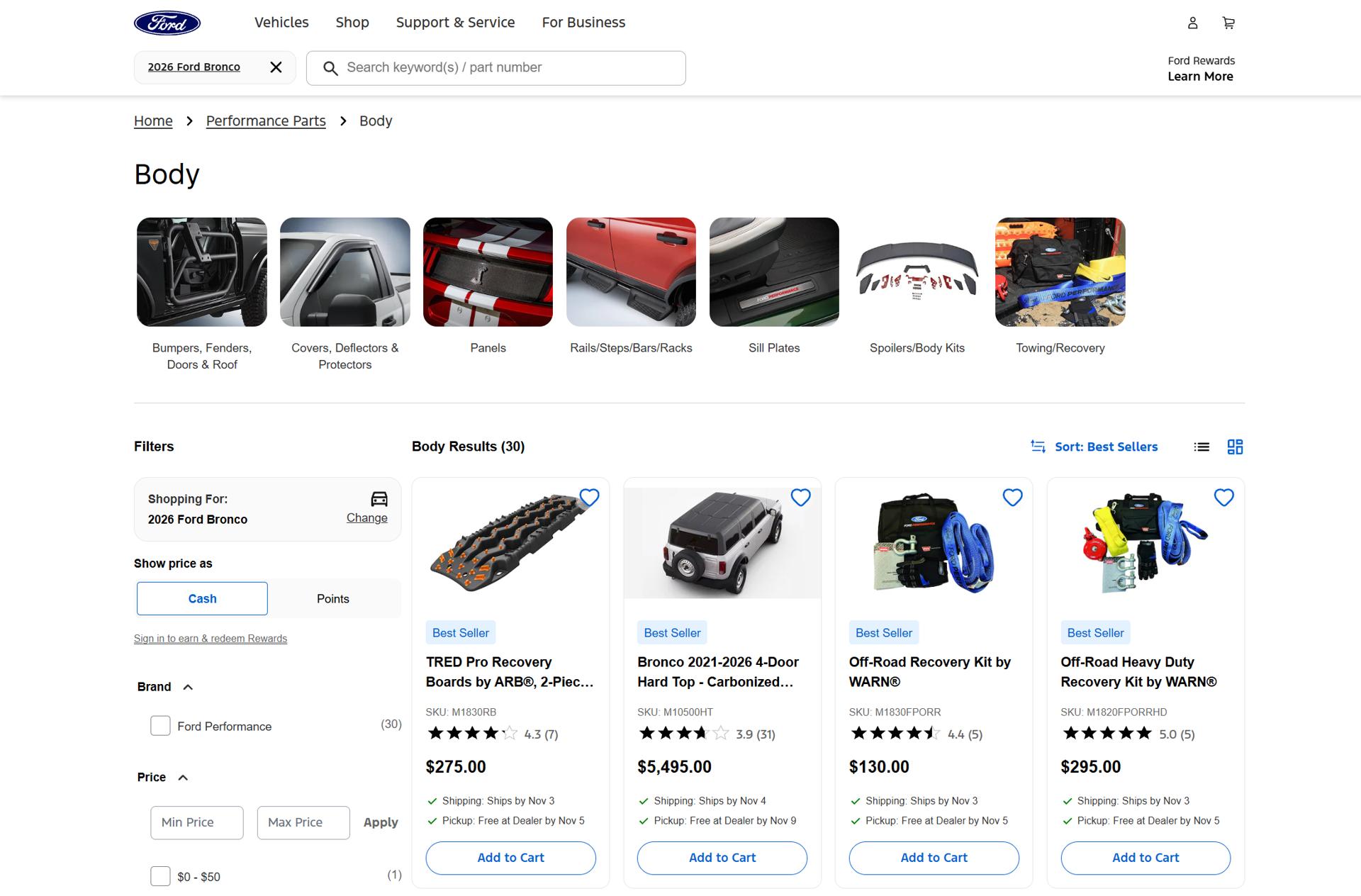
When you’re building your Jeep Wrangler online, you’ll notice you have a lot of options. You can choose between a few different engines, you can choose between a hard or soft top, whether or not you want them to be color-matching or black, two- or four-door configurations, winch bumpers—you name it. You can even decide with axle-ratio you want. If you don’t want to choose, there are trims available to make it easier. When it comes to modifications, Jeep has its own accessories division, Mopar, where owners can trust that these parts were designed and engineered specifically for your Jeep, without voiding the warranty. For the longest time, Mopar was the unchallenged ruler of factory-backed modifications. You could even order different suspension parts, wheels, tube doors, and steel bumpers.
Screenshot - Kristen Brown
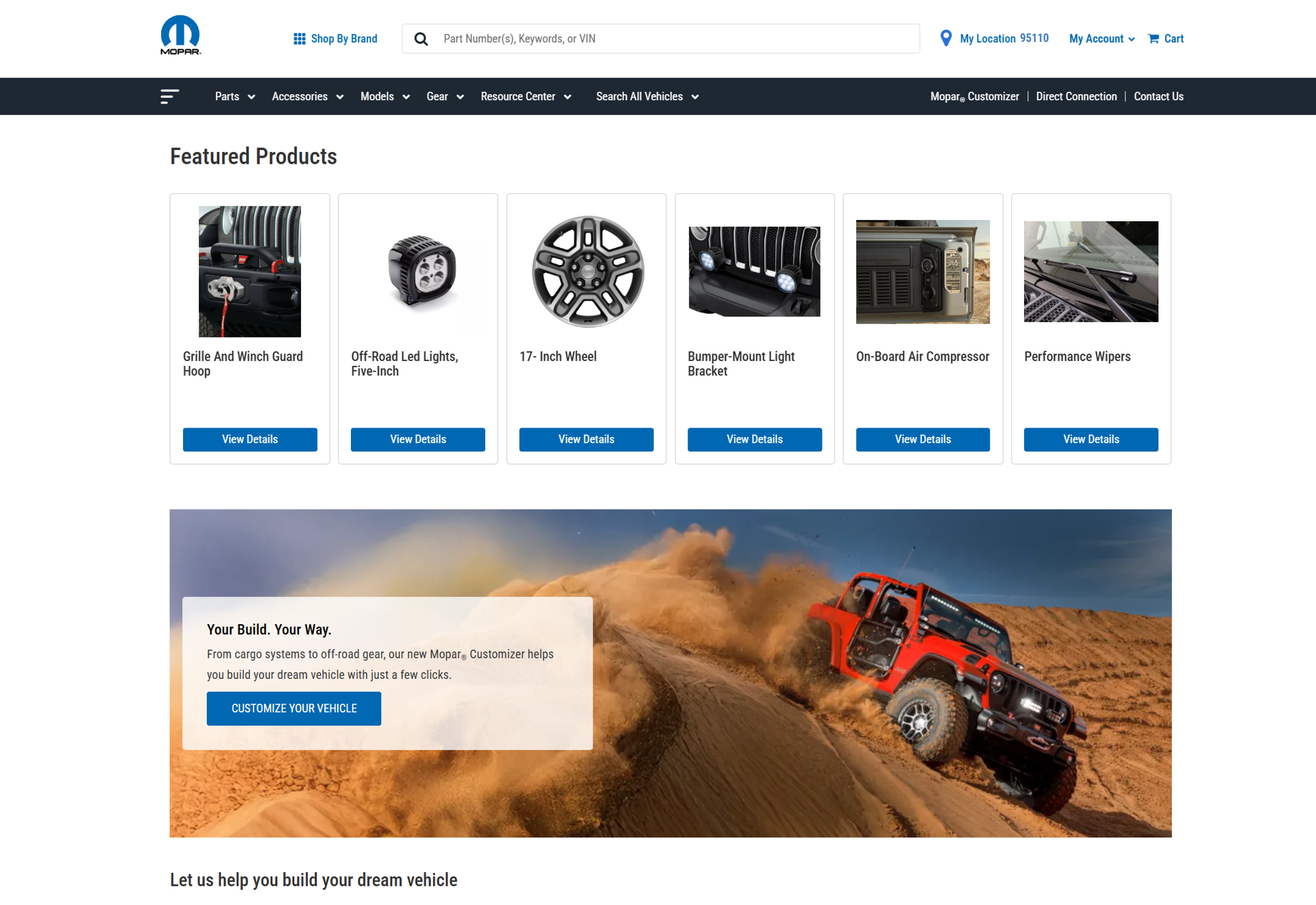
Ford’s been paying very close attention, because they’re doing something eerily similar with their Ford Performance Parts division. The Blue Oval designed the Bronco’s heavy-duty modular steel bumper specifically to accept OEM accessories without cutting or drilling. Need serious self-recovery? Ford offers an official Ford Performance WARN winch kit, complete with dealer-flashed ECU updates so the vehicle’s forward sensors adjust to the front-end profile. In some ways, Ford executed the concept with even less pretension. Rather than rebadging everything behind a corporate moniker, Ford openly partnered with off-road royalty. You can order an under-hood twin air compressor engineered with ARB, A-pillar ditch lights developed with Rigid Industries, and a 2-inch Bilstein coilover lift kit straight through the Ford portal—and like Mopar, finance it with the truck. When a buyer can roll a turnkey overland build into a low-APR loan before taking delivery, Jeep loses one of its most lucrative competitive arguments.
Screenshot - Kristen Brown
And once again, I’m so impressed with how quickly everything mobilized around the Bronco. It took what feels like decades for Jeep to get to this point. Ford did the same within five years. Would I say it’s exactly like Jeep? Not yet, but it’s pretty damn close.
Off-road capability is getting there, though I’d argue Jeep is still ahead
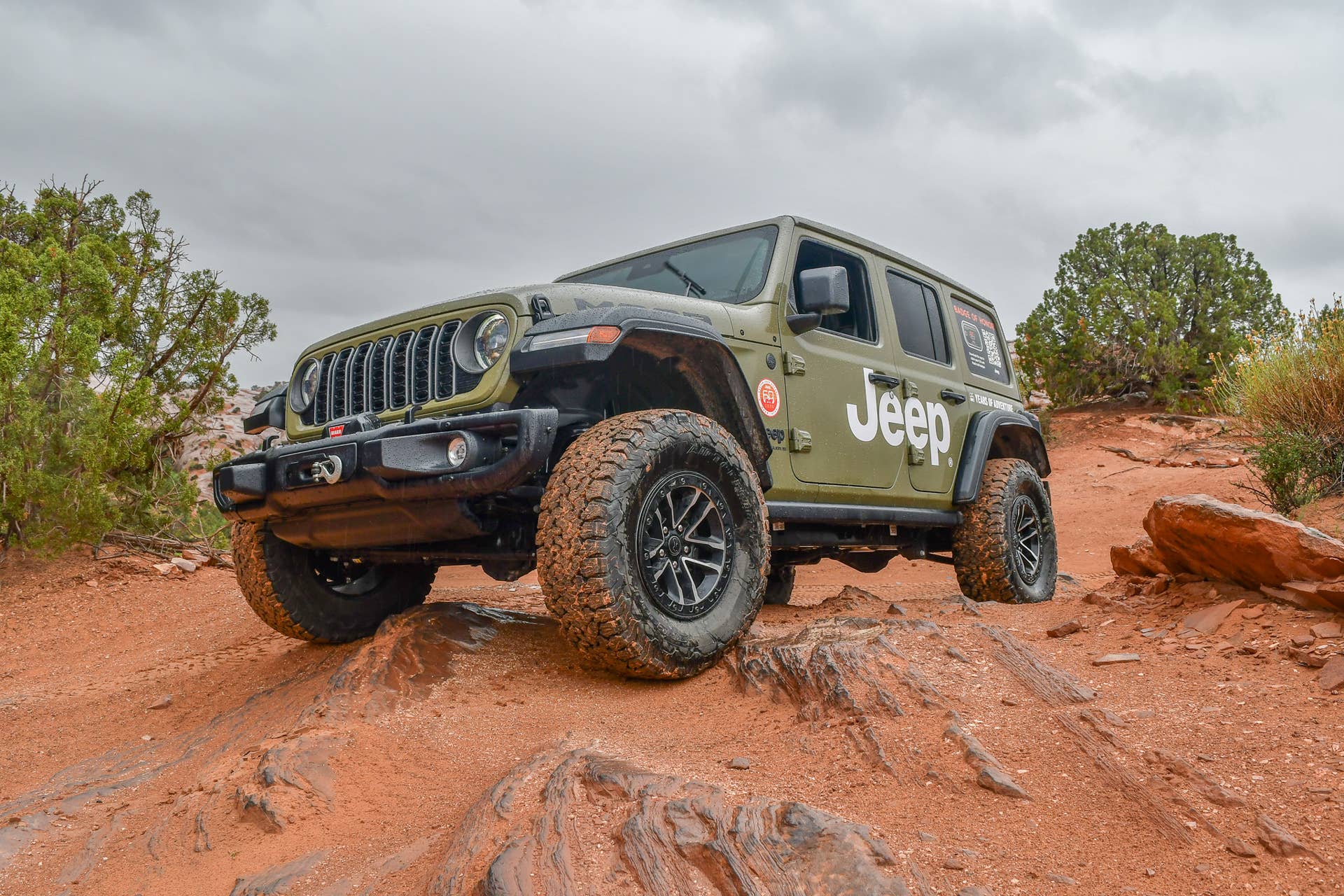
As an enthusiast who appreciates mechanical simplicity, I’ll defend the Wrangler’s solid front axle all day. When you’re crawling over jagged, uneven boulder fields, nothing replaces a solid stick of steel. As one wheel climbs a rock, the axle mechanically forces the opposing tire down into the dirt, maintaining traction and tire contact when an independent system would leave a wheel dangling uselessly in midair. Solid axles are durable, easy to articulate, and shrug off abuse that can snap a CV axle or bend a delicate tie rod on an IFS setup. On the most extreme, low-speed technical trails in America, the Wrangler still wears the crown.
Kristen Brown
But here is where the argument bottlenecks: for 95% of real-world off-roading, the Bronco’s IFS isn’t just “good enough”—it’s arguably better. Unless your idea of a casual Saturday involves the Rubicon Trail or Pritchett Canyon, off-roading (at least in my area) is largely washboard gravel, rutted fire access roads, and modest two-tracks. In those environments, the Bronco walks away from the Wrangler. Its independent front wheels soak up high-speed chatter without rattling your teeth loose or sending the steering wheel dancing over every washboard ripple. Because the front diff is tucked high against the chassis, it means better center clearance over ruts and stumps.
What really erodes Jeep’s advantage, however, is that Ford matched them spec-for-spec on the spec sheet. You can order both platforms with selectable front and rear differential lockers, aggressive crawl-ready axle ratios, and push-button electronic sway-bar disconnects. In fact, a Wrangler requires relatively flat, level ground to uncouple its sway bar; the Bronco’s hydraulic disconnect can decouple under load, mid-obstacle, the moment you realize you need extra flex.

Cole Attisha
Jeep still owns the extreme rock-crawling fringe. But Ford proved that by pairing smart electronic hardware with modern IFS, you can sacrifice just 5% of technical rock capability to gain a massive leap in daily composure. For the vast majority of buyers, that’s a trade they’ll gladly make. I drove my lifted, re-geared 2006 Jeep Wrangler for 12 hours and swore I’d never do that again. But I’d happily drive 12 hours in a Squatch’d out Bronco, and that’s where IFS can really make the difference.
Pricing structure and trim level philosphy options are similar, too
When you map the brochures side-by-side, the matchup is damn near uncanny: the Ford Bronco Badlands is built to trade blows directly with the Jeep Wrangler Rubicon. Both sit right at the sweet spot of the lineup, commanding close to $50,000 (the 4-door Rubi starts at $51,130) starting stickers and packing very real, heavy-duty trail hardware straight from the factory. But looking at the Monroney window stickers reveals two interesting ways of extracting cash from the same buyer. Jeep gives you virtually every core off-road tool on day one. Buy a base Rubicon, and you don’t pay extra for the Rock-Trac 4:1 transfer case, front and rear Tru-Lok lockers, or the electronic sway-bar disconnect. The mechanical arsenal is standard.
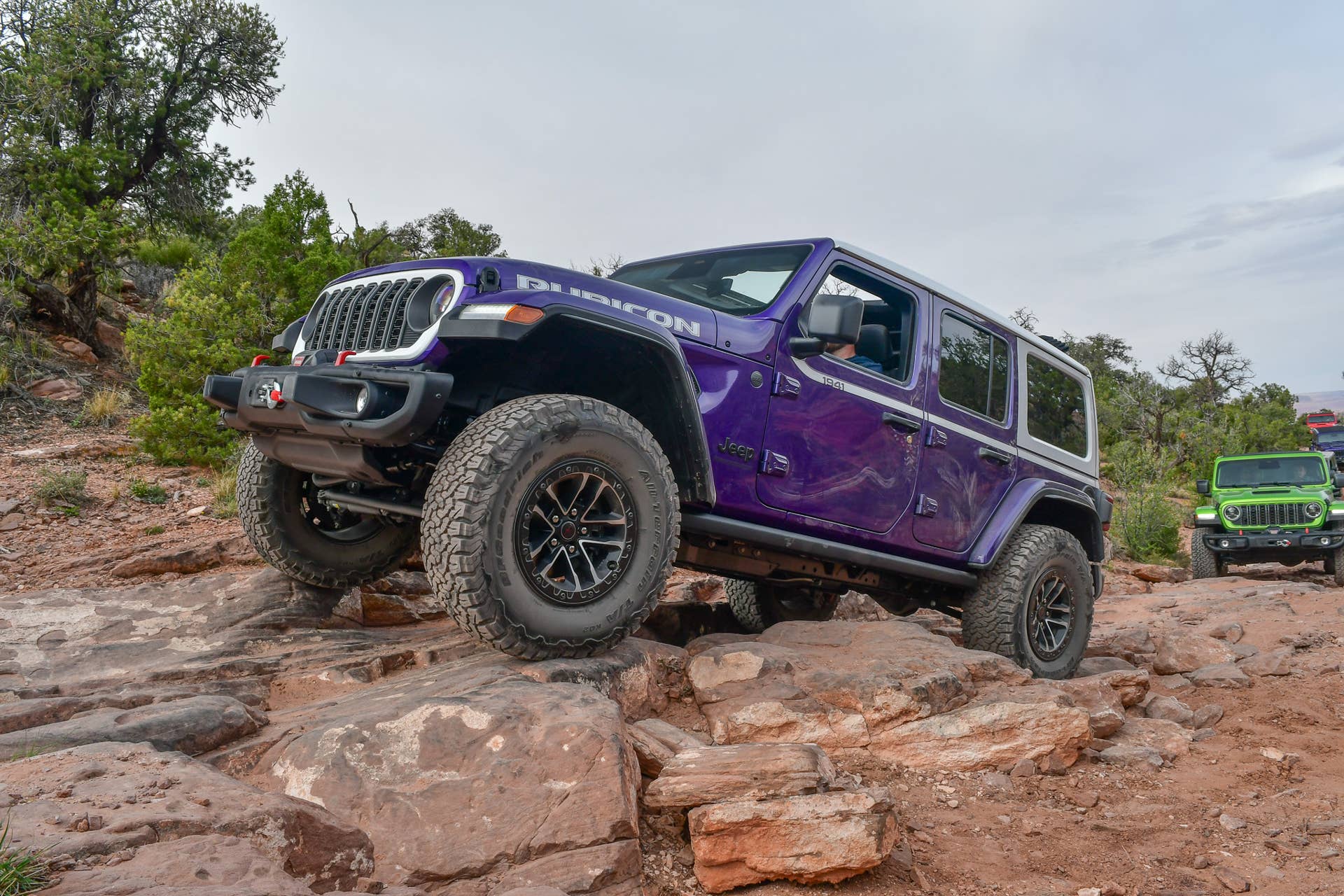
Kristen Brown
Where they both get you is the civilization tax: if you want heated seats, leather upholstery, steel bumpers, or advanced driver safety assists, you’re forced to tack on expensive option bundles or leap up to the more expensive $61,825 Rubicon X. Similarly, Ford approached trims with modular Silicon Valley thinking. The Badlands matches the Rubicon’s front and rear lockers and underbody armor out of the gate, but Ford nests its creature comforts in tiered Mid, High, and Lux packages. Check the box for a 360-degree camera and a premium B&O audio system, and your Badlands effortlessly jumps past $60,000. My Outer Banks model was technically more expensive than a Rubicon X with add-ons and options to maximize comfort, with a sticker price of $64K.
Yet, Ford pulled off a packaging masterstroke that Jeep is still scrambling to answer: The Sasquatch Package. Ford realized that not every buyer wants rock-crawling armor, but almost everyone wants 35-inch factory mud-terrains, front and rear lockers, and maximum trail clearance. By letting customers bolt the full Sasquatch kit onto civilized, daily-commuter trims like the Outer Banks, Ford opened the floodgates. You no longer have to live with the rougher edges of an ultra-specialized rock crawler just to get aggressive factory stance and traction. If you want something a bit tamer to drive every day that still looks the part, Ford makes the transition seamless. The Bronco Outer Banks gives you the aggressive, trail-ready stance, but pairs it with car-like rack-and-pinion steering and an independent front suspension that tracks straight on the highway without drama.
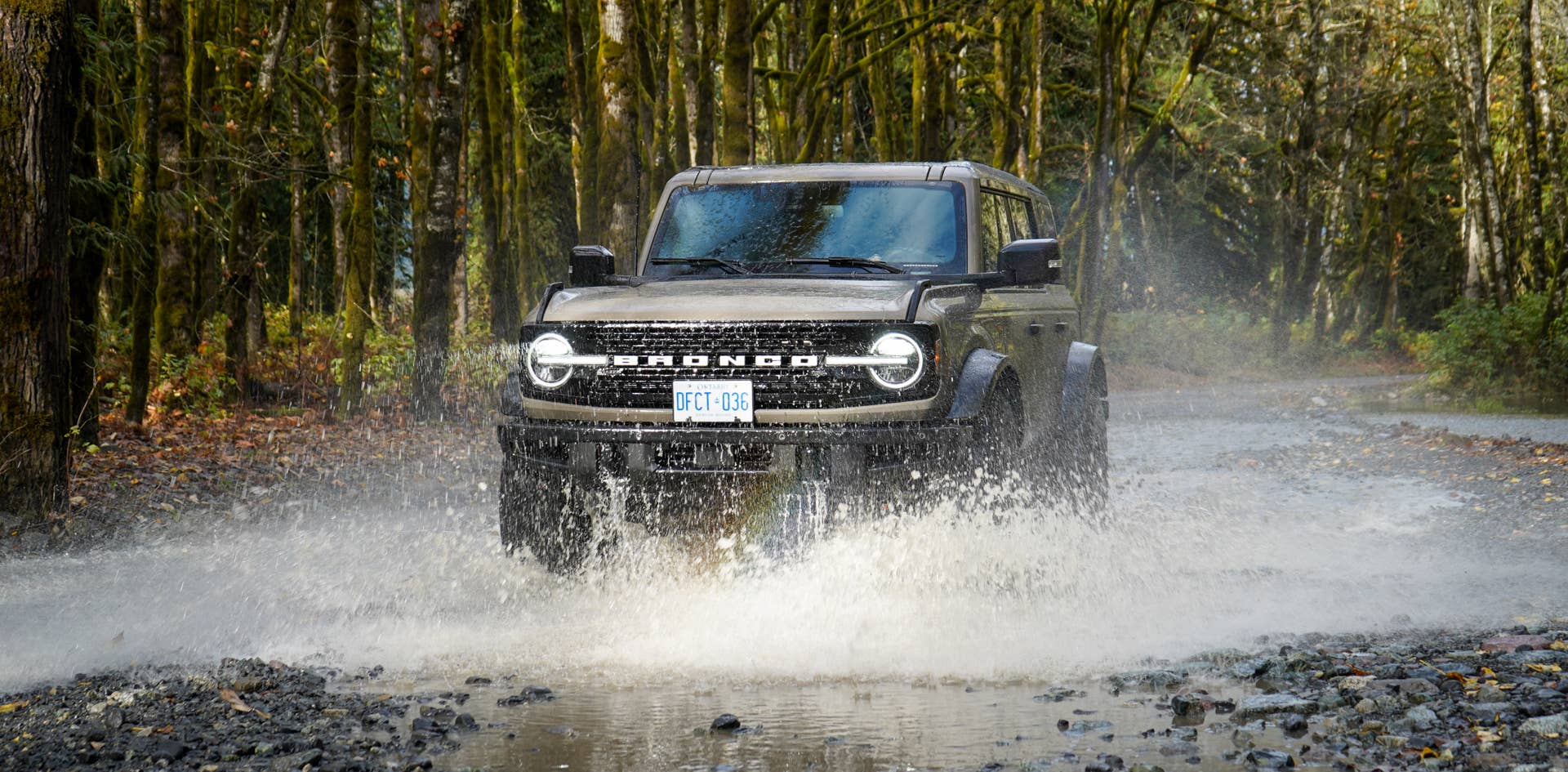
Cole Attisha
With Jeep, a Wrangler is always a Wrangler. While trims like the Sahara tone down the hardware—swapping aggressive mud tires for all-seasons and ditching the Rubicon’s selectable locking differentials in favor of open axles—the underlying bones never change. You’re still driving a vehicle with twin solid beam axles and recirculating-ball steering. No matter how much leather or tech Jeep packs into the interior, there is no such thing as an insulated, soft-riding Wrangler. Ford realized that many buyers just wanted the convertible open-air lifestyle without the live-axle highway-driving sacrifice, and trims like the Outer Banks give them exactly that. There really is a Bronco for every skill and intent level. Can’t say the same for the Wrangler.
Ford makes coming into the lifestyle easy like Jeep, but Ford’s class is easier to access (and free!)
Both Jeep and Ford offer off-road courses for new private owners. Ford calls theirs the Bronco Off-Roadeo course (clever, I know), while Jeep’s is Jeep Adventure Academy or Jeep Jamboree USA. I’d heard of Ford’s Bronco Off-Roadeo program, but I didn’t realize how easy it was for owners to access until I saw the Monroney. On the sticker, there was a QR code, prompting owners to scan it to register for their free class, where you can learn when and how to lock your diffs, when and how to disconnect your sway bar links, and how to pick your lines. You start by scanning the QR code with your phone, pick one of four resort campuses, and your reservation is instantly validated. It’s frictionless, free, and built for a smartphone generation that wants turnkey adventure. It’s also free; you drive one of their cars so you don’t have to worry about your insurance deductible—and the class lasts for an entire day.
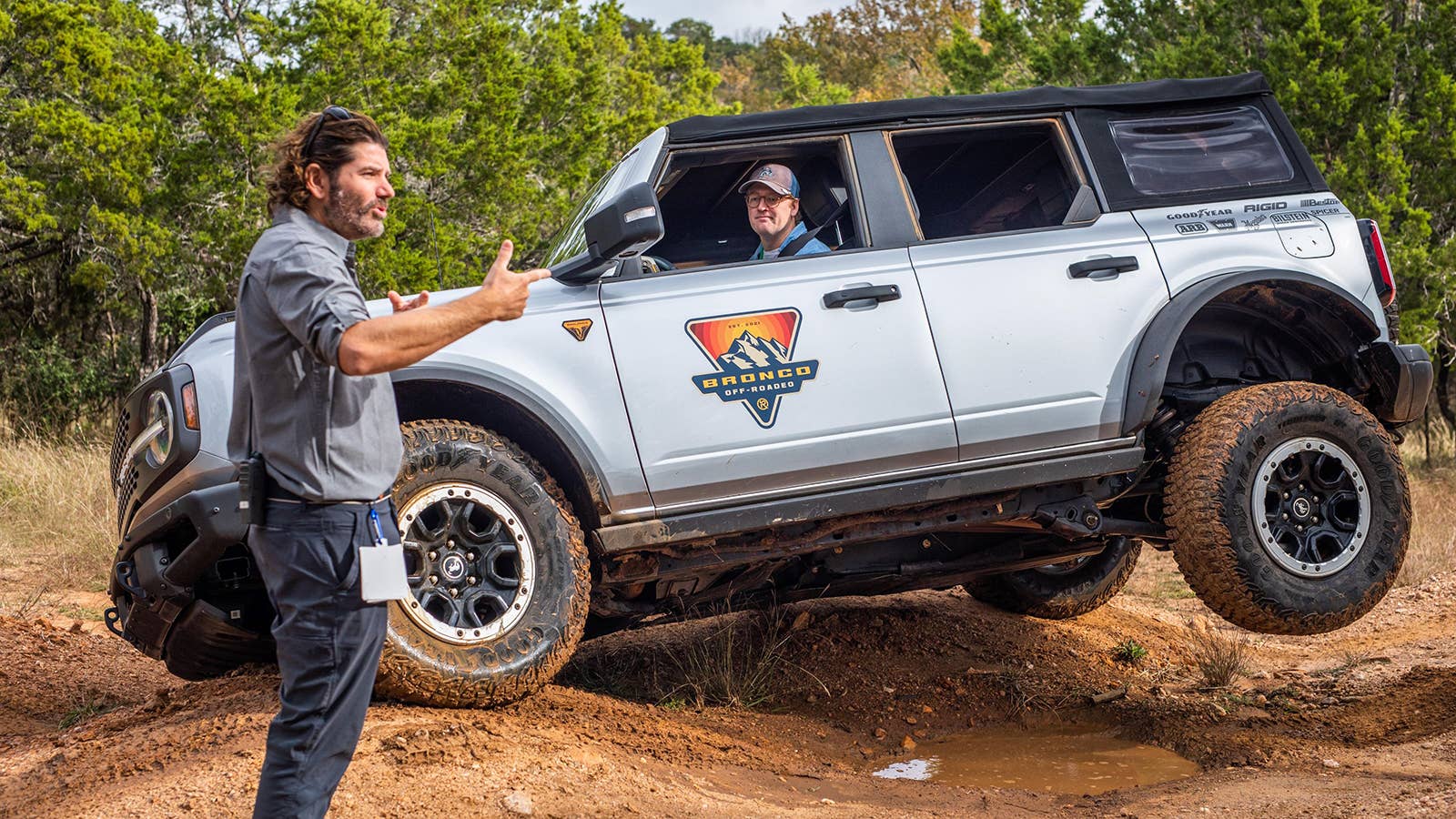
Ford
Jeep’s is a bit more of a process. And it’s not free. Jeep charges an out-of-pocket entry fee, generally ranging from $295 for regional 101 clinics up to $895 for advanced clinics (like their Rubicon Trail prep courses). They also require you to bring your own vehicle, and you have to list your equipment to make sure they meet the minimum requirements. You don’t drive one of their mules. You’re also typically waiting for months. Jeep, like Ford, does supply the trail guides, spotters, lunch, and instructors, but if you make a mistake or pick the wrong line, Jeep puts that in your lap. Both will teach you how to best enjoy your truck off-road, but Ford treats newbies like new members of the family, with no hazing or expectations. You get a full welcoming committee. Jeep’s community is a bit more rough around the edges in that arena.
Ford’s crowd felt more female-friendly
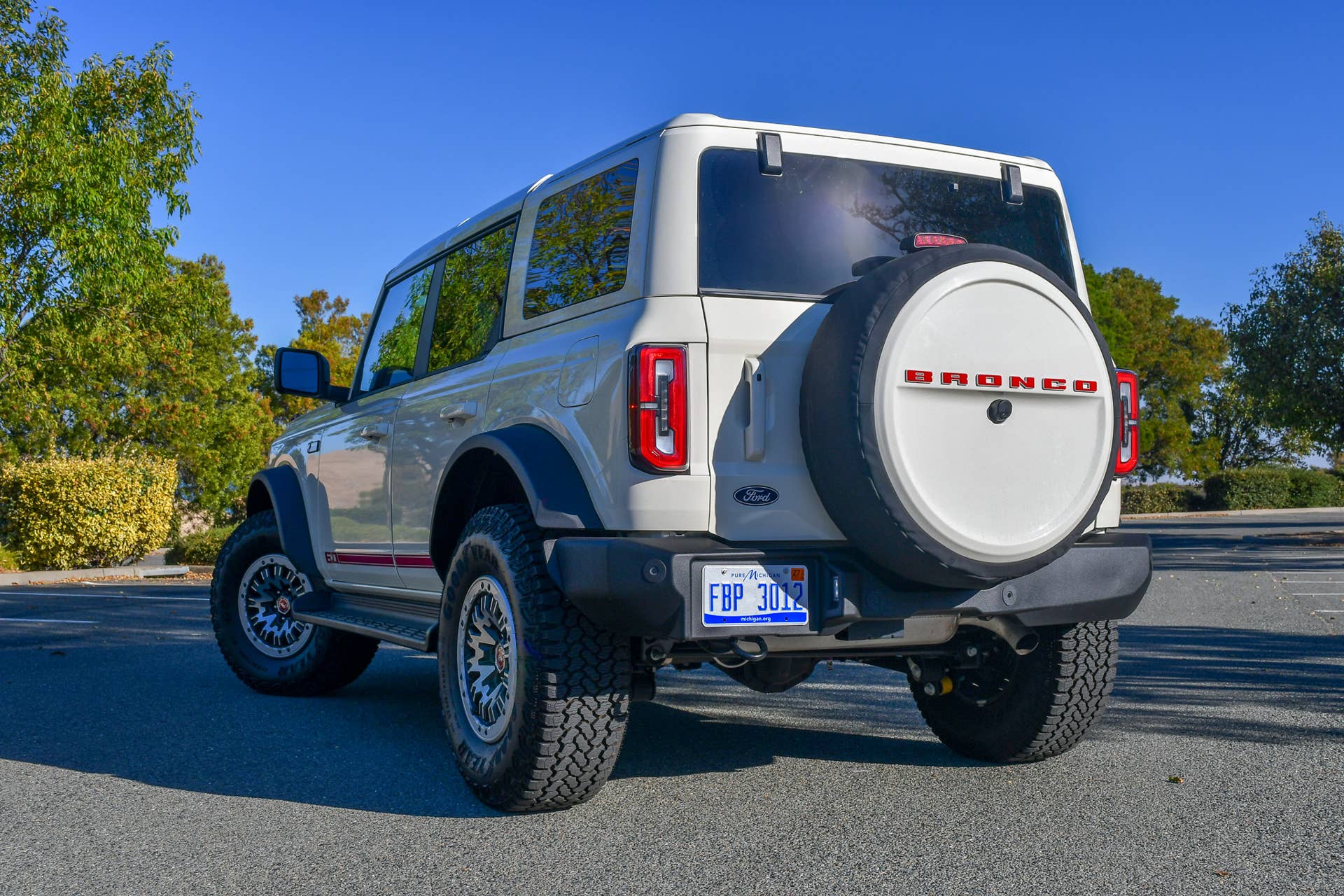
I’m probably going to catch some heat for saying this, but I noticed something undeniable during my week with the Outer Banks: the Bronco community is noticeably more welcoming to women. I adore my Wrangler. I’ve spent time under the hood addressing the cooling issue, suffered through its mechanical gremlins, and will probably be buried in it. Yet, being a female Wrangler owner came with its own set of challenges I was not ready for. I’ve stopped going to local meets and trail rides, now preferring to ride solo, because I’m routinely met with unsolicited condescension. Fellow owners ask if I’m driving my husband’s or dad’s rig, act visibly stunned when I pick a clean line through a rock garden, or assume I don’t know the difference between a sway bar and a track bar.
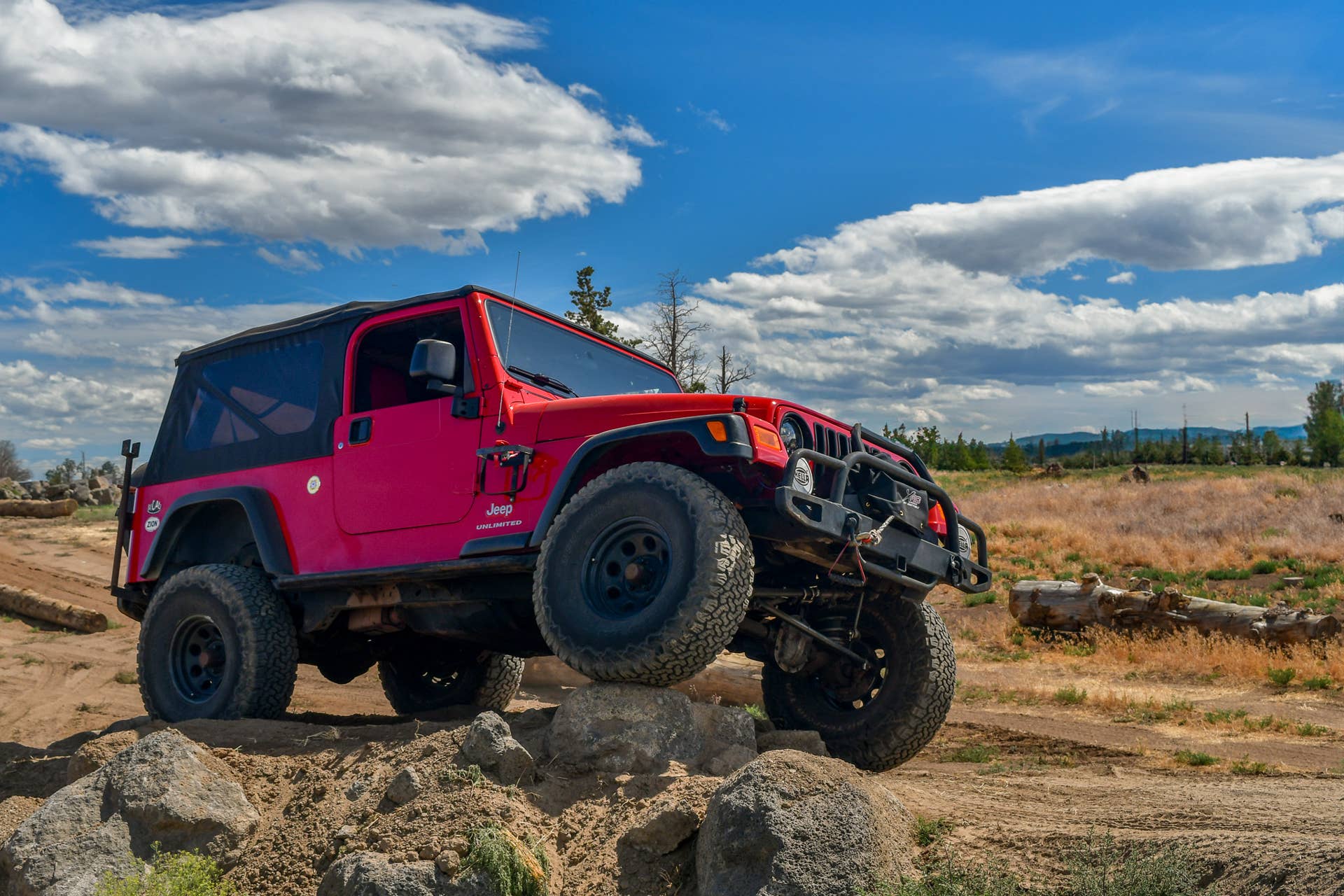
Kristen Brown
Despite registration data showing women make up nearly 30% of Wrangler buyers, the vocal core of the community still acts like the driver’s seat is an exclusively male clubhouse. It makes sense, being a decades-old military-founded brand that is largely made up of a tough old guard that operates under the “built, not bought” mantra. But the Bronco crowd felt so different. Because the 6th-generation Bronco was born in 2021 rather than 1945, it didn’t inherit decades of dogma. In the Bronco orbit, people asked what trails I liked and what options I ordered, assuming I was an enthusiast rather than an interloper. And demographically, the visibility of female owners is everywhere—both behind the wheel and leading trail runs.
By deliberately lowering barriers to entry—like handing every buyer the keys to a factory fleet at the Bronco Off-Roadeo—Ford established an adventure culture centered on curiosity rather than gatekeeping. Jeep, for the most part, still treats mechanical grit like a fraternity initiation. Bronco treated me like a paying customer who just wanted to get out into the dirt. For a legacy brand trying to hold onto its market share, that cultural divide is a dangerous blind spot.
Kristen Brown
To be fair, this isn’t an indictment across the board. The younger generation of Jeep owners is remarkably welcoming, collaborative, and eager to leave the old boys’ club dynamic in the dust. The friction almost exclusively traces back to a grizzled, old-guard contingent of owners still clutching outdated ideas about who belongs behind the wheel of a trail rig (just look at the comments section of some of the articles I’ve written about my Jeep…). I feel like it’s also crucial to separate grassroots trail gatekeeping from the manufacturer itself. As an automotive journalist who has worked closely with Jeep, I know the company’s internal culture is very progressive. Jeep fields competitive, factory-backed teams in the grueling, all-female Rebelle Rally every year, and its roster of engineers, trail guides, and master spotters is packed with accomplished women who know their way around a transfer case better than most keyboard critics.
The blind spot doesn’t live inside Toledo’s engineering headquarters—it lives on private forum threads and local trailheads where the self-appointed gatekeepers continue to linger. But when a rival like Ford rolls out an inclusive, turnkey community that makes newcomers feel instantly valued, Jeep’s legacy culture risks driving the next generation of female off-roaders straight into the Blue Oval’s showroom.
It’s probably coming soon, but Jeep is still the only manufacturer with the Badge of Honor program
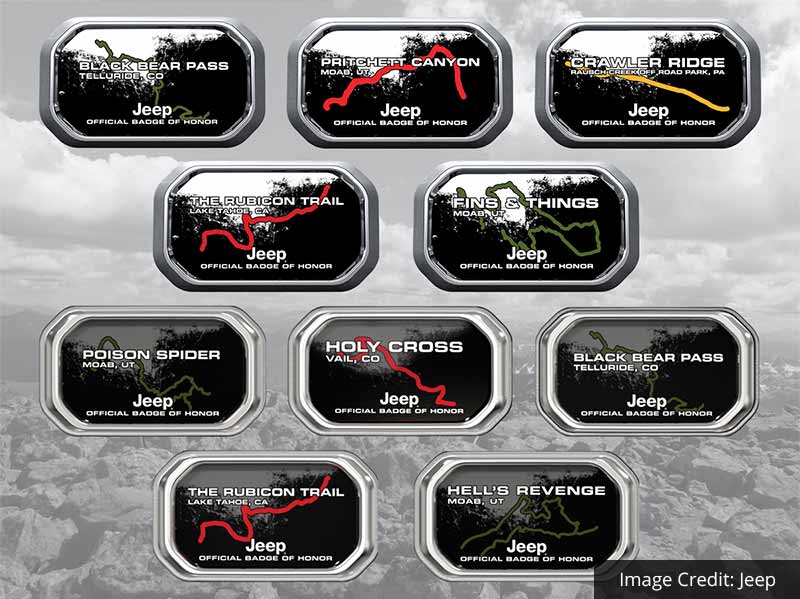
Ford’s shown me that, up to this point, they’re willing to take what Jeep does, copy it, and turn it into something more their style. Right now, Jeep is the only manufacturer with the Badge of Honor program. How it works is fairly simple: you roll up to an iconic trail like Black Bear Pass or Hell’s Revenge, check in via GPS through the Badge of Honor app (after making a profile, of course), and after you complete the trail, you get a heavy, embossed enamel badge arrives in your mailbox for free a few weeks later, ready to be riveted to your fender. It tells other Jeep owners you’ve used your Wrangler to conquer trails that Jeep itself recognized as tough, and worthy of a Wrangler (or a Gladiator, of course).
Jeep
Ford has the tech-heavy Bronco Trail App, but they don’t have an official answer to the badges. At least not yet. Bronco drivers who want trail flair are forced to buy third-party aftermarket badges to paste onto their quarter panels. It’s a small detail, but it speaks to the culture built into the badge.
They’re both great choices. But it’s nice to see that the Wrangler finally has some competition.
You know what they say: you can’t really become perfect if you’re never challenged. Jeep still tops the charts as the best-selling off-roader, because they’ve mastered a formula that no one else has dared to challenge. When Ford dropped the Bronco in 1996, Jeep was no longer under pressure. It grew fat and lazy, because buyers who wanted a rugged four-wheeler had nowhere else to go. There was no reason for them to fix what doesn’t appear to be broken.
With the Bronco, and how quickly the off-roading world is embracing and cherishing it, Jeep’s finally feeling a little bit of heat in its seat. Undeniably, Jeep still wears the crown. But for the first time in literally decades, someone’s decided to challenge the undefeated Gladiator (the famed Roman soldier, not the Jeep truck, though that kind of works here, too).
About the author
Kristen Brown
Contributing Writer, Autoblog