
Key Points
- Bonneville Speed Week offers open-access racing, contrasting with expensive, restricted Formula One experiences.
- Competitors pursue land-speed records across ten-mile salt-flat courses using radically diverse, custom-built vehicles.
- The event’s shared challenges, mutual support, and pursuit of 200 mph foster an enduring motorsports community.
Racing is Racing, Until it Isn’t
Every summer, fans from around the globe gather to celebrate the pursuit of raw speed in its purest form. While high-profile racing series dominate our small and big screens, there is an entire world of racing culture waiting to be experienced firsthand by fans of all ages. For any true automotive and motorsports enthusiast, making the pilgrimage to see races up close and in person is the ultimate dream; it’s the ultimate manifest of an unyielding obsession driven by the smell of burning rubber, the thunderous roar of engines, and the electric thrill of raw speed. Yet, from a spectator’s perspective, not all motorsports offer the same legendary experience when you finally step foot on the track.
On one end of the spectrum, a chance to see a Formula One race is the stuff of bucket lists and dream scenarios. A race weekend at the Circuit of the Americas, Miami, Las Vegas or even Montreal are festival-like events packed with much more activities and action beyond free practice, qualifying and the race itself, including fan experiences, activations and even live music. However, the cost of a ticket dictates how much you can actually get to see; the best tickets with the highest amount of access can run into the five-figures. On the other hand, series like IMSA or grass-roots motorsport like Formula Drift offer a distinctively different, interconnected atmosphere where fans can walk right up to the garages, chat with mechanics and watch team crews prep the cars up close.
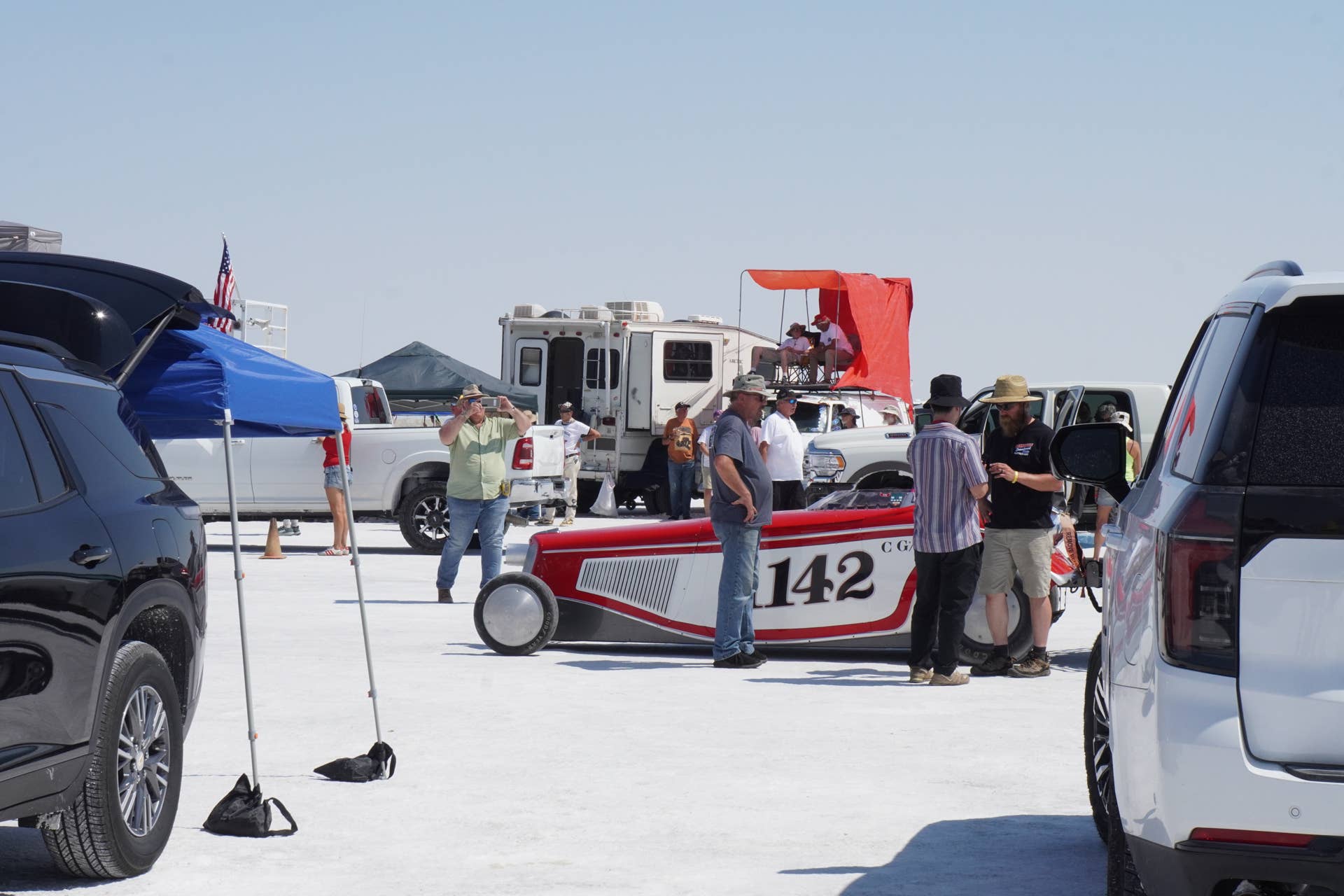
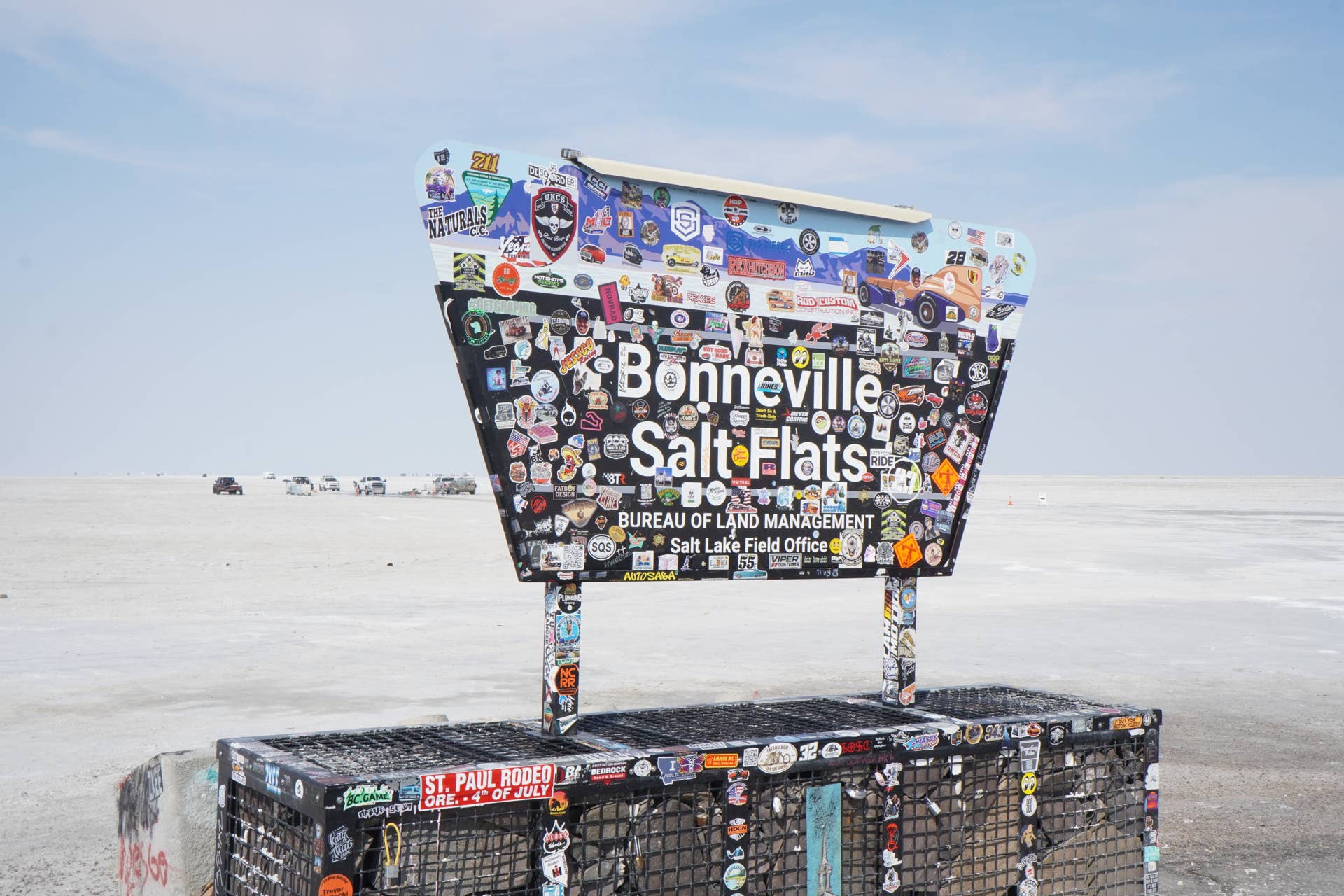
Recently, I got to experience the best example of this open-access philosophy: Bonneville Speed Week. There is no corporate marketing, nor are there luxury hospitality suites; just an eclectic collection of cool humans who are crazy about speed. Against the stark, blinding landscape of the Utah salt flats; a vast white canvas stretching to the horizon, it is motorsport reduced to its purest elements. In the middle of beautiful nothingness is a staggering showcase of human ingenuity: an unbelievable collection of custom-built streamliners, vintage roadsters, hot rods, and motorcycles aim for the highest recorded top speed. Each machine, no matter how unconventional or wildly unique, stands on equal ground with the spectators eager to see them, bound by a shared, relentless devotion to chasing pure speed.
Getty Images
Getty Images
Speed, I am Speed.
For more than a century, people from all corners of the world have traveled far and wide in pursuit of the ultimate expression of adrenaline: speed. Since 1914, the Bonneville Salt Flats in Utah have been a destination proving ground for the daredevils who pushed the upper limits of what’s possible. The dried-up reminants of the Great Salt Lake provide a smooth racing surface that stretches out for what can look and feel like an eternity; a perfect venue for land speed records to be set or broken.
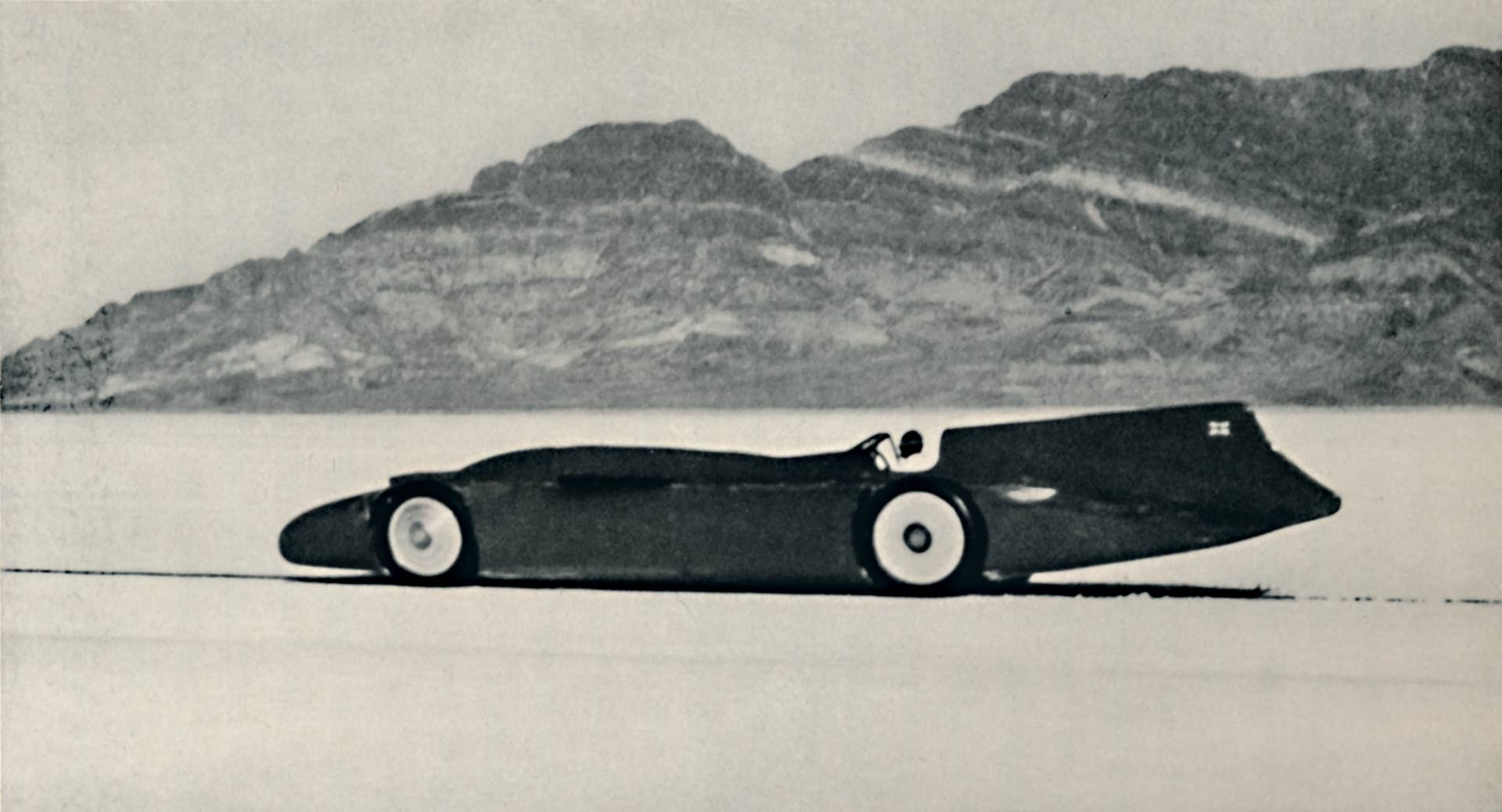
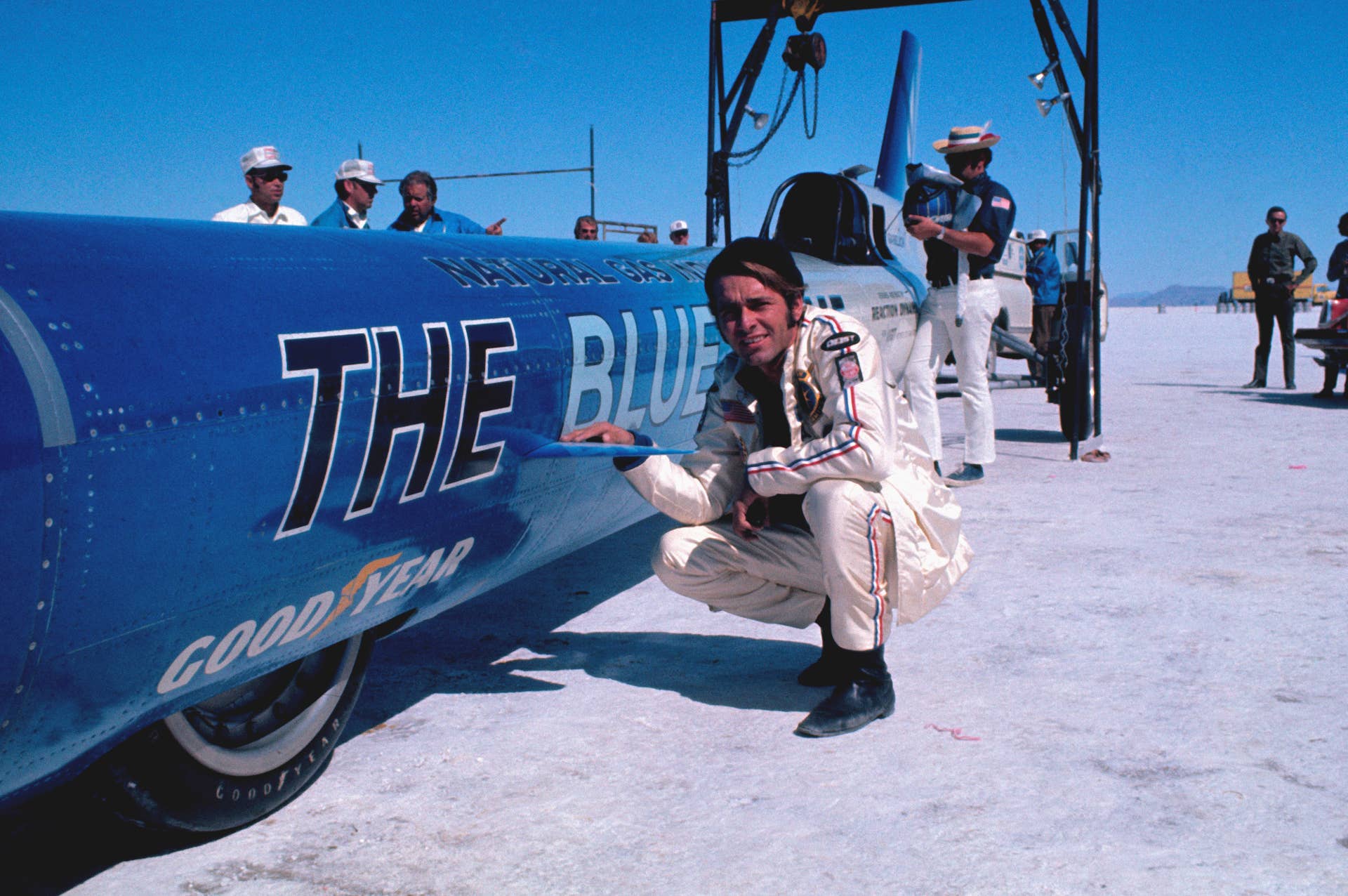
The first person to set an outright land speed record here would be none other than Sir Malcolm Campbell, who drove his Campbell-Railton Blue Bird all the way up to 301.337 miles per hour. The last record set at the flats would be set by Gary Gabelich and the rocket-powered Blue Flame, which reached 630.478 mph. While records have been set for decades prior to its inception, the Southern California Timing Association (SCTA) held the first Bonneville National Speed Trials in 1949; the event that would evolve into the modern Speed Week held every summer since. For six days every August since, the SCTA and Bonneville Nationals play host to this event that attracts speed demons from all over the world.
James Ochoa
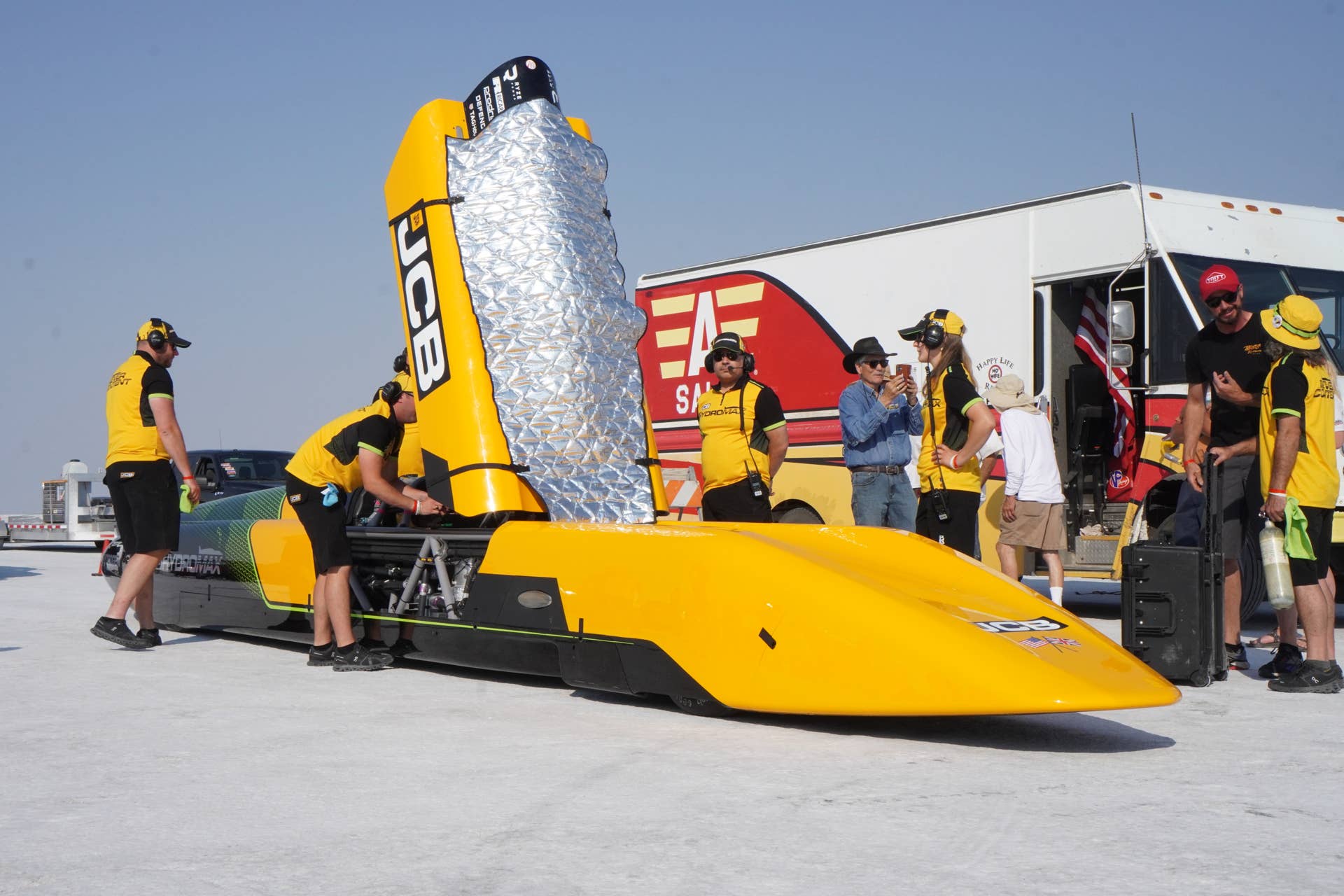
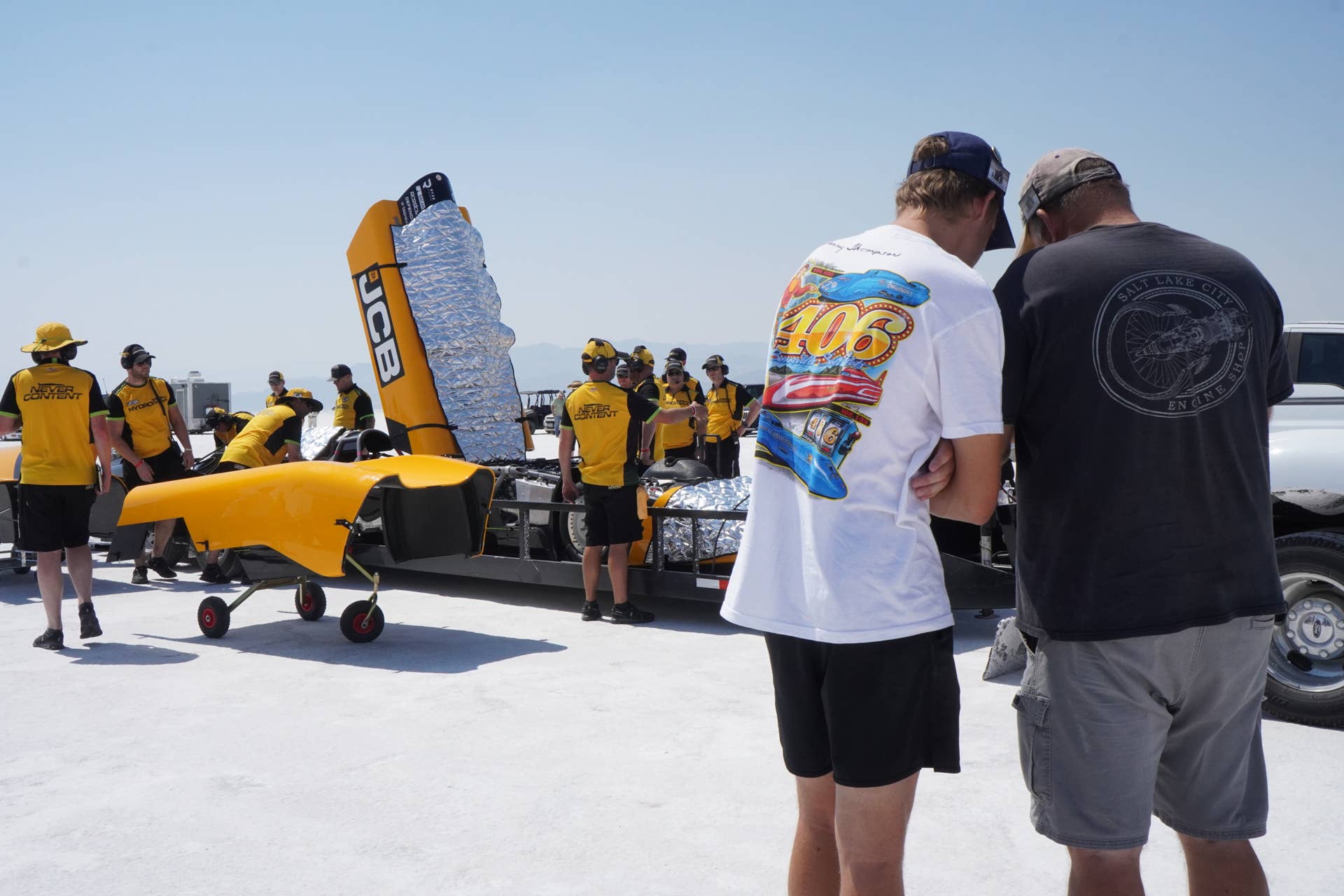
I made the trip out there this year thanks to the folks at JCB, who were there in pursuit of a new record with their latest creation, the JCB Hydromax. This bright yellow streamliner marked their return to the salt after two decades, after it broke the world diesel land speed record witht he JCB Hydromax back in 2006. It’s intentions for Speed Week were not only to break its own diesel-powered record of 350.092 mph with this vehicle, but to also set a new land speed with their new hydrogen-powered powertrains (spoiler alert: it did.)
But while following the JCB team around, I got a front-row view into what really makes Speed Week what it is and I came to find out that this event is unlike any other motorsports event I’ve ever been to. The first thing I learned at the Bonneville Speedway was the sheer scale of everything. Unlike most traditional motorsports events, Speed Week doesn’t take place at a fixed spot every year, like a racetrack or a street course. Each year, the organizers find a stretch of salt flat that’s suitable and prepare it from scratch. This year, the SCTA-BNI ran two courses for competitors, each stretching ten miles. With everything spread that far apart, spectators, competitors, teams, and organizers can end up quite a distance from each other at any given time — a reality that isn’t helped by the fact that the salt seems to stretch for as far as the eye can see.
But near the start line, none of that distance keeps people apart. The pits and the areas around the starting lines at the courses are wide open to foot traffic in a way that makes Speed Week feel more like a social gathering than a sanctioned racing event. Anyone who makes the trip can walk up to the vehicles, talk to the drivers, and see machinery that exists nowhere else in the world.
James Ochoa
The Great Equalizer
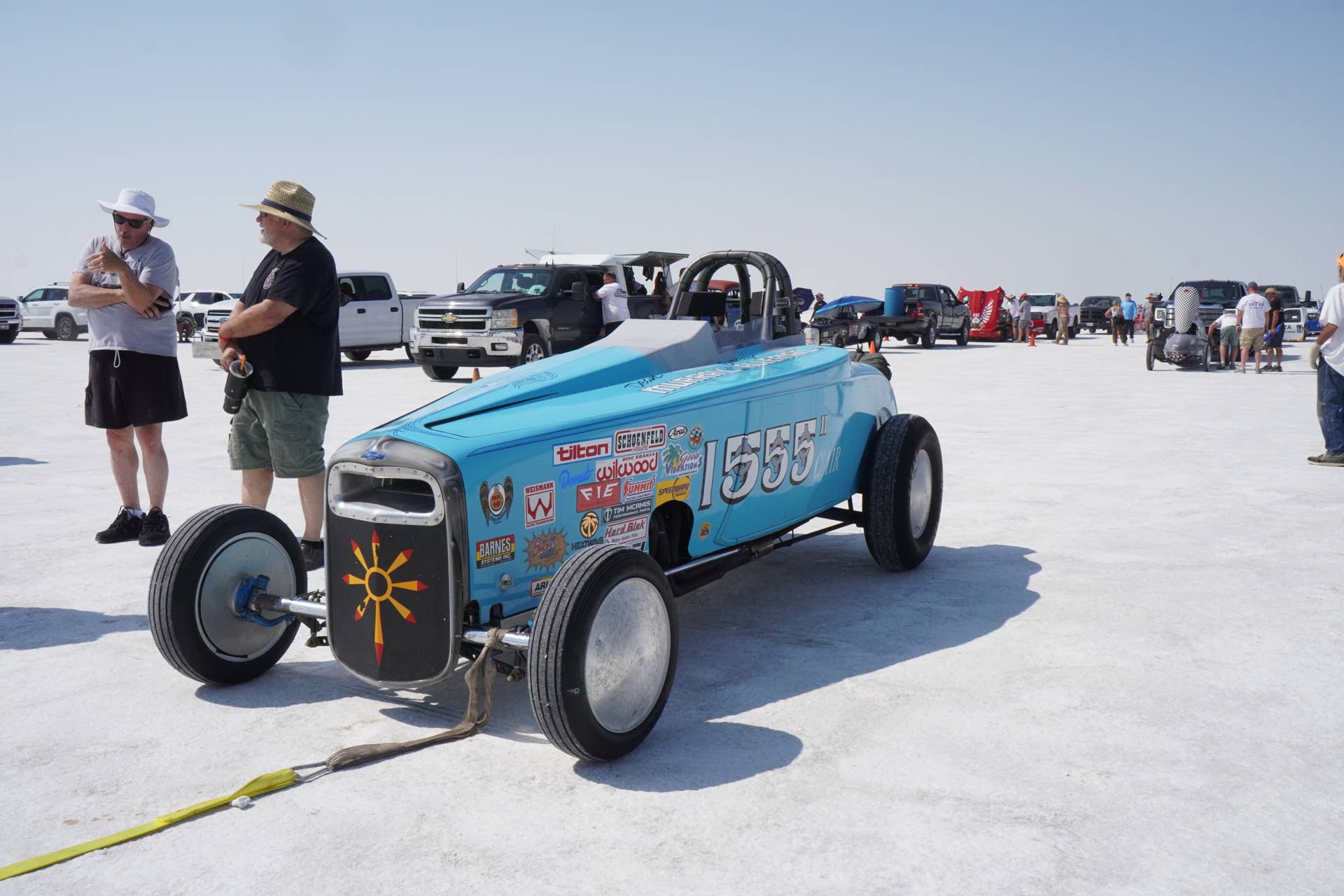
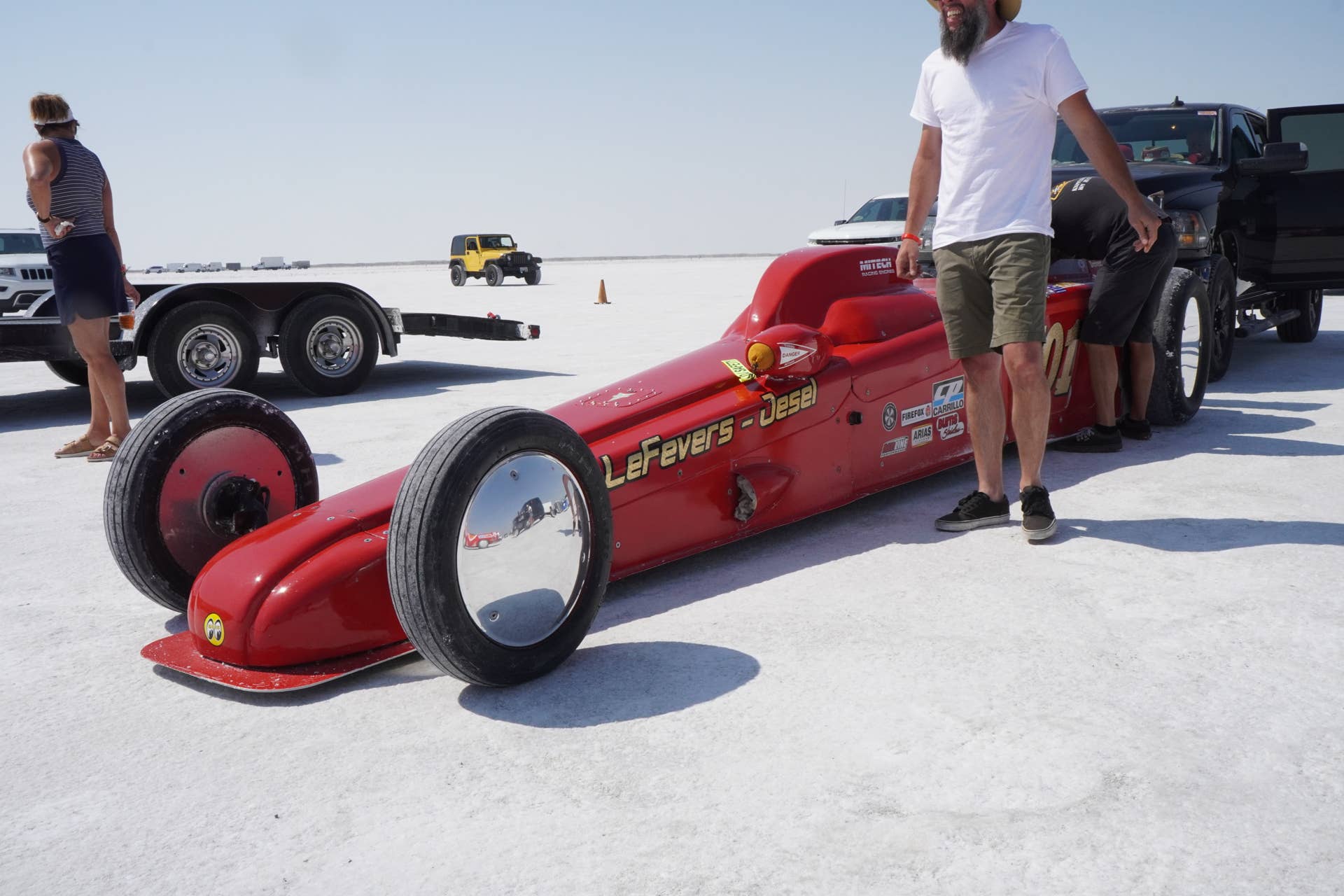
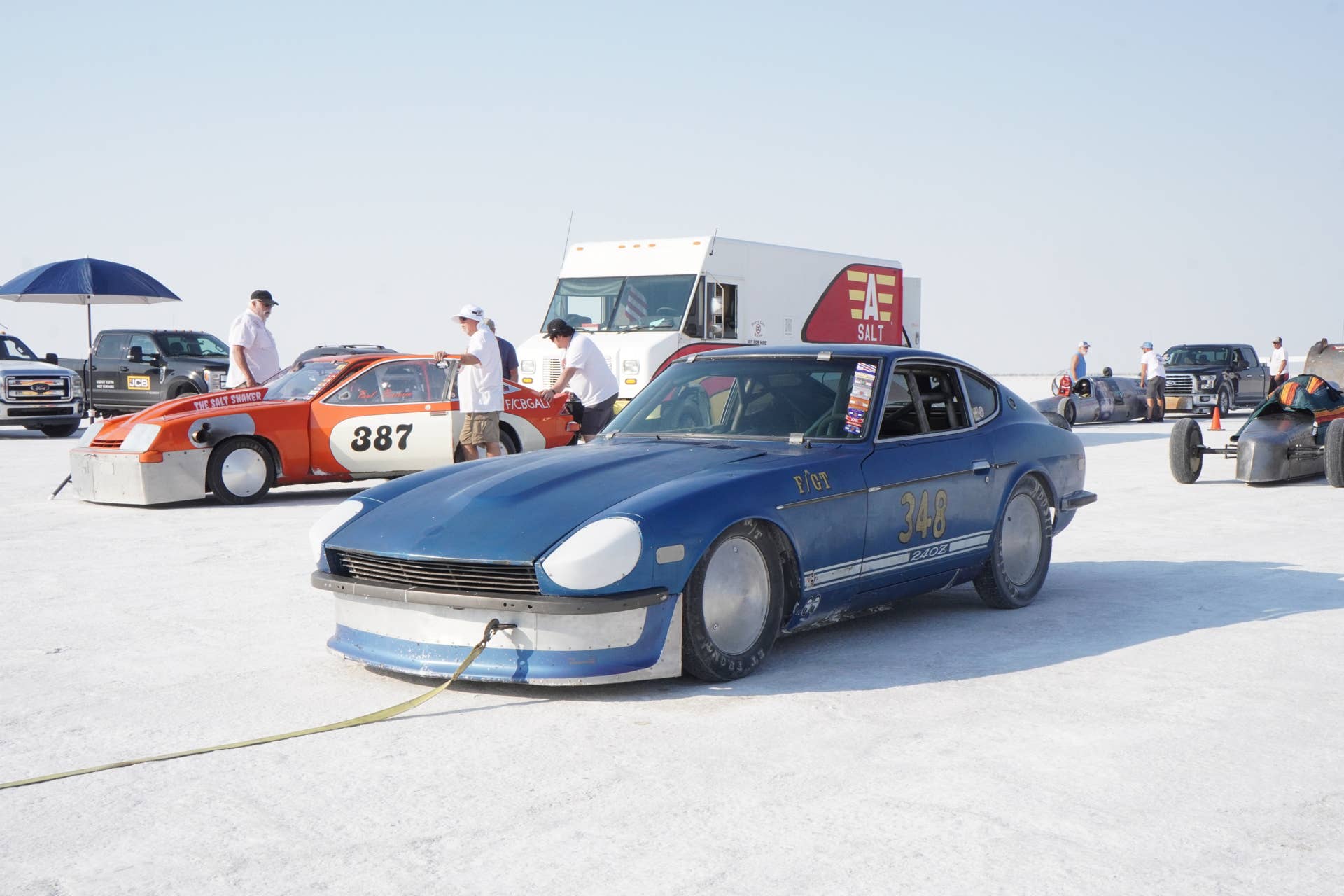
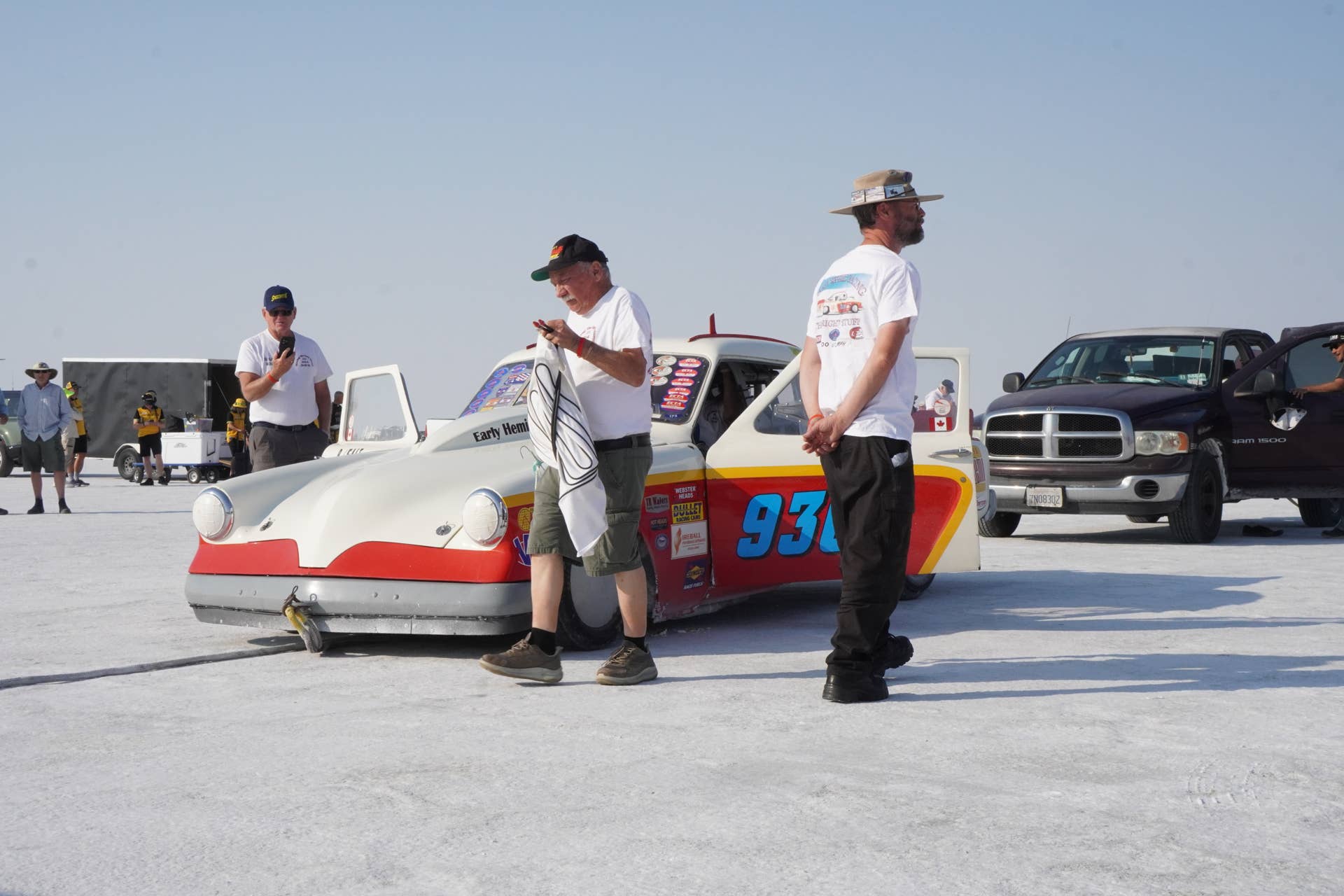
If there’s one rule at Bonneville, it’s that there is no rule, apart from categories that show what the competitors are running, which range everything from streamliners, roadsters, lakesters, competition coupes and sedans, among others. All in all, it shows that no build is the “right” build; you’ll find anything and everything built for nothing but speed, parked wheel to wheel with total disregard for pedigree. In a line behind the JCB Hydromax before one of its runs on the start line, there was a modified Ford Gran Torino, an Isuzu Piazza with a chopped roof, a C4 Chevy Corvette, and a 2JZ-powered Toyota pickup, all wearing smooth wheel covers waiting for their turn at a run.
That leveling effect creates a kind of camaraderie that is unique to Bonneville; a community of like-minded people where speed is the only thing separating each other. Gordon Smith, who was there campaigning a 1934 Ford, put it about as plainly as anyone I met: “We’re all motorheads. We love the challenge, the camaraderie of the team, and then just seeing people that we know is just fantastic. So get to do this once a year.” His team had gone over 200 mph earlier that day and was chasing a personal best of 214.
James Ochoa
A few cars down, Nolan J. Sykes was working the same problem from a different direction. Separate from his work on Donut Media, he and his dad compete in land-speed and drag-racing together, and their car’s best pass sits at 193 mph, chasing a class record of 212 and change. Their goal for the week was simpler: crack 200. Although it may seem like light work for the kind of sports cars that he drives for the entertainment of over 9.34 million YouTube subscribers, Sykes maintained that the sensation of a near 200-mph run on the flats isn’t exactly something replicable by a showroom-grade machine.
“If you put a car like ours next to a ZR1X Corvette or something like that,” Sykes told me, “these cars that are out here are so rudimentary compared to the production supercars of today — it’s just a tube chassis and a big V8. That’s where you’re going down the salt, basically a bathtub with an engine. That’s when it becomes more impressive hitting that number.”
“You could buy a $200,000 car and hit the same speed, but it won’t be the same feeling. You’ll feel like you’re going slower in the supercar, because it’s so planted and safe, with all that noise-vibration-harshness stuff built into it. Whereas this is just — it’s rattling, it’s making a ton of noise. You’re getting blasted in the face by the air at 190 miles an hour. That’s another feeling entirely.”

James Ochoa
James Ochoa
Salt Fever and the 200 MPH Club
Out on the salt, 200 mph isn’t just a number, it’s a rite of passage. Walk the pits and you’ll spot a tent for the “200 Mile an Hour Club,” an actual organization that consists of people who have broken that mark under SCTA sanction. Sykes called it “a really big benchmark for anybody coming out here,” especially if they’re in a car that’s capable of it.
“Some people build cars that aren’t aiming for 200. You can hit 100 on the freeway, you could hit 150 if you wanted to — but 200 is something you really have to have a specialized venue to achieve, and a car built specifically to get there,” he said. “There’s so many things working against you, whether it’s luck or aerodynamics.”
Not everyone that comes to Bonneville leaves with a record. Some leave with a broken car, a pile of parts, and/or ideas of what they would’ve, shoud’ve, could’ve done to achieve their speed goals. But if you ask anyone out there why they keep coming back, you’ll hear the same phrase: salt fever. It isn’t an actual disease, but racers like Sykes and Smith describe it as an addiction to the sensation and the chase of a higher number on their timing slips.
Part of what keeps that sensation alive is how the courses actually work. The two ten-mile courses aren’t loops — once a driver launches, they run the full length, pull their parachute, and coast to a stop, at which point the car can’t be driven back under its own power. Crews have to send a truck out to retrieve the driver and tow the car back, a round trip that Smith clocks taking roughly twenty minutes each way. It’s a small detail, but it explains a lot about the rhythm of the event: long stretches of anticipation, punctuated by a run that’s over in well under a minute.
James Ochoa
“Burning Man, for Car Guys”
If there is one thing that drives home the idea that Bonneville is like no other motorsports event, it is the fact that the closest cultural comparison that I got when I asked was “Burning Man for cars,” referring to the huge, week-long arts-and-culture event held in the Black Rock Desert in Nevada. Many attendees and competitors camp out in nearby campgrounds, stay in motorhomes, or in one of the casino-hotels in nearby West Wendover, Nevada — a far cry from the kind of luxury and glamour that F1 commands.
Despite this, the setting on the salt flats creates the environment that builds camaraderie amongst those on the salt. Everyone has to bring their own supplies, spare parts, tools and some in preparation for what they’re trying to achieve. But, if there’s a hiccup, someone may be able to extend a helping hand.
“You’re camping, you’re bringing all your own supplies, and everybody’s relying on each other too,” Sykes said. “If you need to borrow something from the pit next to you, everybody knows they’re in the same boat as you.”
It’s a level of trust and shared stake that’s hard to find anywhere else in motorsports, and it’s exactly what keeps drawing people back for decades — not the purse, because there isn’t one, and not the production value, because there isn’t much of that either. Just the salt, the speed, and everyone else chasing it alongside you.
James Ochoa
What This Means
An F1 ticket buys you proximity to something grand, but you remain a distant spectator separated by fences, VIP passes, and steep pricing. At Bonneville Speed Week, those barriers vanish entirely. You stand shoulder-to-shoulder with the builders, drivers, and mechanics who pour their hearts and savings into pursuit of magical numbers on a timing slip. It is a rare haven where accessibility isn’t a premium feature, but becomes the essence of what you have traveled to see for yourself.
My time at Bonneville gave me something far more meaningful than any VIP access pass can offer: a pure, unfiltered celebration of speed and human passion. Whether you are chasing 200 miles per hour or simply standing on the blinding white salt to hear the roar of a custom V8, Speed Week reminds us why we fell in love with motorsports in the first place. It remains an unforgettable destination for any true automotive enthusiast looking to experience racing in its purest form.
About the author

James Ochoa
Senior Editor, Autoblog