
MSRP: $29,000
Use the table of contents to jump to a section
Overview
The 2026 Toyota Camry returns without major changes, carrying over the ninth-generation redesign introduced in 2025. Toyota continues to offer the Camry only as a hybrid with no gasoline-only version in its current lineup. That decision follows Toyota’s broader approach with its high-volume models, where hybrid powertrains are now treated as the default. In the Camry, the setup remains familiar. A 2.5-liter naturally aspirated four-cylinder engine is paired with Toyota’s latest hybrid system, with the emphasis on fuel efficiency. Just as importantly, the Camry retains the predictable driving behavior and day-to-day usability it has always been known for.
Front-wheel drive is standard, while an electronic on-demand all-wheel-drive system is optional, and that gives buyers in colder or wetter regions an alternative without a big fuel efficiency penalty. Low operating costs continue to define the Camry’s appeal, and so does long-term reliability. The interior of the 2026 Camry is comfortable and straightforward, with modern safety technology included across the range. Minor updates to the suspension, refreshed exterior details, and a simplified cabin layout help keep the Camry competitive in 2026. Even so, the midsize sedan segment continues to shrink as more buyers shift toward crossovers and SUVs.
Toyota
What’s New for 2026
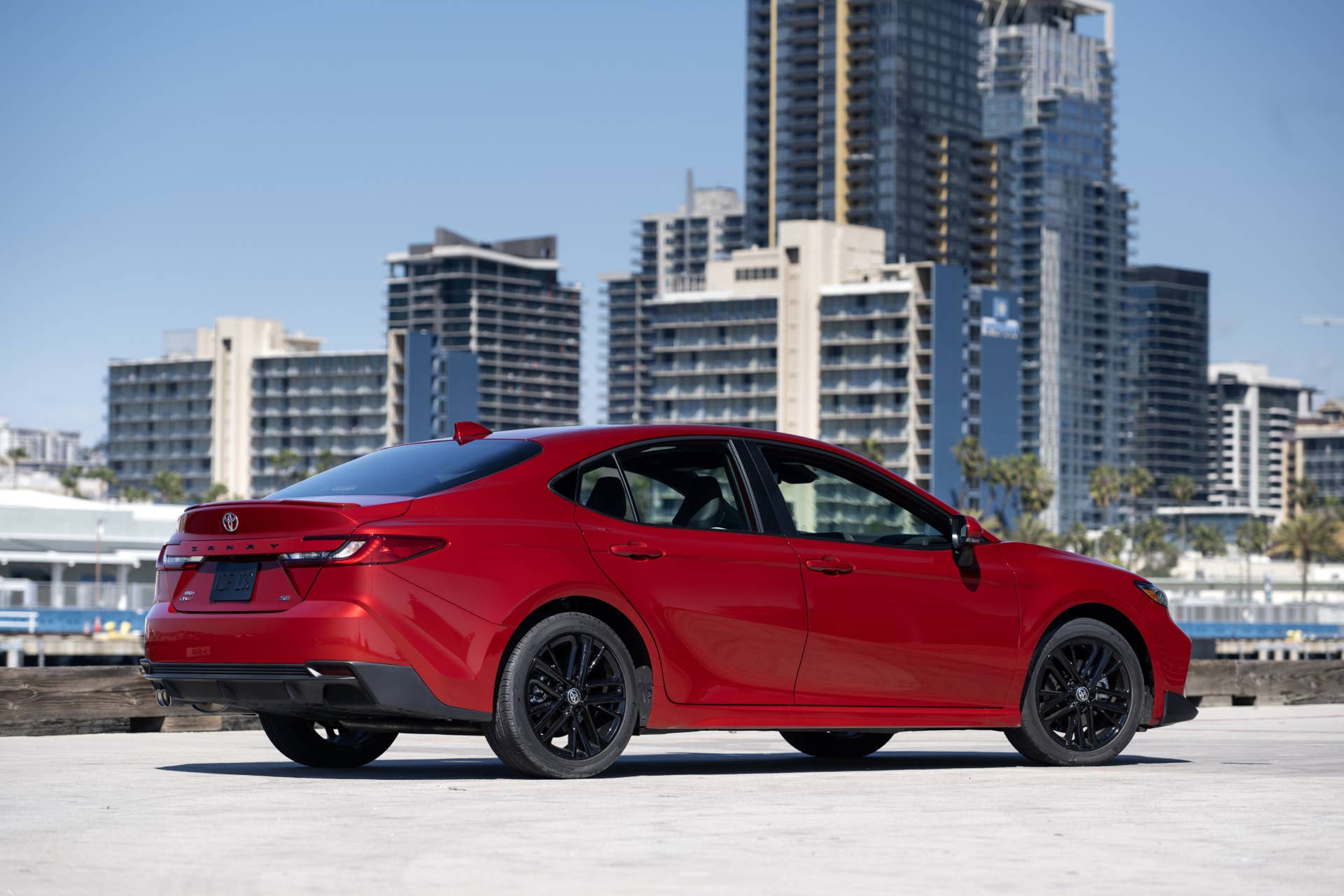
The 2026 Camry does not introduce any major changes as Toyota redesigned the car for a new generation recently, and this model year is largely a carryover. The main addition, however, is the Nightshade Edition trim. It is an aesthetic package rather than a mechanical update, with black exterior trim, dark wheels, and blacked-out badging as part of the package. The Nightshade uses the same sporty suspension tuning as the SE and XSE trims, while powertrain options remain unchanged. Other than that, the Camry lineup remains the same as before. Drivetrain availability and feature content carry over from the previous model year. No new engines or equipment revisions are introduced for 2026.
Exterior
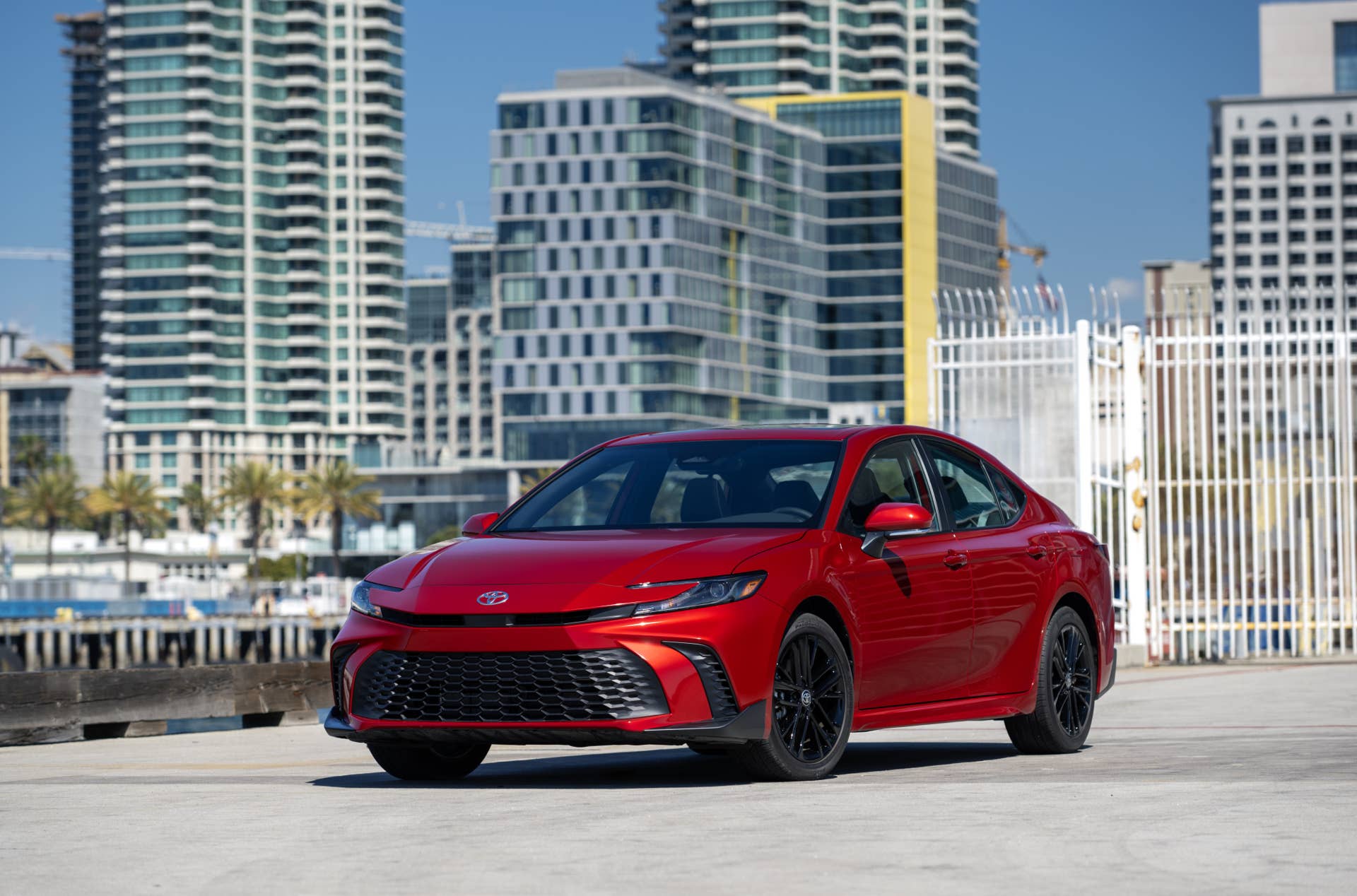
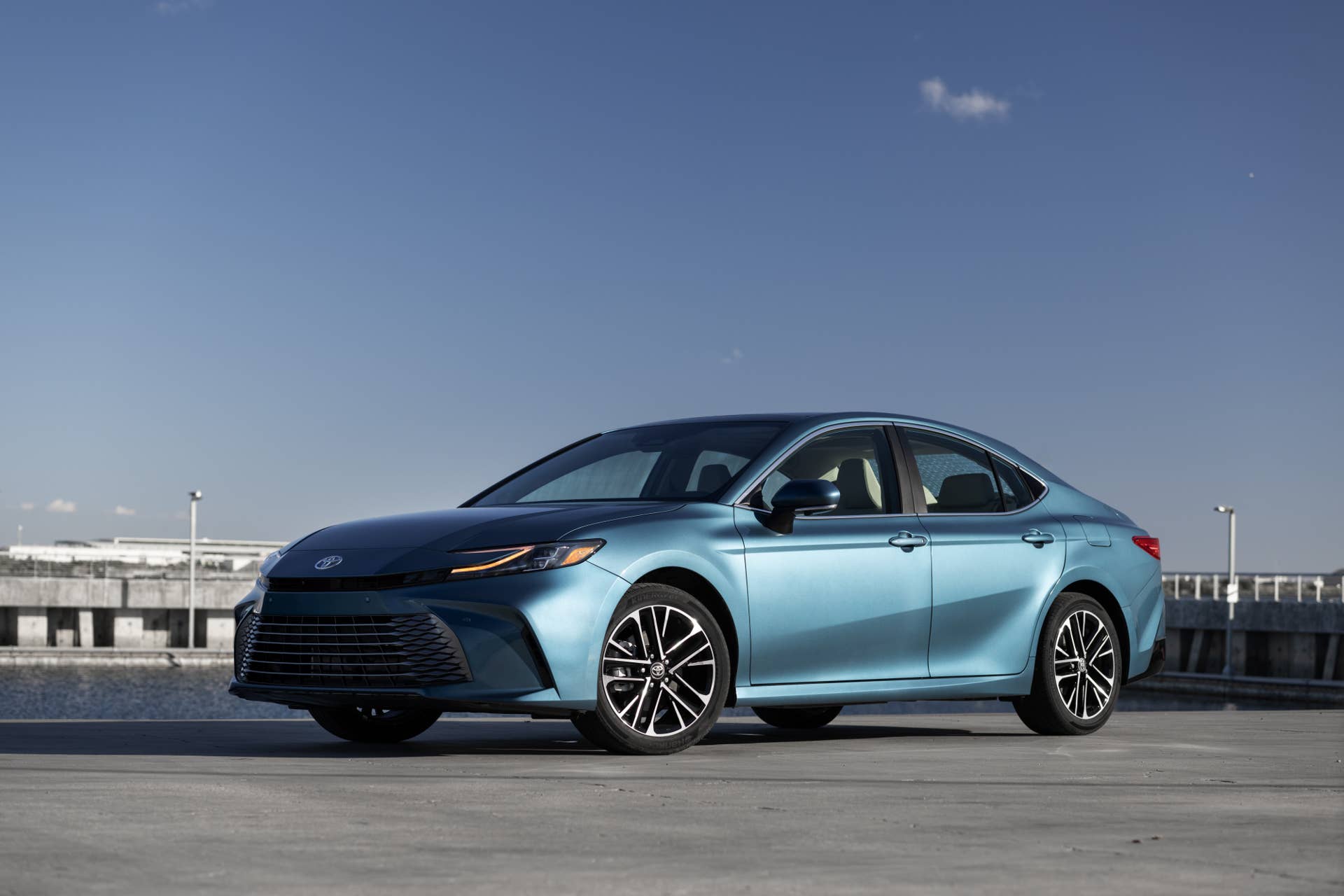
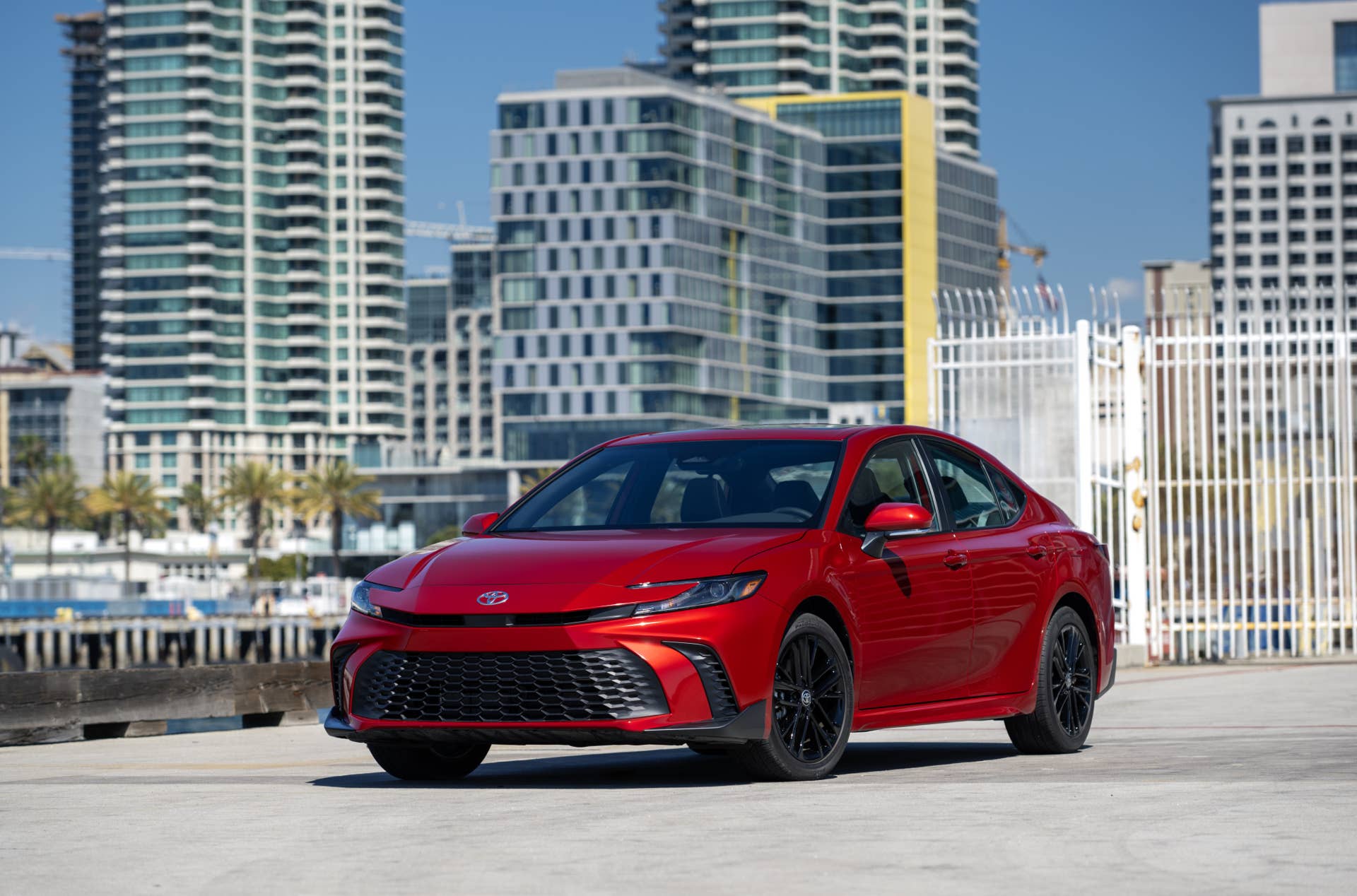
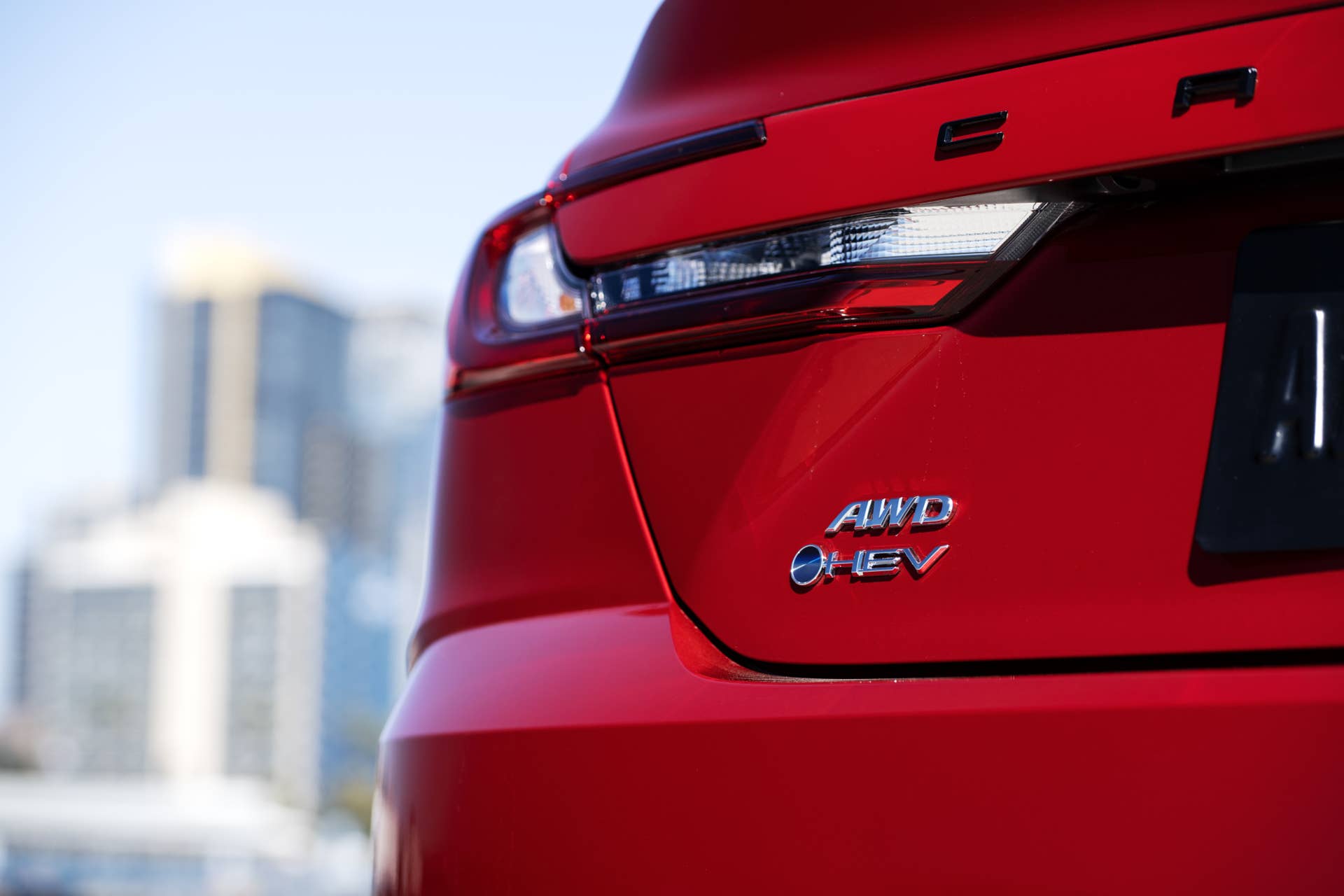
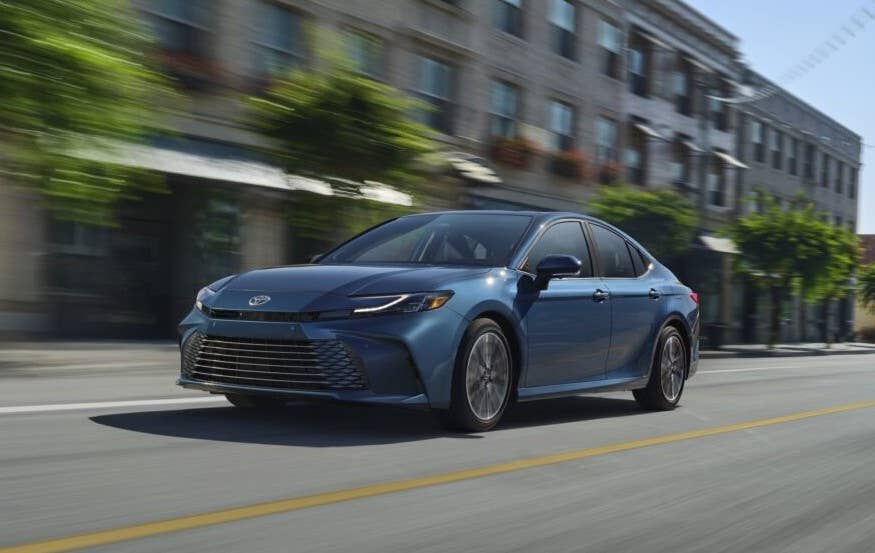
The 2026 Toyota Camry is a midsize sedan of fairly traditional proportions, the latest of which was introduced with the current (ninth) generation for the 2025 model year, and the car sits lower and wider than older Camry models, albeit with a familiar silhouette. A large front grille dominates the nose and is flanked by slim LED headlights that extend into the front fenders, giving the front end a wider visual footprint. Body surfacing is restrained with light sculpting along the hood and doors, but nothing aggressive or sharp.
Wheel designs vary noticeably by trim. The lower trims use more conservative 16-inch wheels, while SE, XSE, and Nightshade versions receive larger 18-inch wheels with darker finishes. These trims look sportier primarily because of the wheels, and not due to changes to the bodywork. At the rear, full-width taillights and simple bumper shapes keep the design modern without straying far from previous Camry styling cues.
Toyota
Toyota
Toyota
Interior
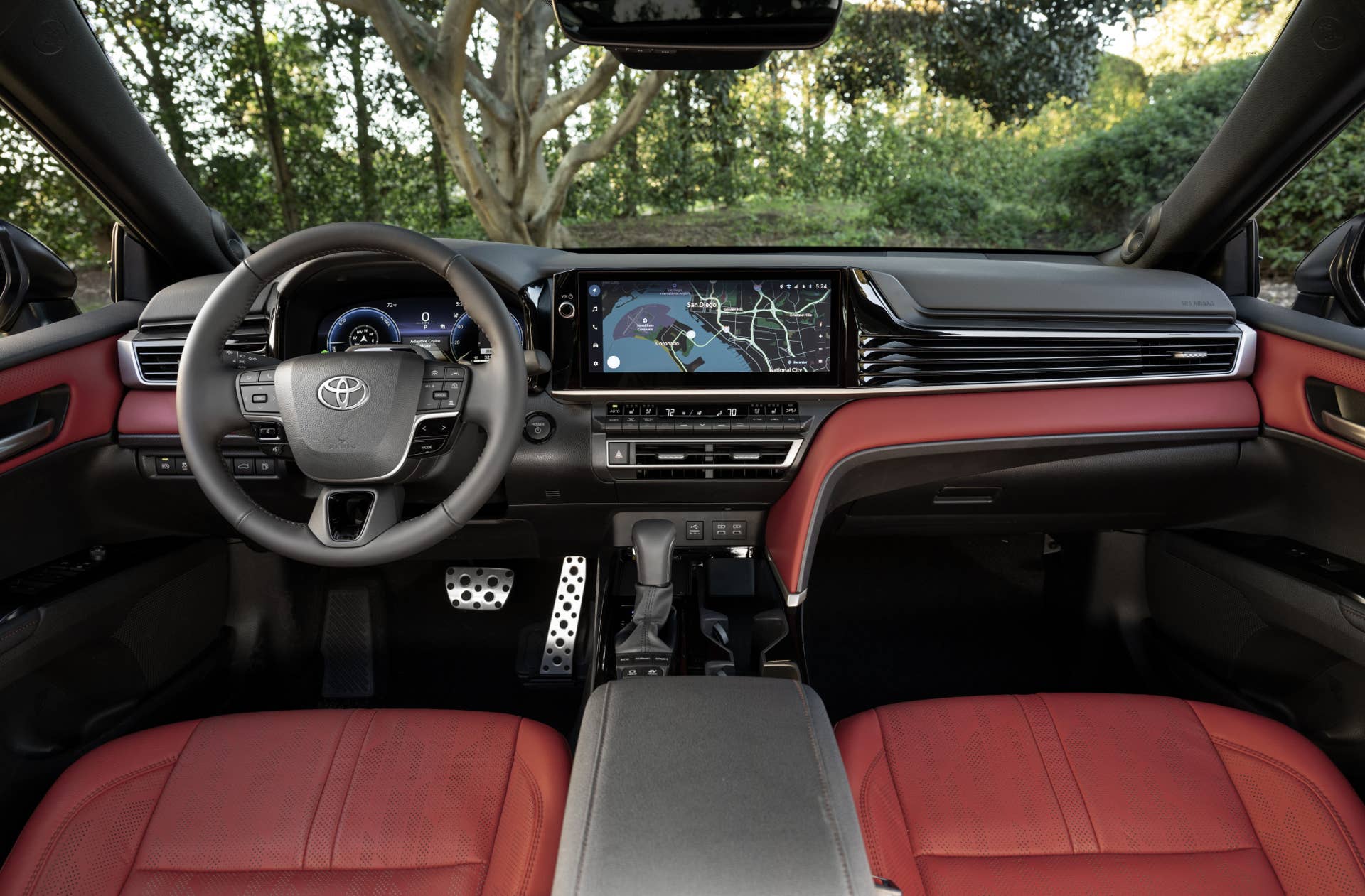
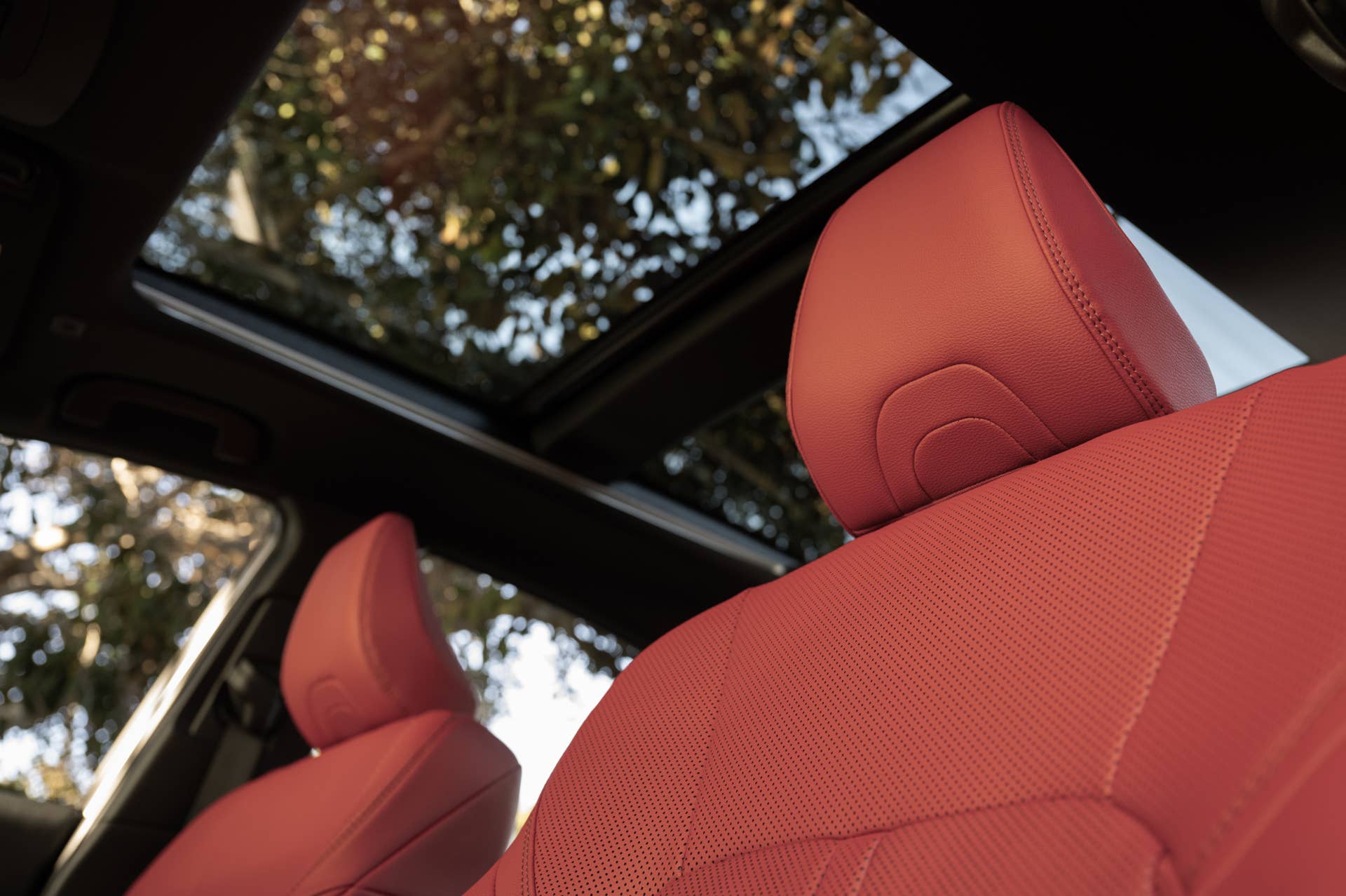
Inside the 2026 Camry, the focus is clearly on function. Toyota hasn’t tried to make the cabin look dramatic or experimental. The layout is simple and familiar, with a large touchscreen placed high on the dashboard so it’s easy to see while driving. Basic climate functions are handled by physical controls, which makes everyday use easier than relying entirely on touchscreen menus. Material quality is better than in older Camry models, and areas that see the most contact now use softer materials, and higher trims add upgraded upholstery that feels more substantial. Nothing feels flashy, but it does feel more carefully finished than before.
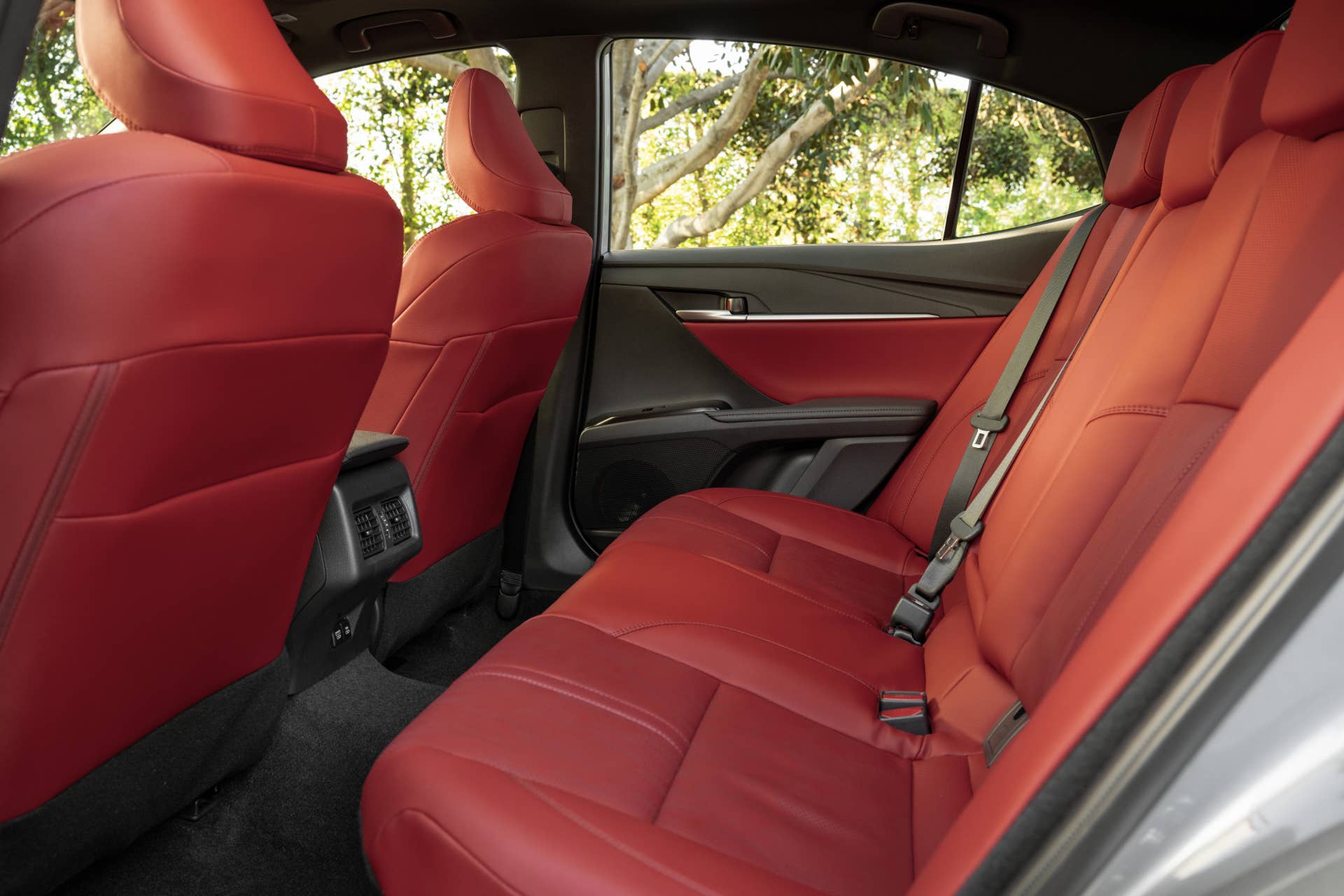
The front seats are comfortable and supportive enough for longer drives, and not just short commutes. Rear-seat space is generous, with good legroom, a natural seating position, and dedicated air vents. Storage is handled sensibly, with a center console that’s easy to use and door pockets sized for common items. Toyota has also improved sound insulation, which makes the cabin quieter on the highway and helps reduce fatigue over time.
Price Range and Best Value Trim
| Trim Level | Price |
| Base trim: LE FWD | $29,000 |
| Top trim: XSE AWD | $35,200 |
| Best value trim: XLE FWD | $34,000 |
The 2026 Toyota Camry price list starts at $29,000 with the LE trim in front-wheel-drive form, and sitting at the entry point of the range, it covers the basics. At the other end, the XSE with all-wheel drive reaches $35,200, reflecting its sportier setup and more aggressive exterior details. Sitting between the two is the XLE with front-wheel drive at $34,000. It costs noticeably more than the LE, but without stepping all the way into XSE pricing, and for buyers who want added comfort features without the sport suspension, it’s the trim most likely to make sense to the majority of Camry buyers.
2026 Toyota Camry Specs Overview
Every version of the 2026 Camry uses Toyota’s latest hybrid setup, and there isn’t a non-hybrid option. The system is built around a naturally aspirated 2.5-liter four-cylinder engine that runs on the Atkinson cycle, working together with electric motors. The focus is clearly on efficiency. Performance takes a back seat, and that’s intentional.
Front-wheel-drive models are rated at 225 horsepower combined. Models equipped with Toyota’s electronic on-demand all-wheel drive add a second electric motor at the rear axle, which raises total output slightly to 232 horsepower and provides extra traction when conditions call for it. Power delivery is handled by an e-CVT. There are no traditional gear changes with this type of gearbox, and the transmission keeps engine behavior smooth and predictable, with the electric assistance keeping CVT buzz to a minimum. Around town, the Camry moves off quietly and feels relaxed, while on the highway, it settles into a steady rhythm, favoring refinement and fuel savings over urgency.
Powertrain Options
| Engine | Horsepower | Torque | Transmission | Drivetrain |
| 2.5L I4 Hybrid (FWD models) | 225 hp combined system | 163 lb-ft | e-CVT | FWD |
| 2.5L I4 Hybrid (AWD models) | 232 hp combined system | NA | e-CVT | Electronic On-Demand AWD |
Performance and 0-60 MPH
The 2026 Camry is not intended to feel sporty, and the hybrid system is tuned with everyday driving in mind rather than quick responses. Electric motor assistance provides immediate torque at low speeds, which helps the car pull away smoothly from intersections and in traffic. In real-world testing, all-wheel-drive models reach 60 mph in roughly 7 seconds, which is adequate for highway merging and passing without ever feeling urgent.
Front-wheel-drive versions place a greater emphasis on efficiency than acceleration. Suspension tuning varies by trim, with SE, XSE, and Nightshade models using firmer settings that better control body movement, while LE and XLE trims focus more on ride comfort. Steering effort remains light across the lineup, reinforcing the Camry’s relaxed and predictable character.
Fuel Economy (MPG)
Fuel efficiency is a central part of the Camry’s appeal. Front-wheel-drive models deliver the strongest EPA ratings, with estimates of up to 52 mpg in city driving, 49 mpg on the highway, and 51 mpg combined on the most efficient trims. These numbers place the Camry near the top of the midsize sedan segment for fuel economy.
All-wheel-drive models return slightly lower figures due to the added rear electric motor, but the difference is limited. EPA estimates for AWD versions sit around 51 mpg city and 49 mpg combined, allowing added traction without a large fuel economy penalty. Sport-oriented trims use larger wheels and firmer suspension tuning, which reduces efficiency, with combined ratings typically landing in the mid-40-mpg range.
Dimensions
| Dimension | Measurement |
| Length | 193.5 inches |
| Width | 72.4 inches |
| Height | 56.9 inches |
| Wheelbase | 111.2 inches |
Interior Space (Front and Rear)
| Measurement | Front | Rear |
| Headroom | 38.1 inches | 37.6 inches |
| Legroom | 42.1 inches | 38.0 inches |
| Shoulder Room | 57.9 inches | 56.9 inches |
| Hip Room | 55.0 inches | 54.4 inches |
| Passenger Volume | 99.9 cubic feet (total) | – |
Cargo Space
The Camry offers 15.1 cubic feet of trunk space. Hybrid battery placement usually makes for compromised luggage space, but in the Camry, it does not significantly reduce cargo capacity. The Camry’s party trick is its ability to fold the rear seats, so accommodating longer items when needed is not going to make you miss a crossover. Trunk aside, the 2026 Camry’s cabin storage solutions support daily practicality as well.
Ground Clearance
The 2026 Camry’s ground clearance measures 5.4 inches, consistent with the Camry’s low-riding sedan design, and is not intended for rough roads. There are advantages, like lowering the centre of gravity and the resultant stable handling characteristic that come along, which benefit the sedan’s aerodynamic efficiency and highway manners. AWD options further add to driving confidence in bad weather and rough surfaces, but definitely don’t expect the car to be happy in off-road conditions.
Warranty
| Coverage Type | Duration |
| Basic/Bumper-to-Bumper | 3 years / 36,000 miles |
| Powertrain | 5 years / 60,000 miles |
| Hybrid Components | 10 years / 150,000 miles (California/CARB states) |
| Hybrid Components | 8 years / 100,000 miles (all other states) |
| Rust Perforation | 5 years / unlimited miles |
| Roadside Assistance | 2 years / unlimited miles |
| Complimentary Maintenance | 2 years / 25,000 miles |
Pros and Cons
Pros:
- Strong fuel economy across all trims
- A hybrid powertrain is standard throughout the lineup
- Comfortable and spacious interior
- Comprehensive safety features as standard
- Available with all-wheel drive trim options
Cons:
- No gasoline-only drivetrain option
- Handling prioritizes comfort over sportiness
- Higher trims may seem pricey
Verdict
The 2026 Toyota Camry follows on from a recent full redesign, so this model year is better viewed as a continuation rather than a reset. Toyota’s move to a hybrid-only lineup is now fully established, and it brings clear benefits in fuel efficiency and everyday usability without forcing buyers into a fully electric vehicle.
Performance remains consistent rather than exciting, which suits the Camry’s role. The cabin is comfortable and easy to live with, safety and connectivity features are current, and Toyota’s reputation for long-term reliability continues to be a major factor. Taken together, the Camry remains a solid and predictable option for U.S. buyers shopping in the midsize sedan segment.

Toyota
Competitors
Kia K5
Honda Accord Hybrid
Hyundai Sonata Hybrid
Nissan Altima
About the author

Cobus F. Potgieter
Reviews and Features Editor