
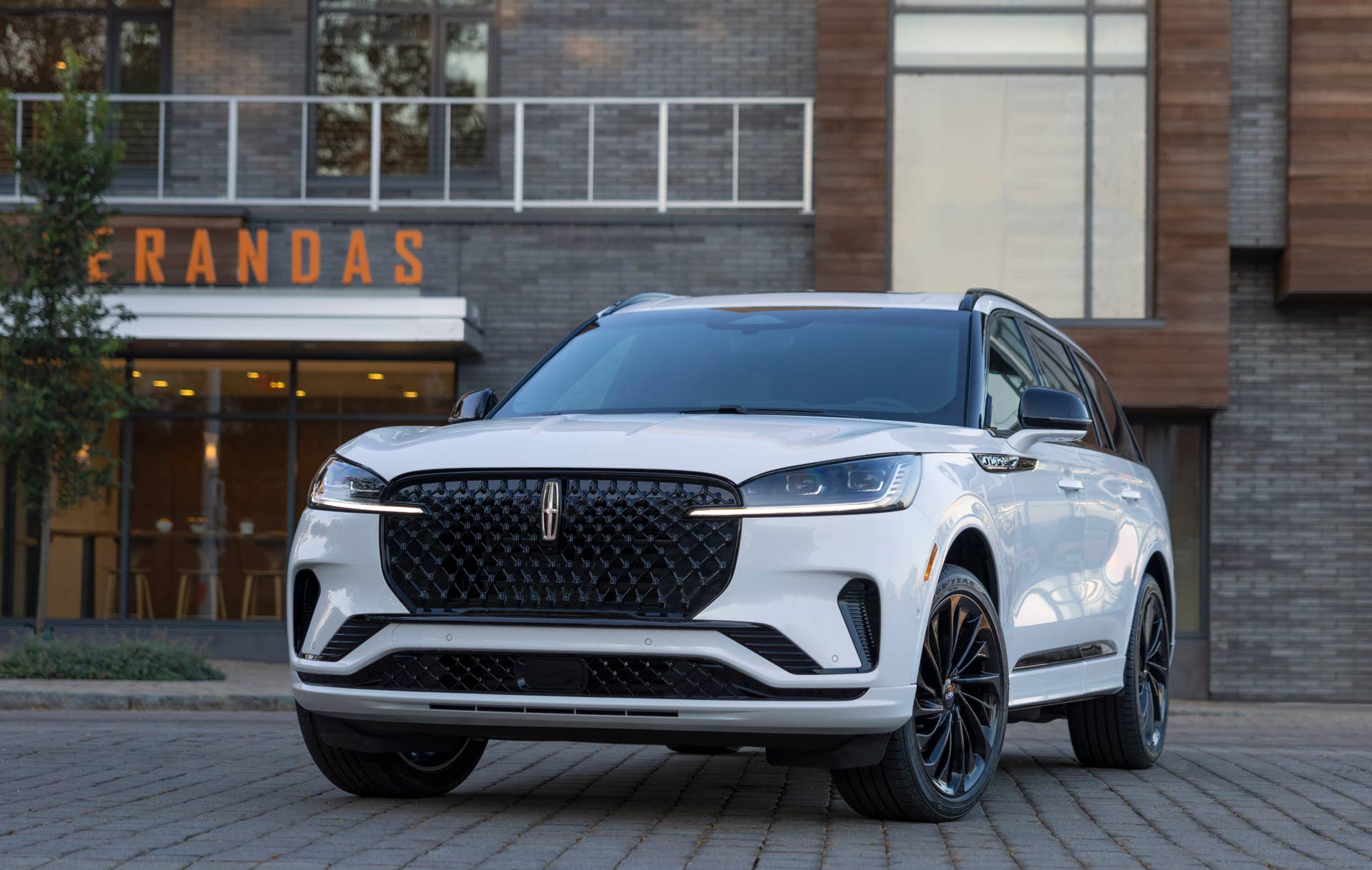
So you want a Lincoln Aviator?
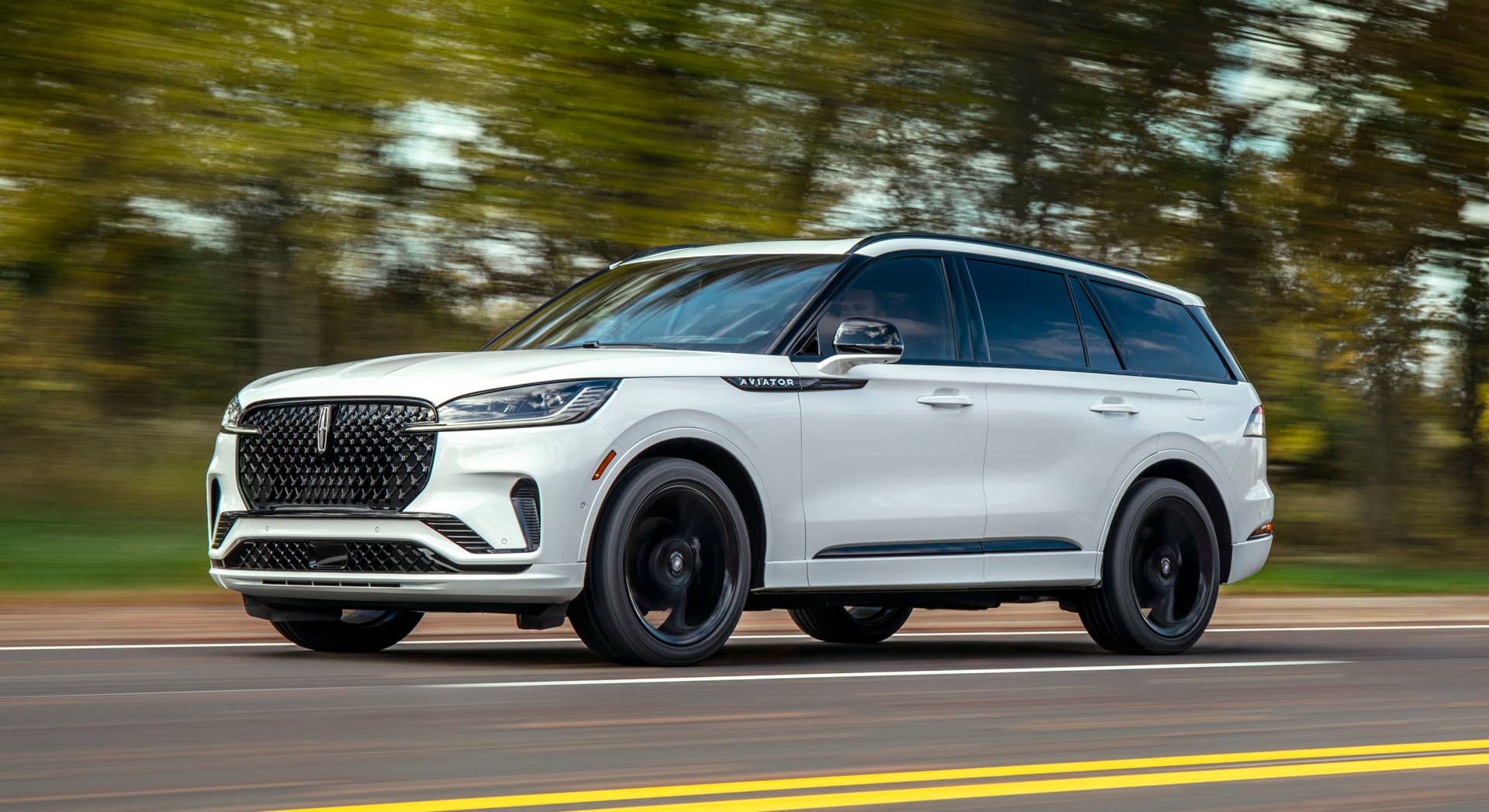
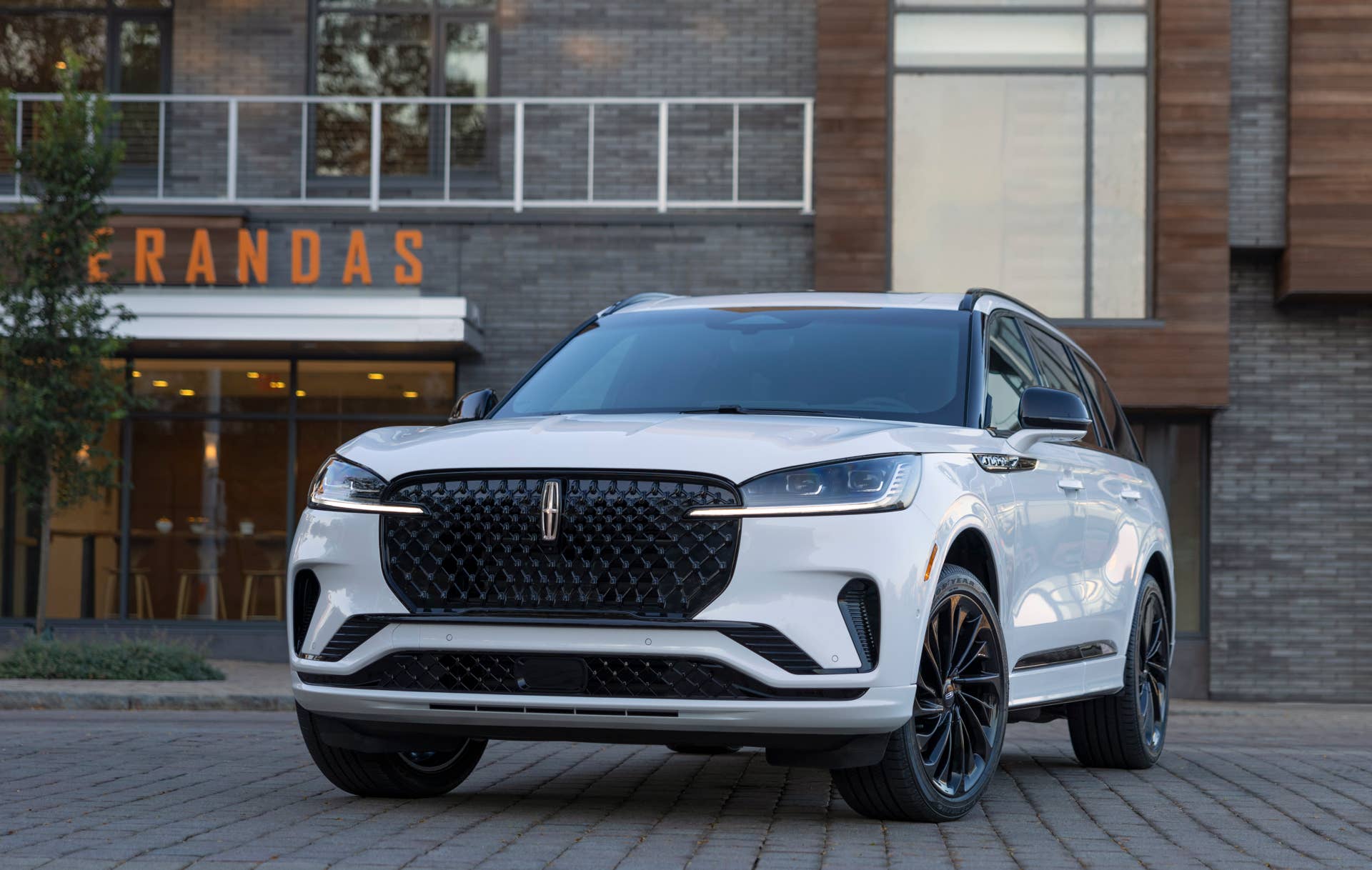
As a younger, smaller brother to Lincoln’s flagship Navigator SUV, the $58,995 Lincoln Aviator is a prime contender in a crowded, mid-sized luxury SUV segment that includes models from some of the biggest automakers around. The three-row, six or seven-seater is powered by a 3-liter twin-turbocharged V6 engine connected to a ten-speed automatic gearbox producing 400 horsepower and 415 pound-feet of torque.
Lincoln
The Aviator comes standard as rear-wheel-drive, with an all-wheel-drive drivetrain as an option. Zero to sixty miles per hour is done in a quick-ish, less than six seconds, and the EPA estimates that fuel economy at 18 city, 26 highway and 21 combined miles per gallon. Though the performance may be less smiles per gallon, the three-row Lincoln’s strong suit is comfort.
Lincoln
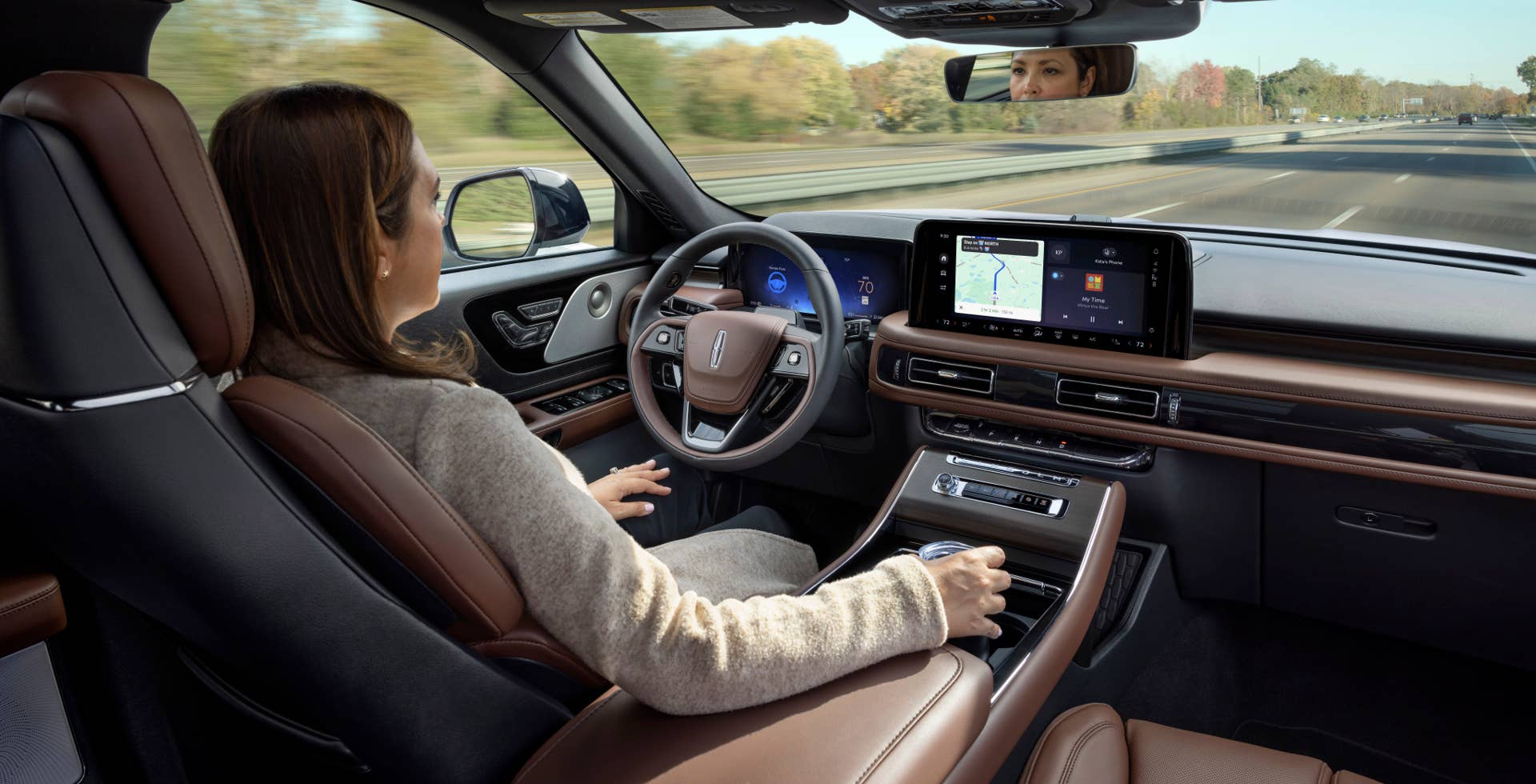
For 2025, a new 13.2-inch infotainment touchscreen and a 12.4-inch digital gauge cluster are powered by Lincoln’s Digital Experience, developed in part with Google’s Android Automotive, featuring Google Maps, Google Assistant, and other essential apps, as well as refreshed exterior styling. The Aviator also provides 18 cubic feet of storage space and either six or seven-seater configurations, the former of which replaces a bench seat with full captain’s chairs.
But while the Lincoln Aviator can provide a bona fide luxury SUV experience for the whole family and much more, the luxo-barge with Ford Explorer roots may not be everyone’s cup of tea. However, there are competitors from South Korea, Germany, and Sweden with their own attributes that may steer your discerning choice.
Genesis GV80 – A Chanel bag on wheels
Genesis
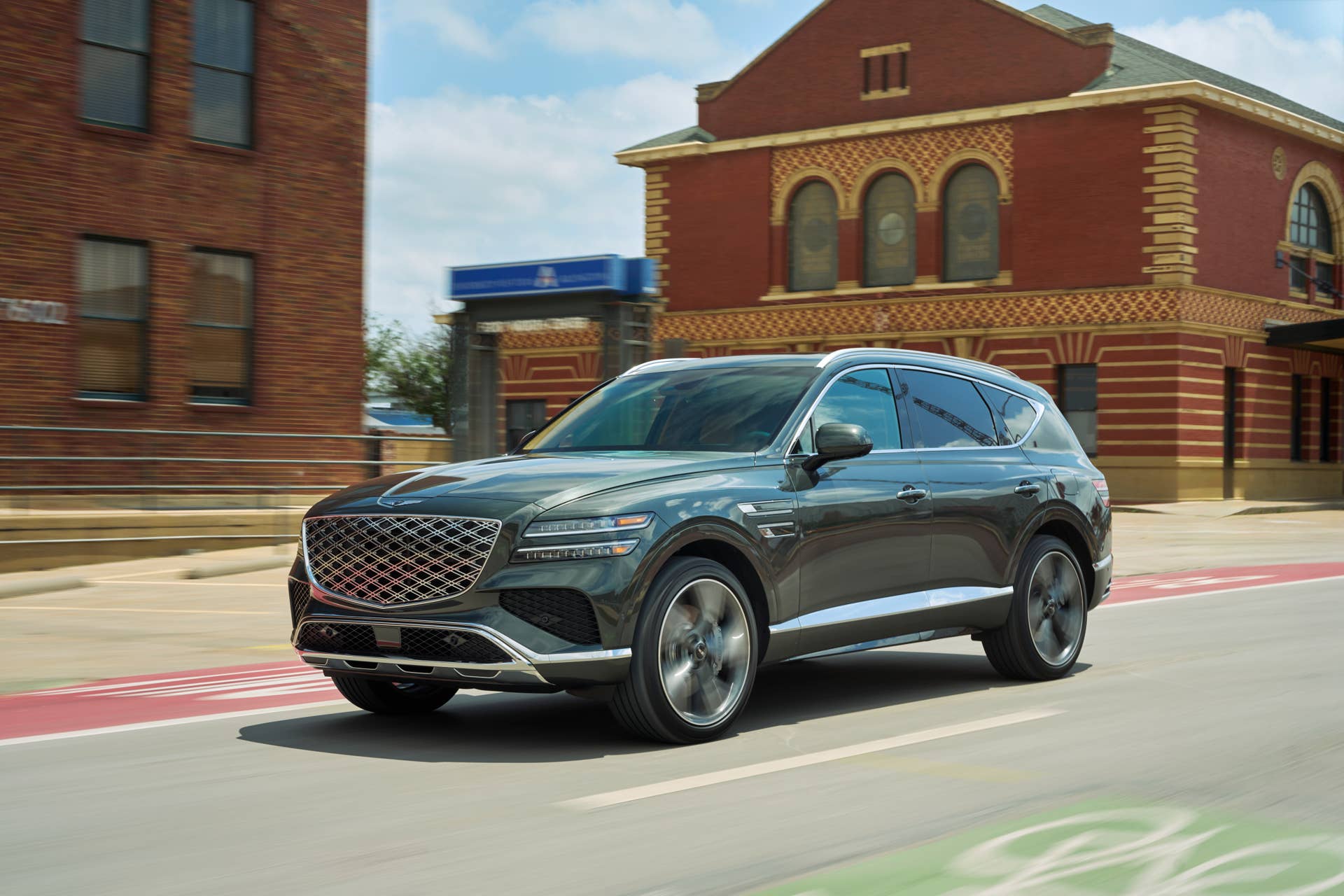
I’m gonna let you in on a little secret: although Lincoln’s Aviator has Ford roots, this Genesis is actually developed by Hyundai. But before you scoff at the idea that this Genesis is some sort of tarted-up Hyundai Palisade with a weirder name, the Genesis GV80 packs a real punch.
Although the Genesis starts at an MSRP of $58,200, which is similar to the Lincoln Aviator, the GV80 gets a healthier dose of personality behind its unfamiliar name. For 2025, it gets a new grille alongside other revised exterior features, as well as a new infotainment system with a huge 27-inch OLED display that stretches across its visually simplistic dashboard. A 2.5-liter turbocharged four-cylinder engine making 300 horsepower sends power through an 8-speed automatic transmission to all four wheels as a standard feature, unlike the Aviator. The EPA rates the four-banger GV80 at 19 mpg city and 24 mpg highway. Upper trims can be upgraded to a 375-horsepower 3.5-liter twin-turbo V6, though it reduces fuel economy to 16 mpg city and 22 mpg on the highway.
Genesis
Genesis
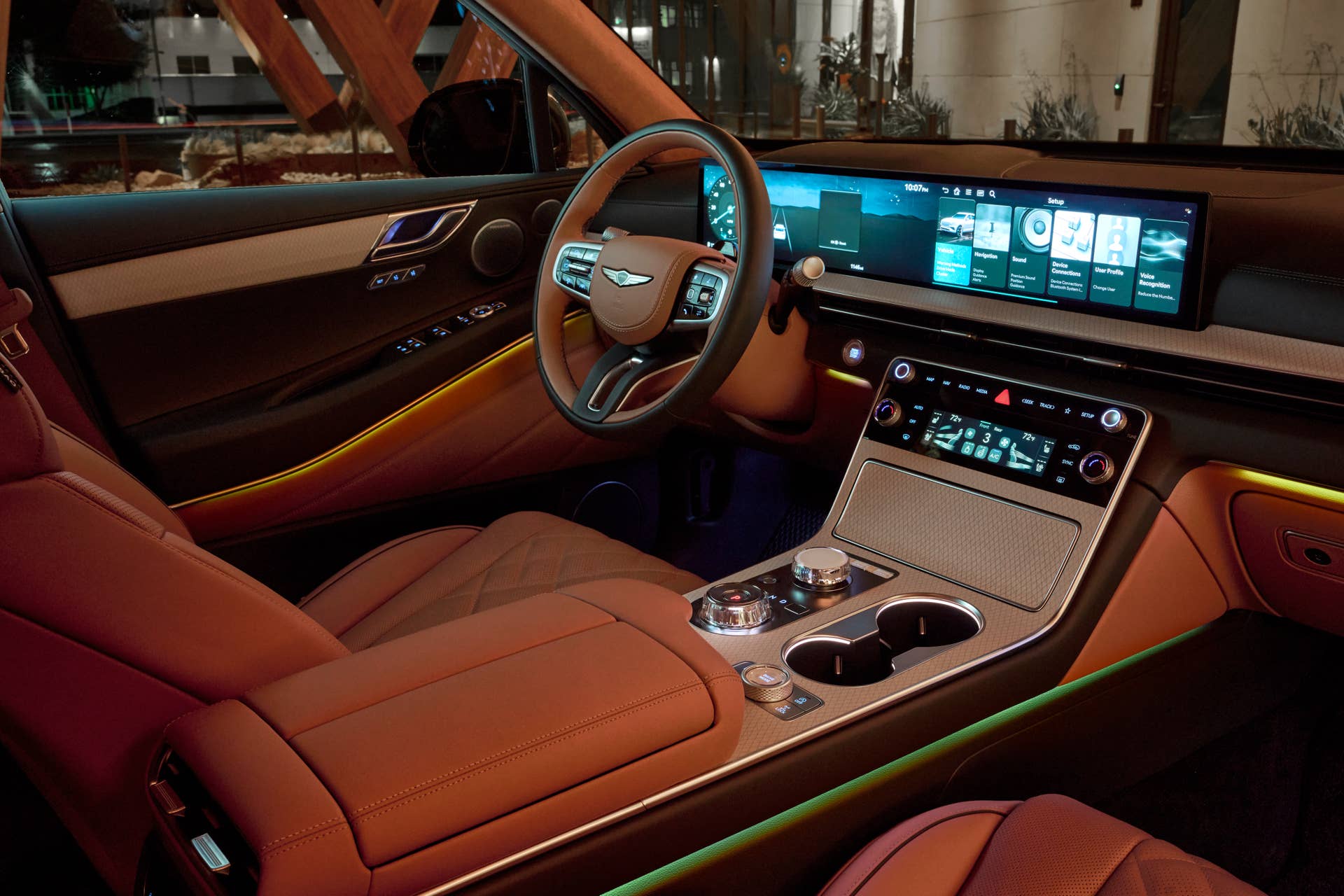
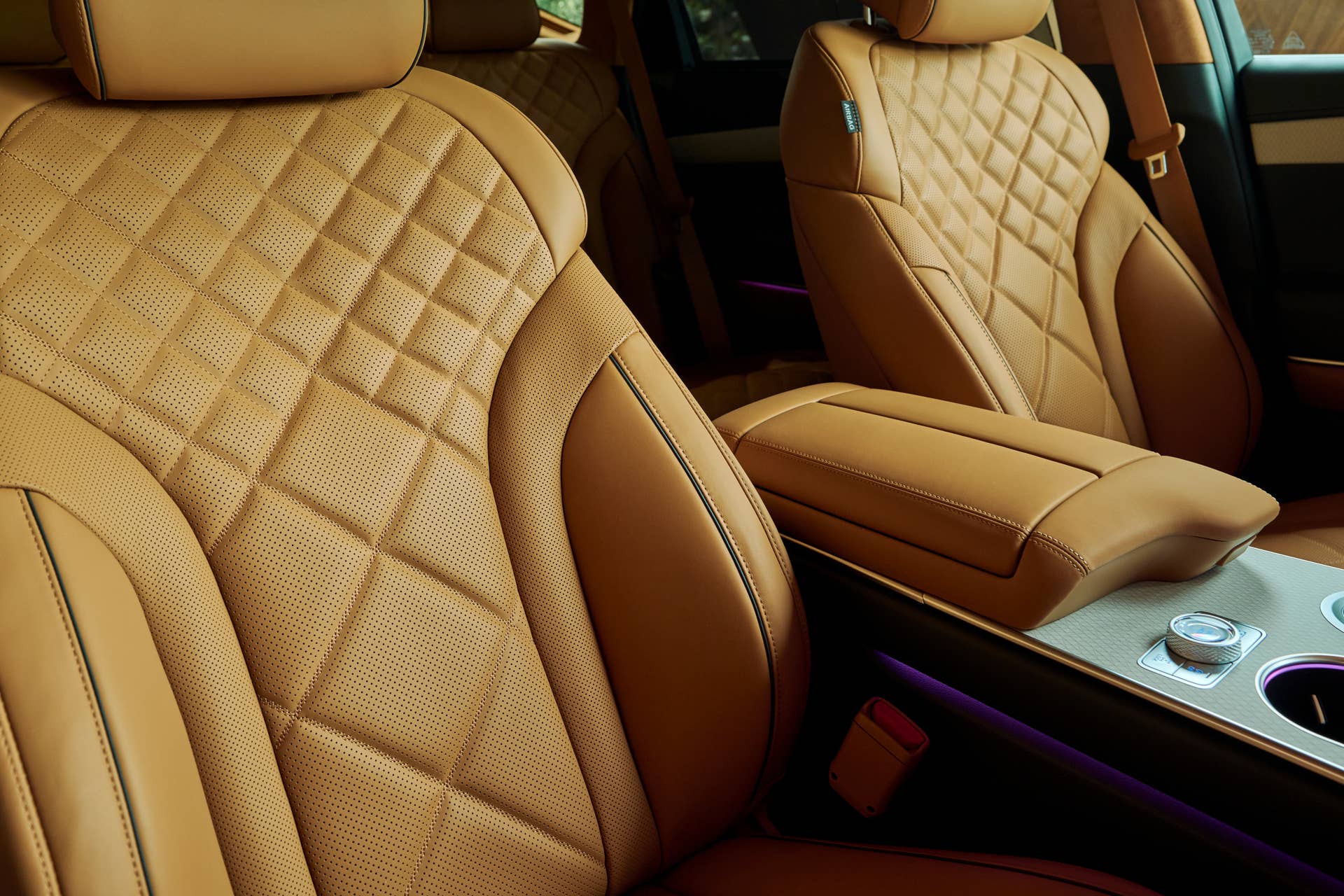
Where the Genesis truly shines is in its interior. The raw numbers say that the GV80 has 109 cubic feet of passenger space and up to 35 cubic feet of cargo volume that extends to 84 cubic feet with the seats folded down, but the environment created in between is where the true beauty lies. It’s an understatement to simply note that the diamond stitch quilting on the Genesis seats resembles that of a Chanel handbag. The intricate touches of burled wood, real, cold metal, and customizable ambient lighting create an environment that truly feels high-end in a way that the Lincoln falls short.
Audi Q7 – The sporty, Quattro alternative
Audi
If there is one thing the German luxury automaker Audi is world-renowned for, it is the Quattro All-Wheel-Drive system; a system that cemented its place in motorsports, including Group B rallying, Trans-Am, and IMSA GTO.
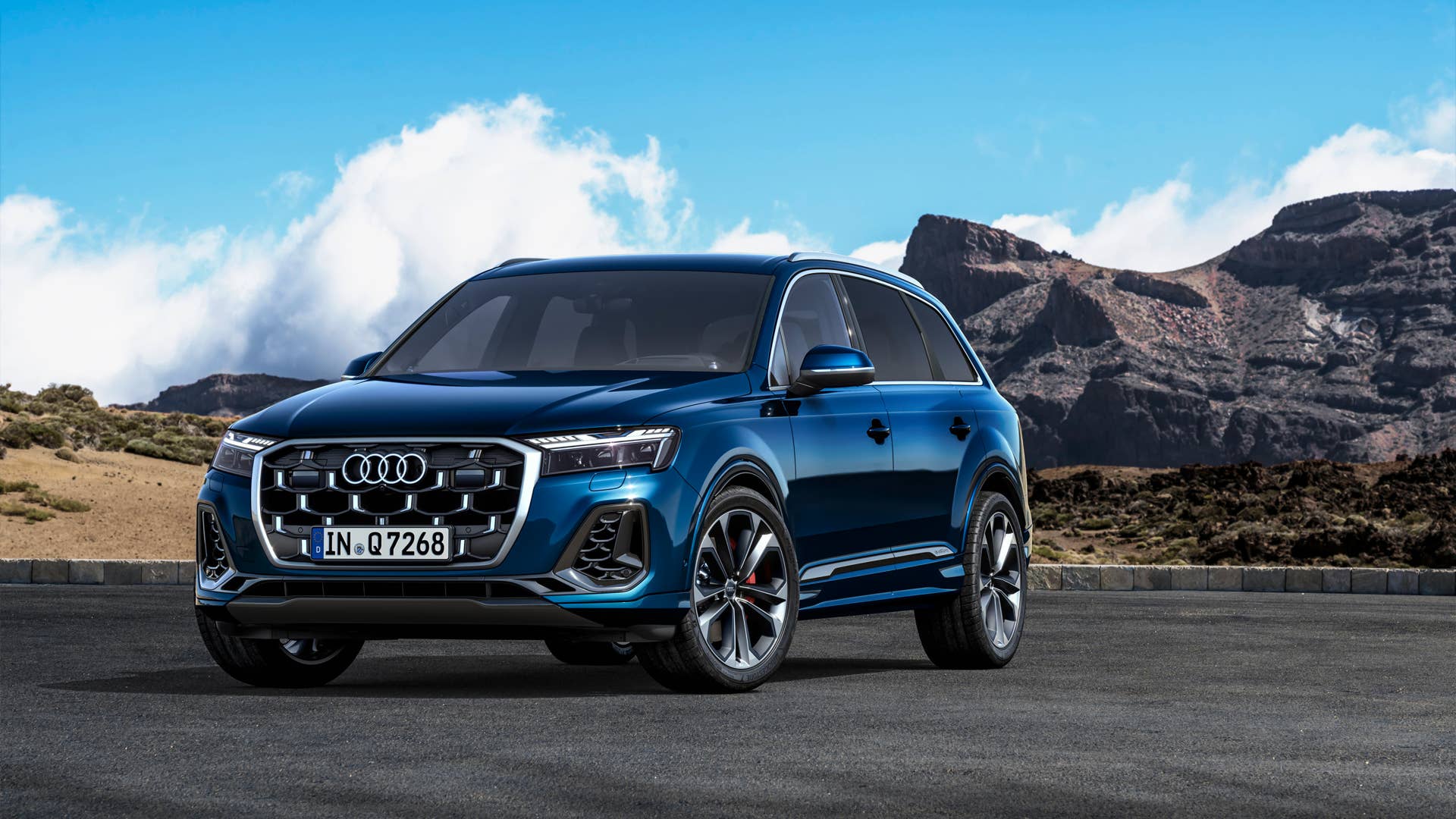
Though it may seem that not much of that heritage has rubbed off on the tall, three-row Audi Q7, the $60,500 MSRP SUV can be seen as a sportier alternative to the Lincoln luxo-barge. Like the Genesis GV80, quattro all-wheel-drive is standard, but the lower-spec ’45’ models have a 261-horsepower turbocharged four-cylinder engine with a 12-volt hybrid system. However, the upgraded ’55’ models come with a 48-volt hybridized turbocharged 3-liter V6 making 335 horsepower. The EPA rates the four-cylinder model at 20 mpg city, 26 mpg highway, and 22 mpg combined, while the V6 gets 18 mpg city, 23 mpg highway, and 20 mpg combined. While it may seem down and out numbers-wise, the Audi Q7 with the optional engine can do a 5.5-second 0-60 mph time, and can be equipped with air suspension and all-wheel-steering for ultimate driving pleasure.
Audi
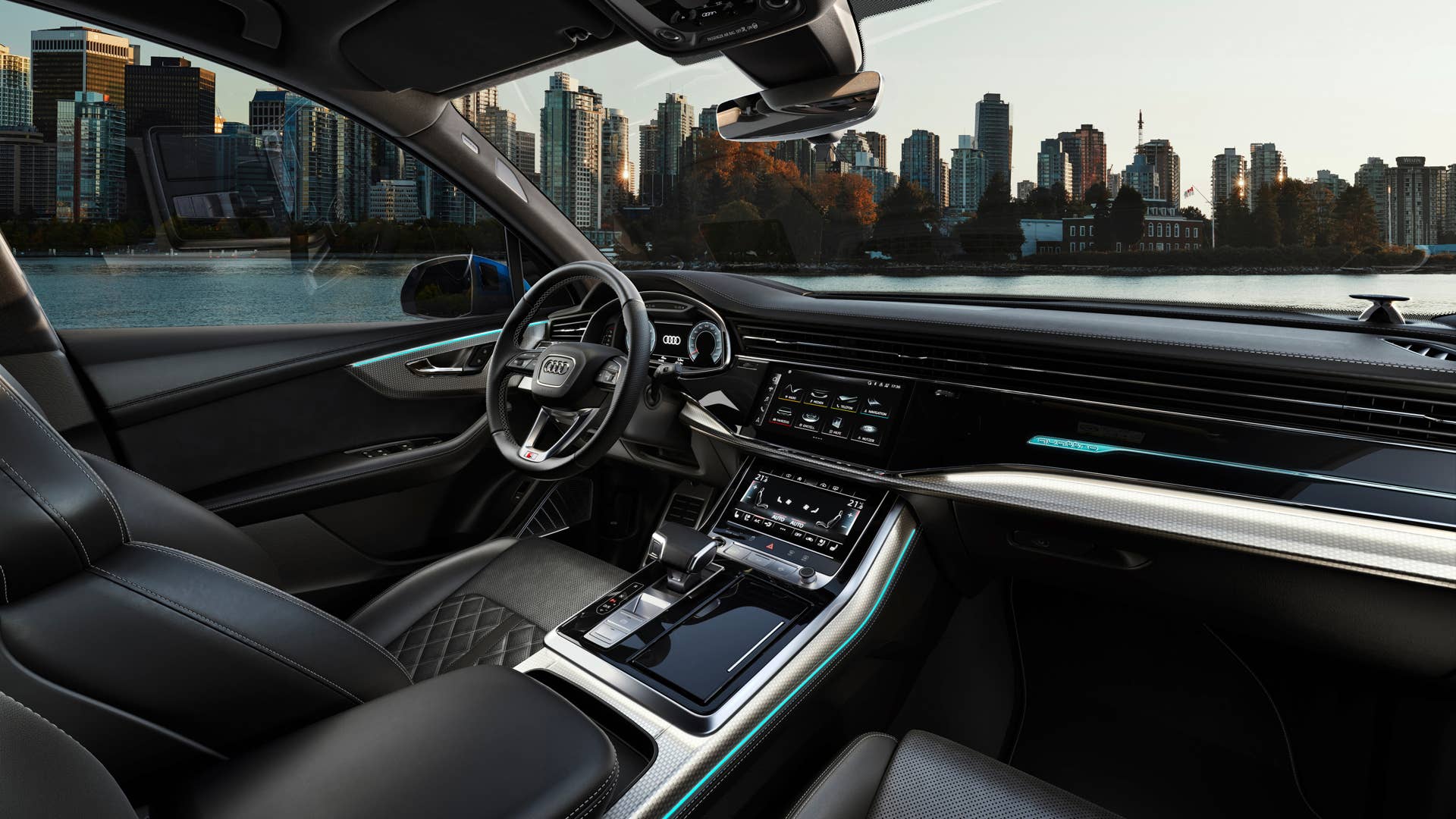
As for the interior, it is screens galore, as separate touchscreens control both the infotainment and the climate controls. Technology heads the Audi’s otherwise premium and minimalist interior, with about 108 cubic feet of passenger space and 35 cubic feet of cargo room that expands to 69.6 cubic feet with all the seats folded down. Compared to Lincoln’s larger-than-life, limousine-esque feel, the Audi’s more compact dimensions seem to indicate that its purpose is that of a sports car, which may be a hard sell if your kids want some extra legroom.
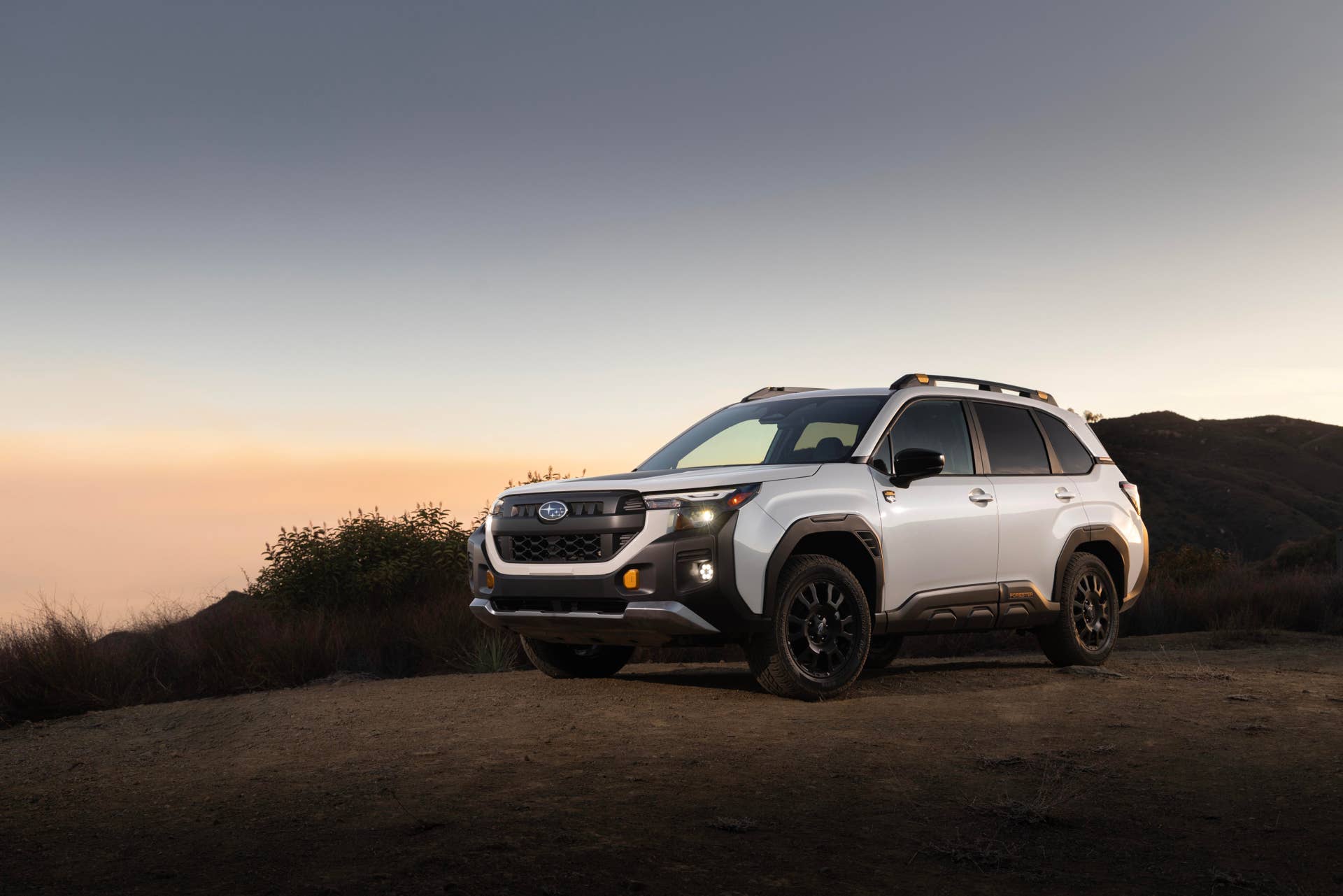
Volvo XC90 – The quirky, left-field choice
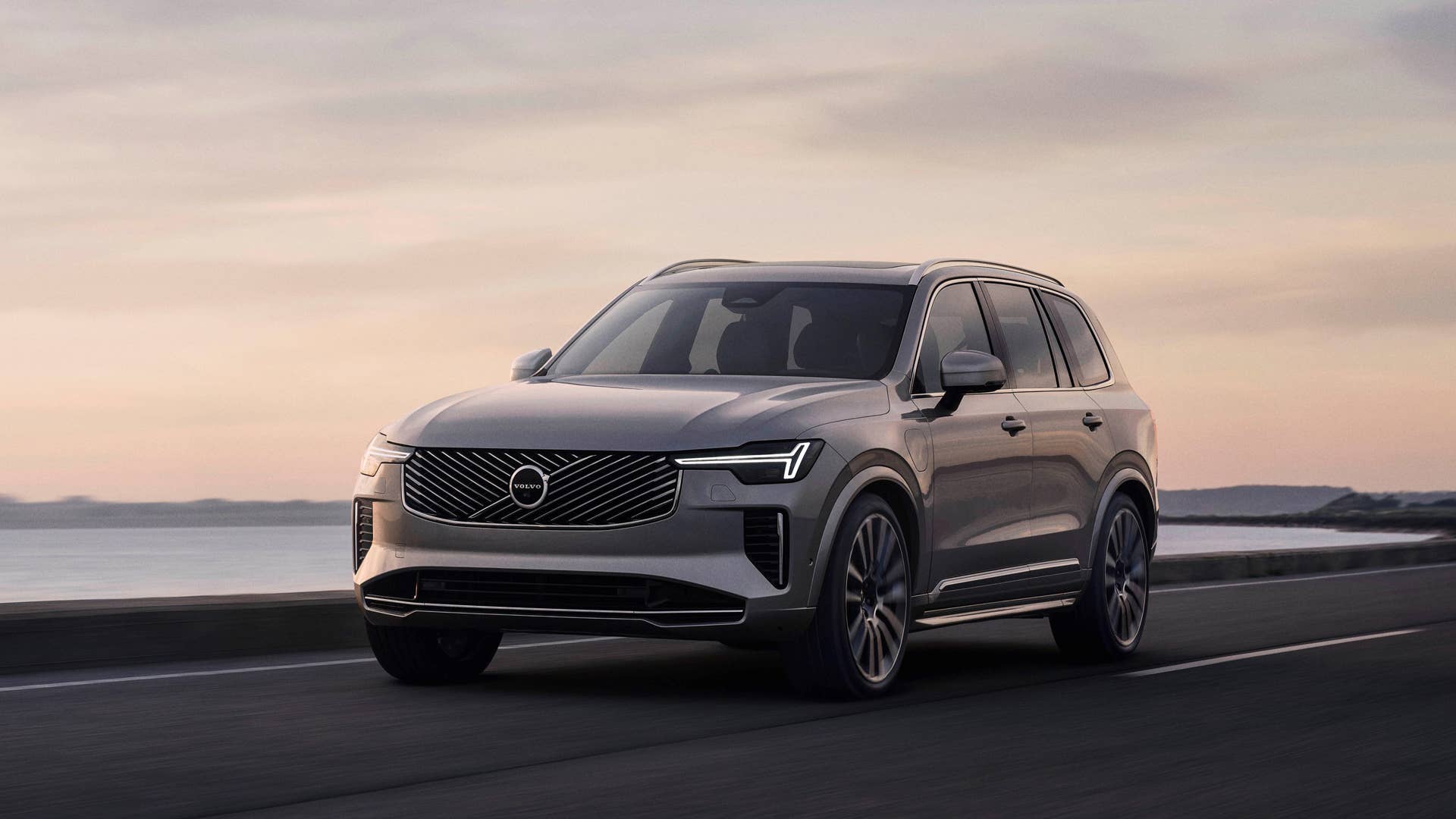
Volvo
The Volvo XC90 is the one model out of the three choices here that is the oldest in its current product life cycle, as it has been nearly ten years since it got some new sheet metal. However, even though the old saying goes, “If it ain’t broke, don’t fix it,” the XC90 got a well-deserved refresh for 2025.
On the outside, the “2025.5” models get new front-end styling with a new nose and cool LED lighting, alongside more features that become apparent on the inside. The interior gets a redesigned dashboard, new interior materials, and a new 11.2-inch infotainment display featuring Google Built-in as well as Android Auto and Apple CarPlay. All XC90s get all-wheel drive and an eight-speed automatic transmission, but buyers get a choice of two 48-volt hybridized motors: either a turbocharged 2.0-liter four-cylinder engine called the B5 that makes 247 horsepower and 266 pound-feet of torque or an upgraded B6 powertrain with 295 horsepower and 310 pound-feet.
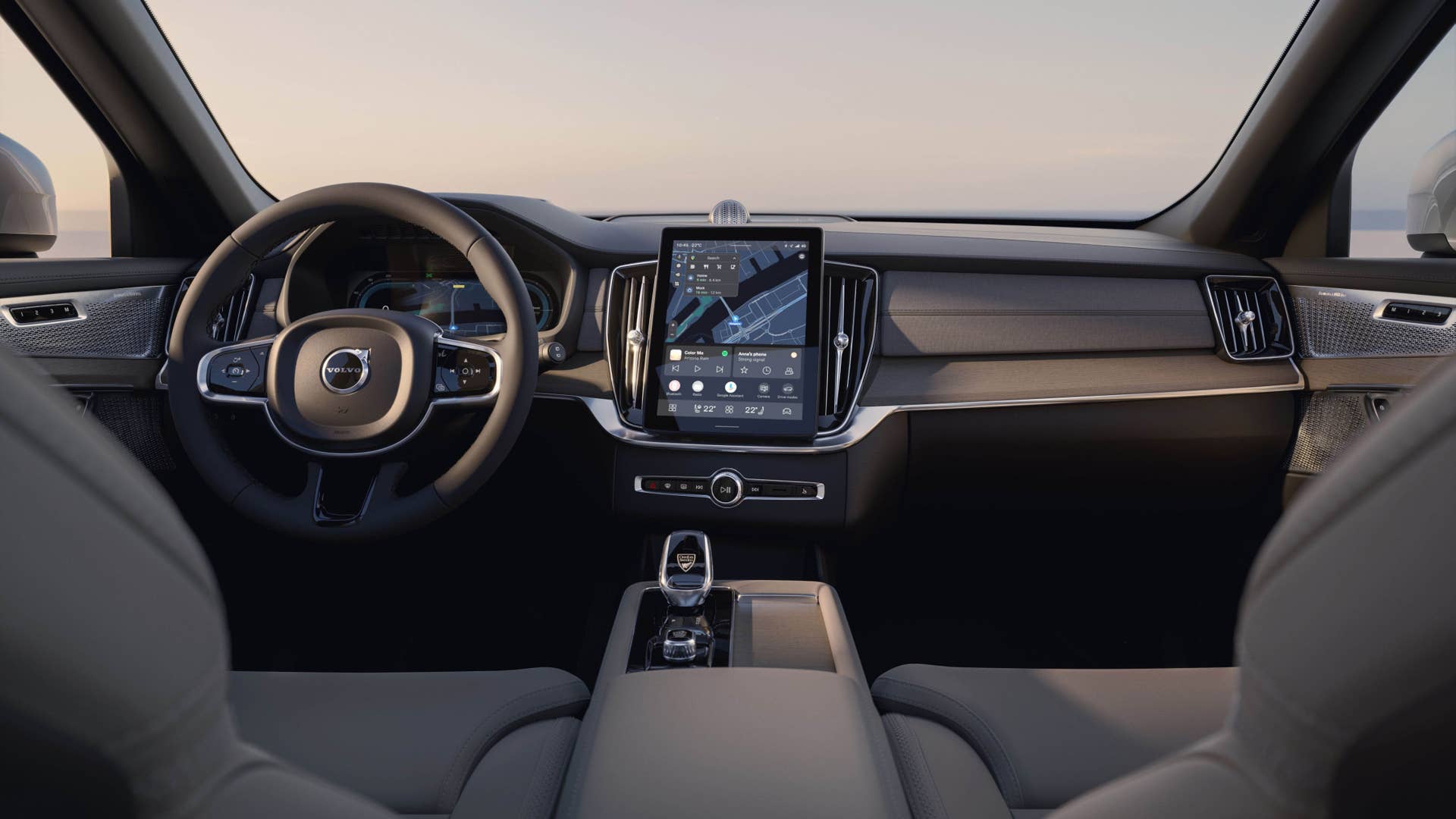
Volvo
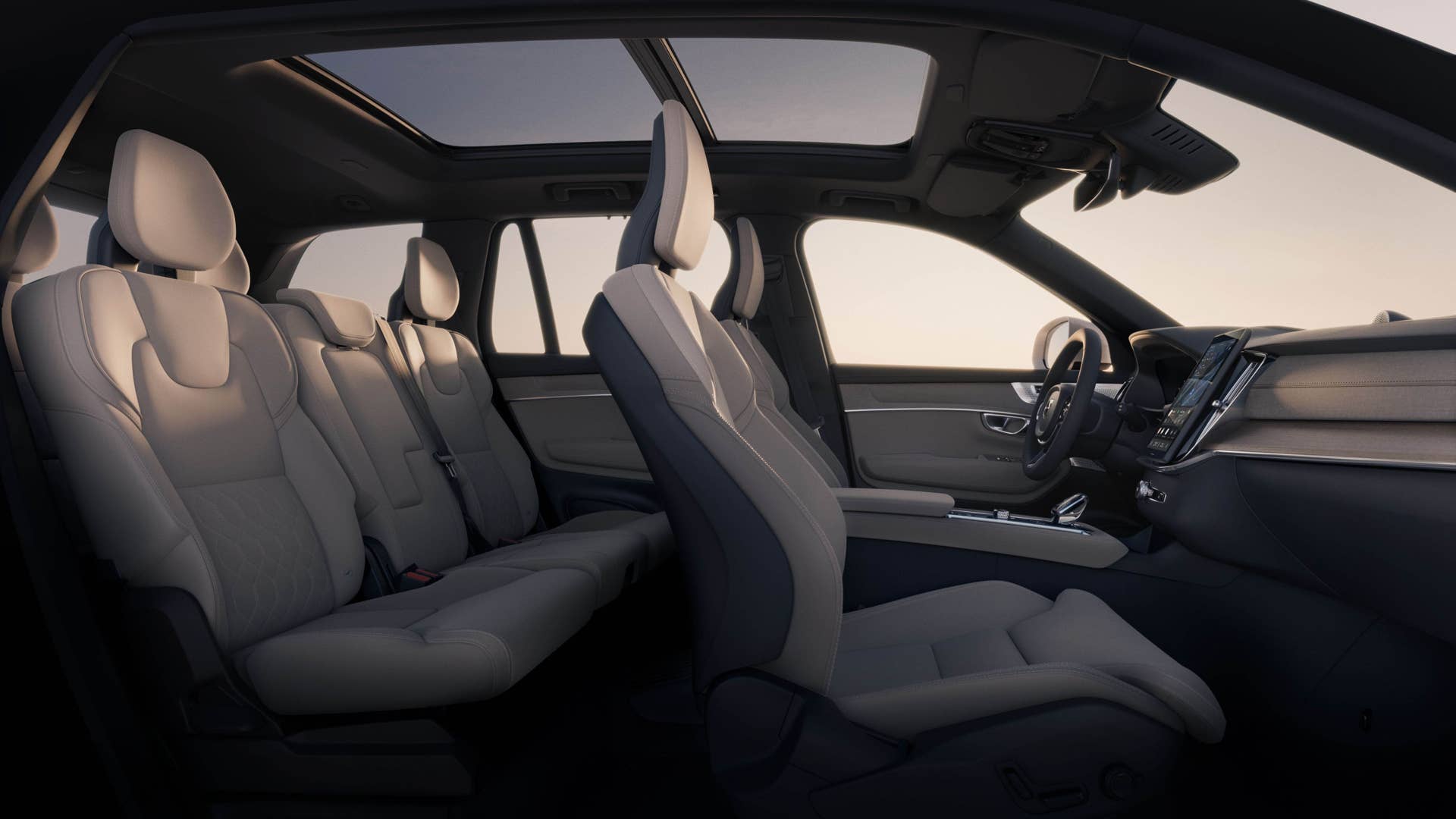
Volvo
As a package, the $59,745 XC90 presents itself as a relatively quirkier option at the Aviator’s price, as the Lincoln has far more room for passengers and cargo than the Volvo. But where it does stand out is efficiency. Both powertrains are hybrids, and as a result, the EPA rates the smaller B5 with 22 mpg city and 27 highway, while the B6 powertrain gets 20 city and 26 mpg highway ratings. Additionally, the XC90 also comes in a T8 plug-in-hybrid model capable of 455 horsepower, which can also travel up to 33 miles entirely on electric power.
Final thoughts
Lincoln
Buyers who opt for the Lincoln are getting their money’s worth in terms of the “raw car” they’re getting for their families, as it outperforms all three of the candidates I presented as alternatives in terms of interior size and power. However, buyers are cynical, emotional, and human beings, and the luxury SUV market is a segment full of buyers with discerning tastes.
Beyond their premium labels, the Genesis GV80, Audi Q7, and Volvo XC90 offer a special attribute that sets them apart from their more expensive counterparts. The GV80 knocks it out of the park with its interior, the Audi has standard quattro all-wheel-drive for a sportier feel, and the XC90 is efficiency in a minimalistic and cool package that oozes “quiet luxury.” If you’re thinking hard about the Lincoln Aviator, its rivals may offer something that the Buffins at Ford might have overlooked, and you might find yourself in a different kind of car.
About the author

James Ochoa
Senior Editor, Autoblog