
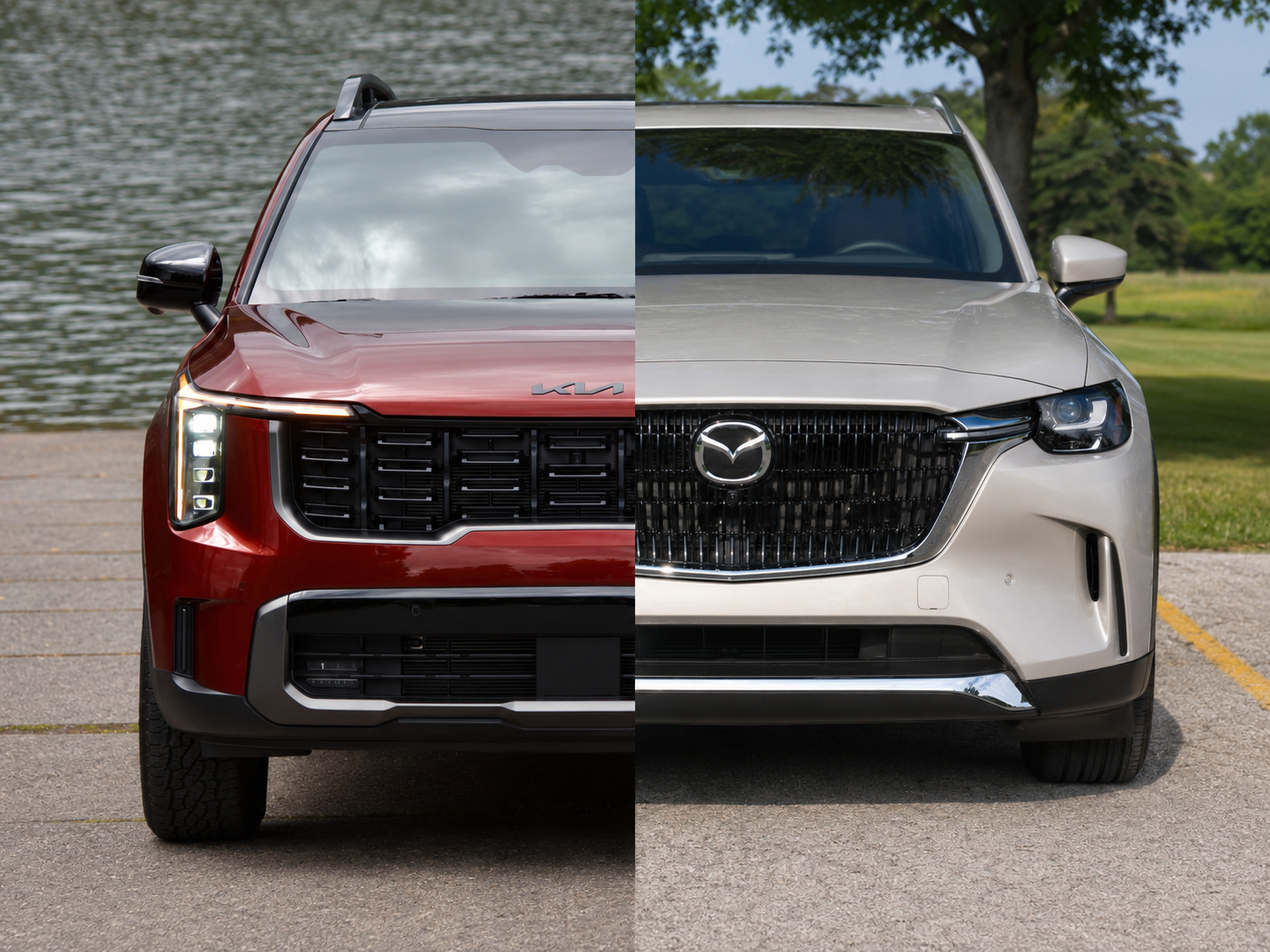
Bigger does not always mean roomier, and this pairing proves it. Mazda’s CX-90 plays the upscale flagship and Kia’s Sorento the value all-rounder, yet when the tailgate opens, the two finish closer than their size gap suggests. On size alone, the CX-90 towers over the Sorento, and passenger volume reflects that. Cargo, though, is a tighter contest. The Mazda takes a clear win behind the third row and then finishes in a virtual dead heat at maximum, which makes the choice more about priorities than pure volume.
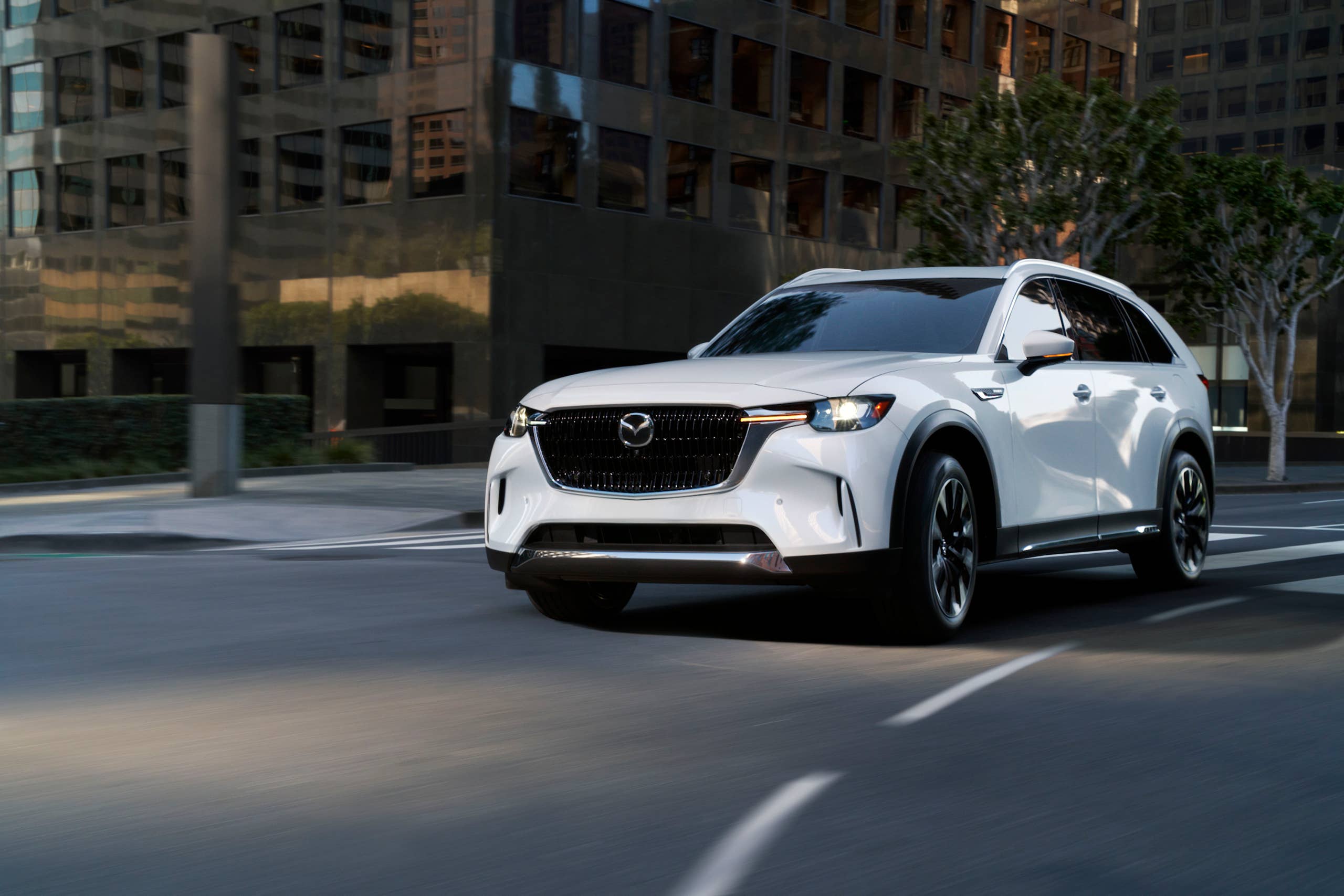
Mazda
Cargo space at a glance
Here is how the two three-row SUVs compare on the cargo numbers that matter most.
| Cargo measure | Mazda CX-90 | Kia Sorento |
|---|---|---|
| Behind the third row | 15.9 cu ft | 12.6 cu ft |
| Behind the second row | About 40 cu ft | About 38 cu ft |
| Maximum cargo | About 75.2 cu ft | About 75.5 cu ft |
| Seating capacity | Up to 8 | Up to 7 |
Behind the third row
With all three rows up, the CX-90 has the edge. It offers 15.9 cubic feet behind the third row, compared with the Sorento’s 12.6, a meaningful difference in the space families use most when everyone is aboard. That extra room is enough for a few more grocery bags or a bigger stroller without folding a seat, and it reflects the Mazda’s larger footprint.
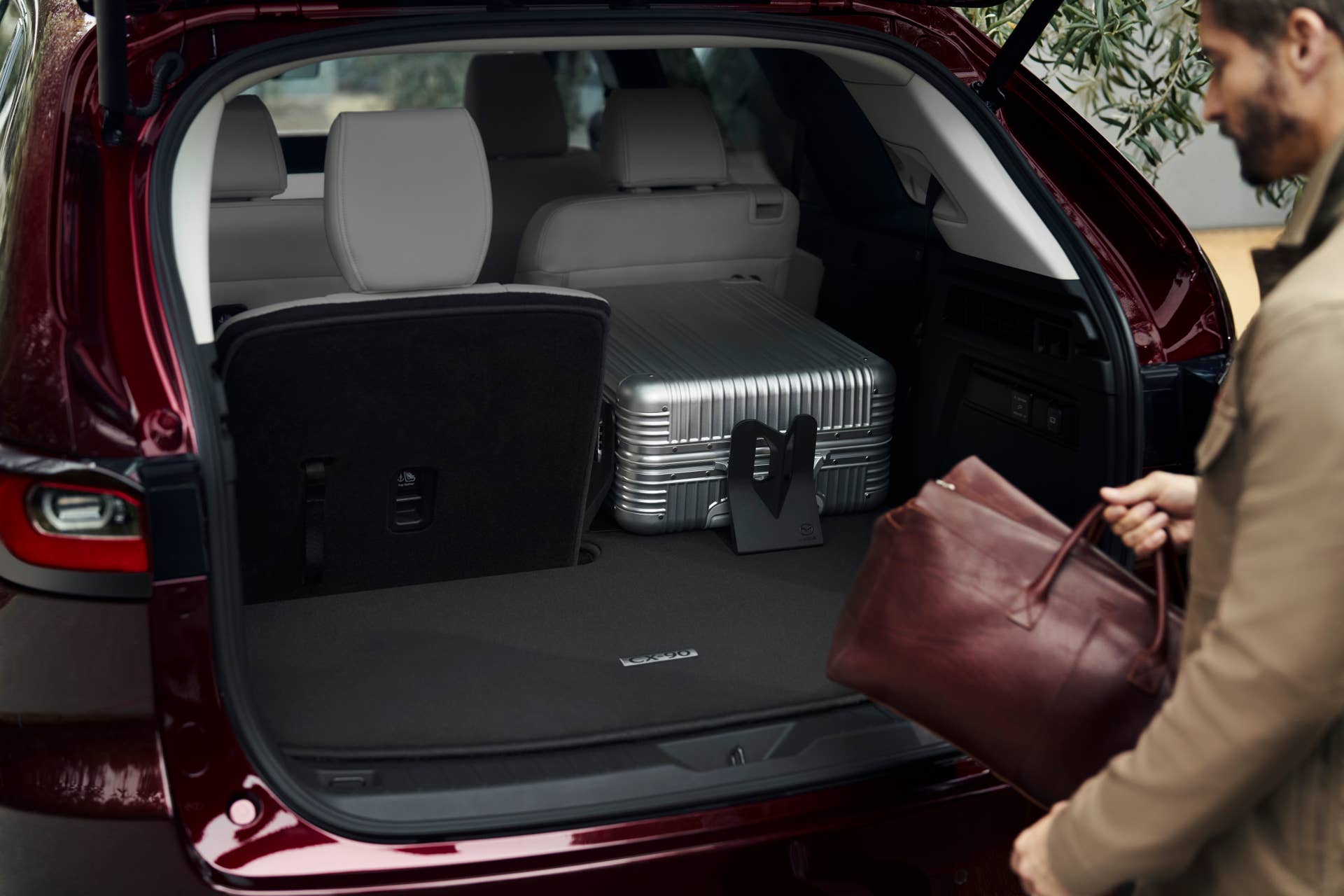
The Sorento’s 12.6 cubic feet is still usable for daily errands, but with the third row occupied it fills up faster than the Mazda. For buyers who often ride with all seven seats in play, the CX-90 is the more accommodating of the two.
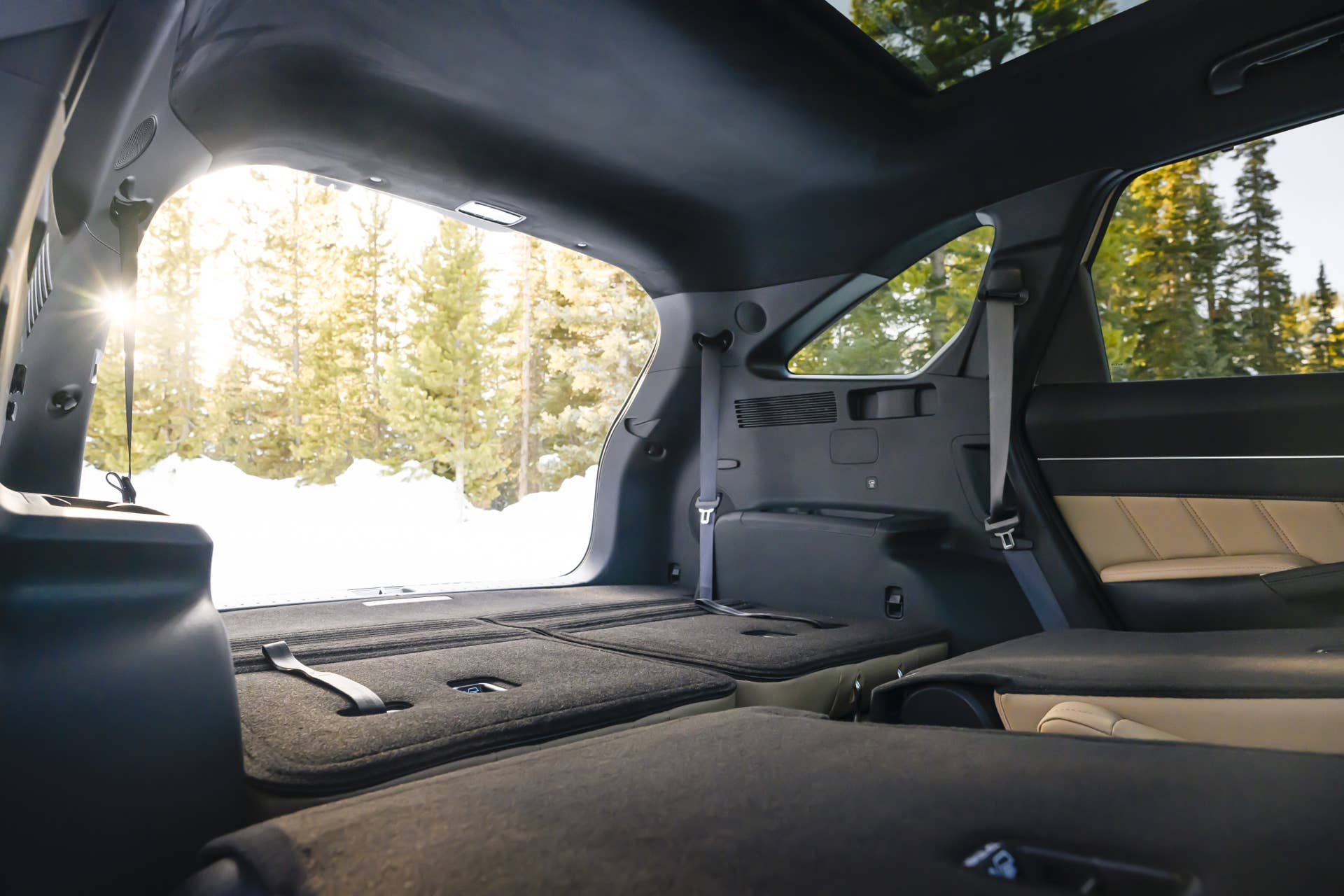
Kia
With the seats folded
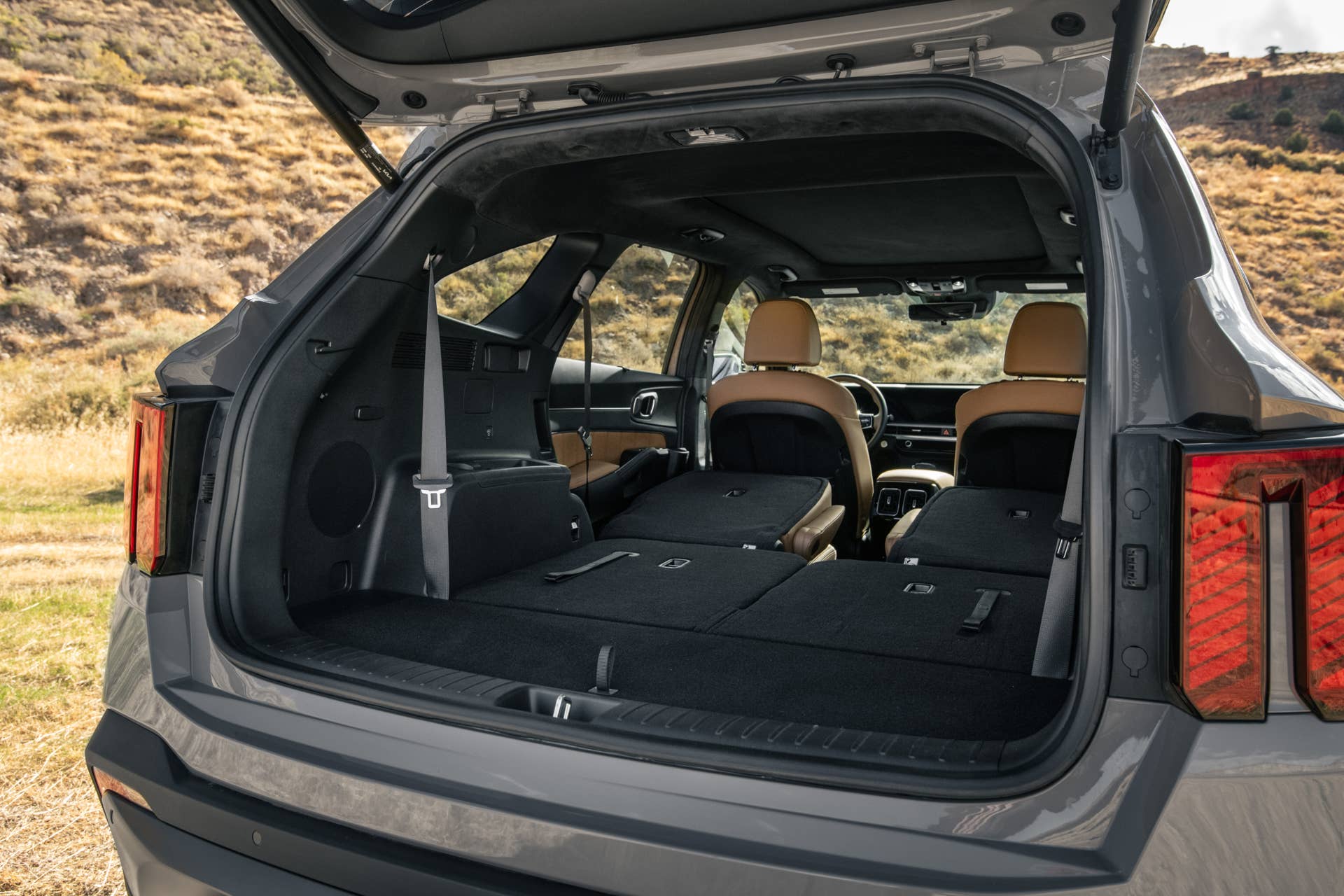
Fold everything, and the two essentially even out. The CX-90 tops out around 75.2 cubic feet of maximum cargo volume, while the Sorento is right there at about 75.5, a difference so small it disappears in practice. Behind the second row, the CX-90 holds a modest lead at roughly 40 cubic feet, but at full capacity, these two are as close as it gets.
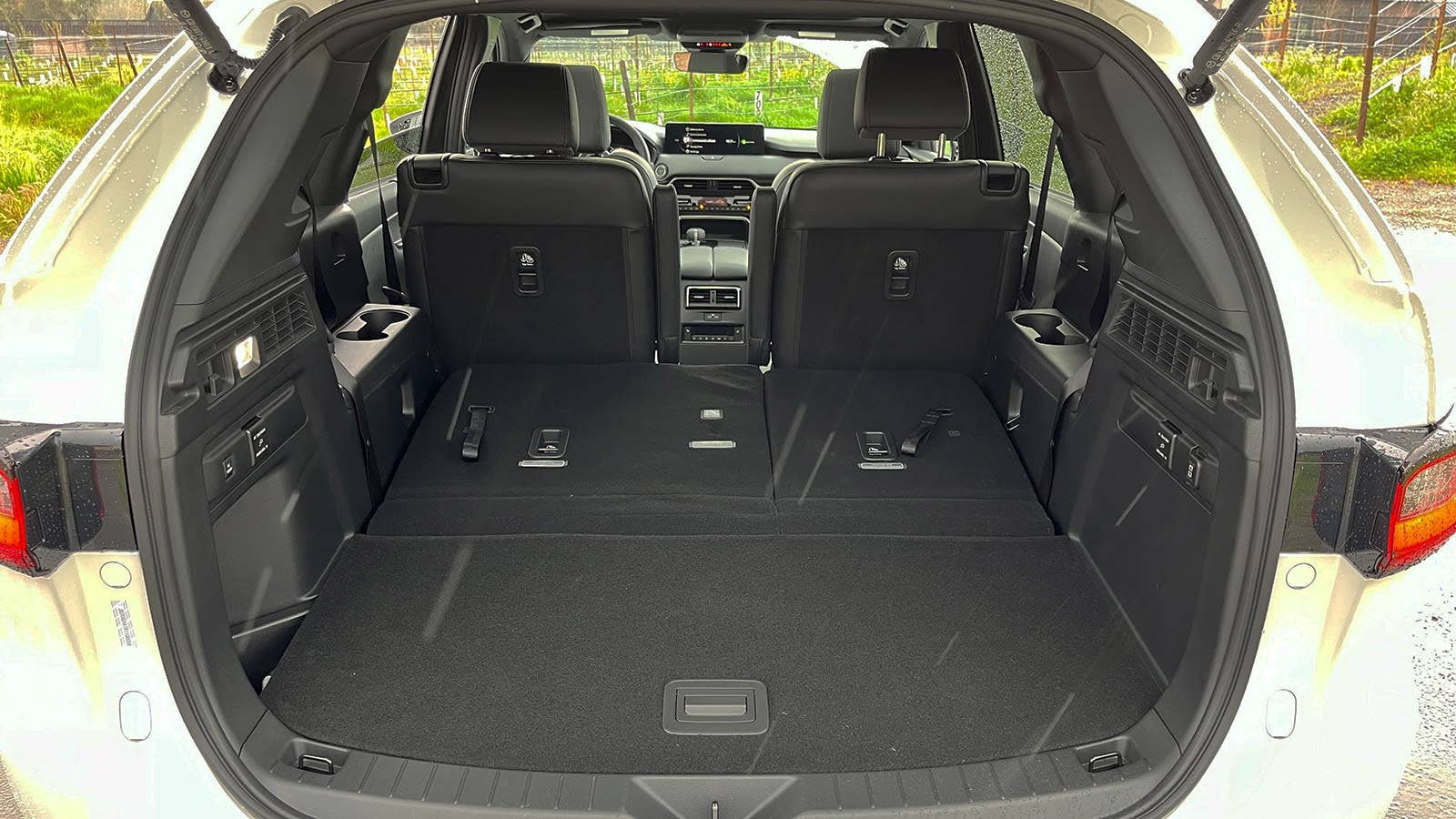
Mazda
That is a mild surprise given the Mazda’s larger exterior, and it speaks to clever packaging on the Kia’s part. Whichever you choose, maximum haul-it-all space is a wash, so the tiebreaker moves to the seats-up measurement and to the rest of the ownership picture.
Beyond the numbers
The two diverge more in character than in raw volume. The CX-90 leans premium, with an upscale cabin, more standard power, higher towing capacity, and that extra passenger room, positioning it against pricier rivals. Its larger body makes it feel more substantial inside.
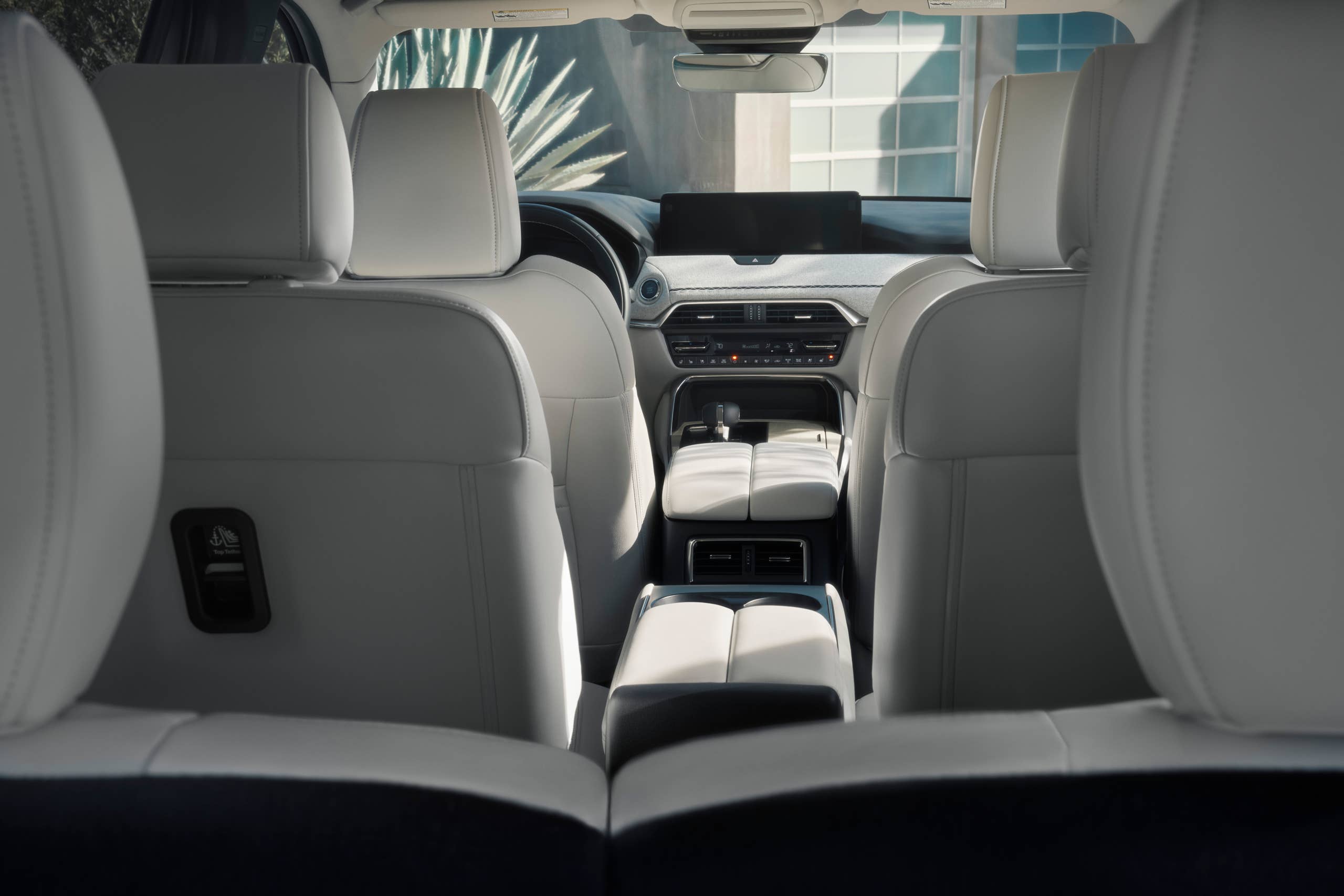
Mazda
The Sorento offers a lower price, strong standard features, a long warranty, and efficient powertrain options, including hybrid and plug-in hybrid models. It packages a genuinely competitive amount of cargo into a smaller, easier-to-park footprint. For value-focused buyers, space efficiency is a real selling point, even though the Mazda falls short behind the third row.
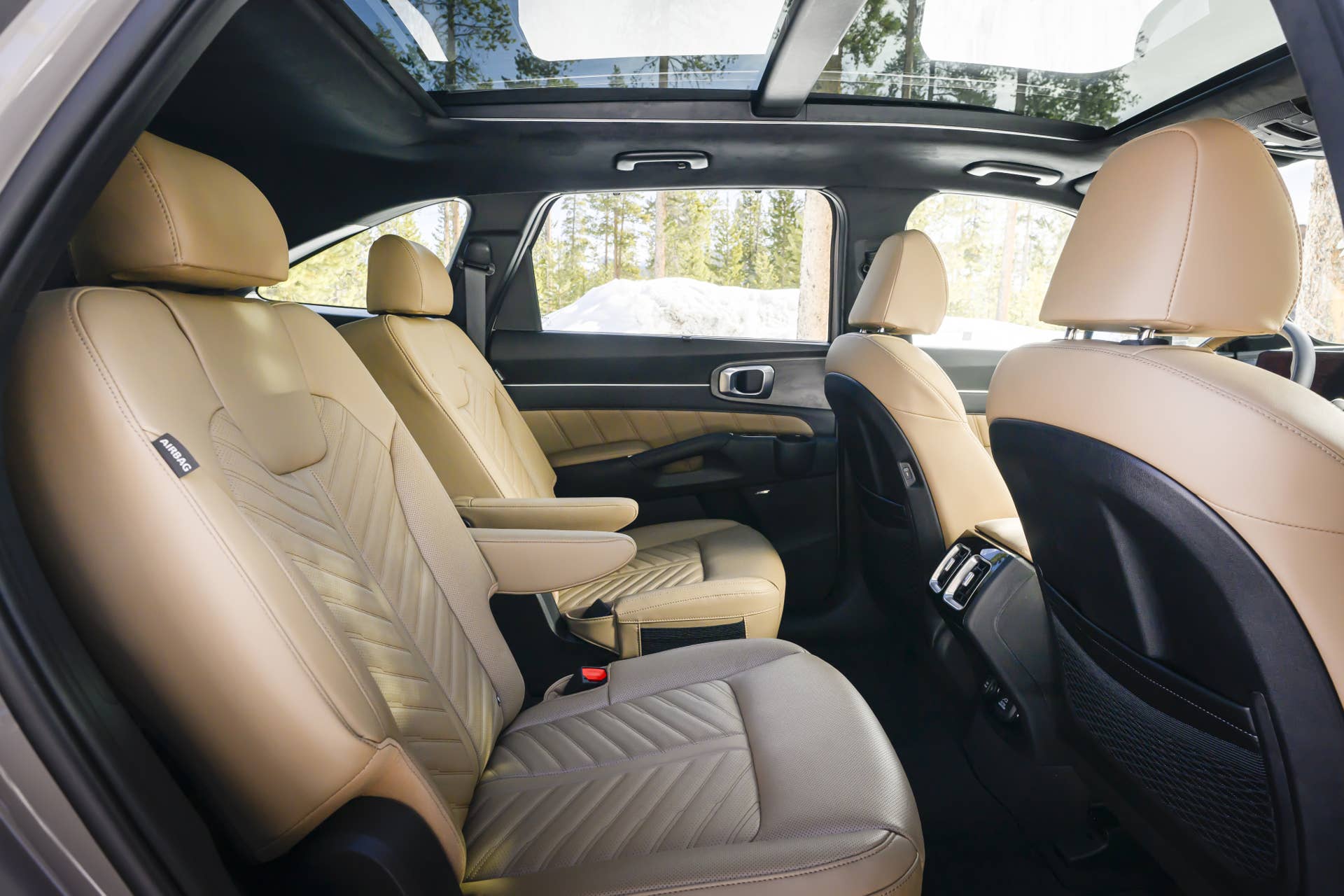
Kia
So which one has more cargo space?
The Mazda CX-90 has slightly more cargo space, but the answer comes with a caveat. It clearly leads behind the third row at 15.9 cubic feet to 12.6, which is the configuration families use most, so it earns the win. Maximum volume, however, is effectively tied to about 75 cubic feet, so the Mazda’s advantage lies in everyday usability rather than outright capacity. The Kia Sorento impressively holds its own, matching the larger Mazda at maximum and undercutting it on price, making it the smarter value for many shoppers. But on the specific question of cargo room, the CX-90’s edge behind the seats gives it the narrow nod.
About the author

Kyle Edward
Editor-in-Chief, Autoblog