
Fuel efficiency at its finest
I remember when cars in the 90s used to get 30 to 40 mpg without breaking a sweat. These were small cars like the Geo Metro, the Honda Civic CX, and the Suzuki Swift, and while getting anywhere close to 40 mpg without the use of hybrid technology is impressive, keep in mind that these cars were very slow, had sparse interiors, and were minuscule in size. You hoped that your ride in the car was short because anyone tall and sitting in the back seat would be furious after more than 30 minutes. Oh yeah, some of the fuel-miser cars lacked air conditioning as well, so you didn’t drive one in the summer. Fortunately, they cost less than $10,000 at the time.
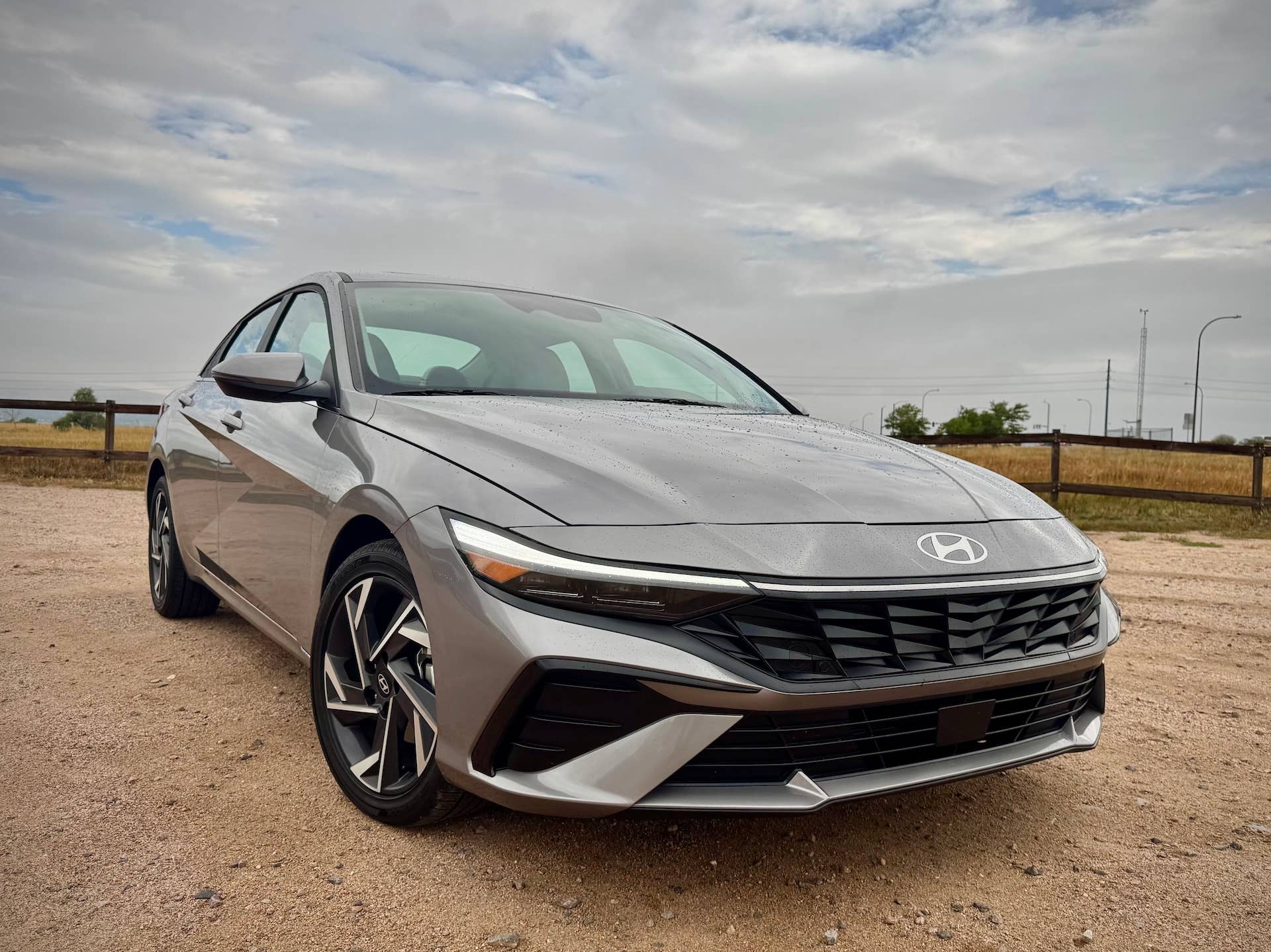
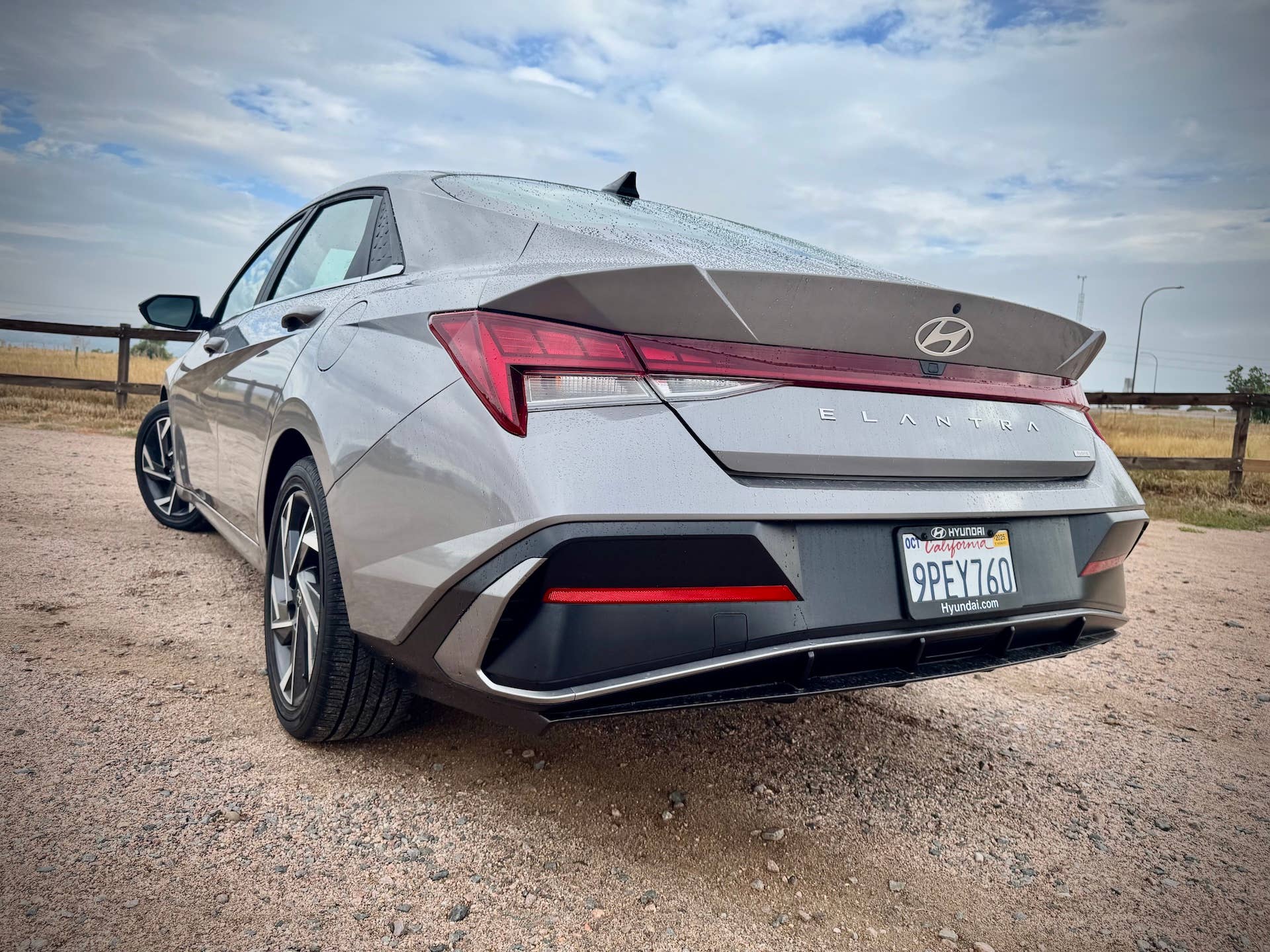
Fast forward 30 years, and here we are with a completely different automotive landscape. Nowadays, Americans are stuck on SUVs and trucks with all kinds of horsepower, while small cars get put on the back burner. However, that’s not completely the case, which is evident when you take the 2025 Hyundai Elantra into consideration. The Elantra has been in the American market since 1991 and has made many advances since. Now in its seventh generation, the Elantra soldiers on as a value leader in its segment, offering buyers excellent fuel efficiency, a practical cabin, and a comfortable ride.
Joe Santos
However, the Elantra Hybrid kicks things up a notch with its hybrid powertrain that’s good for over 50 mpg. To be exact, the EPA estimates equate to 49 mpg in the city and 52 mpg on the highway. During my time spent with the car, I averaged 55 mpg. Talk about being efficient. This sedan is what you need if daily commuting is your jam and you spend some weekends going on road trips.
Just because it’s efficient doesn’t mean it’s slow
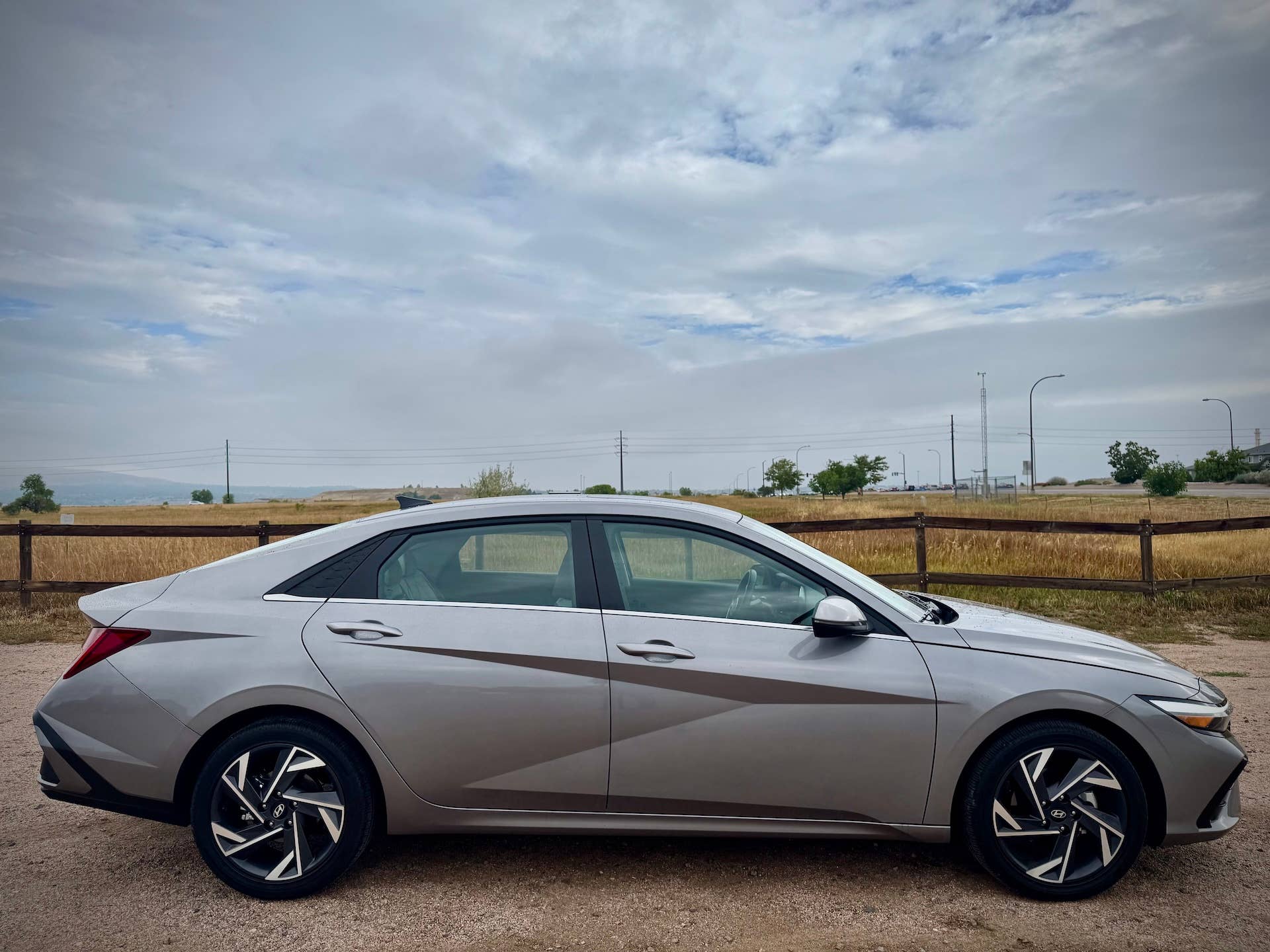
Although the Hyundai Elantra Hybrid is great at sipping fuel, that doesn’t mean it’s slow. Under its hood is a 1.6-liter, four-cylinder engine that is paired with an electric motor generating a combined output of 139 horsepower and 195 lb-ft of torque. Tipping the scales at just over 3,000 pounds, the Elantra Hybrid has a relatively low curb weight for a hybrid car (considering the battery weight), which makes it pretty quick off the line. Much of that quickness is due to the electric assist from the motor, but it can definitely get out of its own way and pass other cars on the highway with no issues.

Joe Santos
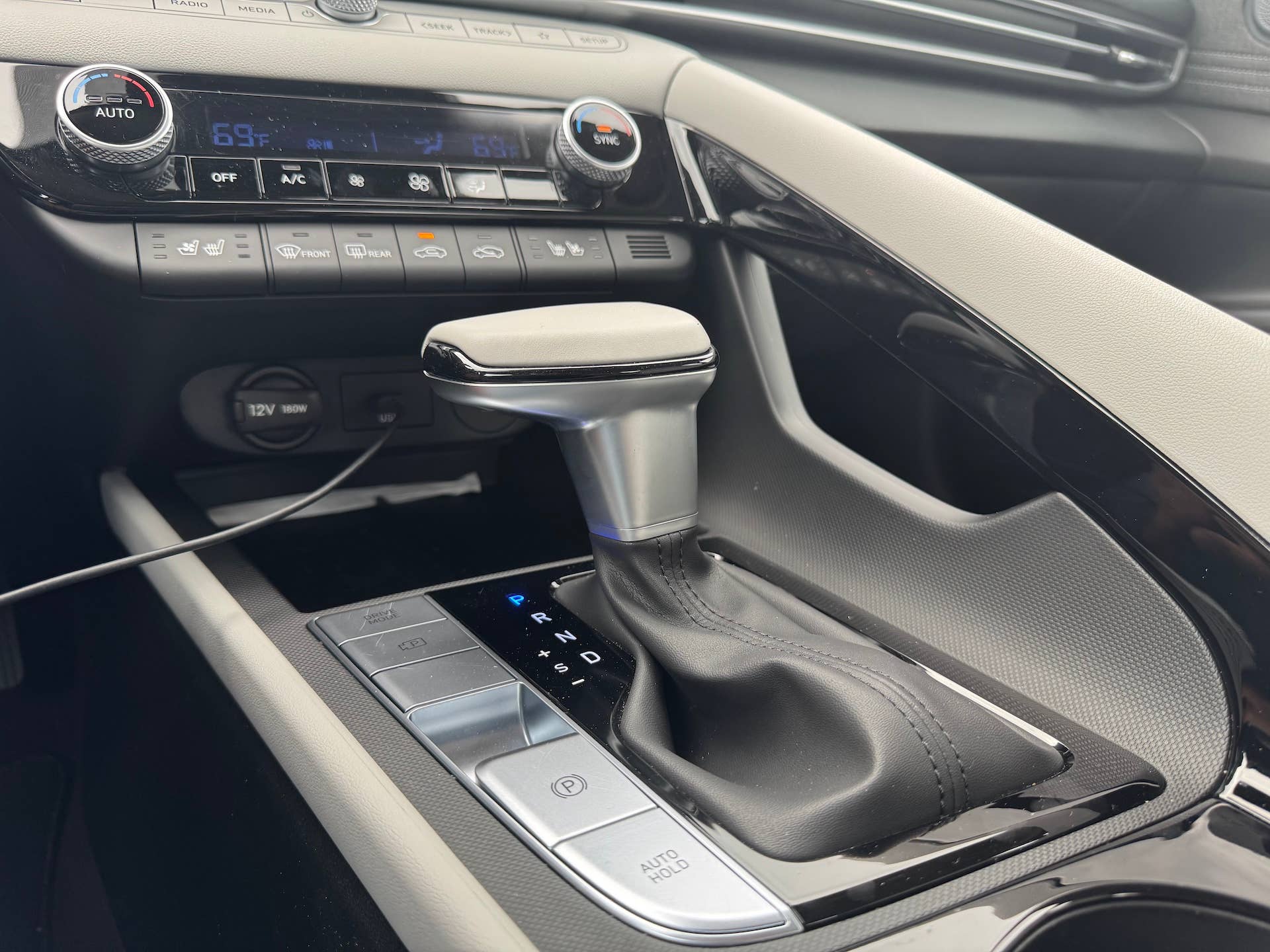
My main gripe with the Elantra Hybrid’s powertrain, though, is the transmission. Hyundai again dared to be different by installing a six-speed dual-clutch transmission in this car, as opposed to the traditional CVT. The Honda Civic Hybrid has one, for example.
The issue I found with the dual-clutch transmission is that it made the car feel laggy during low-speed driving situations, like when pulling into a parking space. Instead of smoothly gliding into a parking spot, it would lurch forward a little, which caught me by surprise since it almost hit a curb. Additionally, when accelerating, the transmission shifts weren’t very smooth, which made the powertrain feel choppy, especially when the gasoline engine would come online to assist the electric motor. Overall, I think the driving experience could be smoother with the use of a CVT, which feels like one long gear and is likely why most other automakers use it.
Joe Santos
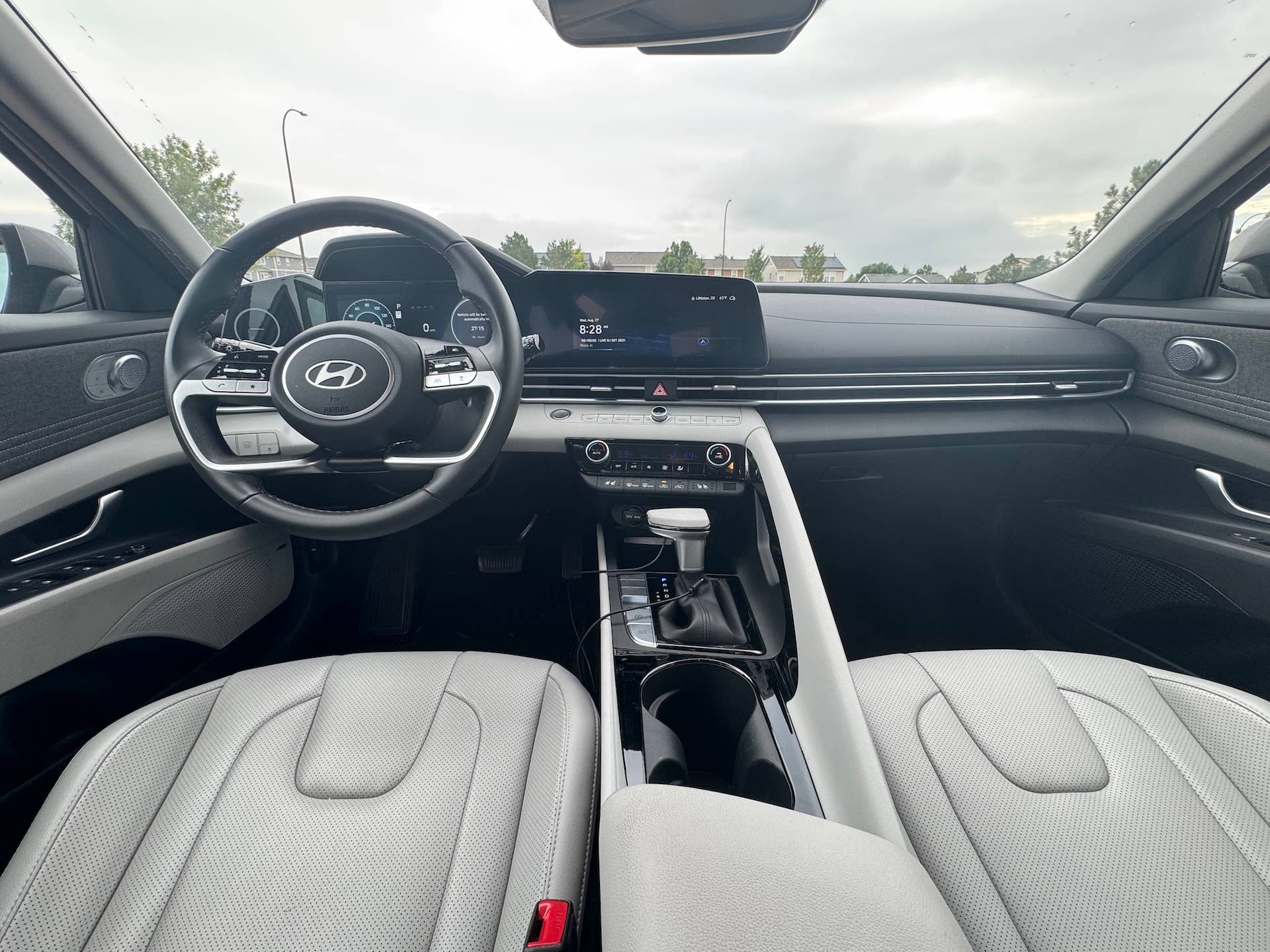
Otherwise, the Elantra Hybrid provides a comfortable driving experience, as its supple suspension soaks up road imperfections well and its cabin is pretty quiet. It’s not as quiet as a luxury car, but it’s not bad considering its price point. The interior is also very spacious and well-laid out, with plenty of room in the rear seat for three across. Even the middle-seat passenger has enough room.
The Hyundai Elantra Hybrid has all the interior goods you need, but there’s one annoyance
Inside, the Hyundai Elantra Hybrid has all the tech features you and your family could want and need. Of course, it helps that my tester for the week was the top-spec Limited trim, which came with every bell and whistle Hyundai has to offer. Some highlights include a large 10.25-inch touchscreen, a Bose premium audio system, a fully digital instrument cluster, and heated/ventilated front seats. The seats were also adorned in synthetic leather, which was soft and looked nice. However, I have a bone to pick with Hyundai about its infotainment system.
The infotainment system itself works well and is intuitive to use, but I wouldn’t recommend using the onboard navigation. I found the map to be rudimentary at best; it reminded me of an Atari game, so I just used Google Maps on Apple CarPlay instead. However, that led to the one annoying thing that I found with the system—you have to connect your phone with a cord. First-world problems, I know, but c’mon, Hyundai, it’s 2025; make everything wireless.
Joe Santos
Final thoughts
Despite the minor annoyances with the transmission and infotainment system, I enjoyed my time with the 2025 Hyundai Elantra. It’s quick enough, spacious, and comfortable for long commutes. With a sticker price of $30,810, I would say it’s worth a look for anyone in the market for a fuel-efficient commuter sedan. However, the only thing standing in the way of Hyundai getting more Elantra Hybrids off dealer lots is the Honda Civic Hybrid.
It has more power, achieves similar fuel economy numbers, and features a CVT and wireless CarPlay. You have to spend a little more for it, but I would say that those minor upgrades are worth the extra cash, considering it also has a slightly nicer interior, in my opinion. Regardless, the Elantra Hybrid is still an excellent choice and comes with everything you need without breaking a tight budget… just like those cars from the 90s, but with a lot more stuff in it.
Joe Santos