
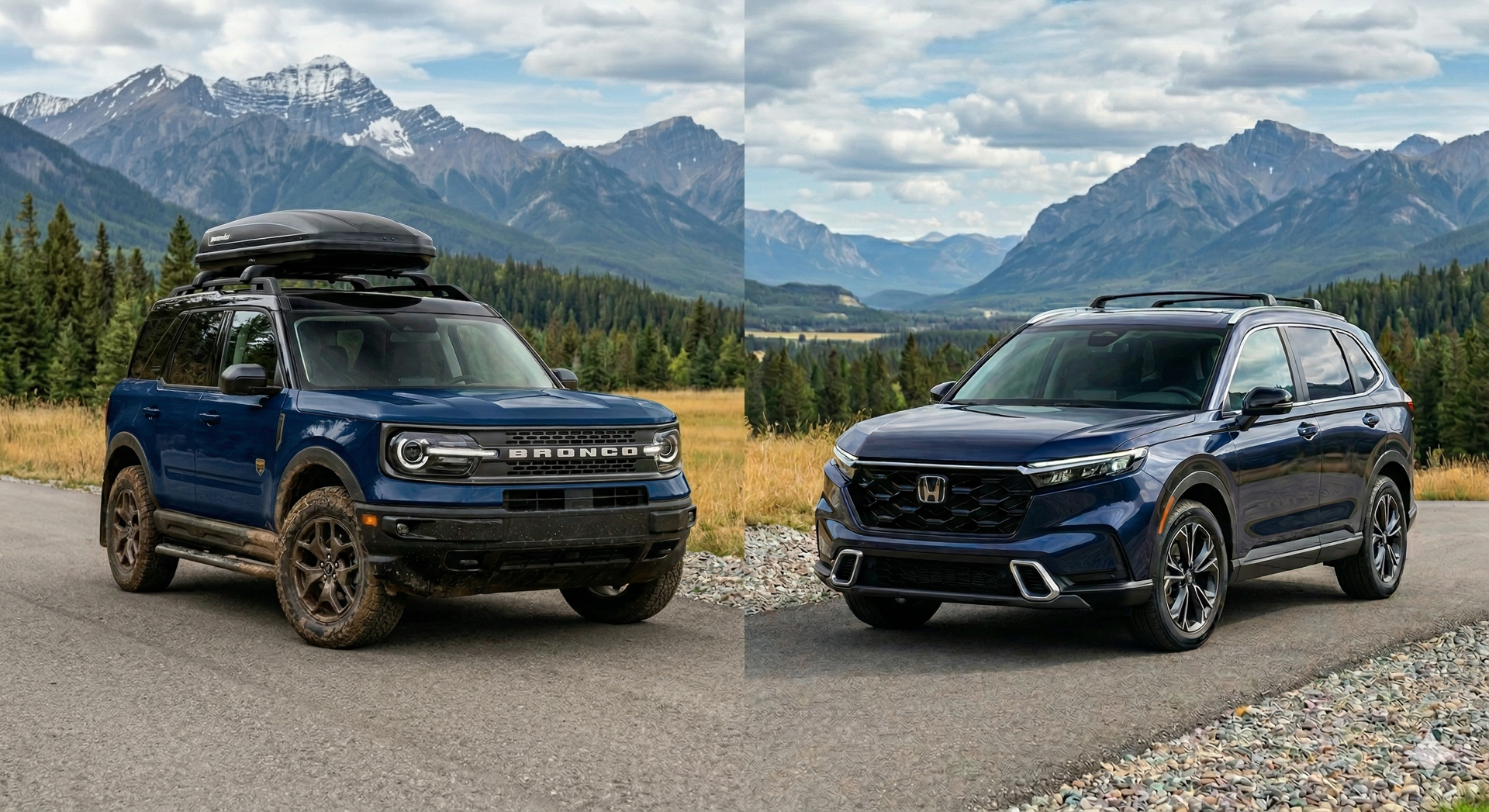
The compact SUV segment is glutted with vehicles that look vaguely adventurous, drive like a minivan, and are purchased by people who will never leave pavement. The Ford Bronco Sport and Honda CR-V both live in this space. They overlap on price, on footprint, and on the showroom floors of suburbia. They disagree on almost everything else. The CR-V is a rational, well-executed machine built around interior volume, fuel economy, and the kind of road manners that make a two-hour commute survivable. The Bronco Sport exists to remind you that “compact SUV” doesn’t have to mean “tall hatchback with a sunroof.” These are not interchangeable choices. They just look like they are from a distance.
The Bronco Sport is built for terrain. The CR-V is built for everything else.
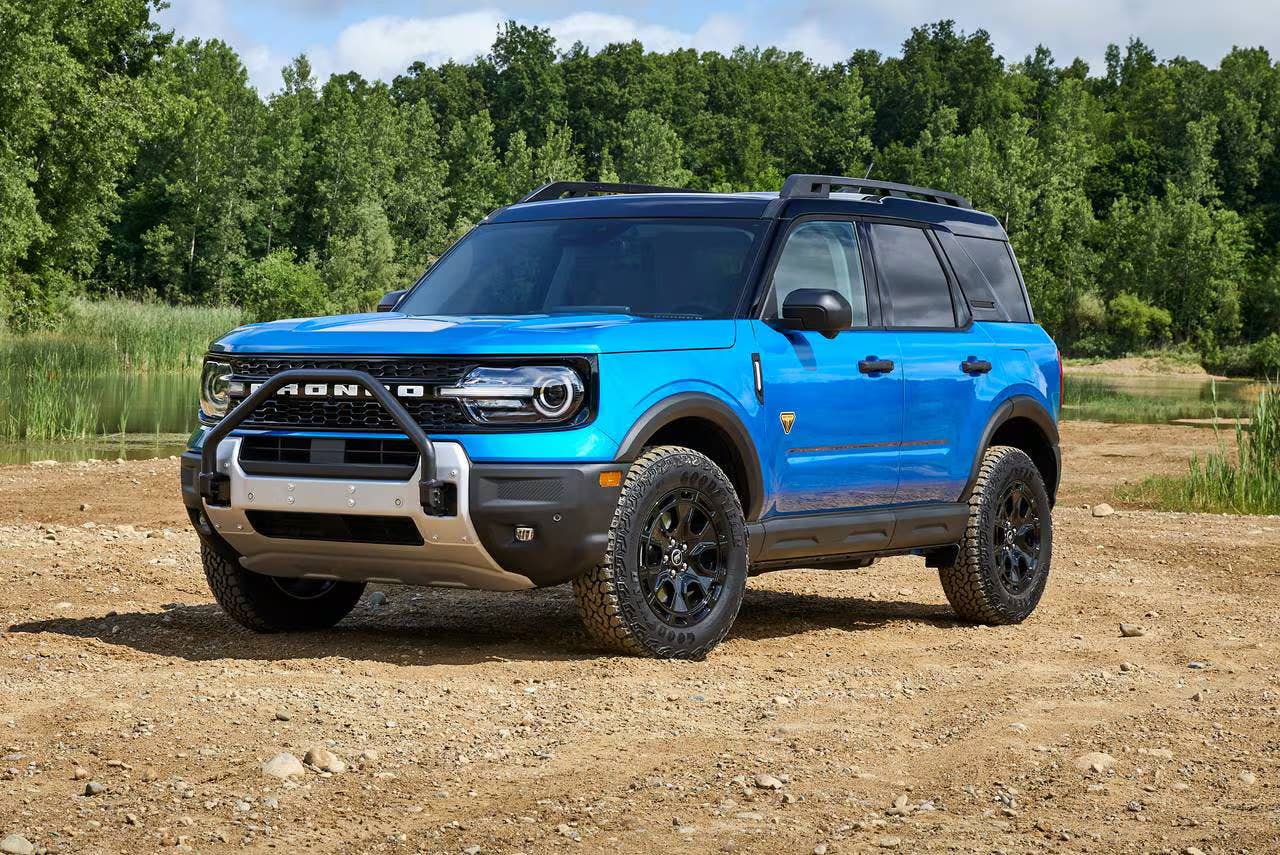
Ford didn’t design the Bronco Sport in a vacuum. It was engineered around the idea that someone might actually use it off-road, which is a radical premise for this segment. Even the base Big Bend trim gets 7.9 inches of ground clearance and AWD as standard equipment. Move up to the Badlands and ground clearance rises to 8.8 inches, paired with a rear Hydraulic Roll Control system, front and rear underbody skid plates, and Ford’s seven-mode GOAT system (Goes Over Any Type of Terrain, a name that’s either brilliant marketing or an acronym committee having too much fun). The Badlands also adds Trail Turn Assist, which brakes the inside rear wheel in a tight turn to tighten the radius on narrow trails. That’s a feature with a very specific use case, and it works.
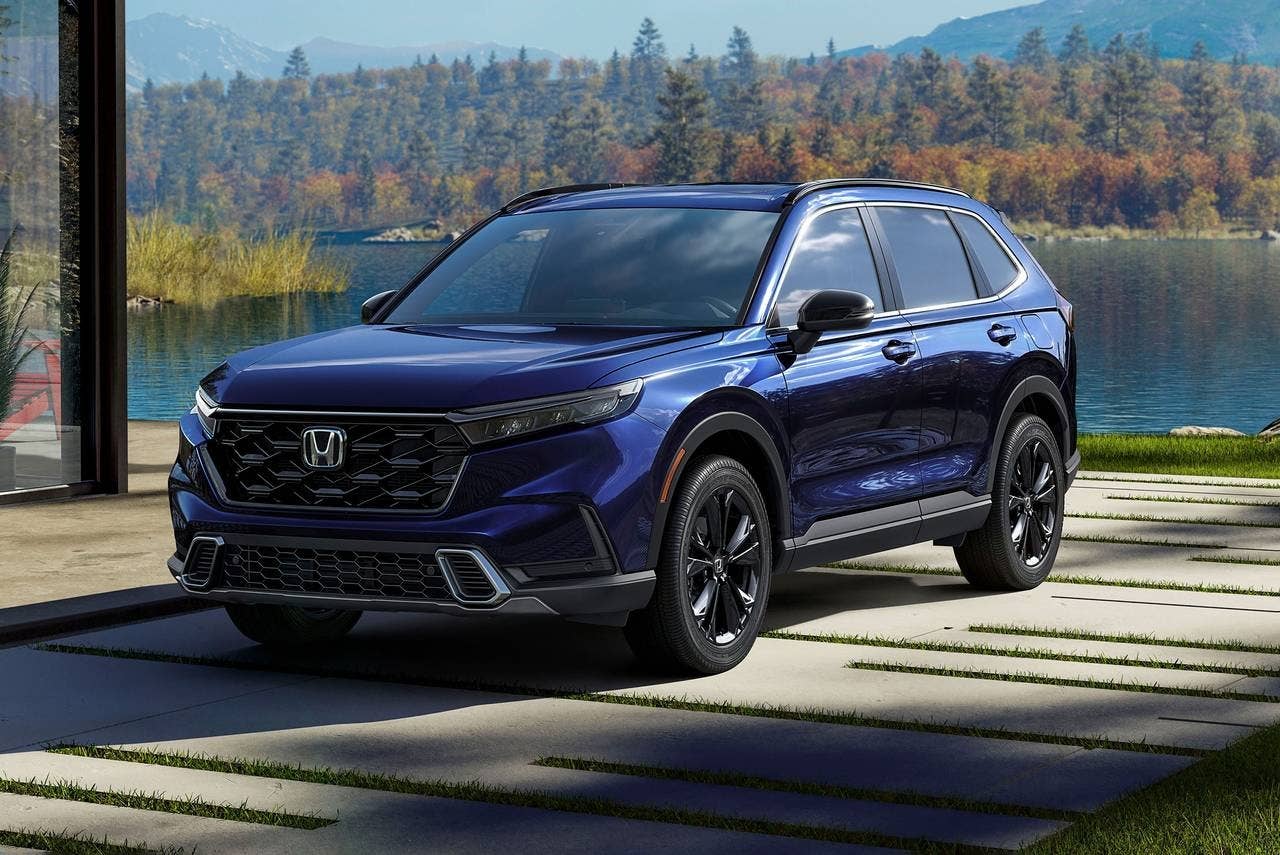
The CR-V’s ground clearance sits at 8.2 inches across most trims, respectable on paper, unremarkable in practice. Honda offers Real Time AWD on higher trims, which does a fine job managing rain-slicked highways and the occasional light snow. It was not designed for approach angles or rock crawls, and Honda makes no effort to pretend otherwise. The CR-V’s AWD is about weather compliance; the Bronco Sport’s is about terrain management. Those are different problems wearing the same label.
Need New Tires? Save Up To 30% at Tire Rack
Find the perfect tires for your exact vehicle and driving style. Click here to shop all top-tier brands, including Michelin, Bridgestone, and more, directly at Tire Rack.
The Bronco Sport has two engines. The CR-V has two drivetrains.
Ford offers two powertrains in the Bronco Sport: a 1.5-liter three-cylinder EcoBoost producing 181 hp and 190 lb-ft of torque in the Big Bend and Outer Banks, and a 2.0-liter four-cylinder EcoBoost making 250 hp and 277 lb-ft in the Badlands. The jump is significant. The 2.0-liter is a genuinely strong engine for this class, and it’s what makes the Badlands feel like more than just a styling package. Towing capacity sits at 2,200 lbs on 1.5-liter models and 2,000 lbs on the Badlands. Not class-leading, but enough for a small trailer or a reasonable boat.
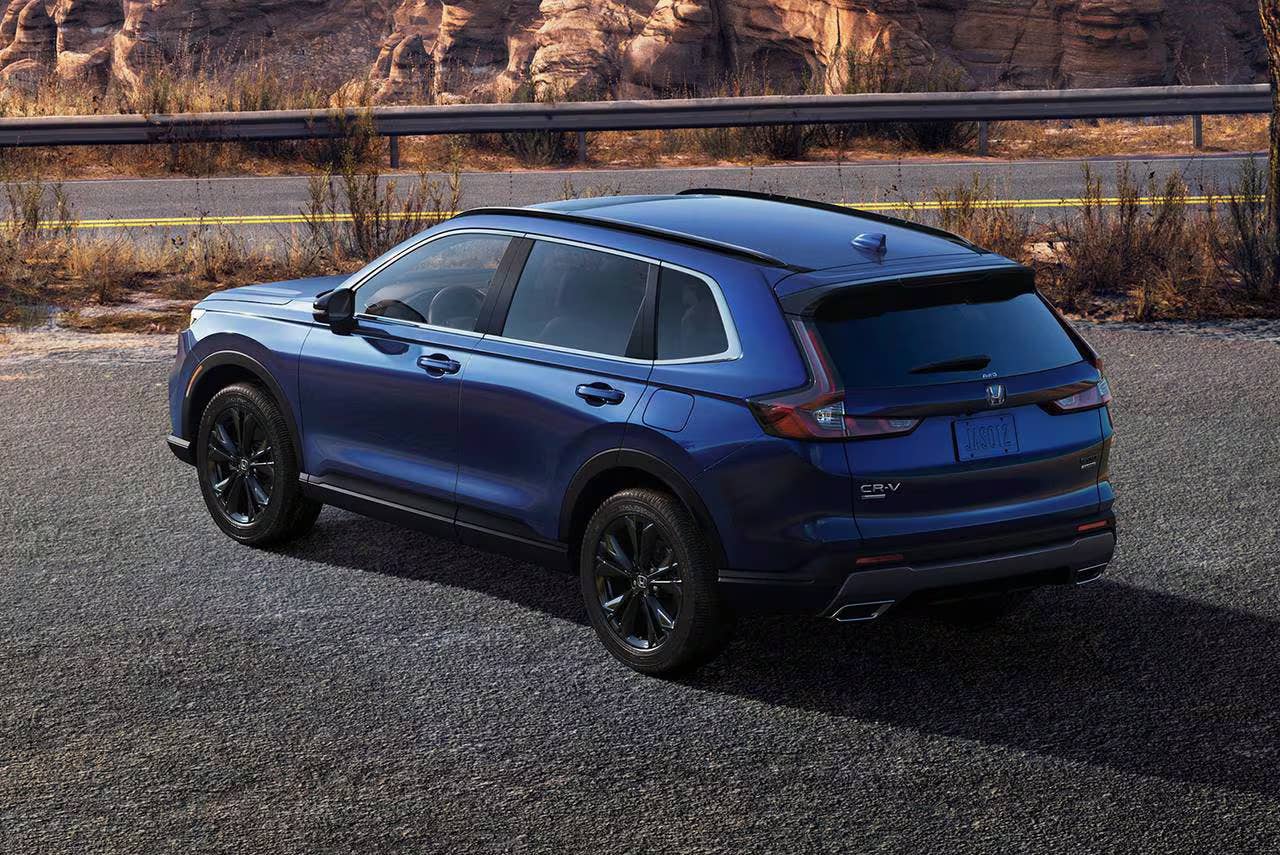

Honda goes a different direction. The standard CR-V runs a 1.5-liter turbocharged four-cylinder good for 190 hp and 179 lb-ft, adequate, not exciting. The more interesting story is the CR-V Hybrid, which pairs a 2.0-liter Atkinson-cycle engine with two electric motors for a combined 204 hp and a real-world fuel efficiency advantage: EPA-rated at 40 mpg city and 34 highway versus the gas model’s 28/34. The CR-V Hybrid also comes standard with AWD across every trim, whereas the standard CR-V starts FWD on lower configurations. If you’re cross-shopping seriously, the Hybrid trims deserve the most attention. The efficiency gain is substantial, and the AWD-standard setup eliminates a decision point. Towing capacity on the CR-V tops out at 1,500 lbs regardless of powertrain, which is fine unless it isn’t.
The CR-V gives you more room. The Bronco Sport gives you more character.
Cargo space is where the CR-V wins without argument. It offers 39.2 cubic feet behind the rear seats and 76.5 cubic feet with them folded, figures that are best-in-class territory for this segment and the primary reason families keep buying this car. The Bronco Sport counters with 32.5 cubic feet behind the second row and 65.2 cubic feet total. That’s meaningfully less. The Bronco Sport also features a pass-through opening in the tailgate glass, a standard 12V outlet in the cargo area, and a standard steel bumper with tow hooks, details that read as minor until you actually use them.
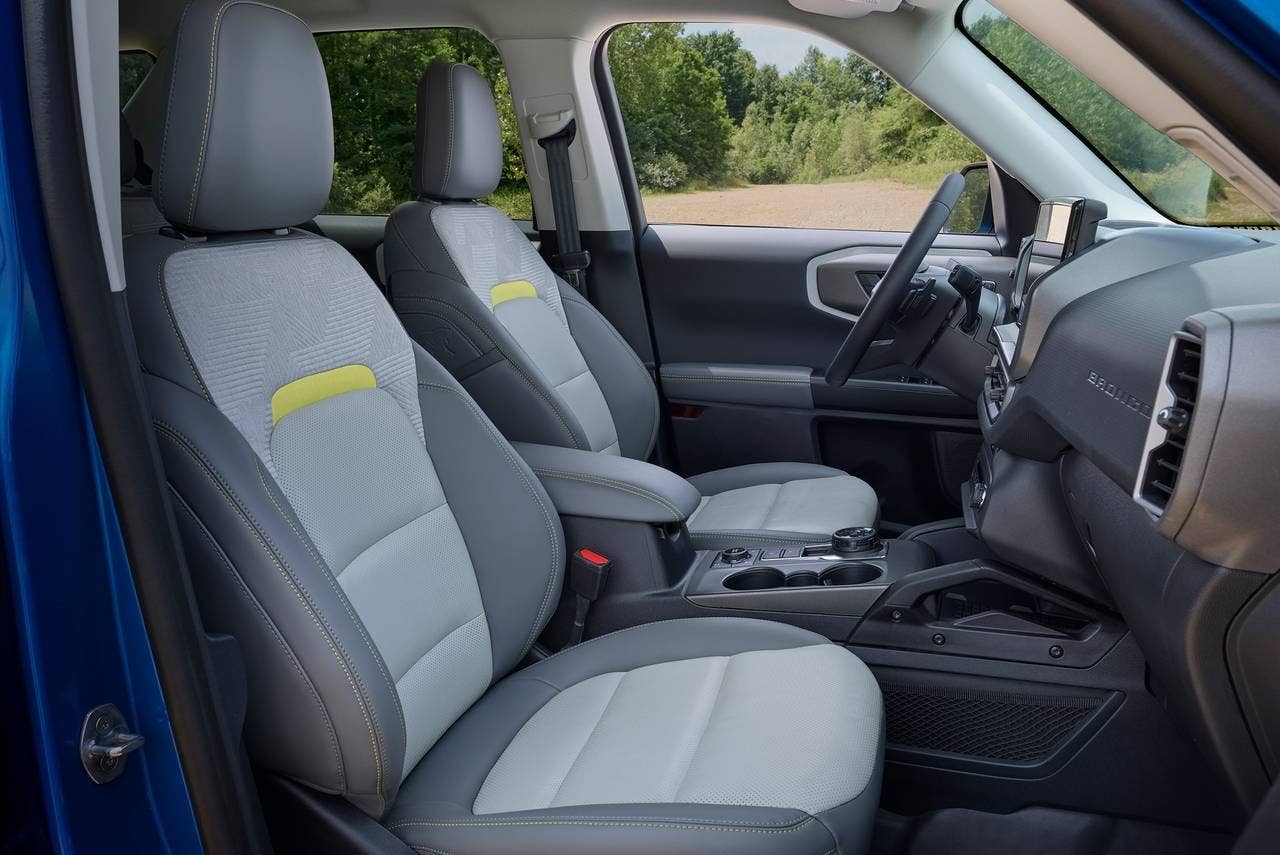
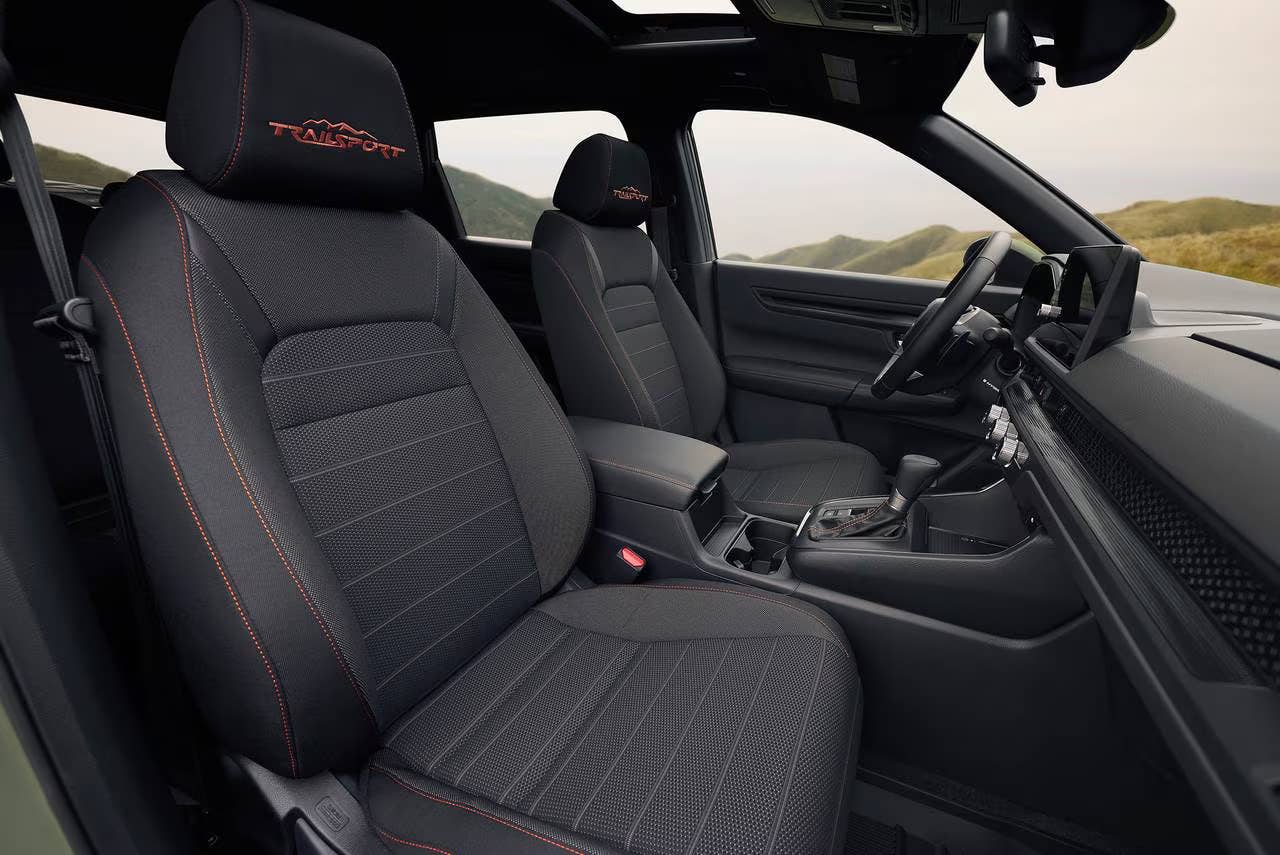
On pricing, the CR-V LX opens around $30,700. A well-configured Touring lands north of $39,000. The Bronco Sport Big Bend starts at $31,495; the Badlands, the one worth buying if capability is the point, runs close to $40,000 before options. So the ceiling prices are comparable. What separates them is what that money buys: Honda spends it on cabin refinement, a larger footprint, and optional hybrid efficiency. Ford spends it on skid plates, locking differentials, and the kind of suspension tuning that assumes you might occasionally be somewhere without cell service.
Verdict
Buy the CR-V if you haul cargo, carry passengers regularly, want a hybrid option that actually makes financial sense, and treat the outdoors as something visible through a window. Buy the Bronco Sport, specifically the Badlands, if you want a compact SUV that takes the “sport” part seriously, doesn’t mind trading a few cubic feet of cargo space for genuine trail hardware, and finds it mildly offensive when a vehicle that looks rugged turns out to be entirely decorative. The CR-V is the smarter car. The Bronco Sport is the more interesting one. Depending on who you are, that sentence lands completely differently.

About the author

Kyle Edward
Editor-in-Chief, Autoblog