
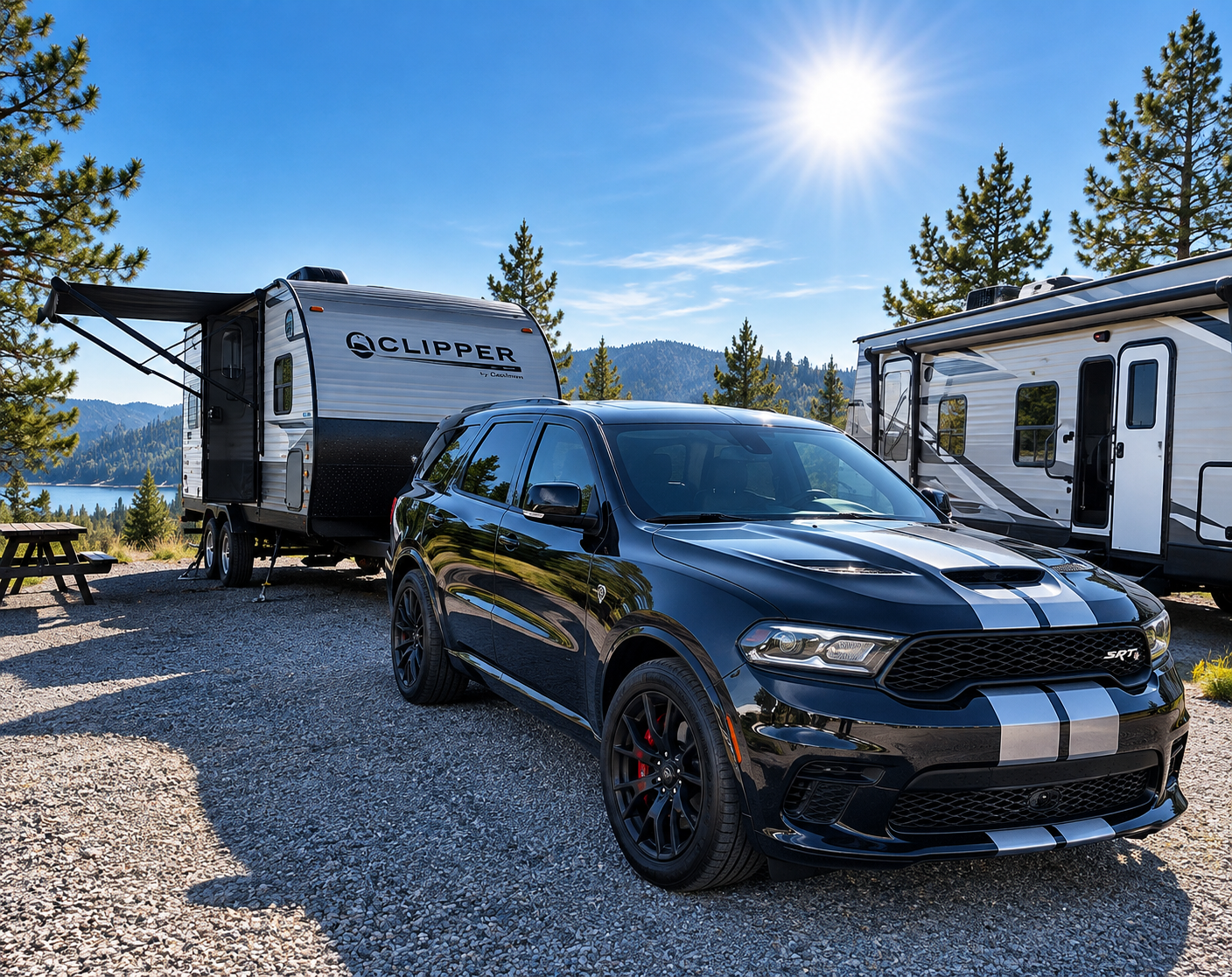
There are certain automotive combinations that make perfect sense. A heavy-duty diesel pickup pulling a big fifth-wheel, for example. A full-size SUV towing a family trailer. Those are logical combinations.
Then there are combinations that make you scratch your head and say, “Why the hell would you do that?”
My answer is simple: it sounded like fun.
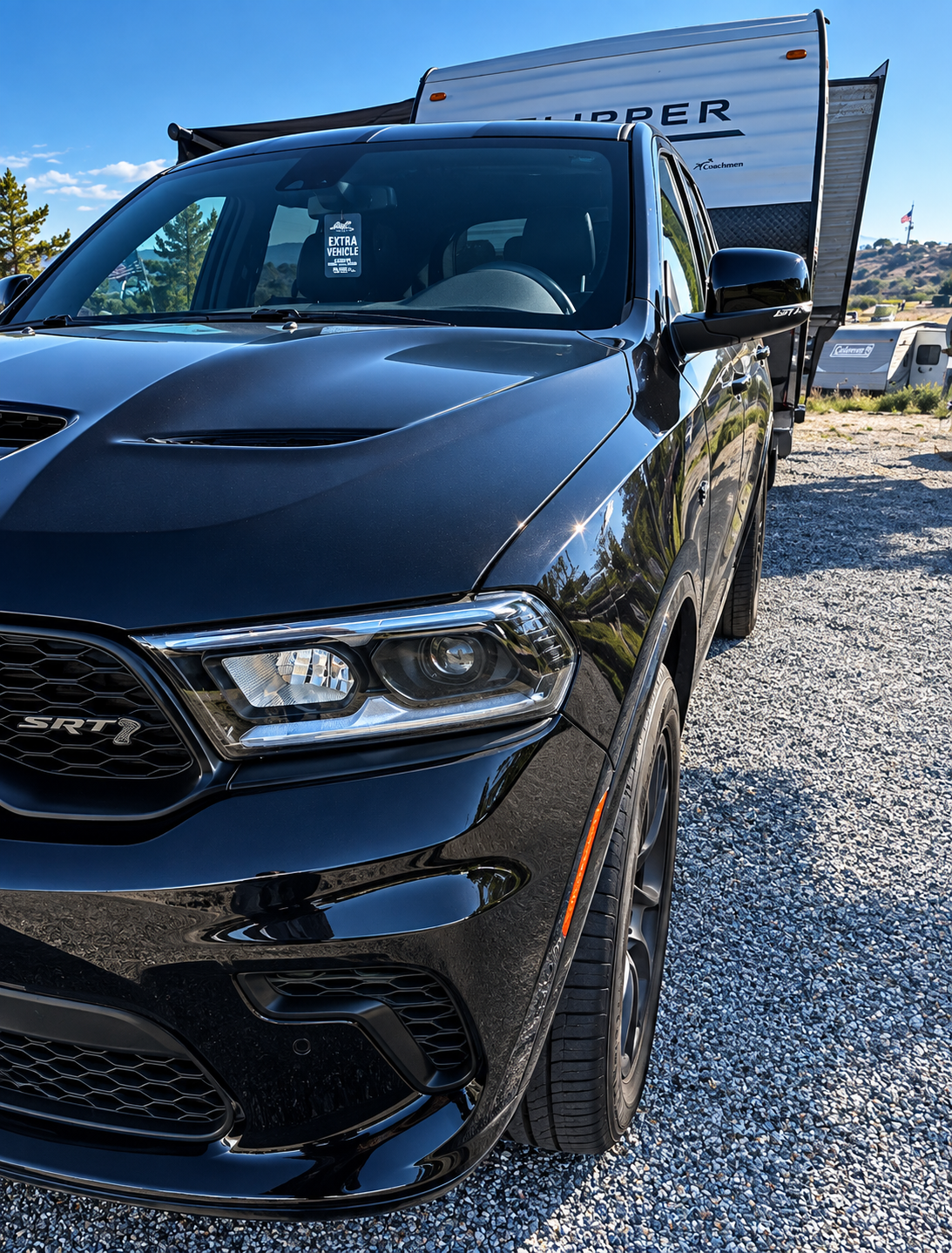
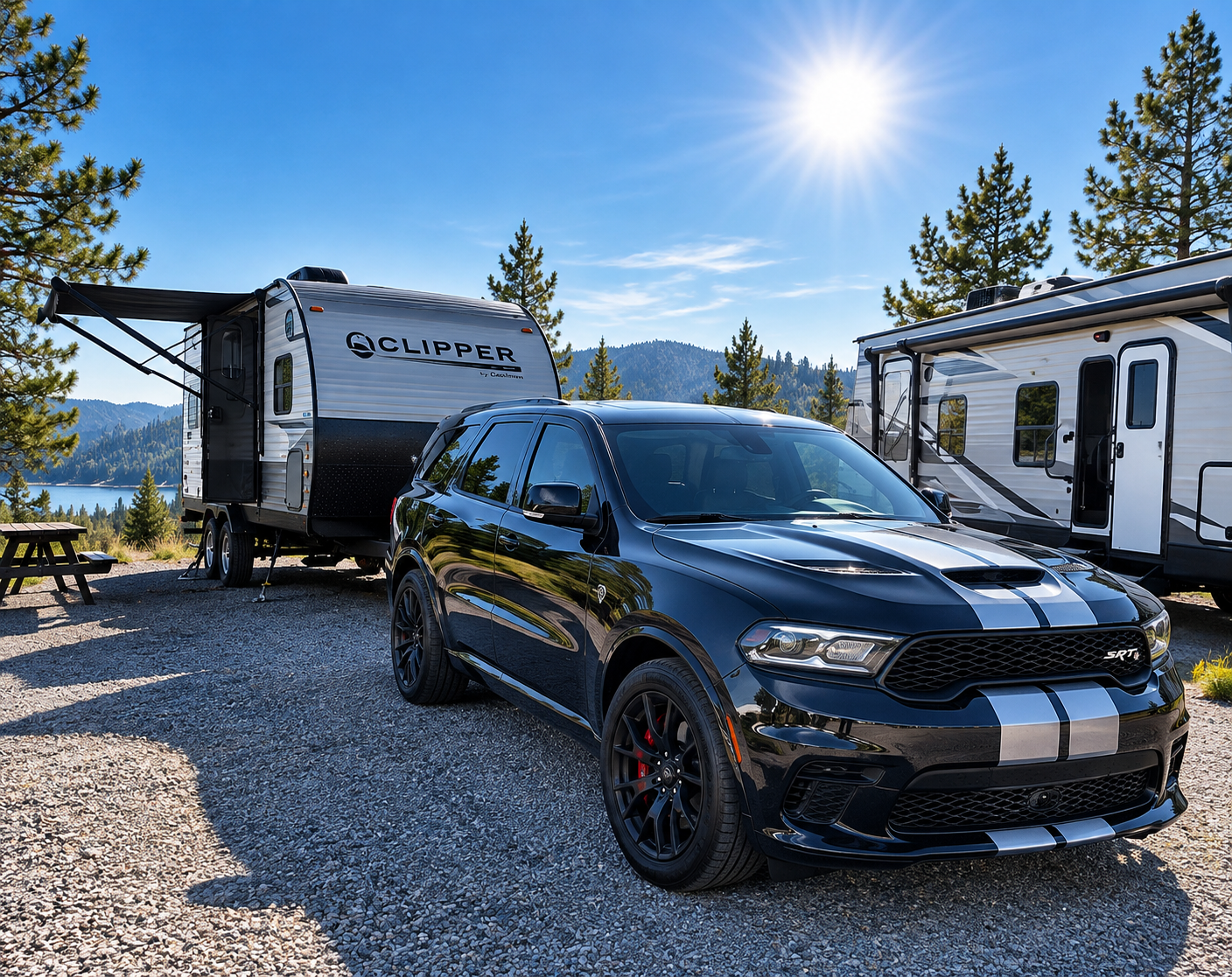
I recently had the opportunity to take a 2026 Dodge Durango SRT 392 and use it as a tow vehicle for a slightly older Coachmen Clipper Explorer 18DBS travel trailer. The trailer, loaded with camping gear and filled tanks, weighed roughly 5,000 pounds. Our destination was Laguna Seca for a race weekend and a few days of camping.
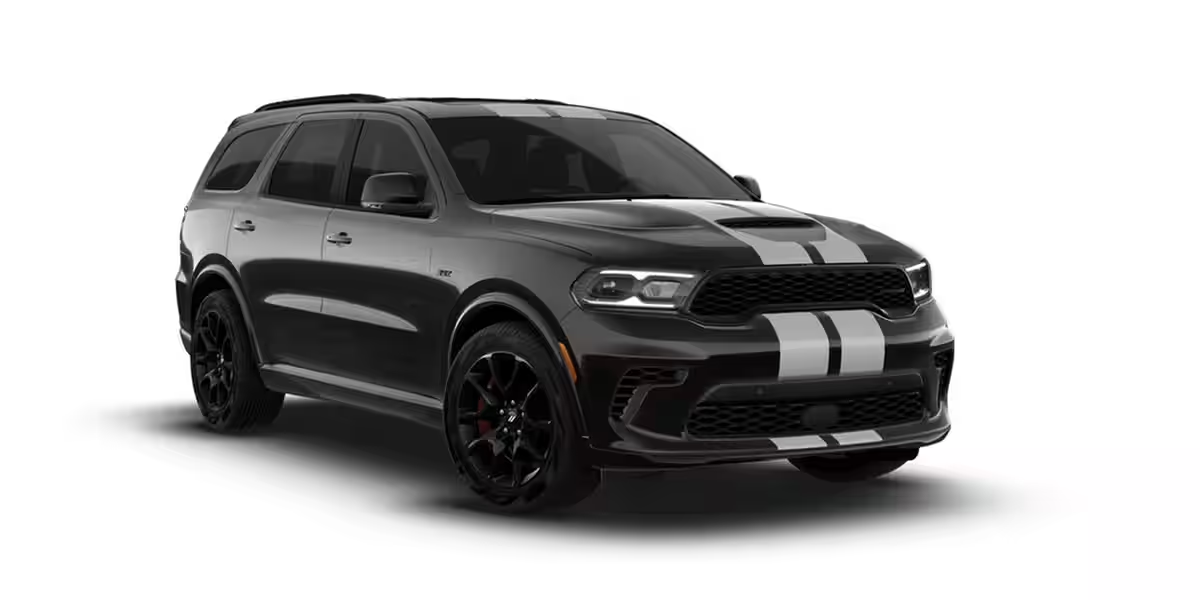
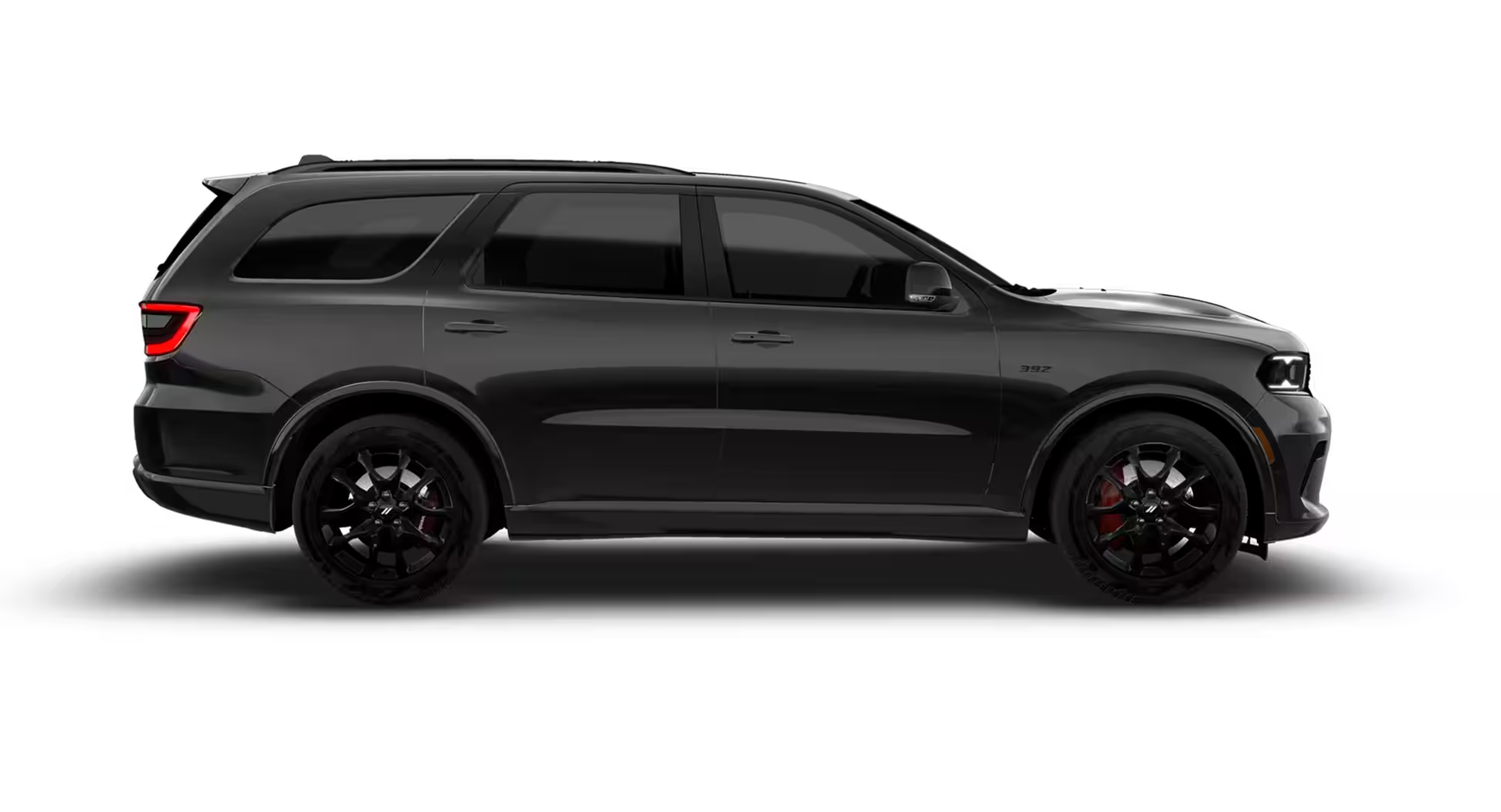
Why the Durango SRT 392? Well, it can tow up to 8,700 pounds, has a built-in trailer brake controller, and when you aren’t towing, it is stupidly fun to drive.
That’s a pretty good combination.
Full disclosure, both the Durango SRT and Clipper trailer were slightly older models. Adjusting for current market values, they are still smart buys… for the right consumer. The 2026 Dodge Durango R/T 392 Premium Launch Edition in this livery with these options runs just over $60,000. The Clipper currently runs between $20,000 and $30,000, as RV MSRPs are sometimes hard to nail down.
Engine and Performance
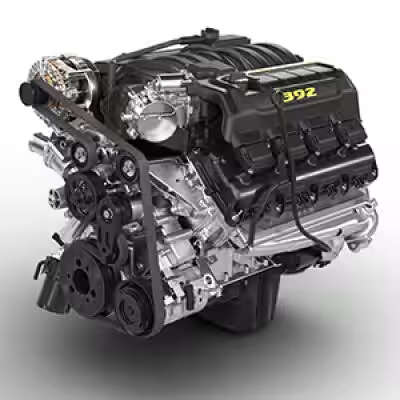
The big bad Durango SRT 392 is powered by Dodge’s 6.4-liter HEMI V8, producing 475 horsepower and 470 lb-ft of torque. Power goes through an eight-speed automatic transmission, and Dodge claims a 0-to-60-mph time of about 4.4 seconds.
Yes, I realize we’re talking about a three-row SUV that can tow a small house and accelerate like something that probably shouldn’t have a third row.
That’s exactly the point.
The eight-speed automatic works beautifully with the HEMI. Gear changes are quick and smooth, and the paddle shifters give you some control when you feel like playing. When the trailer is disconnected, the Durango SRT 392 becomes a remarkably entertaining machine. Slam the accelerator and the thing doesn’t just move, it announces its intentions to everyone within several zip codes.
The Hellcat Durango is obviously more powerful and considerably more ridiculous, but the 392 makes more sense to me. It’s still ridiculously quick, but it’s somewhat more affordable and, dare I say, practical.
The ride is also surprisingly good. This is a muscle SUV with serious performance hardware, yet it does a commendable job soaking up bumps. Even with the trailer attached, the Durango remained composed and comfortable.
Of course, it’s not exactly a lightweight. You’re moving roughly 5,400 pounds of Dodge before adding the trailer, camping gear, food, water and whatever else somehow finds its way into the vehicle. Throwing it into corners like a sports car isn’t exactly recommended.
Still, the Durango handles remarkably well for something this large and heavy. I’ve driven plenty of “sporty” SUVs that feel considerably less athletic. The SRT 392 actually makes you want to find a twisty road.
And if you have a teenager who needs to be picked up from school, the exhaust note provides an additional benefit. Nothing says “Your dad has arrived” quite like a 6.4-liter HEMI announcing your presence from three blocks away.
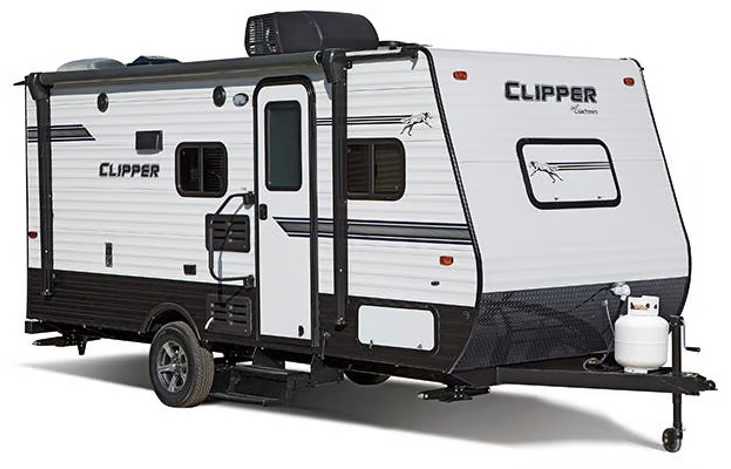
The Clipper Explorer 18DBS
The other half of this experiment was a Coachmen Clipper Explorer 18DBS. Our trailer was a few years older, but its floor plan and dimensions were very close to the current 18DBS. Plus, it seemed like a better fit than Winnebago or Airstream options that were priced higher while feeling a bit out of touch with the vibe. I could be wrong.
Despite being relatively compact, this is a surprisingly useful little travel trailer. It’s roughly 23 feet long, 96 inches wide, and about 10 feet tall, with a gross vehicle weight rating of around 4,915 pounds. The hitch weight is approximately 515 pounds.
The floor plan is where things get interesting.
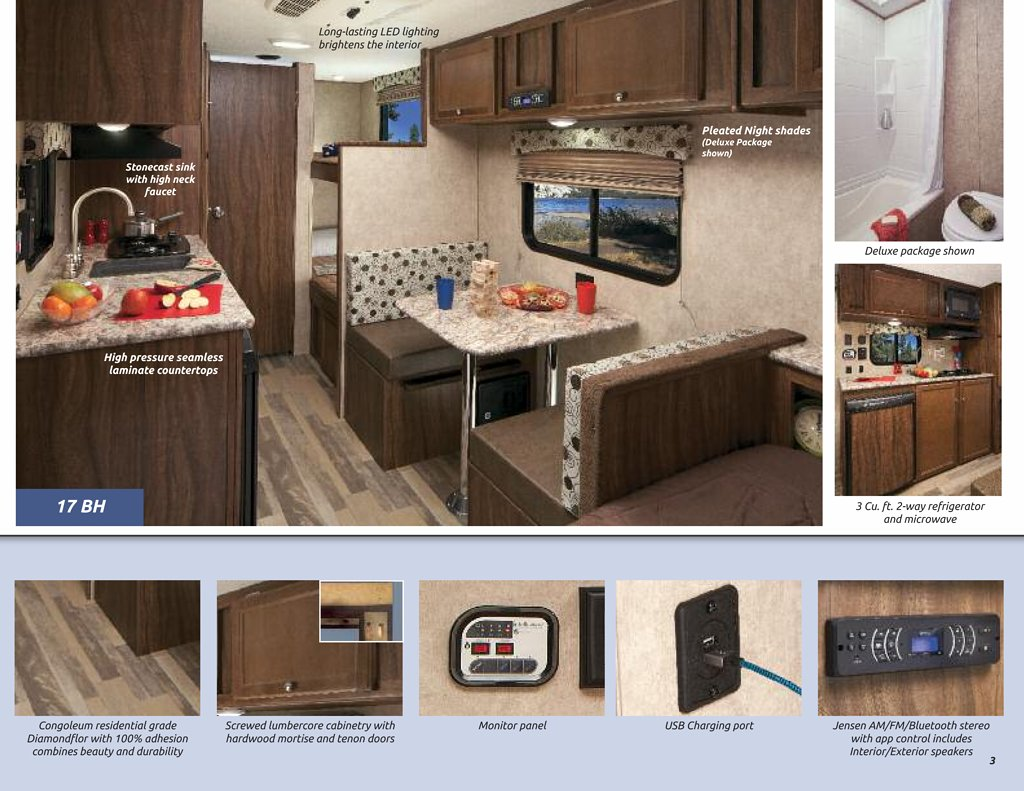
Coachmen’s 18DBS uses its 3-in-1 space-saving front layout to create a family room, living room, and bedroom configuration within a roughly 5-by-8-foot area. There’s also a jack-knife sofa slide-out, double-over-double bunk beds, and a large bathroom with additional storage and a second sink.
Our older trailer had bunk beds in the back that were actually large enough for teenagers, which is an important distinction when you’re trying to convince your children that camping is supposed to be fun.
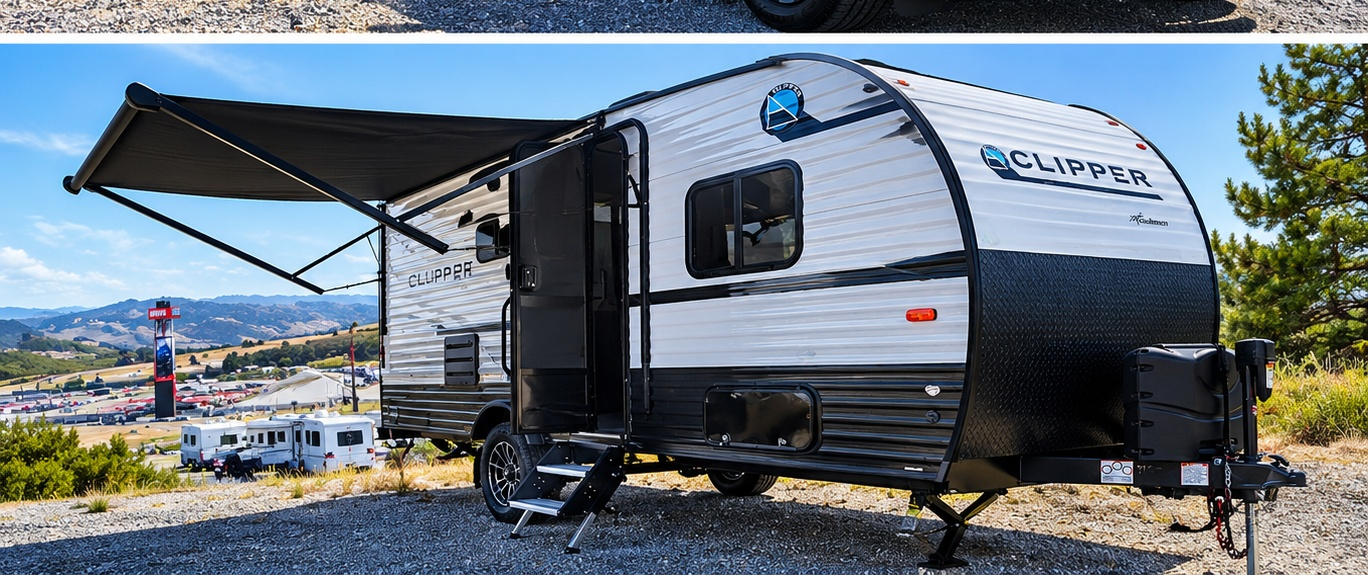
There is also plenty of capacity for boondocking. The trailer has a 39-gallon fresh-water tank, 37-gallon gray tank and 32-gallon black tank. Our version didn’t have solar, but it did have a generator, which proved more than adequate for our needs.
Personally, I’d love to see a modernized version with a substantial solar setup and battery system. For a three- or four-day off-grid race weekend, that would make an already useful trailer considerably better.
ND Adlen and AI
Towing to Laguna Seca
This was the part of the experiment I was most interested in. The Durango’s 8,700-pound maximum towing capacity gives it plenty of headroom over a trailer weighing around 5,000 pounds loaded. More importantly, the integrated trailer brake controller is something I really appreciate. It’s still surprisingly uncommon in this class of vehicle.
Once I got the trailer brake system properly calibrated, acceleration and braking were both quite good. There was a little rear-end sag from the trailer’s tongue weight, something that wouldn’t be nearly as noticeable with a pickup or larger SUV, but the Durango handled it without drama.
The trailer tracked nicely, and the Durango never felt like it was struggling. Even climbing grades, the 6.4-liter V8 had plenty of reserve power.
The biggest problem wasn’t power.
It was gasoline.
Good Lord, was it gasoline.
I could only manage about 10 mpg while towing, and that was despite doing my best to conserve fuel and, occasionally, drafting behind semis. The Durango’s 23-gallon tank suddenly seemed remarkably small.
California gasoline prices didn’t help.
I knew what I was signing up for, so I can’t exactly complain. If fuel economy is your primary concern, this is obviously not the vehicle for you. If you’re serious about towing long distances regularly, you should probably be looking at a diesel pickup.
But that’s not what this test was about.
This was about seeing whether a high-performance SUV could comfortably tow a moderately sized travel trailer to a race weekend. And the answer was absolutely yes.
Obviously, California towing laws still apply, including the 55-mph maximum for trailers. I’m not suggesting anyone should exceed that. What I will say is that the Durango and Clipper combination felt completely stable and comfortable at legal towing speeds.
Interior and Practicality
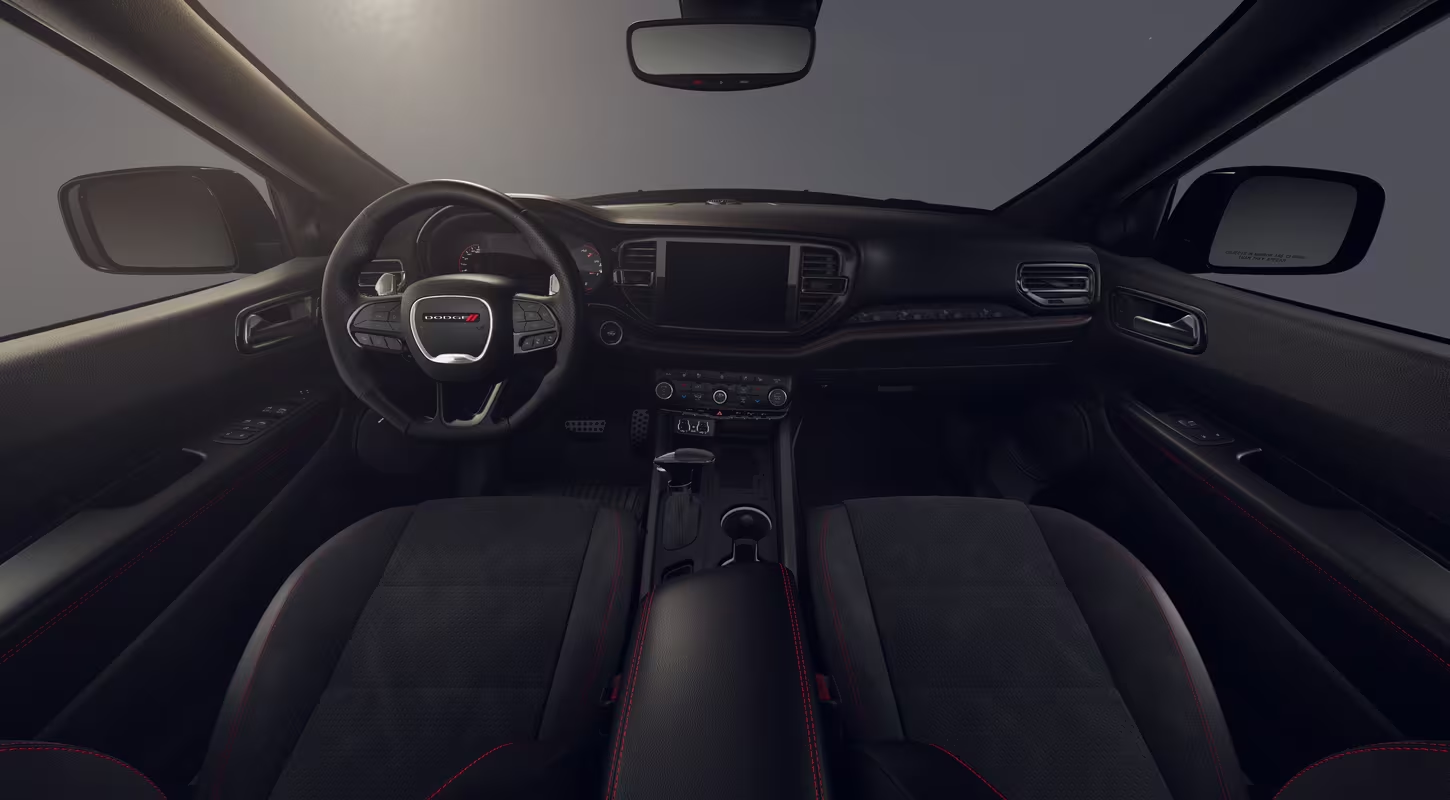
The Durango’s interior is beginning to show its age. The basic architecture has been around for a while, and compared with newer SUVs, the infotainment system and digital displays aren’t exactly cutting edge.
You get a 10.1-inch infotainment screen and a smaller 7-inch digital display between the analog gauges. It works, but nobody is buying an SRT 392 because they’re excited about the user interface.
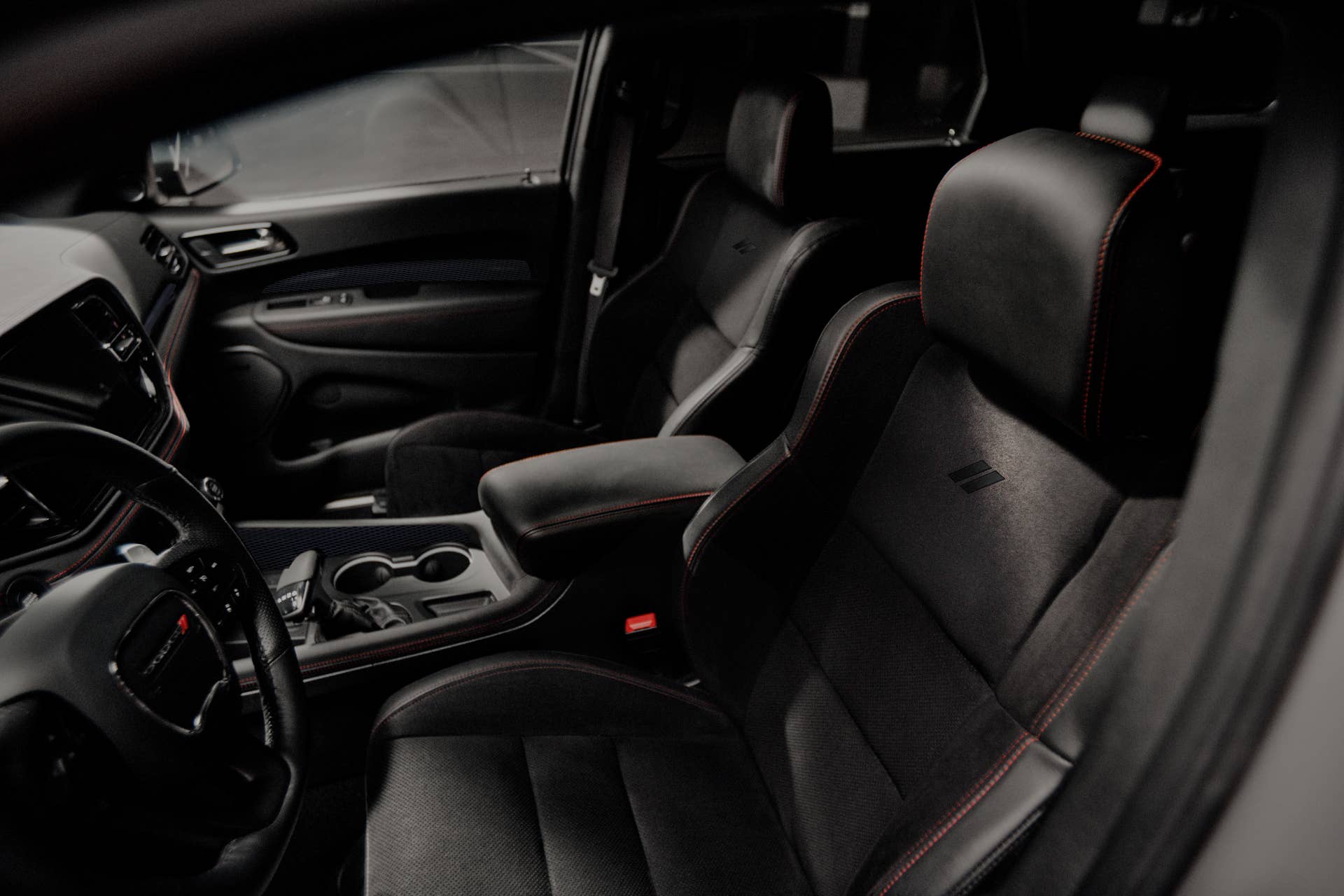
The seats are another story. They’re comfortable, supportive and designed to hold you in place when you’re exploiting the Durango’s considerable performance capability. That’s particularly useful when you’re driving aggressively, although the trailer obviously changes that equation considerably.
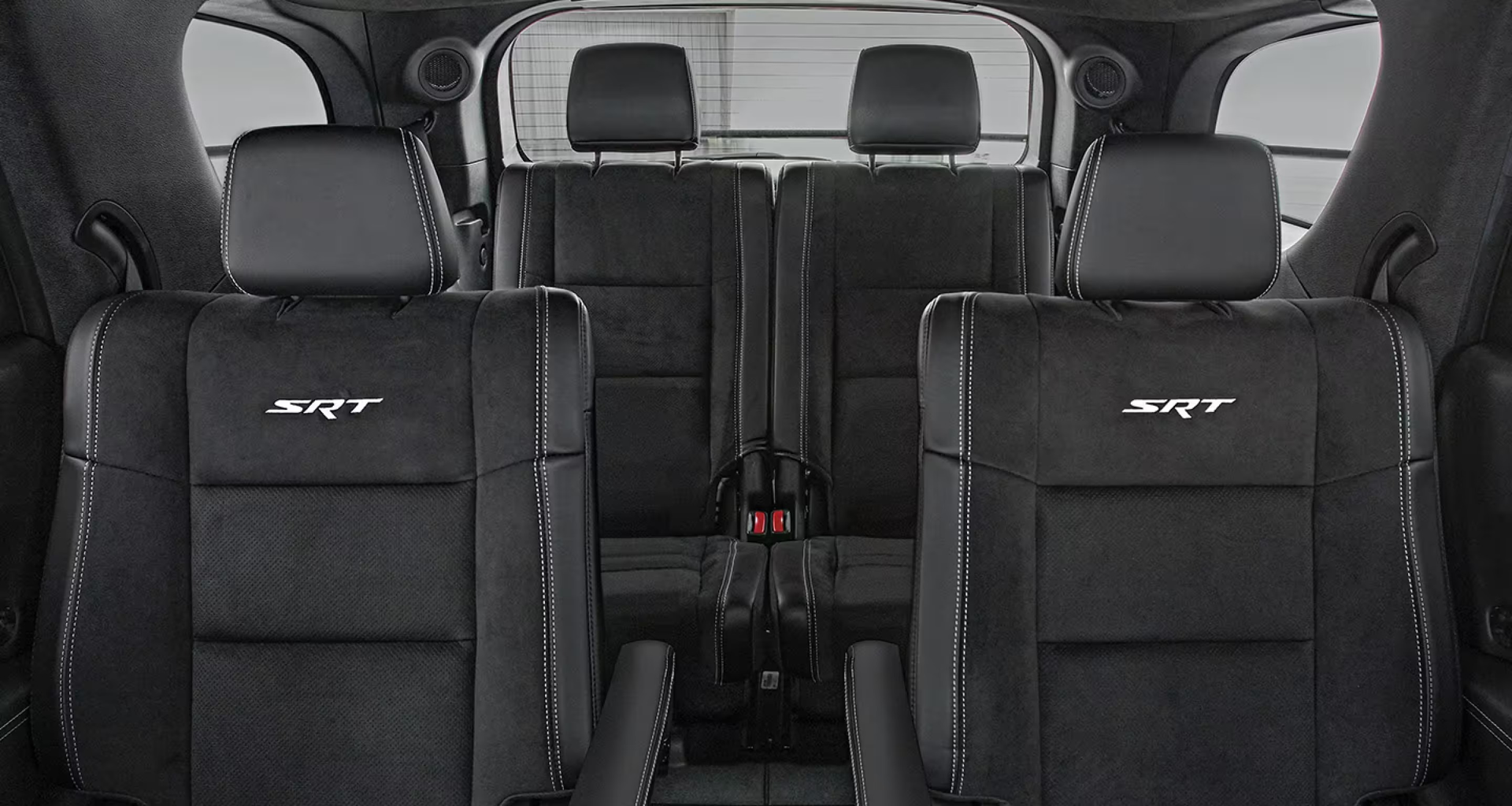
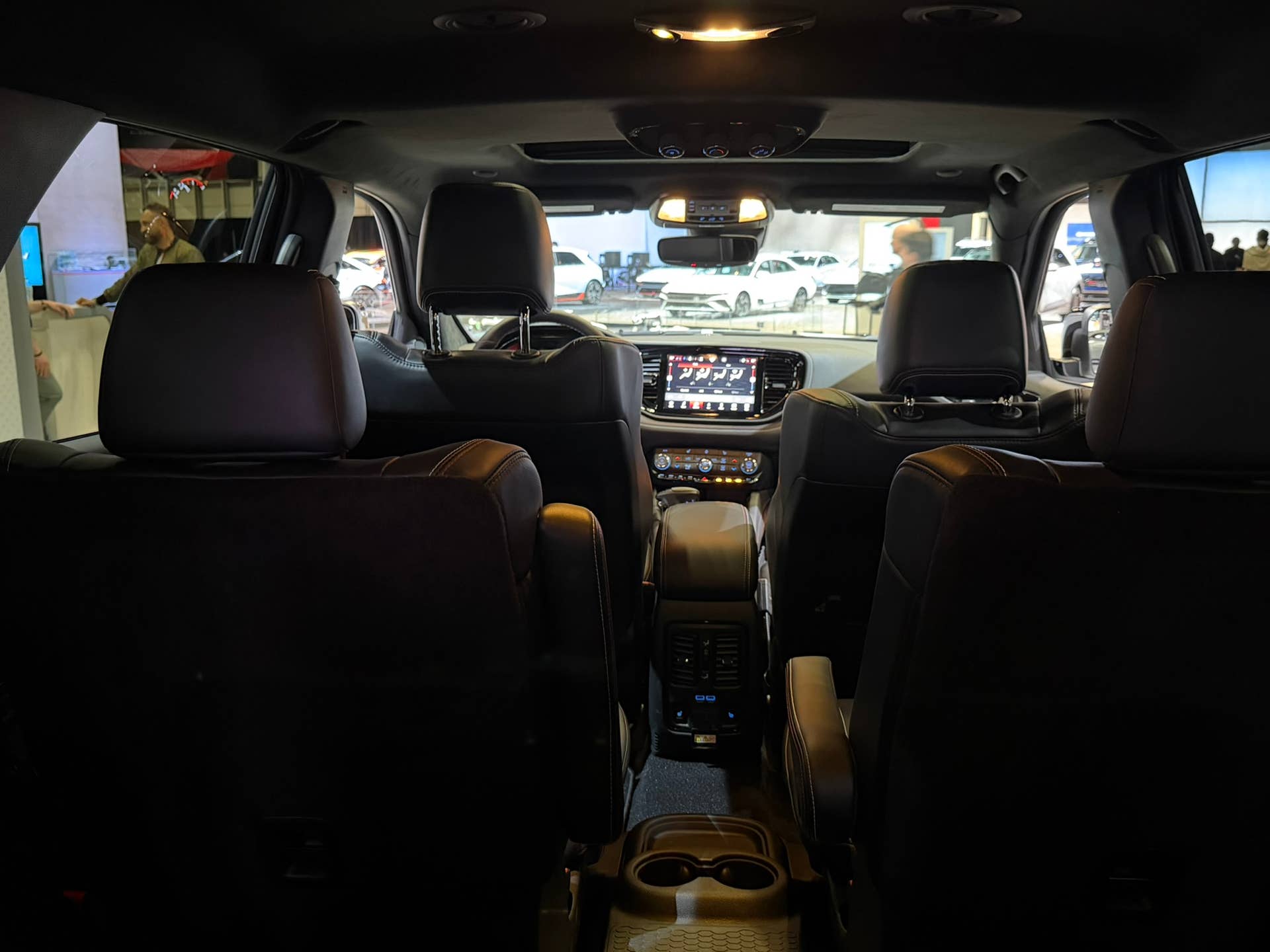
With the third row available, the Durango can seat up to six people, and folding everything down gives you up to 85.1 cubic feet of cargo space. That proved extremely useful because we weren’t just taking a trailer to Laguna Seca. We were camping in it.
That means food, clothing, tools, cameras, equipment, helmets and all the other stuff that mysteriously appears whenever you’re leaving for a few days.
Adam Lynton/Autoblog
ND Adlen and AI
Final Thoughts
I’m not going to pretend the 2026 Dodge Durango SRT 392 is the perfect tow vehicle. It isn’t.
It’s thirsty, it’s heavy and there are much more efficient ways to tow a 5,000-pound trailer. A diesel pickup would make far more sense if towing were the primary purpose. But there’s something wonderfully irresponsible about having 475 horsepower available when you’re not towing.
The Durango SRT 392 handled the Clipper Explorer 18DBS beautifully. It had more than enough power, the integrated brake controller made setup easier, the suspension remained composed and the vehicle was comfortable for the trip to Laguna Seca.
Then, when we arrived and unhooked the trailer, I had a 475-hp V8-powered SUV sitting there waiting for me.
That’s the part I really enjoyed.
We spent money on gasoline. A lot of money. But we also spent several days camping at Laguna Seca, watching racing and enjoying the kind of weekend that makes you remember why you put up with the ridiculous parts of car culture in the first place.
Would I recommend the Durango SRT 392 to someone specifically shopping for a tow vehicle?
Probably not.
Would I recommend it to someone who wants a genuinely entertaining SUV that can also tow a decent-sized travel trailer when necessary?
Absolutely.
Because sometimes the logical choice is overrated. Sometimes you just need 475 horsepower, a trailer, a campsite, and a stupid grin on your face.
About the author

Nathan Adlen
Contributing Writer, Autoblog