
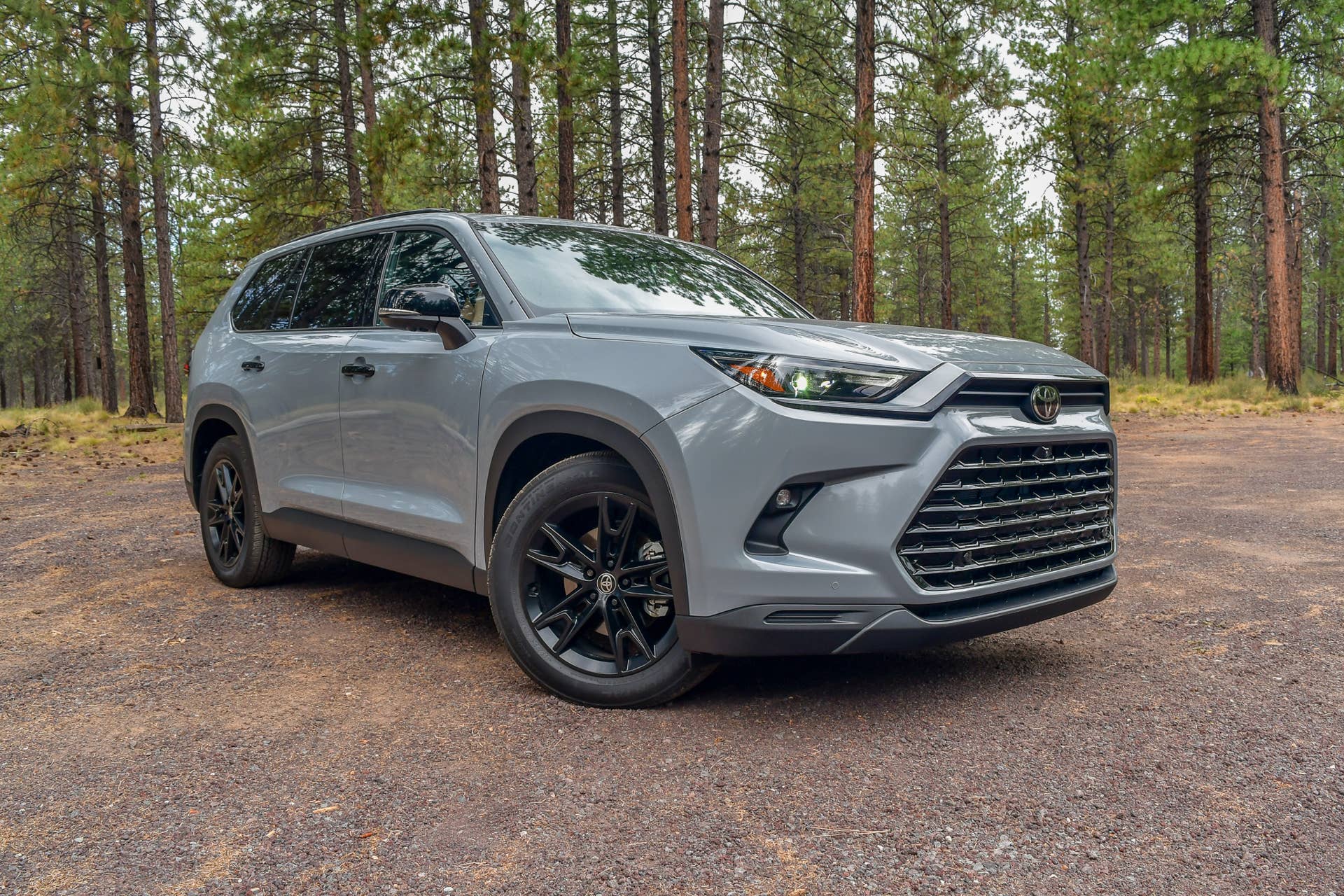
The Highlander has been a family hit for the past two decades
When Toyota introduced the Highlander back in 2001, it was an instant hit. It was designed to be bigger and more family-oriented than the smaller 4Runner of the time, complete with front-wheel drive and an optional full-time four-wheel drive system (basically AWD). If it didn’t come with traction control, Toyota offered a limited-slip differential. For the past 24 years, the Highlander has been a top seller for the same reasons.
Kristen Brown
In 2024, Toyota debuted the Grand Highlander — a longer, taller, wider, and more expensive version of the Highlander. Toyota took the Highlander’s common critique of the third row being too small for adults seriously and got to work. The Grand Highlander shares a platform with the Lexus TX, giving it a more spacious third row over the standard Highlander, and more room behind the third row when it’s in use, too. As a parent, I appreciated the space for my two toddlers. But do families really need something that large? Here’s what I think.
The Grand Highlander is huge, but doesn’t drive like it
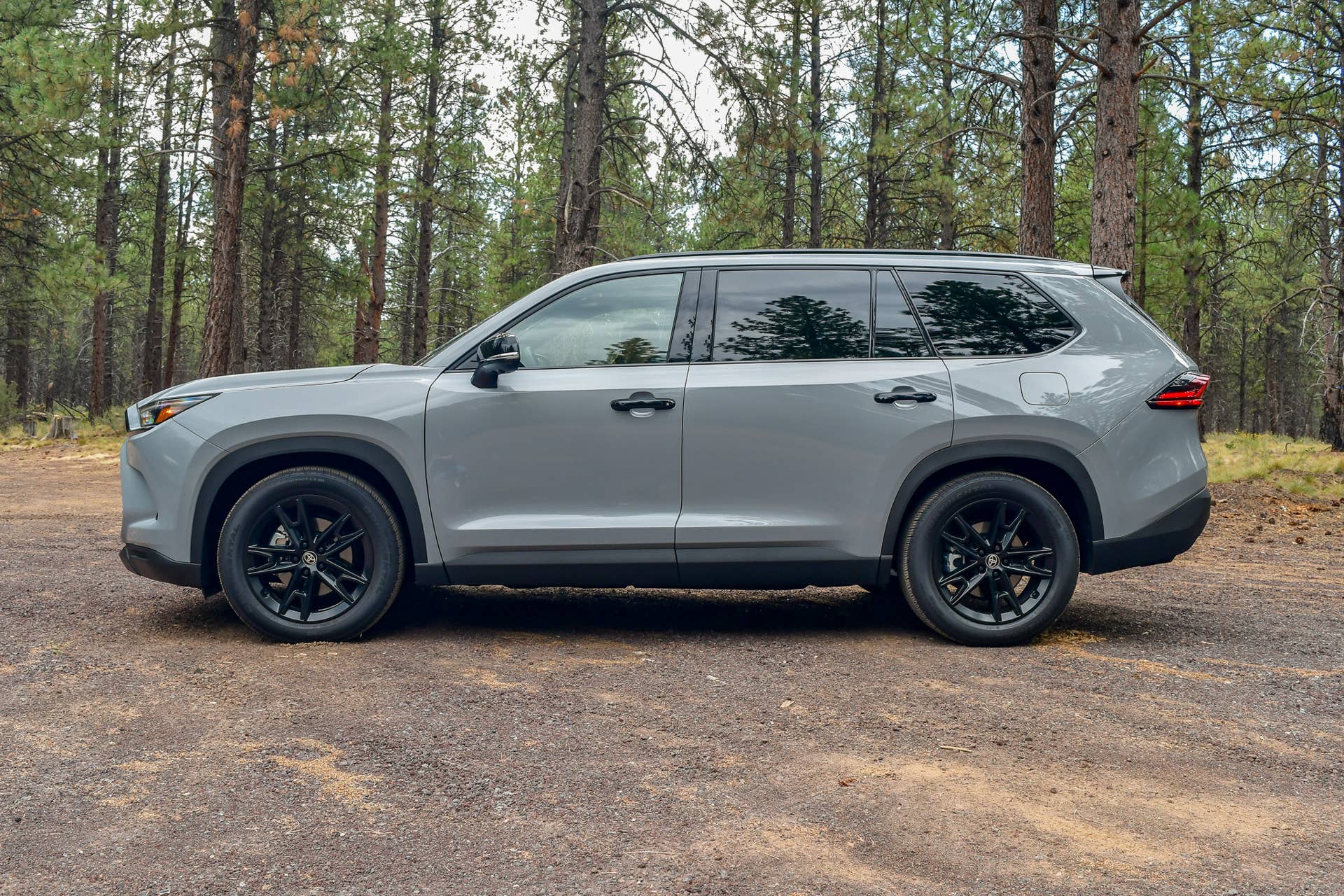
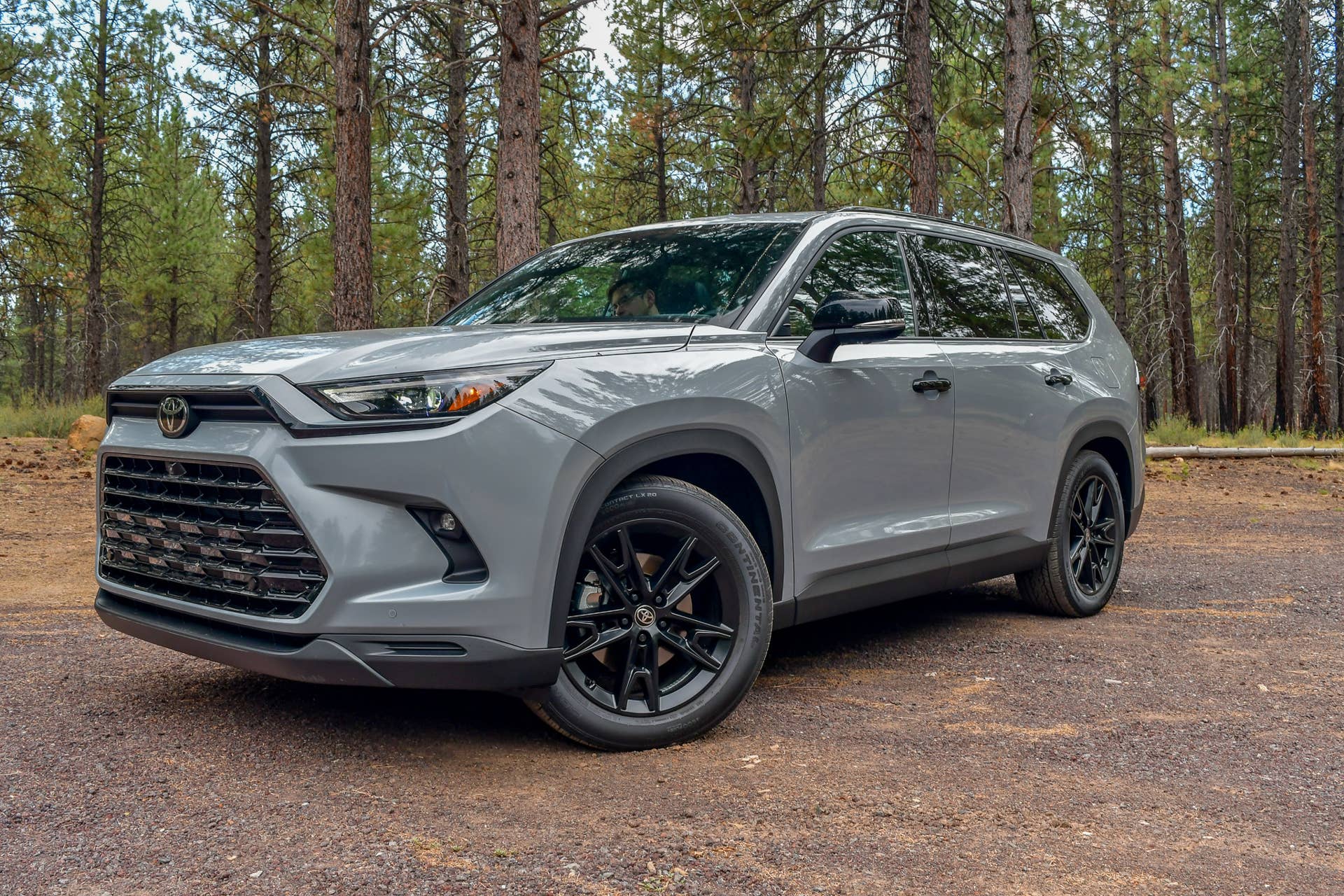
When the $56,818 Grand Highlander Nightshade Hybrid was dropped off, the first thing I thought was, “Damn, I’m shocked it even fit on my driveway.” At 201.4 inches long, 78.3 inches wide, and 70.1 inches tall, it’s no small SUV. Ironically enough, it’s almost the same size as the Toyota Sienna, so I was expecting the 2.5-liter four-cylinder hybrid engine to struggle to move 4,620 lbs through Central Oregon. I pictured a wide steering radius and anticipated having to keep extra space between myself and the car ahead of me in case I needed to stop suddenly.
Kristen Brown
But I was wrong. In fact, I was very pleasantly surprised by how nimble Big Bertha was. Going through drive-thrus, backing into a parking spot between two large trucks (yes, that actually happened), and navigating parking lots with narrow aisles was way easier than I could have ever imagined. Driving was fluid, the steering was tight and very responsive, and the brakes were sharp (yes, I know that Toyota hybrids alternate between using regenerative braking using the electric motor to slow the car and hydraulic braking if a sensor detects enough force to use the pads and rotors), and the throttle response was quick. It drove like a standard SUV, not an SUV of its stature. It didn’t take long for me to feel comfortable driving it at all.
The interior was simply designed, but incredibly functional
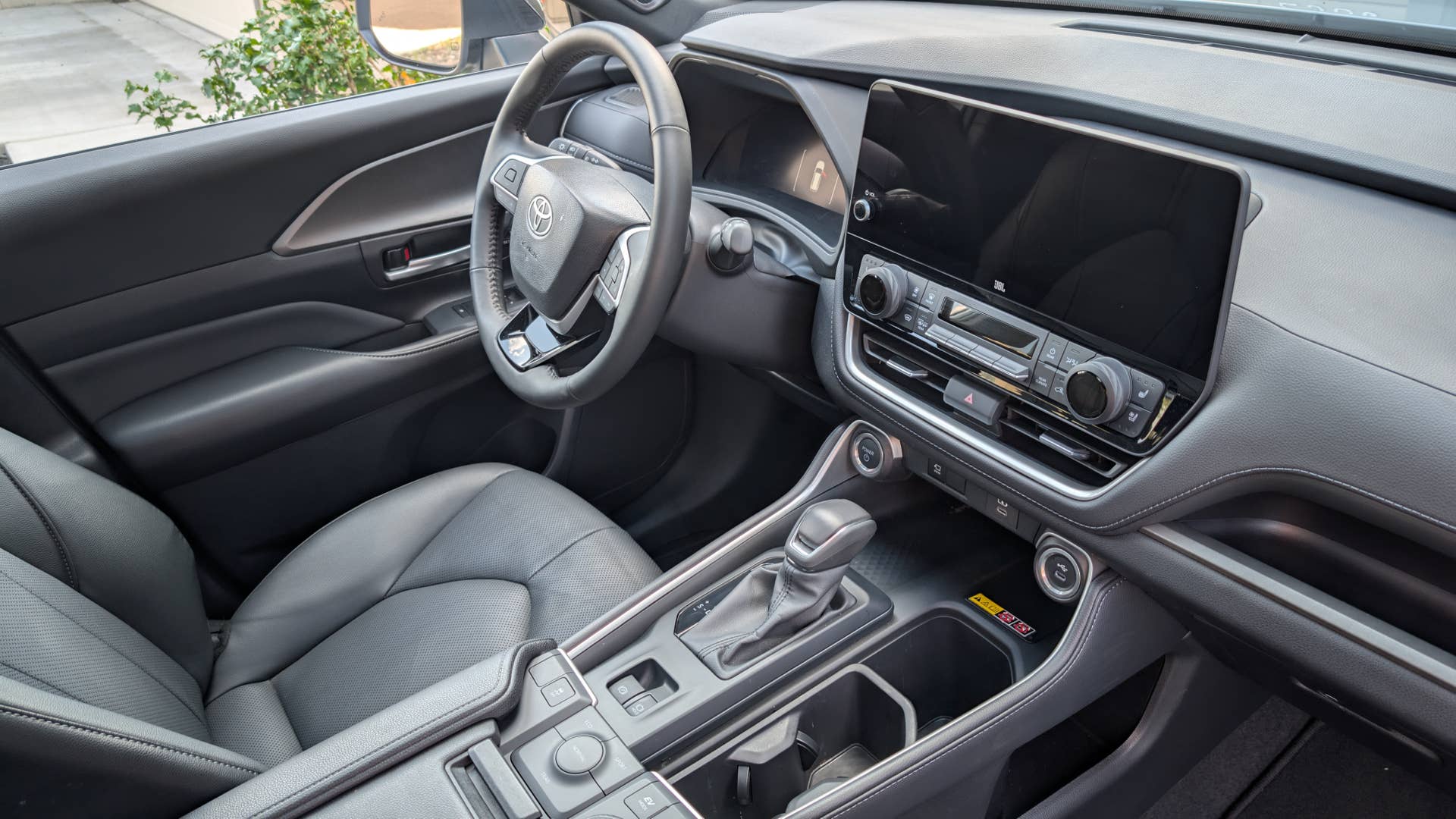
I’m typically unimpressed with Toyota’s interiors, since they tend to be very simple and plain (I’m not a fan of black-on-black), but the interior of the Grand Highlander was charming, with subtle white accent stitching on the seats, steering wheel, and across the dashboard. The seats were black leather, but insanely comfortable. I’m almost shocked they didn’t come with a massaging option. Visibility from the driver’s seat, second-row captain’s chairs, and even the third row was excellent, and it was only enhanced by a large, tinted panoramic sunroof.
Kristen Brown
My husband and I were both surprised by the center console, as it had a slider to open and close the main compartment. He said, “I’m surprised to see this in 2025. A lot of manufacturers stopped using these because they’d get stuck or break easily.” But I rather liked it–while driving, I found it much easier to slide the top open instead of opening a lid and having to contort myself to close it when I’m done digging around. The inside of the center console was modular, too, so I could move or remove pieces to increase volume. It’s deep enough to fit a large waterbottle like a Stanley, but the center console also had three cupholders–one of which was larger than the other two, perfect for beverage goblins like myself.
I also appreciated the screen size of the media infotainment system. It wasn’t so big that it took up the entire dashboard, but it wasn’t too small, either. I had the typical connectivity issues with Android Auto that could be fixed with an update, but otherwise, the JBL sound system was greatly appreciated by my toddlers, who are STILL hung up on Soda Pop by the Saja Boys.
Toyota’s hybrid system nailed it, again
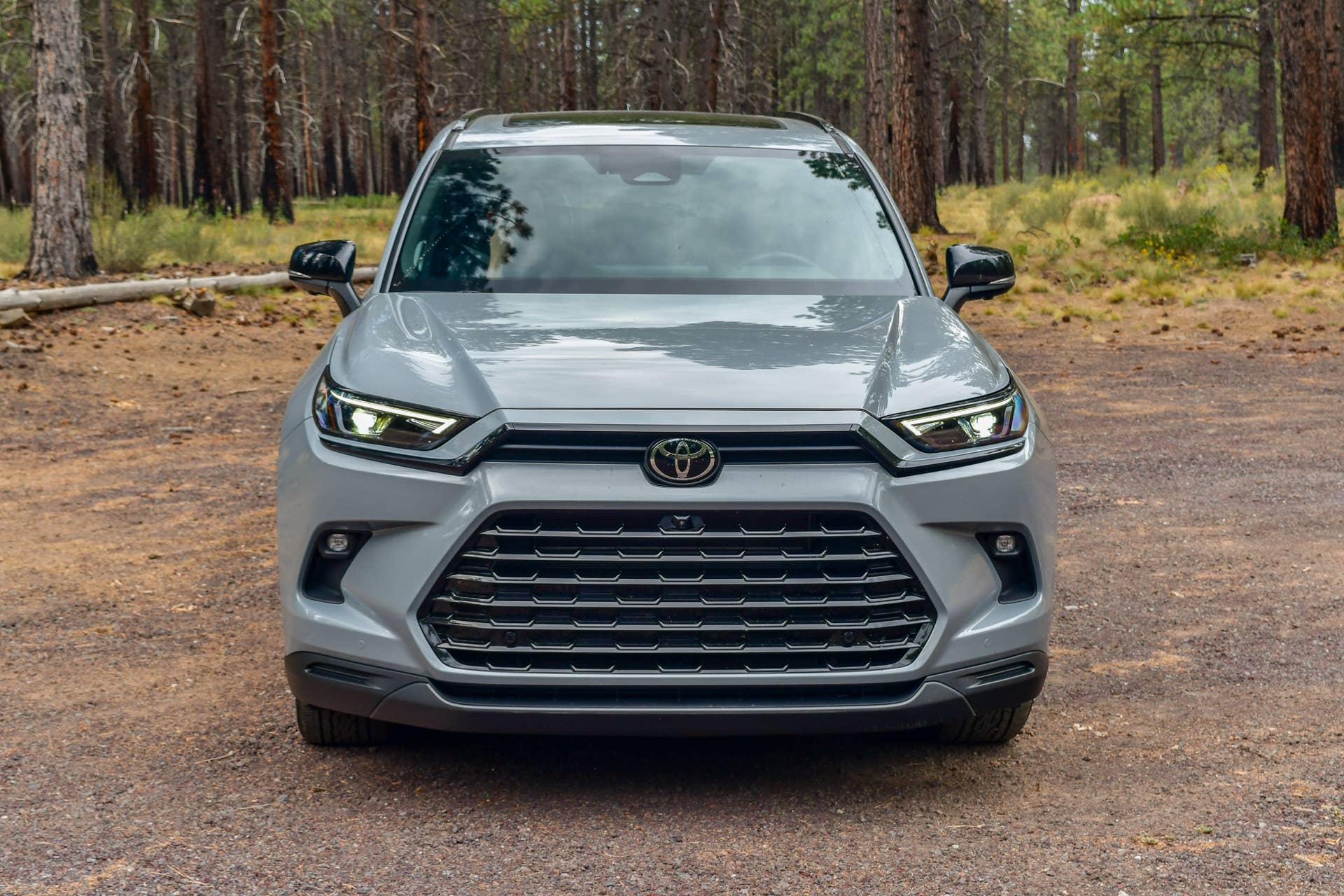
I’m not a stranger to Toyota’s hybrid systems. I’ve seen it in action in the RAV4 XSE and the Toyota Crown, and saw close to 34 mpg both times. The Highlander can be bought as a gas-only SUV with the 2.4-liter turbocharged four-cylinder making 265 horsepower and 310 lb-ft of torque, or with the company’s relatively new performance-oriented Hybrid Max system. That setup produces a combined 362 horsepower and 400 lb-ft of torque with a six-speed automatic transmission instead of the eCVT that was in my standard 2.5-liter four-cylinder hybrid engine, which makes a combined 245 horsepower with the hybrid battery. With the standard hybrid system and the AWD option, I saw a steady and impressive 30.4 mpg. If it were my choice, I’d have chosen the Hybrid Max system, though that’s only offered in the Limited and Platinum trims, so you’d be paying quite a bit more than $56,818.
Kristen Brown
Even with just 245 horsepower at my disposal, the Grand Highlander was no slouch. The eCVT was quick to respond to my cues, and putting it in Sport Mode definitely helped the heifer feel a lot more spry, especially when trying to merge onto a busy highway or turn onto the highway from the High Desert Museum. So, not only was it nimble and quick, but insanely efficient, too, which comes as no surprise.
I could tell the Grand Highlander was made for families
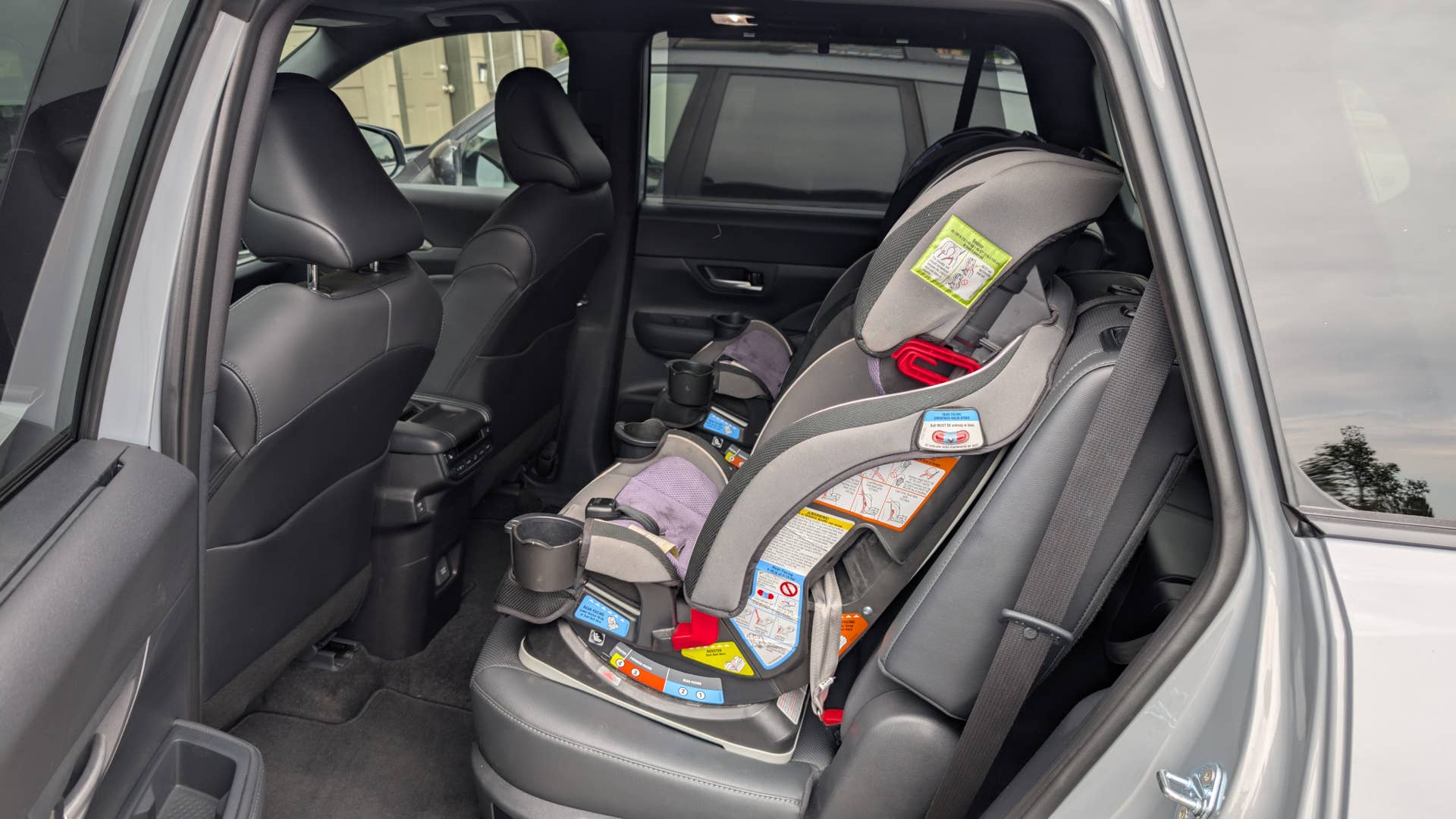
Aside from the increased cargo and passenger space, I loved how easy it was to involve my kids in all my excursions. Installing their seats was easy, thanks to a high entry point and wide doors. The second row’s captain’s chairs easily slid forward with the press of a button, making it very easy to secure the top tether on the back of the seat. When it came to removing the headrests to accommodate the back of their seat, the ceiling was so tall, I didn’t have to fold the seat partway to remove it on either side. Thanks to the captain’s chairs, getting the lower anchors secure was easy too, since they were visible without having to dig into the seat to find and buckle them.
Kristen Brown
The second row had large built-in sunshades that didn’t have a large gap on either side, which my picky toddlers loved (they get cranky when there are gaps that let sunlight in), and the rear climate control was easy to change without having to dig around in a screen. I saw a button on the dash below the screen that easily turns off the rear climate system if no one’s in the back, too, and it’ll automatically deactivate the rear A/C if pressure sensors in the seats don’t detect a butt on them. For larger rear passengers, the temperature and fan speed are easily controlled and interpreted from a control panel located on the back of the center console.
For what you get, I felt the price was fair
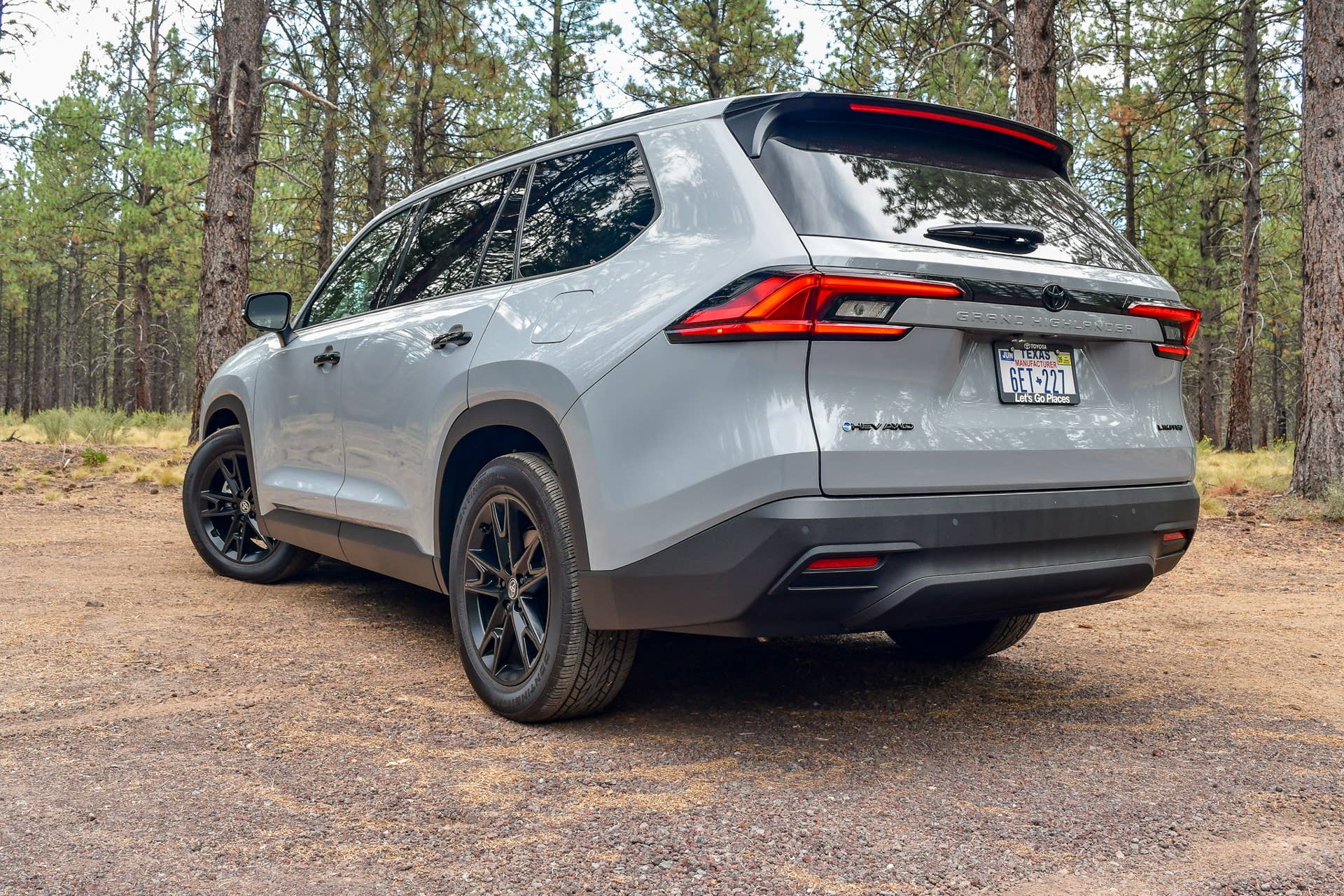
The Grand Highlander can be configured in a variety of ways, depending on how much you want to spend. The gas-only model starts at $41,360 and goes up to $54,545 (tack on an extra $1,590 if you want AWD), the standard hybrid Highlander ranges from $44,710 to $53,190, and if you get the Hybrid Max system, look forward to paying up to $59,275–more if you want it with AWD. The model I drove was a fully loaded Nightshade hybrid, which is two steps below the top of the line, and the Monroney sticker read $56,818. The base price was $52,610, but the addition of a sunroof, panoramic view monitor for parking, floor mats, cargo liner, and connected services significantly increased the sticker price.
Kristen Brown
That’s quite a chunk of change, but the size of the SUV, the excellent mileage, the ease of use, and daily drivability made it worth the price to me. Especially when you compare the price to other SUVs it competes against, like the Lexus TX, Hyundai Palisade, Jeep Grand Wagoneer, and Jeep Grand Cherokee L.
Final thoughts
I thoroughly enjoyed my week with the Grand Highlander. With two kids, I felt it was a bit too large, but for a family with three or even four kids, the Grand Highlander would be the one I recommend over Toyota’s other 3-row SUVs if they were adamant about not wanting a minivan. The space, ease of driving, parent-friendly features, excellent safety rating, and stellar mileage make it an easy SUV for me to recommend to fellow parents or grandparents–especially for the price.
About the author

Kristen Brown
Contributing Writer, Autoblog