
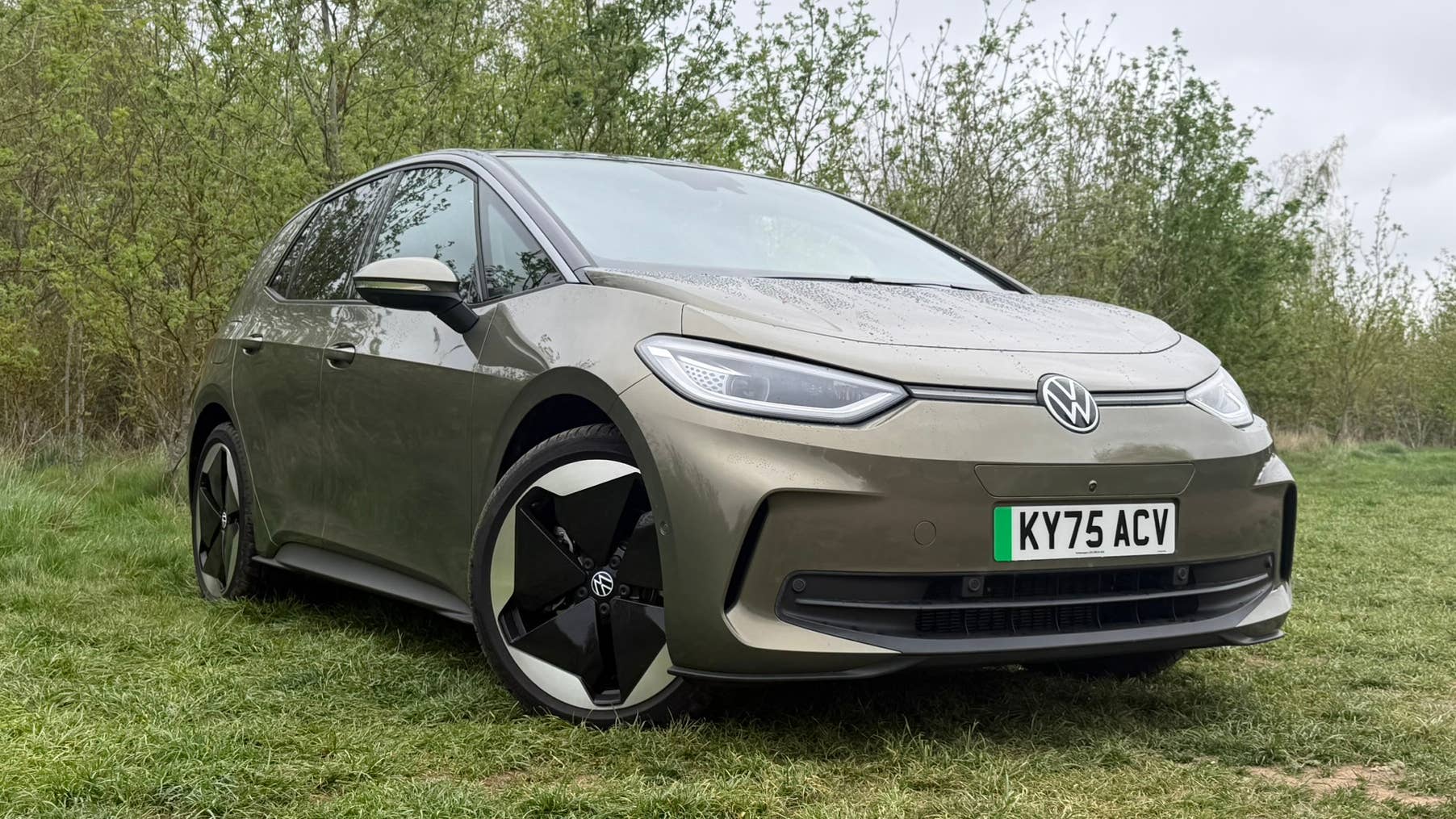
I spent a week with the Volkswagen ID.3 and covered about 350 miles — enough to get past first impressions and into the parts that actually matter. Town driving, motorways, country lanes, and the usual broken British road surfaces provided enough evidence that the electric hatch would make for an excellent long-term companion.
Alas, the ID.3 is not sold in the United States. It is too small, too hatchback-shaped, and too honest about what it is for our SUV-obsessed tastes, which is more a criticism of the market than of the car.
The car I drove was the 2026 Volkswagen ID.3 Pro S Match: 79-kWh battery, 204 horsepower, 229 lb-ft of torque, rear-wheel drive, 8.2 seconds to 62 mph, 351 miles of WLTP range, and DC rapid charging at up to 170 kW. Basic price £39,940, with options pushing this example to £45,295 (if the ID.3 was sold in the US, a similar number next to the dollar sign would be expected). So this is no bargain EV, but a properly equipped, long-range compact electric Volkswagen — and in everyday use, it makes a strong case for itself.
Adam Lynton / Autoblog
Adam Lynton / Autoblog
Adam Lynton / Autoblog
Exterior Design: Compact, Sharp, And Better In Person
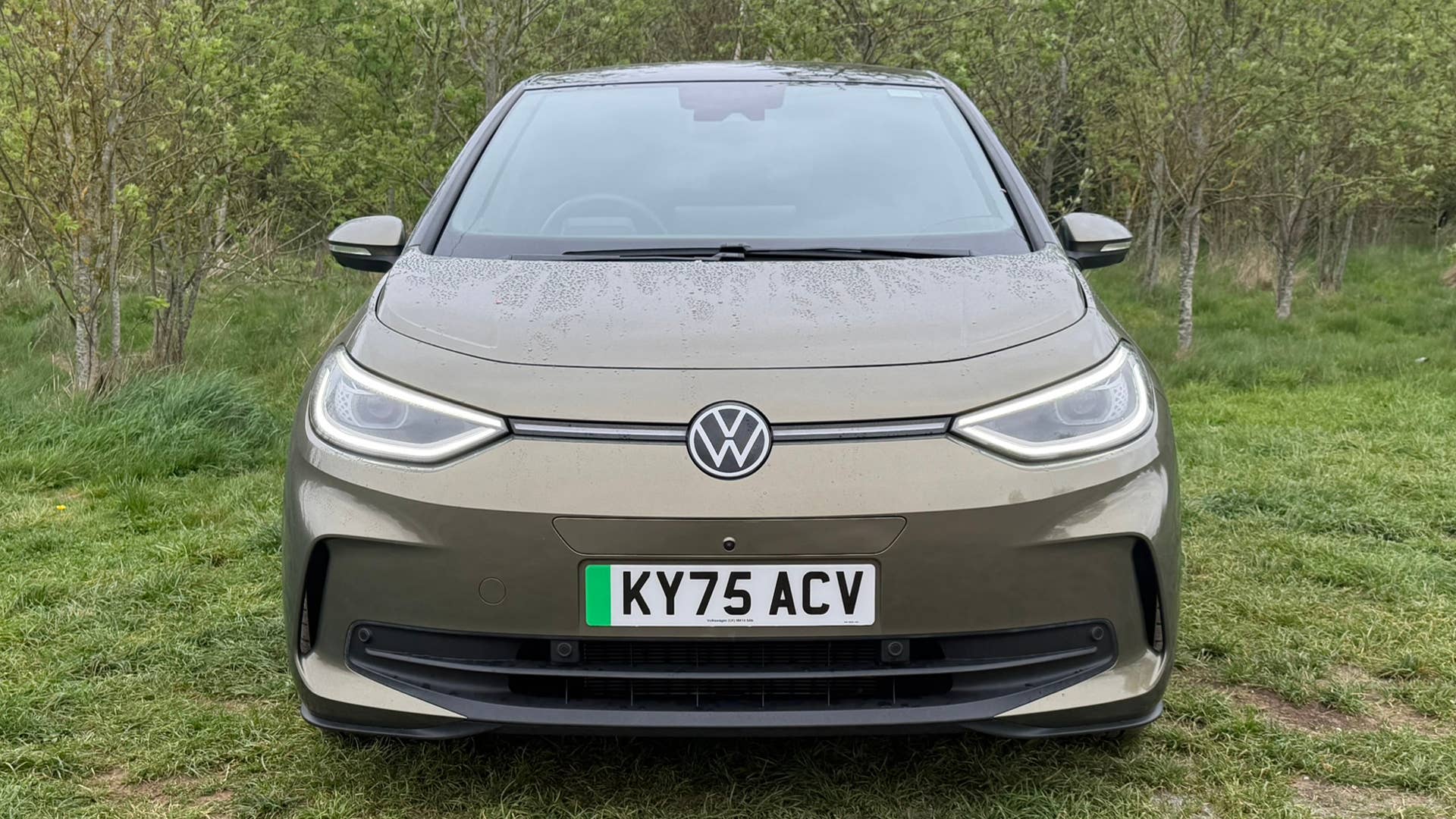
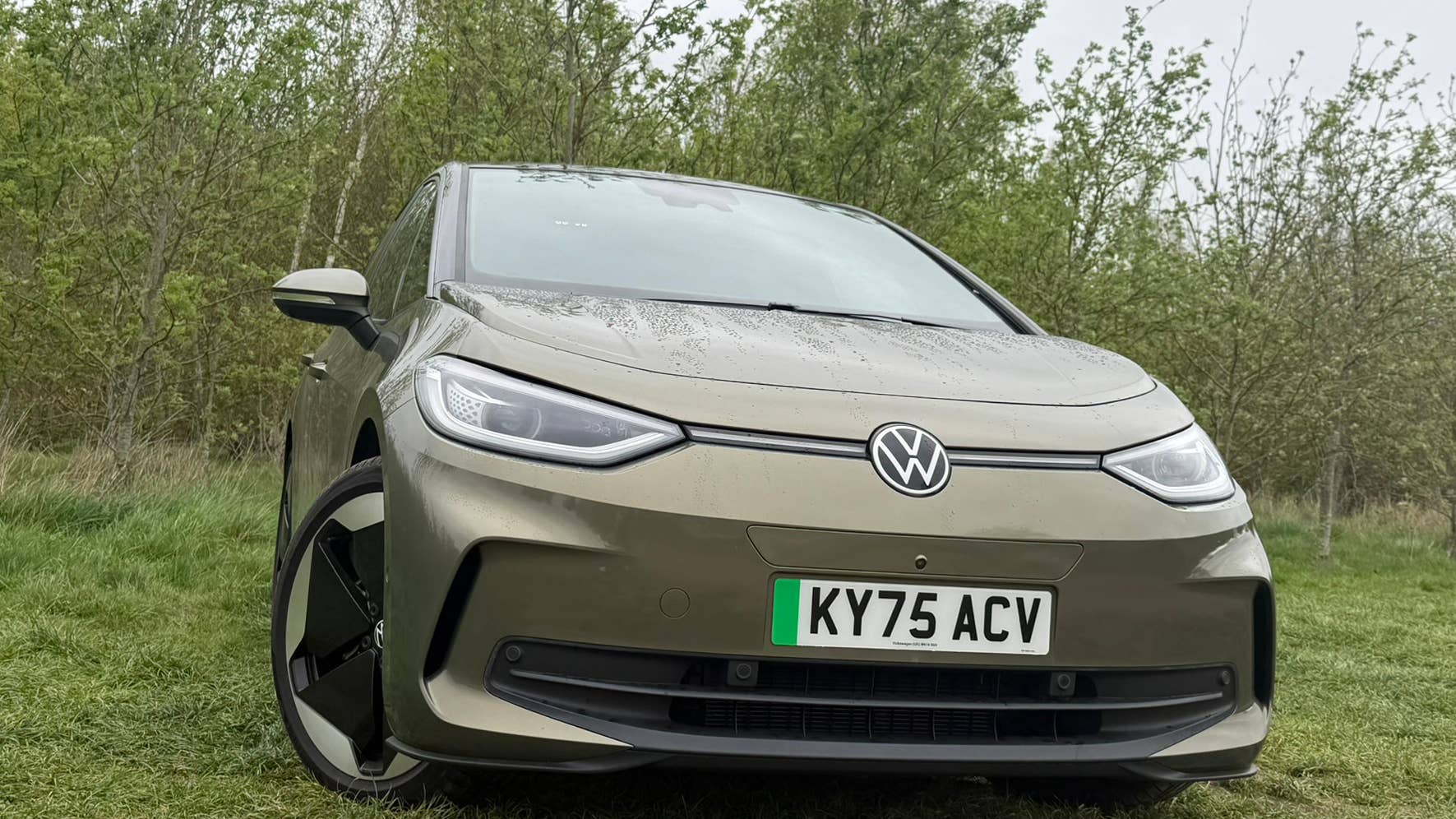
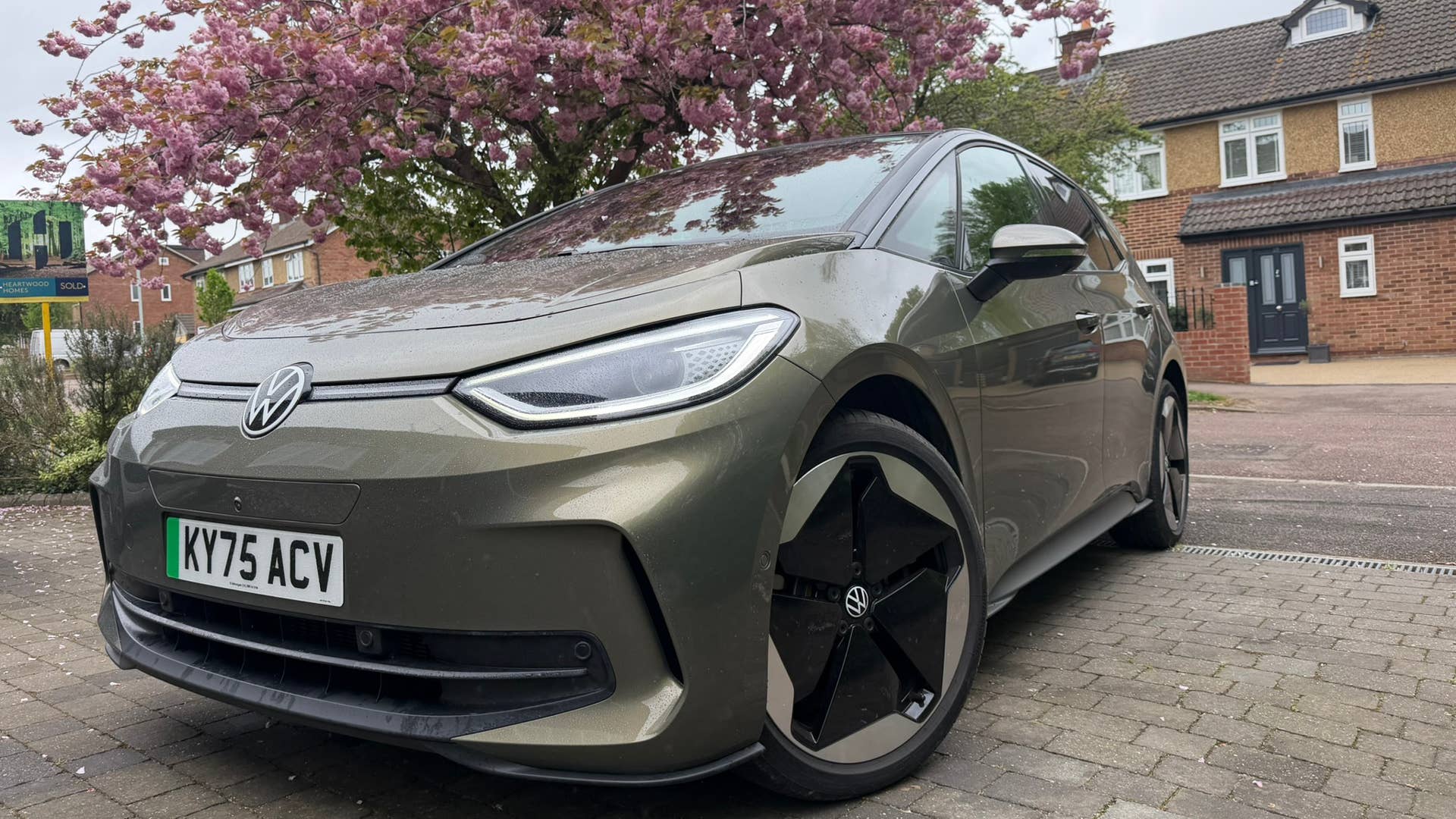
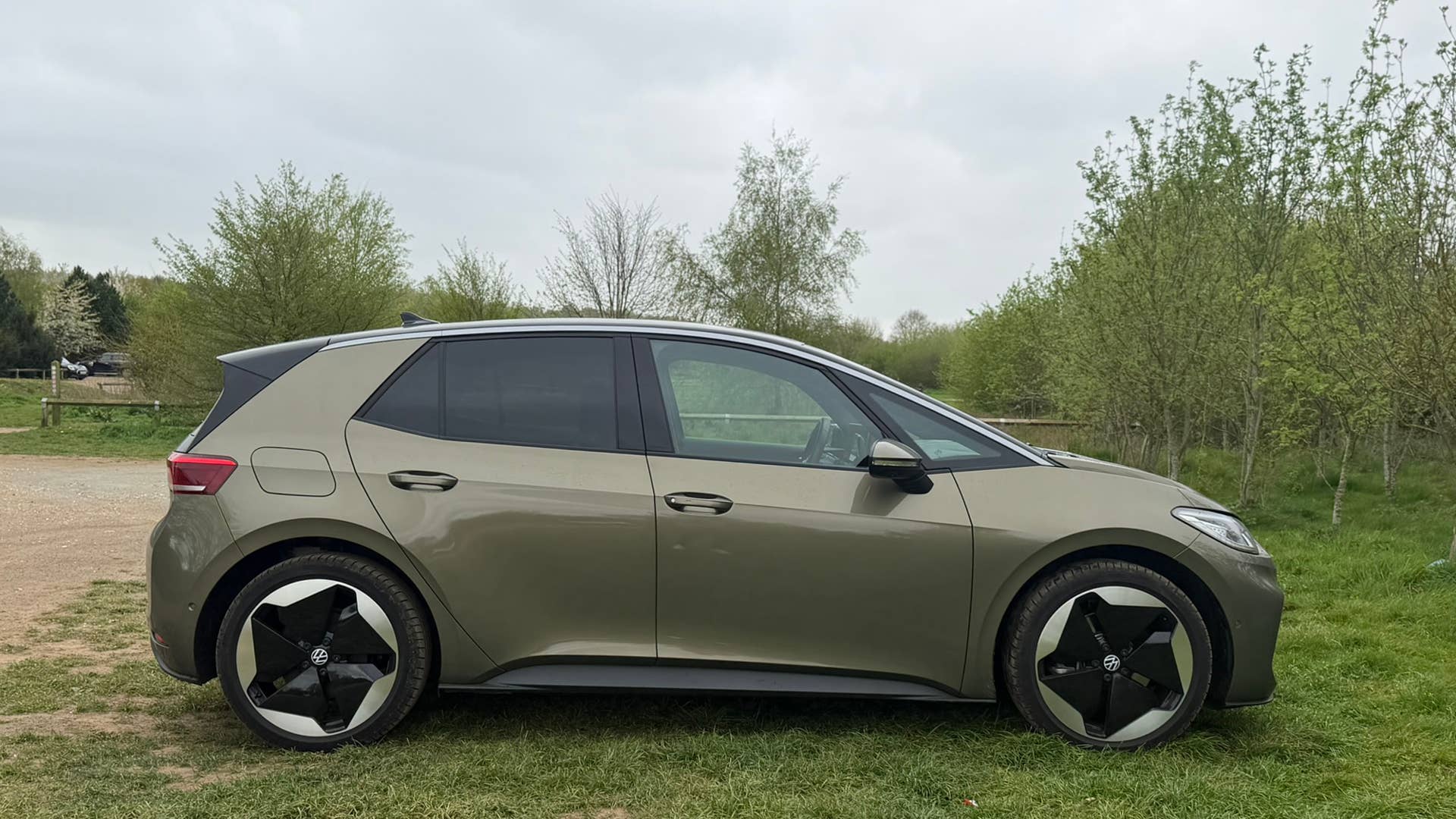
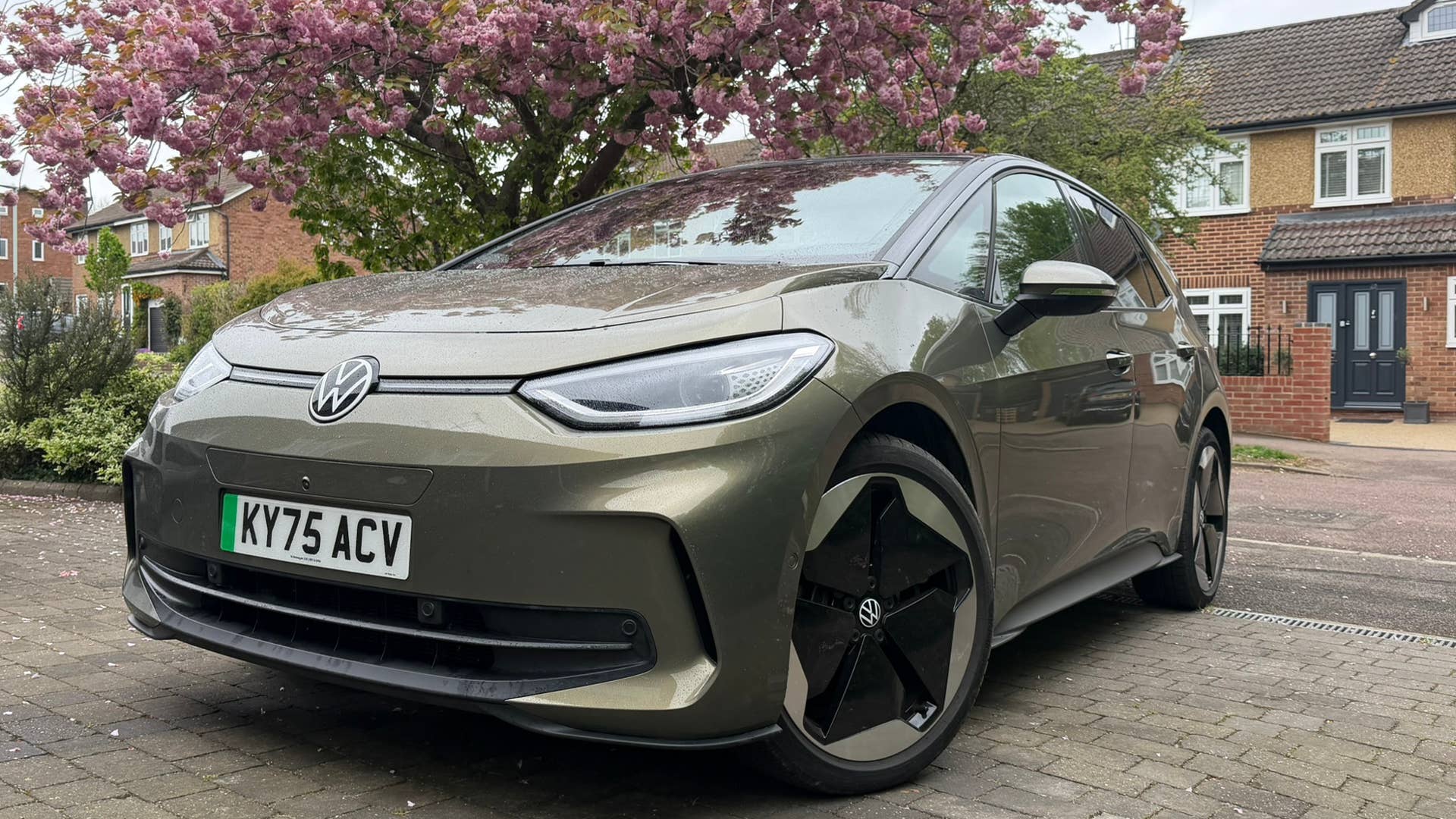
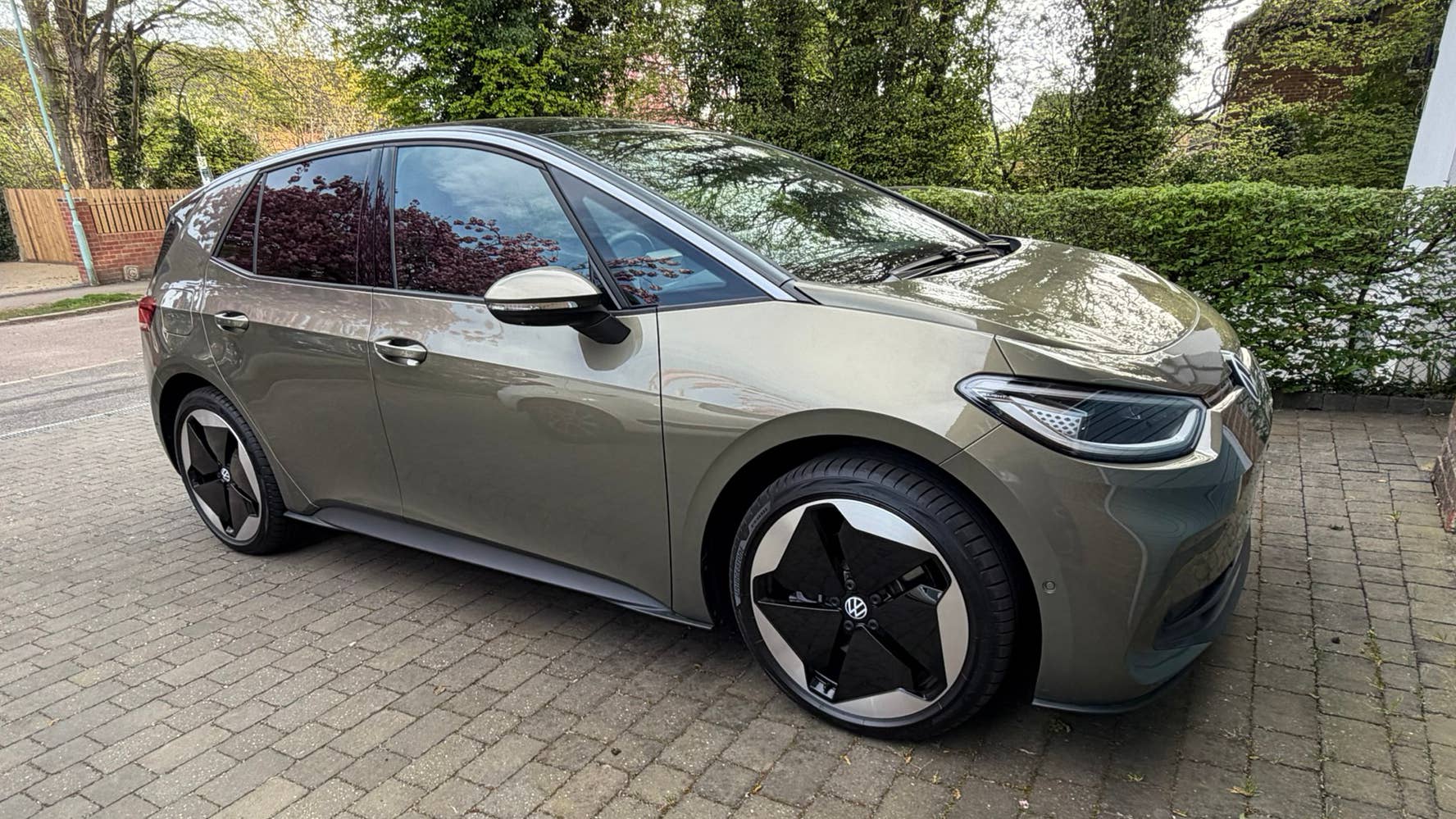
The ID.3 looks better in person than in photos. It is compact without looking flimsy, and the updated front end is cleaner than the earlier version. VW is no longer trying quite so hard to announce the electric future with the styling alone.
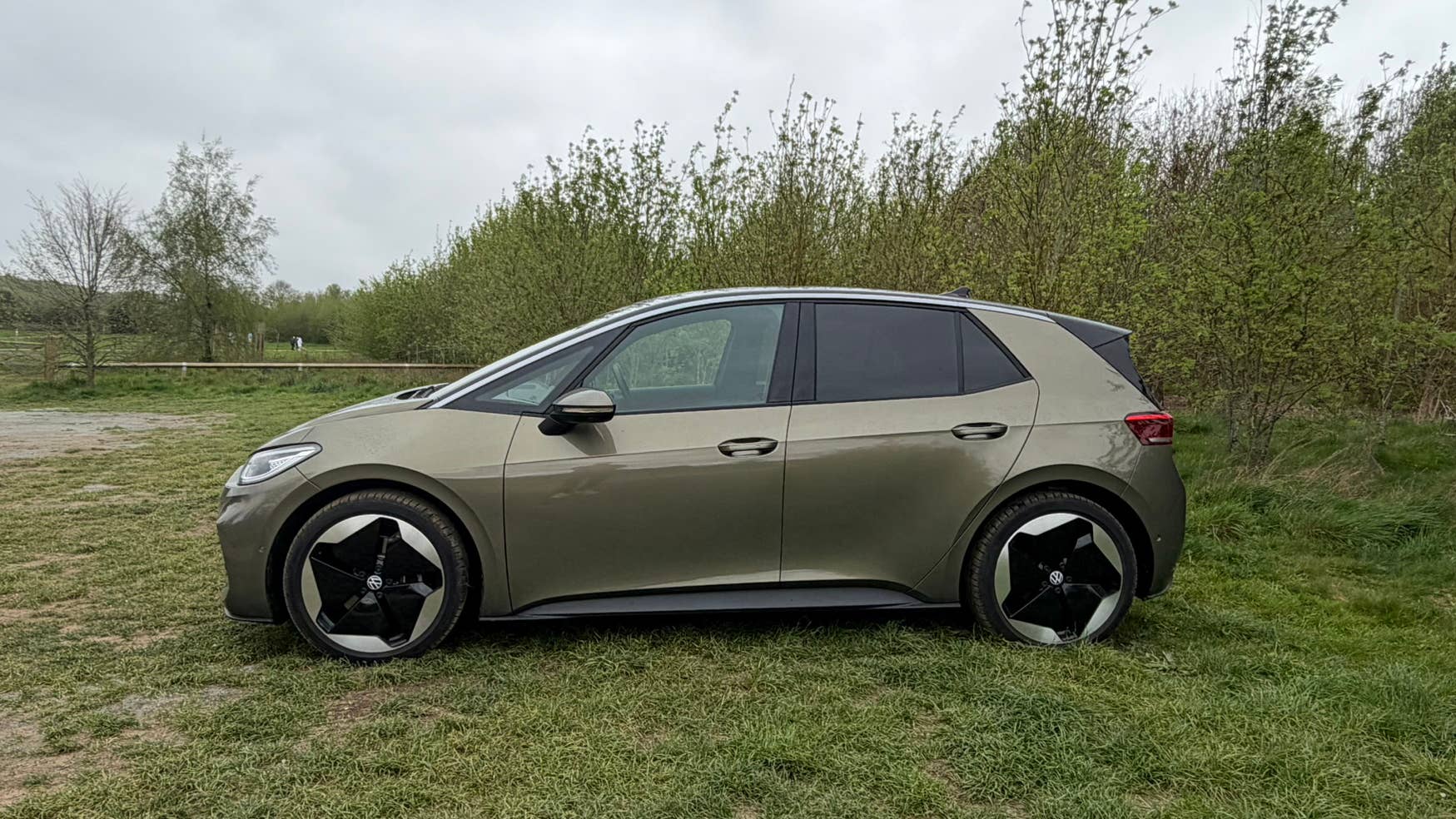
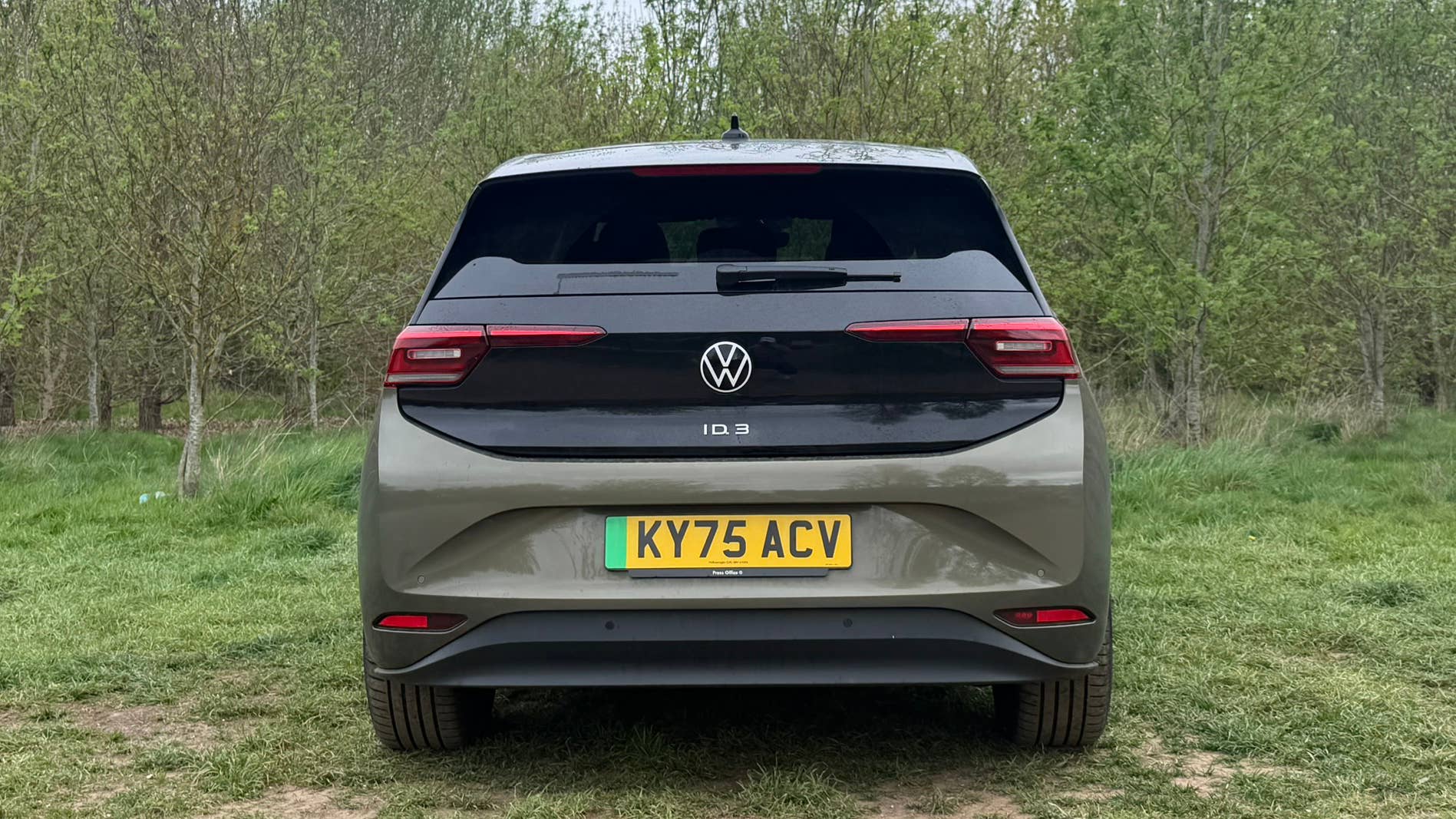
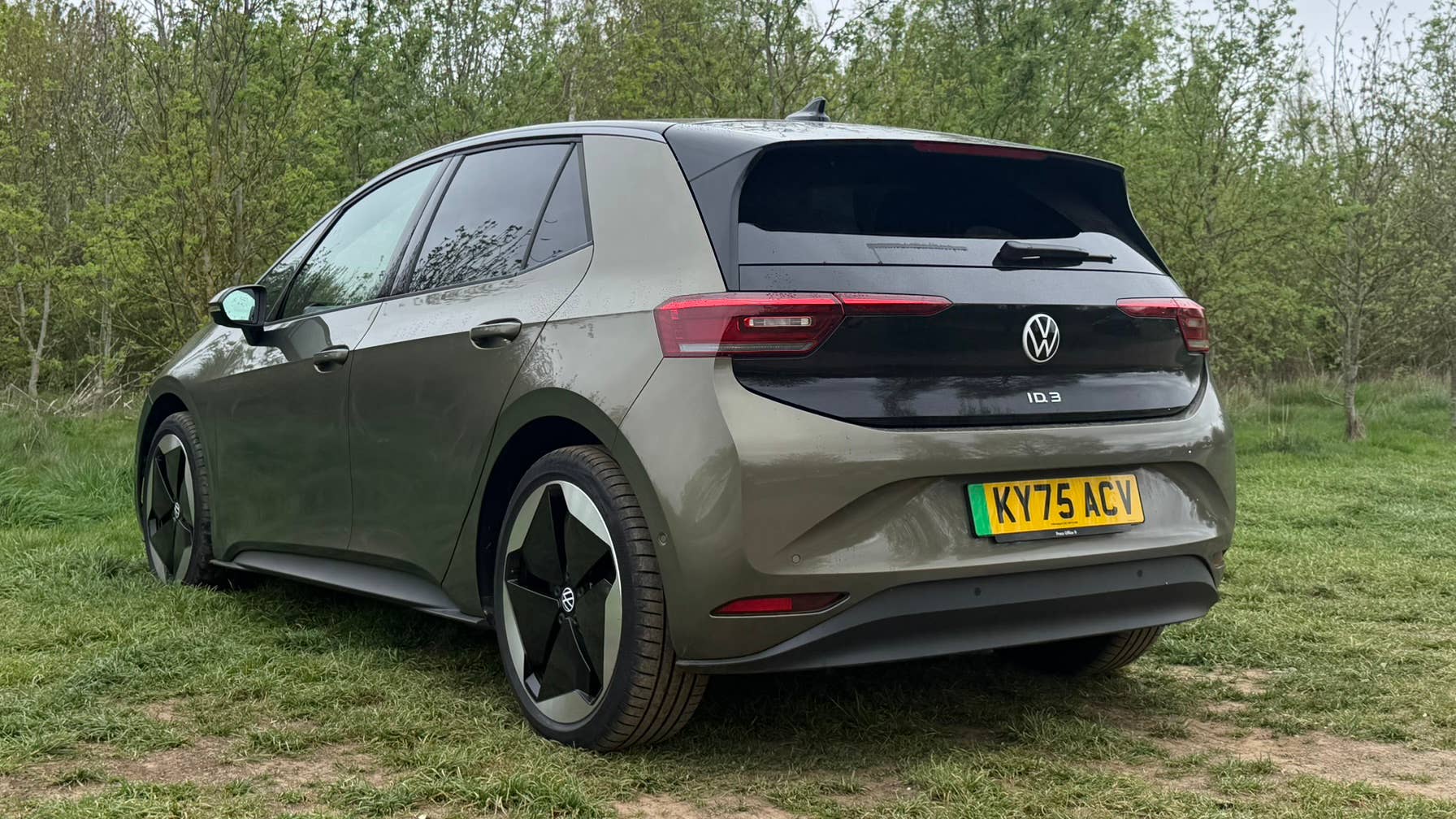
My test car’s Dark Olivine Green metallic with the black roof suited it well. Modern, sharp, faintly camo-like without tipping into gimmicky. It did not turn heads, but that is not really its job. There is a quiet confidence to it.
The proportions are the interesting part. At 4,264 mm long, it is genuinely compact, especially by American standards, but because the wheels are pushed out and the cabin is tall, it looks bigger than the numbers suggest. This is a real hatchback in a world that has more than enough SUVs.
Adam Lynton / Autoblog
Adam Lynton / Autoblog
Adam Lynton / Autoblog
Adam Lynton / Autoblog
Interior: Bigger Than It Looks
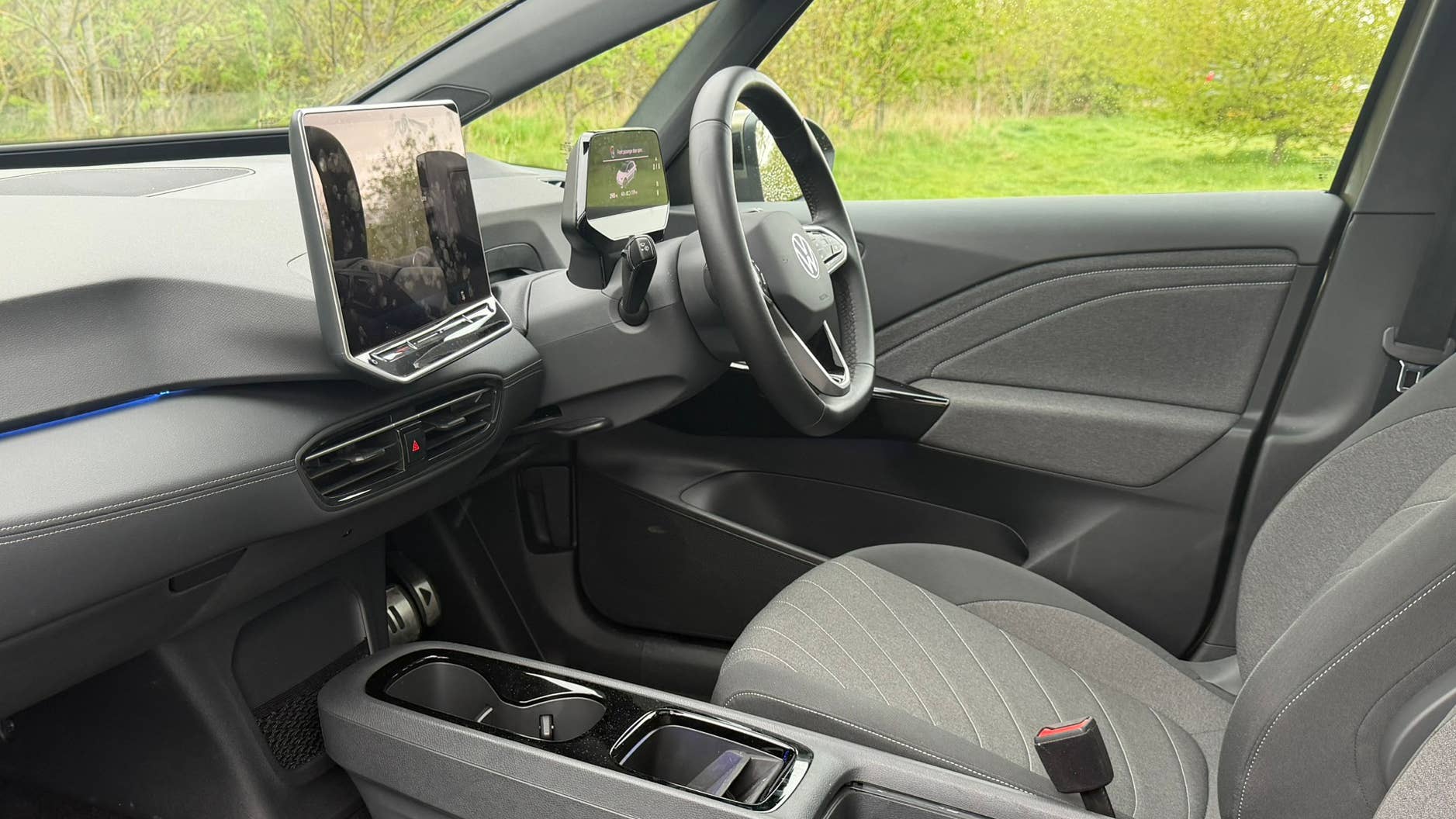
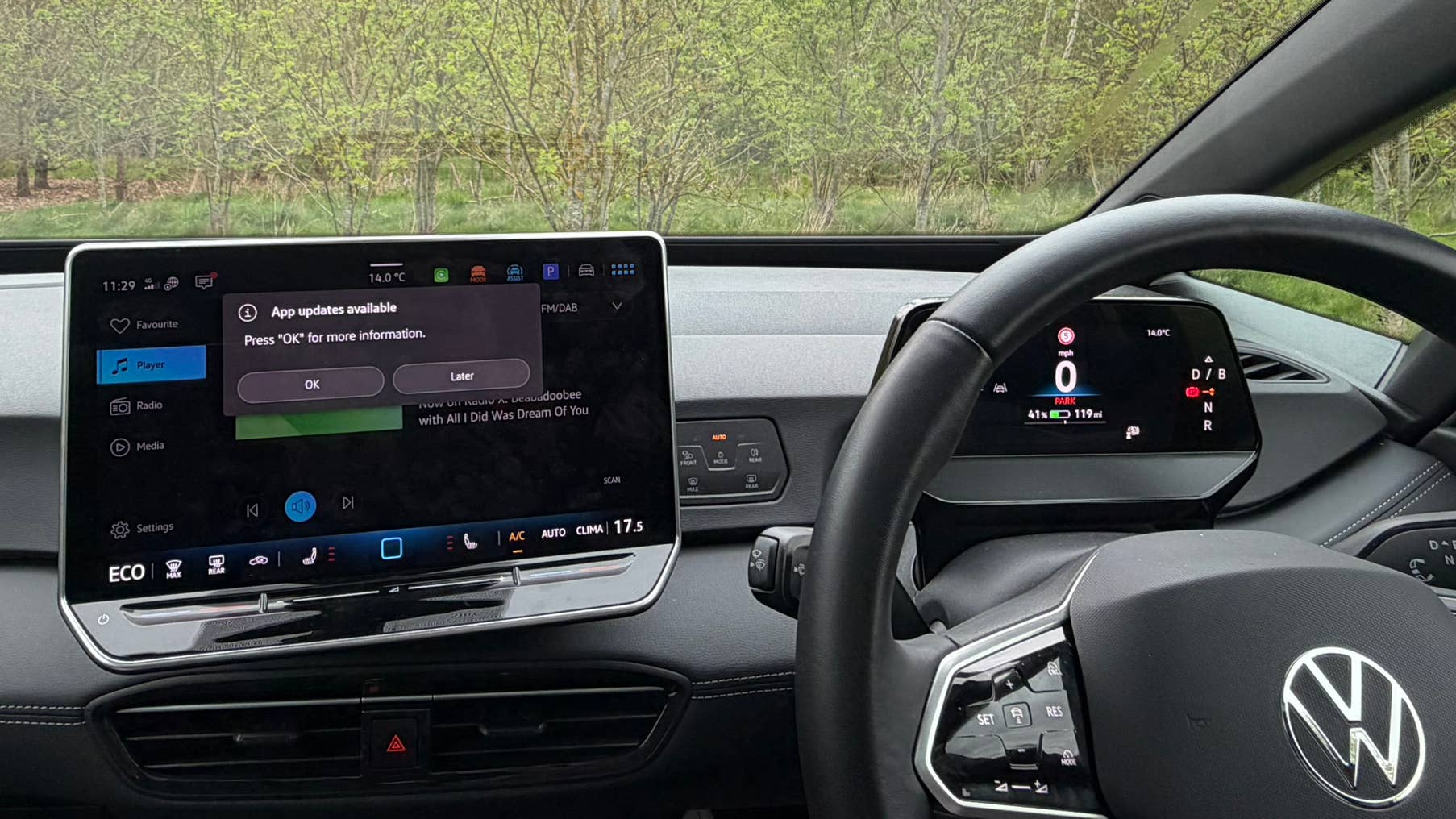
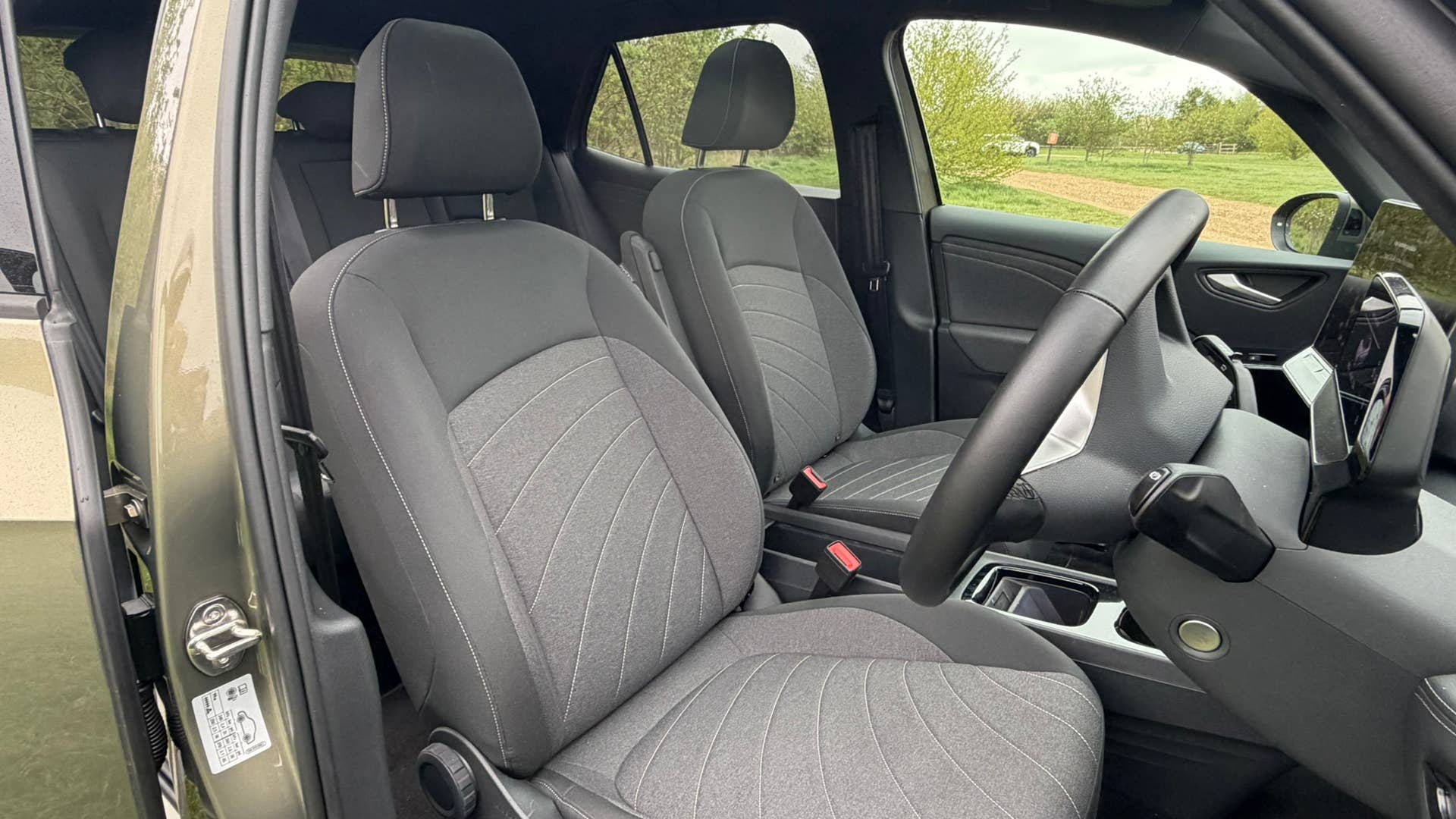
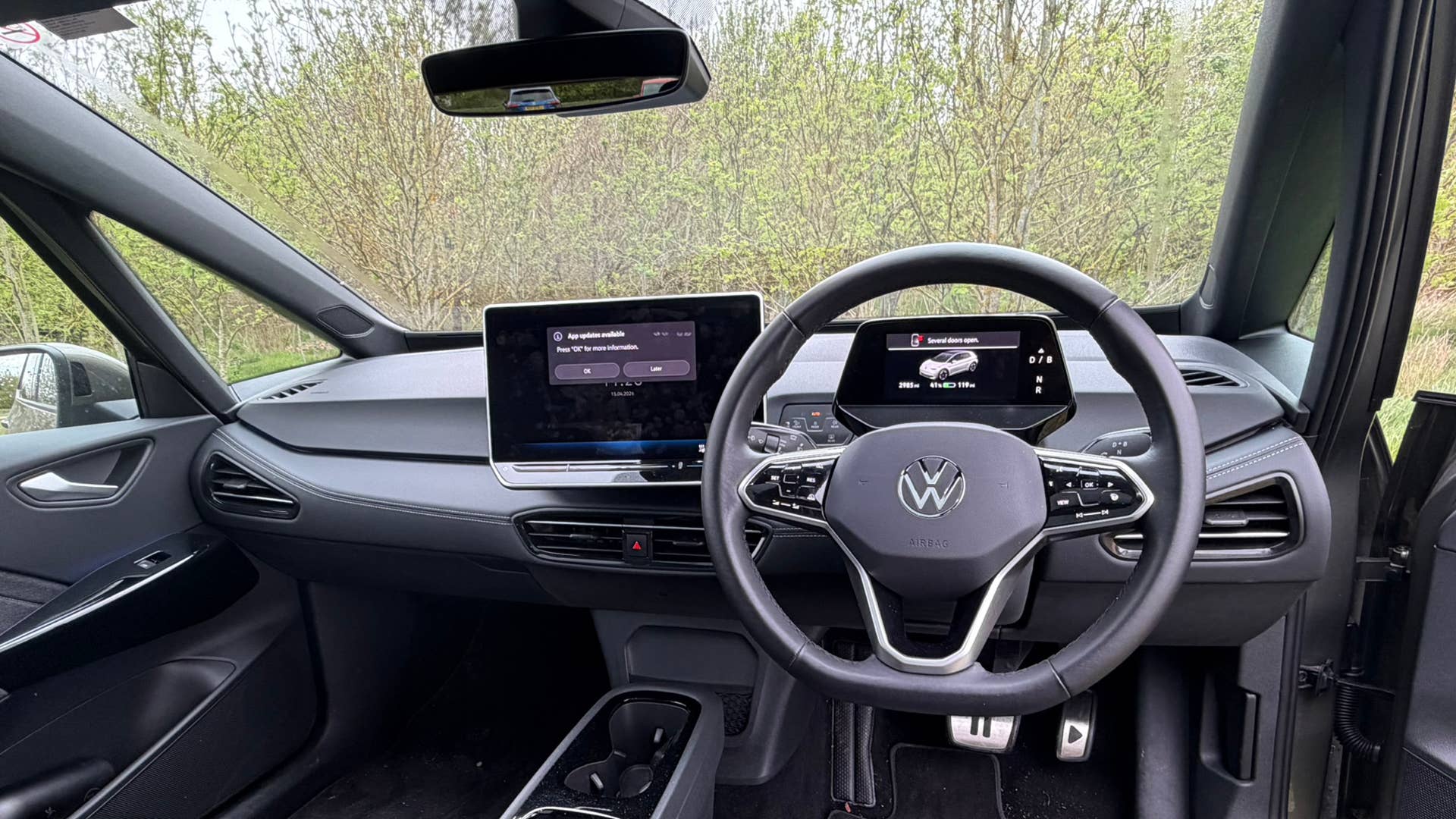
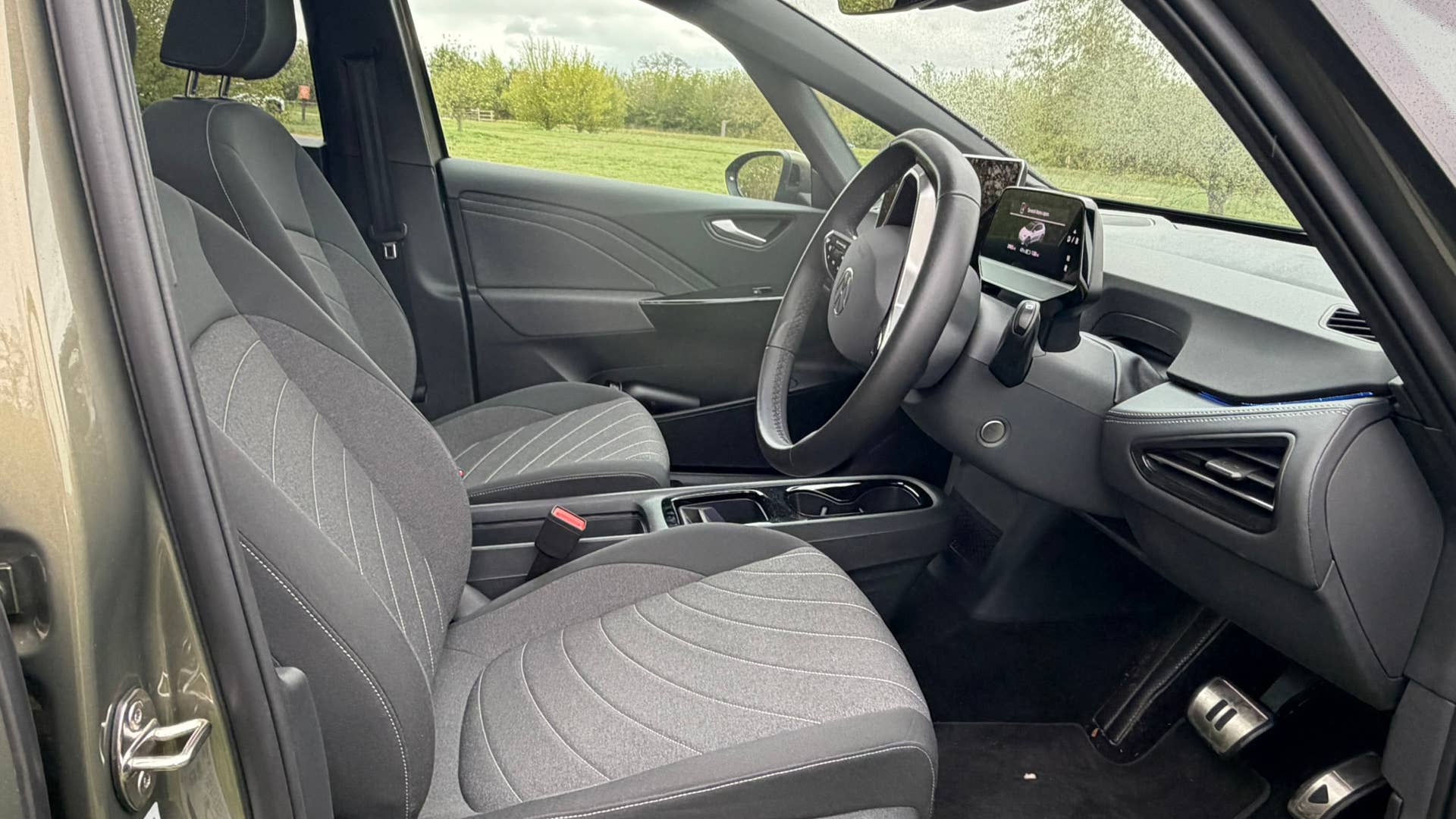
The ID.3’s best trick is feeling considerably larger inside than outside. From the driver’s seat, the layout will be immediately familiar to anyone who has spent time in the ID.4: small driver display, central screen, clean dashboard, simple gear selector. VW wants the cabin to feel open rather than cluttered, and it succeeds.
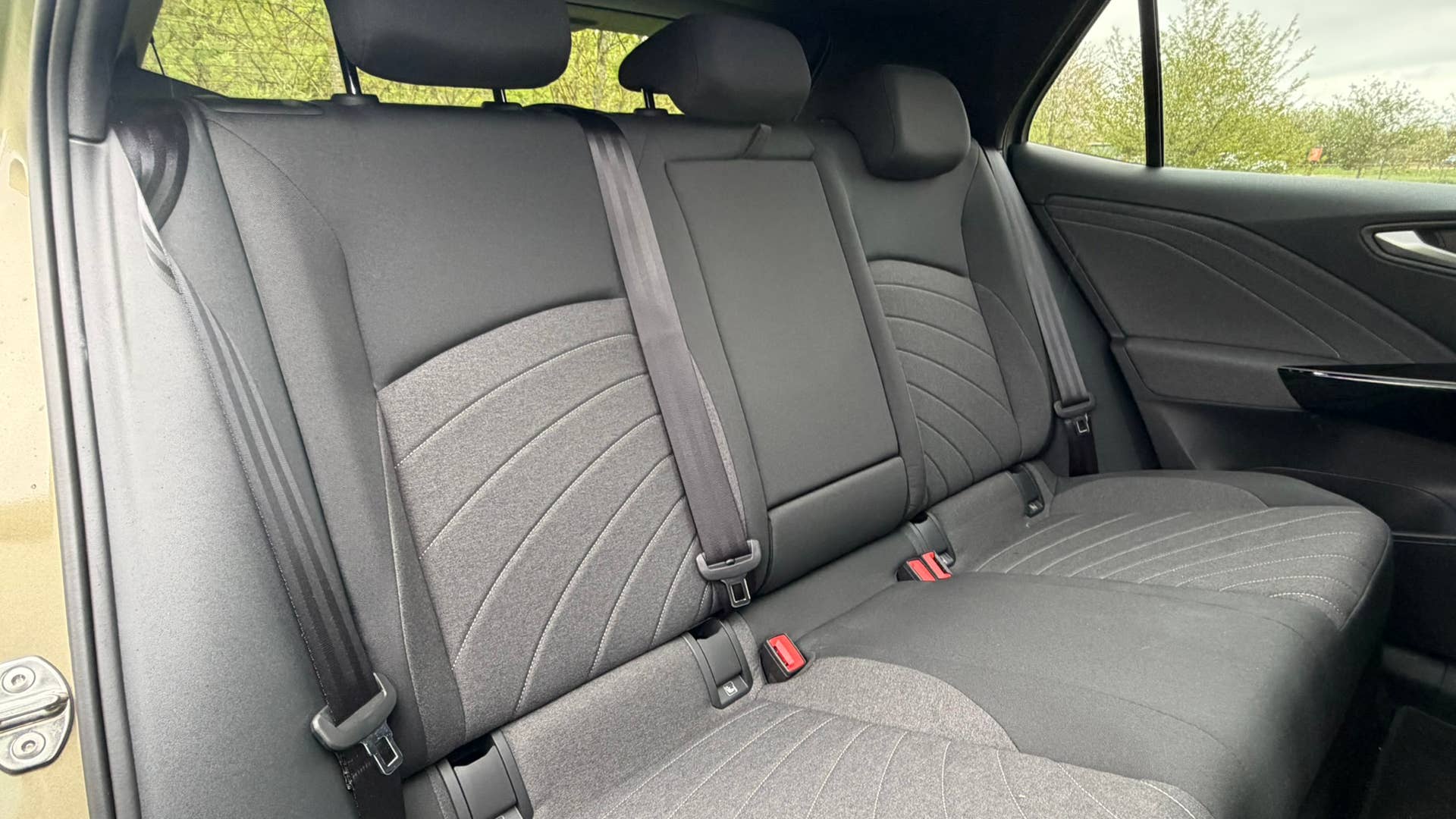
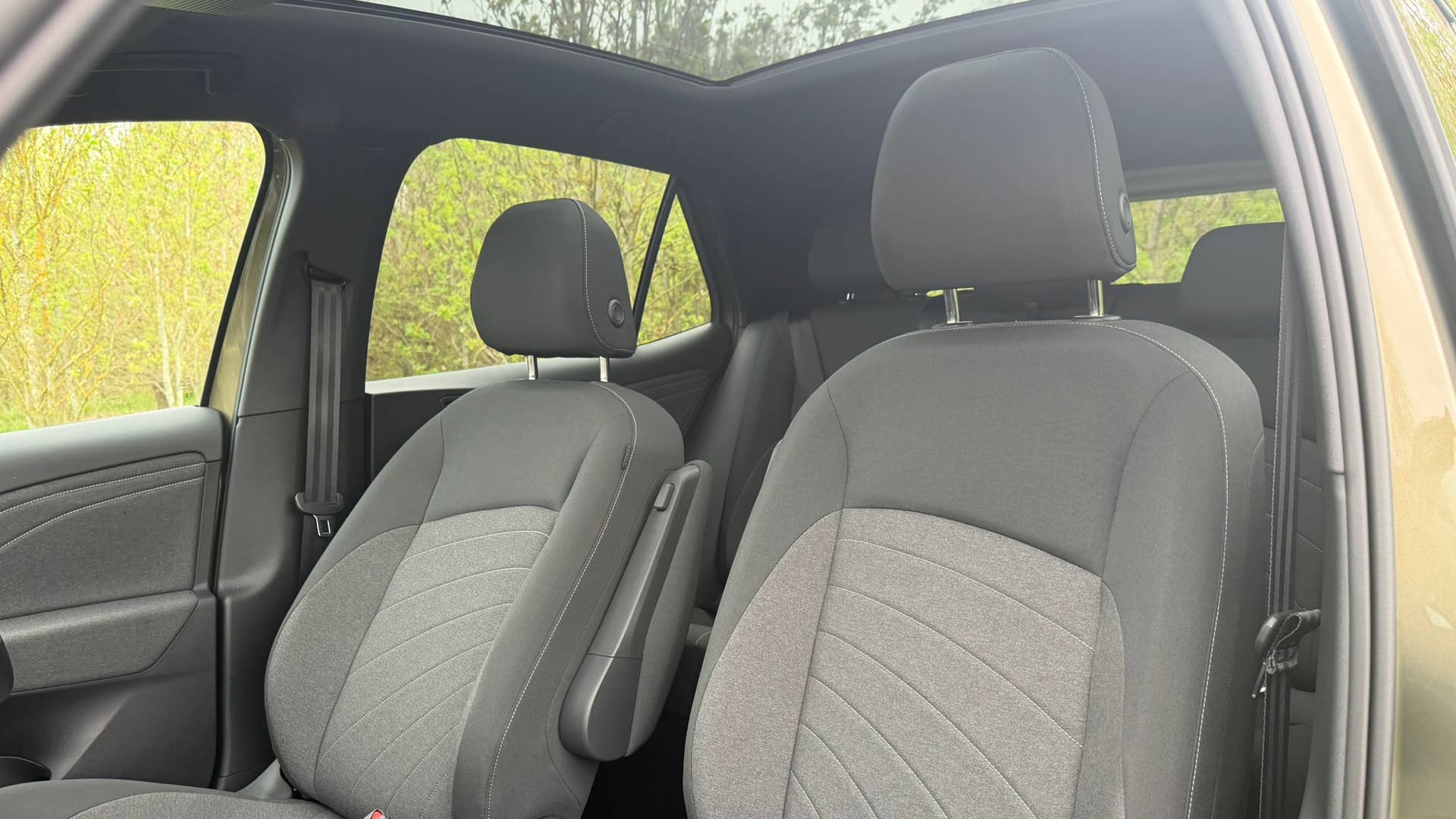
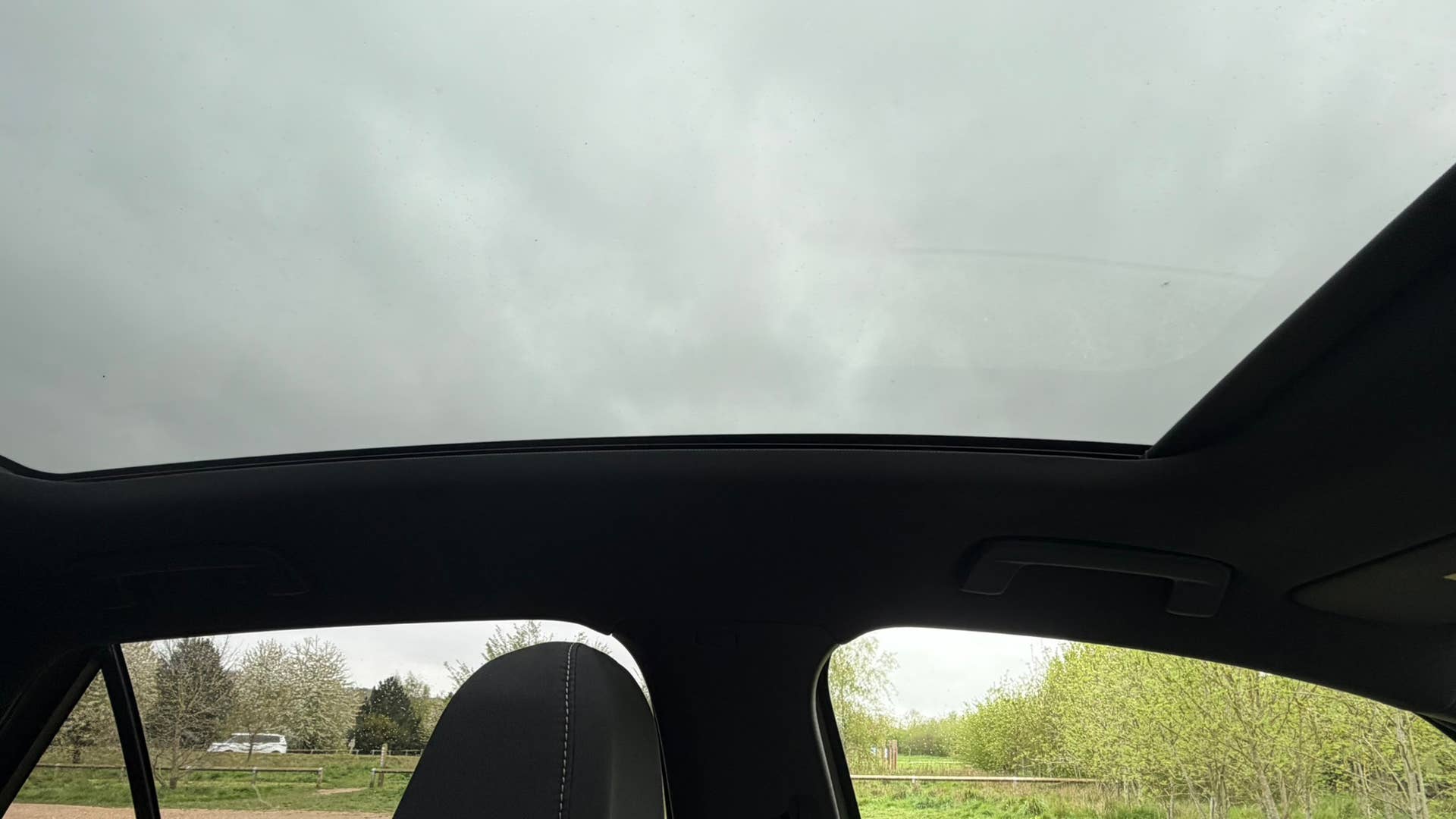
The Pro S Match spec helps considerably. The ArtVelour Eco trim adds warmth, the ergoActive seats are genuinely comfortable over distance, and the panoramic roof stops a darker interior from feeling closed in. It gives the car a more premium feel than the base specification manages.
For four people, this is an excellent car. With a child seat fitted, it handles three in the back for shorter trips without complaint. Load it with five people and holiday luggage and you would start noticing its limits. But for normal family use, school runs, and weekend errands, it works better than the footprint suggests.
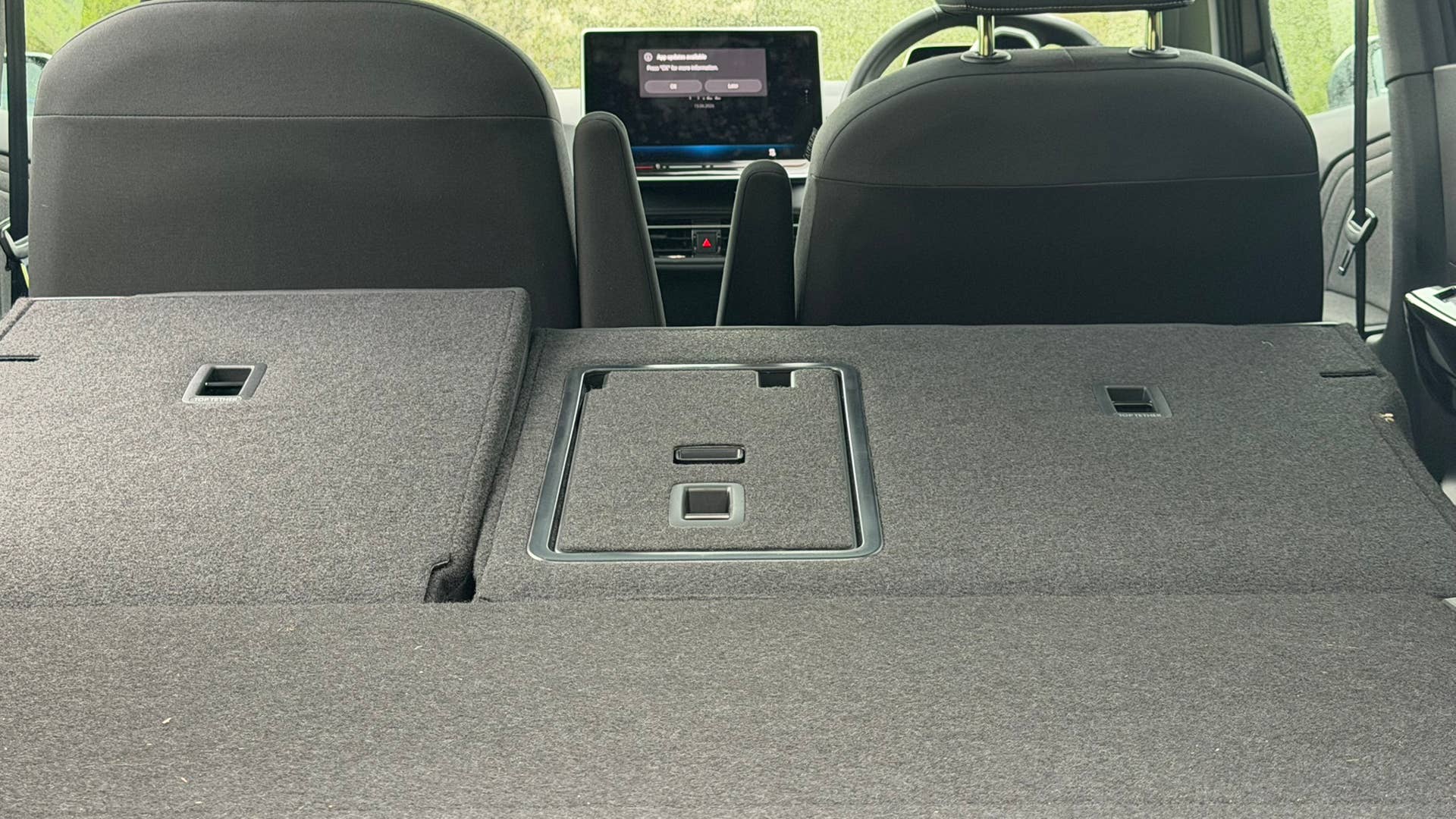
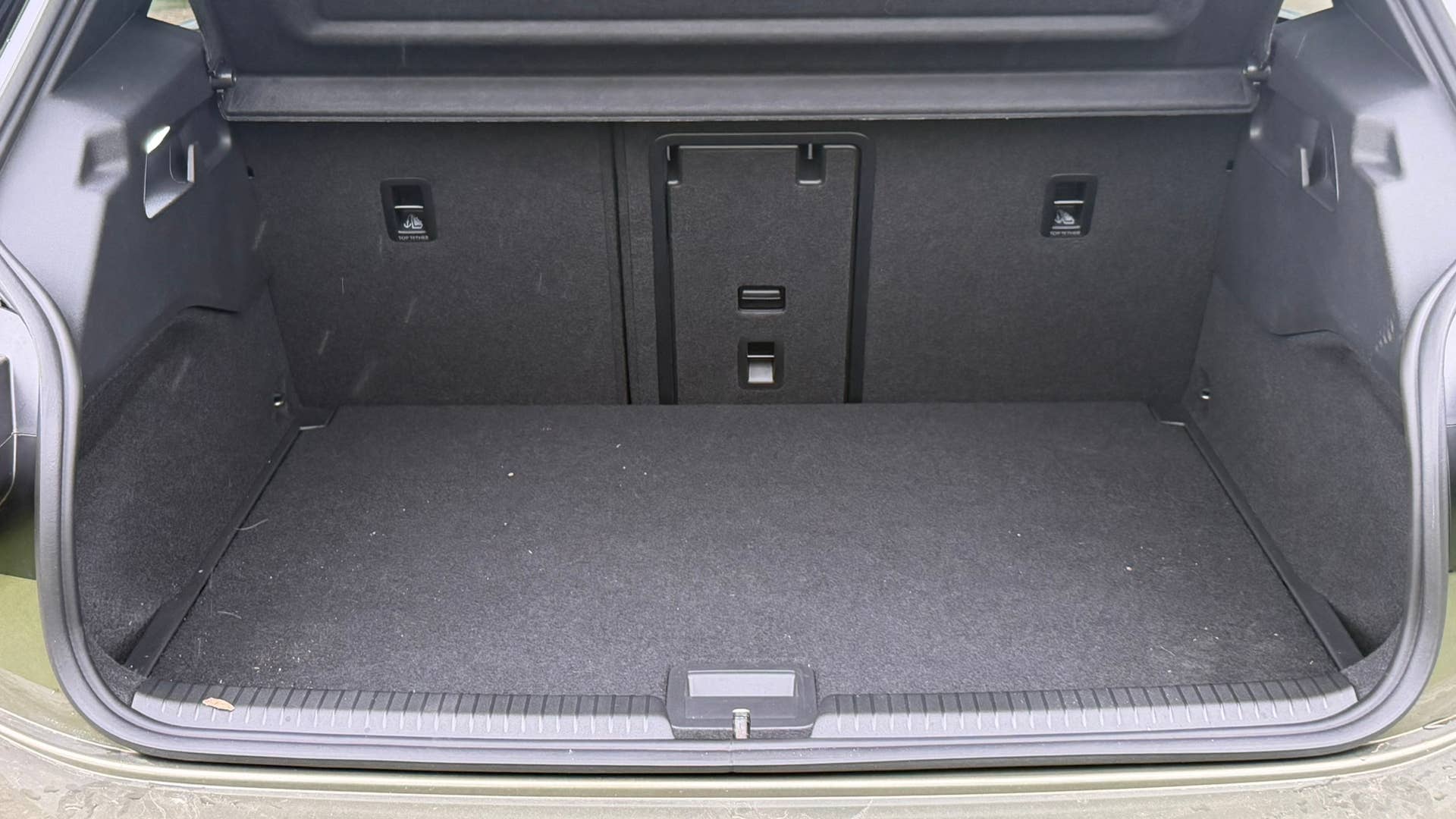
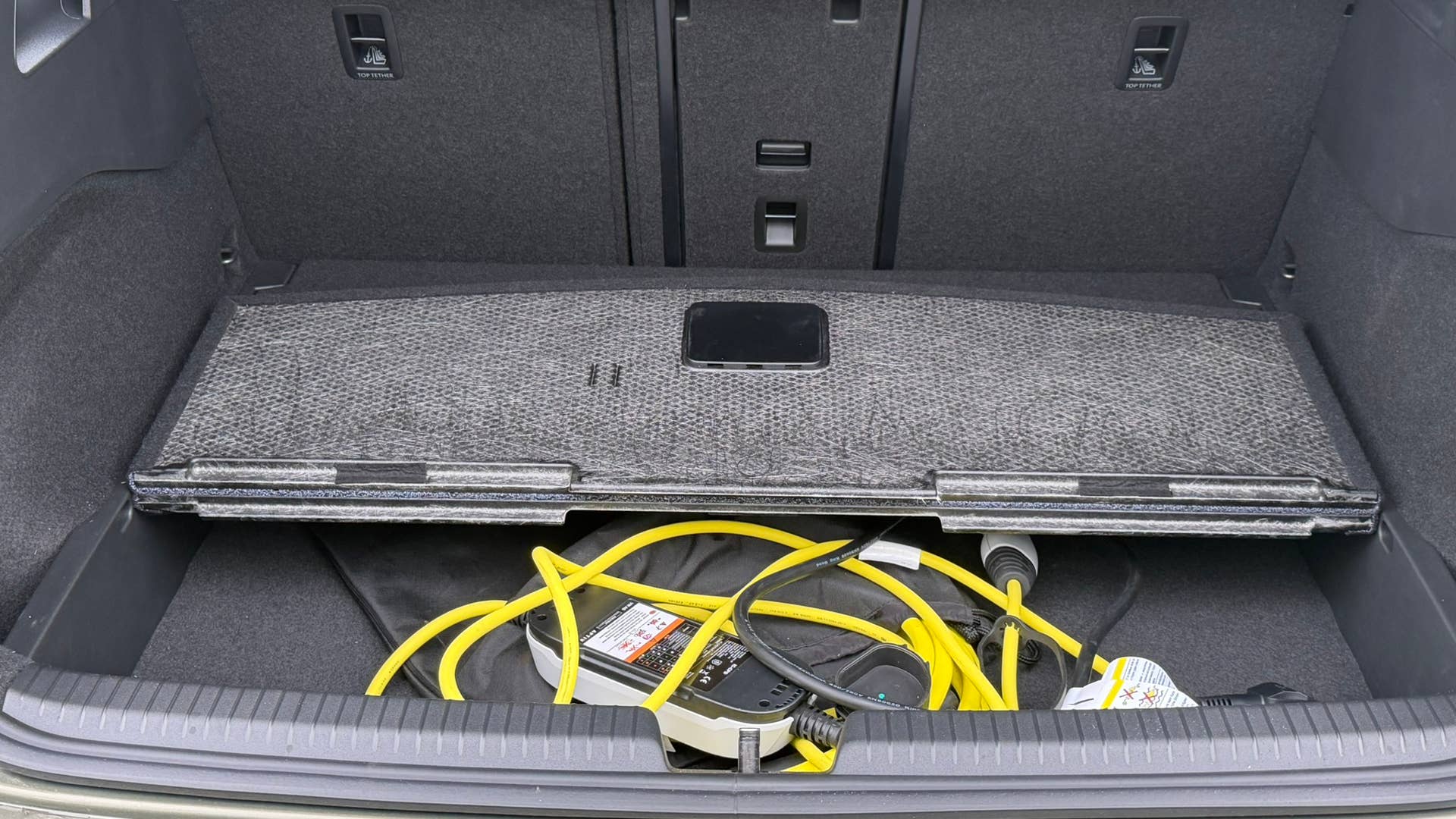
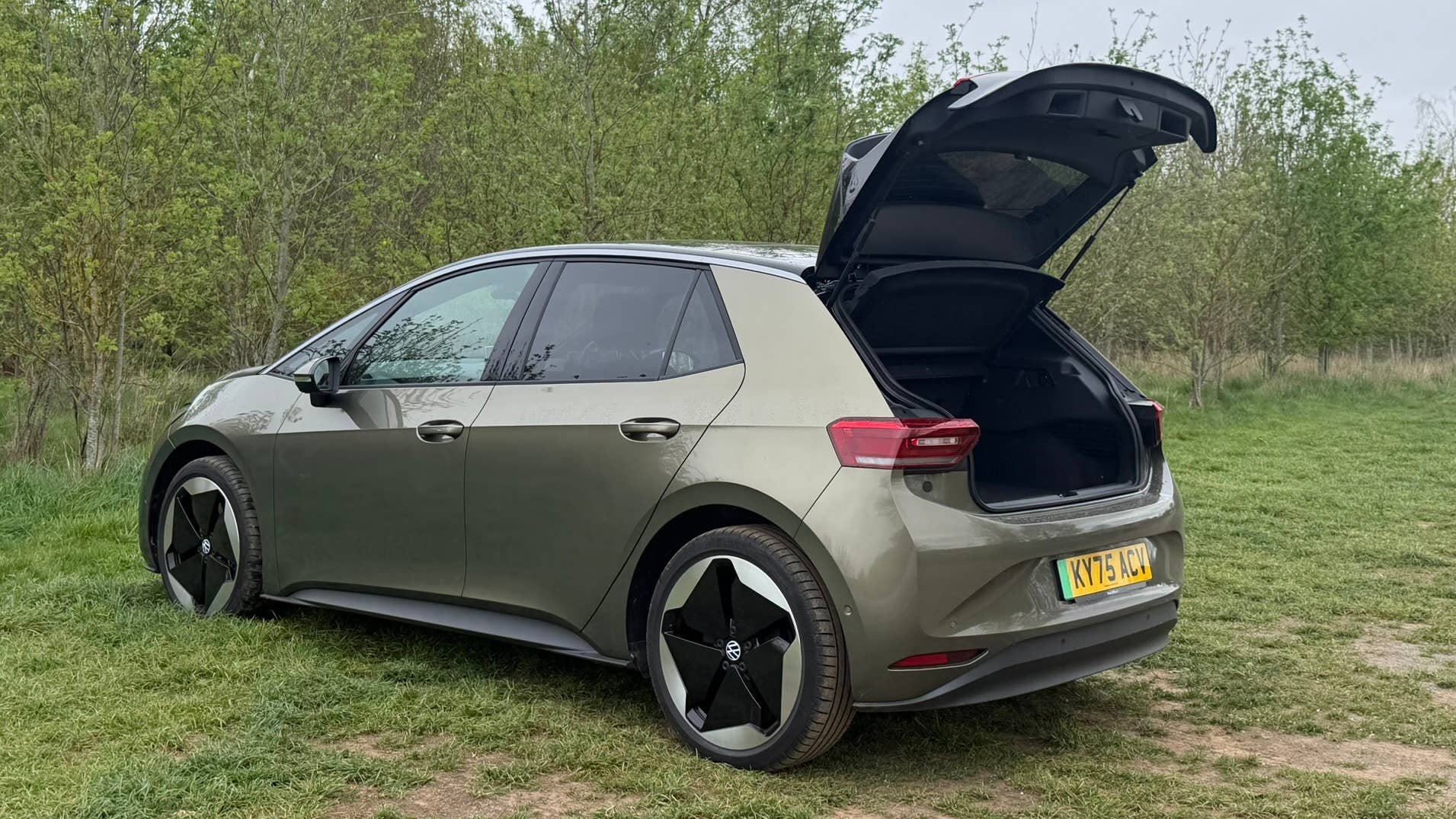
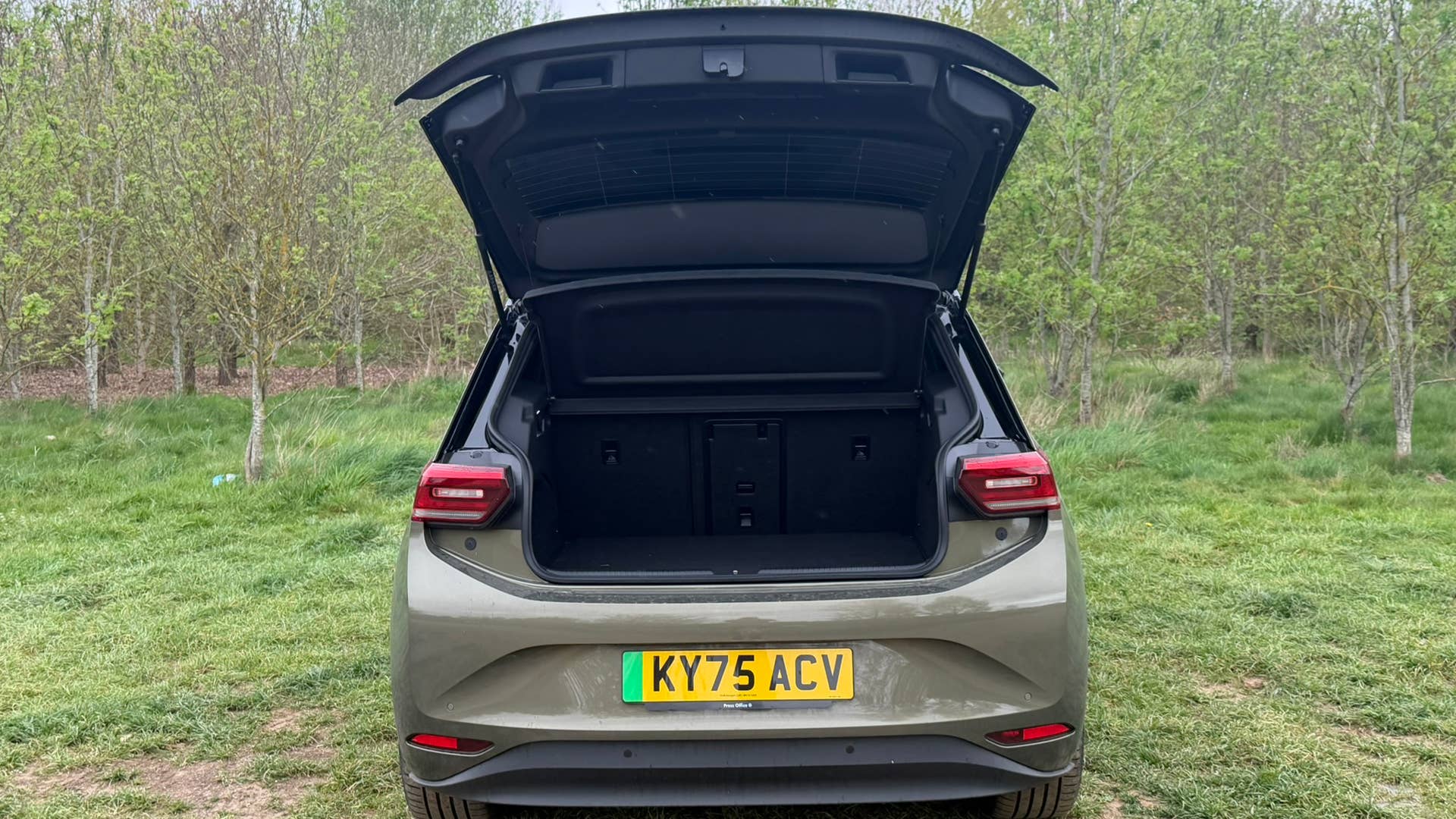
Boot space is 385 liters, expanding to 1,267 with the rear seats folded. Enough for everyday life without needing to plan around it. The optional variable luggage floor is worth specifying for the added practicality.
Adam Lynton / Autoblog
Adam Lynton / Autoblog
Adam Lynton / Autoblog
Infotainment And Controls: Better Than Expected, Still Not Good Enough
I expected the controls to irritate me more than they did. Recent Volkswagens have earned criticism for their touchscreen-heavy interiors, and some of that criticism has been fair. VW went through a period of confusing fewer physical buttons with better usability.
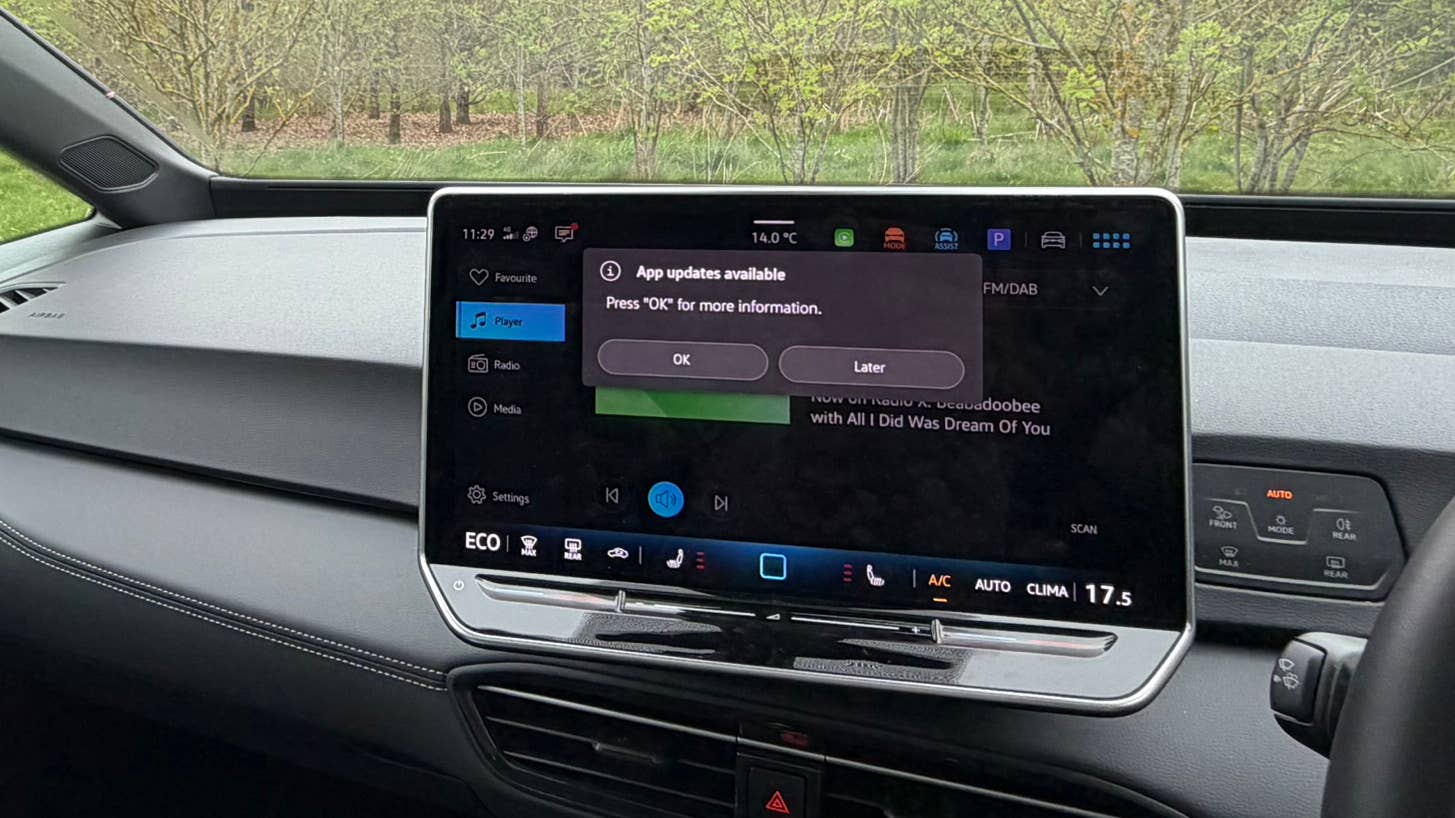
Over a week, the ID.3 did not drive me mad. Apple CarPlay worked smoothly, the screen responded well, and I never missed a turning because I was buried in a menu trying to do something basic. Normal infotainment things were performed with minimal fuss.
But the climate controls are still a problem. Changing temperature or fan speed should require no thought in a daily-use car. In the ID.3, it still relies too heavily on touch-sensitive inputs. Not unusable, but slower and less intuitive than a knob. There is no design credit for making something look cleaner if it works less naturally.
This should be the company that understands this better than anyone. You got into a Golf, adjusted everything once, and never thought about it again. The ID.3 looks simple, but some of that simplicity is cosmetic. Functionally, it still asks for more attention than it should. And because the rest of the car is so settled and easygoing, the moment you want a bit more fan speed, the contrast is jarring. Nobody missed bad buttons. Everyone misses good ones.
Adam Lynton / Autoblog
Adam Lynton / Autoblog
Adam Lynton / Autoblog
Performance: Quick Enough, And Occasionally Fun
204 hp and 229 lb-ft of torque is plenty for what this car is. The 8.2-second 0–62 mph time does not sound exciting in a world where EVs have recalibrated everyone’s expectations toward drag-strip numbers, but in daily use, I never wanted more.
Around town it feels sharp because the response is immediate. On motorway slip roads there is enough shove. On country lanes it is not a hot hatch, but it can be fun — not visceral in the way a Golf GTI is, and not emotionally engaging in the same way, but not dull either.
The rear-wheel-drive layout helps more subtly than dramatically. The motor is at the back, the battery sits low, and the front wheels are left purely to steer. You do not consciously register it as rear-wheel drive but the ID.3 feels neat, tidy, and easy to place. It avoids the tugging, scrabbling sensation some front-drive EVs produce when instant torque meets a wet junction. Competent most of the time, enjoyable some of the time, which is the correct balance for this kind of car.
Adam Lynton / Autoblog
Adam Lynton / Autoblog
Adam Lynton / Autoblog
Adam Lynton / Autoblog
Ride And Refinement: Big Wheels, Modest Penalty
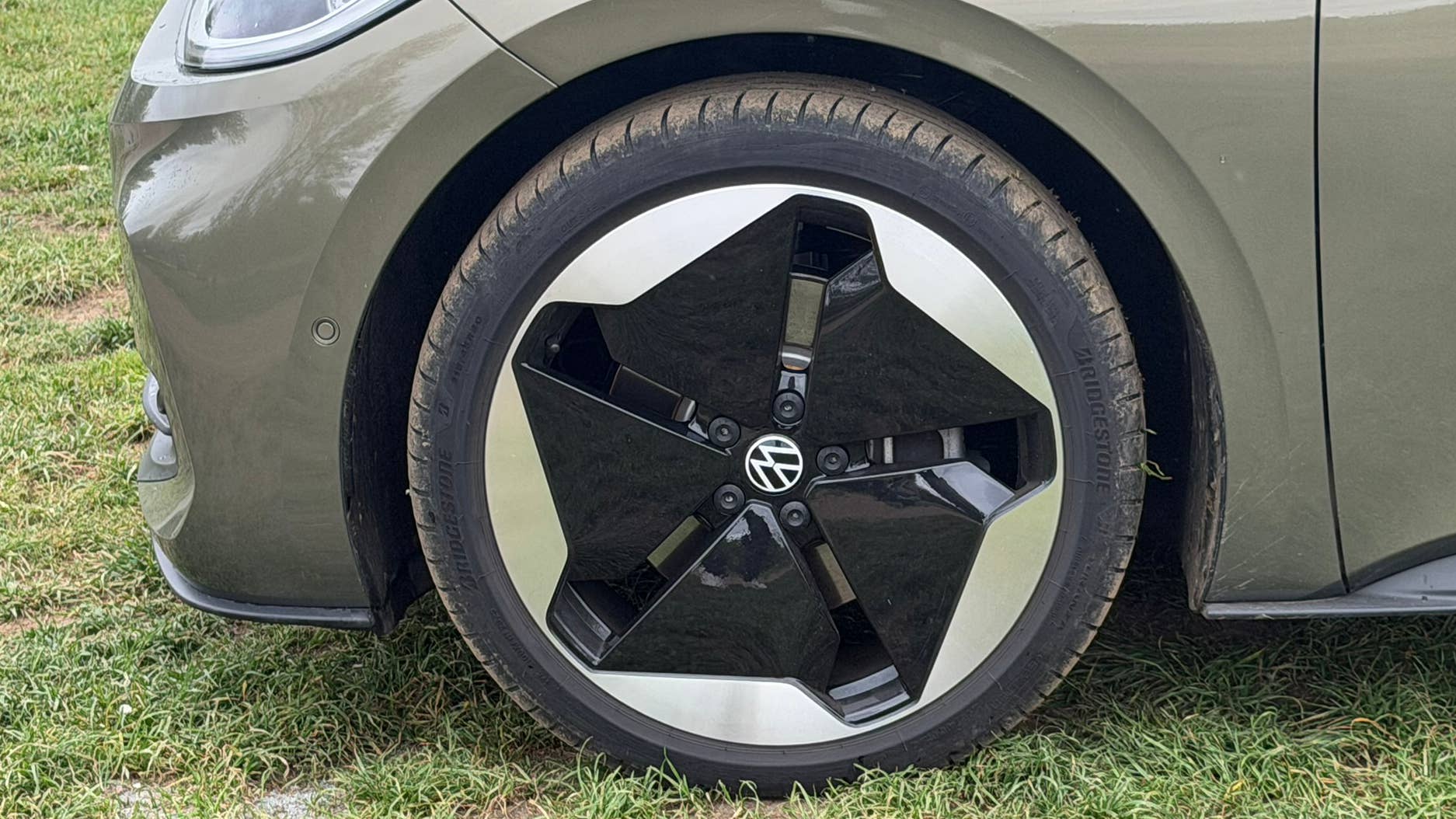
The ride was better than expected. Twenty-inch Sanya alloys usually signal unnecessary punishment; big wheels usually make small cars look better and ride worse, but in the ID.3 this wasn’t acutely felt.
Over town roads, speed bumps, motorway expansion joints, rougher country lanes, and the usual pothole lottery that passes for road maintenance in Britain, the ride held up. It could feel slightly busy on broken surfaces, but never uncomfortable.
That is more impressive when you consider the unladen weight: 1,957 kg is a substantial number for something this compact. In normal driving, it barely showed. No clumsiness in corners, no thumping over bumps, no excessive dive under braking.
Motorway refinement was strong. The car was quiet at speed, tire noise was well contained, and the overall experience was calm. The ID.3 does not try to entertain you constantly; it settles down and gets on with the journey, which is what an everyday car should do.
Adam Lynton / Autoblog
Adam Lynton / Autoblog
Adam Lynton / Autoblog
Adam Lynton / Autoblog
Range And Charging: No Anxiety, One Nagging Complaint
The 79-kWh battery is the one I would want. With more than 300 miles showing on a full charge, range simply was not a source of stress. Over a week and 350 miles, I charged once on a public rapid charger and used an overnight three-pin top-up the rest of the time. Both were straightforward.
The one complaint I have now that I’ve lived with a few EVs, is something I would urge all carmakers to consider: stop displaying range as a live countdown.
Gas cars show a fuel gauge. You see roughly where you are and act accordingly. Watching a specific number fall mile by mile creates a low-grade psychological pressure that has nothing to do with actual range anxiety. The ID.3 had enough battery that I was never genuinely concerned, yet the display kept nudging me toward concern anyway. Range shown in broad phases — 300-plus, 250-plus, 200-plus — until precision actually matters would be a meaningful improvement. If someone could fix this, EV owners everywhere would be in your debt.
Adam Lynton / Autoblog
Price And Value: Careful With The Options
At £39,940 before options, the Pro S Match is already a considered purchase. At £45,295 (around $60k) as tested, it is into serious money. The options are defensible individually — the IQ.DRIVE assistance package, heat pump, panoramic roof, metallic paint — but they accumulate fast, and the result is a compact hatchback priced alongside larger or more premium alternatives.
The car is good enough to justify a premium over bargain EVs. It is not quite special enough inside to make £45,000 feel painless. However, if you specify sensibly, there is a strong case here. Let the options list run away, and the value proposition gets harder to defend.
Adam Lynton / Autoblog
Verdict: The Sensible EV America Would Ignore
After a week and 350 miles, the ID.3 made more sense to me than I expected. It is not exciting the way a GTI is exciting, and it does not have the emotional pull of Volkswagen’s best analogue hatchbacks. It is too composed, too digital, and too focused on calm efficiency to be labeled as exciting.
But it is a very good everyday EV: compact outside, spacious inside, comfortable over distance, quiet on the motorway, easy to charge, and quick enough in practice. The 79-kWh battery gives it the range to behave like an ordinary car rather than an exercise in planning.
The ID.3 is precisely the kind of vehicle Americans claim to want when discussing EVs in the abstract — efficient, compact, practical, honest about its footprint. Then the same buyer walks into a showroom and chooses a crossover. That is why the ID.4 exists, and why the ID.3 never came to America. VW built what the market wanted. This is the car for people who wanted something different
It is not revolutionary. But it is normal in the way Volkswagens used to be normal — useful, easy to live with, and better thought out than it first appears. The electric Volkswagen that best remembers why small Volkswagens used to matter.
Adam Lynton / Autoblog
About the author

Adam Lynton
Co-Editor-in-Chief, Autoblog