
Key Points
- The redesigned 2026 Hyundai Palisade Hybrid combines near-luxury styling, extensive technology, and family-friendly practicality.
- Its 329-horsepower powertrain delivers smooth performance and up to 29 mpg combined with all-wheel drive.
- Despite tight third-row space and fussy seat controls, the Calligraphy offers exceptional value at approximately $60,625.
Telluride Who?
Aside from the fact that Hyundai couldn’t decide what the front fascia of the first-generation Palisade should look like, there was nothing wrong with the model. Hugely successful (not as successful as its Kia Telluride cousin) during its freshman effort, the Palisade was roomy, powerful, luxurious, and family friendly. For the first time, a Hyundai SUV could be parked next to a Lexus or a BMW and not look out of place.
Amos Kwon
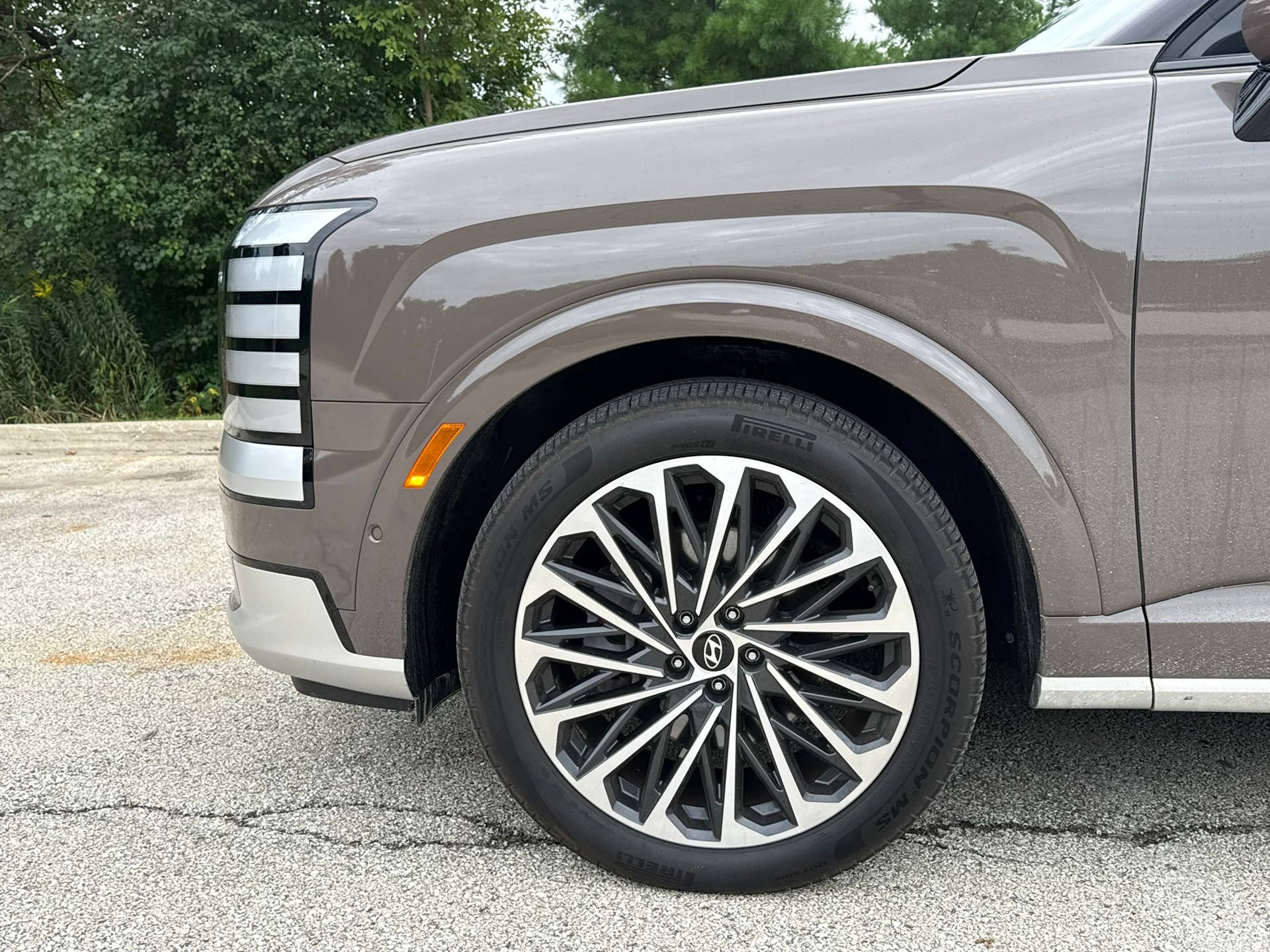
The standard feature highlights on my test vehicle included 21″ alloy wheels, dual pane sunoof, LED headlights/taillights/DRLs, power folding and autodimming side mirrors, adaptive cruise control, surround view monitor, hands-free smart power liftgate with auto-open, Remote Smart Park Assist, Nappa leather trimmed seating surfaces, heated/ventilated front seats, Ergo Motion and memory driver’s seat, 1st and 2nd row relaxation seats, 2nd row heated/ventilated power Captain’s Chairs, 2nd row manual window shades, power folding/sliding 3rd row seats with heated outboard positions, heated steering wheel, 3-zone automatic climate control, head-up display, 12.3″ instrument cluster, 12.3″ infotainment with navigartion, Bose Premium Audio, wireless Apple CarPlay/Android Auto, wireless phone charger, Digital Key, front and rear dashcam.
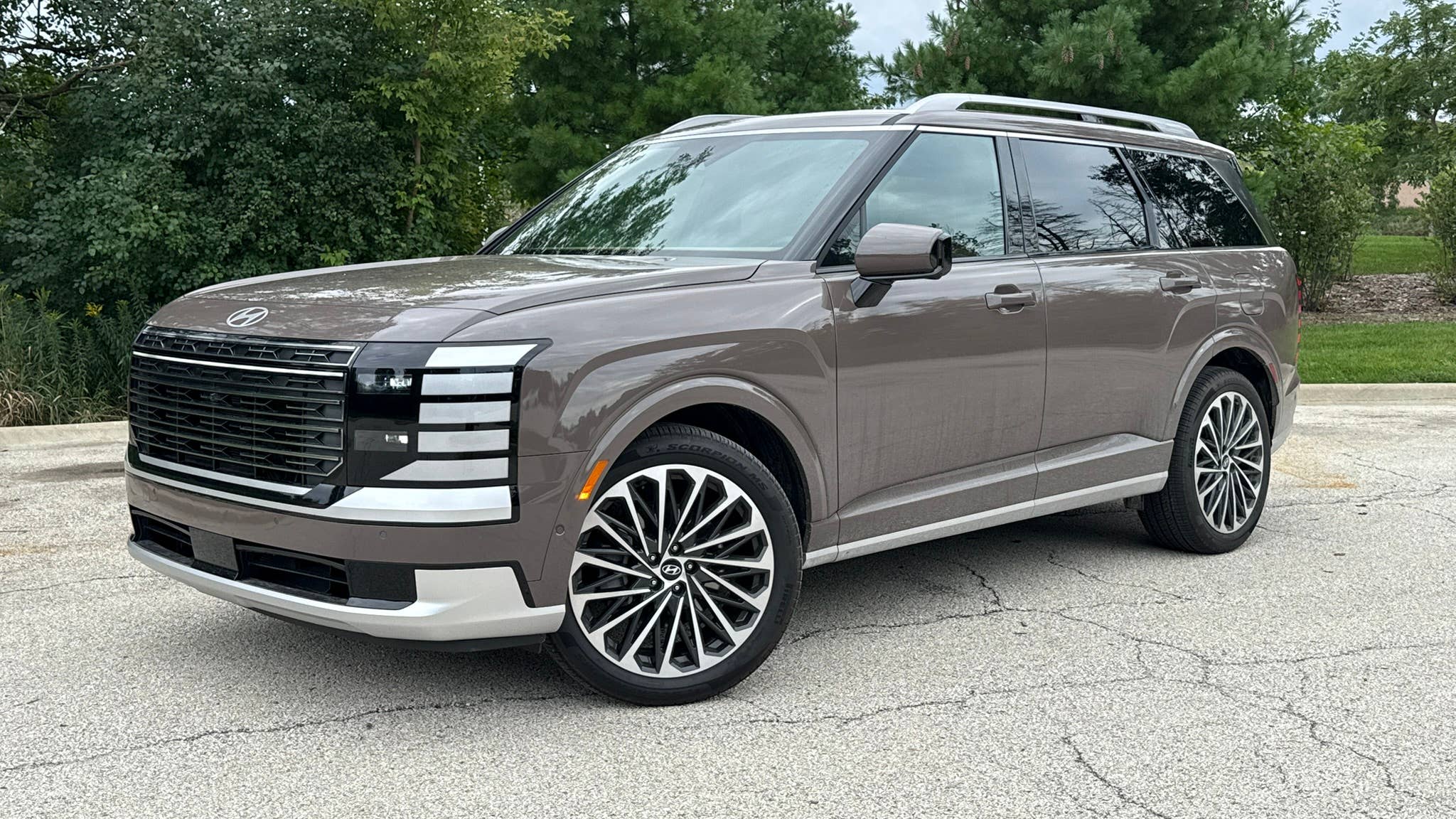
My test vehicle was a 2026 Palisade Calligraphy AWD with a base price of $58,780. The total price with options (only carpeted floor mats for $245) and the $1,600 destination feee came to $60,625. I got to put it through the paces and found that the three-row flagship nicely mates hybrid efficiency with near-luxury style, technology, and presence without abandoning thos all-important family duties.
Exterior & Interior Styling – 9.75/10
Amos Kwon
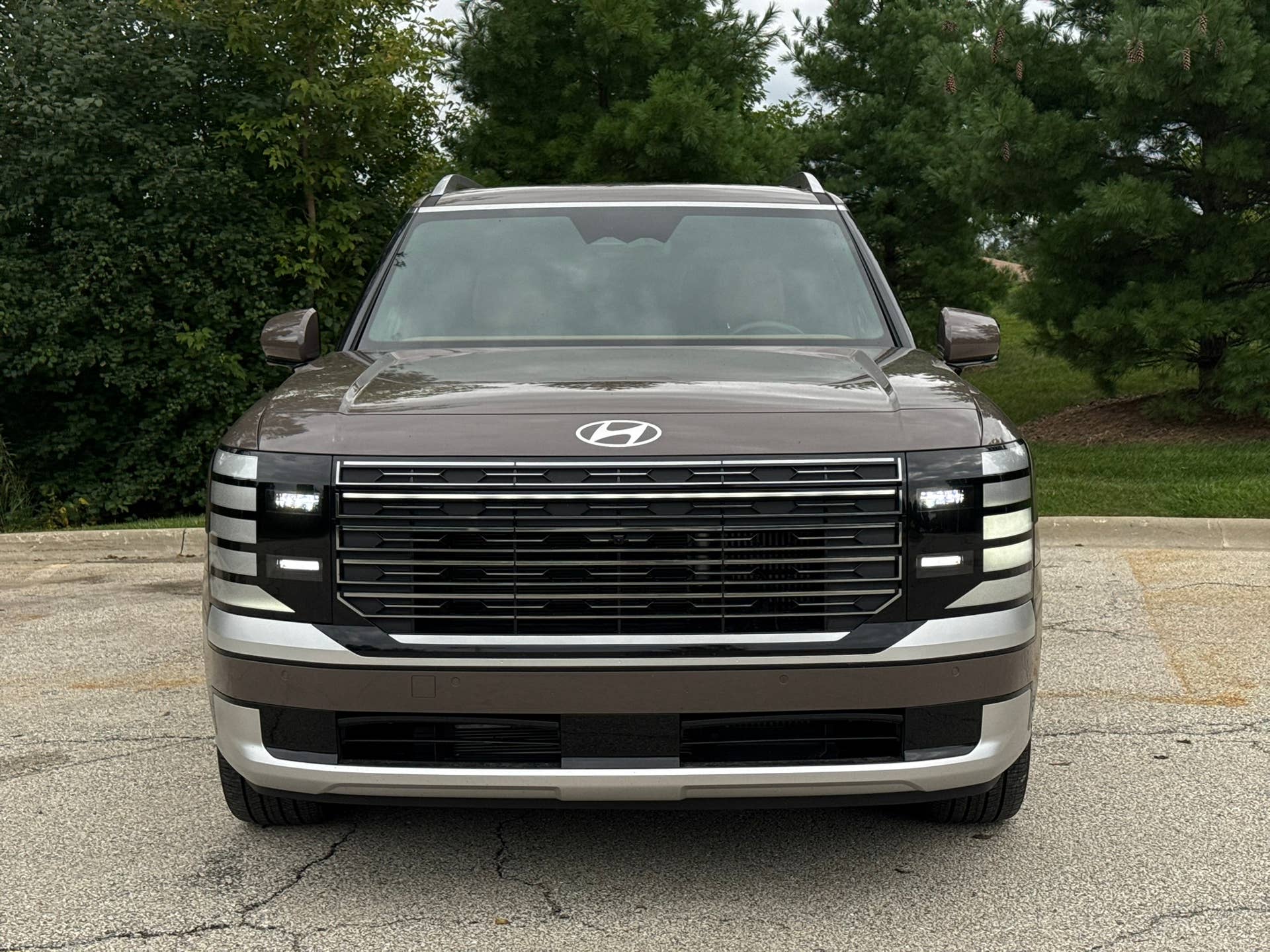
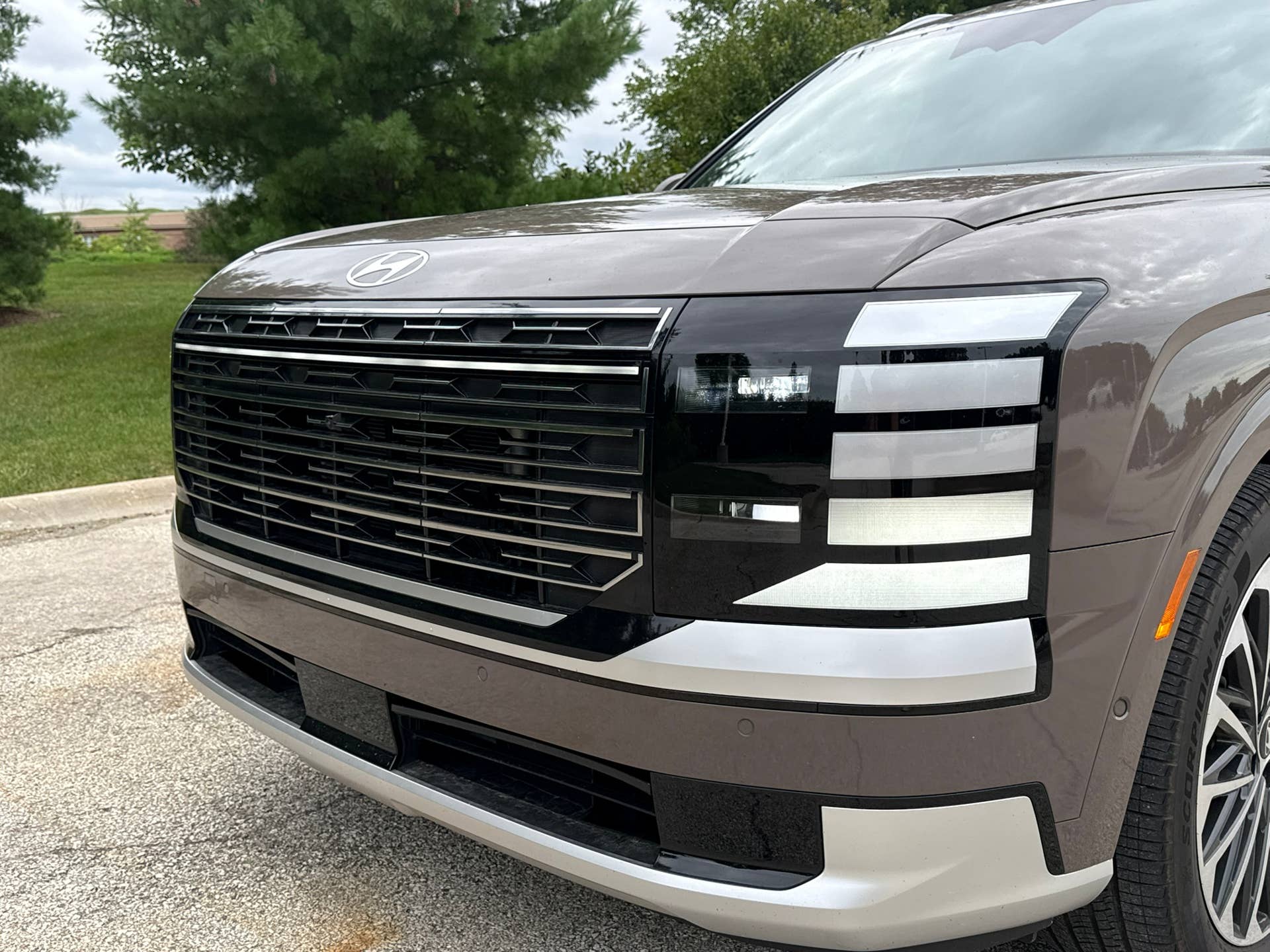
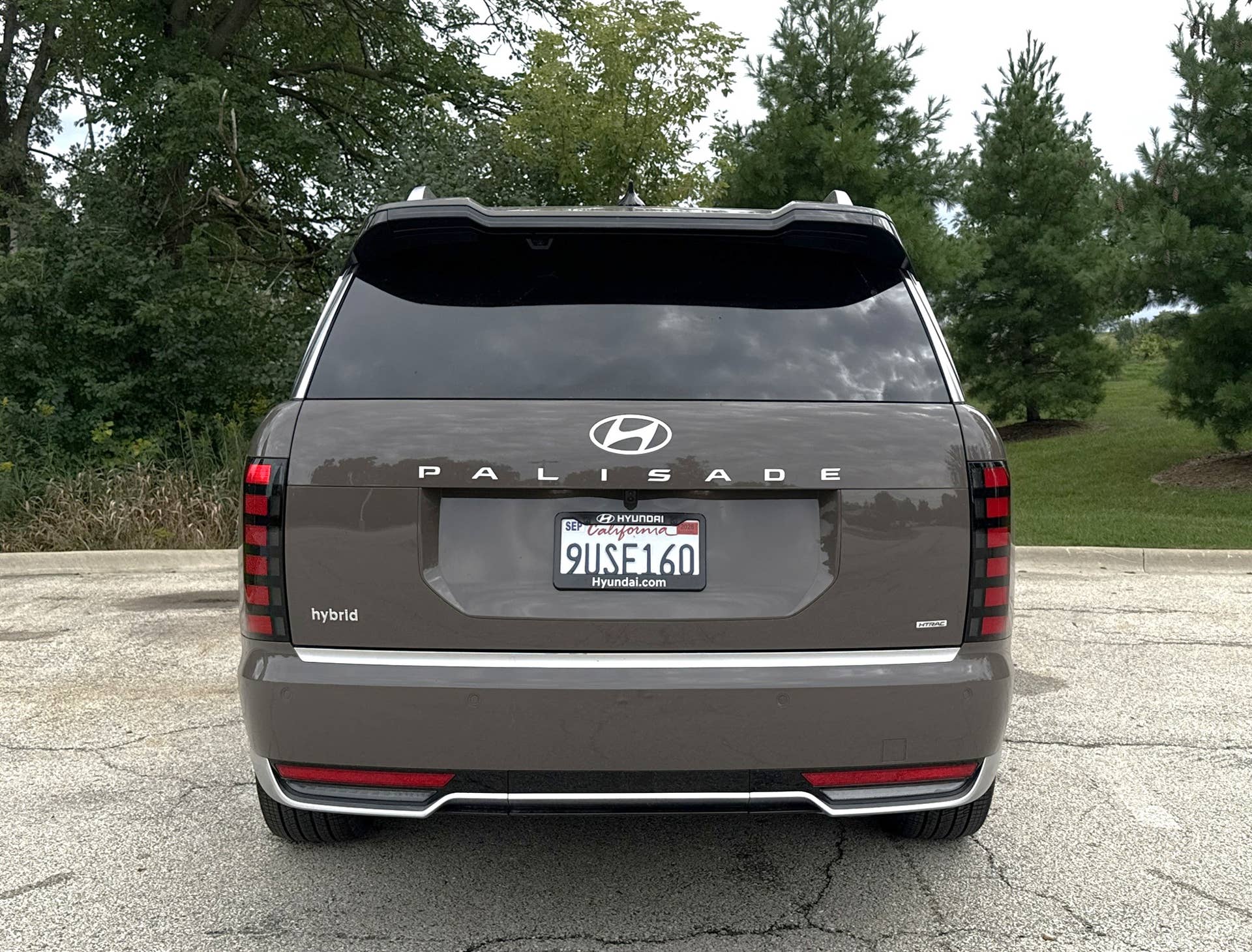
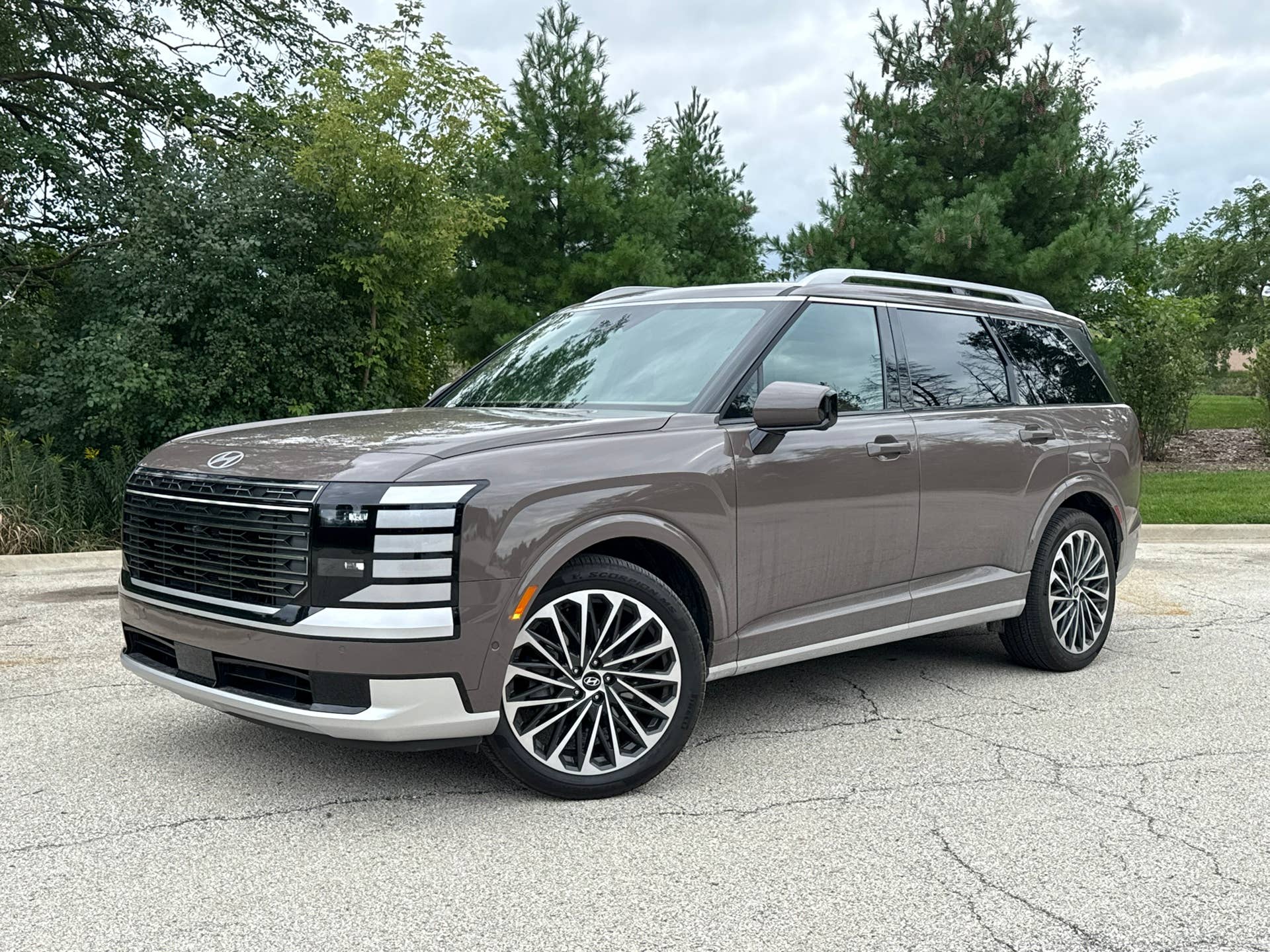
The 2nd-generation Palisade is a full redesign. It has some minor whiffs of the old one (stacked DRLs and taillights) and big glass, but it doesn’t look similary to the old one. To call it a Korean Range Rover isn’t an insult to either brand. In top Calligrapy trim, everything is dialed up to the nines, and it cements itself into near-luxury territory even more than the last Palisade. The heavily boxy design has a lot of rectangles in the styling, including the power meter style DRLs and taillights. Kudos to Hyundai for giving the Palisade daring flair to help set it apart from the Telluride.

Amos Kwon
Amos Kwon
Amos Kwon

Amos Kwon
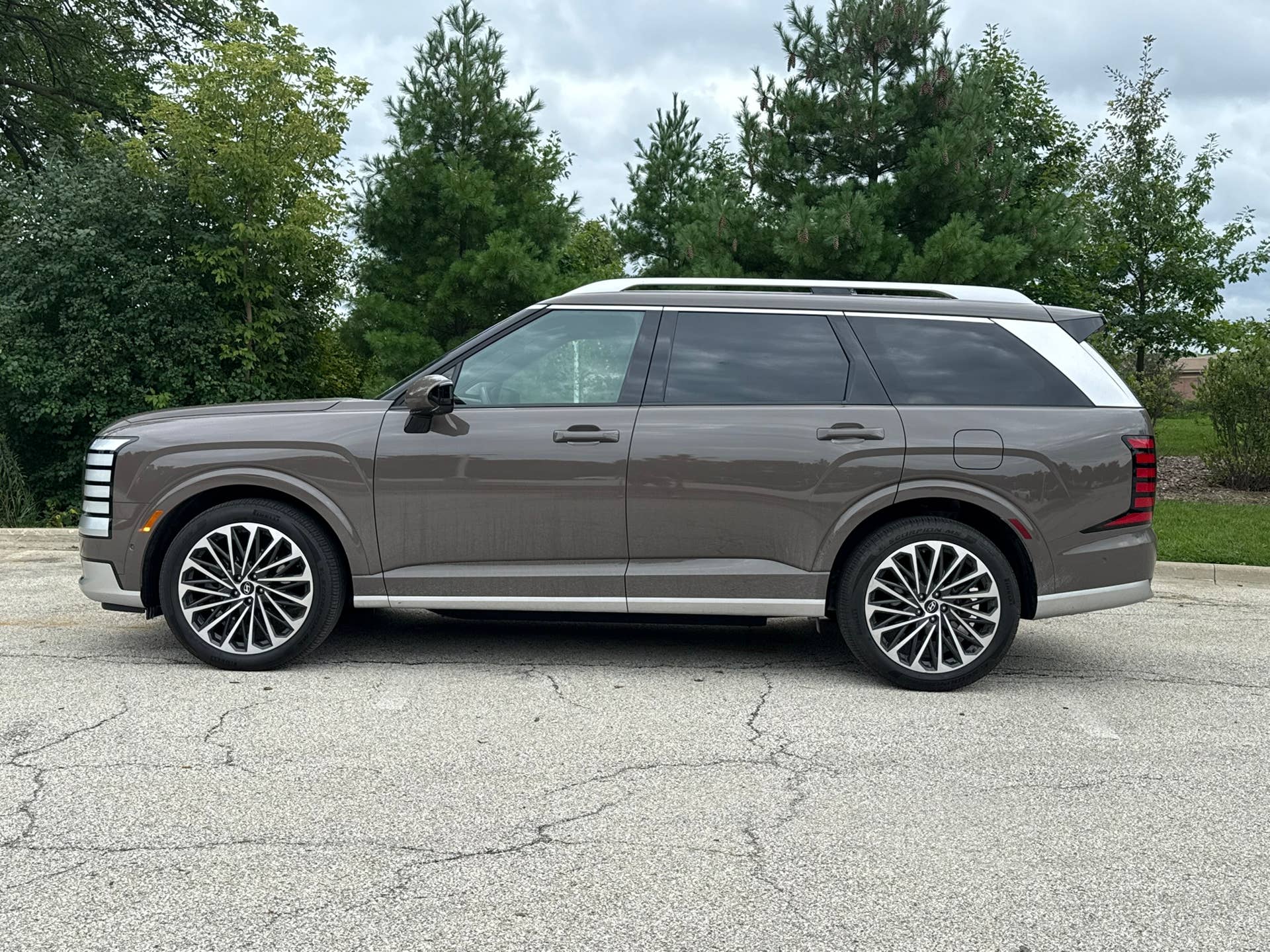
The body avoids too much contouring and sculpting, except for the large fender creases and the lower portion of the doors, just above the rocker panels. The D-pillar is steeply raked and colored in a metallic silver, punctuated by a prominent roof spoiler. The silver roof rails elegantly taper into the D-pillar, a nice touch that adds to the Palisade’s cohesive design. The large 21″ turbine wheels on the Calligraphy trim are stunning and help round out the upper crusty look.
Amos Kwon
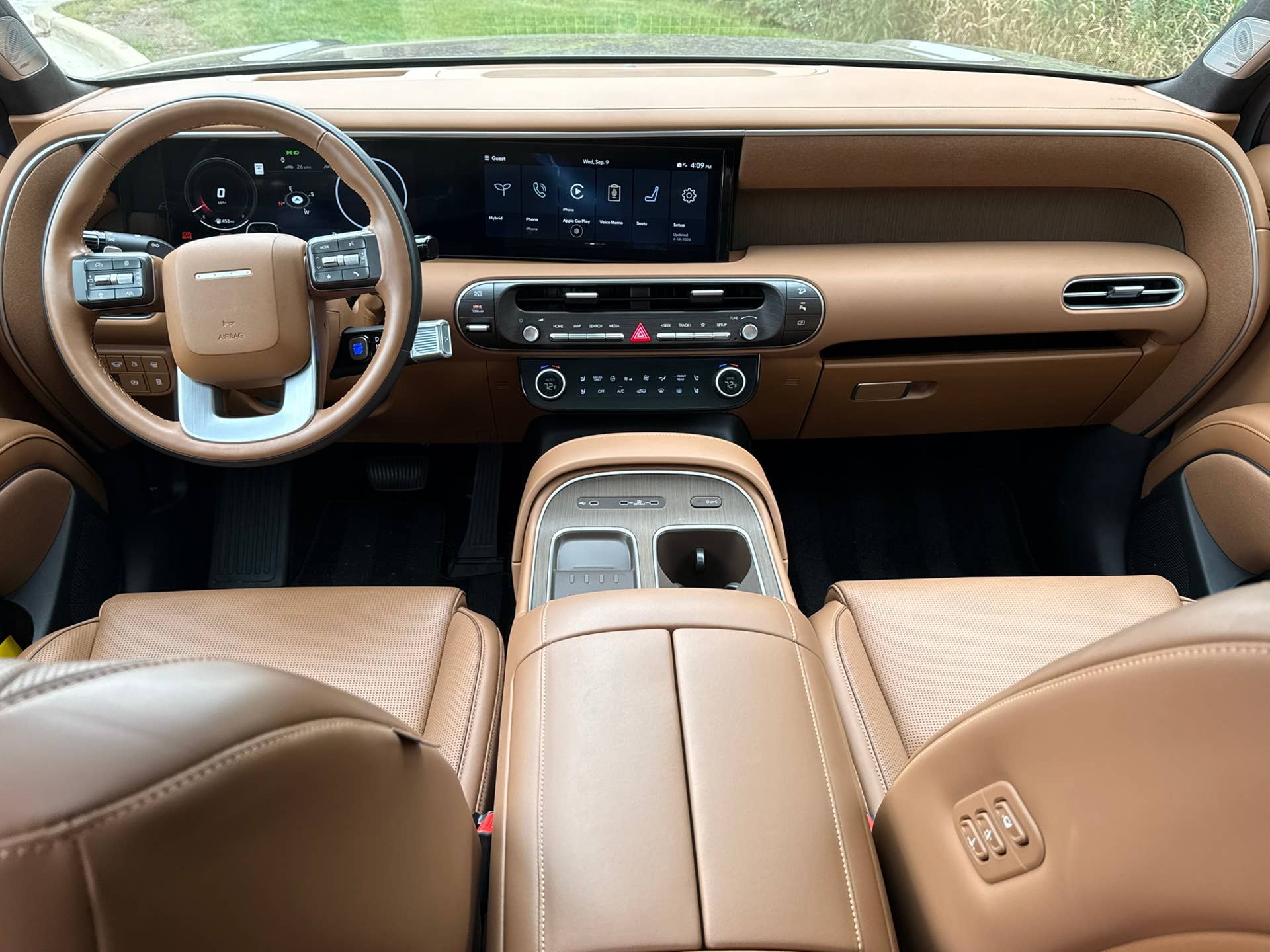
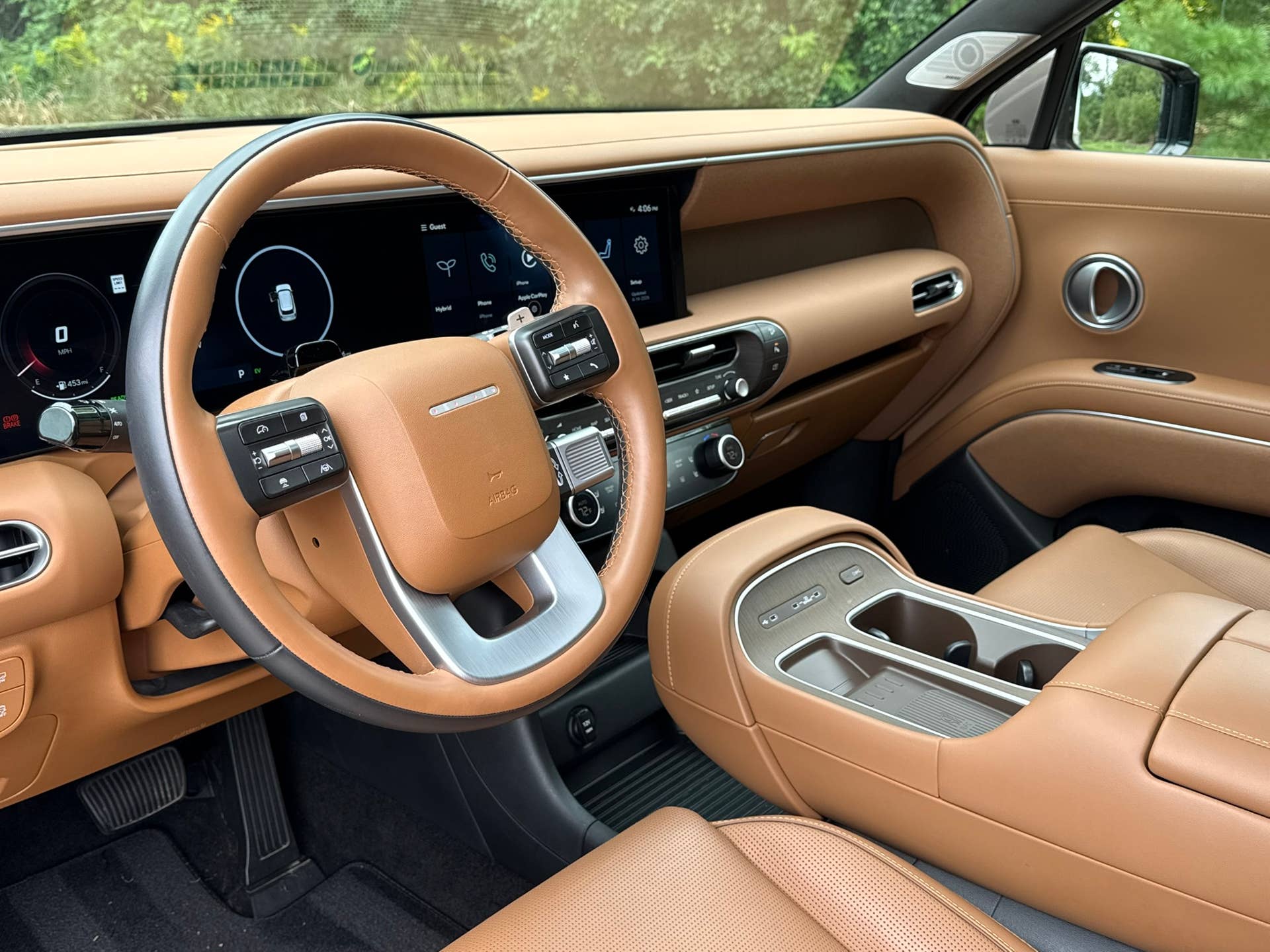
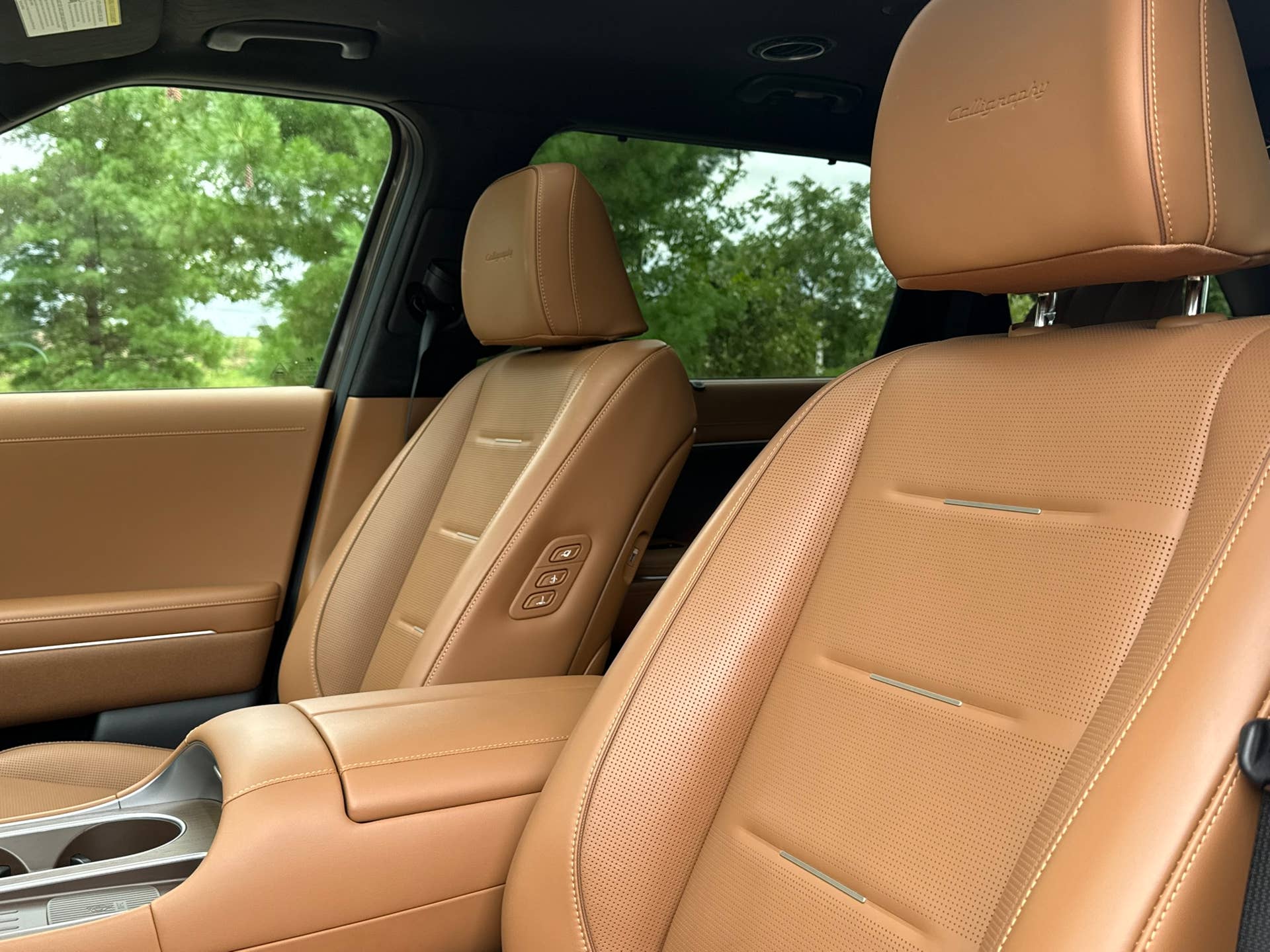
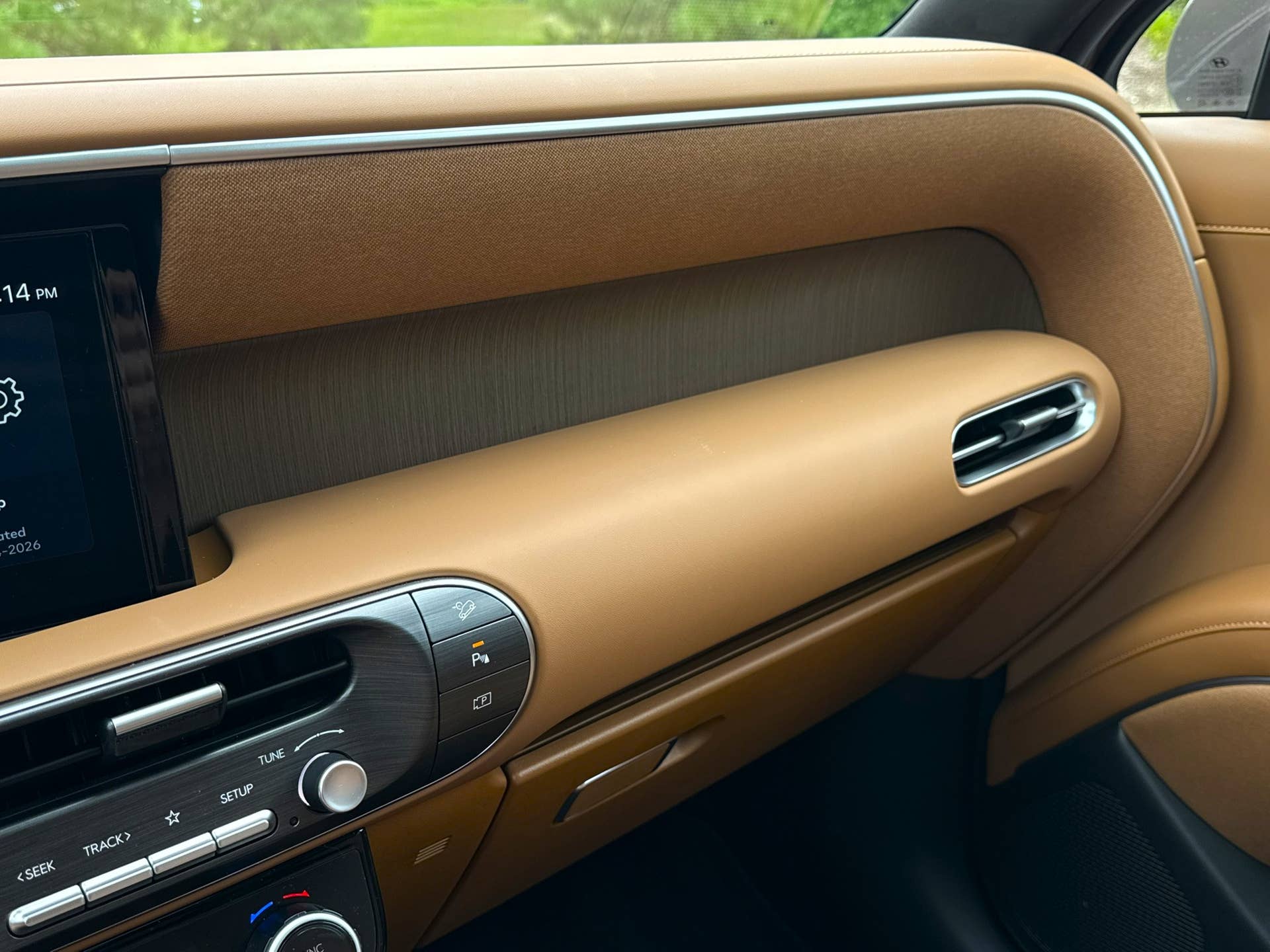
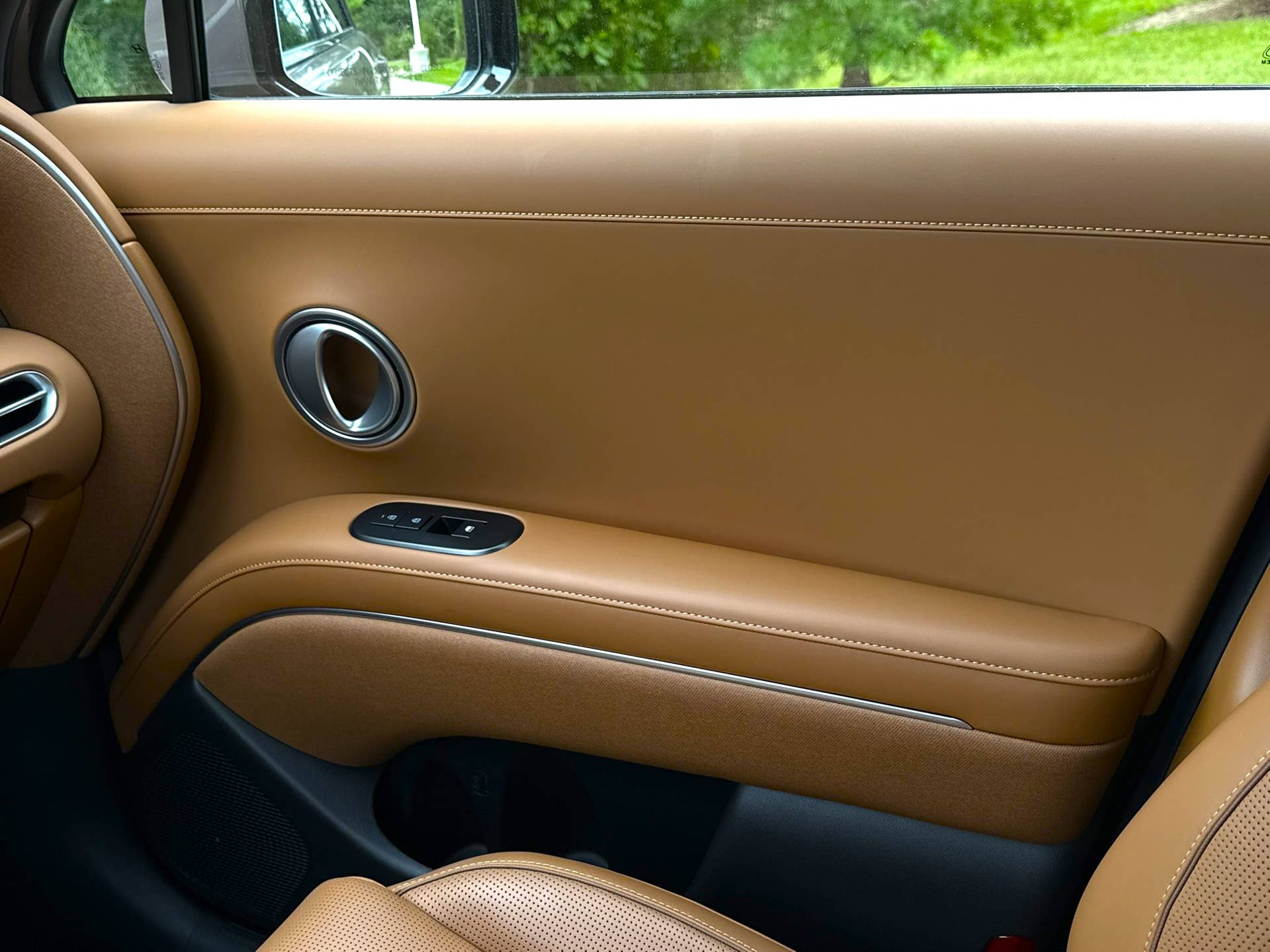
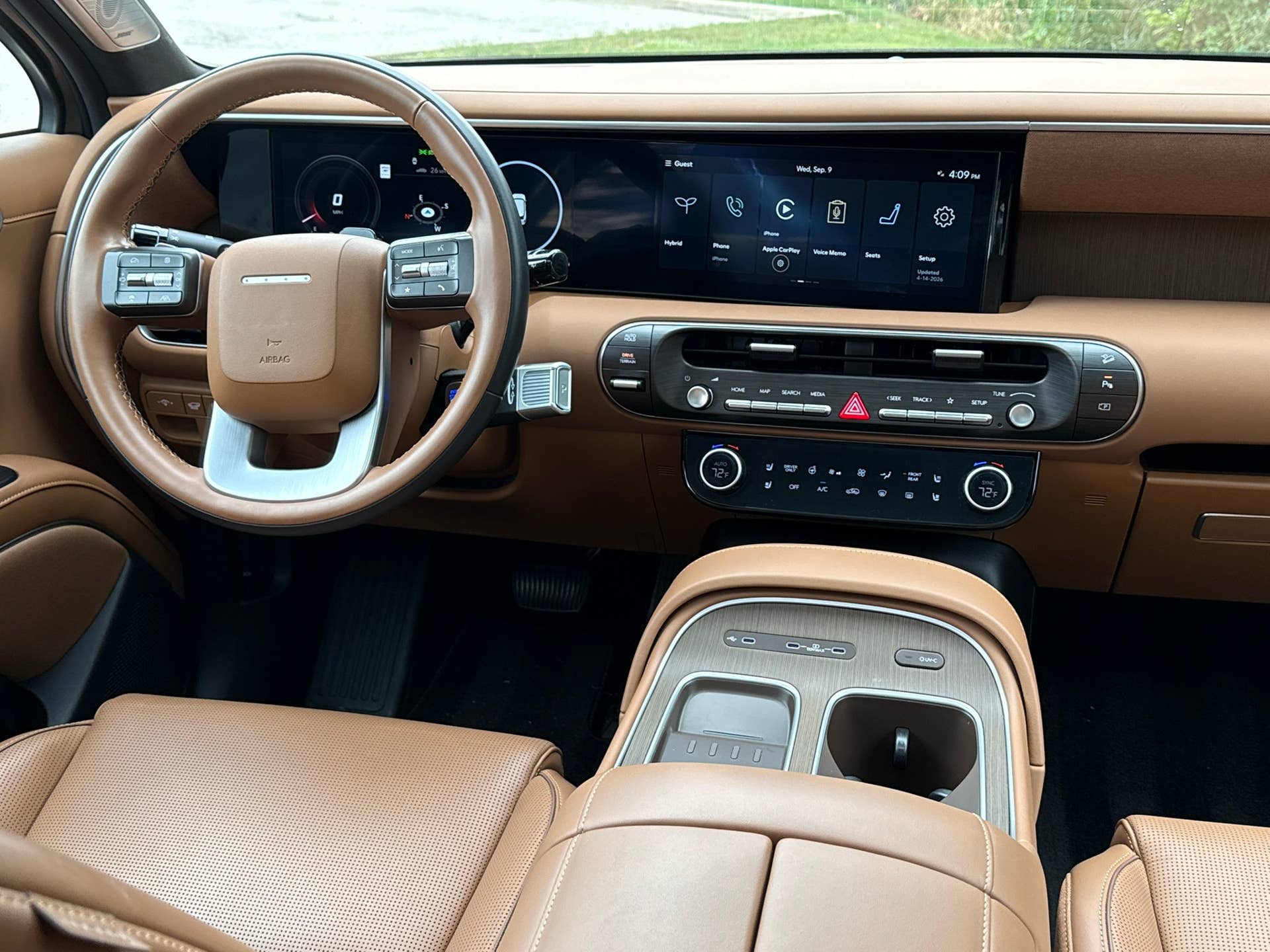
As good as the exterior is, it’s the Palisade’s cabin that earns the biggest points from us. There isn’t an interior made today that looks like this. It’s as if every piece, every feature, every material, was meticuloulsy chosen and crafted. Everything looks high-end and feels great to the touch: the rounded shapes along the dash, the pill-shaped vents and center dash controls, the single hued door cards with round door handles wtih surrounding contours, the capsule-shaped center console. It’s a stunning execution of an SUV interior, and nobody does it like this. It’s elevated in the freshest of ways, making BMW, Land Rover, Mercedes, and even Volvo seem less design-forward.
Amos Kwon
Amos Kwon
Amos Kwon
Amos Kwon
The vast expanses of brown are more of a British tan or cognac, and the coloring is beautiful. I found the inside of the doors to be one of the most stunning designs. You would think a solid color from top to bottom would be boring, but sheer simplicity (rather than just minimalism) takes it to a new level design-wise. It’s one of the most impressive cabins at any price, and sets it apart from the Telluride with a truly distinct flavor.
Thinking about selling your car? Get an instant cash offer online now. Click here to get started.
Infotainment and Technology – 9.5/10
Amos Kwon
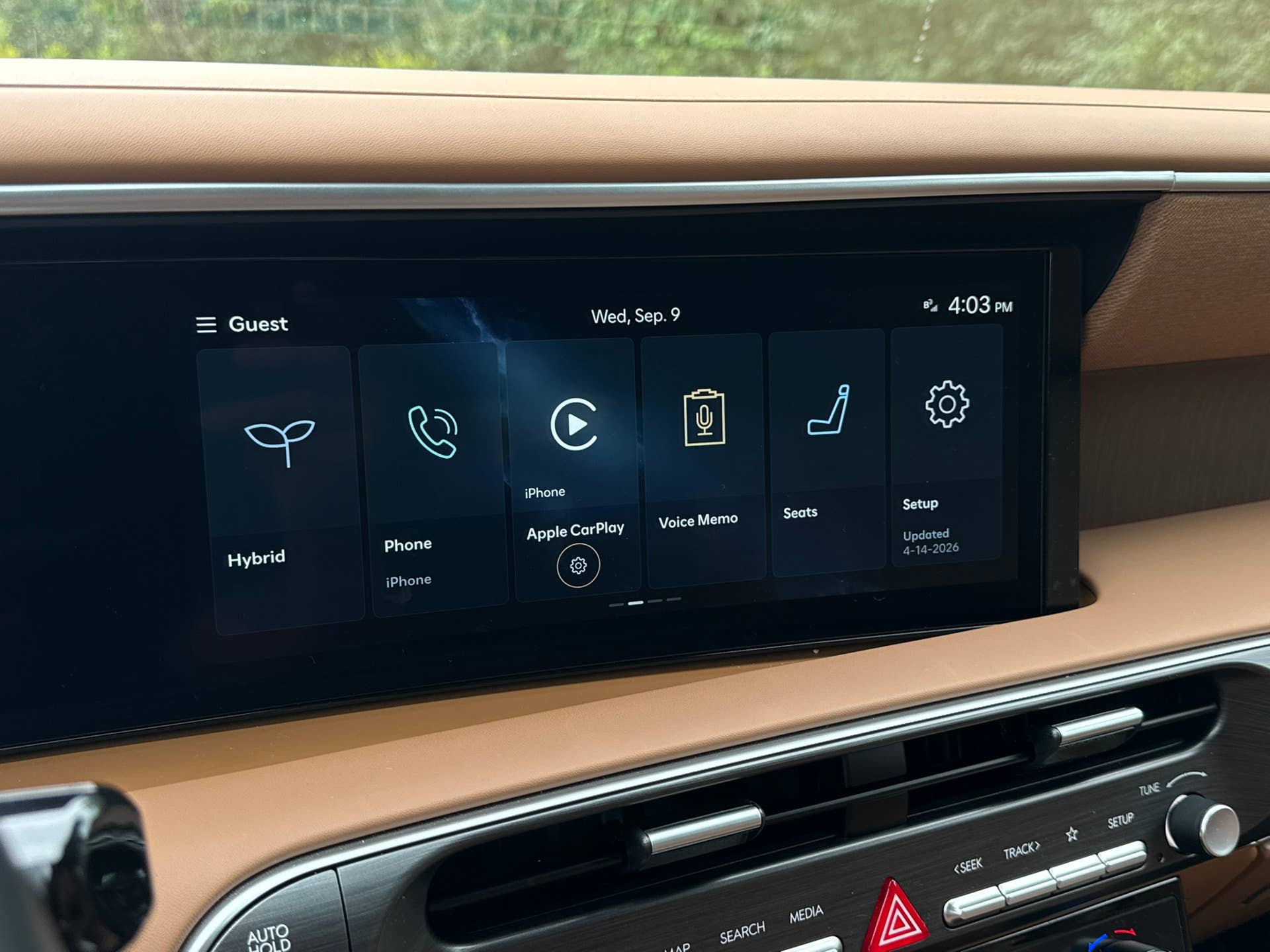
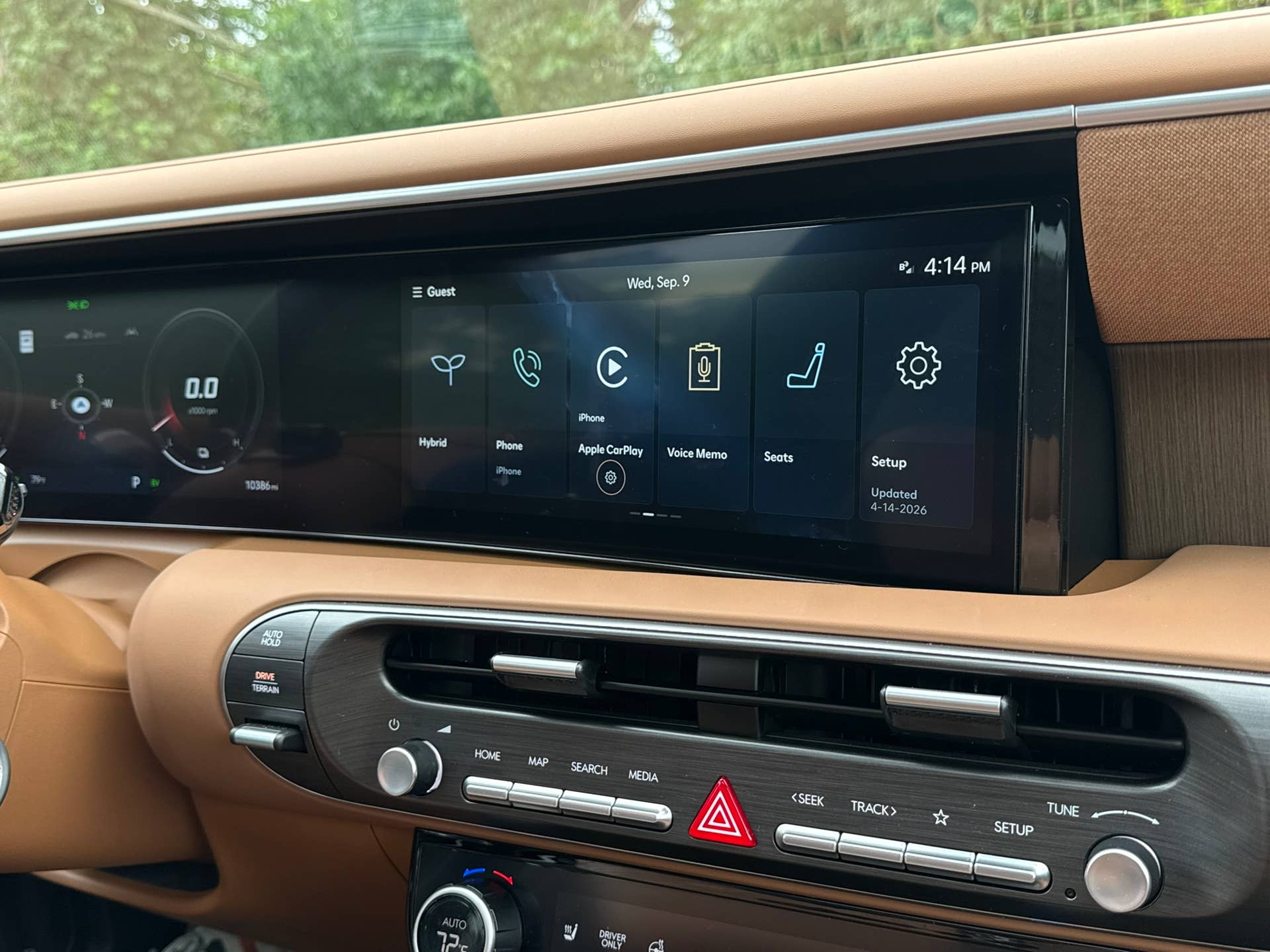
Hyundai’s interface is one of the best in the industry, not just for its graphics but also for its user-friendliness. The twin 12.3″ screens are housed in a single panoramic frame, but it’s the positioning that’s worth mentioning. Most of these types of systems, including those on other Hyundai models, sit atop the dash rather than being embedded within. The Palisade does the latter but in a fresh way. It’s sandwiched between the top and bottom layers of the dash, and the center infotainment screen is slightly canted toward the driver, making it easier to read and operate by the driver.
Amos Kwon
It also comes packed with features like Remote Smart Park Assist (allows you to move the car in and out of tight parking spaces before entering or after exiting), a surround view monitor, forward attention warning (alerts you departing vehicles in front of you at traffic lights if you’re distracted), a head-up display, a wireless smartphone charging deck, a digital rearview mirror (uses the rear camera that’s swappable with the standard mirror view), and a nifty UV-C button that activates a sterilizing feature for small items placed in the center armrest compartment when it’s closed.
Standard safety features include Forward Collision-Aveidance Assist, Lane Keeping Assist, Lane Following Assist, Rear Cross-Traffic Avoidance Assist, Blind-Spot View Monitor
Parking Distance Warning-Forward/Reverse & Side, Parking Collision-Avoidance Assist-Reverse, Rear Occupant Alert, and Highway Driving Assist.
Comfort, Space, and Usability – 8.75/10
Amos Kwon
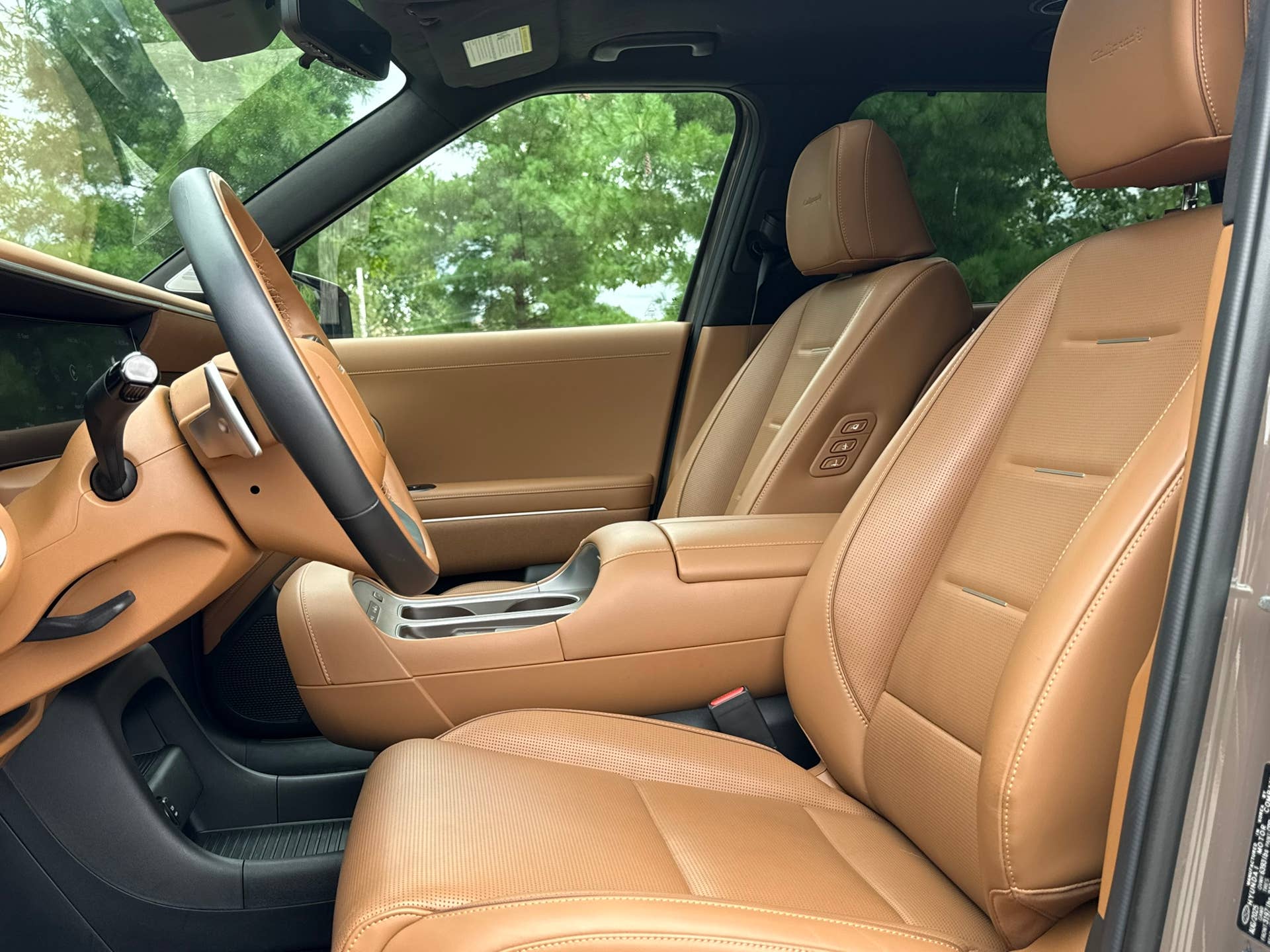
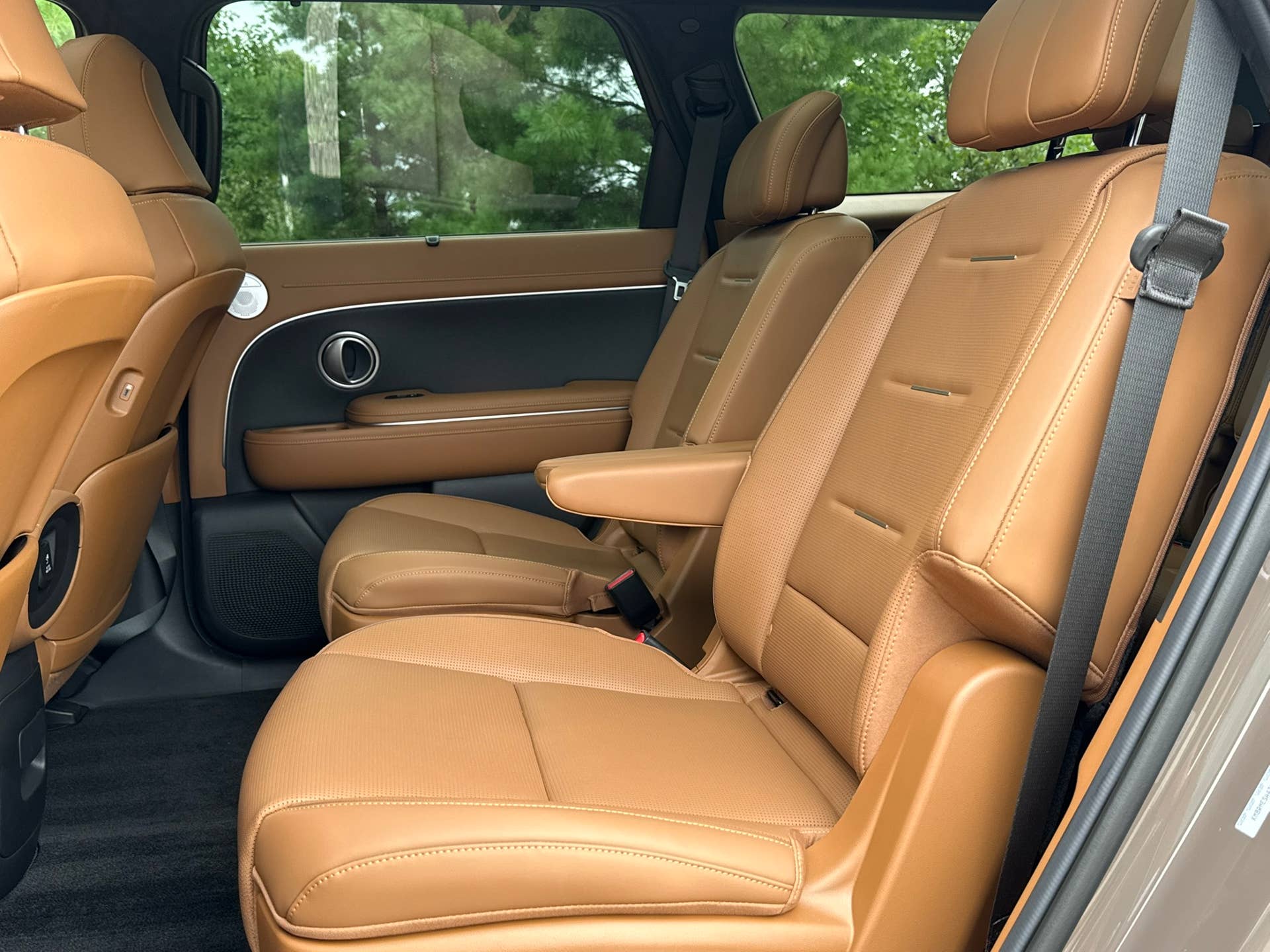
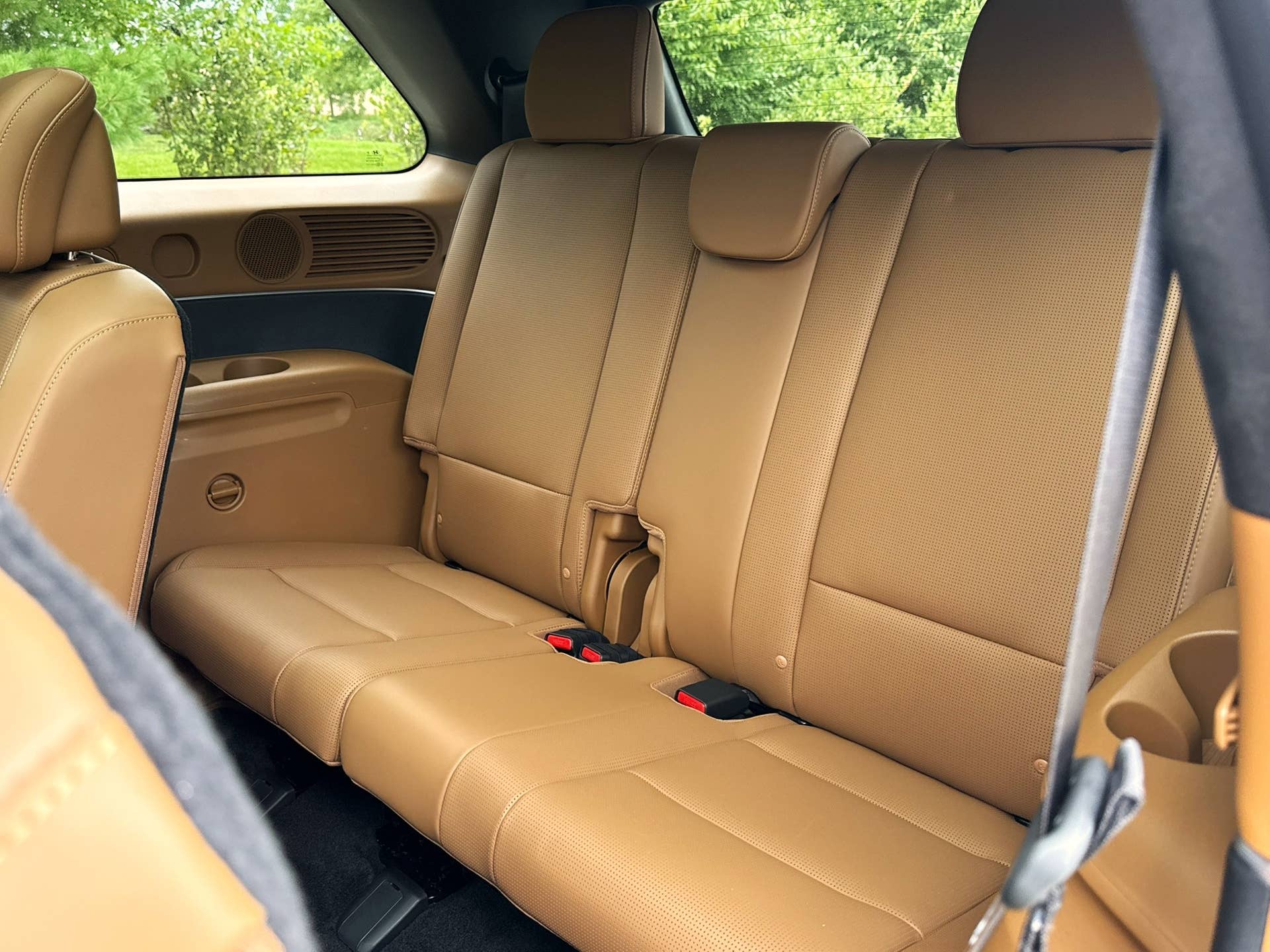
The new Palisade’s cabin improves on what was an already excellent interior, and it’s not just about the aesthetics. The first two rows are superb when it comes to comfort. The seat cushioning and bolstering nicely balanced, and the Nappa leather seating surfaces are high-grade. The driver’s seat uses ErgoMotion for ideal positioning, as well as massage functions. The first two rows are Relaxation seats that recline with leg extensions. The first two rows of seats provide heating and ventilation, and row three seats are heated (the latter of which are rarely found anywhere in the industry).
Amos Kwon
Amos Kwon
Amos Kwon
Amos Kwon
The new Palisde provides 43.0 inches of legroom in the second row and 32.1 inches in trow three, about half an inch more than the previous generation. The third row has power slide and recline, as well. Third row legroom and headroom aren’t ideal for tall occupants, but they’ll do for average sized adults. Unfortunately, there’s no room under the second row seats for the third-row occupant’s feet, so longer trips are out of the question.
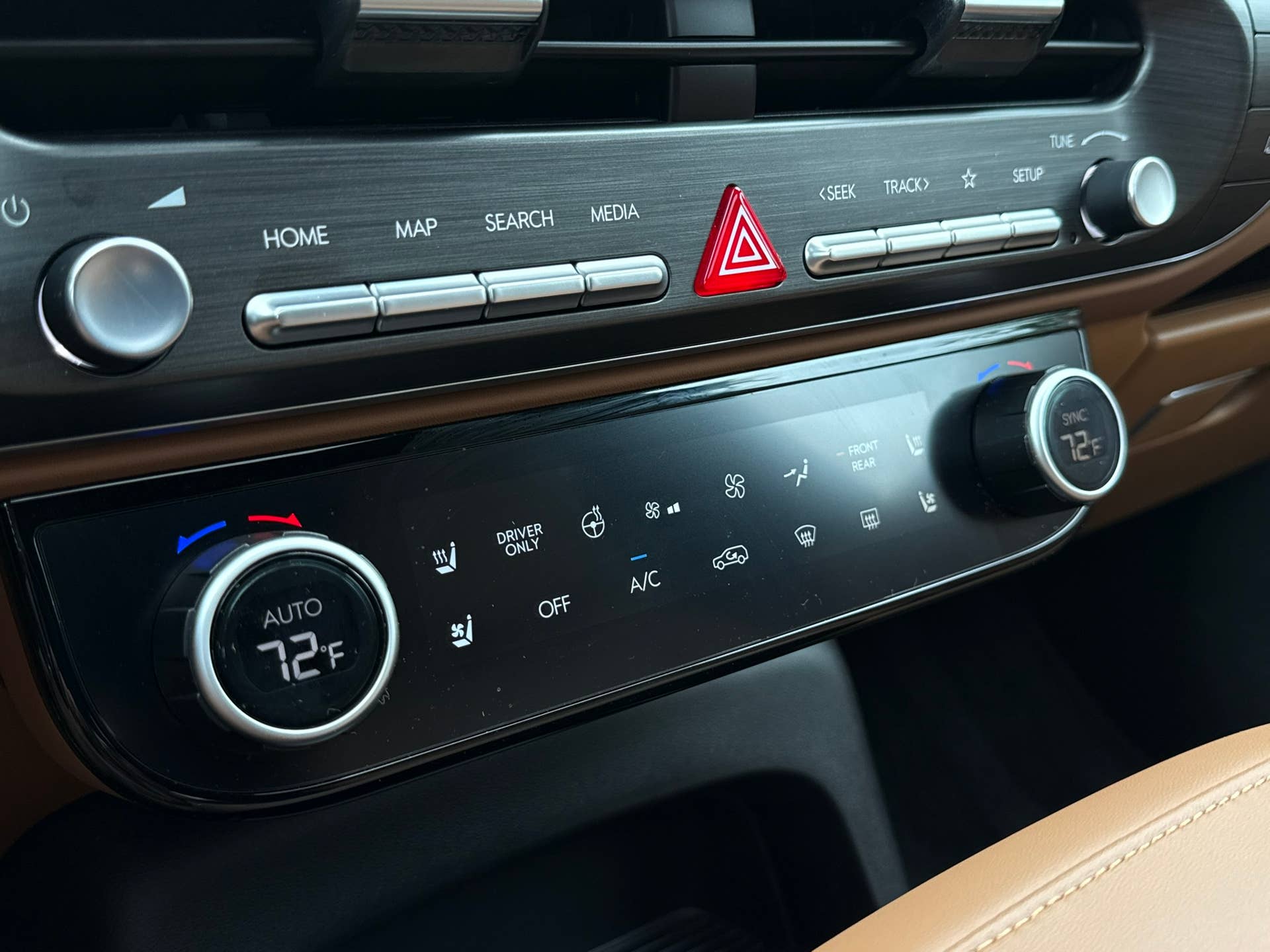
Hyundai did a masterful job of providing physical controls for the most frequently used functions like climate and audio. They’re cleanly laid out on the center stack, and they work well. Hyundai places them in clean lines for easy legibility, and even the touch controls on the climate panel are very good, placed between the big temp knobs with digital display.

Amos Kwon
Amos Kwon
Amos Kwon

Amos Kwon
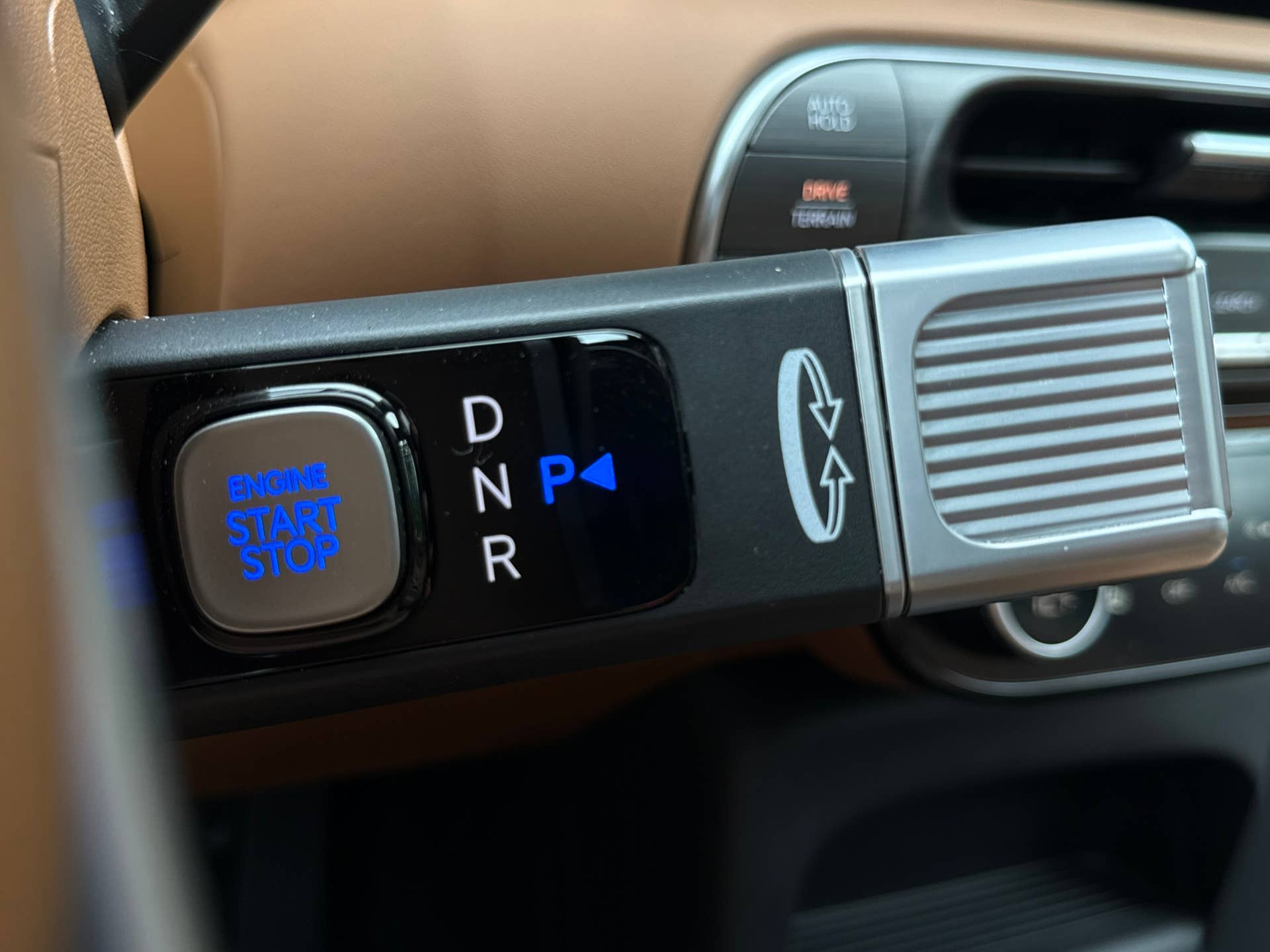
The shift knob and start/stop button are a big change from the center console mounted push-button version. They save space, but it takes some getting used to. The good news is that they work more quickly than the older version, making three-point turns much easier. Just make sure you know which way to twist the knob for drive and reverse.
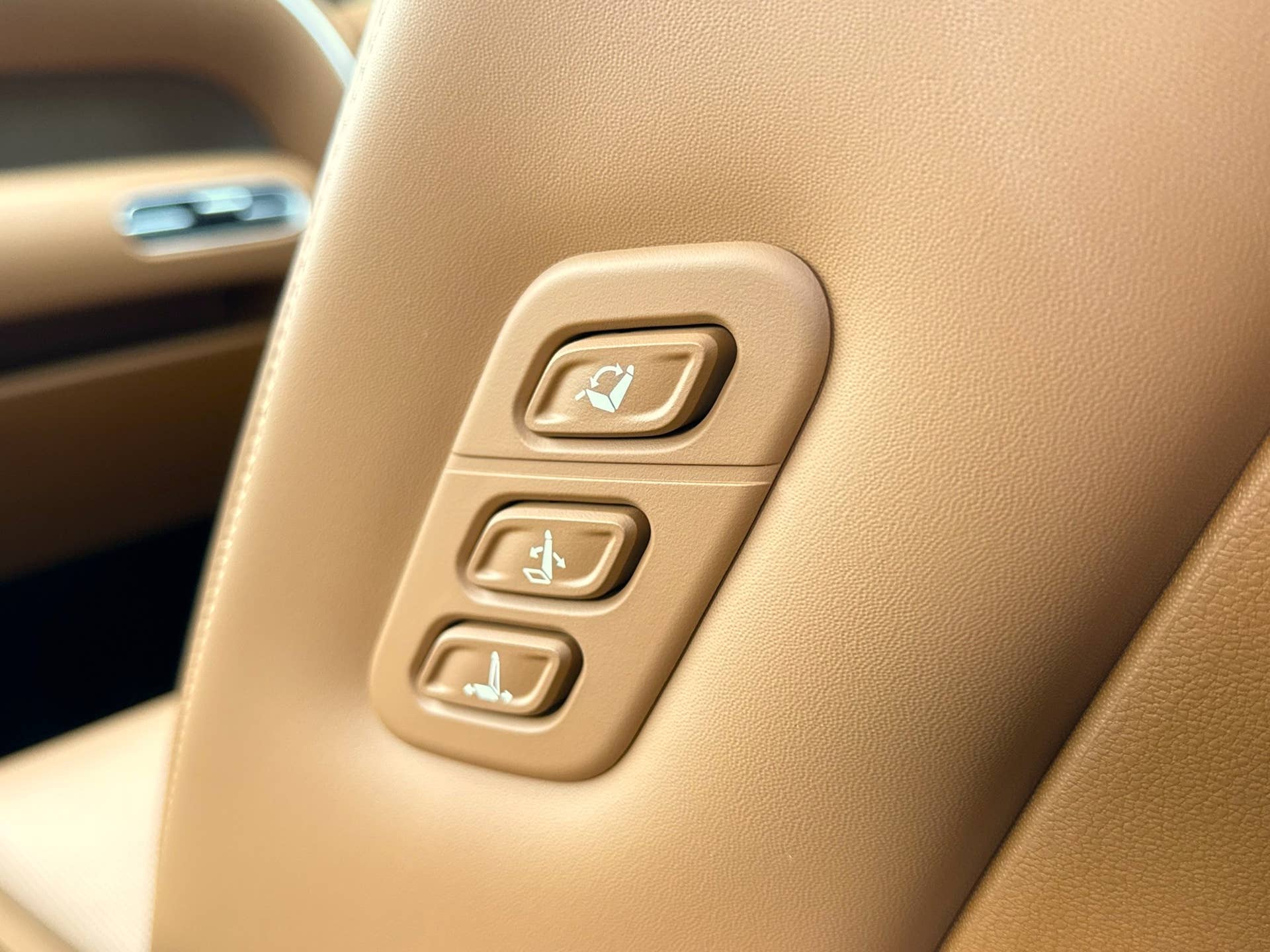
The operation of the second row seat slide/fold functions take some getting used to because it involves three controls. If you want access to the third row, you have press and hold the button on the shoulder of the backrest. The seat will move up and forward. Once inside, you (or someone else) has to press and hold a circular button on the side of the second row seat cushion to move it back into place, and then the recline/slide levers will need to be used to put the seat back in the original position.
Amos Kwon
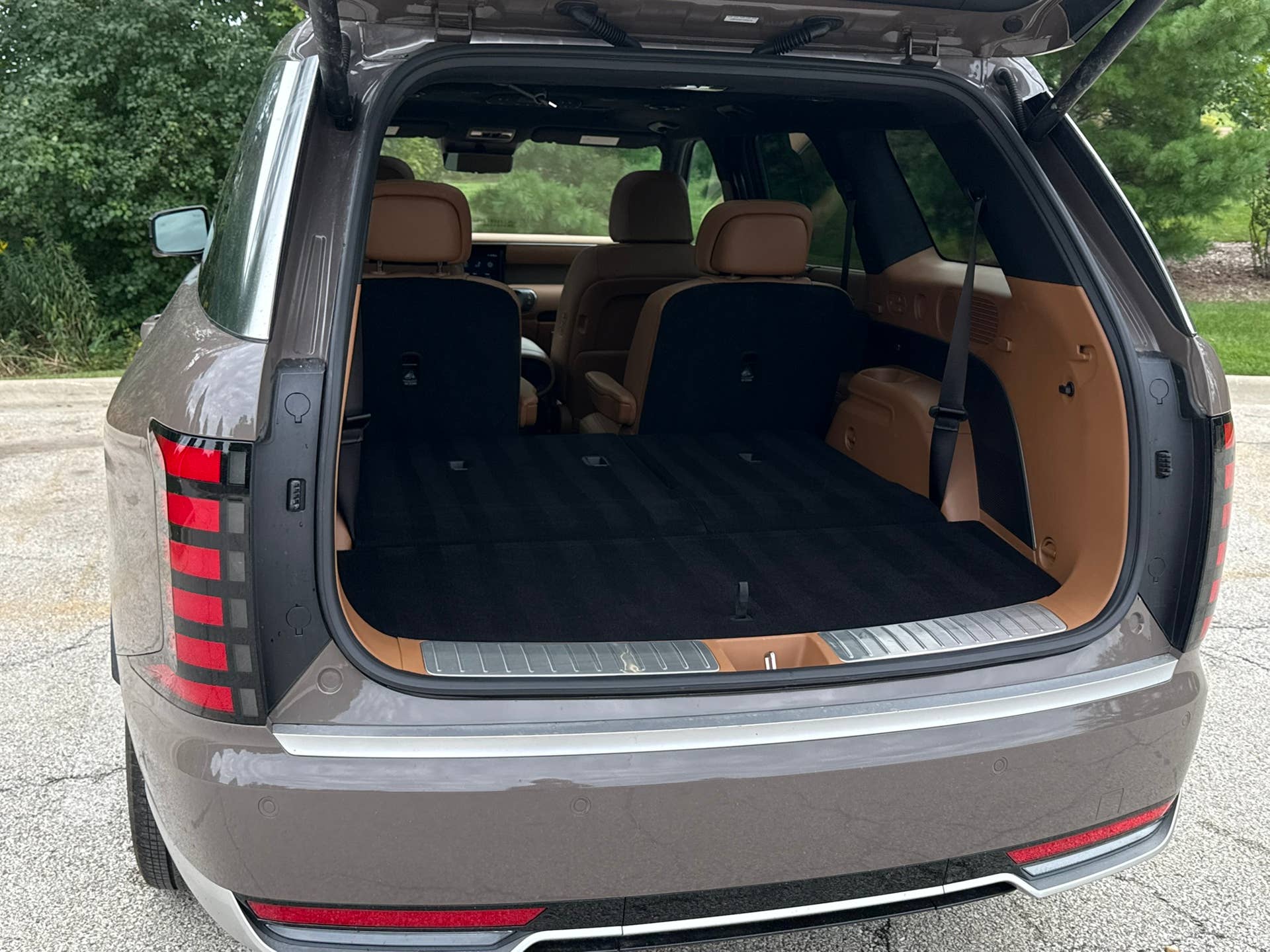
The Palisade opens up to provide 19.1 cubic feet of cargo space behind the third row, expanding to 46.3 cubic feet with the third row folded, and a grand total of 86.7 cubic feet with the rear rows folded flat (an increase from 2025 by 1.1, 1.5, and 0.3 cubic feet, respectively). Conveniently, you can fold and raise rows two and three from a panel in the Calligraphy’s cargo hold.
The Driving Experience – 8.75/10
Amos Kwon
The 2026 Hyundai Palisade Hybrid gets a worthy powertrain. The hybrid features a 2.5-liter turbocharged four-cylinder engine paired with a dual-motor hybrid system and a 1.65-kWh battery pack. Combined output is 329 hp and 339 lb-ft of twist. That’s more than 3.5-liter V6’s 287 horses and 260 lb-ft. It also benefits from a conventional 6-speed automatic transmission with paddle shifters rather than the company’s eCVT. The result is a 0-60 sprint in the high six-second range. That’s quicker than the gas version by nearly two seconds.

Amos Kwon
Efficiency for all-wheel drive models stands at 29 mpg city, 30 mpg highway, and 29 mpg combined. During my week with the Palisade Hybrid, I was able to obtain 25 mpg combined, but the lower number has more to do with my use of Sport mode almost exclusivly.
The system works well, but the throttle response off the line isn’t especially quick. Dialing the drive mode into Sport helps significantly. The hybrid powertrain is smooth and surprisingly quiet, adding to the level of refinement that contributes to a premium feel. There’s signficant body roll, but the Palisade Hybrid feels balanced and predictable in the turns.
Amos Kwon
Most importantly, for this Calligraphy trim, is the way the Palisade rides. It’s ultra-smooth, very quiet, and composed. The Hybrid powertrain suits the vehicle much better than the old gas version, but we have yet to drive the new gas Palisade. I imagine it’s less rewarding, and it’s fuel efficiency and power aren’t nearly as good as the Hybrid’s.
Final Verdict – 9/10
The new Palisade Hybrid, especially in top trim, is one of the most convincing unibody three-row SUVs in the business. It offers unique premium styling, a beautifully appointed cabin, and some of the best tech and switchgear found today. Some of the seat controls are fussy, and the third row is tight for more than average-sized adults, but the Palisade Calligraphy offers a ton for the money, making $60 grand seem like a relative bargain. Nobody’s doing what Hyundai (and Kia, for that matter) are doing in the the industry, and anyone questioning their reliability should lean on the impressive warranty.
About the author
Amos Kwon
Contributing Writer, Autoblog