
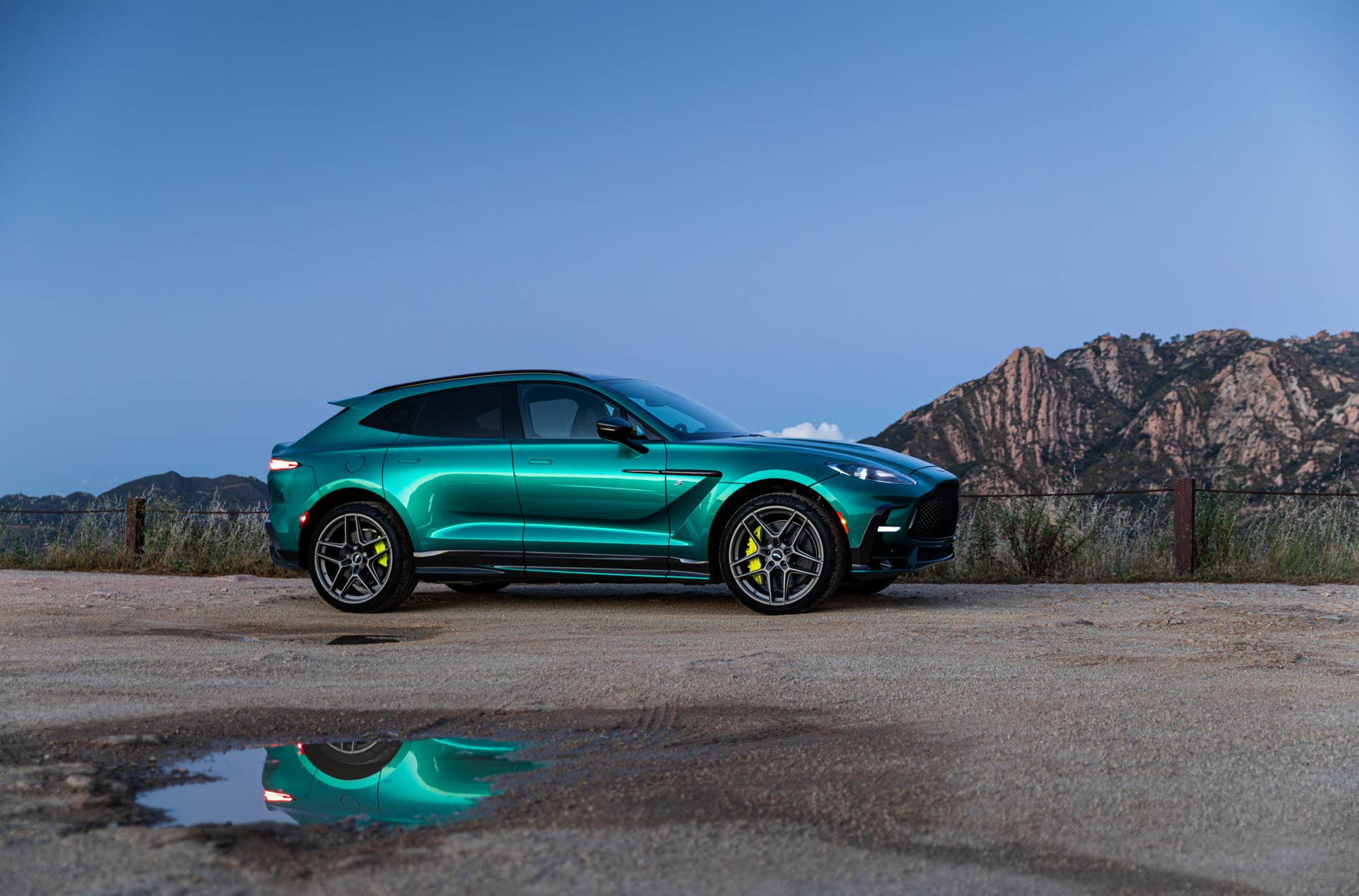
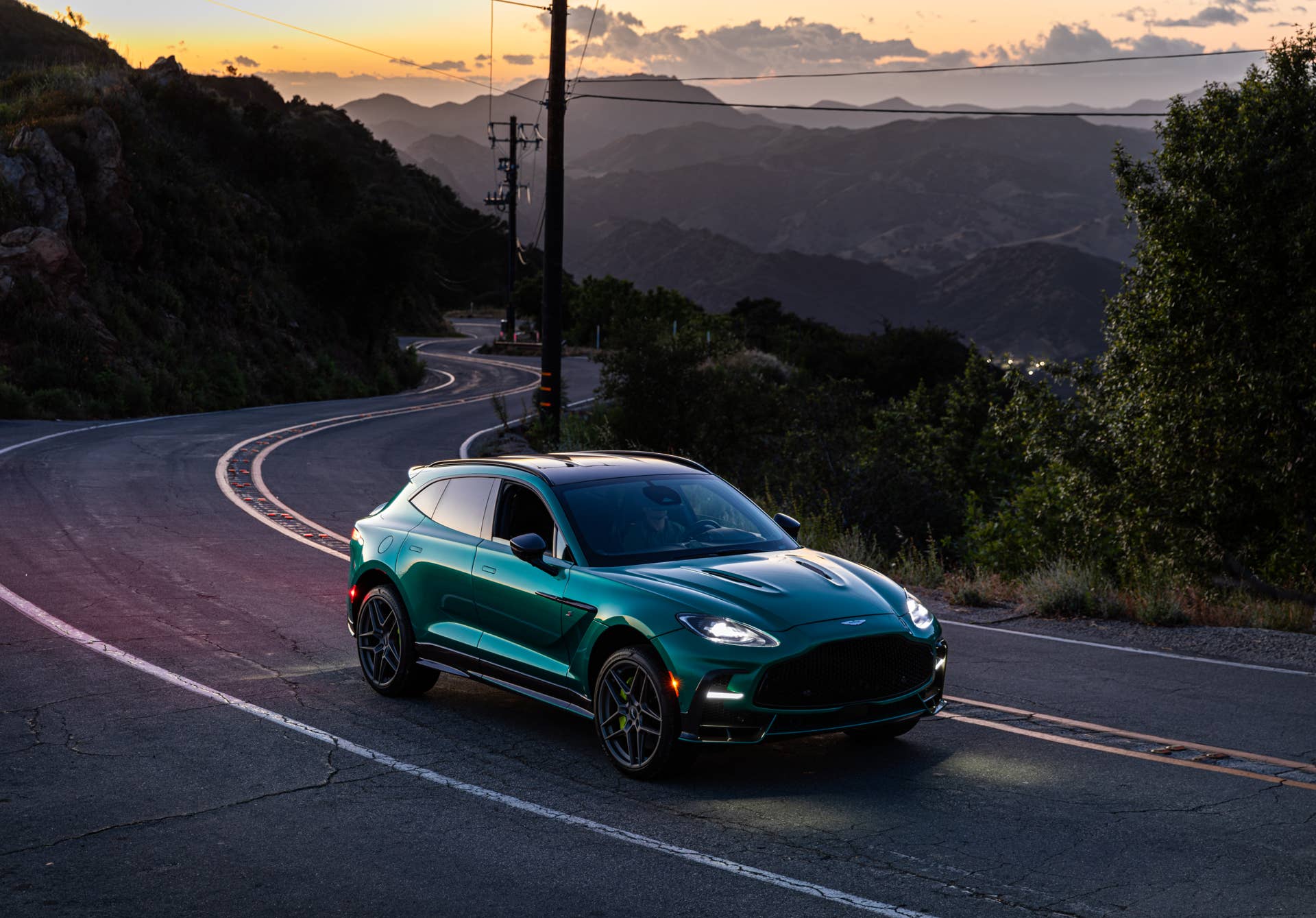
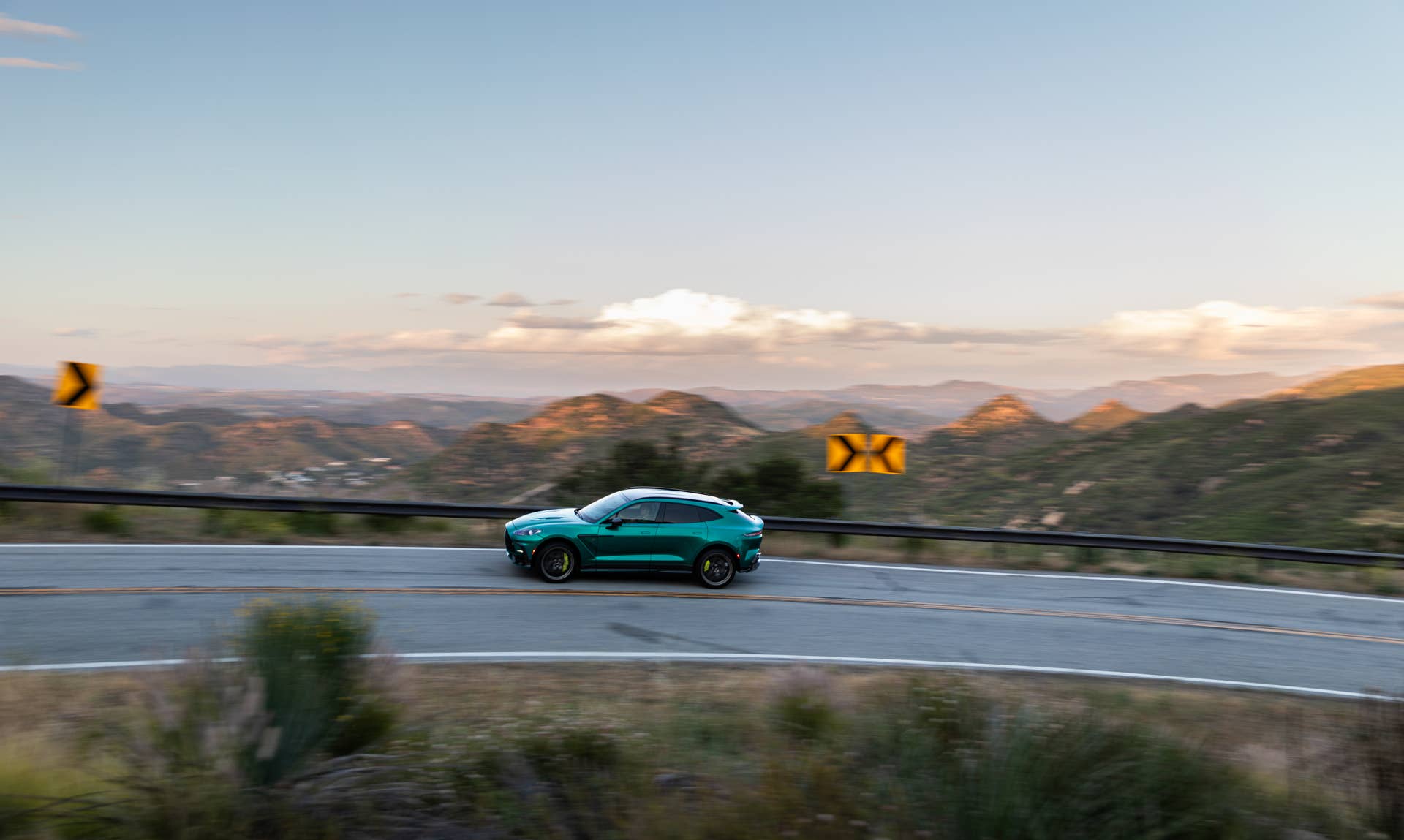
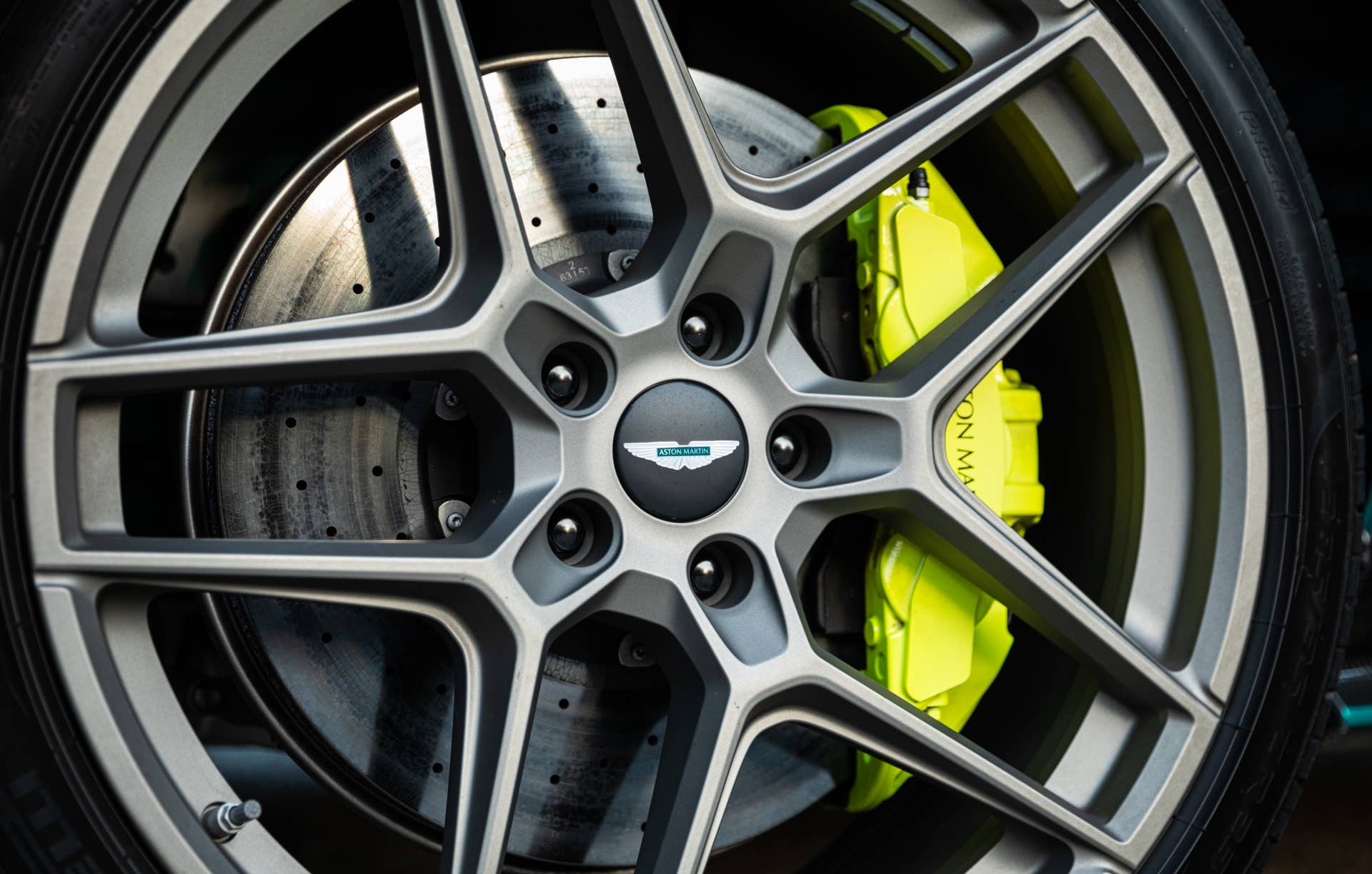
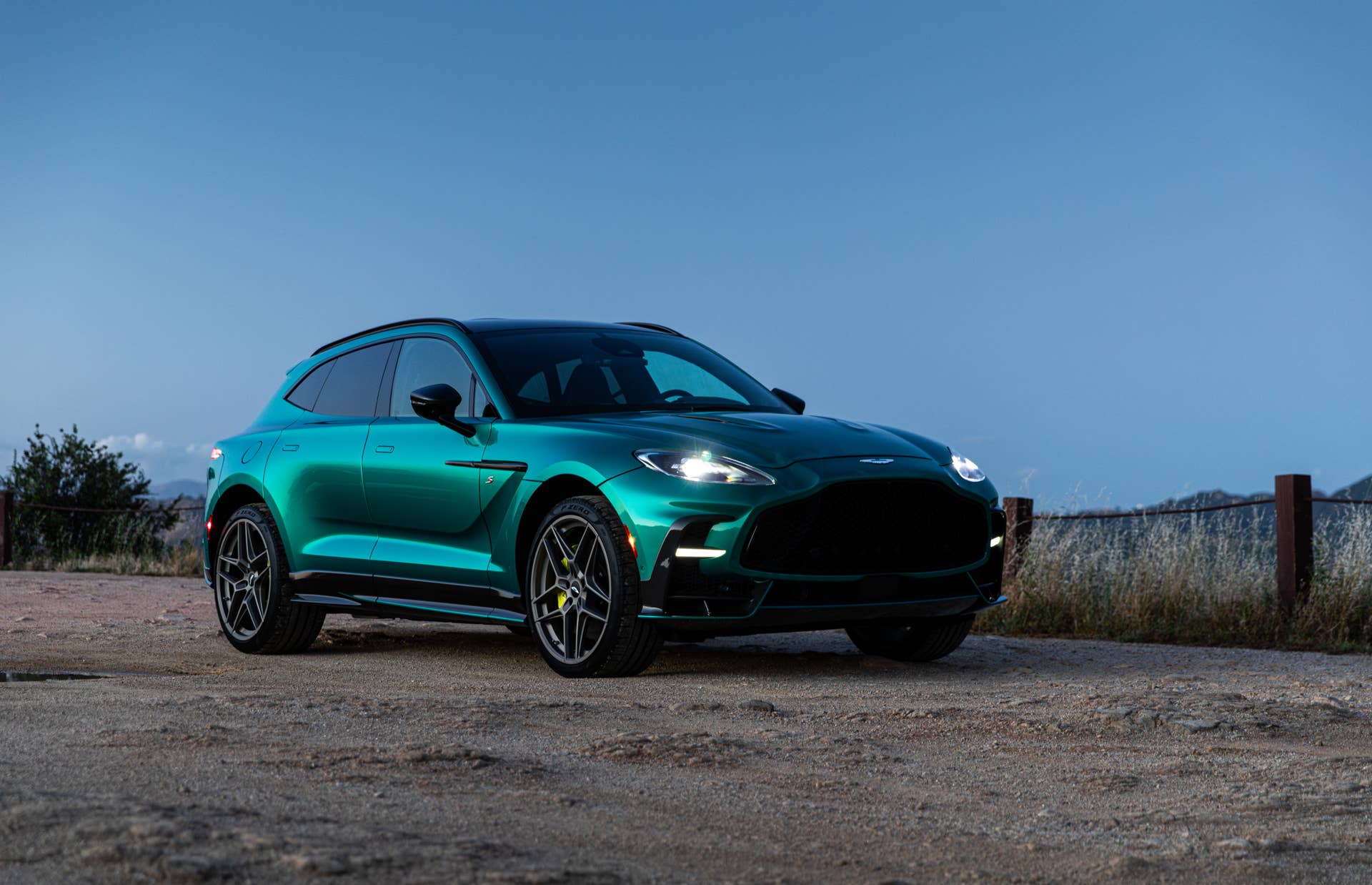
Coming down Malibu Canyon at the back end of golden hour, exhaust valves cracked wide open, the DBX S sounds like something that has no business being shaped like an SUV. The V8 is trading hard punches with the canyon walls on every downshift, the magnesium wheels are doing whatever it is magnesium wheels do at $22,300 a set, and the Verde Ermes-adjacent Podium Green paint is catching the last of the light off the carbon roof. There is a thesis somewhere in this car, and it has very little to do with school runs.
Gabiwabi
Where the S Sits in the Lineup
The DBX has always been the car that pays the bills at Gaydon, and Aston has been protective of how it grows up. The lineup for 2026 is brutally simple: the DBX 707, which makes 697 horsepower and is now the entry point into the family, and the DBX S, which sits above it as the new halo. The 707 designation that used to feel exotic is now the warm-up.
Gabiwabi
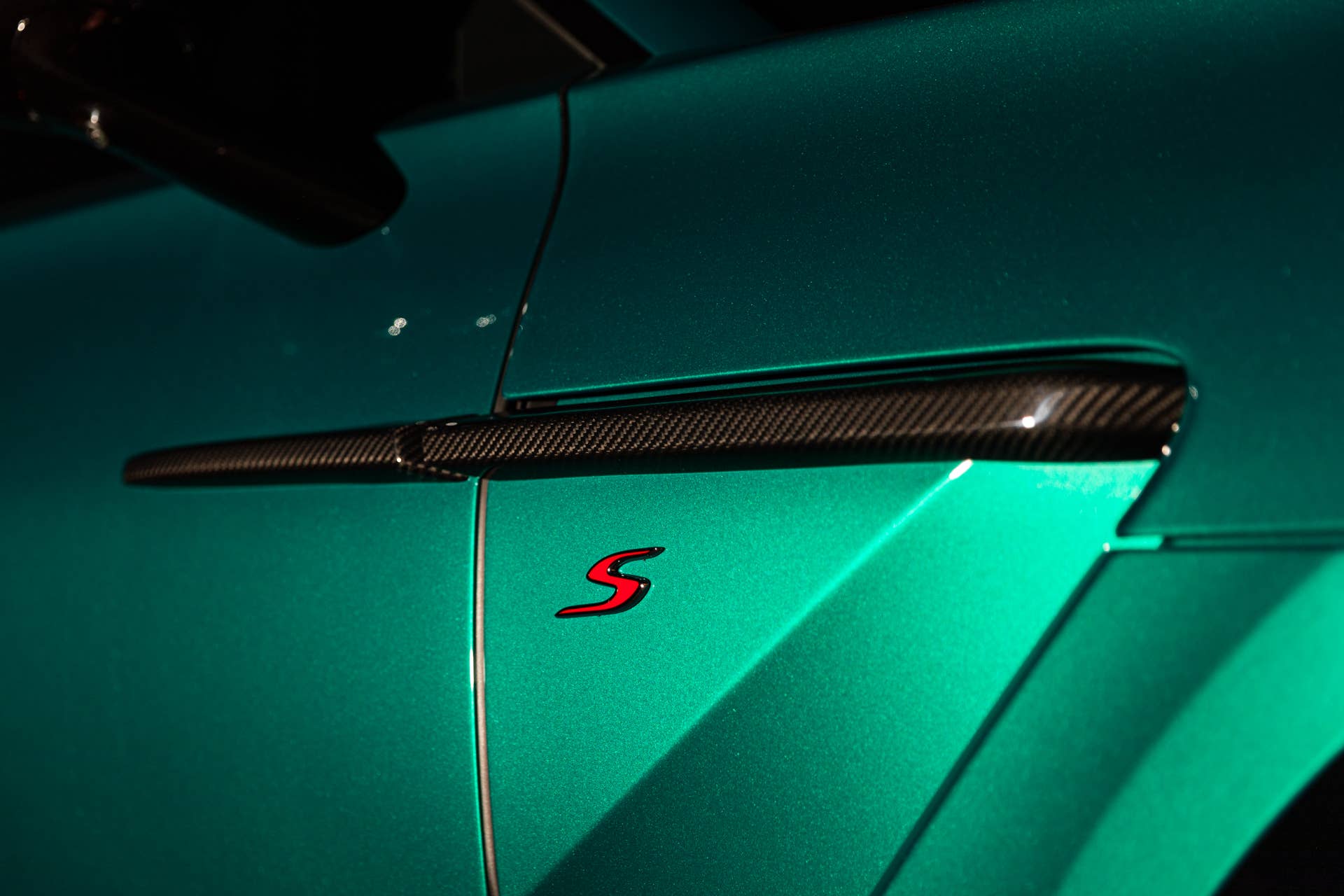
What the S is trying to be is the version of the DBX that flexes against the Lamborghini Urus Performante and SE, the Bentley Bentayga Speed, and, at the actually unhinged end of the segment, the Ferrari Purosangue. The S has a real fight to pick. It picks it.
The Hardware Underneath
The S keeps the AMG-sourced 4.0-liter twin-turbo V8 but ditches the standard turbochargers in favor of larger units pulled directly from the upcoming Valhalla program, with compressor wheels 4 mm bigger and turbo speeds spun up to 160,000 rpm. The result is 717 horsepower at the top of the rev range and 664 lb-ft of torque, with the extra urgency arriving above 6,000 rpm rather than down low. Torque is unchanged from the 707; the S is about character at the top end.
Behind it sits a nine-speed wet-clutch automatic with revised tuning, feeding a four-wheel-drive system that can shove very nearly all of the torque rearward when it feels like it. The numbers come out at 0 to 62 mph in 3.3 seconds and a 193-mph top end. From 62 to 124 mph, the S claws back a full second over the 707, which is where the new turbos do their best work.
Gabiwabi
Lightweighting is the other half of the story. The optional 23-inch magnesium wheels reduce unsprung mass by 42 pounds. The carbon-fiber roof, at 40.9 square feet, is the largest carbon panel ever fitted to a road-going Aston, dropping 40 pounds from the very top of the car. The carbon exterior pack saves another 15 pounds, the polycarbonate honeycomb grille trims 7. Spec all of it and you’ve taken roughly 100 pounds out of an already sorted 707.
Underneath, the architecture is unchanged in concept and meaningfully retuned in execution: bonded aluminum body, triple-chamber adaptive air suspension with eARC 48-volt active anti-roll, electronic rear differential, carbon-ceramic brakes. The S brings sharper damping logic, a quicker steering rack, and a slightly more belligerent attitude in Sport+.
Behind the Wheel
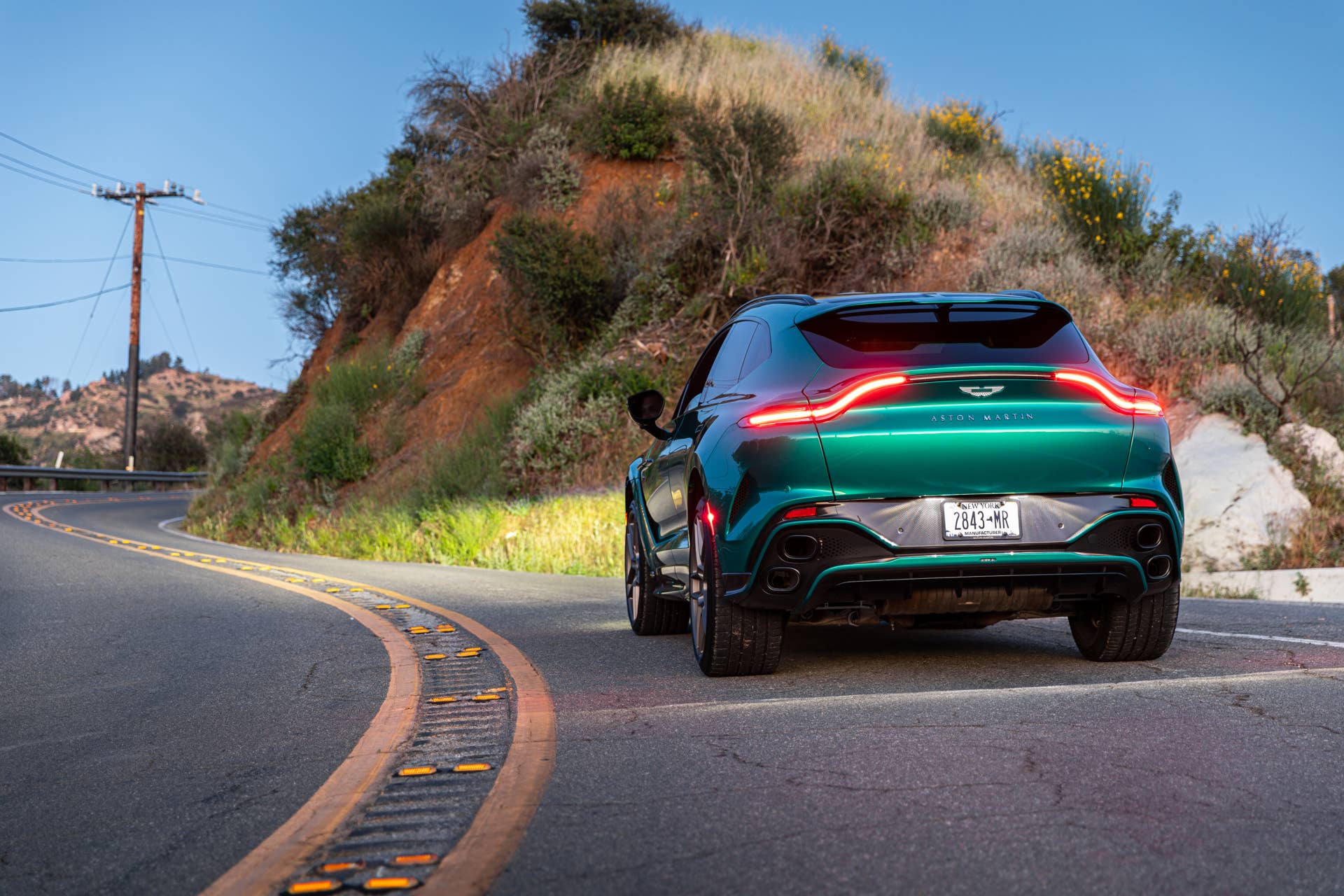
The first thing the DBX S does, before you’ve even hit Sport+, is sound sporty in a way that almost no SUV manages. The new quad stacked exhausts (vertically arranged, taking visual cues from the Vanquish) have been retuned to the bigger turbos to drop back pressure and add bark. In GT mode it’s restrained. Click into Sport+, open the valves, and the V8 turns into the only reason you need to pick this thing over a Range Rover.

Gabiwabi
Up Malibu Canyon, the S does the trick that good fast SUVs do, which is to stop feeling like an SUV three corners in. The steering rack is genuinely quick, the kind that asks for less wrist input than you instinctively want to give it. Body roll is barely there. Turn-in is sharp enough that the first time you commit to a corner you over-rotate the wheel and have to dial it back. After ten minutes you stop noticing that you’re sitting up high. The S goes where you point it, holds the line, and lets you get back on power earlier than physics suggests it should.
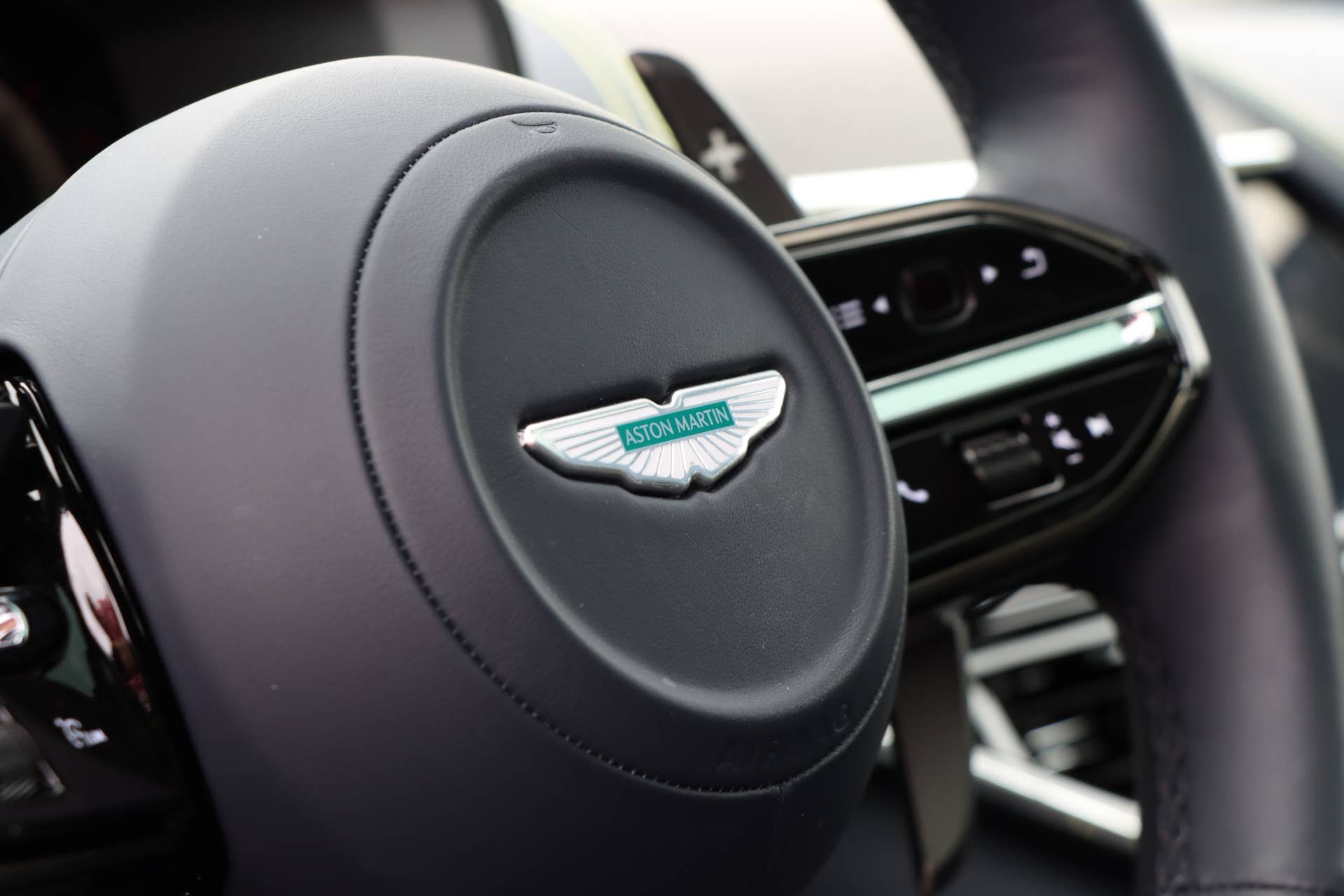
The transmission is the unsung hero. In Sport+, and especially in manual mode with the paddles, shifts come through with a real crack. Downshifts on corner entry are immediate, not interpretive. Roll back into normal driving on PCH or coming through Beverly Hills and the same gearbox plays smooth, low-rpm, completely unbothered. That bandwidth, where the same hardware can be both savage and civil, is the part Aston has clearly spent the most time on.
The five hundred miles split roughly into thirds: canyons, highway, city. Highway is where the S becomes a grand tourer with extra digits. It floats, it settles, the cabin goes quiet, and 90 mph evaporates into “wait, how fast am I going.” City driving is the surprise: low-speed manners are impeccable, throttle response in GT mode is calibrated for not pitching coffee, and the 23s ride better over broken Beverly Hills pavement than they have any right to. Driveway inclines, the universal performance-car tax, are a non-issue. You don’t sweat the angle of your own garage. That’s not nothing.
Gabiwabi
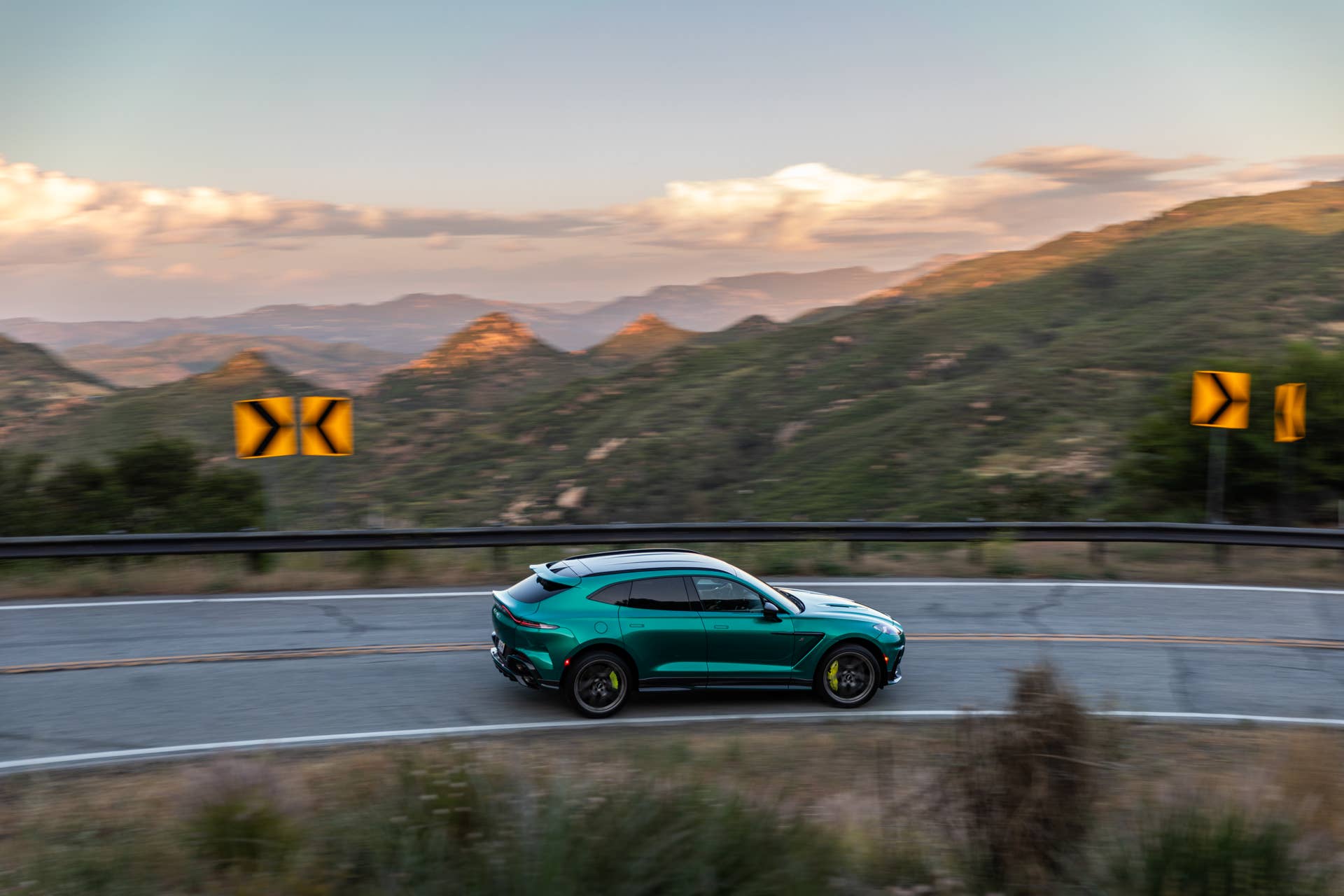
The exterior is also, just objectively, gorgeous. The Podium Green paint is the right color for this car. The rear three-quarter, with the stacked exhausts and the reprofiled diffuser, looks more resolved than anything in the segment. People notice. They notice in the way they notice a Lamborghini, which is rarer than it sounds for a five-seater.
Chassis, Steering, and Dynamics
Underneath the personality, the S is mechanically tighter than the 707 in ways you can feel inside the first mile. The eARC anti-roll system makes the body sit dead flat through the kind of off-camber Malibu sweeper where a heavier SUV would be loading up its outside springs. The damping in Sport mode finds a window where the car is composed without being brittle, and Sport+ pulls everything tight without ruining ride quality on anything other than truly broken pavement.
Gabiwabi
The brakes are carbon-ceramic standard and bite harder than the 707’s, with a slightly grabbier first millimeter of pedal travel that takes a few stops to learn. After that they’re confidence inspiring in the way you want when you’re carrying real speed into a downhill canyon hairpin. Steering weight is medium-firm and the rack speed (faster than the 707) means small inputs at speed translate to big direction changes, which is the trade you want in something this size.
Gabiwabi
What the chassis does best is shrink the car. There’s a moment, somewhere mid-canyon, where you stop driving an SUV and start driving an Aston that happens to be tall. That’s the whole job description, and the S delivers it.
Inside the Cabin
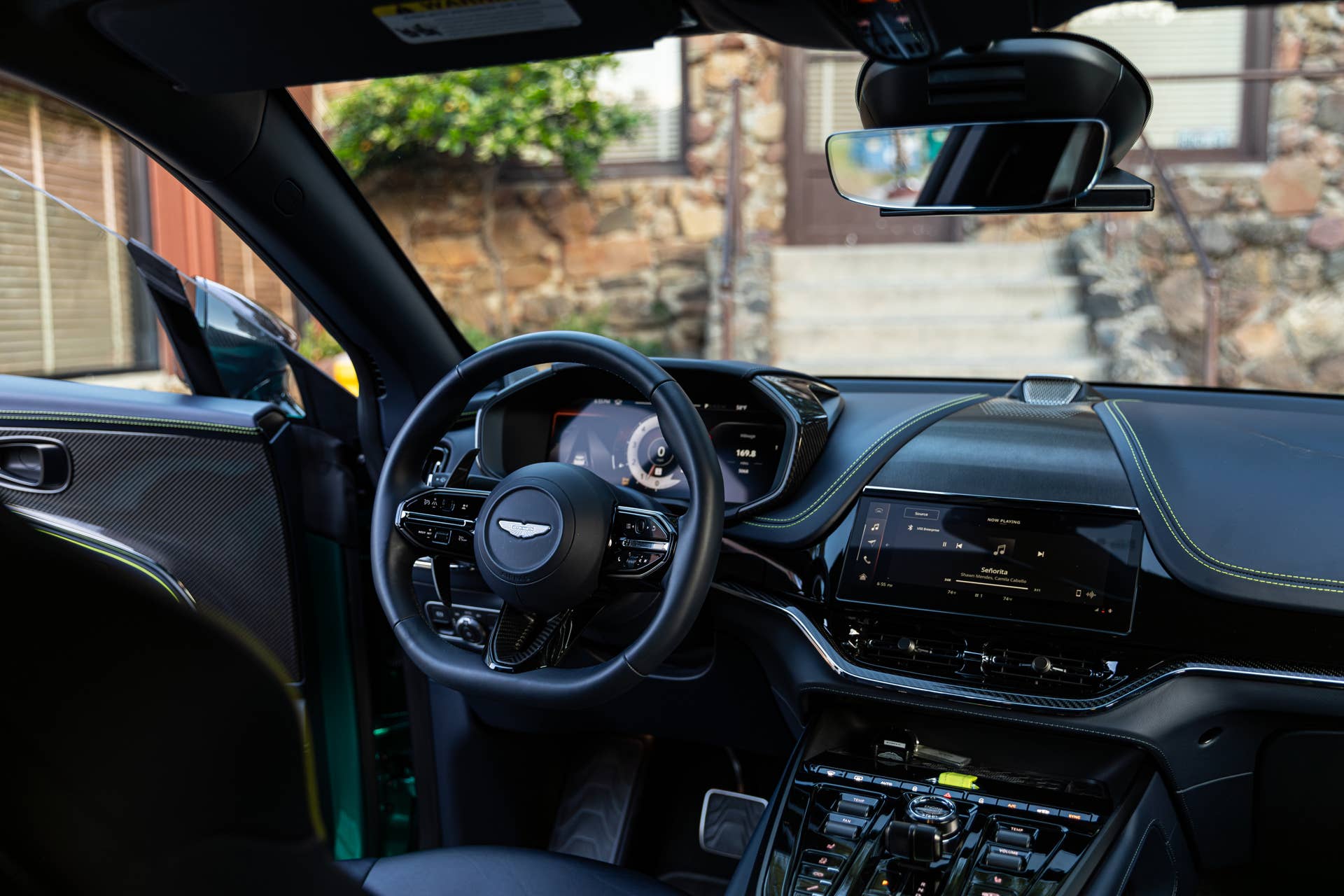
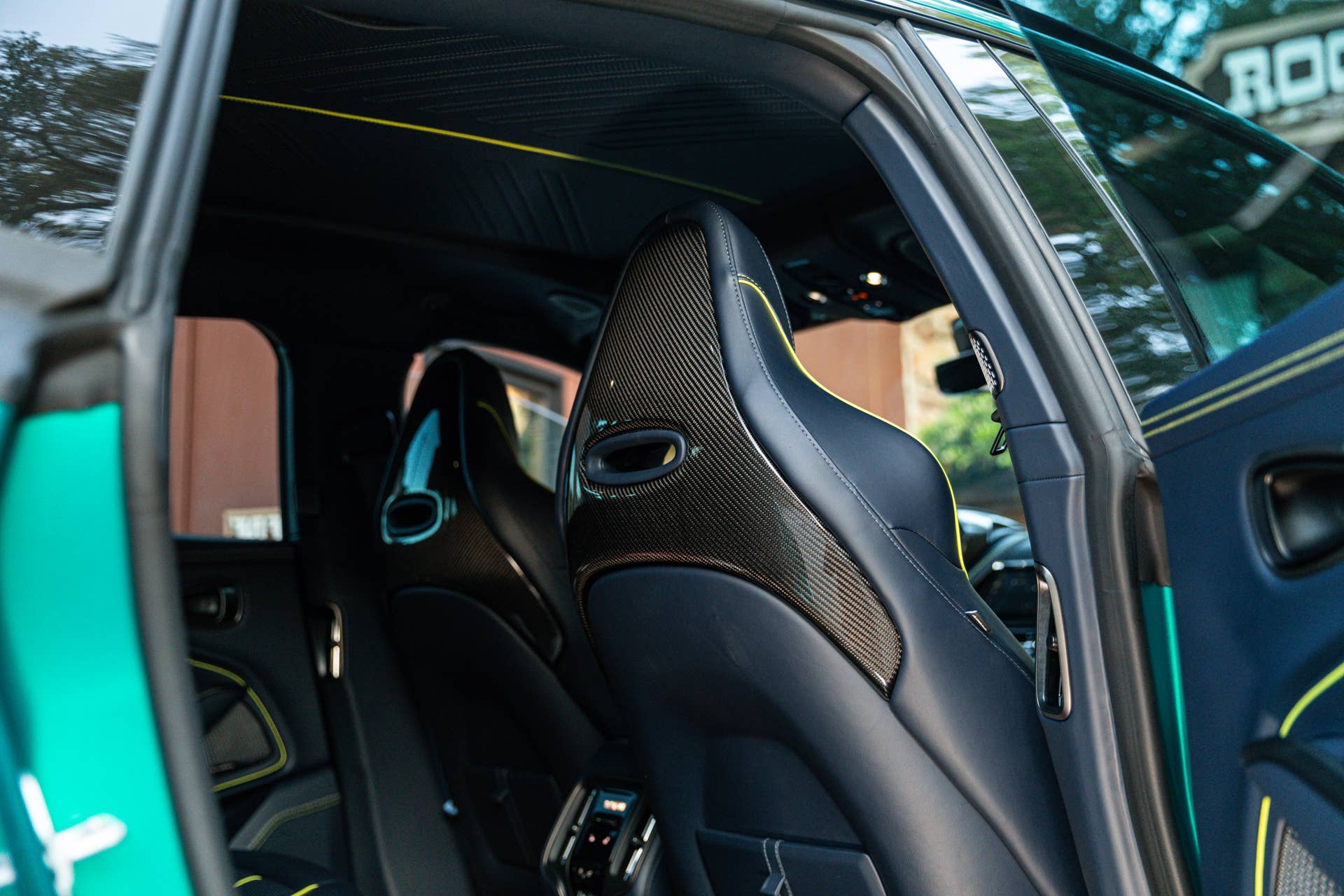
The cabin feels special in a way that other super SUVs don’t quite manage. There’s Alcantara on the headliner, a leather-stitched ceiling, and carbon fiber everywhere that matters. The new “sculpted leather” headrests, which Aston embosses and debosses under several thousand pounds of pressure to render the wings logo in three dimensions, are the kind of detail that justifies the badge before you’ve even sat down.
Gabiwabi
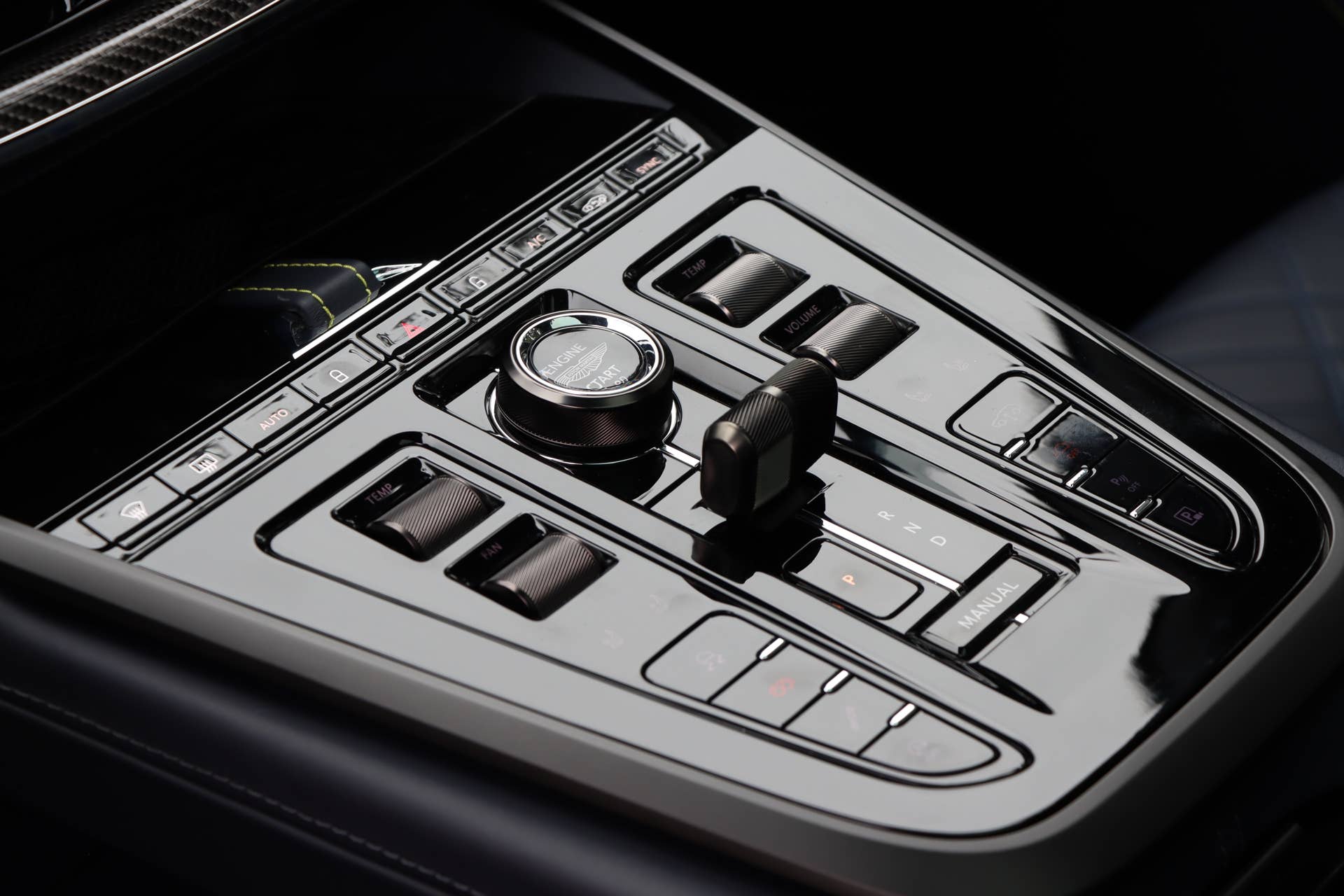
The switchgear is the surprise. After years of Mercedes-derived plastic in the old DBX, the S goes hard the other direction with knurled aluminum, real metal toggles, proper buttons that click when you push them. It’s tactile and intentional, and it makes the cabin feel handmade rather than borrowed.
Kyle Edward
Front seats are supportive without being aggressive, the bolsters firm enough to hold you in a Sport+ canyon run but not so tight that they make the car feel like a track special. Rear seat space is good, not class-leading; the Bentayga still wins on absolute back-seat indulgence and the Purosangue’s individual rear thrones are their own thing entirely. Cargo is reasonable. This is a usable five-seater, and Aston still hasn’t lost sight of that.
Gabiwabi
Software and Tech
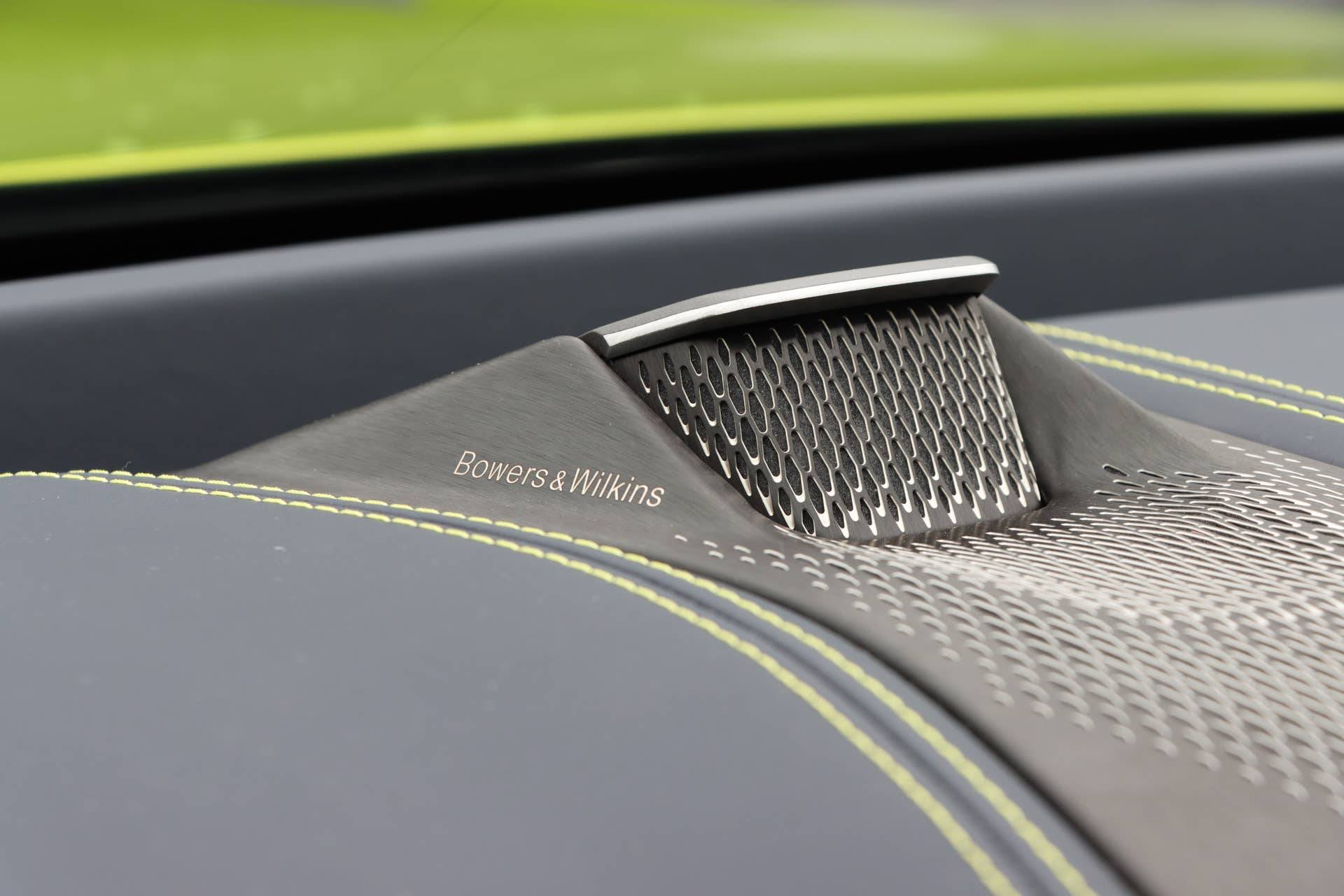
The infotainment is the part Aston has been quietly working on, and it’s better than its reputation, but not best-in-class. The reskinned interface looks properly Aston, complete with green accenting. The center screen, however, can lag, and voice control is hit-or-miss. None of it gets in the way of driving, which is the bar that matters in a car like this. CarPlay and Android Auto are both standard, and the optional Bowers & Wilkins audio is worth the $12,700 if you love music.
Kyle Edward
The Competition
The Urus Performante is the obvious cross-shop. It’s louder visually, makes 656 horsepower, and feels more theatrical from the driver’s seat. The S is the more refined product. It’s the one that drives more like a fast Aston and less like an SUV cosplaying as a Huracán.
The Bentayga Speed brings 641 horsepower, peerless rear-seat comfort, and a chassis that feels half a class softer. If you spend more time in the back than the front, that’s the answer. If you spend more time at the wheel, it isn’t.
Gabiwabi
The Purosangue is the wild card and the only direct competitor that out-dramas the S on noise and theater, with its naturally aspirated V12 and supercar pretensions. It’s also a different proposition entirely, with rear suicide doors, a fundamentally different brief, and the Ferrari tax. The S slots into a real gap in the segment: more sporting than the Bentley, more polished than the Lambo, less precious than the Ferrari. There’s an actual case for it.
The Verdict
The DBX S starts around $270,000 and the test car (with magnesium wheels, carbon roof, B&W audio, and the Carbon Pack) gets you well into the low-$400,000s. That’s a number, but it’s a number that buys you the most powerful pure-ICE production SUV in the world, a properly resolved Aston cabin, and a chassis that genuinely earns its S badge.
The criticism is small but… for a car wearing Aston’s most loaded letter, the S could go further. The exhaust is great, but it could be louder. The acceleration is fierce, but the segment is moving toward electrified launches and the S still leaves a tenth or two on the table off the line because it doesn’t play that game. The personality is there; the edge is almost there.
Photo credit: shot by gabiwabi in Los Angles, CA
About the author

Kyle Edward
Editor-in-Chief, Autoblog