
Key Points
- Volvo EX30 and EX30 Cross Country differ mainly in style and ride comfort, not mechanics.
- Regular EX30 offers sharper handling; Cross Country prioritizes comfort, rugged style, and details.
- Both models have unique appeal, but practicality and controls may frustrate some buyers.
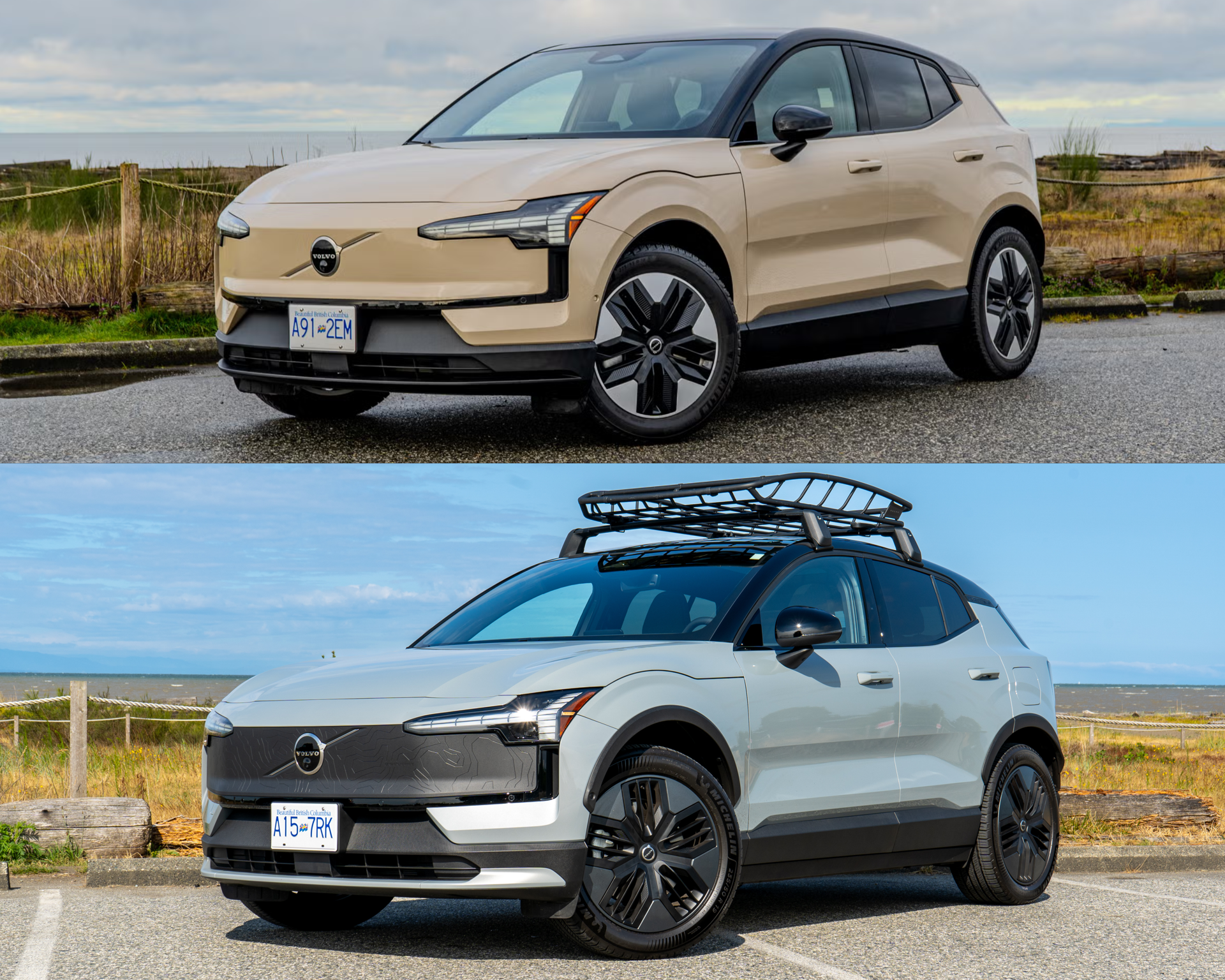
The regular Volvo EX30 and the EX30 Cross Country are separated by less than an inch of ride height and a lot more than that in personality. Mechanically, these two tiny electric Volvos are nearly identical. In Twin Motor Performance form, both use a dual-motor all-wheel-drive setup making 422 horsepower and 400 lb-ft of torque. Both are absurdly quick, charming, and minimalist to the point of occasional frustration. Both can make you wonder whether Volvo’s designers are brilliant, stubborn, or both. But they both offer unique answers to a similar question: what should you buy if you want a stylish, charming small electric SUV, and care too much about personality to buy a more logical alternative instead?
Cole Attisha
Specs And Pricing
| Model | 2026 Volvo EX30 | 2026 Volvo EX30 Cross Country Twin Motor Performance Ultra |
|---|---|---|
| Base MSRP (U.S.) | $40,345 (RWD) $46,345 (AWD) | $49,545 |
| Base MSRP (Canada) | C$49,395 (Standard AWD) | C$50,395 |
| Powertrain | Single-motor RWD or Dual-motor electric AWD | Dual-motor electric AWD |
| Output | 268 hp / 253 lb-ft (RWD) 422 hp / 400 lb-ft (AWD) | 422 hp / 400 lb-ft |
| 0–100 km/h | 3.4 sec (AWD) | 3.5 sec |
| Usable battery | Up to 65 kWh | 65 kWh |
| EPA range | Up to 253 miles | 227 miles |
| NRCan range | Up to 420 km (RWD) Up to 407 km (AWD) | 365 km |
Thinking about selling your car? Get an instant cash offer online now. Click here to get started.
There is an important market-context wrinkle to consider here. The EX30 and EX30 Cross Country are being discontinued in the U.S. after the 2026 model year, while remaining available in Canada and Mexico. That makes this comparison feel a little strange depending on where you’re reading it. In America, these cars are but short-lived curiosities, but in Canada and Mexico, they remain real options.
Cole Attisha
Design: Clean Restraint Or Clever Ruggedness?
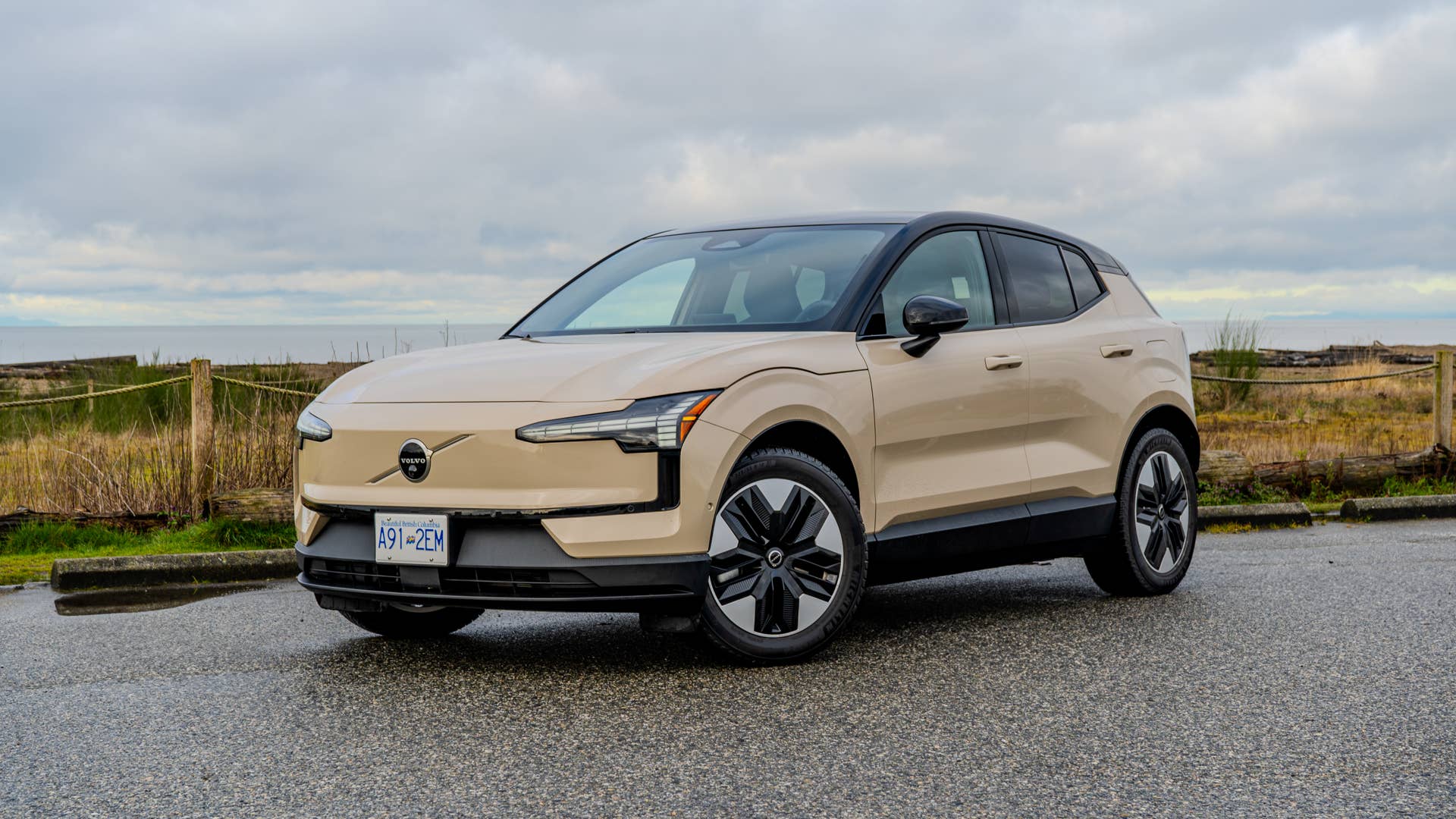
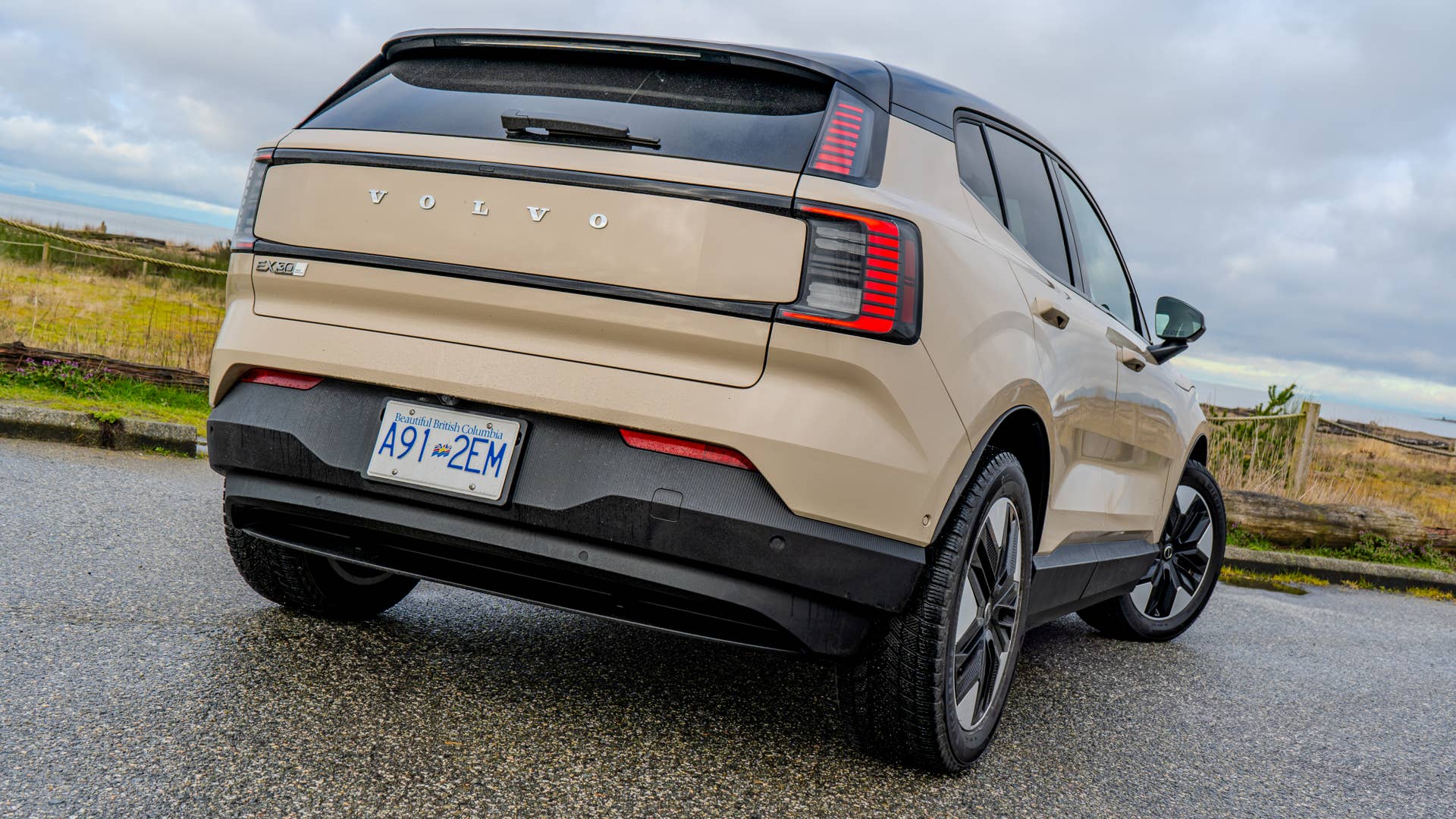
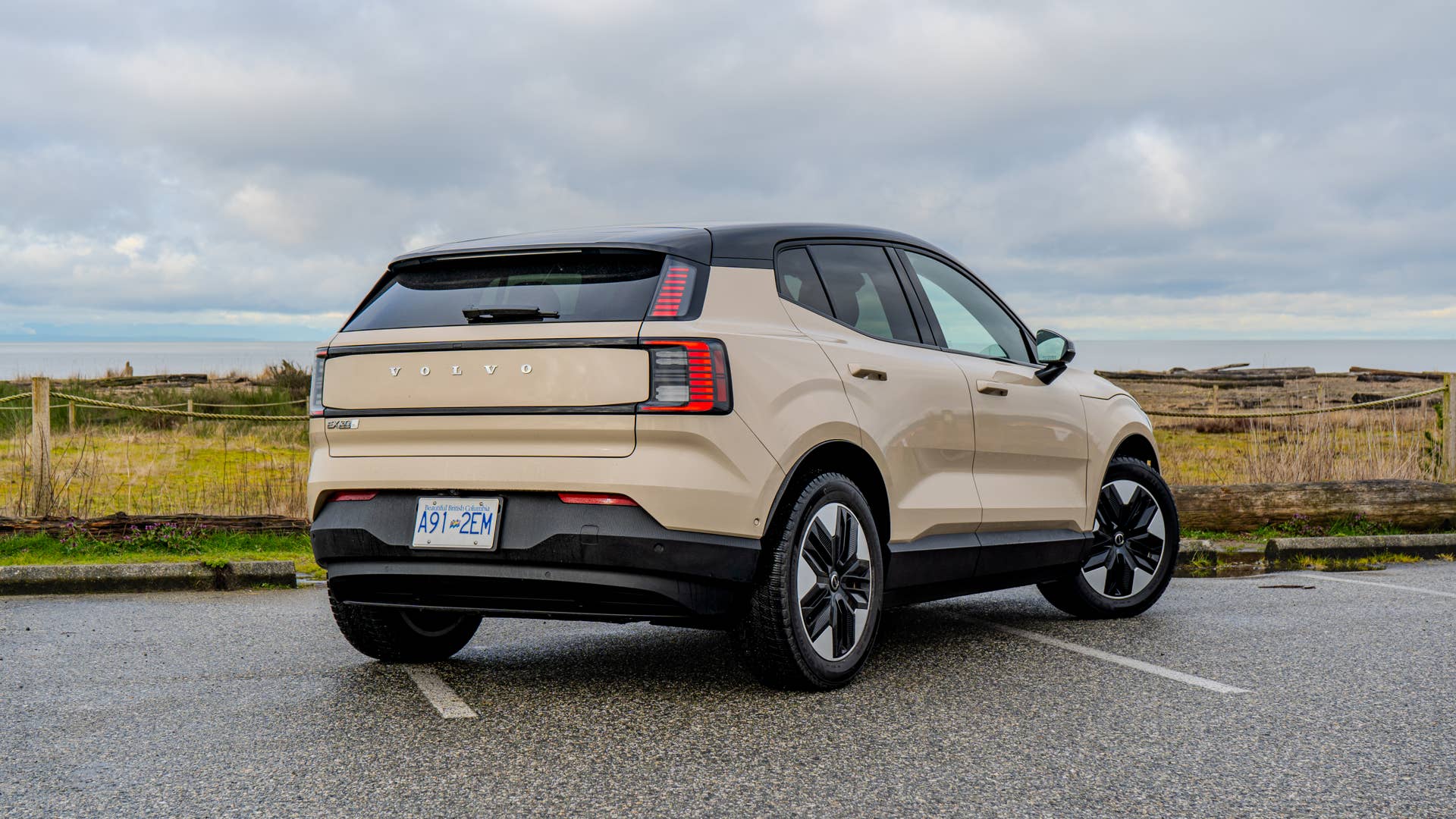
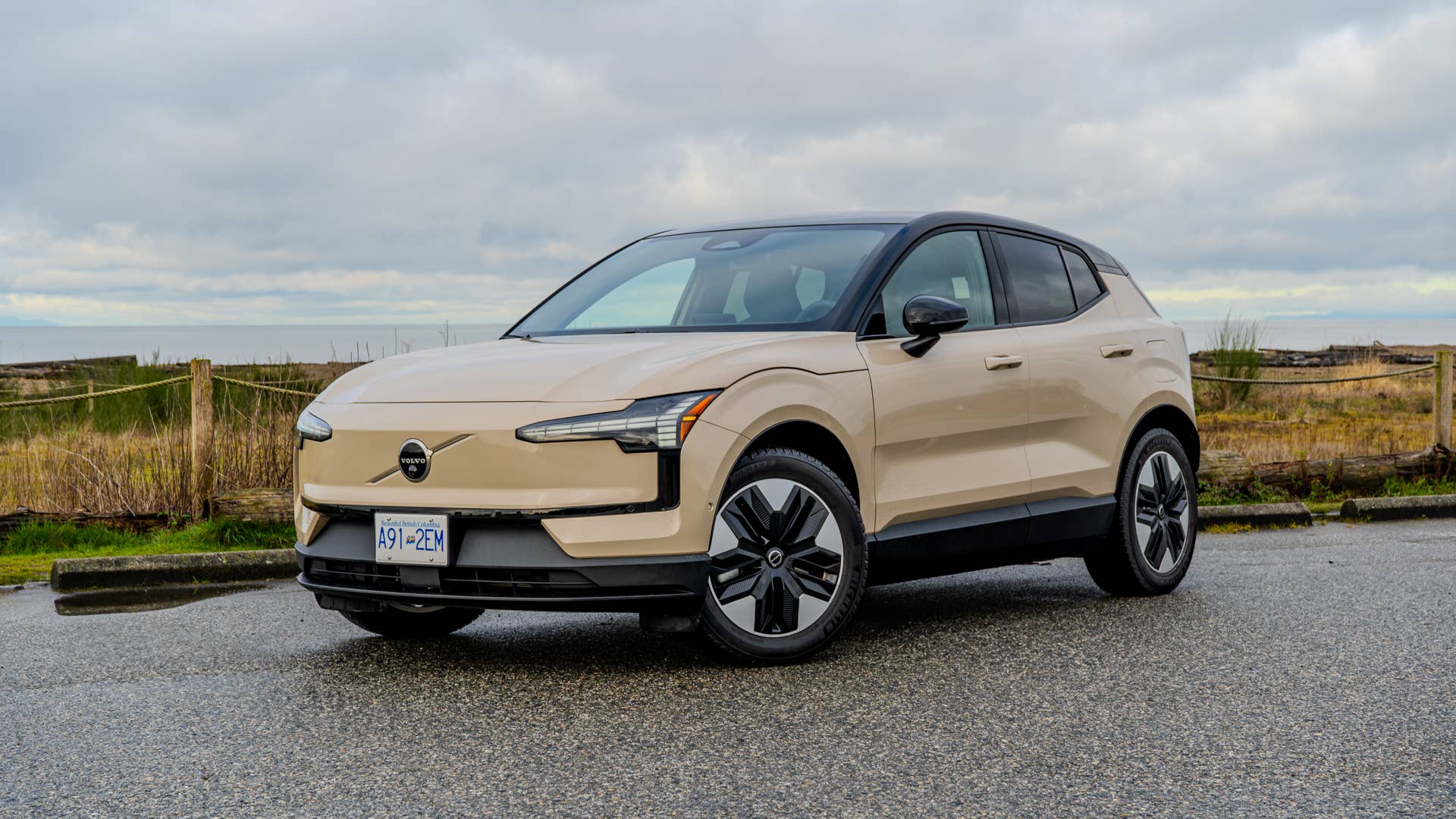
I don’t think one looks better than the other, but I do know which one I prefer. The regular EX30 has a lovely sense of restraint. In the right colour, especially something warmer or more expressive, its shape and lighting signatures do most of the talking. It looks clean, modern, and compact without trying too hard. That was part of what I liked so much about it the first time. It felt like Volvo remembered that small cars can be stylish without shouting.
Cole Attisha
Cole Attisha
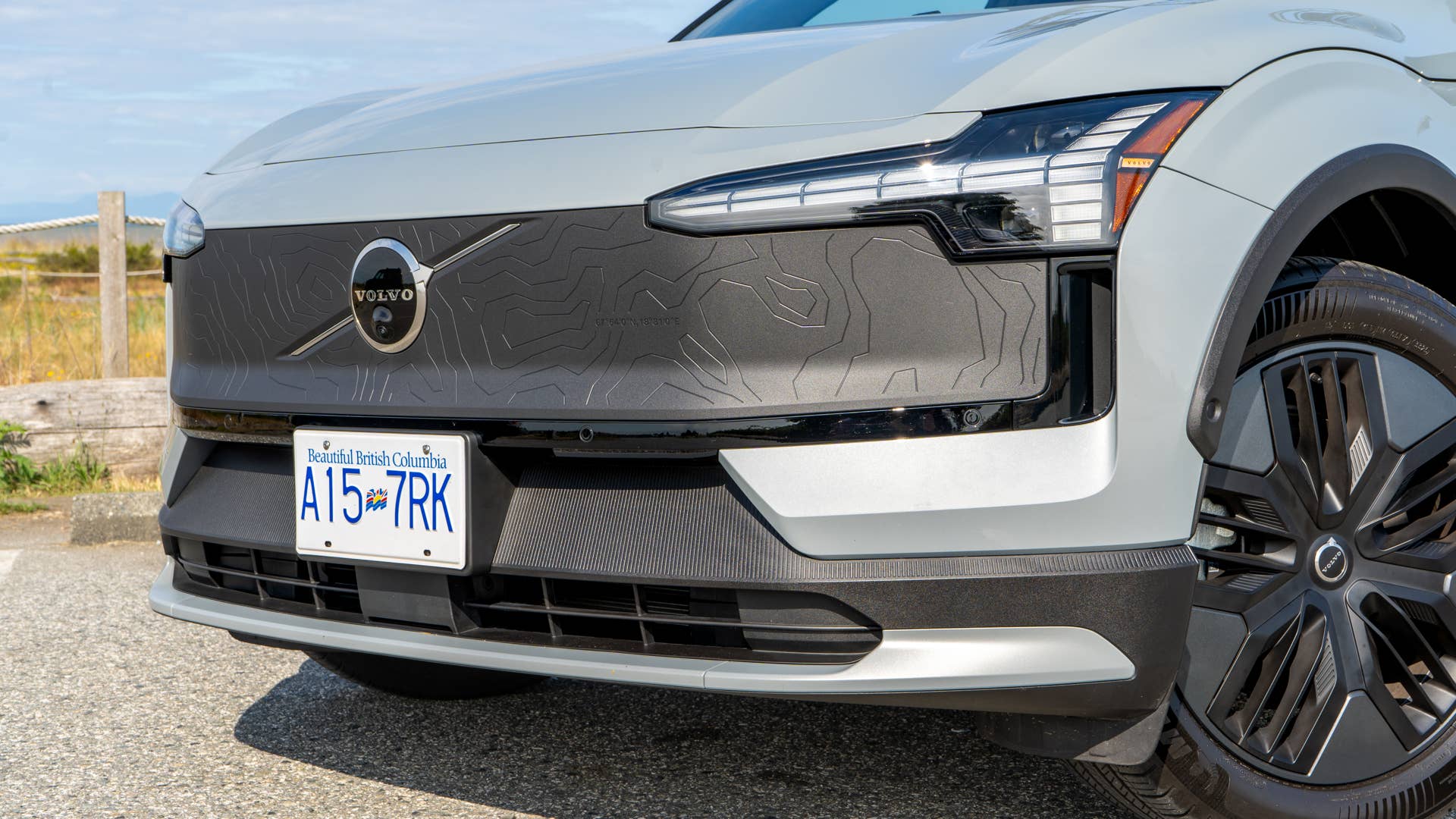
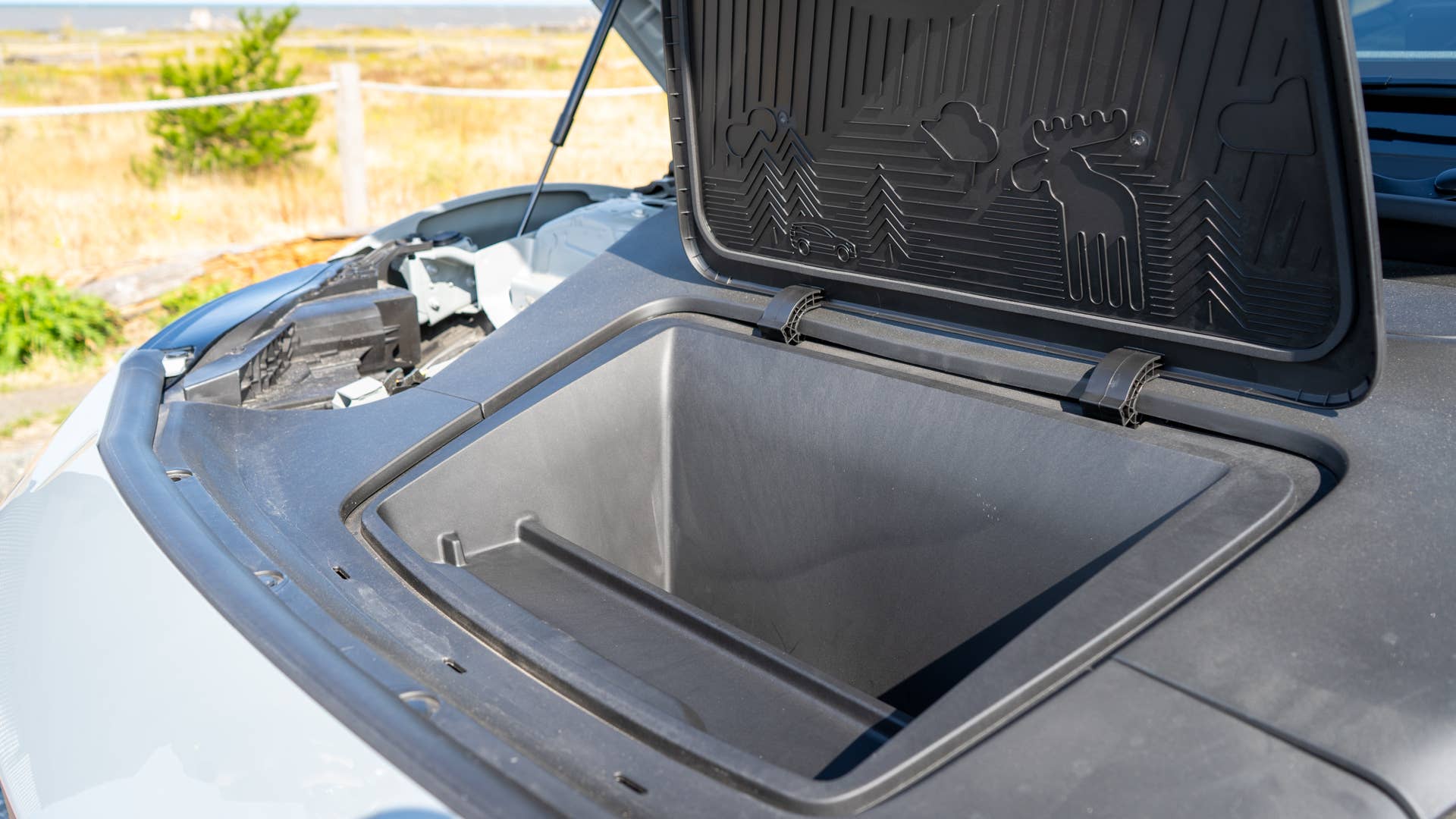
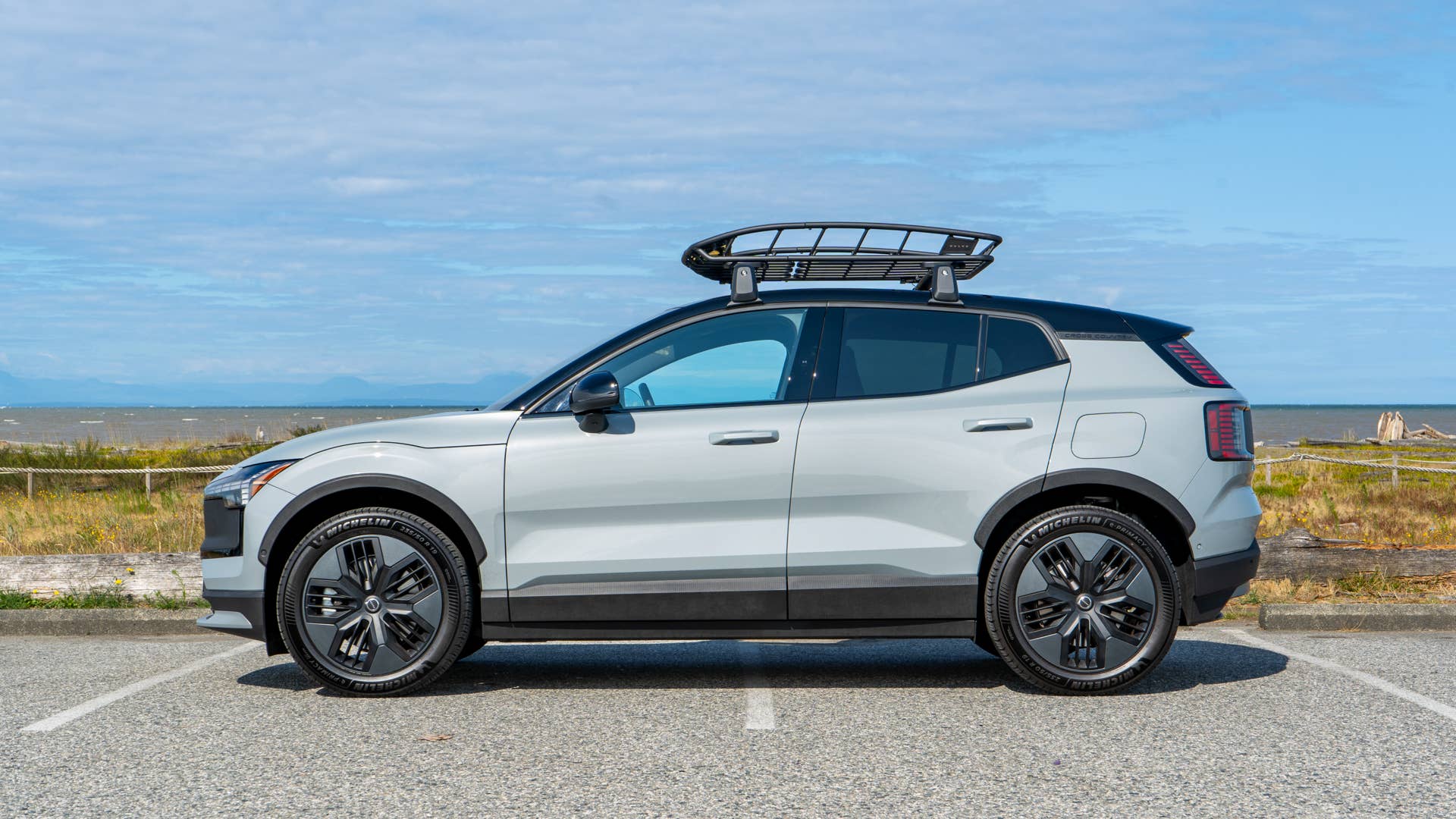
The Cross Country is more charming at first glance. It adds matte-black rugged trim, wheel-arch extensions, skidplate-style details, a raised suspension and, best of all, a topographic-map graphic stamped into the front panel where a grille would be on a combustion-powered Volvo. That detail does a lot of emotional work. It’s clever, specific, and just weird enough to feel authentically Volvo.
Most people seemed to respond more strongly to the Cross Country, and I can understand why. It looks like the more characterful object. It makes the EX30 feel more like an “XC” Volvo, not because it suddenly becomes a serious off-roader, but because it taps into the same outdoorsy design language that has worked for Volvo wagons and SUVs for decades. Still, I prefer the standard car’s elegance. The Cross Country has charm, but a little soft-roader cosplay comes with the package. It strikes a good balance, but I just don’t personally need the costume.
Cole Attisha
Driving Feel: Same Speed, Different Priorities
Both versions are hilariously quick. The standard EX30 Twin Motor Performance already felt excessive in the best way, like a tiny, tasteful Scandinavian EV that had somehow been given permission to behave like an electric rally hatch. The Cross Country keeps the same basic thrust. It does not feel slower or less urgent in normal driving, and full-throttle acceleration is still slightly ridiculous in something this small. The difference is what happens when the road gets interesting.
The standard EX30 feels more planted and more precise. Its lower ride height makes it the more enjoyable version on a twisty road, and that’s a major reason I prefer it. It still isn’t a traditional hot hatch, but it has that point-and-shoot small-car energy that makes the EX30 feel more alive than many larger EVs.
Shopping for a new car? Click here to get a great deal on your next vehicle. Powered by Carvana, no haggle pricing, 100% online.
Cole Attisha
The Cross Country is similarly sharp in basic responses, but its raised suspension adds more body roll. That sounds negative, but I would call it a fair tradeoff rather than a flaw. It rides better than the regular EX30, especially over rough urban pavement, and that matters if most of your driving is commuting, errands and highway use rather than looking for corners.
Think of it this way: if the regular EX30 is a Subaru Impreza, the Cross Country is a Subaru Crosstrek. Same basic idea, different stance, different attitude, different buyer. The regular EX30 is for drivers, but the Cross Country is for people who want more comfort and a bit more weekend-adventure credibility.
Cole Attisha
Cole Attisha
Ride, Comfort, And Daily Use
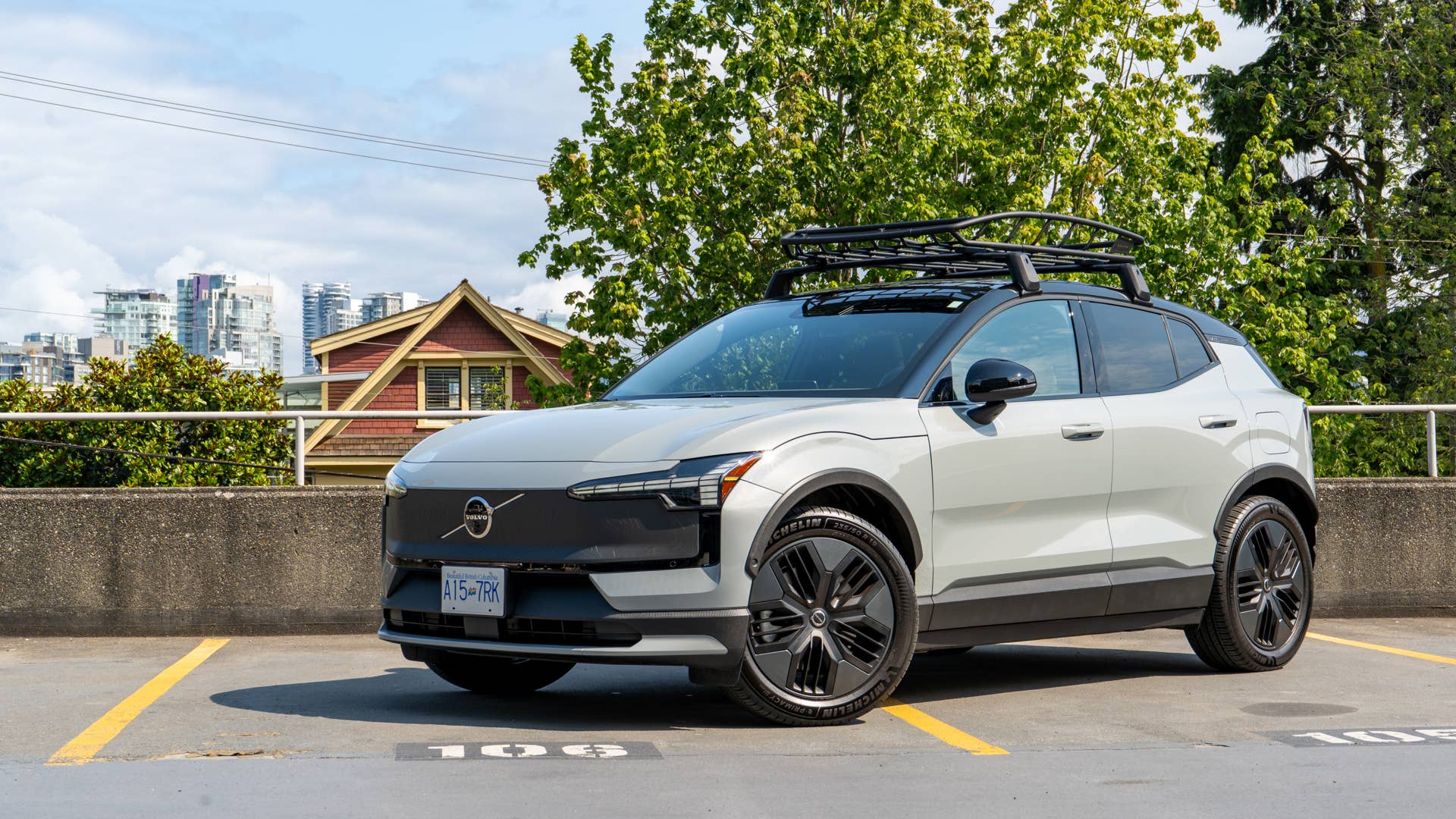
The Cross Country is the easier one to live with day to day. That surprised me less than it probably should have. The extra 19 mm of ride height gives it a softer, more forgiving feel, and Volvo lists the Cross Country with front and rear skidplates, wheel-arch extensions, raised suspension and 235/50R19 tires on matte-black aero wheels. It still feels small, easy to park, and simple to place in traffic, but it’s more comfortable than the standard EX30.
The standard car, meanwhile, feels more stable at highway speeds and cleaner dynamically. It’s the one I would rather commute in, partly because I prefer the way it drives and partly because I prefer its less rugged visual personality. That might sound backwards, considering the Cross Country rides better, but daily driving is emotional too. I would rather walk up to the regular EX30 every morning.
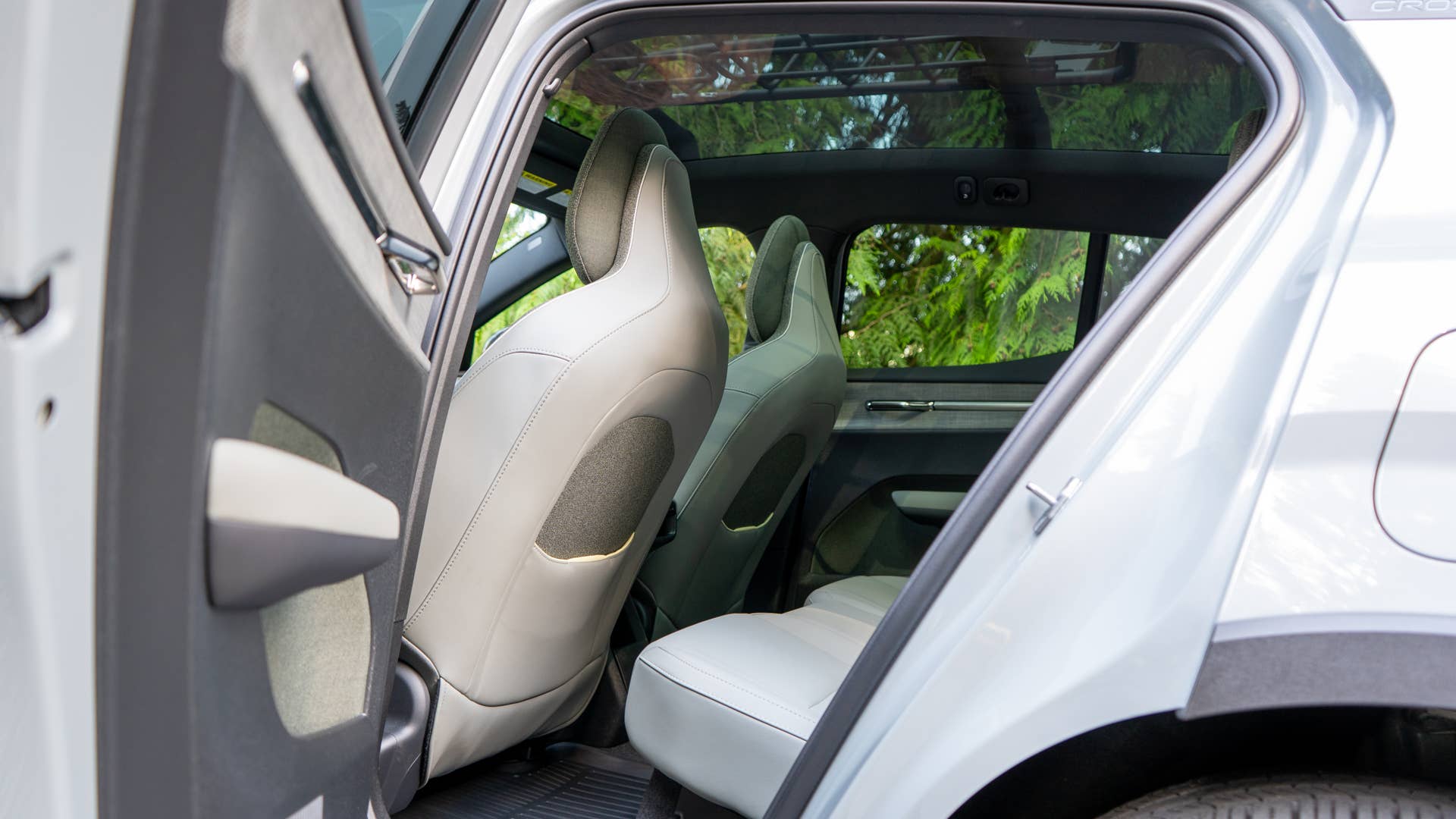
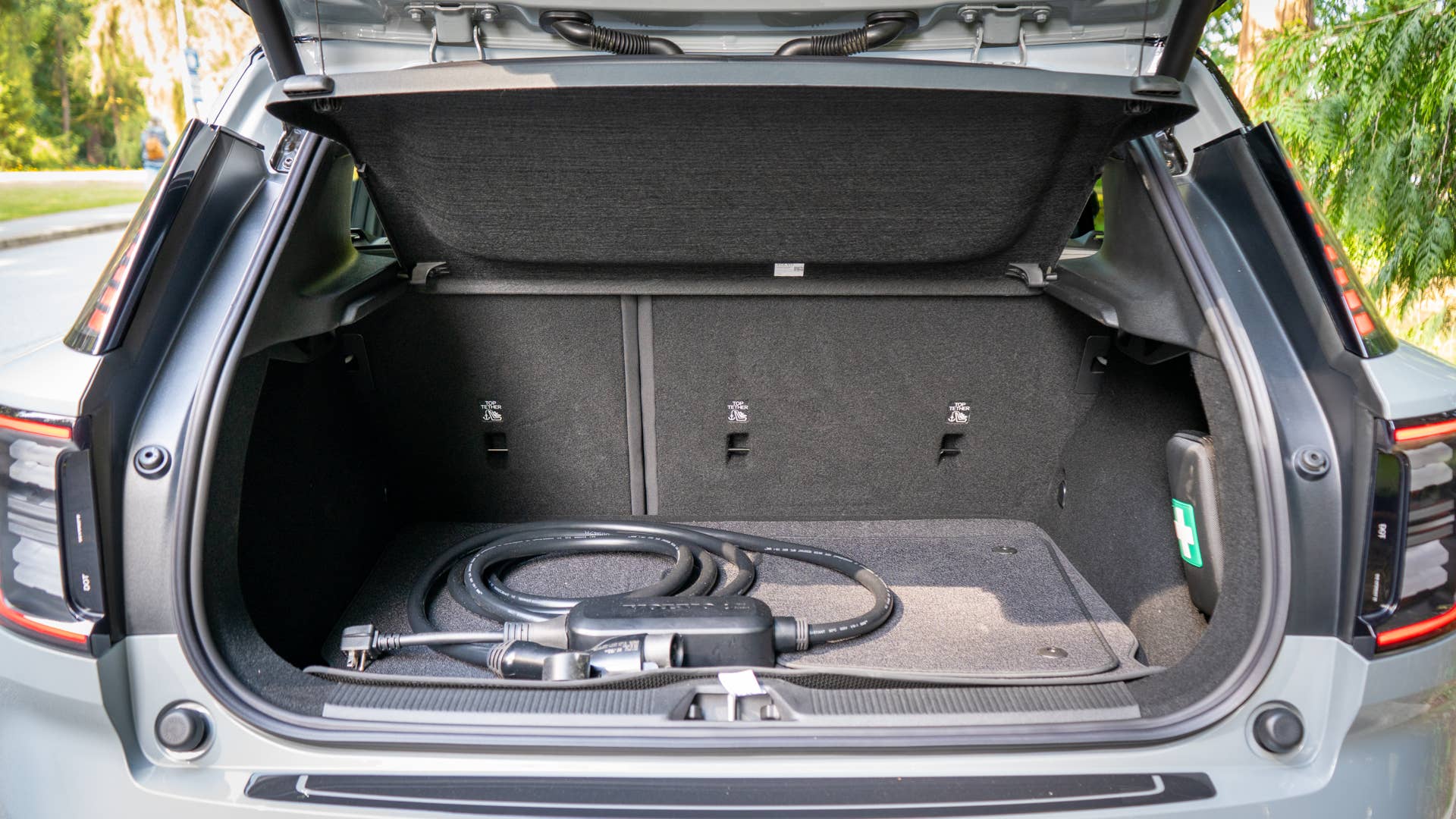
Passenger space was workable in both. The EX30 is a tiny vehicle, but it does a good job of avoiding the punishment-cell feeling that some small EVs create. The Cross Country did feel slightly more practical, partly because the whole presentation suggests more usefulness, and partly because its ride makes the compact footprint easier to forgive. The roof basket, though, has consequences. It adds wind noise, and I would be shocked if it didn’t hurt efficiency too.
Cole Attisha

Cole Attisha
Interior And Tech: Same Brilliance, Same Frustrations
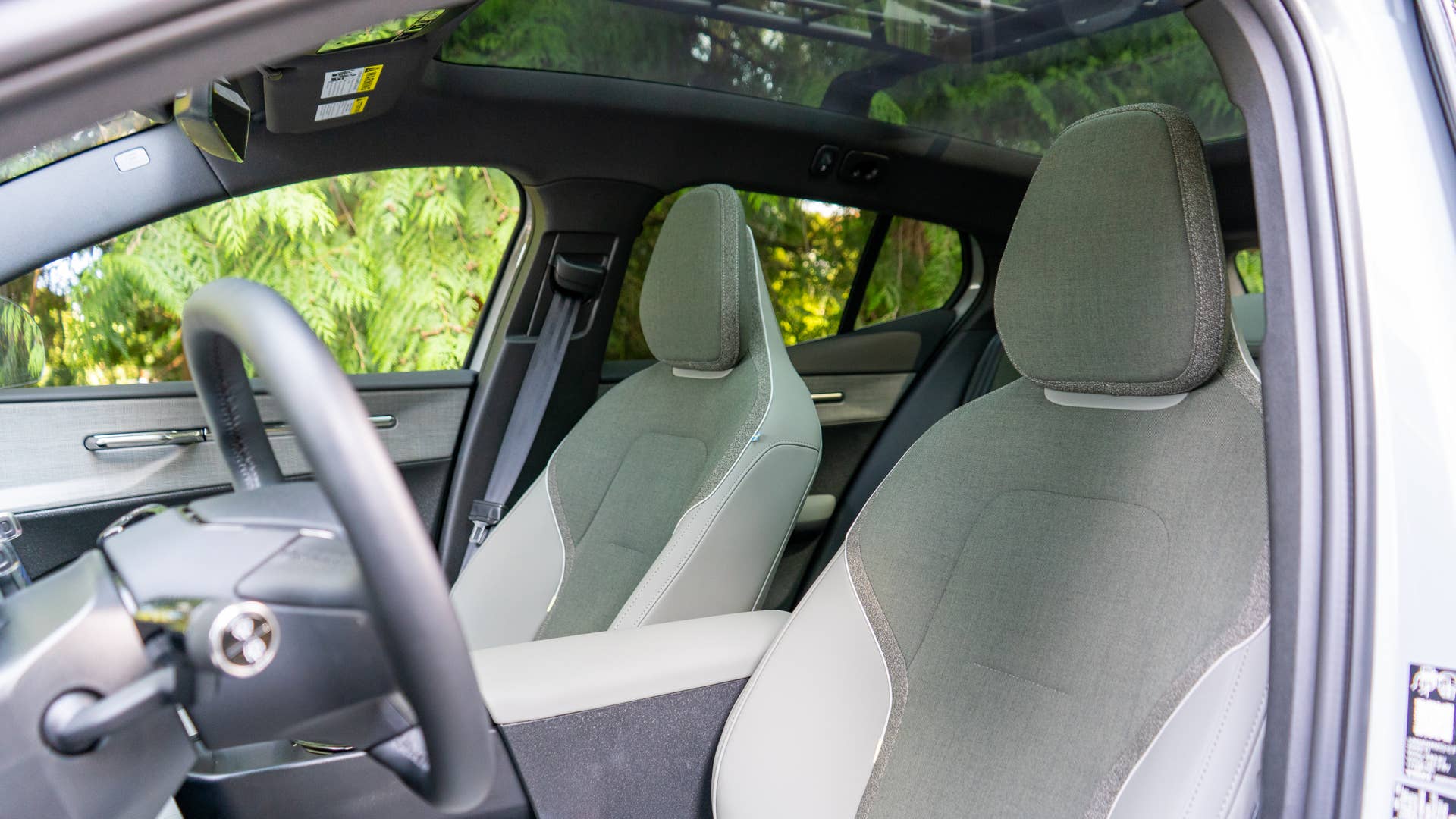
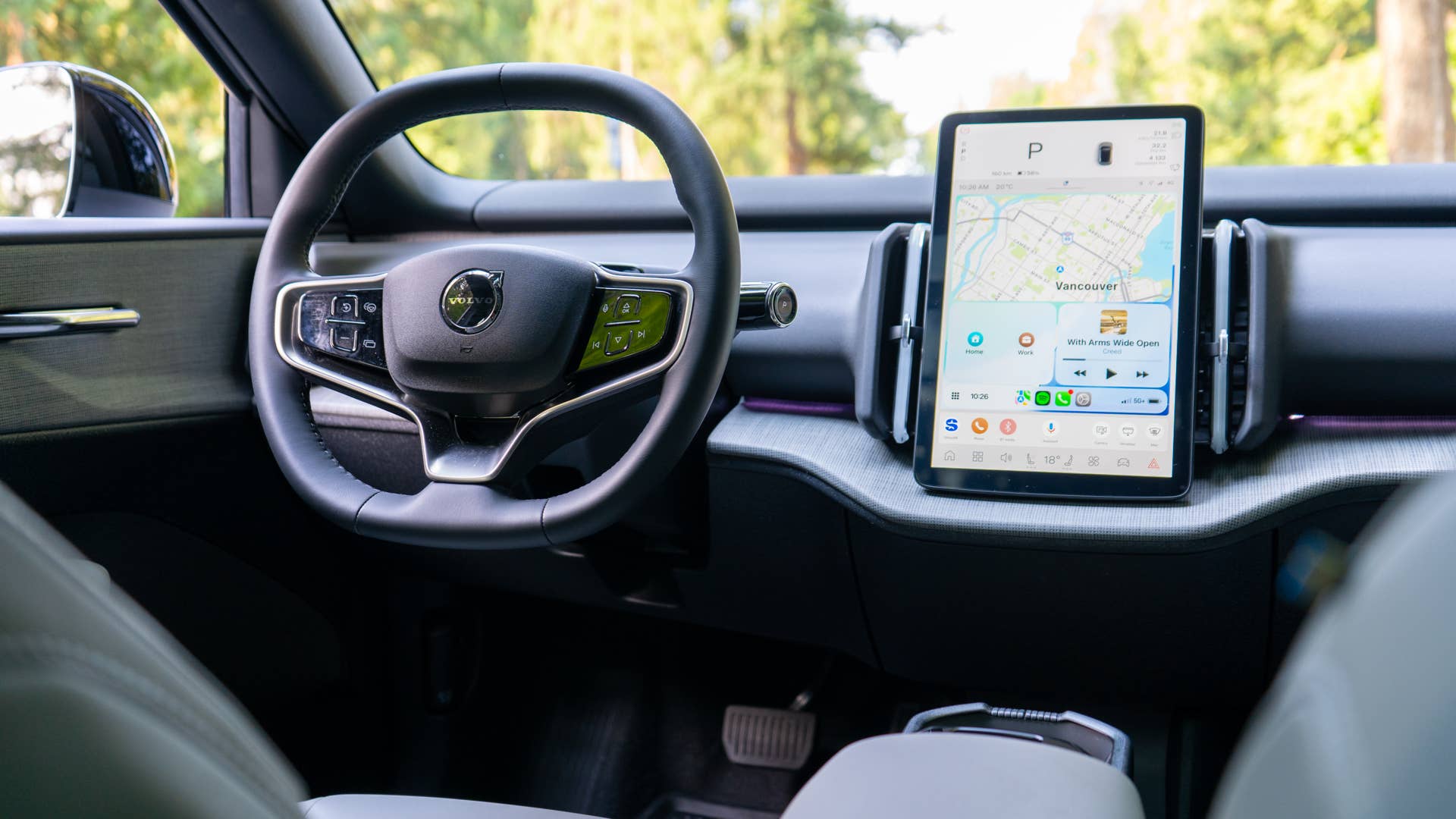
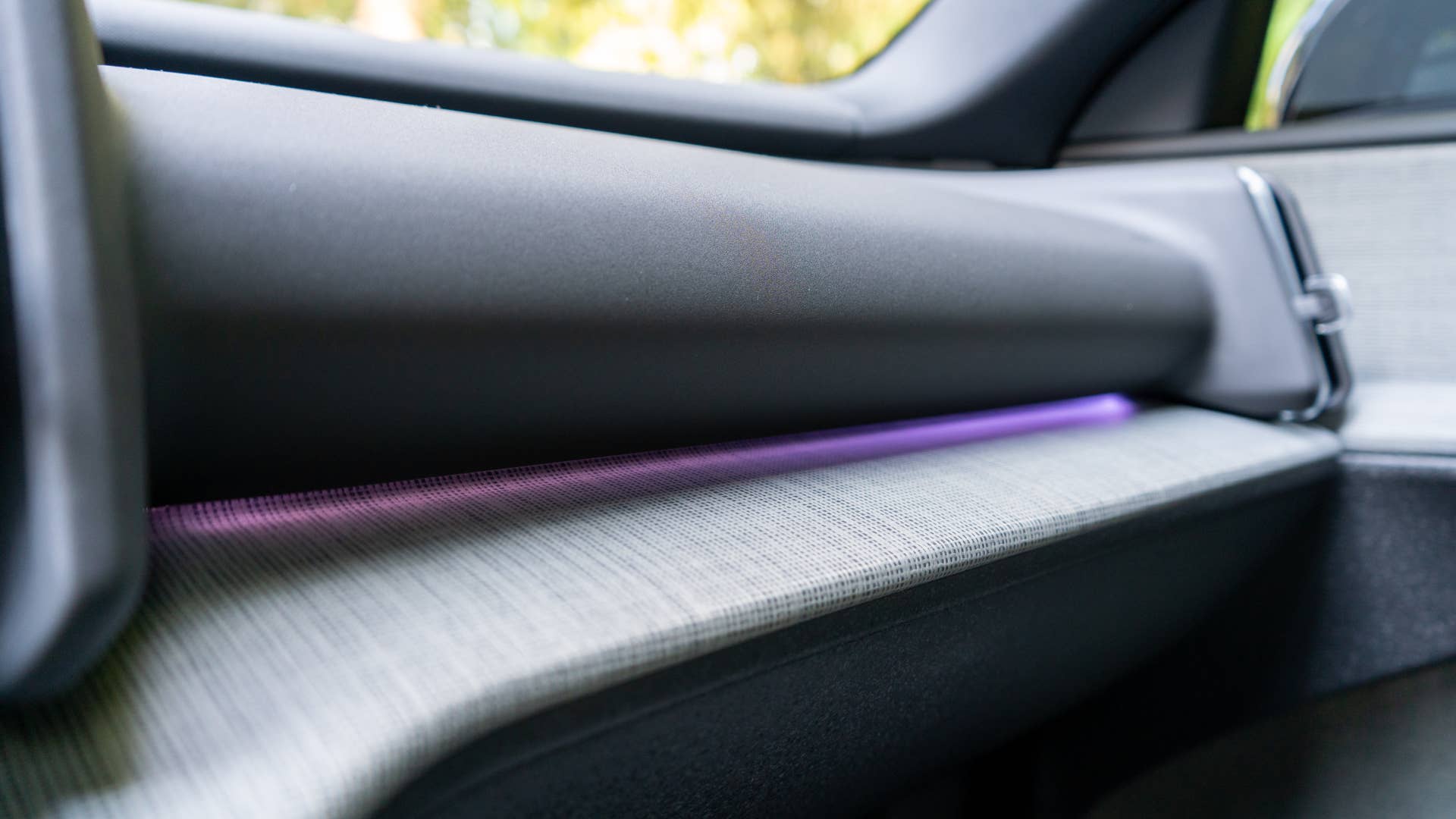
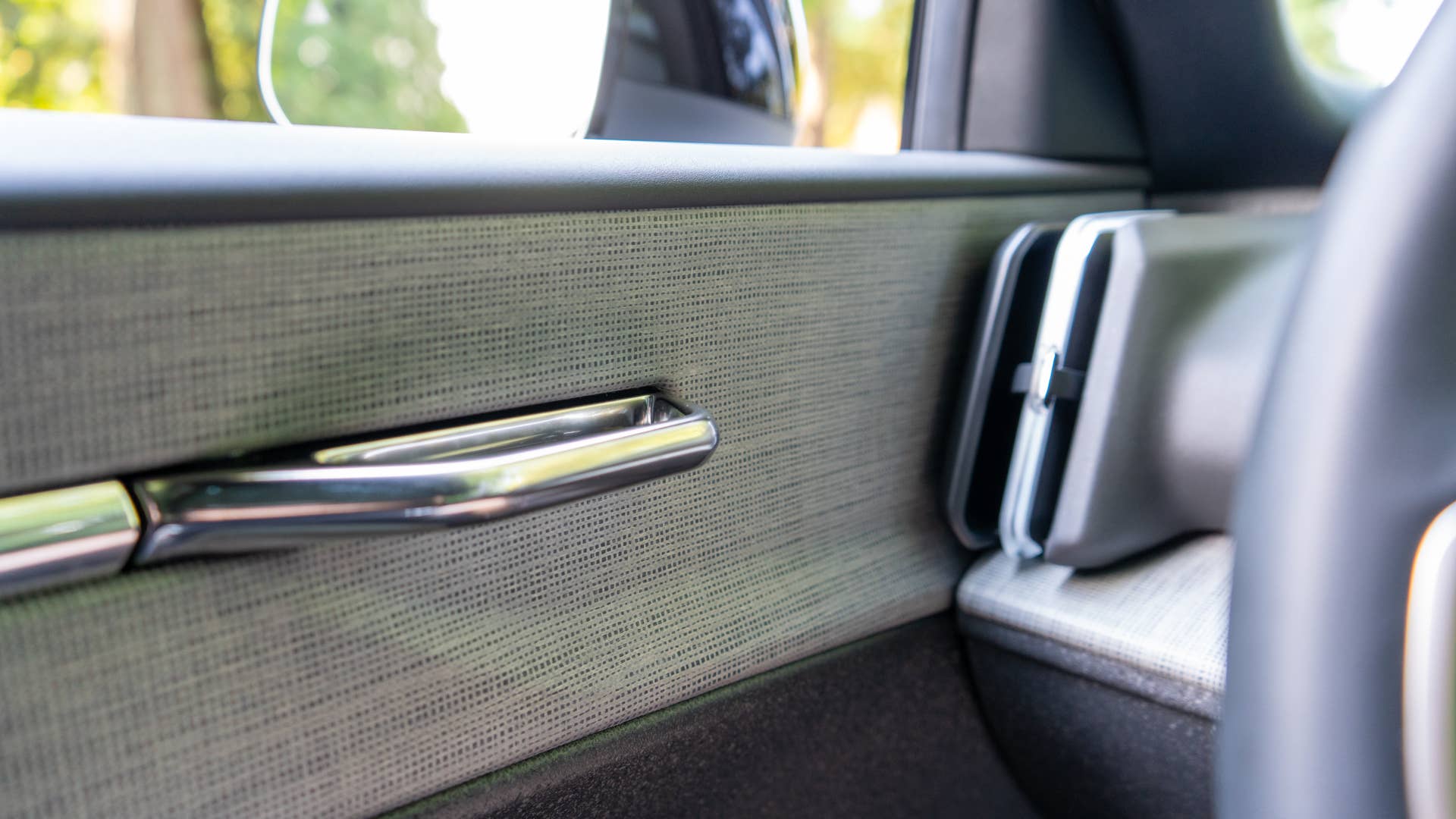
Inside, these two are more alike than different. Both cabins are visually excellent. The regular EX30 I drove had blue upholstery and a mixed-material theme that gave it warmth and character. The Cross Country’s Pine Wool Blend and Nordico interior is equally appealing: sustainable-cool, properly Scandinavian and premium-feeling in a way that does not rely on old luxury clichés. The Cross Country’s fixed panoramic roof, Harman Kardon audio, power front seats, and 360-degree camera also help it feel well equipped.
But both versions suffer from the same control philosophy. I still want a real instrument cluster. I still want more physical buttons. I still do not like adjusting the mirrors through the screen using steering-wheel arrows. I still think every window should have its own switch, rather than two switches and a separate button that changes their function from front to rear. This is where Volvo’s minimalism stops feeling clever and starts feeling self-satisfied.
Cole Attisha
Cole Attisha
The same goes for the driver-monitoring and safety behaviour. In my regular EX30 review, I noted how the car could scold me for looking through a bend rather than staring straight ahead, as if aiming my vision down the road was somehow a lapse in attention. The Cross Country had its own version of that annoyance, including abrupt braking interventions when the car seemingly misread parked vehicles near curves. Those are not small issues. These systems need trust, and when they behave unpredictably, they make an otherwise charming car more difficult to recommend.
Cole Attisha
Range And Value: Pick The One You Love Most
The regular EX30 has the range advantage, and that’s key when the available range is already this low. With up to 253 miles of EPA range in Twin Motor Performance form, it doesn’t quite dominate the segment for range-per-dollar. The Cross Country drops that figure to 227 miles, which isn’t a complete disaster, but it is a noteworthy tradeoff. It’s still usable, but still not exactly generous for something with an adventure-themed pitch. Would I pay more for the Cross Country? Personally, no. But I understand why someone else would.
If you prefer the rugged look, the more comfortable ride, the topographic-map details, and the added sense of focus, the Cross Country is worth the extra money. It’s the version that makes the EX30 feel more competitive against adventure-styled EVs, and it turns the Volvo’s quirkiness into a more obvious lifestyle pitch.
But if you’re choosing with your head, neither EX30 is the easy answer. Logic-first buyers should probably look elsewhere. There are EVs with more range, more space, and fewer frustrating controls for similar money. The EX30’s value depends almost entirely on whether you connect with its size, design, and personality. In my earlier review, I came to the same basic conclusion: the EX30 isn’t bad value, but it carries an asterisk because it asks buyers to prioritize style, character, and performance over cold practicality.
Cole Attisha
Verdict: Which EX30 Would I Buy?
Personally, if I had to pick one, I would choose the standard EX30 Twin Motor Performance, but that doesn’t mean it is objectively the better version by any means. It only means it’s the one that best fits my own priorities. I would rather trade off the Cross Country’s rugged styling and better ride for the regular EX30’s sharper handling, more elegant restraint, and slightly stronger range. I like the cleaner look, the lower stance, and that it lets the shape and lighting do most of the talking.
The Cross Country, on the other hand, is for the buyer who wants the EX30’s charm but wishes it looked a bit tougher, rode a little better, and felt more ready for gravel access roads, ski hills, and weekend escapes. It isn’t a hardcore off-roader, but it feels authentically “XC” in a way that suits Volvo’s personality. It’s the one that will probably make more people smile when they first see it.
The standard EX30 is the better fit for drivers and design minimalists, and the EX30 Cross Country is the better fit for comfort-seekers and weekend adventurists. Both are easy to like, but both are difficult to recommend without qualifications. Both have the same good bones and many of the same maddening flaws. The regular EX30 feels like the purer expression of the idea, and the Cross Country gives that idea a more specific outdoorsy focus. My head says neither is the obvious logical choice, but my heart says the regular EX30 is the one I would want in my driveway.
Autoblog aims to feature only the best products and services. If you buy something via one of our links, we may earn a commission.
About the author

Cole Attisha
Staff Writer, Autoblog