
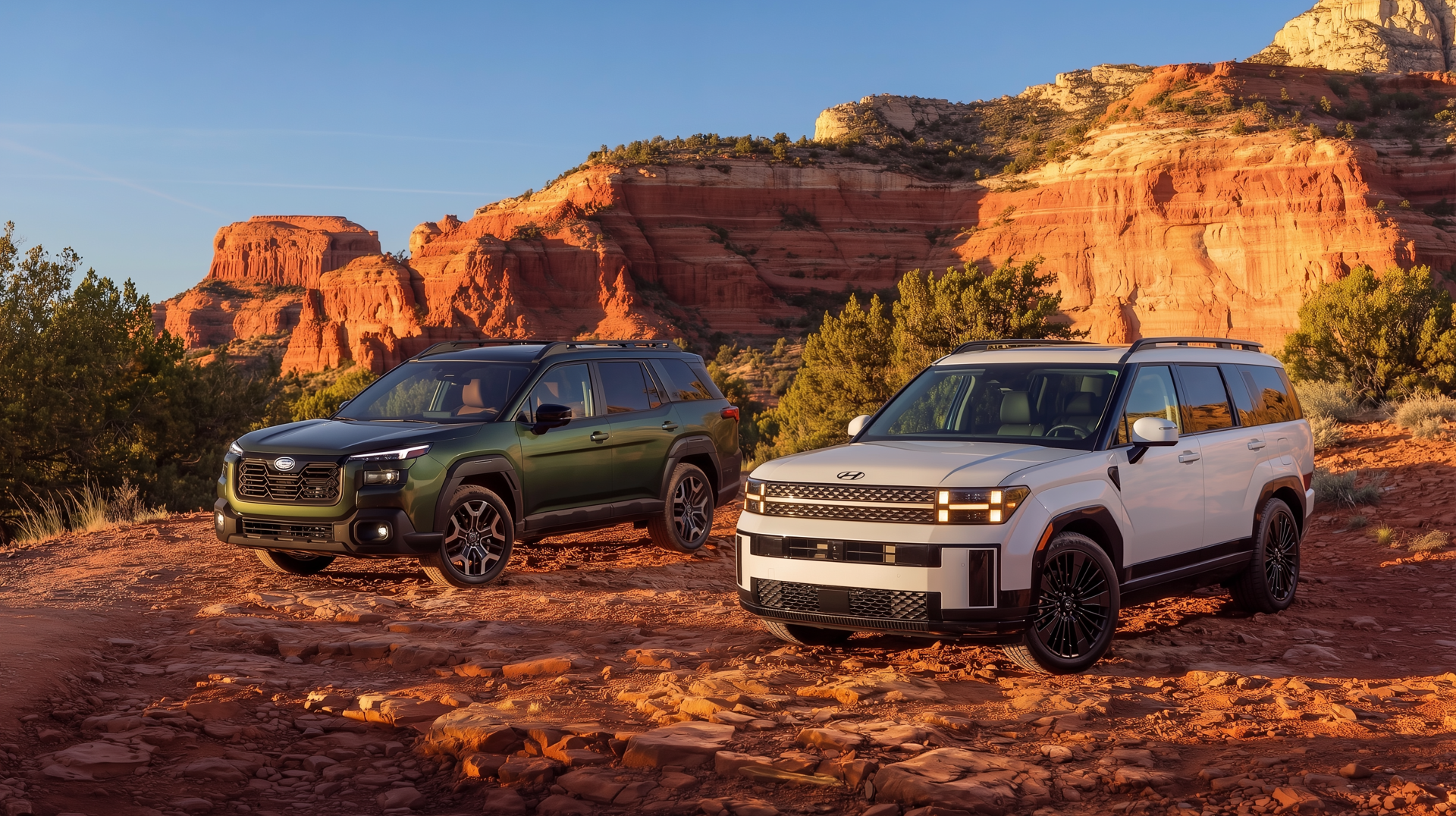
Some buyers refuse to be categorized. Though they may prefer boxy cars, they don’t often appreciate being placed into boxes in the categorical sense within the automotive industry, instead preferring something that transcends strict segment rulings—one vehicle that just makes sense. One that can handle the school run, a Costco stop, a road trip, maybe a muddy trailhead, maybe a ski weekend, and maybe a life that is split between the denseness of urban civilization and the freedom of the great outdoors.
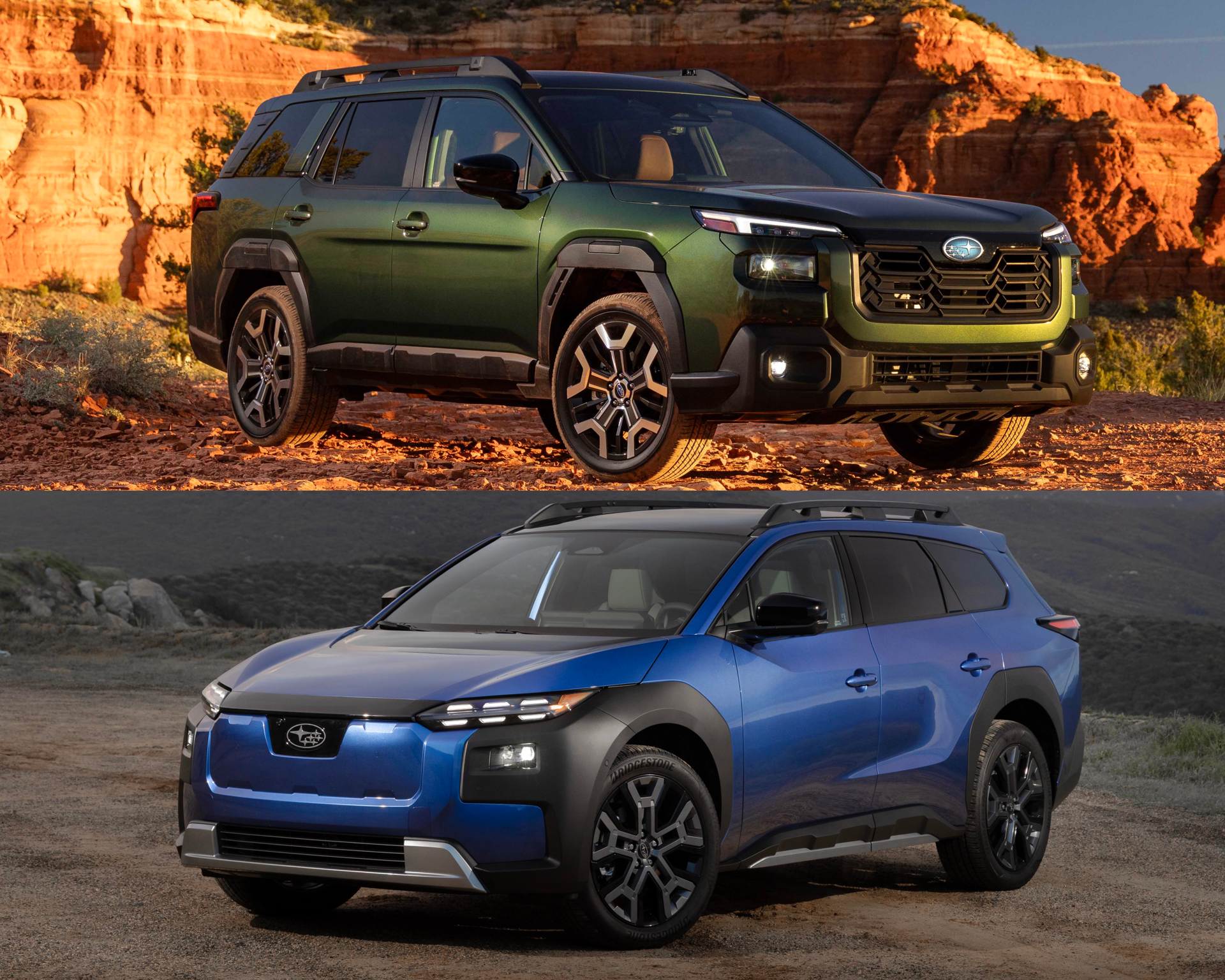
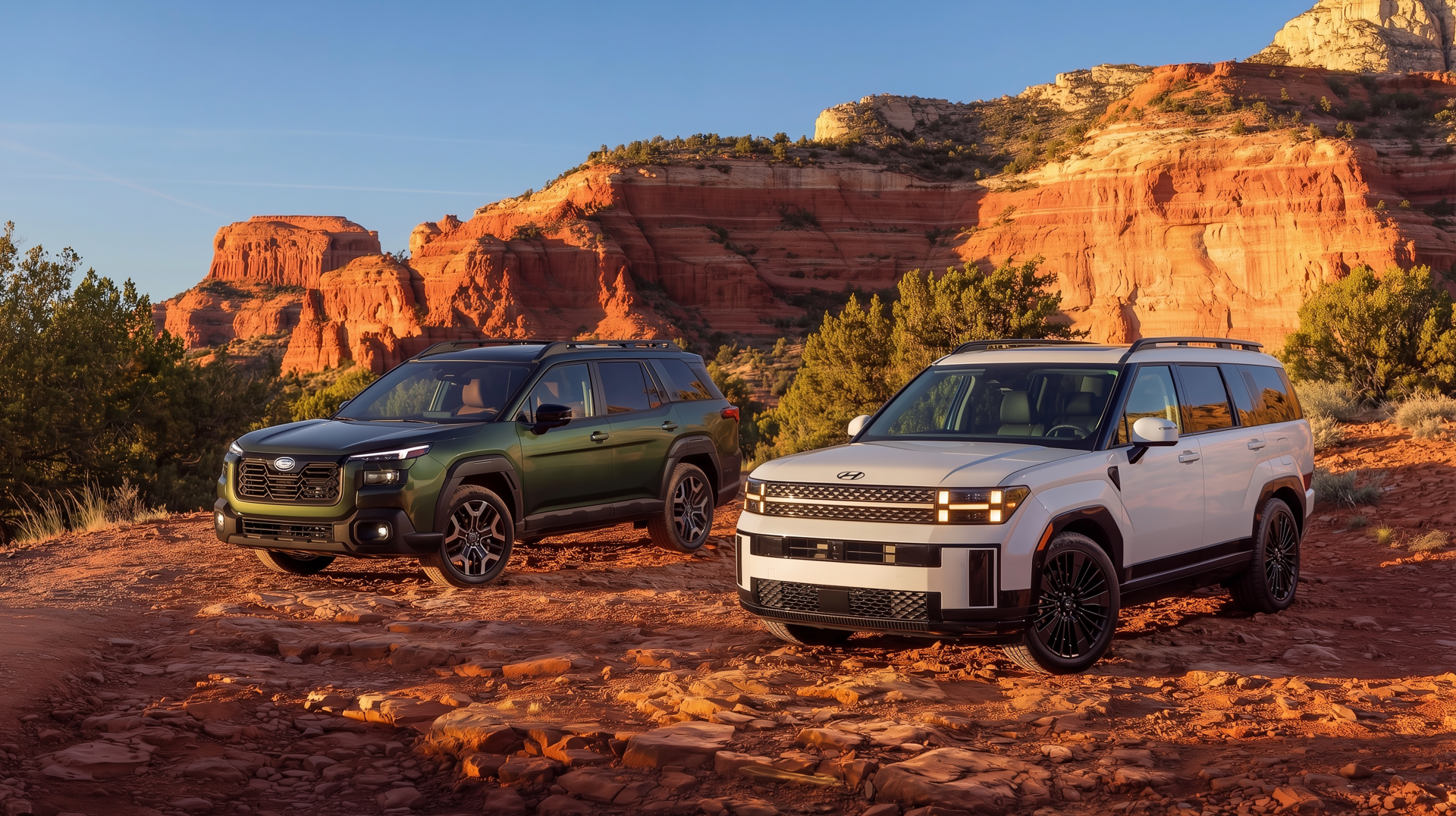
The 2026 Hyundai Santa Fe Hybrid and the all-new 2026 Subaru Outback are not identical competitors in the standard sense. The Hyundai is a three-row midsize crossover with a boxy shape, a hybrid option, and a cabin designed with families very much in mind. The Subaru is still, in spirit, the thinking person’s wagon-turned-SUV-adjacent Swiss Army knife, now in its seventh generation and visually pushed further toward traditional SUV territory than ever before. But once you look at how people actually shop, especially in the mid-$40,000 range, these two undoubtedly collide. A Santa Fe Hybrid SEL AWD starts at $40,240, a Limited Hybrid AWD starts at $47,250, and a Calligraphy Hybrid AWD lands at $50,250. Subaru’s Outback lineup starts at $34,995, but the trims that really overlap with the Santa Fe Hybrid are the Limited XT at $44,365, Touring XT at $47,995, and even the Wilderness at $44,995.
Driving them back-to-back makes the contrast obvious. The Outback feels like it was engineered for people who would rather be driving out of a city rather than towards one. The Santa Fe Hybrid feels like a family-first machine that knows most of its life will be spent in suburbia, heavy traffic, and chaotic parking lots, but is smart enough not to become useless the moment it leaves city limits and paved roads. Both SUVs aim to tackle the same problems for buyers, albeit with different priorities and execution strategies.
Cole Attisha
Driving Impressions: The Subaru Feels More Native Off the Grid, the Hyundai Feels Better Calibrated for Real Life
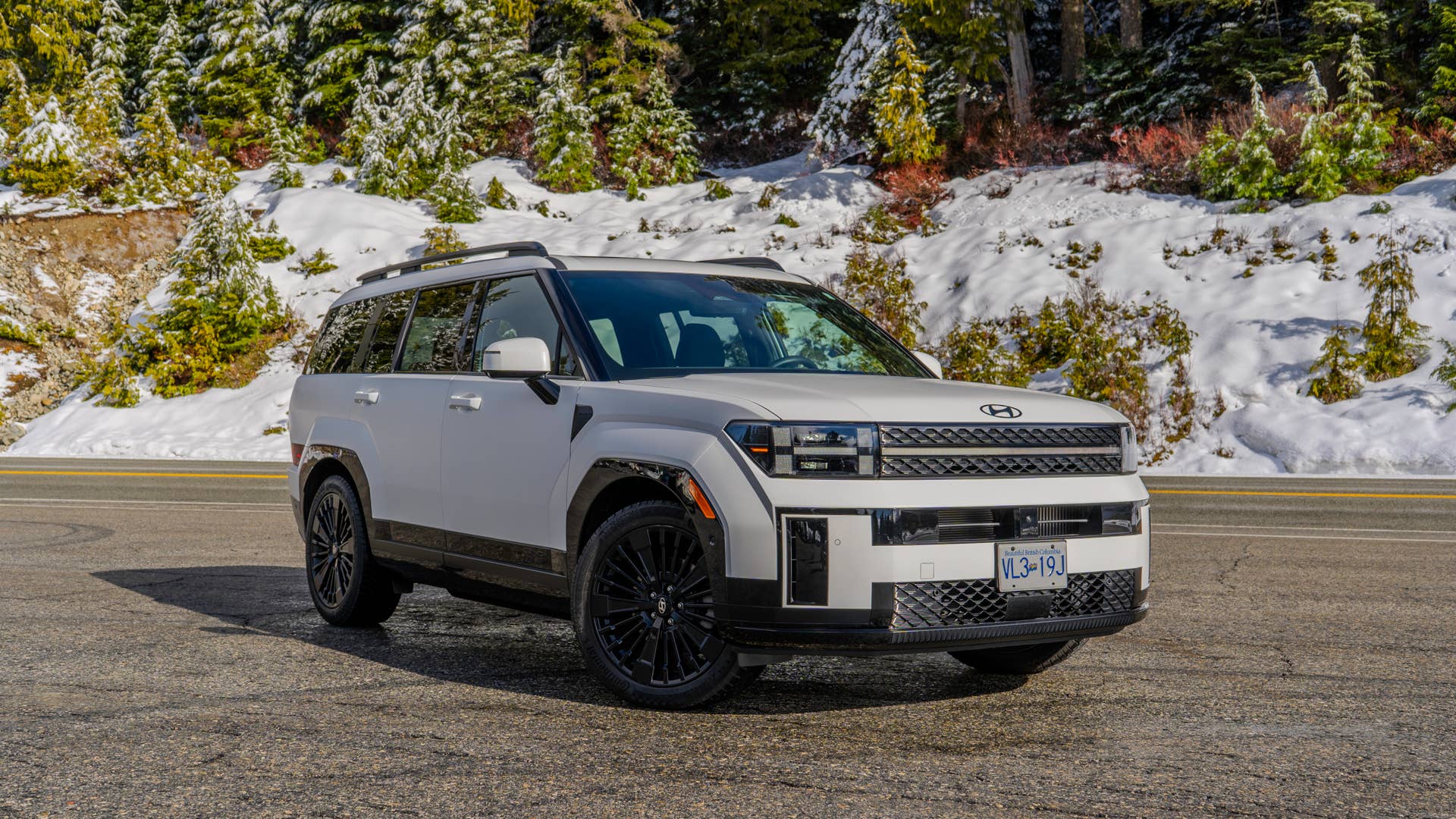
The Santa Fe Hybrid’s core mechanical package is straightforward enough: a turbocharged 1.6-liter four-cylinder paired with an electric motor, good for 231 combined horsepower and 271 lb-ft of torque, routed through a six-speed automatic rather than the sort of power-sapping CVT that makes car enthusiasts mutter obscenities under their breath. Hyundai’s non-hybrid Santa Fe, meanwhile, gets a 277-hp, 311-lb-ft 2.5-liter turbo with an eight-speed automatic. The Hybrid is the one that makes the most philosophical sense in the lineup, though, because it best suits the vehicle’s character. It is smoother, more relaxed, and more cohesive than a lot of family crossovers that try too hard to be athletic at every moment.
That is what makes the Santa Fe Hybrid so easy to recommend to people who spend most of their time in gridlock traffic. It does not feel especially eager, but it feels properly sorted. The steering is nicely weighted, the ride is polished, and the whole thing carries itself with a comfort-first maturity that families will appreciate. In my Santa Fe review, I likened it to something of a modern-day reincarnation of the Ford Flex, because the Hyundai has that same squared-off practicality and that same sense of being designed around passengers rather than around image. The difference is that the Hyundai is vastly more modern and far more efficient. Officially, AWD hybrids are rated at 35 city, 34 highway, and 34 combined, while FWD versions are rated at 37/36/36.
Need New Tires? Save Up To 30% at Tire Rack
Find the perfect tires for your exact vehicle and driving style. Click here to shop all top-tier brands, including Michelin, Bridgestone, and more, directly at Tire Rack.
Cole Attisha
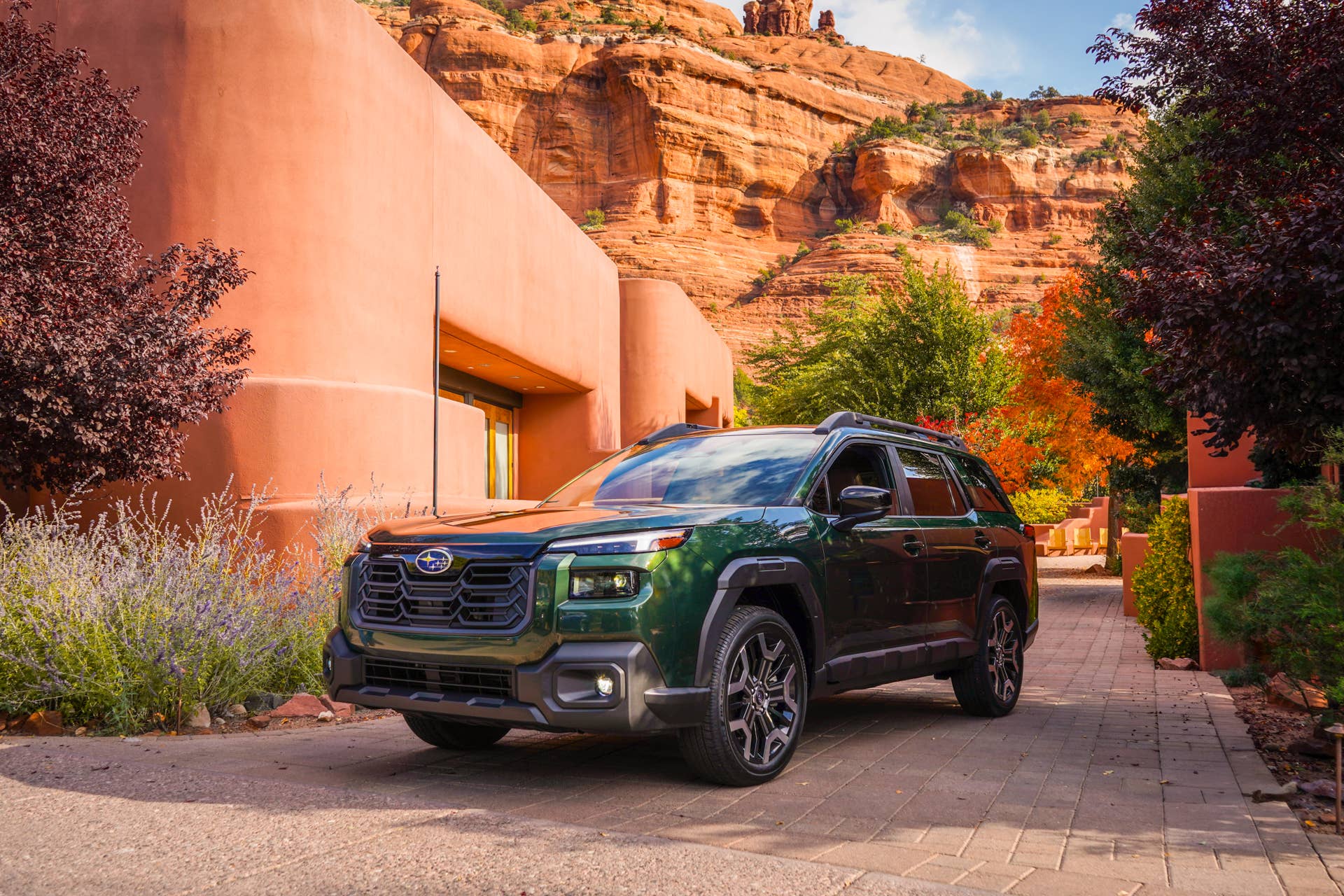
The Subaru offers two different personalities depending on trim. Premium, Limited, and Touring models use a 2.5-liter naturally aspirated flat-four with 180 horsepower and 178 lb-ft of torque. Limited XT, Touring XT, and Wilderness models move to the turbocharged 2.4-liter flat-four with 260 horsepower and 277 lb-ft. Every Outback uses a CVT and standard symmetrical all-wheel drive. On paper, the turbo Outback XT is the Santa Fe Hybrid’s more direct rival in both price and output. In feel, though, the Santa Fe Hybrid and Outback XT arrive at competence from opposite directions. The Hyundai feels cleaner and more conventional in the way it delivers power. The Subaru feels torquier and more muscular in the midrange, but never entirely escapes the elastic character of its CVT.
The Outback, by contrast, still feels like it has one boot in the wilderness, even in its new, more polished form. Subaru says the new generation improves quietness, introduces dual-pinion steering, and leans into greater overall refinement, and those improvements are tangible. The naturally aspirated version is the one that makes the most emotional sacrifices. It will do the job, and for many buyers that will be enough, but once you have driven the turbo XT, it is hard not to see the base engine as the one you buy because you value simplicity and price rather than delight.
Still, the Subaru has an earthy sense of all-terrain competence the Hyundai never fully replicates, even in XRT guise. Standard all-wheel drive, 8.7 inches of ground clearance on most trims, available 9.5 inches in Wilderness form, X-Mode, and the Outback’s long-standing sense of mechanical robustness all make it feel more at home the farther you get from dense urban life. The Santa Fe can absolutely play adventurer, especially in XRT or AWD Hybrid form, but the Outback still feels like the one that isn’t just wearing a costume.
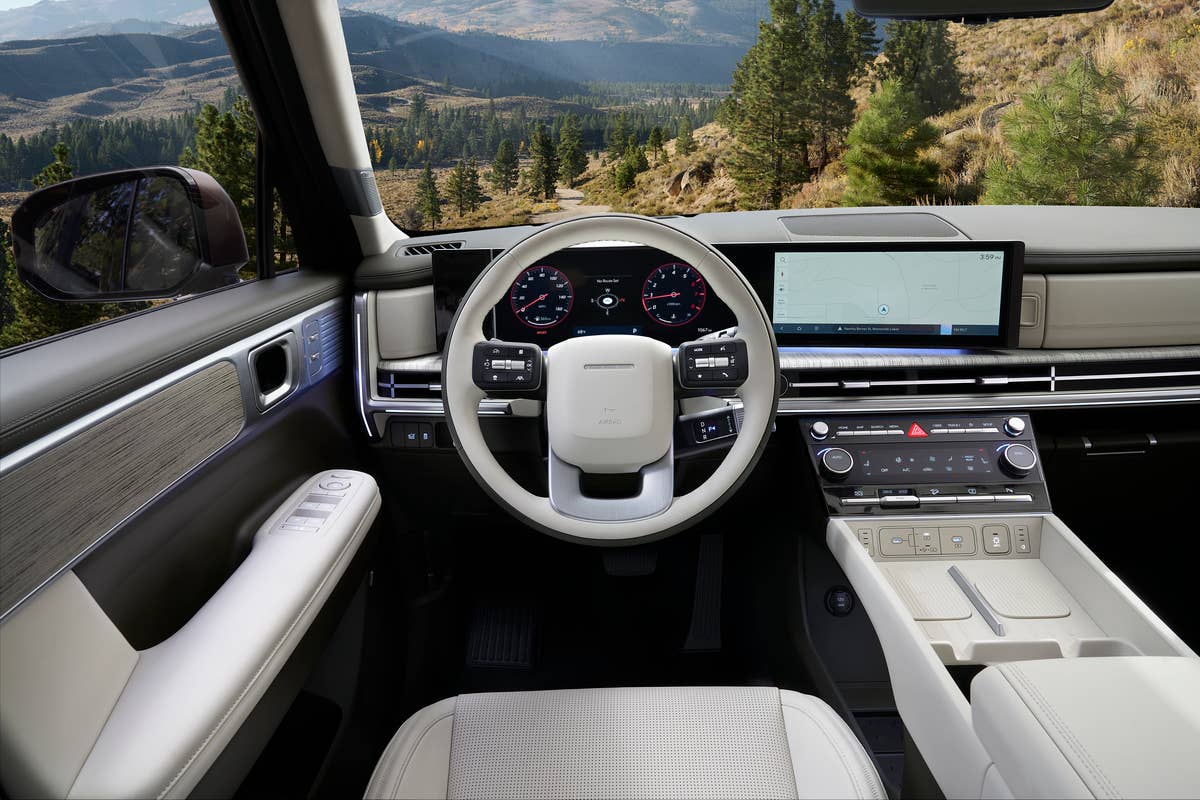
Hyundai
Interior and Technology: Hyundai Wins on Drama, Subaru Wins on Restraint
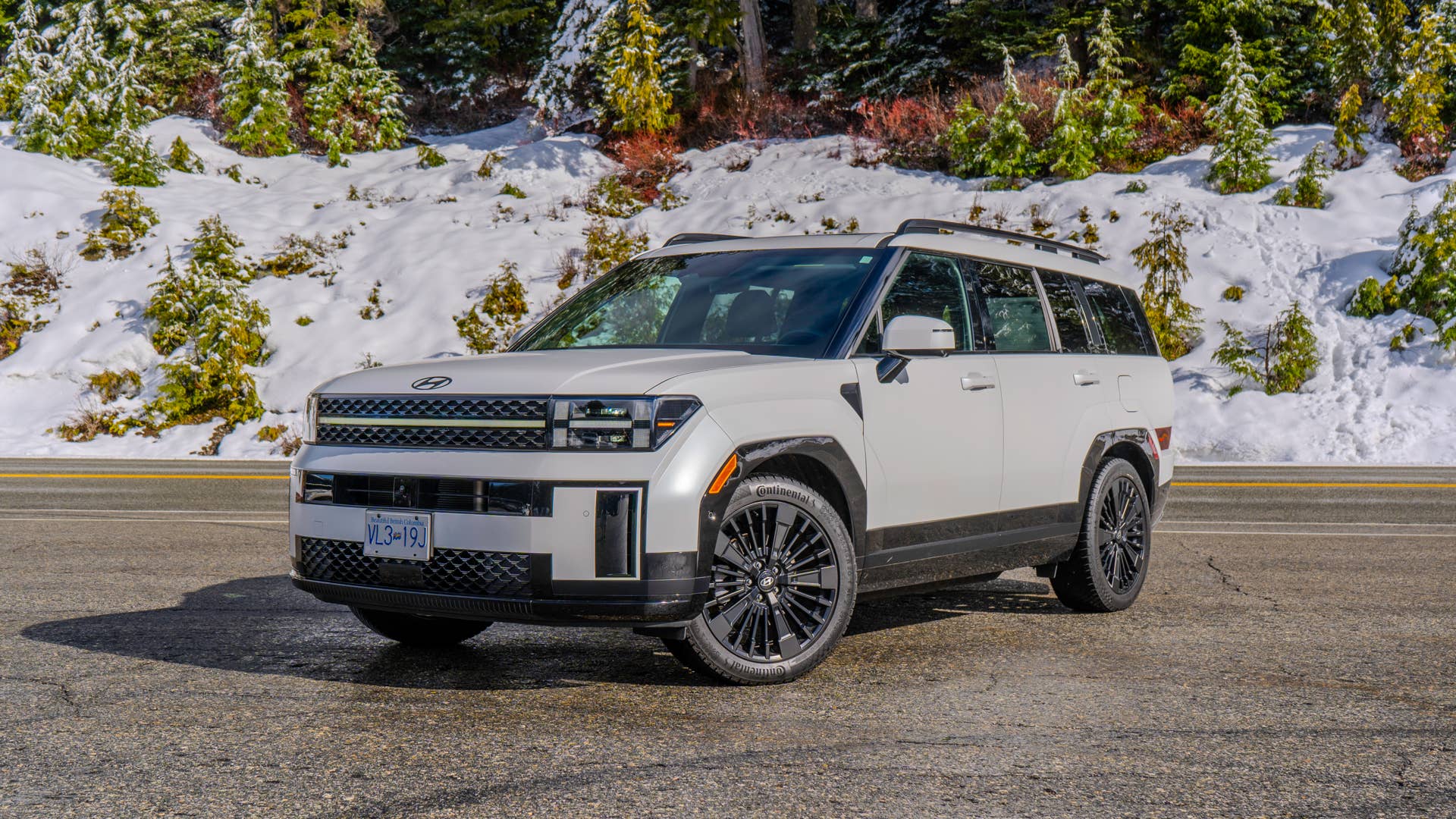
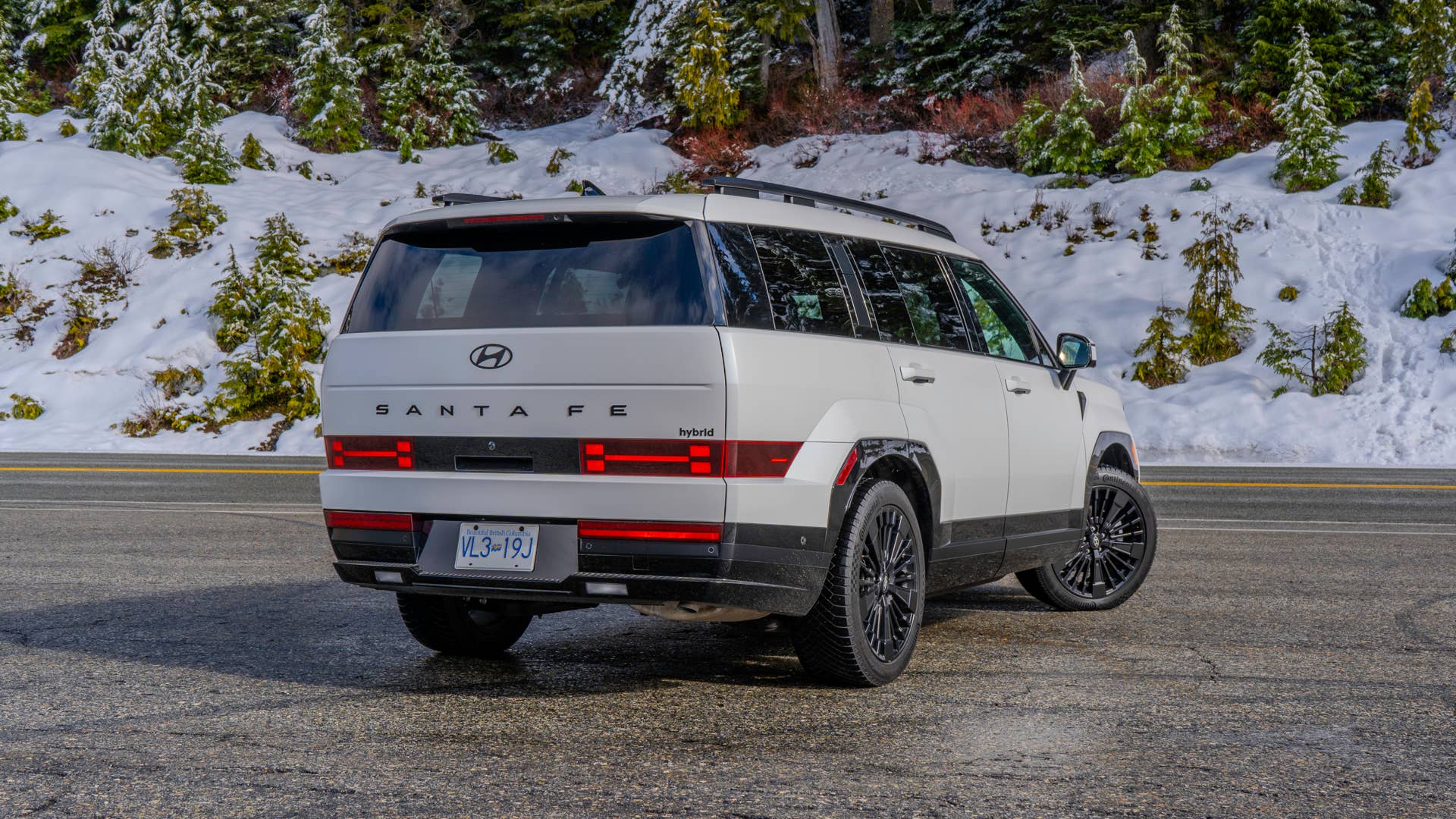
The Santa Fe’s cabin is one of the main reasons it makes such a strong case for itself, especially since Hyundai claims it was designed from the inside out. Hyundai has become extremely skilled at giving mainstream buyers an interior that feels more expensive than the badge (or four dots) on the steering wheel might suggest, and the Santa Fe is one of its best recent examples. Most trims seat seven, while Limited and Calligraphy can be configured with either a bench or second-row captain’s chairs depending on spec. Higher trims add a 12.3-inch digital cluster, surround-view monitor, dual wireless chargers, Hyundai Digital Key 2 Premium, and on Calligraphy, Highway Driving Assist 2. It feels modern, thoughtful, and family-centric without looking like it was designed by a committee of accountants.
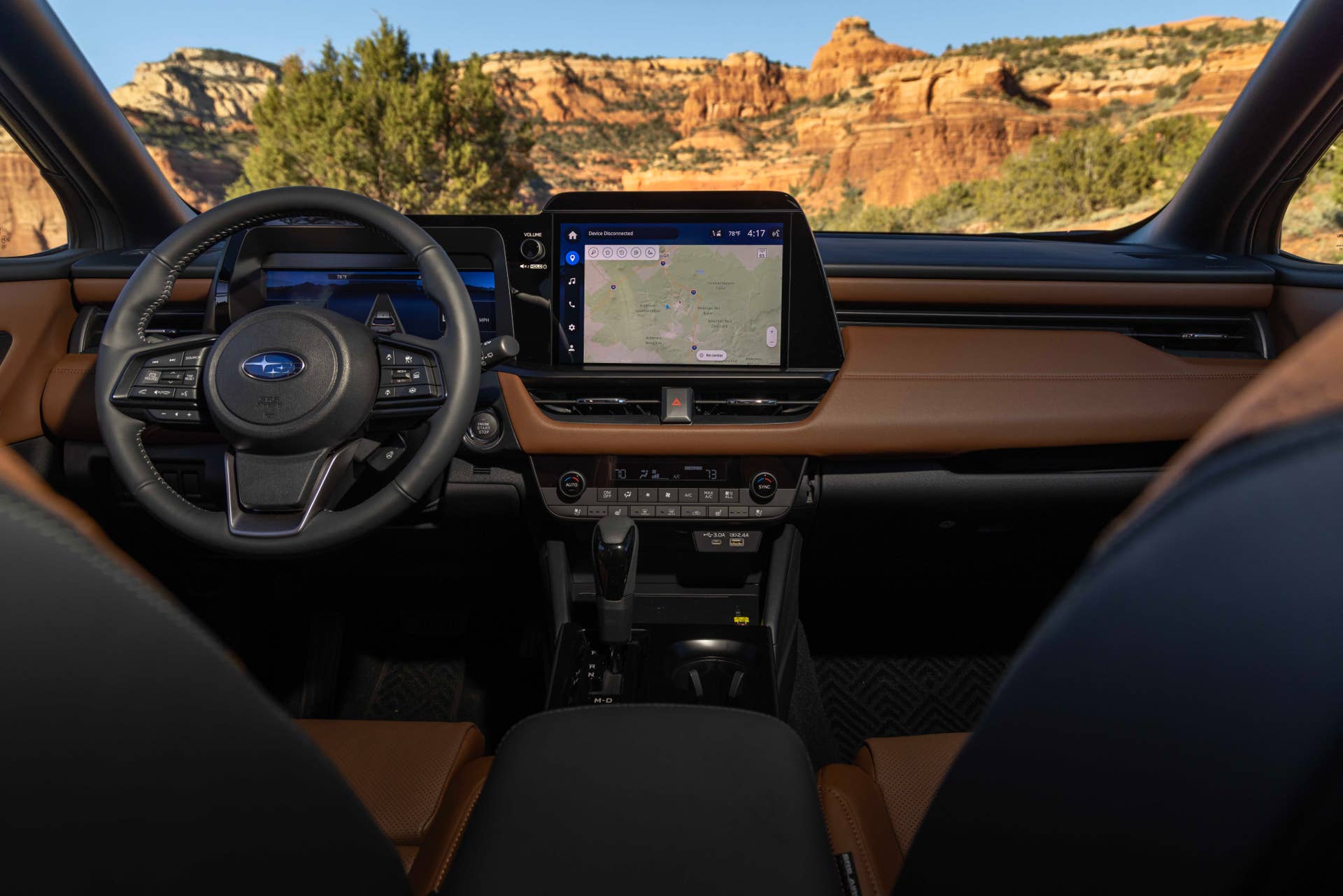
Subaru
The Subaru, to its credit, has moved in a smarter direction than before. The new Outback gets a standard 12.1-inch touchscreen and 12.3-inch digital cluster across the lineup, and crucially, Subaru brought back dedicated hard-button climate controls instead of burying every basic interaction inside a glossy slab of digital inconvenience that never seemed eager to load up. The new infotainment system uses a Snapdragon 8 Automotive processor, Subaru says processing speed is up to 2.5 times faster, and Touring/Touring XT trims add a more advanced highway-assist suite with limited hands-free capability on major highways at speeds up to 85 mph. For a company not always known for class-leading cabin tech, this is a legitimate step forward towards technological seamlessness.
Still, the Hyundai feels more special inside. The Santa Fe understands that family buyers still appreciate visual drama, nice materials, clever storage, and the simple emotional relief of sitting in something that does not feel cheap or joyless. The Subaru’s interior is arguably more ergonomic and more honest. The Hyundai’s is more stylish and more overtly upscale. Which you prefer depends on whether you want your family vehicle to feel like a tool or like a reward for surviving the week.
Cole Attisha
Practicality: The Santa Fe Thinks Bigger Because It Is Bigger
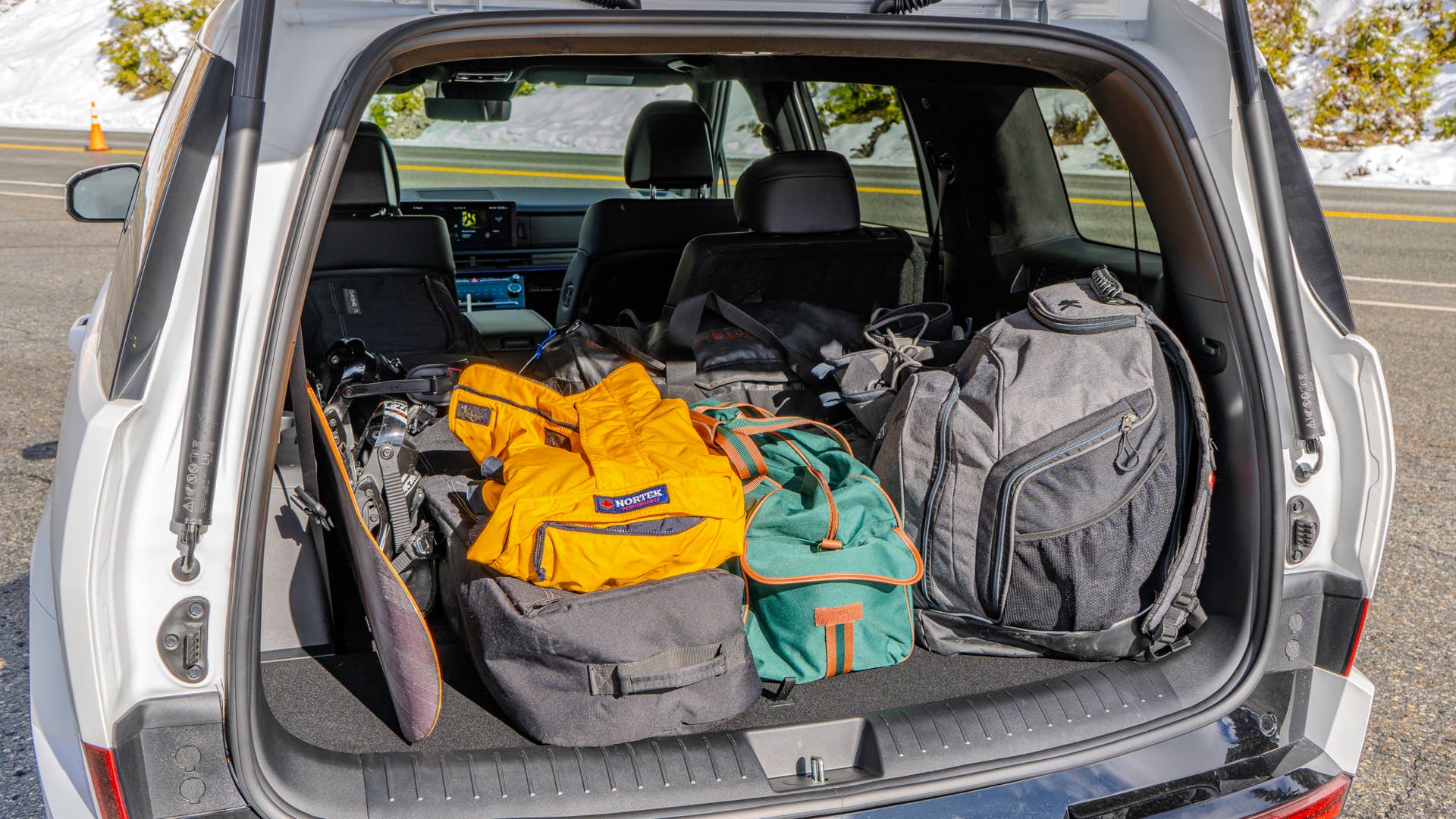
The Santa Fe Hybrid offers 79.6 cubic feet of cargo space behind the first row, 40.5 behind the second, and 14.6 behind the third. Total interior volume comes in at 165.6 cubic feet for the hybrid. That is the benefit of Hyundai’s boxy, upright shape: it is not just a styling exercise meant to evoke Land Rover Defenders and Ford Broncos. The thing is genuinely engineered around people who need to carry kids, friends, sports gear, groceries, weekend luggage, or perhaps even an inflatable air mattress. In practical, family-use terms, the Santa Fe simply has more bandwidth, and yet it’s still perfectly suited to in-car camping.
Chase Bierenkoven
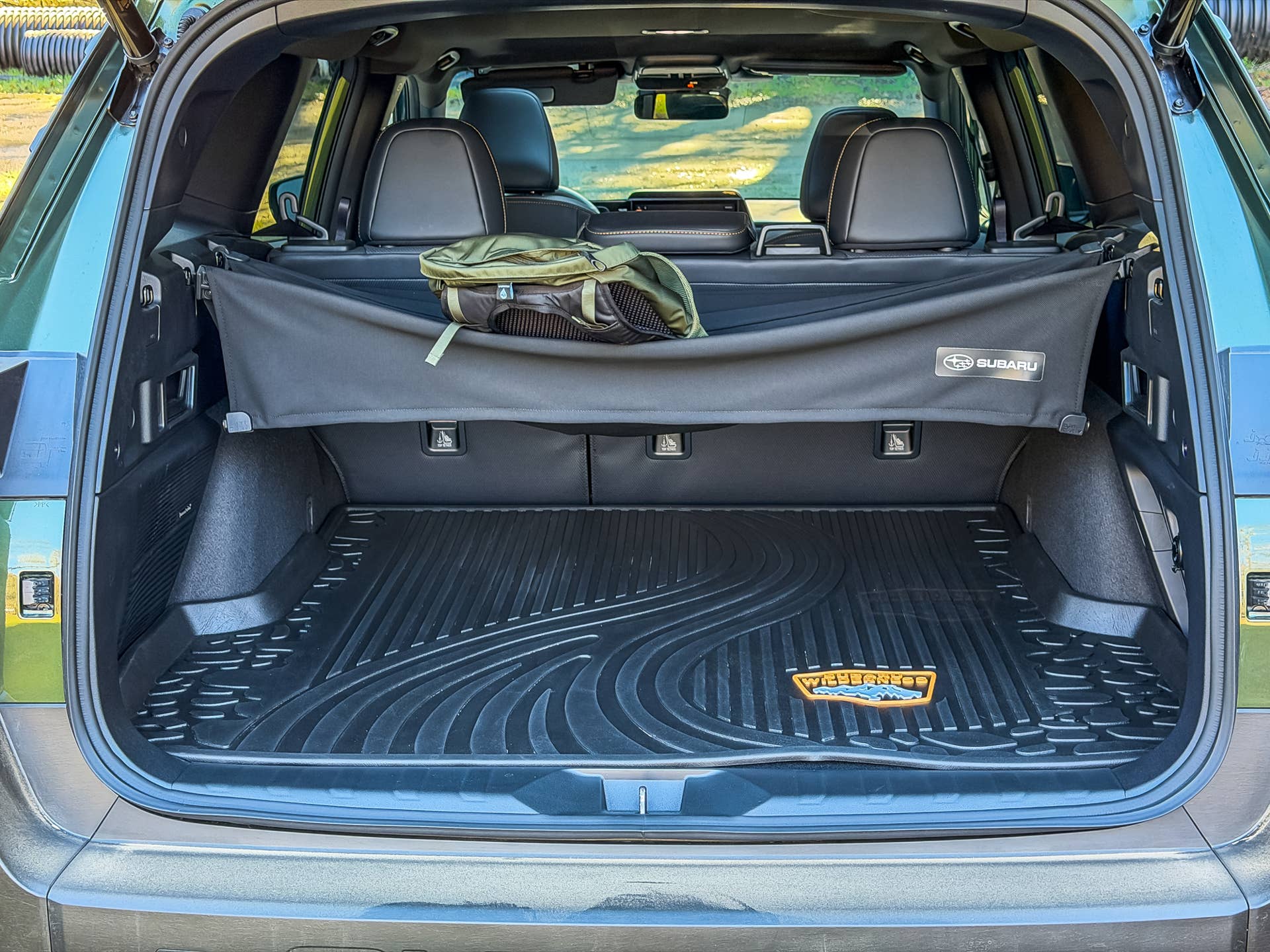
The Outback remains practical in a different, more Subaru-ish way. Subaru says cargo capacity is 34.6 cubic feet behind the rear seats and 80.5 with them folded, with a 28.3-inch cargo lift-over height and a lower, longer load floor than many conventional SUVs. For couples, dog owners, hikers, skiers, and people who don’t need a third row, its shape may actually be more useful than the Hyundai’s. The Outback still feels like it was designed by a team that understands its owners need to throw awkwardly-shaped outdoor gear in the back instead of just square-shaped weekend luggage and matching hard-shell carry-ons.

Cole Attisha
Capability and All-Weather Character: Subaru Still Has the More Convincing Soul
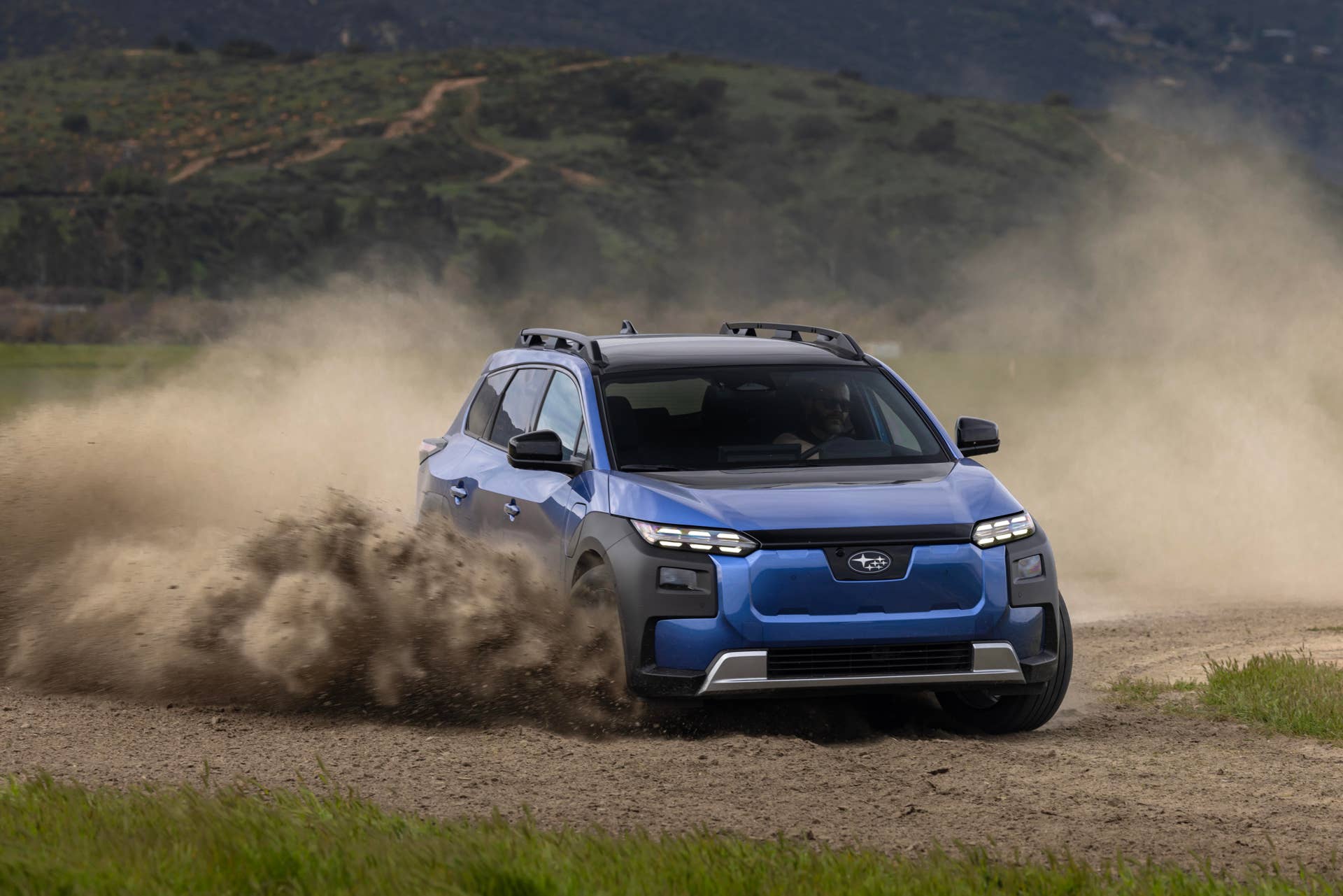
Every 2026 Outback comes standard with Symmetrical AWD, X-Mode, and 8.7 inches of ground clearance. Wilderness raises that to 9.5 inches, adds all-terrain tires, electronically controlled dampers, and more aggressive off-road geometry. Subaru also quotes approach, departure, and breakover angles of 18.0, 21.4, and 19.4 degrees for standard Outbacks, with the Wilderness stretching those to 20.0, 23.6, and 21.2 degrees. None of this is theoretical. The Outback’s whole demeanor suggests it was designed around inclement weather and rough roads. Although naturally aspirated Outbacks can only tow up to 2,700 pounds, turbocharged models can haul up to 3,500 pounds.

Cole Attisha
The Santa Fe can absolutely handle more than many buyers will ever ask of it, but it is still playing a different game. Standard ICE and hybrid models have 7.0 inches of ground clearance, while the XRT pushes that to 8.3 inches and improves approach and departure angles. Hyundai rates most ICE models at 3,500 pounds of towing with trailer brakes, bumps XRT to 4,500 pounds, and caps the hybrid at 2,000 pounds. So yes, the Santa Fe is capable enough for camping trips, forest service roads, ski weekends, and the usual crossover-adventure fantasy, but the Outback still feels more authentic in those settings. It is not just more capable on paper in the rough stuff, it carries itself like it belongs there.
Cole Attisha
Pricing and Value
The Santa Fe lineup runs from $34,800 for an SE FWD to $49,150 for a Calligraphy AWD in ICE form, while hybrid models span from $36,150 for an SE Hybrid FWD to $50,250 for a Calligraphy Hybrid AWD. The Outback starts at $34,995, rises to $41,715 for a Limited, $45,395 for a Touring, $44,365 for a Limited XT, $47,995 for a Touring XT, and $44,995 for a Wilderness. With destination, Subaru’s Touring XT lands at $49,445 and a fully optioned Wilderness reaches $50,535. In other words, the Santa Fe Hybrid and the turbocharged Outback trims sit right on top of each other in the market.
The naturally aspirated Outback makes most sense against lower-grade non-hybrid Santa Fe trims. The turbocharged Outback XT is the cleaner match for the Santa Fe Hybrid in both price and usable pace. From there, the value argument is mostly philosophical. The Hyundai gives you more cabin theater, more family functionality, a third row, and dramatically better fuel economy in hybrid form. The Subaru gives you standard AWD, more convincing off-pavement credibility, and an identity that still feels tied to an of out-of-town sense of freedom.
Cole Attisha Using Gemini 3 Pro and Midjourney 7.0
Final Verdict: The Hyundai Is Better for Most People, the Subaru Is Better for a Very Specific Kind of Person
The 2026 Hyundai Santa Fe Hybrid is the one I would recommend to the broader audience. That’s not because it is more charming. It is not. The Outback still has more renegade blood in it, more of that anti-urban streak that makes sense if you live farther out and resent what society has become, see harsh weather as pleasant white noise, and prefer your daily driver to feel like a willing accomplice for escaping civilization. But the Santa Fe Hybrid is the more complete answer for modern American life. It is more efficient, more spacious, more family-friendly, and more premium-feeling inside. It understands school runs, airport pickups, Costco hauls, traffic, and long family road trips better than the Subaru does.
The Outback, though, is still the better fit for a different kind of buyer. The person who doesn’t need a third row, and whose weekends involve tough trails, snow, gravel, and gear. The person who values standard AWD, lower-slung practicality, superior ground clearance, and a more honest sense of ruggedness over a fancier cabin and hybrid thrift. And if that is you, the XT is the version to get. It is the one that gives the Outback enough power to feel like a companion rather than a compromise. The Santa Fe is better for the life most people live. The Outback is better for the life some people have chosen very carefully. That, in the end, is the most honest answer.
About the author

Cole Attisha
Staff Writer, Autoblog