
The Toyota Sienna has been with us since 1997 when it replaced the egg-shaped yet mid-engined Previa minivan. At the time, it was simply another player in a crowded field, but over the years, the Sienna has proven to be a reliable, utilitarian family hauler. A few years ago, all Siennas became hybrids, thus also becoming one of the most efficient minivans in our market.

Toyota
For 2025, the changes are all inside. Materials have been upgraded, there are more plugs, and the dashboard received a welcome refresh right alongside the infotainment system. There is even an optional vacuum system and refrigerator/cooler to power those outdoorsy adventures and long road trips.
And if you ever worry about leaving items unattended in the backseat, the Advanced Rear Seat Reminder system alerts you via text if you overlook the in-car audio warning.

Toyota
The advanced powertrain gives the Sienna the power it needs
In 2021, Toyota made all Sienna minivans hybrids, which was a glimpse of things to come for many of their vehicles. This powertrain would give the Sienna sufficient power, outstanding efficiency, and access to a high-tech all-wheel drive (AWD) system.
The hybrid system consists of a 2.5-liter four-cylinder paired with two electric motors. If you opt for the AWD package, a third electric motor is added into the mix to power the rear axle. Either way, the combined output remains at 245 horsepower.
There is no mechanical connection from the engine to the rear axle with the optional AWD system. The motor simply powers the rear wheels when needed, and it works well with little penalty in terms of efficiency.
The 2025 Toyota Sienna has an EPA-estimated fuel economy of 36 mpg in the city and on the highway for front-drive models. AWD Siennas have a slightly lower EPA-estimated rating of 34 mpg in the city and 36 mpg on the highway. With its 18-gallon fuel tank, you could go between 610 and 640 miles on a tank. Impressive.The
Toyota
Interior and utility are nice, but the cargo space could use some help
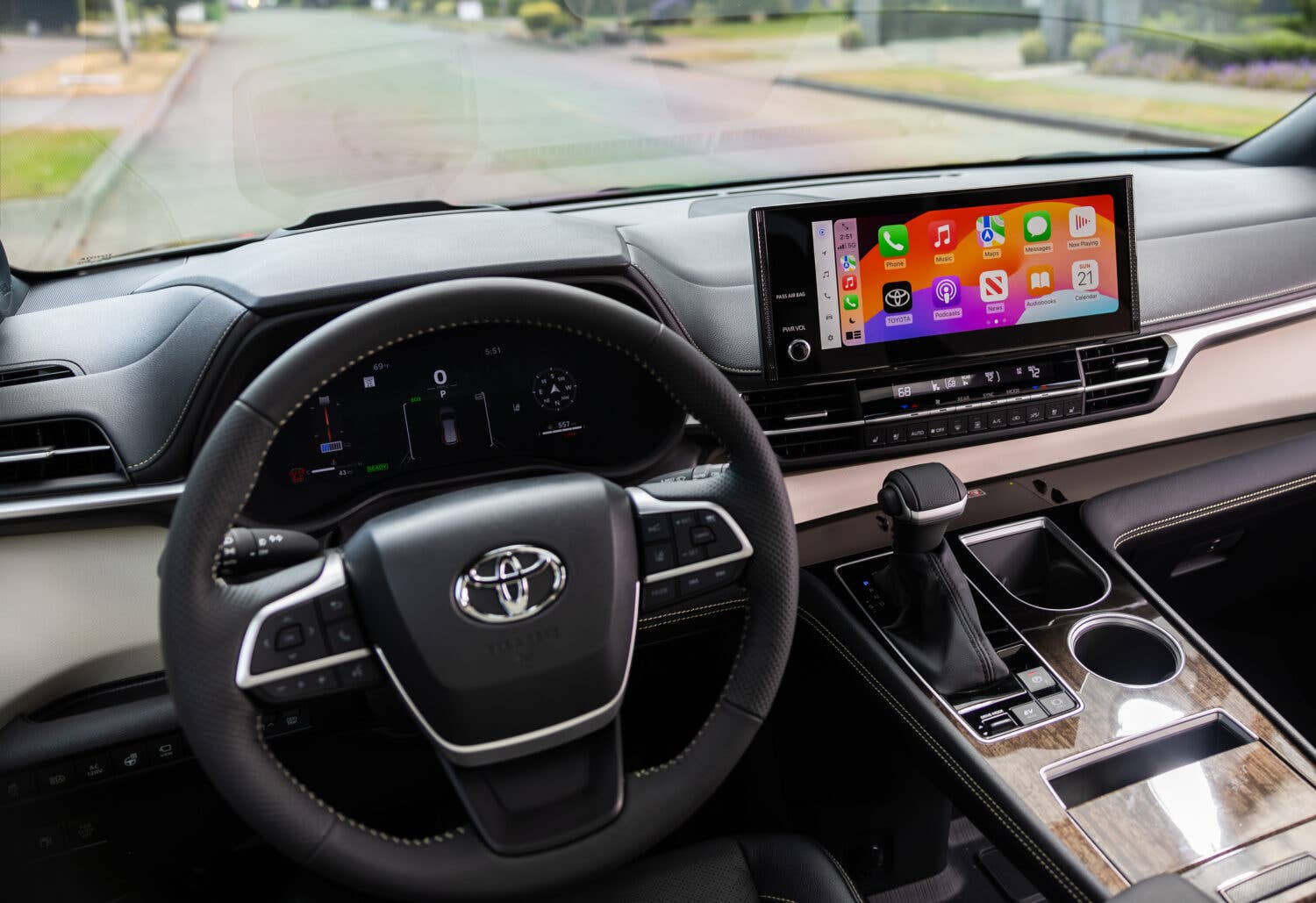
Seating comfort, cup-holder counts, and cubbies inside the 2025 Toyota Sienna are great and on par with the rest of the competition. The new dashboard design is also far more aesthetically pleasing, and overall ergonomics have improved as well.
Even the base LE model, with its small 8-inch infotainment screen, feels a bit more premium. Better still, all other variants get the huge 12.3-inch setup, which has great graphics but takes a while to learn.
Toyota
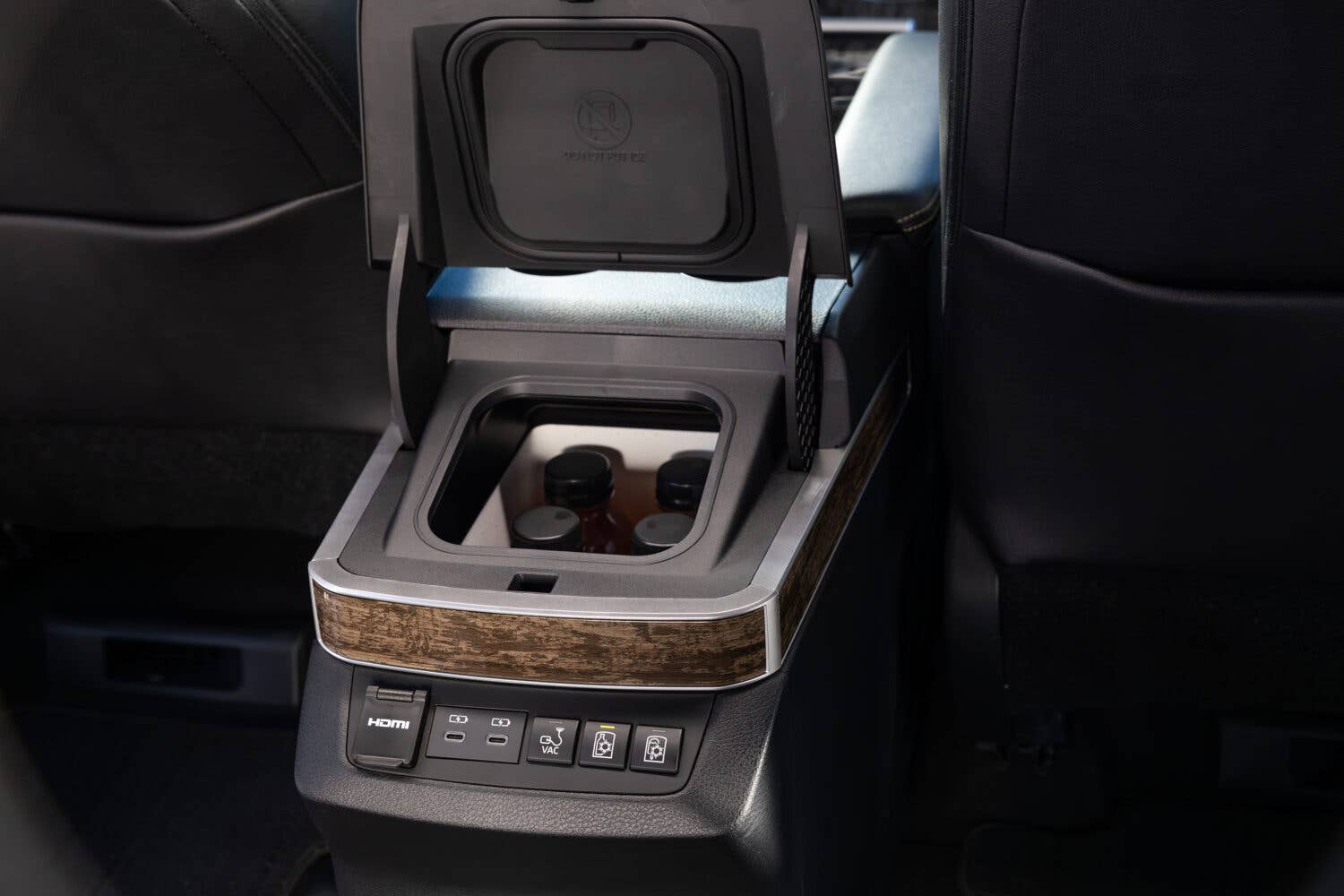
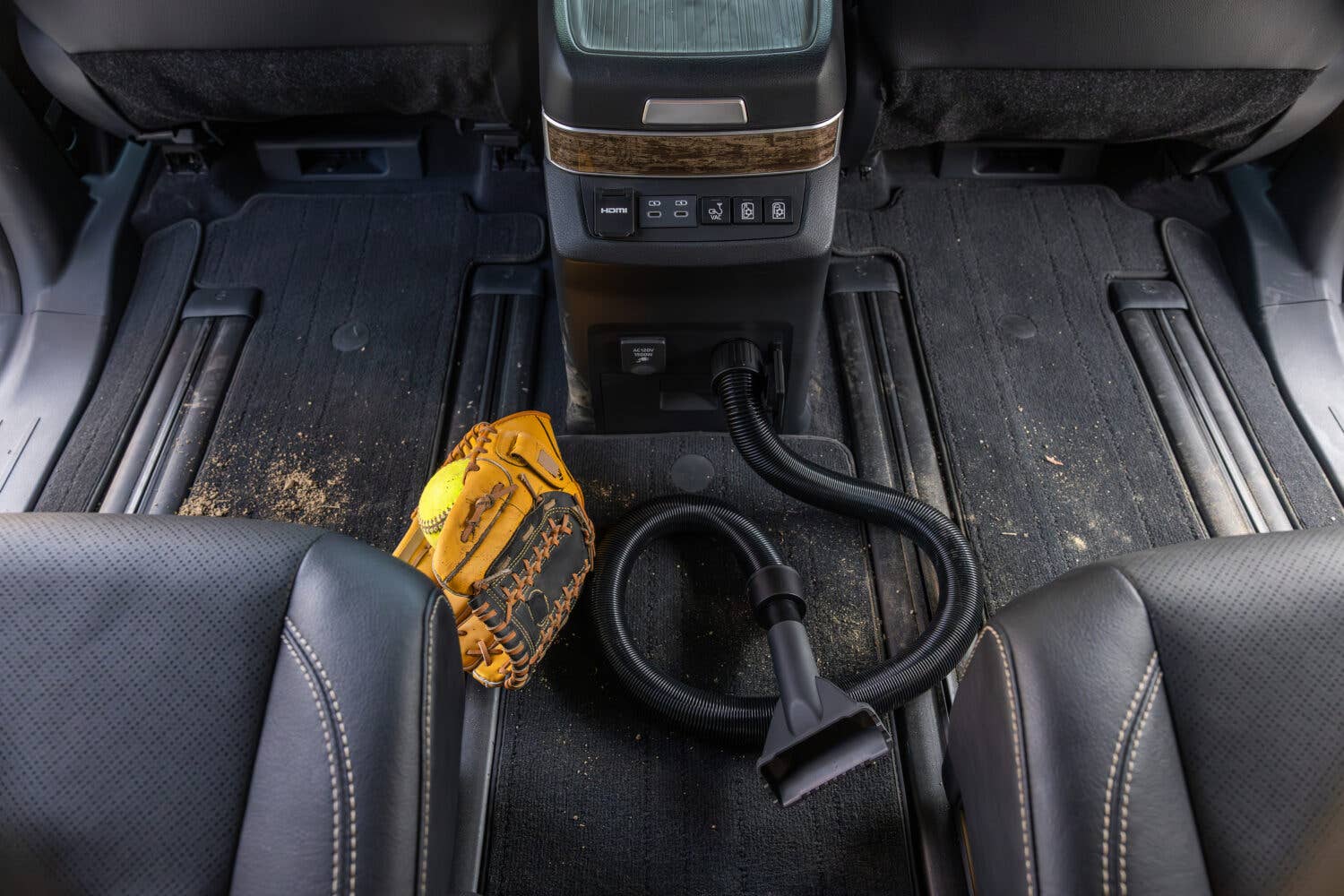
The center console sweeps from the bottom of the dash and extends to the rear seats, where it opens into the optional cooler/refrigerator and the vacuum. The fridge will hold a six-pack of soda or so, but don’t expect a Rolls-Royce-sized champagne fridge. I was more impressed with the vacuum, which had an extendable hose and decent suction.
Toyota
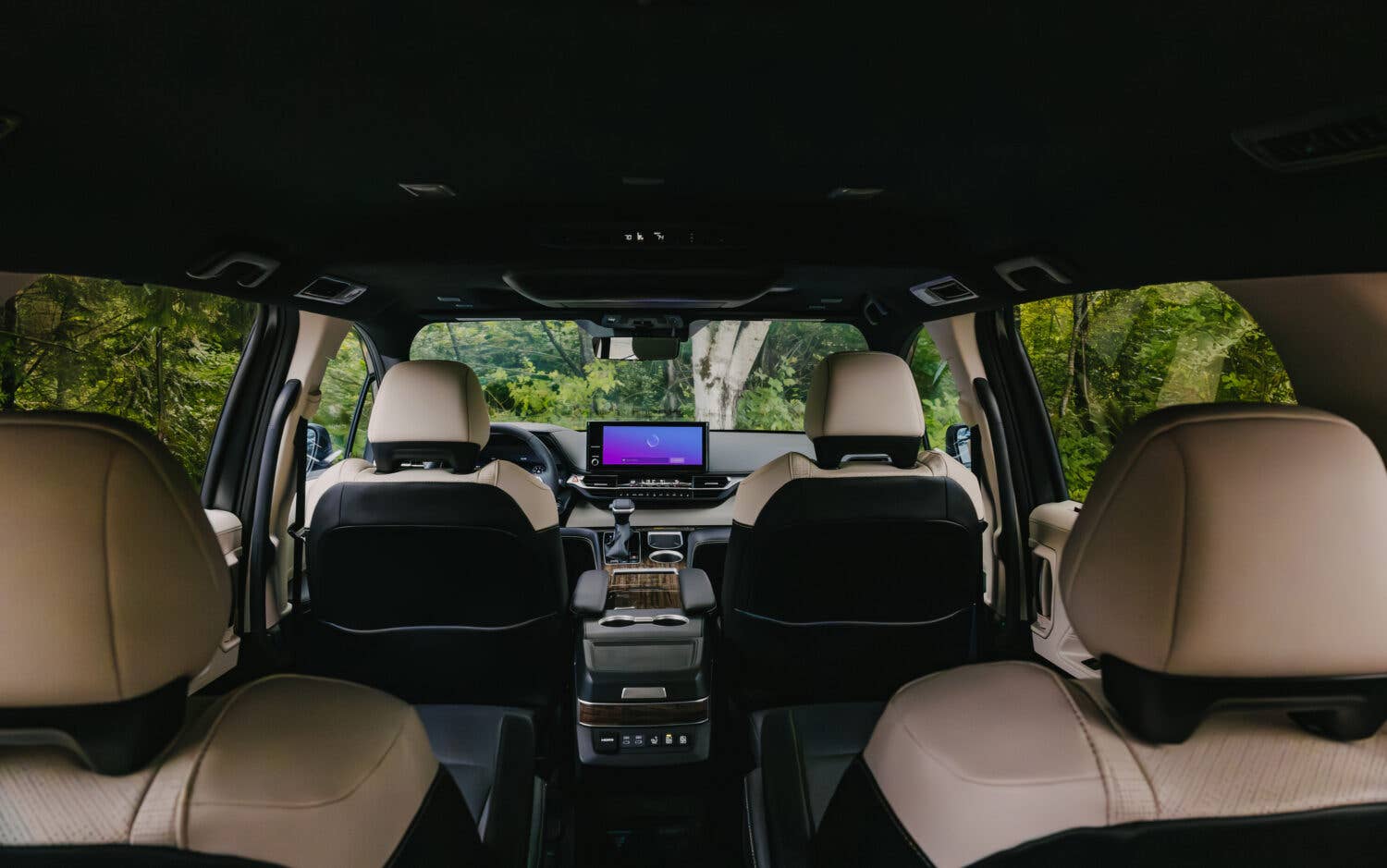
The biggest letdown is the Sienna’s cargo capacity. No, it’s not that bad, but it lags behind many, especially with the center-row seating’s lack of flexibility. The Sienna has 33.5 cubic feet of cargo space behind its third-row seats, which grows to 75.2 cubic feet behind the second row and 101 cubic feet with the second row folded flat-ish. The problem is that the second-row seats don’t compress that much, and they don’t fold flat onto the floor, either.
Toyota
Driving the 2025 Toyota Sienna
It’s not slow, but it sounds slow. For context, the Sienna can run from 0 to 60 in under eight seconds. That’s not bad; however, the sound it makes getting eight seconds is a bit rough. It has Toyota’s eCVT, which gets too high in the revs and sits there until the vehicle’s speed matches its output.
Passing power and climbing uphill requires a heavier right foot than in other minivans. Fortunately, the brakes work very well, and steering is effortless if completely disconnected.
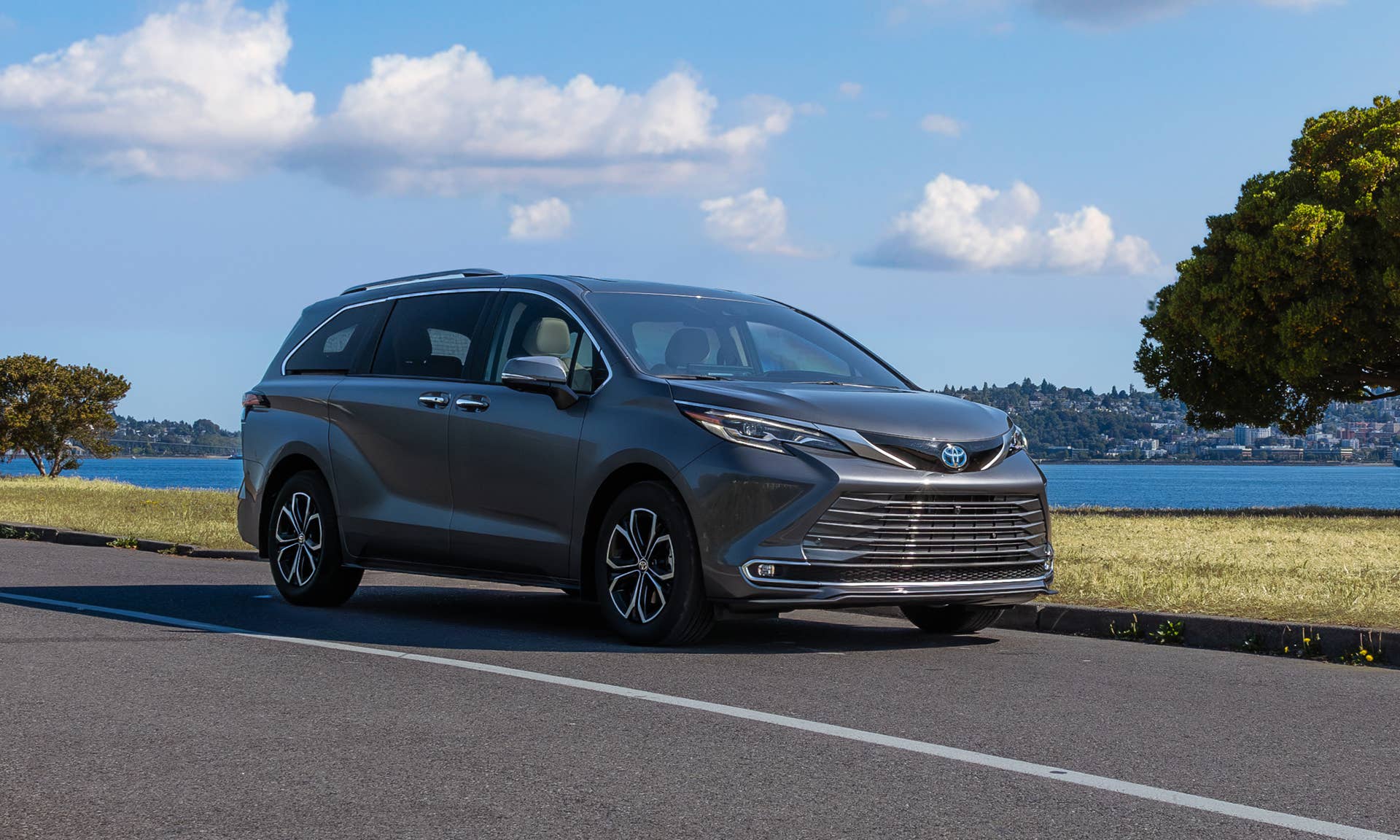
Currently, the only minivan that gives you a little bit of fun at the tiller is the Honda Odyssey. I would say the Toyota is at the bottom when it comes to driver involvement and dynamics. Still, most people are buying a minivan for moving people and cargo, which it does quite well.
Recently, Toyota updated the AWD system, providing much-needed extra power to the back wheels and making the Sienna an outstanding vehicle for driving in the snow. If you get the Woodland trim, you get 0.59 inches of additional ground clearance, which isn’t much, but it makes the minivan even more capable in the snow.
A face only a mother could love
Let’s be honest here: there are way too many over-exaggerated lines, curves, and styling dashes in this thing. It looks like it was designed by several parties who never met. I know, I know, it’s hard to make a box look sexy, but this is a bit too much for many.
For me, the issue comes from the front-end design. The headlights look out of place, and the grille makes it look incredibly ungainly. Only about 10 percent of that massive grill is actually functional, with the rest of it being used only for aesthetics.
Toyota
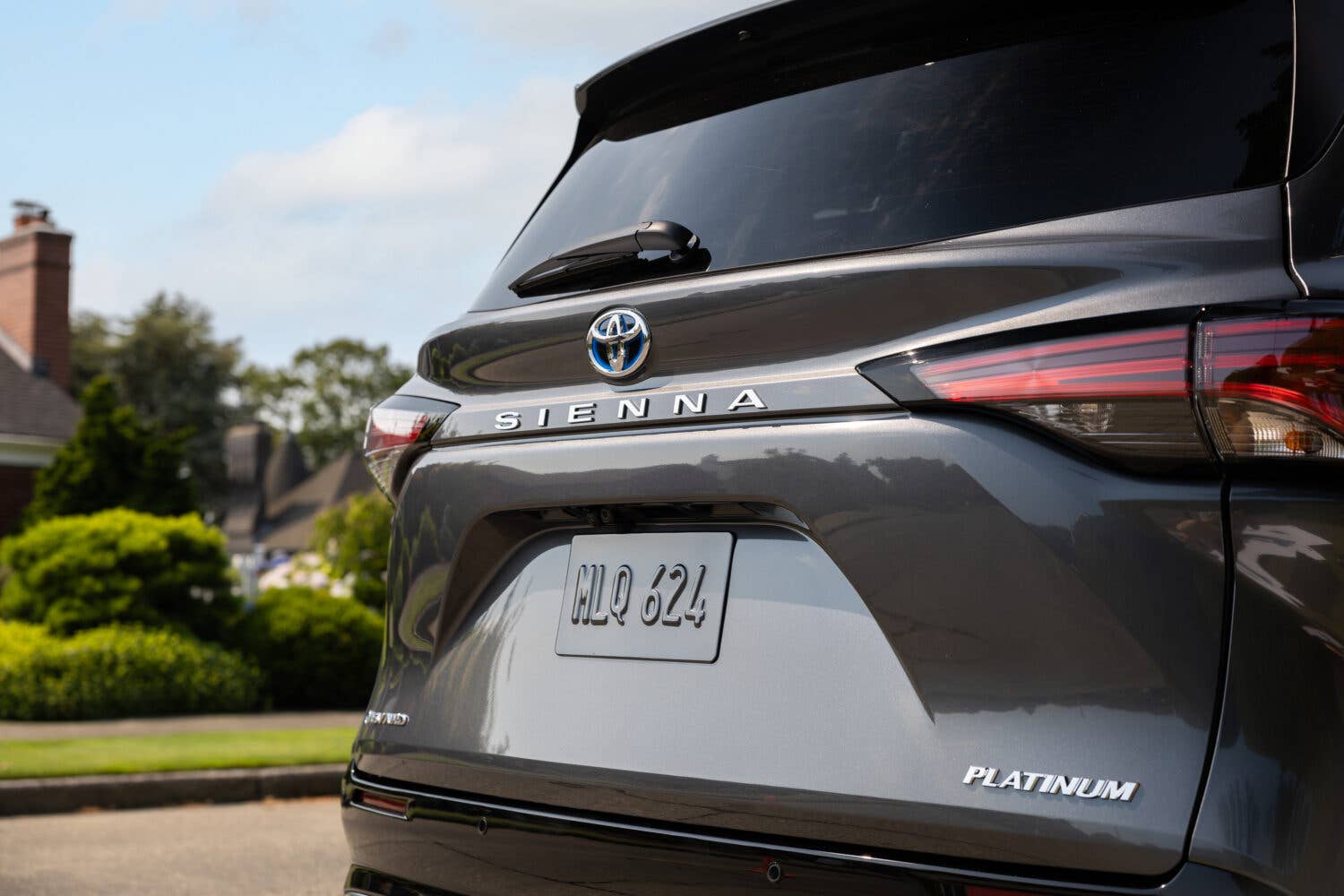
The profile is square, and that’s how a minivan should be. What’s odd to me is the unusual rear fender and body design in that area. I can’t quite get my head around that choice either.
Final thoughts
The base model 2025 Toyota Sienna LE starts at $39,185. From there, you can get the XLE at $43,995 or the XSE for $46,640. If you want a slight suspension lift, a tow package, and some rugged vibes, the $50,425 Woodland might be for you. Finishing out the trims, the Sienna Limited starts at $50,200, and the top-of-the-line Platinum starts at $56,145.
Many trims charge an extra $2,000 for AWD, but the Woodland makes it a standard feature. Additionally, seating for seven or eight depends on trim and options, and yes, captain seats are available.
After driving many Sienna minivans, I have to say that it is one of the most logical vehicles you can buy for your family. It’s easy to load, far smarter, very comfortable, and more economical than an SUV. I may not love the looks, but I find its family utility and economy to be outstanding.
About the author

Nathan Adlen
Contributing Writer, Autoblog