
Making good-looking three-row SUVs accessible
For a long time, the US was flooded with fancy new two-row EVs, but there weren’t any 3-row EVs. The Tesla Model X was the first, then the Rivian R1S was second, and then Kia revealed the EV9 in 2025. The Kia EV9 emerged on Hyundai Motor Group’s E-MPG platform, specifically designed for large EVs. Not long after the EV9 deliveries began, the Hyundai IONIQ 9 was announced. Which, as I’m sure you’re putting together by now, is built on the same platform. These two EVs did more than just put their name into the growing “3-row EV SUV” hat. They helped make 3-row SUVs more accessible, as other models are a lot more expensive than the base models of the Kia EV9 ($54,900) or the Hyundai IONIQ 9 ($58,955). Even the top-tier models, the ones I drove, are priced similarly: the IONIQ 9 Calligraphy Design AWD $76,490, and the Kia EV9, after the add-ons cost $76,650.
Kristen Brown
Kristen Brown
Both are built in Hyundai Motor Group’s plant in Georgia, both can have maximum ranges of over 300 miles even with all-wheel drive, and have a comfortable third row. Most importantly, they’re very similarly priced, but offer different features, design languages, and interior layouts. After having driven both of them, here’s what a week with either revealed. Both are great, but only one felt like family. Let’s dig in.
They come from the same plant, but speak two different design languages
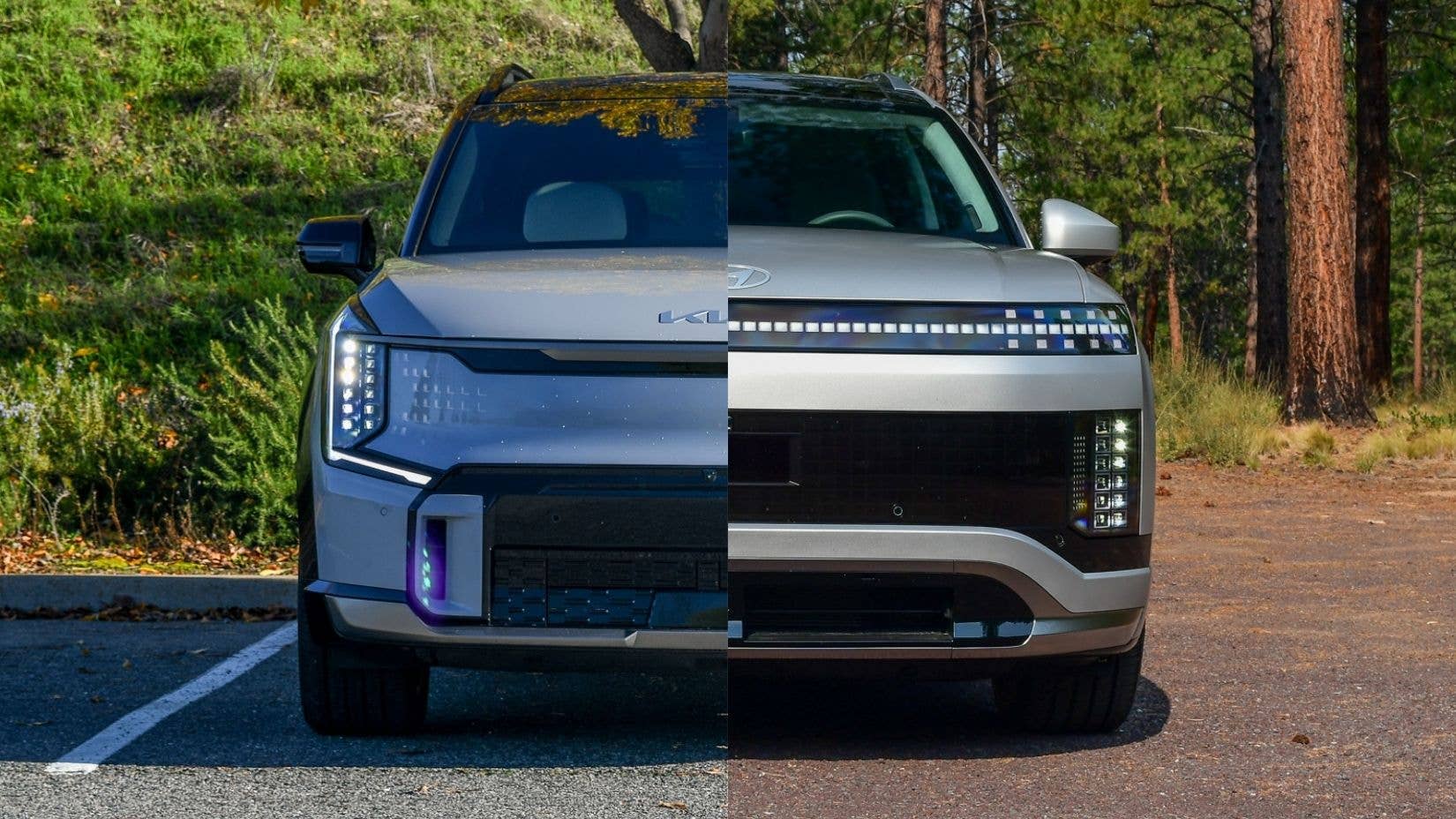
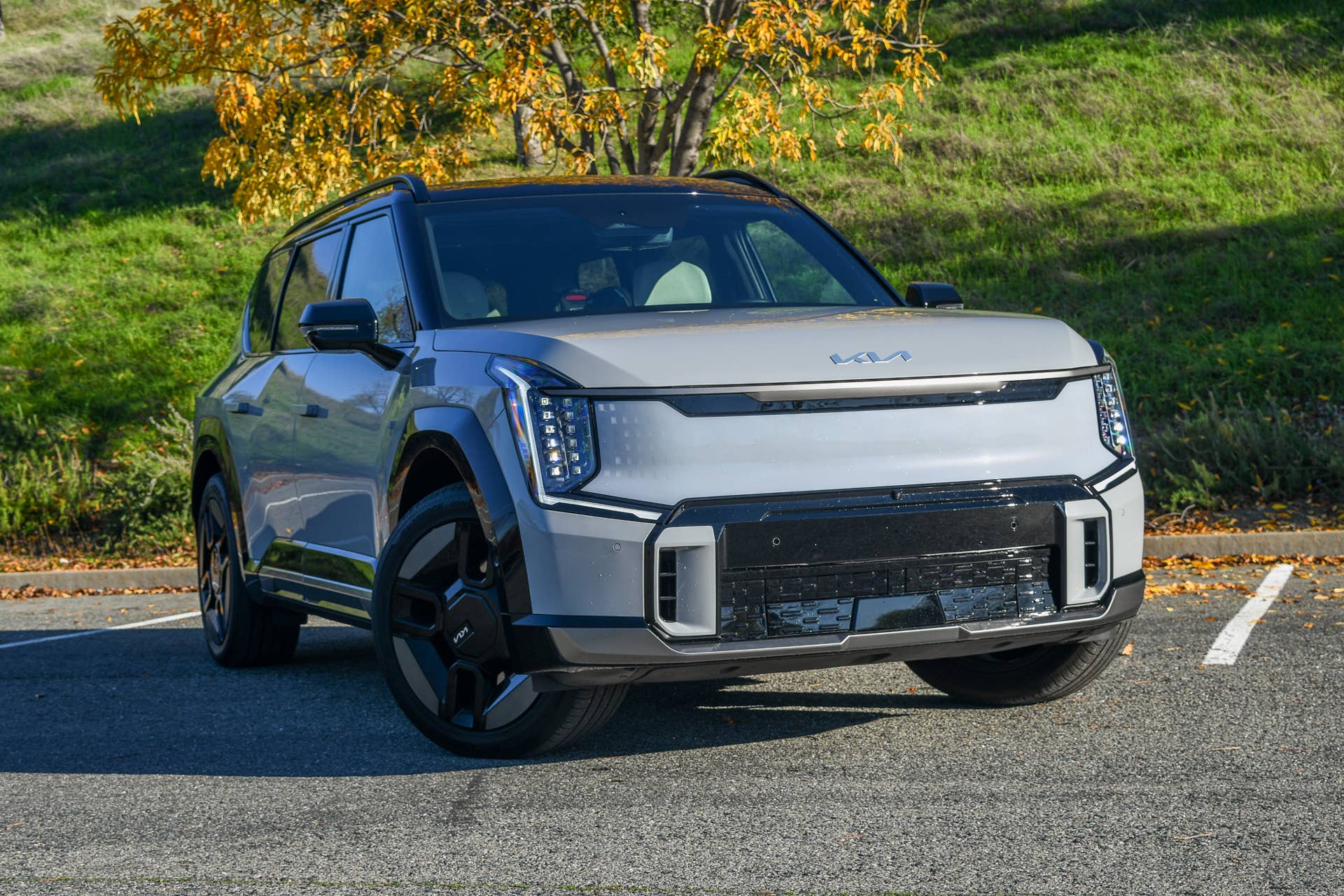
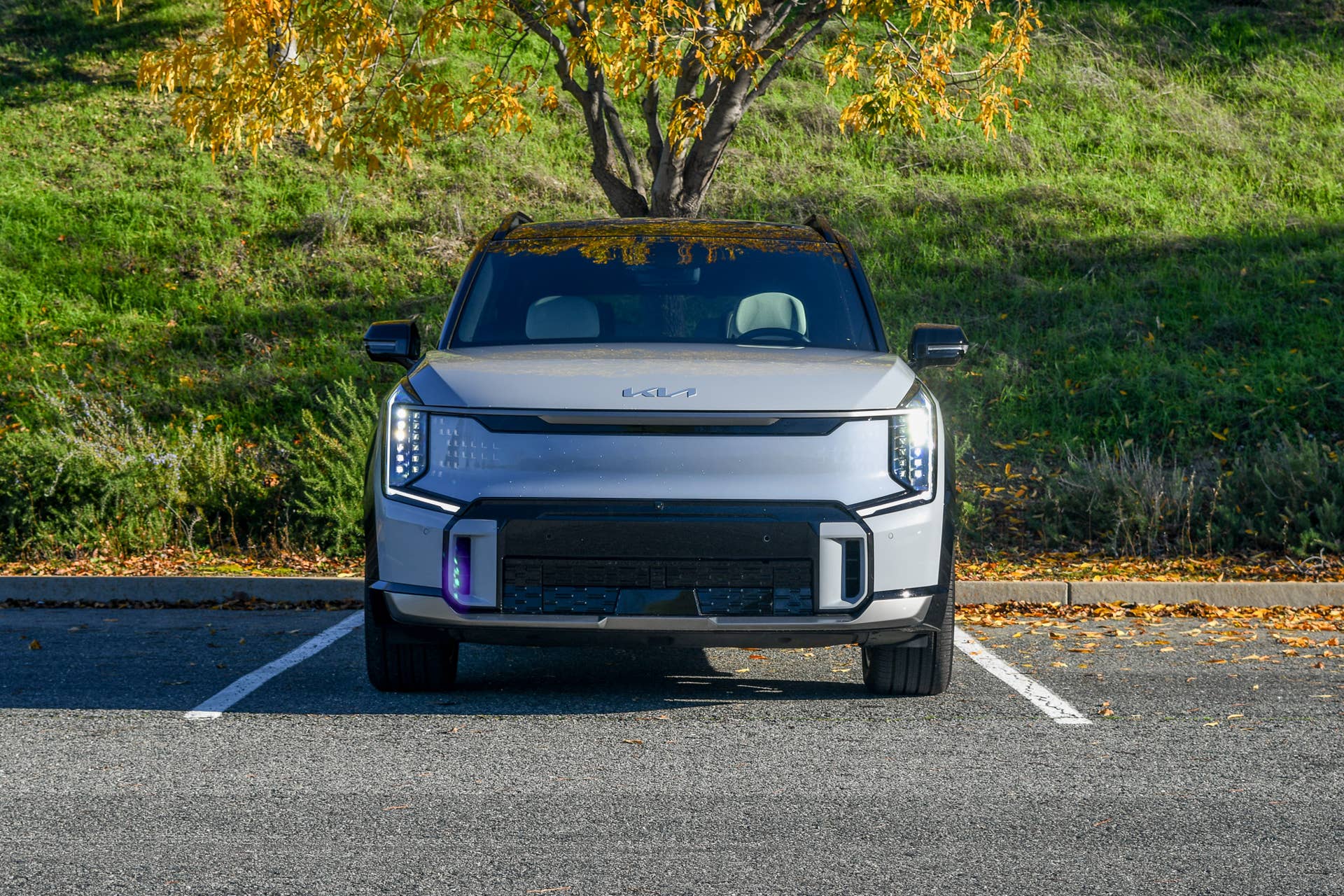
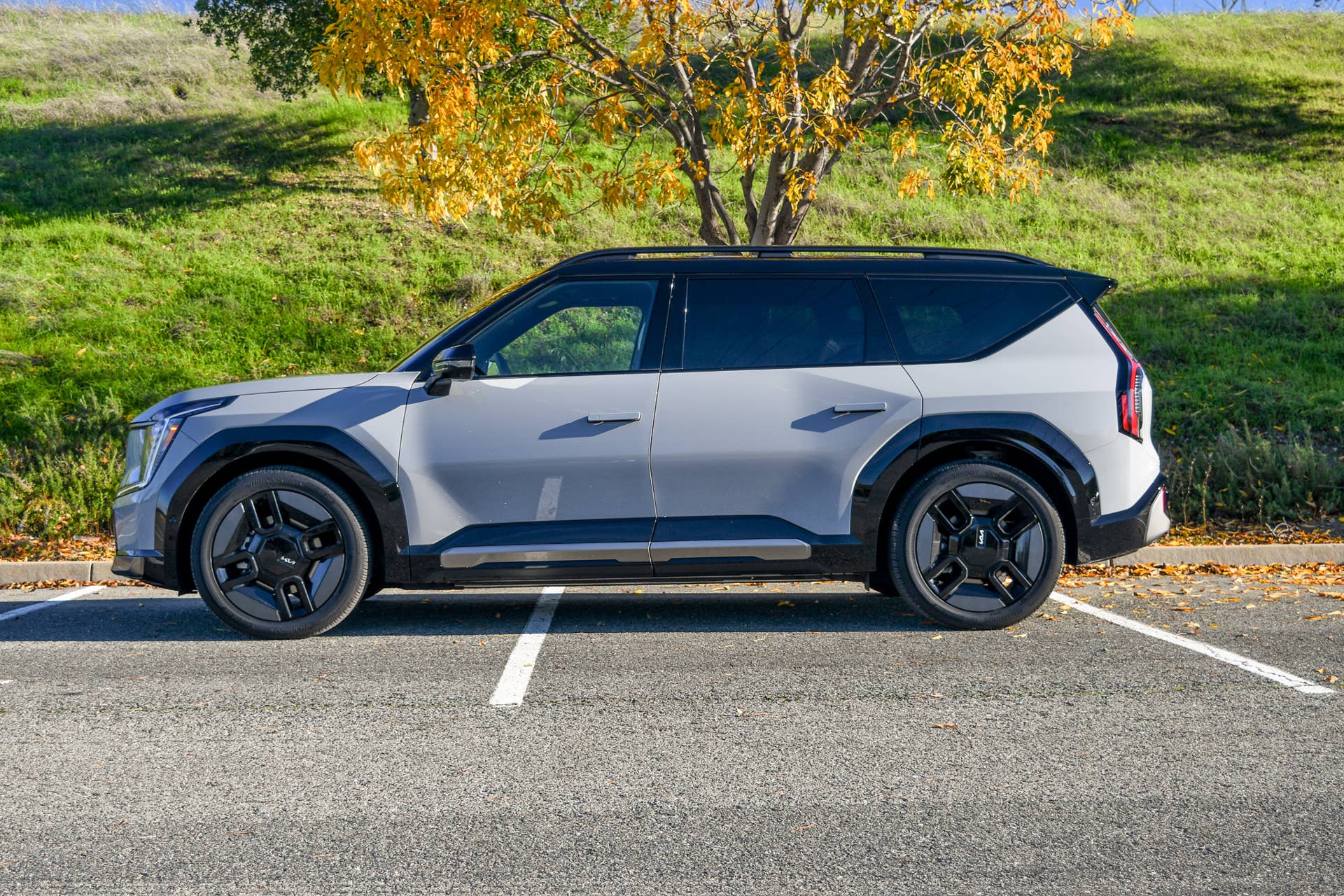
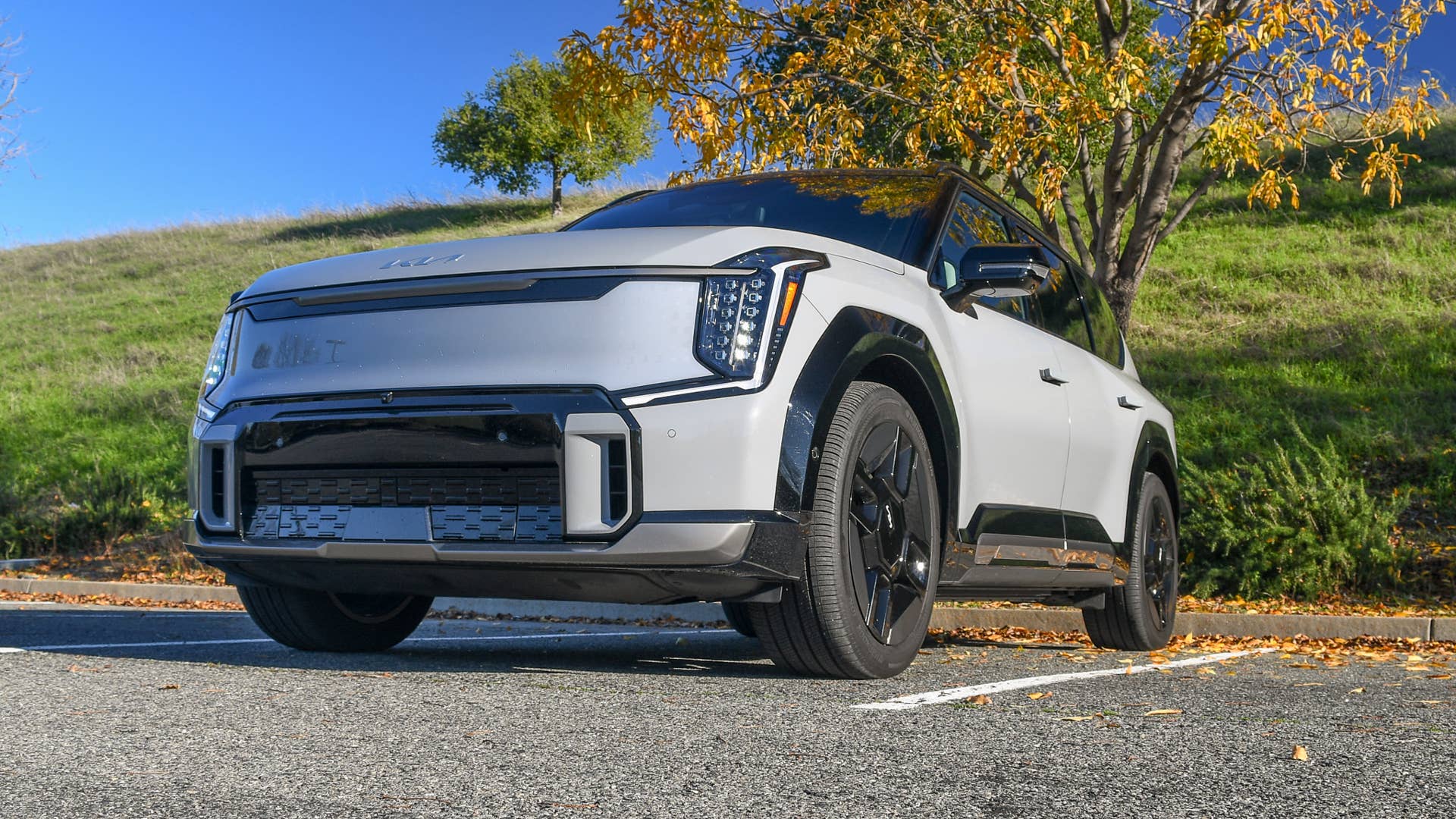
As I mentioned before, both the Kia EV9 and the Hyundai IONIQ 9 are built at Hyundai Motor Group’s US plant in Georgia, and they share the same platform. But that’s pretty much where the similarities end. The Kia EV9’s exterior design is vastly different from that of the Hyundai IONIQ 9. The Kia EV9 falls under the company’s “Opposites United” design theme, featuring a mix of curves and angles with pixelated accents that accentuate a boxy exterior. The EV9 has a very extroverted, youthful, energetic, and confident mantra to it. The interior is very Kia-like, with bold lines and curves, bold and customizable ambient lighting, excellent visibility, and an excellent sound system.
Kristen Brown
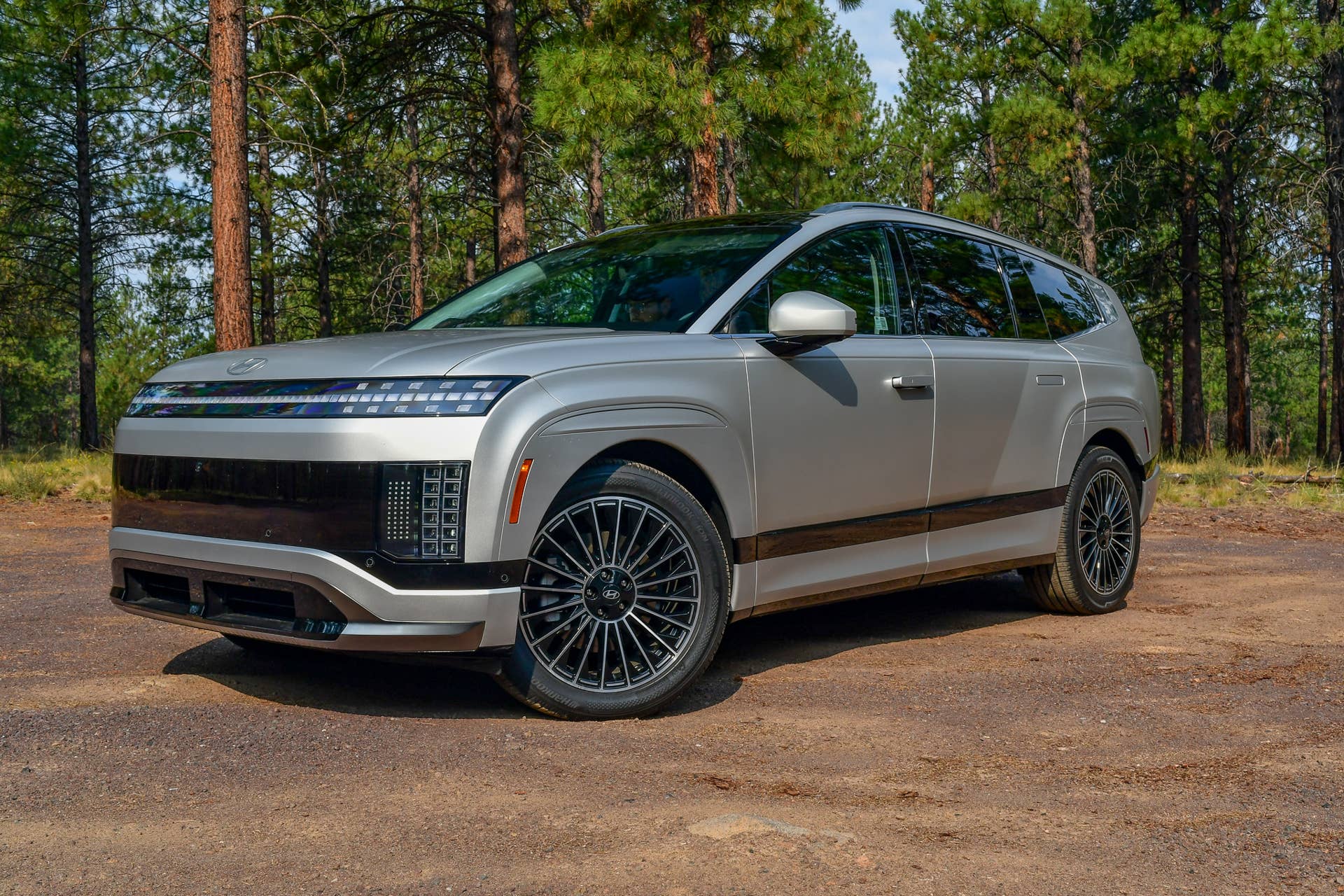
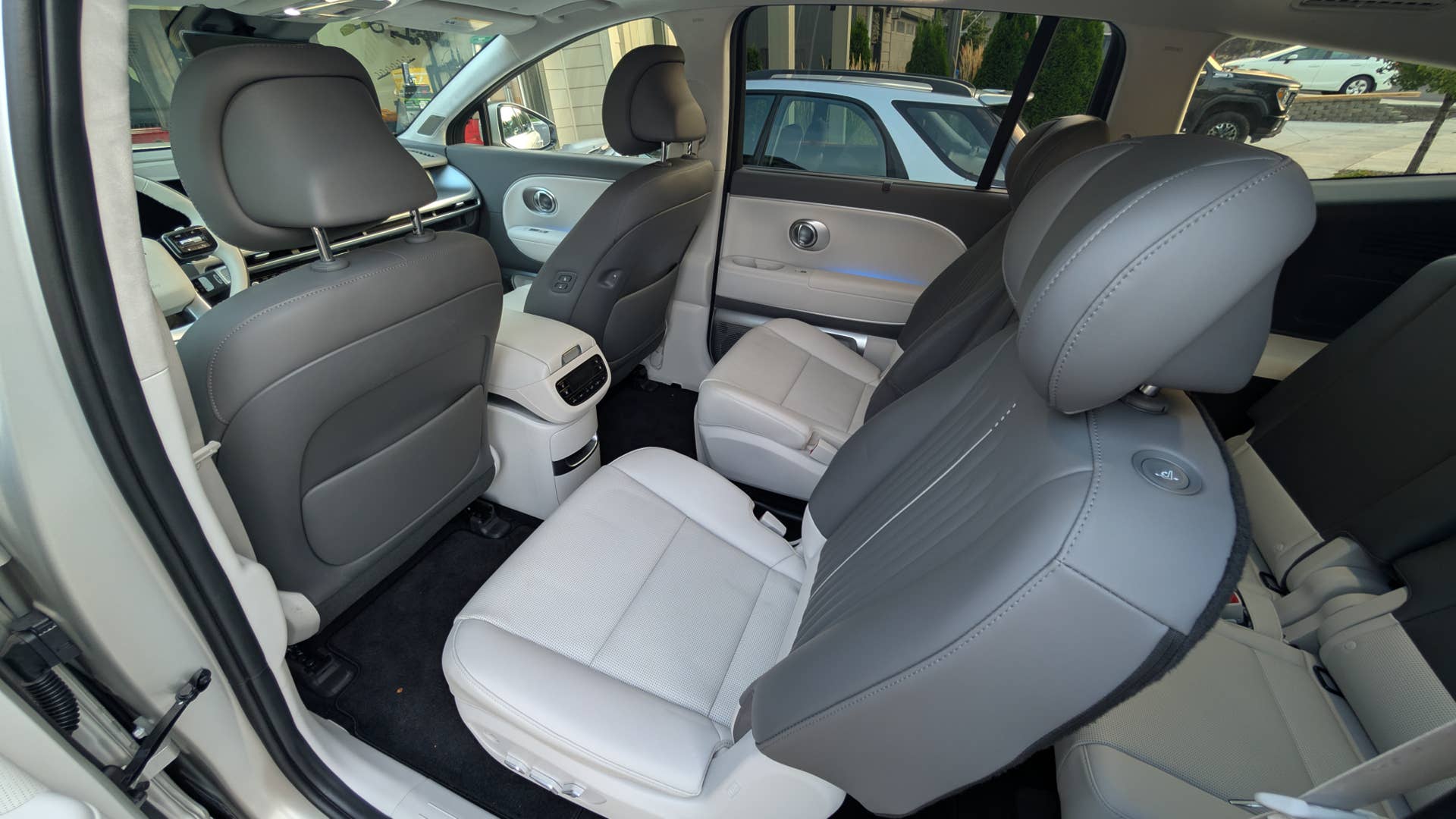
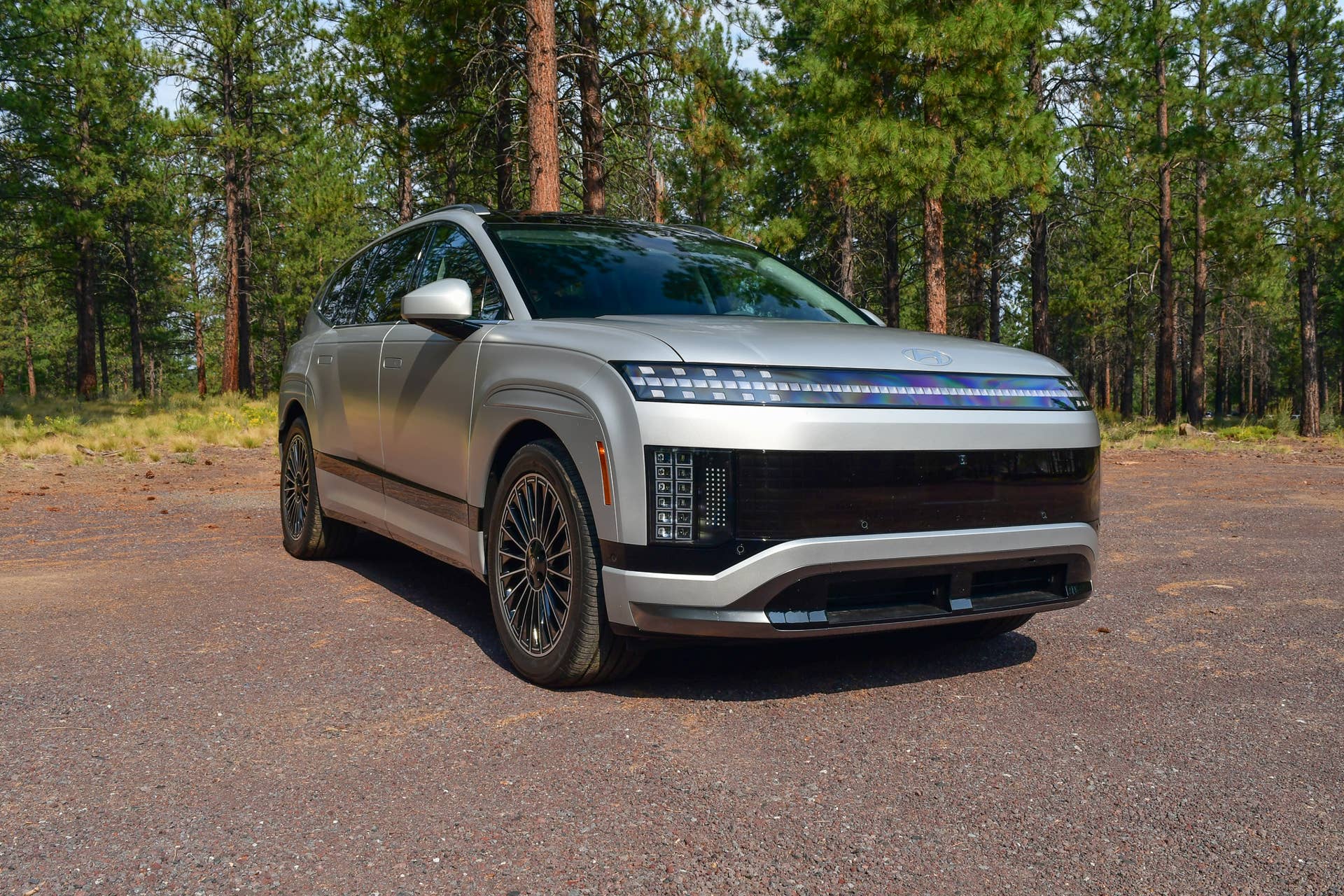
The Hyundai, despite sharing the same bones, had a completely different philosophy. The EV9’s bold and playful lines were replaced by smooth, rounded lines, with faux wood accents on the dashboard and front doors, soft alcantara, and bright and premium interior colors and textures, which were complemented by similarly customizable and—if you want it to be—bold ambient lighting. My toddlers loved it in purple. The exterior of the IONIQ 9 felt just as polarizing, with smooth, soft angles and curves, and a much more premium, polished look. Especially with matte paint (the EV9 can have it too, but my tester didn’t—I’d have adored it with matte paint). If both cars were people, the EV9 would be the sibling who DJs part-time, only feels alive when dressed in bold, ostentatious colors, and has almost as many piercings as they do TikTok followers. But don’t be fooled—they’re incredibly articulate, and can clean up nicely if they have to. They truly live in two different worlds at the same time. Sort of like Hannah Montana.
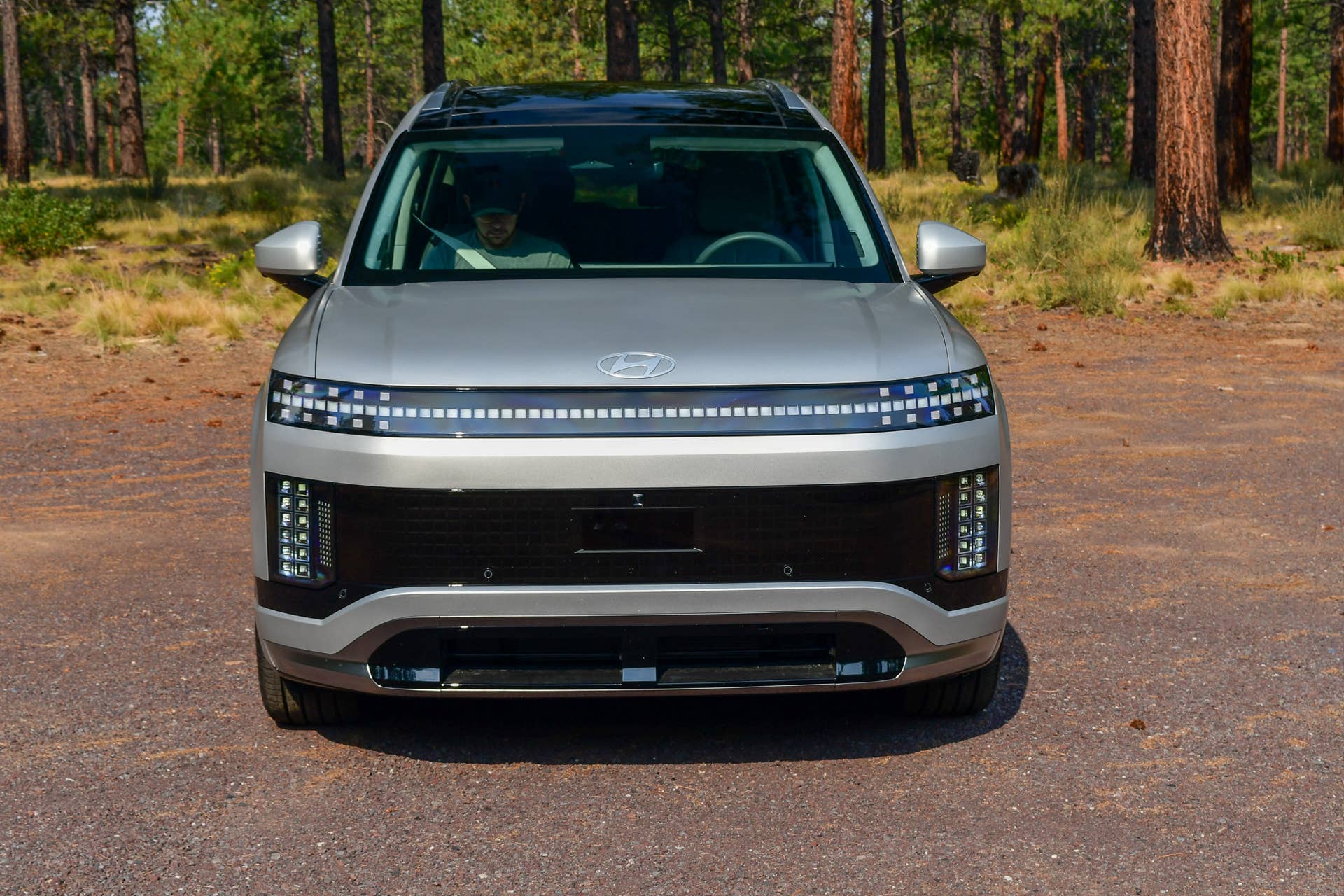
Kristen Brown
The IONIQ 9, on the other hand, is the sibling who went to a fancy private college, has a collection of degrees, and works a fancy job making a handsome salary—but in their free time, they have a wide array of hobbies to choose from, like camping. And going fast, but in a classy way. They enjoy the finer things, but they’re smart about what they buy. Only the best for the IONIQ 9. But the kicker is, both come from the same family.
The interior of the IONIQ 9 isn’t just more refined, it’s more functional
Both models, at the very top of the line, had a lot to offer. But the IONIQ 9 had more to offer. Yes, this is going to sound nitpicky. First, the GT-Line Long Range AWD had massaging seats, but only for the driver. The Hyundai IONIQ 9 Calligraphy Design Long Range AWD had massaging seats for the driver, front passenger, and the second row captain’s chairs. Both offered electronic ottomans, seat heaters, and ventilators in the front and second row, and built-in sunshades. However, the Hyundai had one large panoramic sunroof that stretched all the way from the front to the third row. The Kia had two: a smaller one for the driver and front passenger, and a larger, fixed one for the second row. Both opened up the interior by quite a bit and helped make the second and third row much more comfortable and bright.
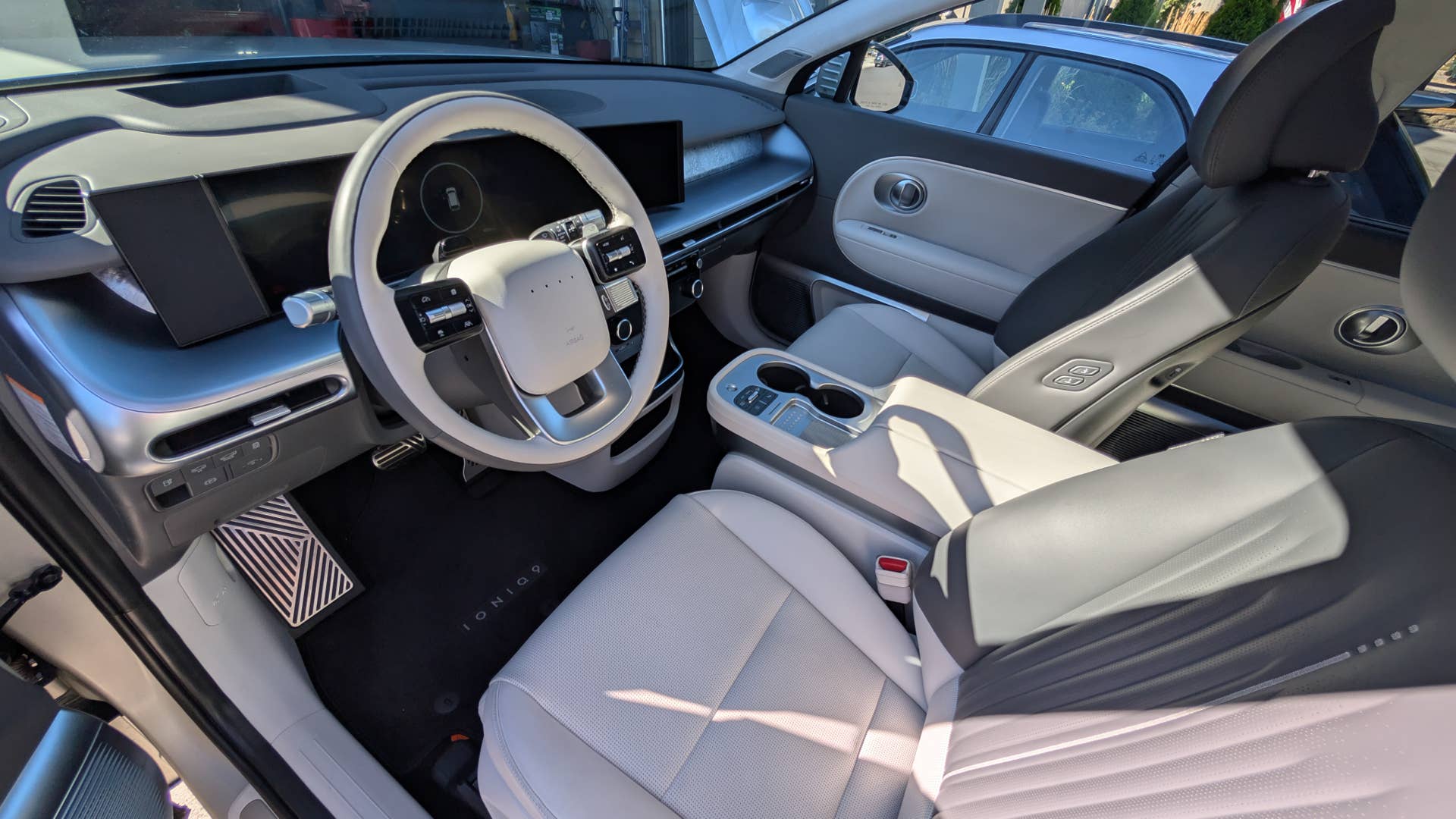
Kristen Brown
Both had a sliding center console that could move forward or backward by 7.5 inches. The sliding center console had plenty of clever storage cubbies and spaces for the driver and passenger, but if it’s slid back, the second row passengers have access to their own storage spaces and a table they can use for smaller tasks. As a parent, I immediately thought of it being a good place to keep first aid items or to turn it into a changing station for infants and toddlers. You can keep wipes, extra diapers or pull-ups, extra shoes or socks, a set of clothes, snacks, or juice boxes in there. The second row seats can slide back towards the third row to give you more than enough space for a quick change, or to tend to a boo-boo. The point being, it’s a versatile space that was much appreciated as a parent, in either EV.
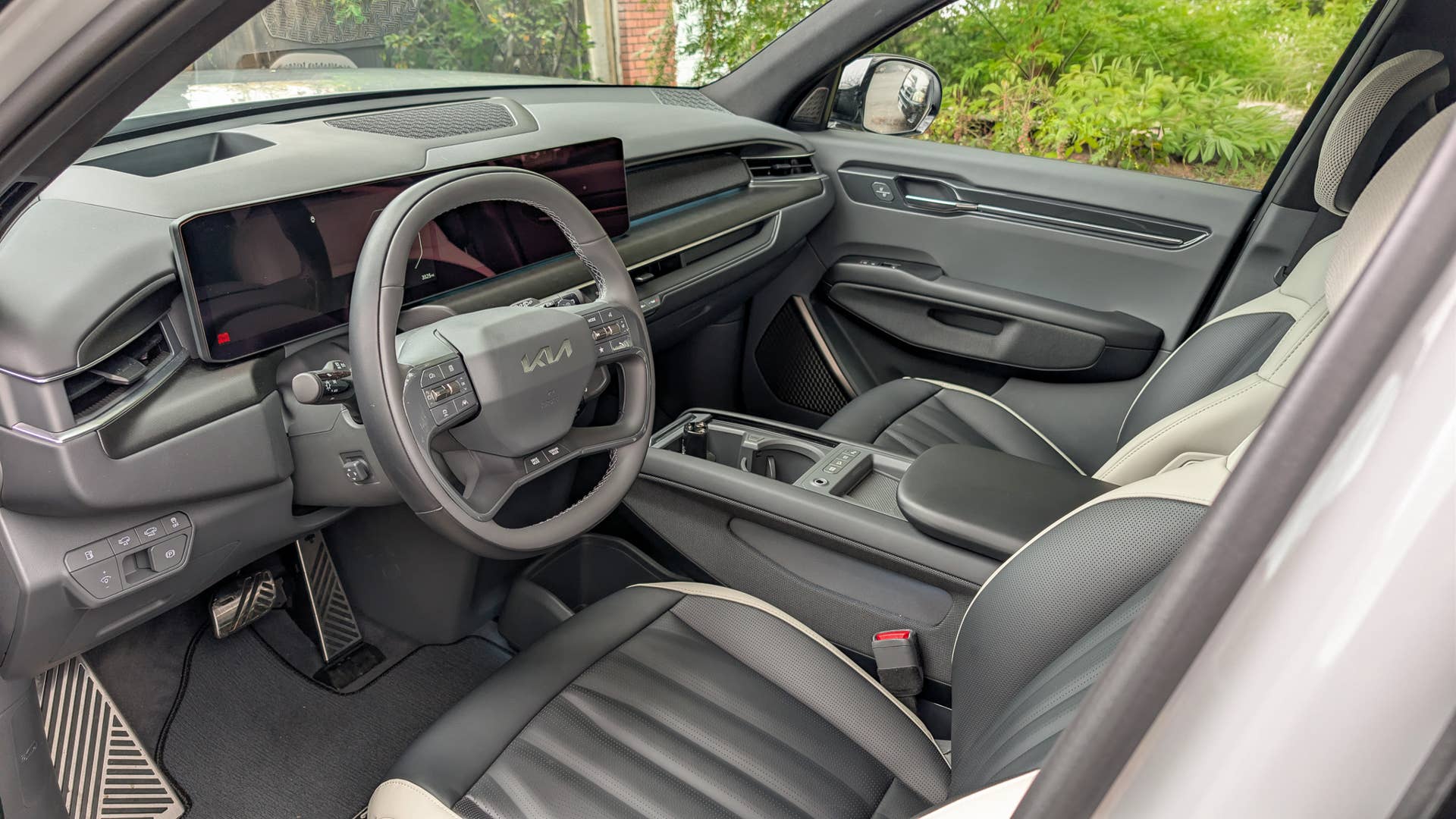
Kristen Brown
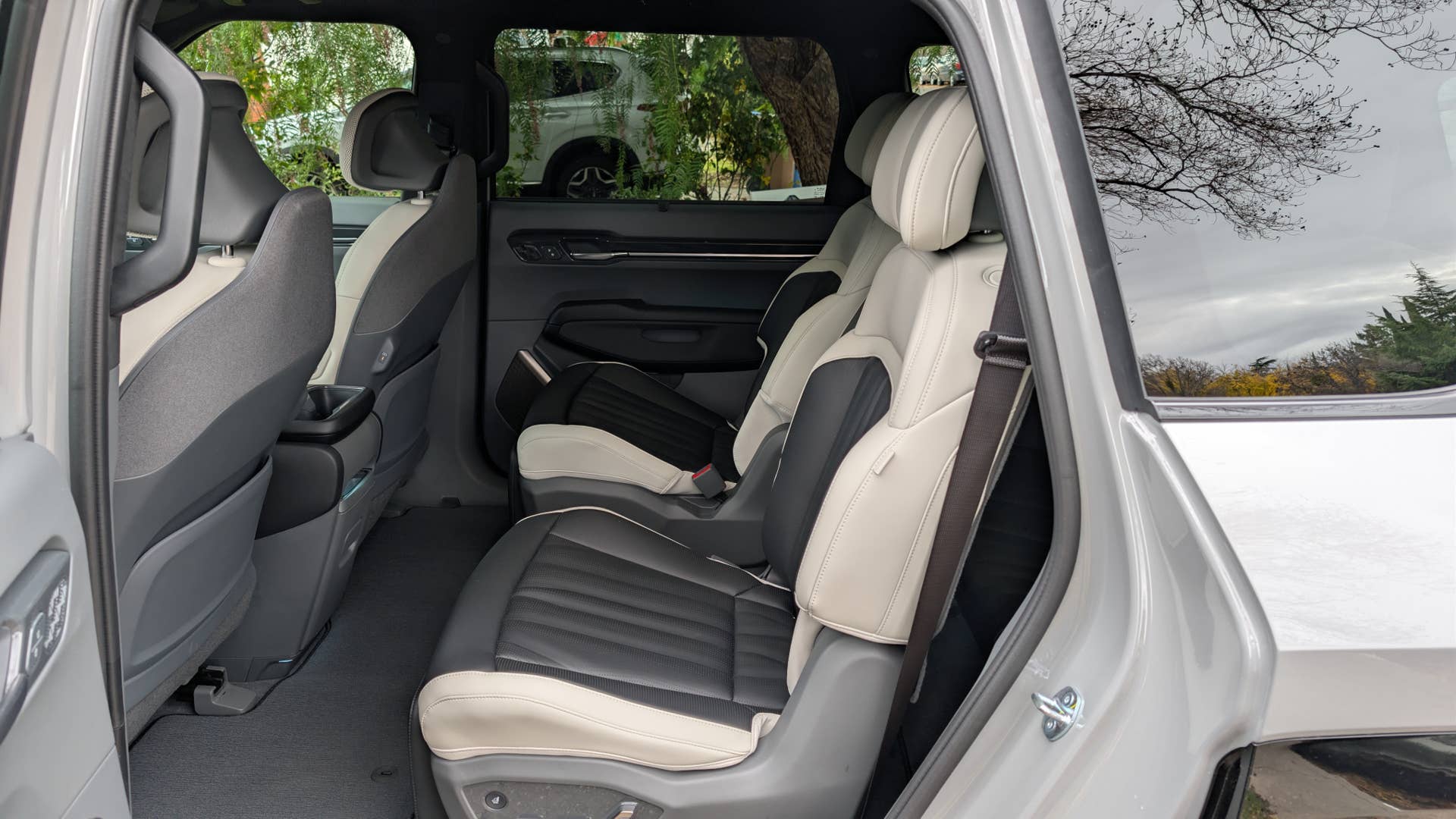
One gripe I had with the EV9, though, is that the third row seats were not electronically adjustable like they were in the Hyundai, even at the highest trim. In the IONIQ 9, third row passengers had a panel where they could electronically adjust the seat back’s position, as well as the second row’s position (which I could see causing a spat between siblings on longer drives when boredom strikes). The EV9 had no such adjustments. When I sat in the third row, I was only able to adjust the seat back by reaching behind the seat, grabbing the folding strap, moving the seat, and releasing the strap when I found the right spot. For a car that’s close to $77,000, there’s no excuse for that. But both had two cupholders on both sides, a dedicated A/C vent, speakers, large windows, and USB-C charging ports. Both third row seats were also plenty comfortable.
The Hyundai has more range and more horsepower, which makes it more fun
The Hyundai IONIQ 9 I drove delivered 422 horsepower, making it the more powerful of the two. It moves its 6,000‑pound body with a kind of quiet confidence that felt almost surreal for a three‑row SUV. Acceleration is smooth, immediate, and surprisingly refined, even when you’re merging onto the highway with a toddler yelling for snacks in the back. Hyundai’s tuning makes the power feel effortless rather than aggressive, which is exactly what you want in a family hauler that never waved goodbye to its wild side.
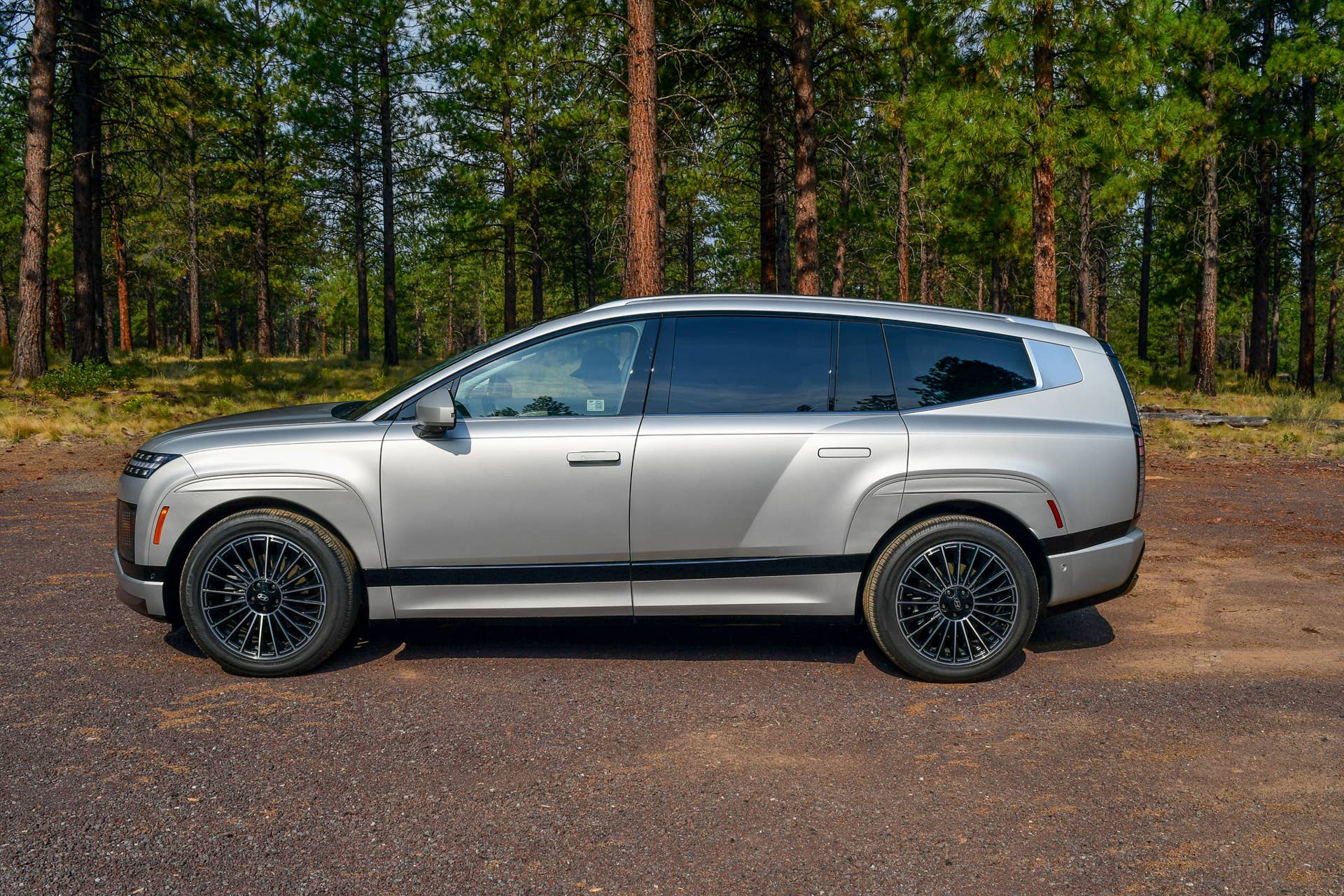
Kristen Brown
The Kia EV9 GT‑Line Long Range AWD, by comparison, produces 379 horsepower. It’s still quick—quicker to 60 mph, technically—and it has a sportier, more playful edge. The EV9 feels lighter and more nimble on its feet, even though it isn’t, and Sport mode gives it a burst of personality that makes school‑run duty a little more exciting. But the power delivery is more dramatic and less polished than the Hyundai’s, which may appeal to some drivers and overwhelm others.
Kristen Brown
Maximum range is where the gap widens. The IONIQ 9’s AWD configuration is rated at 311 miles, but during my week with it, I consistently saw 321 miles projected—a rare case of an EV outperforming its own sticker (I’ll tell myself it’s my driving). Smart energy‑saving features like “Driver Only” climate mode help stretch every mile, and the efficiency never felt like it came at the cost of comfort. The EV9 Long Range AWD tops out at 304 miles, which is respectable for a three‑row EV, but not standout. It’s enough for daily life and weekend trips, but it doesn’t offer the same buffer the Hyundai gives you—especially if you’re running climate control, hauling kids, or sitting in Bay Area traffic with one‑pedal driving engaged. The EV9 charges just as quickly thanks to its 800‑volt architecture, but the Hyundai simply goes farther on the same kind of driving. So, the Hyundai IONIQ 9 is the one I’d recommend in this category.
Both were incredibly family-friendly, but I felt cozier in the Hyundai
Since both were the fully-loaded top-shelf models, both had captain’s rows for the second row. I prefer bench seats, since they open up the space for an additional passenger—but that’s just me. Installing car seats in either EV was dummy easy, and both offered an excellent amount of cargo space. The Kia EV9 has a useful frunk (the Hyundai’s was almost non-existent) and more practical underfloor storage for its cargo cover, but the Hyundai IONIQ 9 generally offers more space.
Kristen Brown
Kristen Brown
Specifically, the IONIQ 9 provides greater cargo capacity behind the third row (21.9 vs. 20.2 cu. ft.) and a larger maximum capacity with all seats folded (86.9 vs. 81.7 cu. ft.). Furthermore, the IONIQ 9 also boasts slightly better legroom for third-row passengers, which is something worth noting if the third row is going to be used full-time instead of an “as-needed” basis. My husband, at 6’1”, preferred the third row seats of the Hyundai over the Kia, and I’m inclined to agree.
As far as technology goes, both were excellent
Since they come from the same parent company, they share the same native software. However, their user interfaces are much, much different. The Kia EV9 technically had three screens spanning across the dashboard—a 12.3-inch digital gauge cluster, a smaller touchscreen for the HVAC controls, and then a 12.3-inch touchscreen to serve as the central multimedia screen. It has haptic “buttons” underneath the screen, and the Hyundai has more physical “buttons” as it doesn’t have a touch screen for climate control functions. The Hyundai’s screens were visibly more attractive, but both EVs had very intuitive, highly customizable, and easy-to-navigate menus, as well as wireless Android Auto or Apple CarPlay.
Kristen Brown
Kristen Brown
Where sound systems are concerned, Hyundai partners with Bose to make their premium sound system, while Kia’s sound system is engineered by Meridian (the same company that made the system in the Range Rover Sport). Both systems were great, with plenty of customization options, pre-made equalizer modes, and powerful subwoofers. But I liked the Kia’s system a lot more. The tones were richer, I was able to hear a lot more, and the bass fit better with more music genres. It’s hard to explain—but it just worked better.
Final thoughts
For the money, I would absolutely pick the IONIQ 9 over the EV9, because it feels like the drivers, as well as the passengers, get a lot more. There are more premium functions for the second row (like massagers), the third row is a tad roomier, and the interior quality feels so much more posh and refined over the EV9’s approach. The exterior design is more grown-up (though I did like the EV9’s design) on the Hyundai, and the lack of electronic controls for the third row passenger to adjust the seat back was a huge miss for the price. Apparently, the Euro-spec models have them, but not the US-spec models, for some dumb reason. For families, the IONIQ 9 is the obvious choice. For everyone else, the EV9 is also great.
About the author

Kristen Brown
Contributing Writer, Autoblog