

One Thing Leads To Another
The automotive industry’s pace is rapid these days. Instead of launching new models every few years, manufacturers are finding ways to refresh, update, or launch cars more quickly to keep buyers interested and capture the market’s short attention span.
While the pace has its benefits, such as a wide variety of up-to-date cars, sometimes it can also lead to production errors. In some cases, these errors start as small, insignificant issues but end up causing much bigger problems. Lincoln’s latest recall advisory represents that very idea: a small fault with big consequences.

Lincoln
Anti-Rust Failiure
The National Highway Traffic Safety Administration (NHTSA) just issued Safety Recall Report 26V688. This report affects the Lincoln brand, specifically the Lincoln Corsair and the Nautilus. In total, the report lists 11,623 affected vehicles, most of which are Nautilus (11,560), with only 63 affected Corsair units. For the Corsair, the affected cars were built from Mar 12, 2026 to Jul 08, 2026, while the Nautilus units were produced from Sep 09, 2025 to Aug 06, 2026.
All NHTSA reports are detailed and sometimes very specific; here is how the report explains the specific issue: “Ford’s team reviewed supplier manufacturing records to determine the population of affected vehicles. Affected vehicles may have been produced with an anti-rust oil that may degrade the conformal coating on the Printed Circuit Board (PCB) of the Integrated Parking Module (IPM). Affected vehicles have HF55 transmissions.
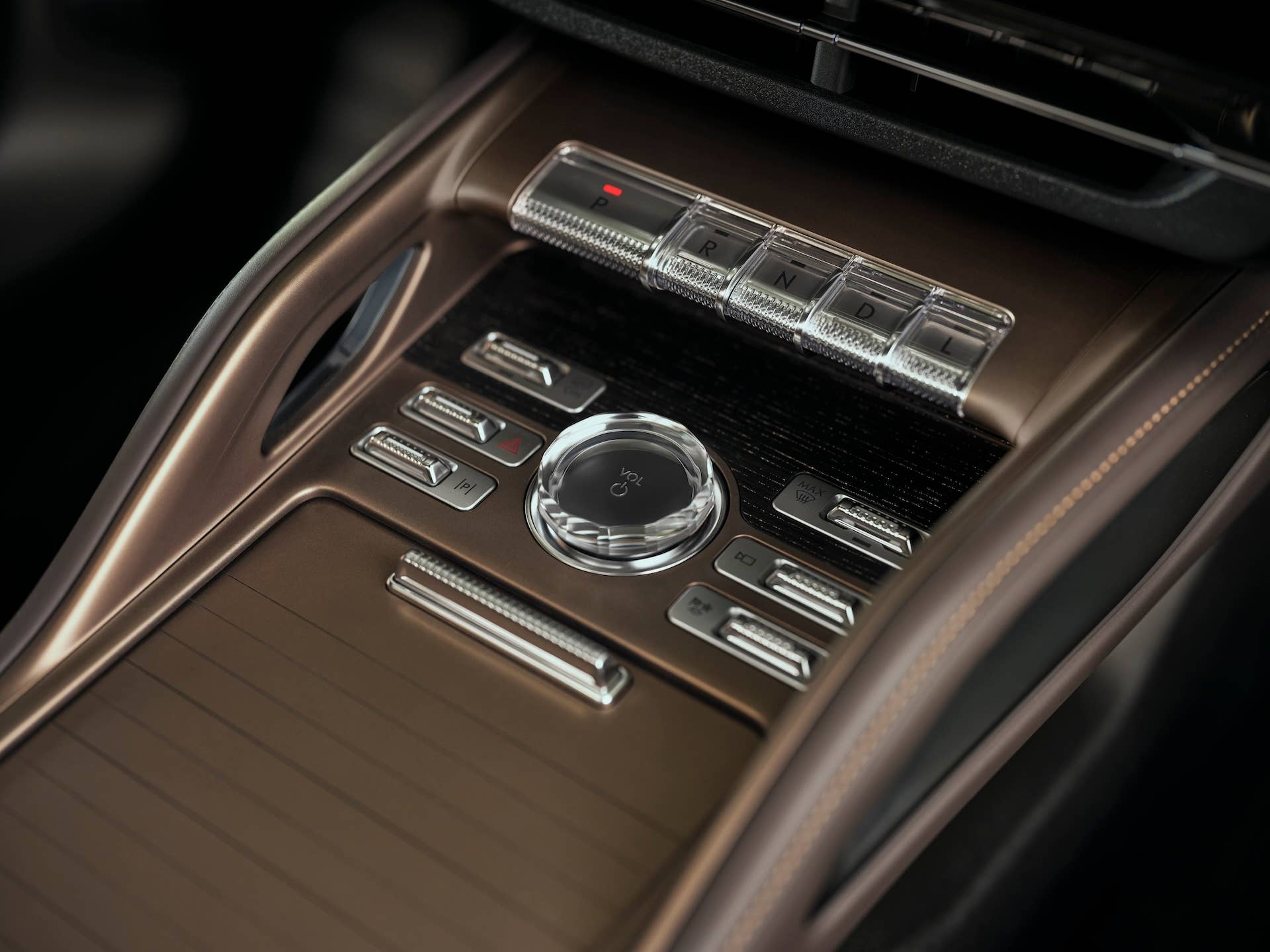
Those who know cars and engineering may already have a sense of how bad the issue is based on the description above. Thankfully, the NHTSA report also has a more layman-friendly explanation: the anti-rust oil could degrade the coating on the PCB, which might cause a drop in voltage for the rotary sensor. If the voltage drops, it could inadvertently shift the car into Neutral while driving, which is a major safety risk. Another issue is that low voltage might also prevent you from shifting out of Park to get going.

Lincoln
The Fix
According to the report, Ford was not informed by the supplier that the anti-rust oil was changed. Additionally, the new oil didn’t undergo proper validation tests to confirm its compatibility with the part it was applied to. The report also stated that affected cars would be notified through dashboard messages displaying “Service Vehicle Soon” or “Shifting System Error”.
To fix the problem, the Integrated Park Module (IPM) will be replaced with a module that does not contain anti-rust oil that degrades the conformal coating, and the replacement module will be updated with the latest software.
Lincoln
About the author

Pablo Salapantan
News Editor