
There’s a pedestrian approaching a crosswalk. He’s focused on his iPhone, oblivious to the fact he’s walking into danger.
We’re driving down the street. There’s a minivan parked alongside the curb, obscuring the view of the sidewalk. We’re oblivious to the fact we’re moments away from tragedy.
The pedestrian steps out in front of the car. The brakes lock and the tires squeal.
Had this been an everyday scenario, the pedestrian might have joined the more than 4,400 pedestrians killed on U.S. roads annually. Instead, an experimental safety system developed by Honda alerts both the driver and pedestrian of the impending crisis.
Sufficiently warned, the car screeches to a stop before the crosswalk and the pedestrian recoils.
Honda demonstrated the vehicle-to-pedestrian warning system Wednesday in Detroit, touting it as one of numerous safety technologies the company is working on to decrease the number of deaths on American roads.
“We have a responsibility to share the road, and that includes with pedestrians,” said Art St. Cyr, Honda vice president of product planning and logistics. ” … This is the next frontier for road safety.”
The technology is in its infancy and not yet available to everyday drivers. But there are many companies studying such technology, as well as the federal government, and the Honda demonstration provided a glimpse at the not-too-distant future of advanced safety technology.
Here’s how it works: The system uses a Dedicated Short Range Communications band already approved by the Federal Communications Commission and incorporates GPS functions. The pedestrian has an app on his phone that transmits his location. Together, the technologies can determine whether pedestrians are in danger of being struck by an oncoming car.
The system then flashes warnings on a dashboard-mounted screen to the driver and alerts the pedestrian via cell phone that a collision is imminent. It updates positions approximately 10 times per second.
Honda says it is better than similar radar-based systems because its technology does not require direct line of sight –- it can sense pedestrians that lurk behind obstructions, like parked cars.
There’s one big caveat. Users must have the software installed. For pedestrians, that means having an app enabled on a properly-equipped cell phone.
The technology is nonetheless promising. Pedestrian deaths have been rising in recent years, even as the overall number of traffic fatalities has stayed near historic lows. In 2009, 4,109 pedestrians were killed in the U.S. In 2010, the number crept up to 4,280 and it increased further to 4,432 in 2011.
A massive vehicle-to-vehicle communications system experiment is underway at the University of Michigan, where researchers are testing 3,000 cars on the road in the Ann Arbor, Mich., area.
Honda’s research in vehicle-to-pedestrian and vehicle-to-motorcycle communications systems are based on the same basic platform, “but take it one step further,” says Richard Pham, senior product planner.
Honda showcased a similar experiment with motorcycles, demonstrating how the short-range communication system alerted a car beginning a right turn to the presence of a motorcycle obstructed by a large van.
A warning system flashed a picture of a motorcycle on a dash-mounted screen seconds before it came into view.
Experts say motorcycle-related death are rising. Approximately 5,000 motorcyclists died in 2012, according to Government Highway Safety Association projections, and they constitute 14.7 percent of all traffic fatalities.
“Vehicle communication technology is needed to realize a collision-free car,” said Jim Keller, chief engineer and senior manager of Honda’s automobile technology research. “It’s this area that we believe the next big steps can be made.”
Pete Bigelow is an associate editor at AOL Autos. He can be reached via email at peter.bigelow@teamaol.com and followed on Twitter @PeterCBigelow.
Featured Gallery

Car owners are seeing an increase in problems with vehicles they’ve purchased in the past three years, says research firm J.D. Power, which recently released its Vehicle Dependability Study.
The research firm says car owners are seeing more problems with engines and transmissions than in prior years. The problems are particularly bad with 4-cylinder engines, Power says. Owners complain frequently about engine hesitation, lack of power, and rough gear changes, the firm says.
For 27 years, J.D. Power has been conducting surveys of new car owners to gather data about problems with their vehicles. The dependability study collects this data and rates cars and brands based on the numbers of reported problems over three years of ownership. The results are adjusted based on sales numbers to determine a number of “problems per 100 vehicles.”
While J.D. Power does not release the specific numbers for each model, it does release the numbers for each brand, as well as for the industry as a whole. Additionally, it offers the top performers in each segment, such as crossovers, trucks and luxury vehicles.
We’ve compiled a gallery of the highest and lowest scoring brands in the 2014 Dependability Study. Head through to see who was at the top and bottom of the list.

Problems Per 100 Vehicles: 112Buick, one of GM’s luxury brands, took the number five spot on the JD Power list this year with 112 problems per 100 vehicles. Hearing the word “Buick” probably doesn’t immediately conjure the word “quality” in many minds, but the numbers don’t lie: It’s one of the most dependable brands out there right now.Research MoreShop New Buick VehiclesShop Used Buick Listings

Problems Per 100 Vehicles: 109Acura, which is Honda’s luxury arm, took fourth place on this year’s study with 109 problems per 100 vehicles. This isn’t surprising. Honda has been known for making reliable vehicles for years, and with the extra attention and quality that goes into more expensive luxury rides, the end result is a brand that is among the most dependable on the planet right now.Research MoreShop New Acura VehiclesShop Used Acura Listings

Problems Per 100 Vehicles: 107
We already saw one GM brand on the list of the most dependable vehicles (Buick). Here’s another.Cadillac is the higher-end luxury brand in GM’s portfolio. It has had a resurgence as of late, bringing to market cars that are better looking, more fun to drive and, as this study suggests, much more reliable.Research MoreShop New Cadillac VehiclesShop Used Cadillac Listings

Problems Per 100 Vehicles: 104
German cars tend to have a poor reputation for reliability.Mercedes-Benz, however, seems to want to put that sentiment to bed. With only 104 problems per 100 vehicles, the luxury brand took the number two spot on the list. Considering how much these cars tend to cost, it’s nice to know that they will generally last you a while.Research MoreShop New Mercedes-Benz VehiclesShop Used Mercedes-Benz Listings

Problems Per 100 Vehicles: 68
With just 68 problems per 100 vehicles, Lexus blew the other brands out of the water and took the top spot as the most dependable brand. These numbers suggest that the luxury arm of Toyota, which has a great reputation for reliability in its own right, is the most well-built car brand out there. This isn’t really surprising: Lexus took the top spot in last year’s study, too.Research MoreShop New Lexus VehiclesShop Used Lexus Listings

Problems Per 100 Vehicles: 169
While Hyundai has been on a roll with a stable of sharp, fuel-efficient vehicles, dependability seems to be holding the brand back. The Korean automaker, which, to be fair, has drastically improved the quality of its cars over the past decade, still suffers from having 169 problems per 100 vehicles.Research MoreShop New Hyundai VehiclesShop Used Hyundai Listings

Problems Per 100 Vehicles: 178Jeep is known for making some of the most capable off-road vehicles you can buy. But while they may be able to tackle the Rubicon Trail with minimal issue, dependability seems to be a mountain that the brand cannot scale. The American SUVs suffered from 178 problems per 100 vehicles, according to the study.Research MoreShop New Jeep VehiclesShop Used Jeep Listings

Problems Per 100 Vehicles: 179
Almost everything said about Jeep on the previous slide can apply to Land Rover. A Land Rover is arguably the best vehicle you can have if you need to get across the Sahara, but if you’re tackling the concrete jungle, it’s not a great option. The British brand, which is owned by India’s Tata Motors, had 179 problems per 100 vehicles, according to J.D. Power.Research MoreShop New Land Rover VehiclesShop Used Land Rover Listings

Problems Per 100 Vehicles: 181
TheDodge brand has suffered since the Great Recession decimated Chrysler, its parent company. Its cars have been mediocre, lagging well behind competitors from companies like Ford, Chevrolet, Toyota and Mazda in almost every aspect. A big problem that Dodge will have to overcome is dependability, as, according to the study, for every 100 of its vehicles, there were 181 problems.Research MoreShop New Dodge VehiclesShop Used Dodge Listings
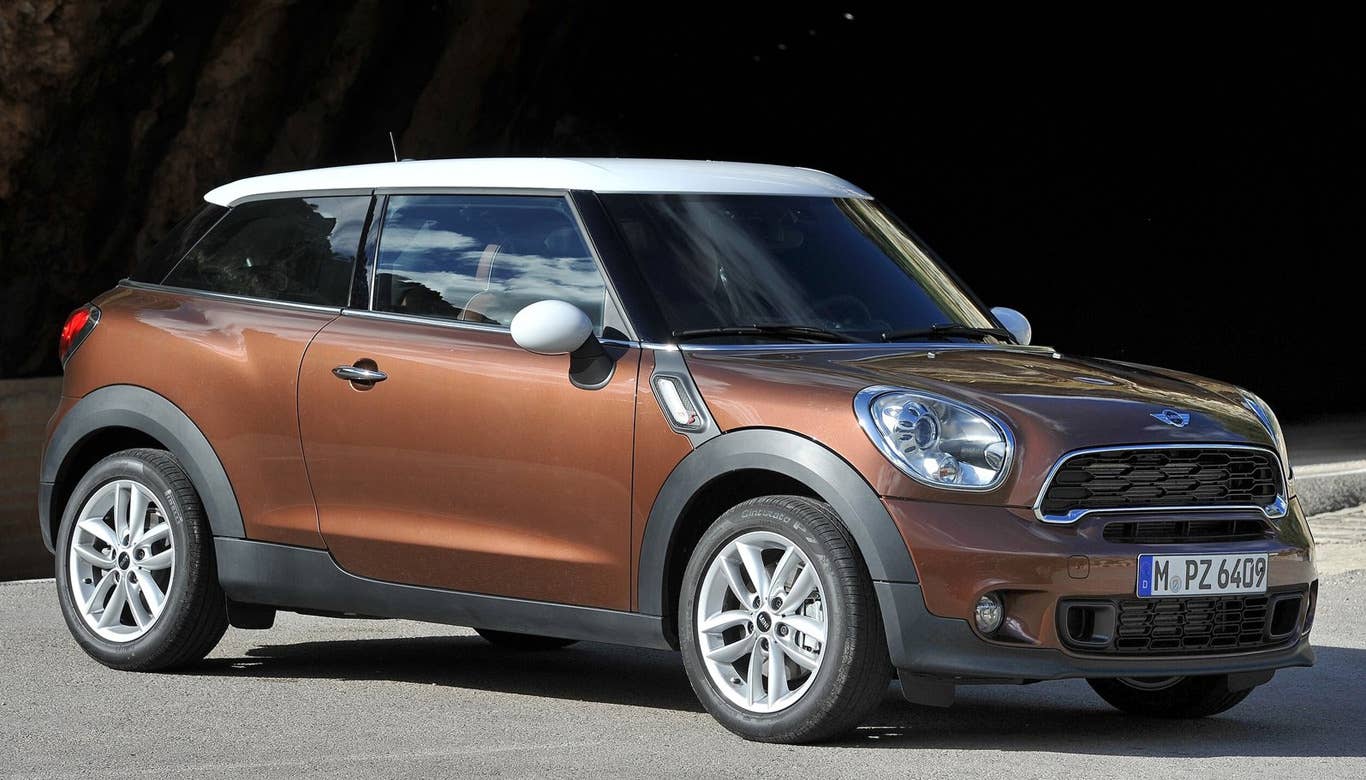
Problems Per 100 Vehicles: 185
Mini, which is a British brand built by BMW, has always been known for its novelty, cute design and fun-to-drive demeanor. It has not, however, been known for reliability. According to the J.D. Power study, Mini suffered from 285 problems for every 100 vehicles, solidifying its place as the least dependable car brand out there right now.Research MoreShop New Mini VehiclesShop Used Mini Listings