

Not Every Automaker is a Car Company
When Chinese smartphone giant Xiaomi decided to make a car, it turned heads (and populated headlines) for several reasons. It was a reminder that tech companies – built around user experience, software, and data – could shake up an industry still tied to metal and dinosaur juice. Even Apple flirted with the same dream before quietly stepping away. Now, another non-automotive player is entering the space: SCSK Corporation.
SCSK isn’t a household name like Xiaomi or Apple, but it’s one of Japan’s largest IT service providers. Based in Tokyo, the company’s bread and butter lies in consulting, software development, cloud infrastructure, and outsourcing. It’s the kind of company that builds digital backbones for other industries – but this time, it decided to make a car instead. And not just any car, but one developed in just nine months.
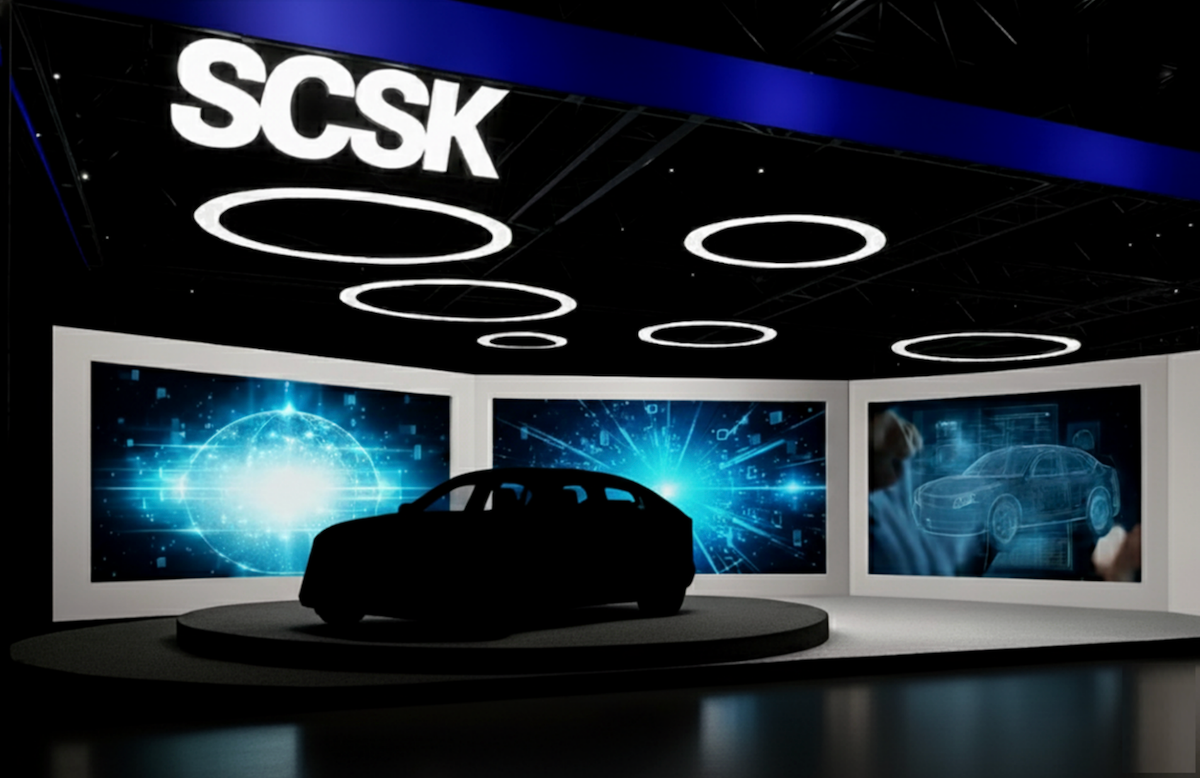
SCSK Corporation
A Different Kind of Electric Vehicle
At the upcoming 2025 Japan Mobility Show, SCSK will showcase its first-ever electric vehicle – a concept born of the idea of redefining how cars are made. The vehicle follows the principles of a Software-Defined Vehicle (SDV), in which its functions, from performance to in-cabin experience, are dictated by software rather than hardware. It’s an idea that even legacy automakers like Ford once dabbled in.

According to its release, SCSK partnered with several overseas suppliers, focusing on a horizontal collaboration model instead of the usual vertically integrated approach automakers rely on. The goal wasn’t to compete with Toyota or Honda, but to demonstrate that software-led vehicle development could be faster, leaner, and more adaptable.
Inside, the car features what SCSK calls the “Intelligent Cockpit” – a highly digital, AI-personalized cabin. There’s a 44.6-inch 8K pillar-to-pillar display that stretches across the dashboard, offering different content for each seat. The AI system learns user preferences, adjusts climate settings, recommends destinations, and even updates wallpapers based on mood.

Getty Images
Co-Creating Mobility’s Next Chapter
For now, what we have is a silhouette of the mysterious concept. SCSK describes it as a “co-creation project,” an experiment that could influence how the mobility sector works with IT firms in the future. It’s less about selling cars and more about proving that an IT company can redefine the process from the inside out.
The company hopes this prototype will lead to new partnerships with automakers and tech suppliers alike. It’s symbolic, I must say – a software company entering a hardware-heavy world to show what happens when lines blur.
I’m in Japan right now as I write this story, and something is fascinating about watching a systems integrator try its hand at making a car. When the Japan Mobility Show opens its doors in a few days, I’ll be checking out SCSK’s booth – curious to see how far software alone can take a car.

Xiaomi
About the author

Jacob Oliva
Senior Editor, Autoblog