
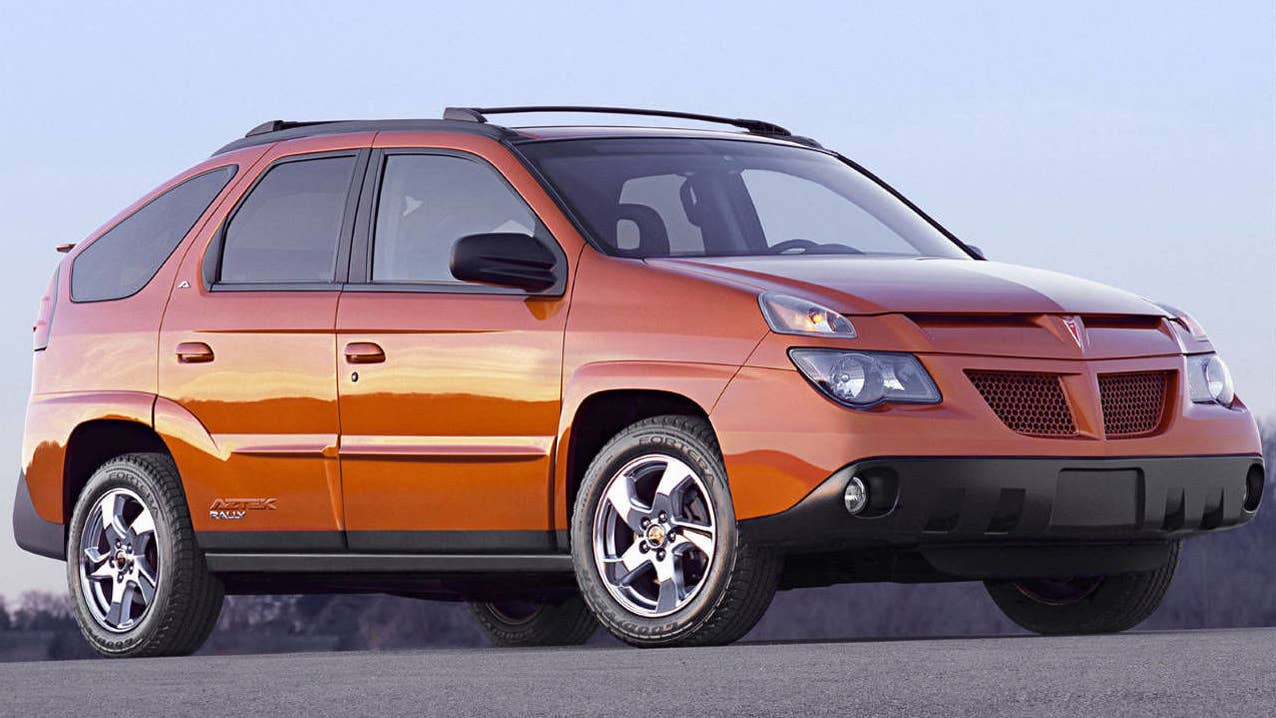
As is the case with every turning point in automotive history, there’s always one model that’s ahead of its time and falls off the wayside as a result. I previously discussed how the 1992 Jeep Grand Cherokee may have had significant influence on the crossover segment, but the Pontiac Aztek is a different case. The American model arrived right as crossovers were gaining traction, but it just managed to miss the mark by anticipating what would become staples of the segment too early.
Cars & Bids
Anticipating the market shift
The Pontiac Aztek arrived just as models like the Toyota RAV4 and Honda CR-V were picking up steam, but it pushed the envelope even further. The 2001 model featured a car-based unibody platform that prioritized ride comfort and interior space, while also offering all-wheel drive. The Aztek wasn’t designed for dedicated off-roading, but it was a rather adventurous departure from the standard crossover.
GM
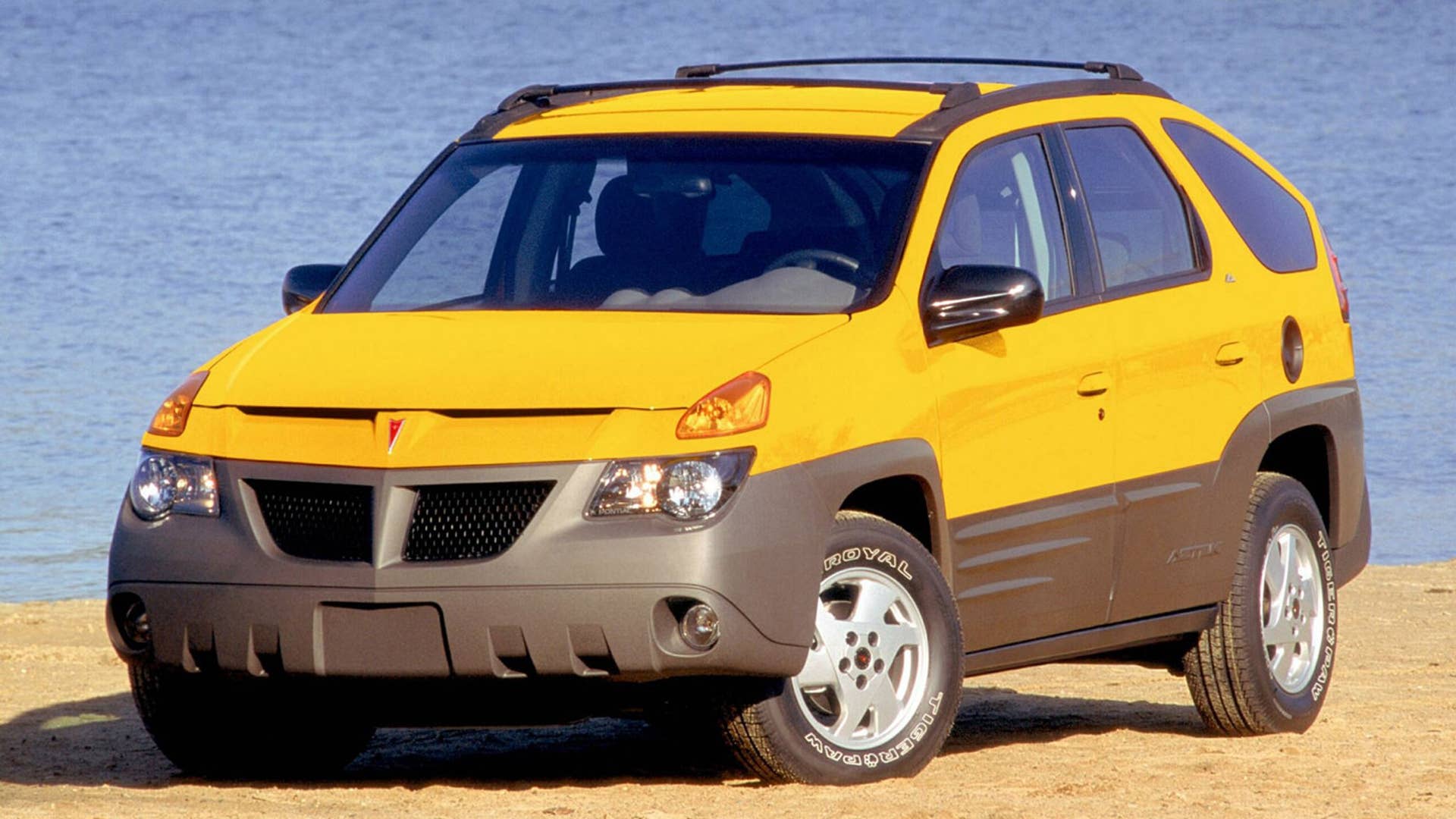
Ultimately, the Aztek was geared towards younger buyers who sought a taste of adventure. Not everyone wanted, or needed, a minivan, but the extra space was desired by many. In the early 2000s, however, the Aztek fit the description, albeit in a clunky way. Sedans still had a heavy hand in the automotive market, and SUVs still wore a rugged design. Pontiac’s entry was the odd one out. On top of that, some buyers were still hesitant about crossovers and their hybrid styling.
In short, when it arrived for the 2001 model year, the Pontiac Aztek provided solutions to needs that hadn’t become apparent just yet. Its anticipation of trends put it ahead of its time. At launch, it was available in two trim levels, the Sport and GT Sport, priced from $21,995 and $24,995 respectively. From 2002 to 2005, Pontiac dropped the GT Sport model. Fortunately, pricing didn’t change much, with the final 2005 Aztek Sport starting at $22,060.
Function over form
Pontiac managed to push the envelope with the Aztek, especially when it came to developing an adventurous crossover. The model itself was designed as more than just transportation. It was a precursor to the lifestyle vehicle, a niche that focuses on how people utilize their vehicle. The model’s offerings included a built-in tent, modular storage, a removable cooler, and a rear cargo area that could be converted into a sleeping area.
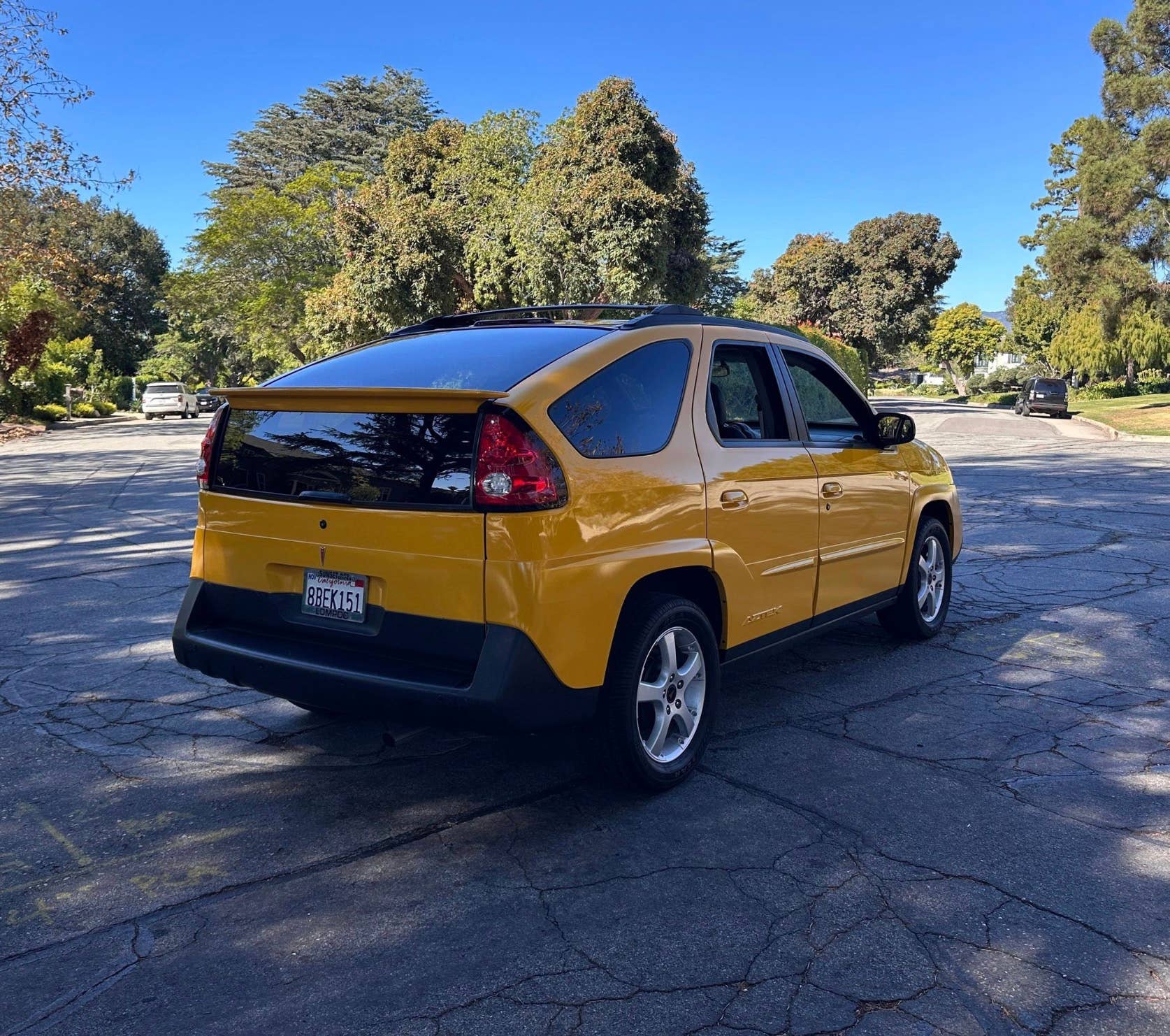
Today, the idea of a lifestyle vehicle is widespread, but the Aztek anticipated the trend a little too early, and its design certainly didn’t do it any favors. The model’s styling was full of odd angles, and it came heavily clad in plastic. Visually, it was unconventional. While that isn’t necessarily a bad thing, the Aztek’s looks managed to shoo buyers away, so much so that it’s often cited as one of the ugliest cars to ever roll off the production line.
Despite styling that stuck out like a sore thumb, the Aztek came mechanically ready for adventure. All models came equipped with a hefty 3.4-liter V6 engine that produced 185 horsepower and 210 lb-ft of torque. A four-speed automatic transmission sent power to the front wheels unless you opted for the optional all-wheel drive system. Front-wheel drive models were rated for 20 mpg combined, while all-wheel drive models earned one mile per gallon less.

A lasting legacy
When it first arrived for the 2001 model year, the Aztek prioritized utility and amenities while compromising on styling. It was certainly a practical vehicle, but it left much to be desired. Its styling in particular proved to be a point of contention and served as the leading cause in its struggle to gain popularity. The precursor to the more adventurous crossover failed to meet its sales goal year after year, with an estimated 119,000 units sold over its entire production run. Despite a redesign in 2004, the Aztek was ultimately discontinued following the 2005 model year.
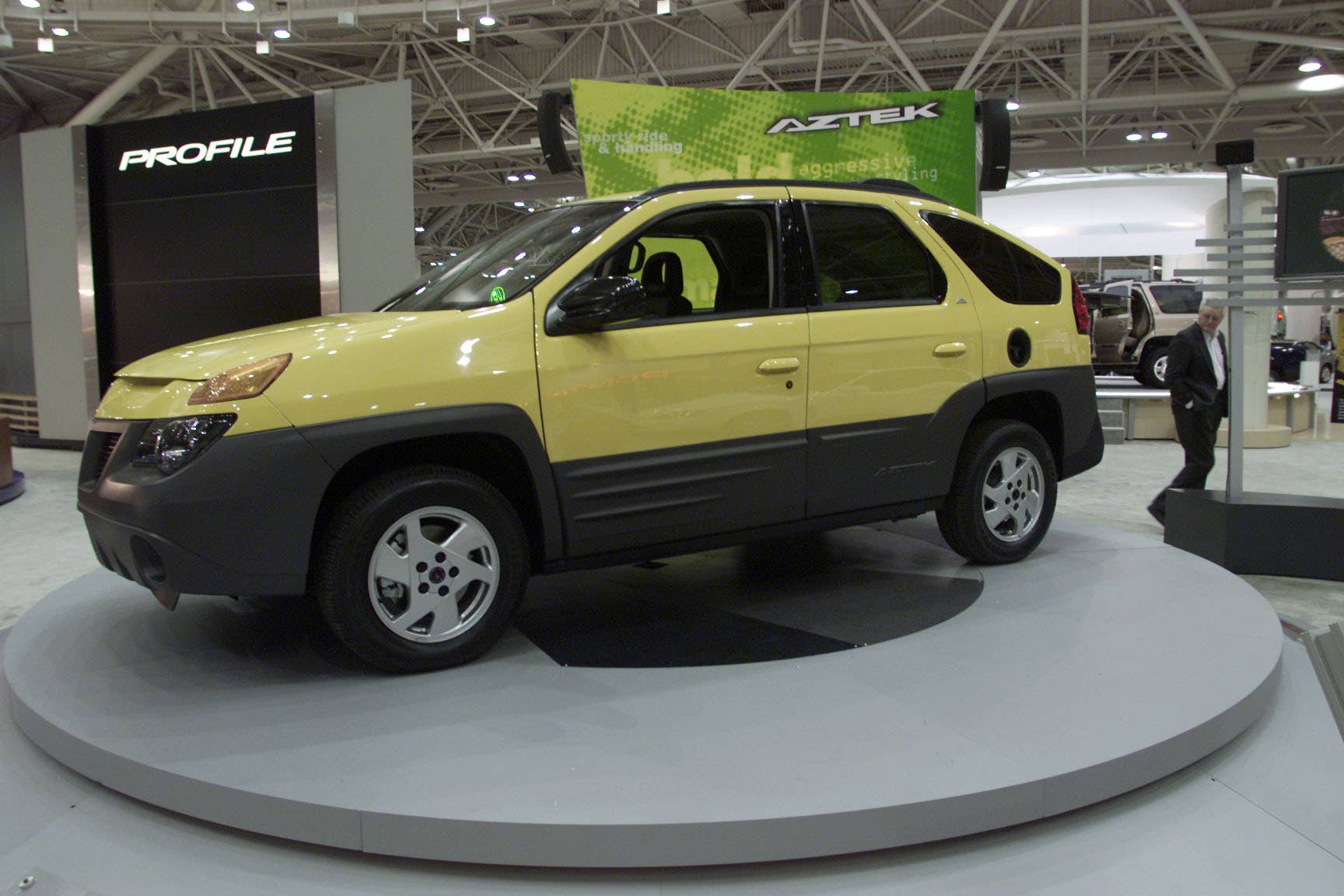
While it was initially deemed a failure, the Aztek has since gained a cult following centered around its odd design. It has also garnered some pop culture credibility, having served as Walter White’s vehicle in Breaking Bad. According to Automotive News, the Aztek found new life on the used market following its appearance on the show.
The Pontiac Aztek was fine in concept, but production was a different matter. Even so, the features it experimented with early can now be found in modern crossovers. While the Aztek successfully predicted the lifestyle vehicle, practicality and all, it arrived before consumers were ready in a shell that was far from conventional.

Modern crossovers continue to combine the versatility of an SUV with car-like comfort via a unibody design. Many models now offer all-wheel drive, and the more adventurous trims include optional and standard equipment, like a built-in air compressor, similar to what was found in the Aztek. In the end, the Pontiac Aztek predicted a trend, showed automakers what worked, and reinforced that styling matters, especially in vehicles built around a lifestyle.
About the author

Joseph Pudlewski
Contributing Writer, Autoblog