
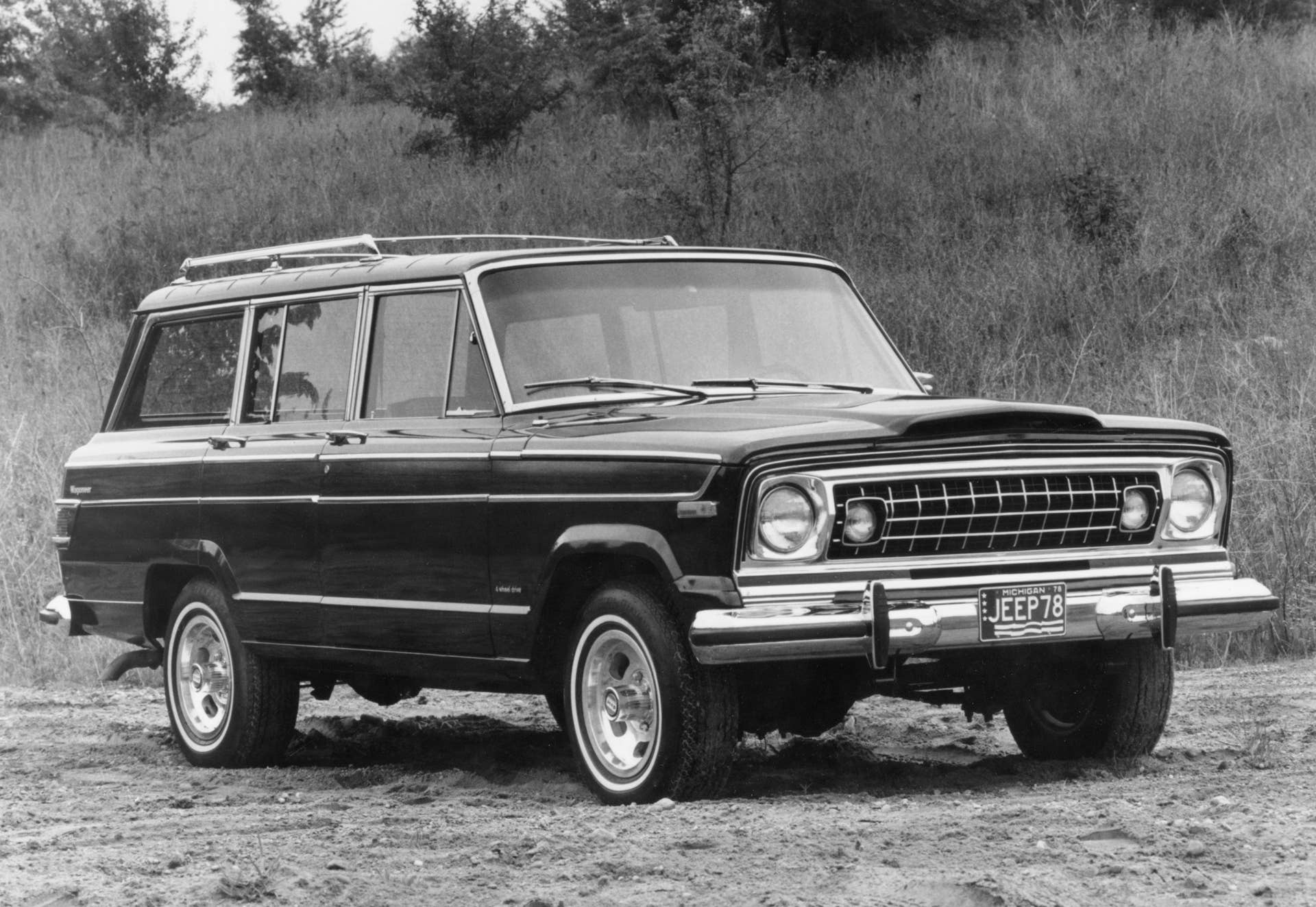
Look to your left, look to your right; you might find a luxury SUV.
These days, it seems like there are luxury SUVs being driven and parked practically everywhere you look; whether it be the mall, your local supermarket, church, on the school run or even in your neighbor’s driveway. Sales of SUVs and crossovers of all sizes are so dominant, it has some of the car industry’s most prestigious marques coming to cash in. Rolls-Royce has the Cullinan, Lamborghini has the Urus, and even Bentley has an SUV of their own; the Bentayga, a massive, opulent all-wheel drive machine that is capable of off-road adventures and .
Even though they carry some incredibly high price tags, the luxury SUV has become so commonplace that it’s easy to forget where it actually came from. It didn’t emerge from a boardroom in Munich, Tokyo or England. It was actually born in Toledo, Ohio and it had a Jeep badge. Long before the Range Rover became a status symbol, before the Cadillac Escalade and well before every luxury brand from BMW to Bentley decided they needed an SUV, one American 4×4 quietly invented the concept. The Jeep Wagoneer didn’t just participate in the birth of the luxury SUV; it created the formula that everyone else has been following ever since.
The Formula
Back in 1963, Kaiser Jeep, the company that would become the Stellantis-owned brand, unveiled the original Wagoneer as a replacement for the outgoing Willys Jeep Station Wagon. Designed by Brooks Stevens, the Wagoneer was unlike any four-wheel-drive vehicle of the era; though most 4x4s like Toyota’s Land Cruiser were essentially Jeep copycats. However, what made the Wagoneer different was that it came with features that would be considered upmarket for a “normal” sedan, much less in a 4×4. It was the first four-wheel-drive vehicle ever mated to an automatic gearbox, which helped transmit power from an overhead cam inline-six.
While base models had the bare essentials, Kaiser offered nicer, and more appointed trim levels like the Deluxe (later Custom), which came with sedan-like features including carpeting and nicer cloth interior appointments. In addition to off-road essentials like a front-mounted winch or a snow plow, the Wagoneer’s options list read more like one for a Ford or Chevy, which included a push-button AM radio, glove box light, electric clock, power steering, power brakes, seat belts, an electric tailgate window, heater and defroster, while later models had the option for air conditioning. But while the original Wagoneer represented a four-wheel drive experience that felt much less like a spartan military vehicle, Kaiser Jeep thought they could go one step further. What if a 4×4 could offer more comfort, Cadillac and Lincoln levels of refinement and more power? Clearly, the boffins at Jeep had expectations to go one further, and they delivered.
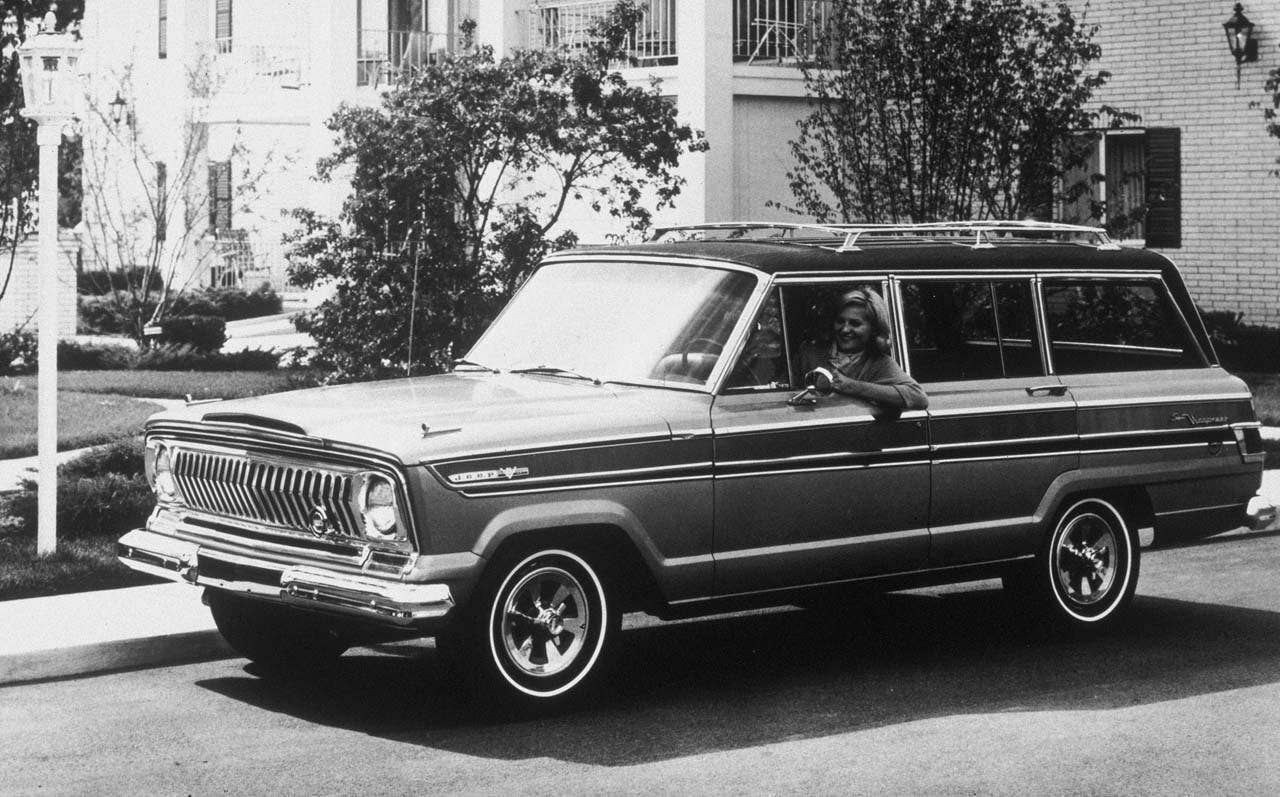
Introduced in 1965 for the 1966 model year, Kaiser introduced the Super Wagoneer; the spiritual precursor to all the luxury SUVs that would come to dominate suburban driveways and parking lots more than 60 years after its introduction. Also dubbed as the “Super Custom,” the upscale Super Wagoneer was designed for a more highbrow buyer who thought their rugged vehicles needed to match their Continentals and DeVilles.
If there is one word that could describe the Super Wagoneer, it would be “loaded,” as it came with a level of comfort and technology features that wasn’t found on other 4x4s of the era. In addition to every conceivable optional extra for its lower-trim models, the Super Wagoneer had extra features, including a seven-position tilt steering wheel, ceiling lights, a vinyl roof, a chrome roof rack, tinted windows, body striping, and shiny chrome hubcaps with whitewalls. Under the hood was a 270 horsepower AMC 327ci Vigilante V8, which was connected to a console-shifted TH400 automatic transmission and provided smooth power that matched the premium feel.
Although features like these seem uneventful or even spartan by today’s high-tech, everything-needs-to-be-a-screen luxury cars; it should be noted that this was an era when almost everything was an optional extra. Although the same features were found in the era’s Cadillacs and Lincolns, it would be decades before they’d respectively introduce the Escalade and Navigator. The Super Wagoneer was the direct precursor to the modern luxury SUV and it came at a heck of a price. At a time when most Jeeps were still being sold as fleet and utility vehicles, the Super Wagoneer came at a whopping $5,943 (~ $61,071 in 2026 dollars), about $500 more than a Lincoln Continental and a Cadillac DeVille. Kaiser’s upmarket experiment proved to be a dud, just 3,989 Super Wagoneers were made before it was discontinued in 1968.
New owners, another attempt upmarket
Although it didn’t prove to be a success from the jump, the Super Wagoneer from the 60s wouldn’t be Jeep’s only attempt to make an upmarket, luxury SUV. By the mid-1970s, the American Motors Company (AMC) would buy Kaiser Jeep, and continuously upgrade and refine the Wagoneer, adding in upgraded powertrains, automatic Quadra-Trac four-wheel drive and front disc brakes. With the addition of these new features atop an already-refined four-wheel-drive experience, Jeep’s new owners began to notice that the Wagoneer was taking away from luxury car sales, as it became attractive to a more affluent type of customer in ski country and old-money New England.
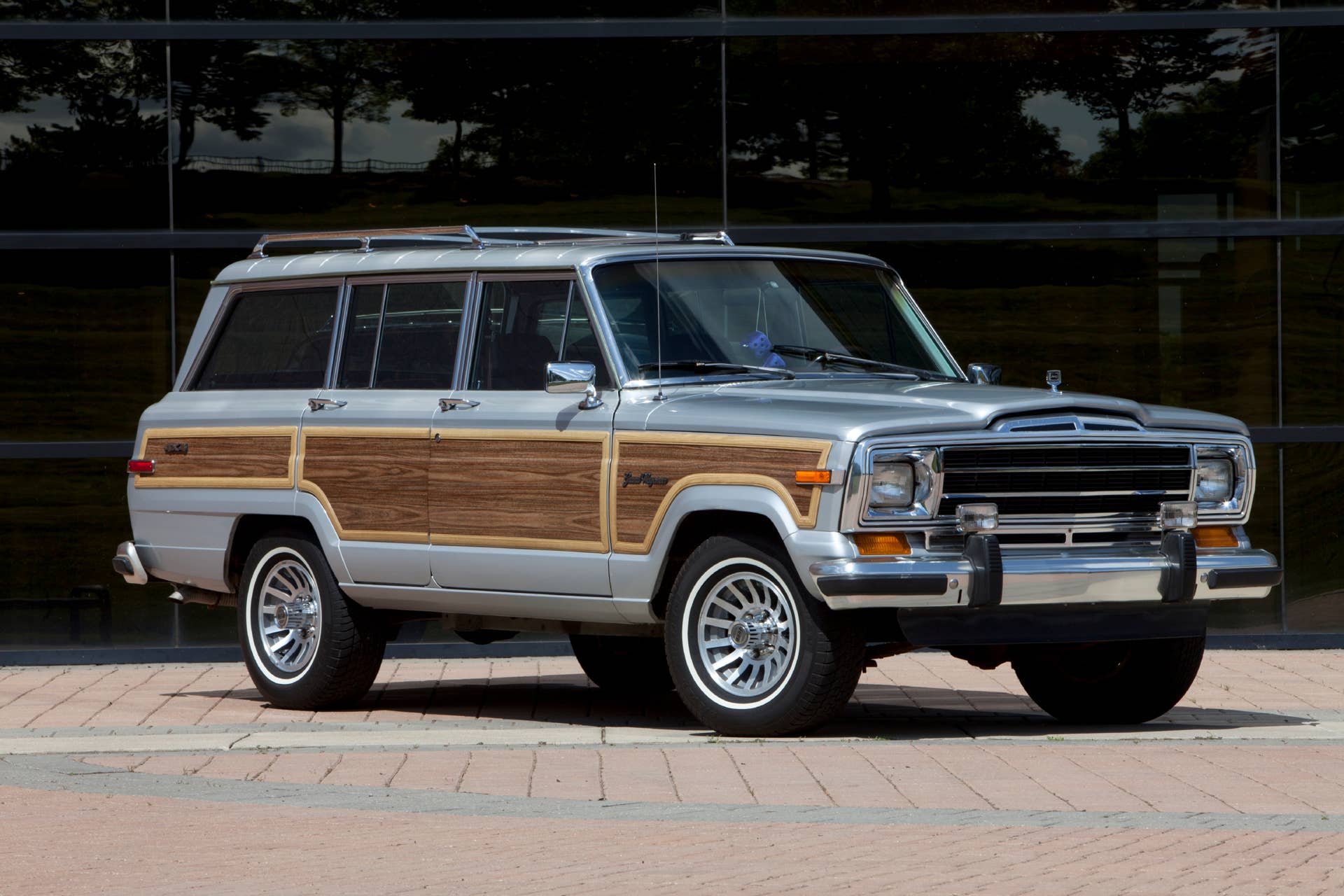
In 1978, AMC Jeep introduced the Limited, a new top-trim model that rewrote the formula that the earlier Super Wagoneer tried to create. It had leather, power-adjustable bucket seats, power windows and door locks, cruise control, a leather-wrapped steering wheel, and extra-thick plush carpeting. It was also around this time when the Wagoneer’s signature styling cue: woodgrain exterior paneling, became the most prominent. These simulated body-length wood-panel sides transformed the Wagoneer into the preppy American icon it is today.
Jeep
In 1984, Jeep’s new owners, Chrysler (who bought AMC), officially renamed the SJ-body Wagoneer to the Grand Wagoneer, only offering it in a single, fully loaded flagship model. Standard equipment included leather, air conditioning, AM/FM/CB stereo, an AMC 360 cubic-inch V8, Selec-Trac four-wheel drive, sound insulation, power everything, and the iconic woodgrain exterior panels. In 1986, the Grand Wagoneer got a redesigned interior with a new dashboard, improved climate control, adjustable headrests, and richer trim materials.
Production of the Grand Wagoneer ended in 1991 after 29 model years, which made the SJ one of the longest-running models in U.S. automotive history. This single generation outlasted three separate parent companies, and when the last one left the Toledo plant, the luxury SUV segment that the original Wagoneer had invented became one of the most lucrative segments in the industry.
GEOFF ROBINS/AFP via Getty Images
From Dormant to Dominant: The Modern Wagoneer
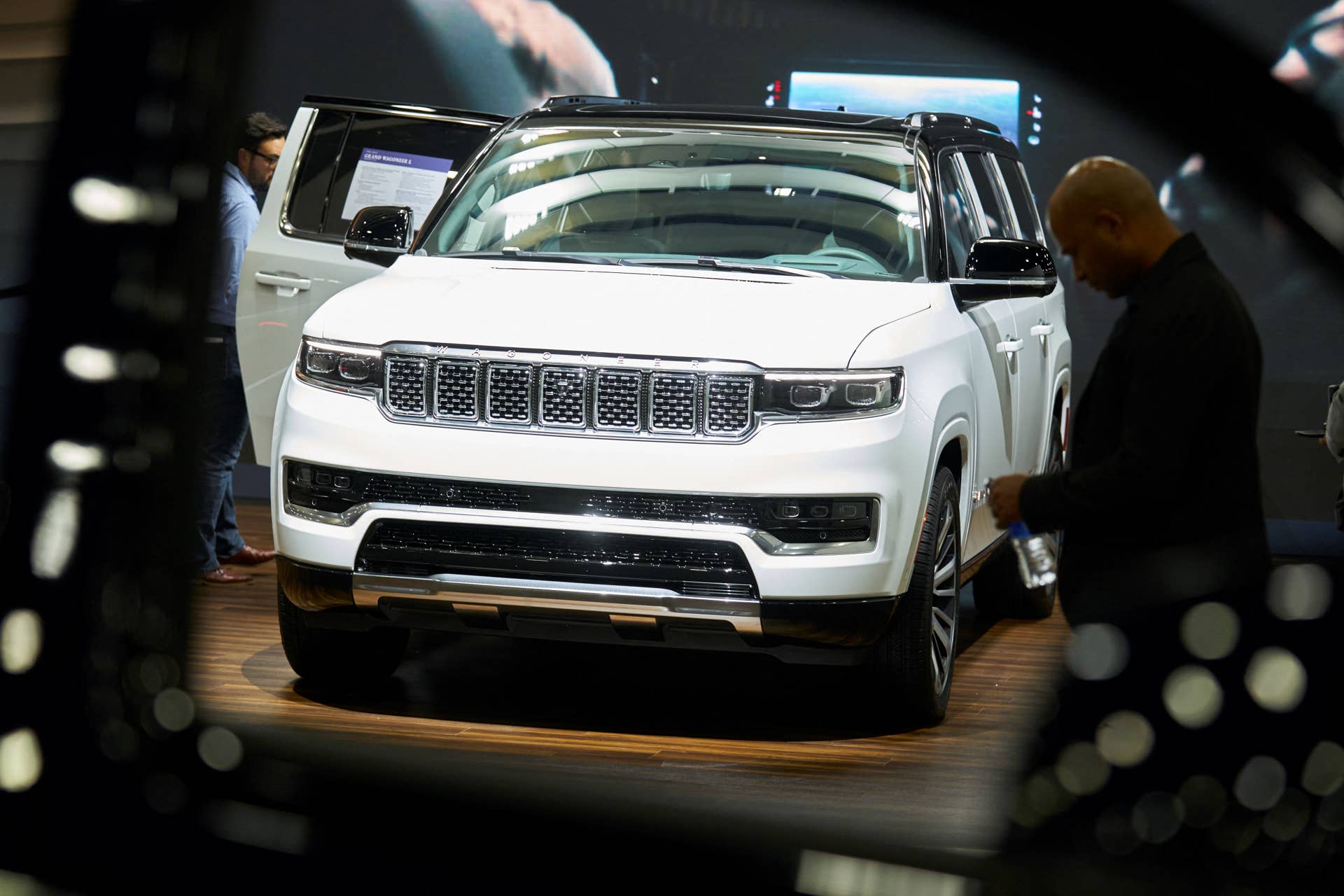
The Wagoneer name was largely dormant for three decades after 1991, although it was brought back for one year as a Grand Cherokee trim in 1993. However, the legend never faded. To this day, Grand Wagoneers are sought-after collectibles, with pristine examples commanding serious money, while specialists make bank on full restomod versions for today’s old-money aspirationals. Jeep finally brought the Wagoneer back in earnest for 2022, introducing an all-new lineup built around two models: the Wagoneer and the Grand Wagoneer. As a direct spiritual descendant of the original, the modern Grand Wagoneer competes directly with the upper echelon of the luxury SUV market; including Cadillac Escalade, Lincoln Navigator and the Range Rover, vehicles that echo the OG’s mantra.
The Jeep Wagoneer didn’t stumble into luxury by accident, and without it, it may be impossible to fathom if SUVs would be accepted by the public. Every Range Rover, Escalade, and G-Wagon you see on the road today exists, at least in part, in the tradition the Wagoneer established. The OG luxury SUV didn’t just start a trend, it started a revolution.
About the author

James Ochoa
Senior Editor, Autoblog