
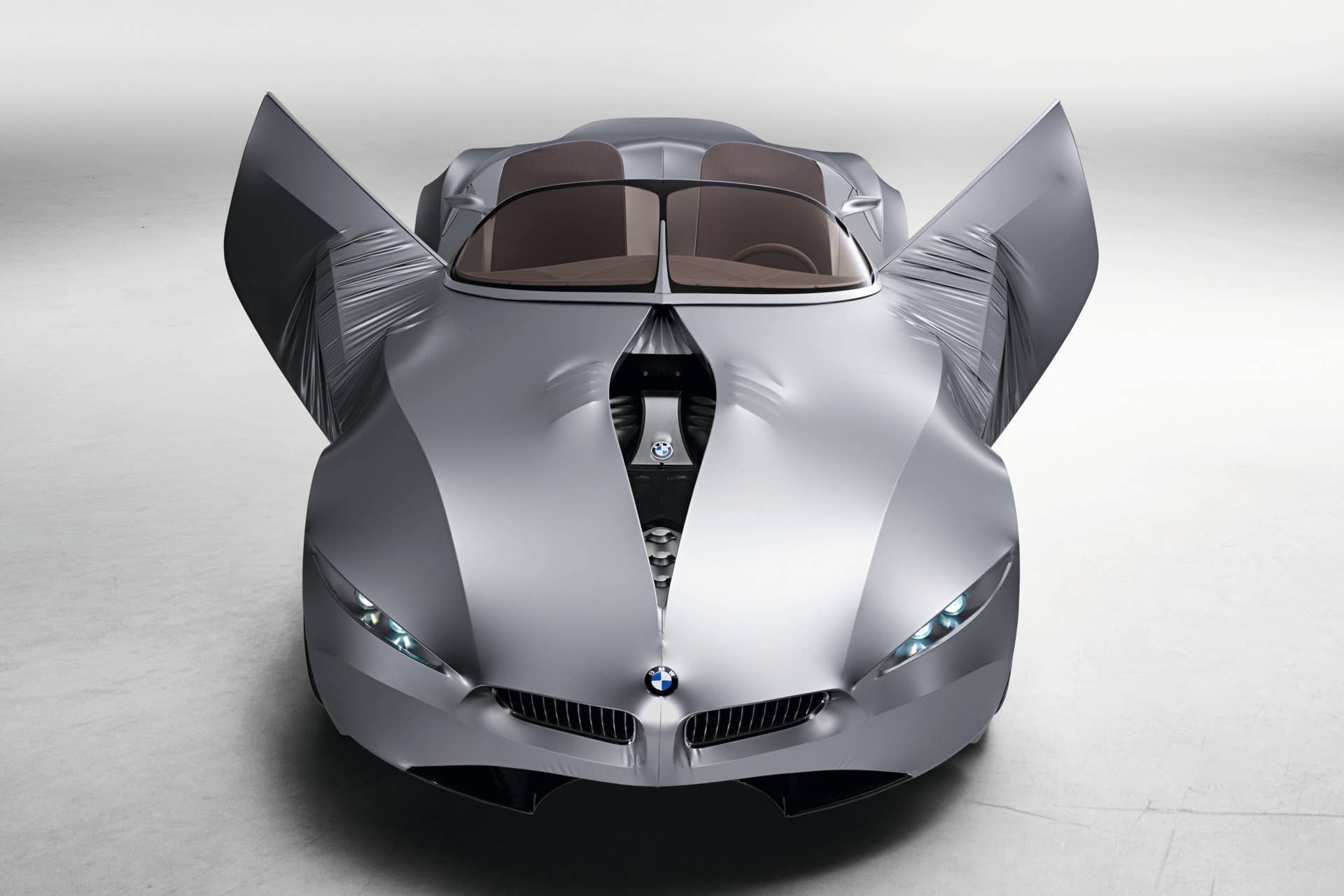
Cars have always had moving body panels. They’re a necessity for about a million reasons, from egress and ingress to maintenance, to storage, to the simple construction of the vehicle. There’s also something of an aesthetic drawback to them. They interrupt the design of a vehicle. Often, designing with these breaks in mind can result in a shape that’s too boxy, even for today’s designs, and possibly even a design that looks a little flat or low-effort. On June 6, 2008, BMW decided to try something new: it made a car without panels. Instead, it made one with skin. But not in a creepy “it puts the lotion on” sort of way.
BMW called the concept the “GINA Light Visionary Model,” but it became colloquially known as the GINA concept after its debut in 2008. Penned by the then head of design at BMW, Chris Bangle, the design was intended to explore geometry and a car’s functions. It was, literally, in the name: Geometry and Functions In “N” Adaptions. BMW called it an “optical expression of selective, future-oriented concepts. The brand said the concept was “not just interested in answering the question of how the car of the future will look but primarily wishes to explore the creative freedom it has to offer.” 18 years later, the creative freedom of the future hasn’t quite reached the ambitious highs of the GINA’s skin-like bodywork, making the concept something BMW hasn’t done before or since, and possibly never will.
BMW
BMW
BMW
Though the brand sort of saw its own ambition as its downfall with the GINA. BMW said the GINA wasn’t a concept at all, which it argues is intended to implement “as many elements as possible in a future production model.” For evidence of that logic, just take a look at the new i3 and the Neue Klasse concept that informed it. Instead, the GINA is a “vision of future cars” and a study in one.
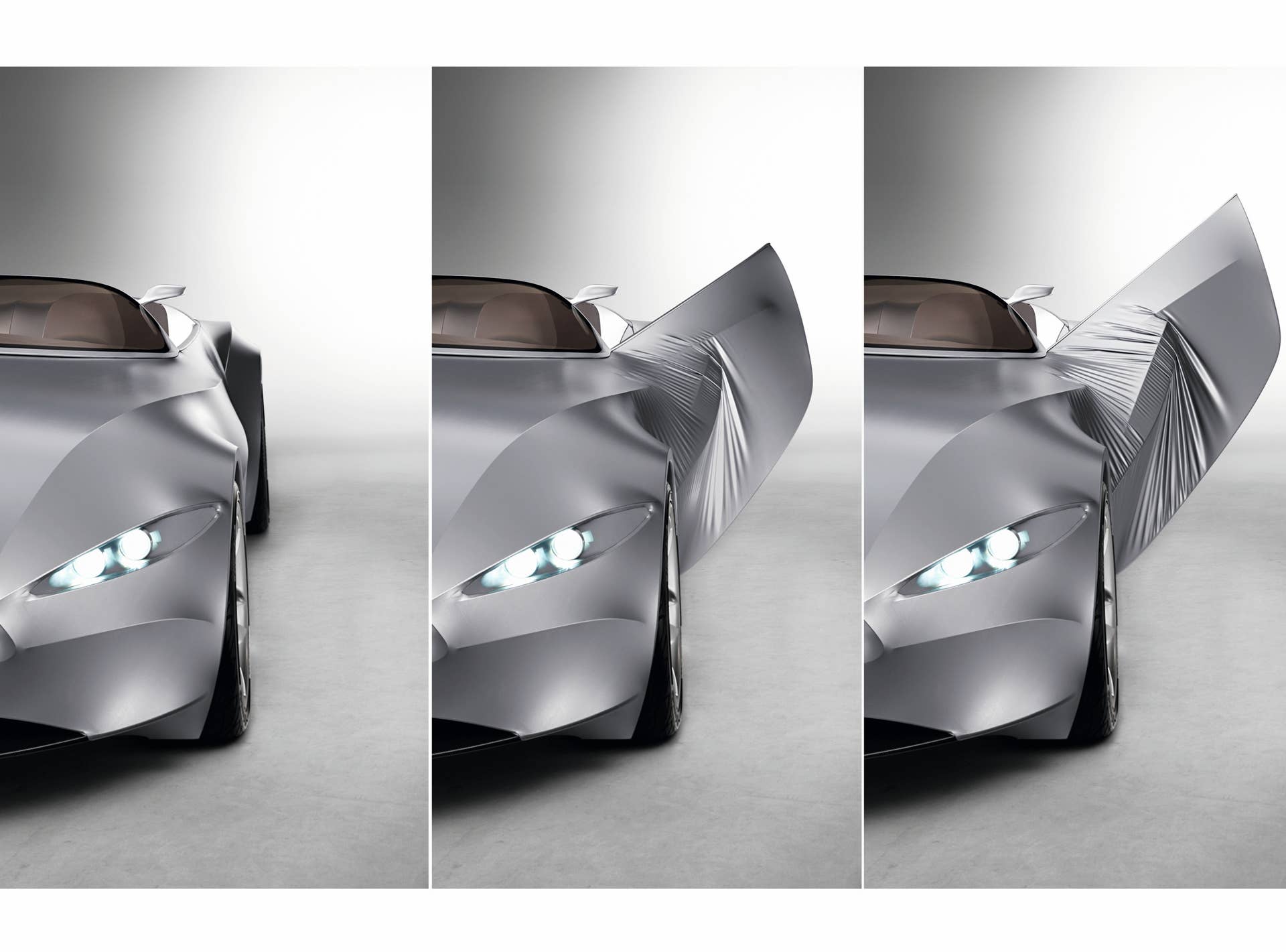
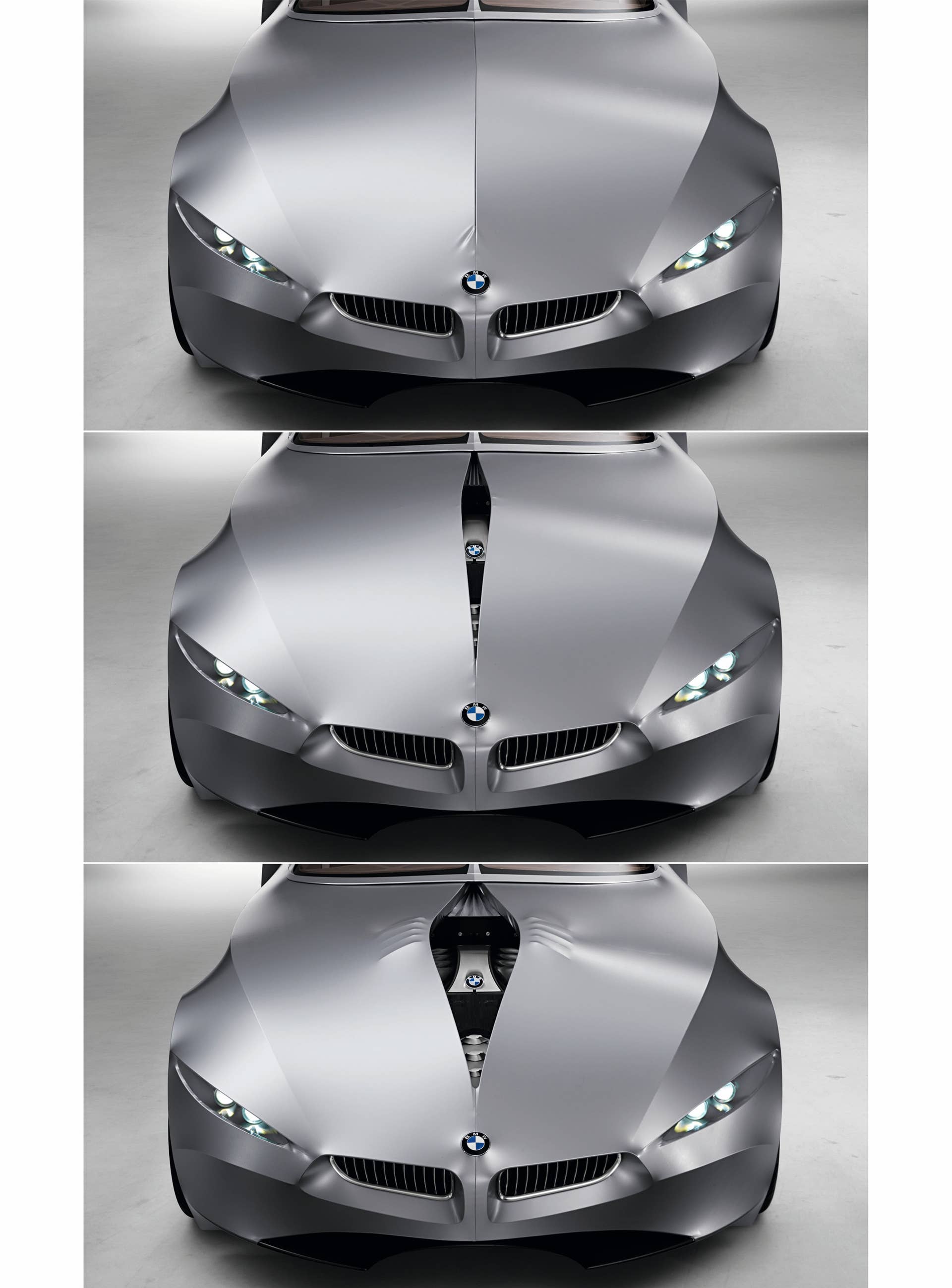
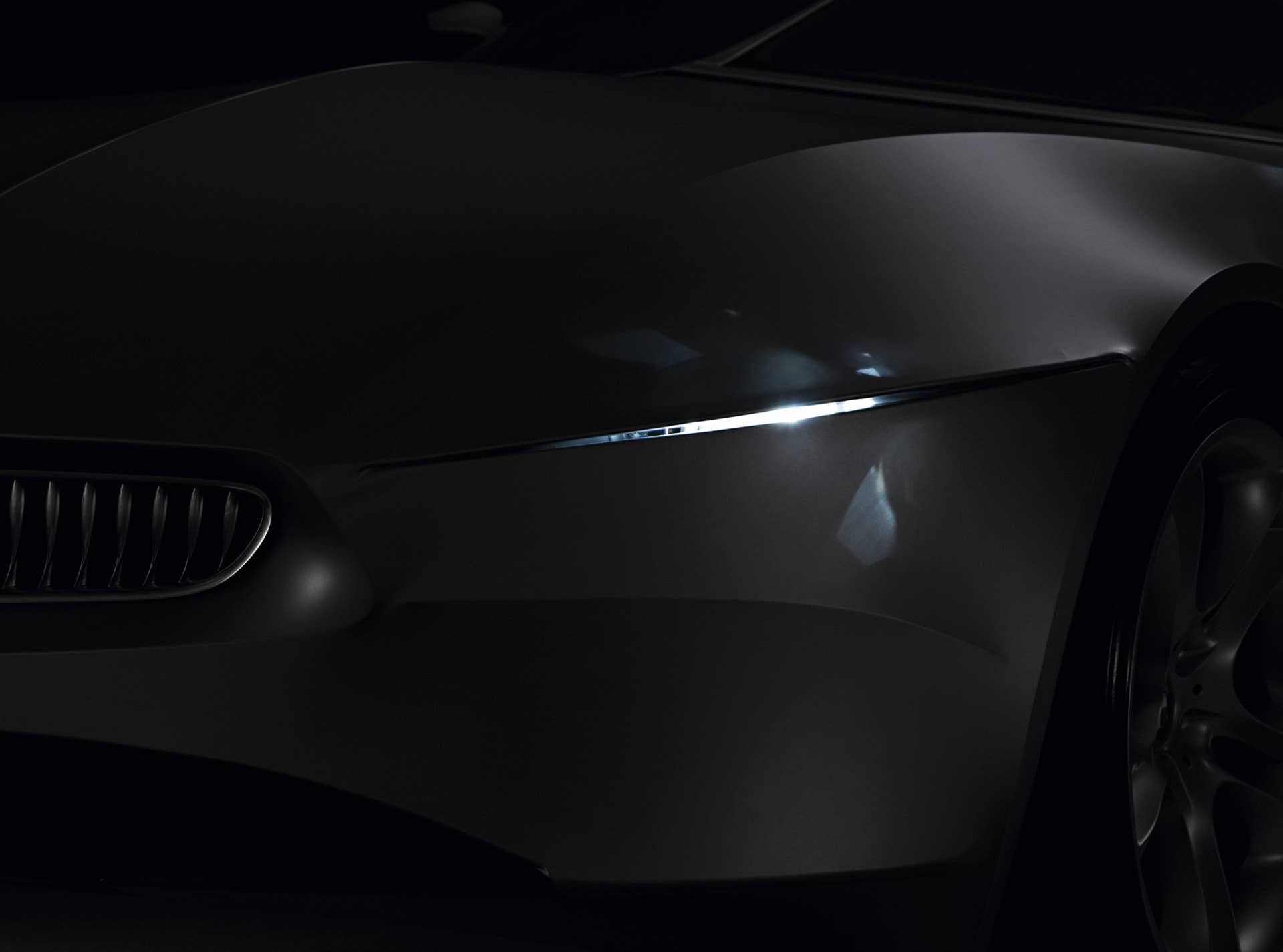
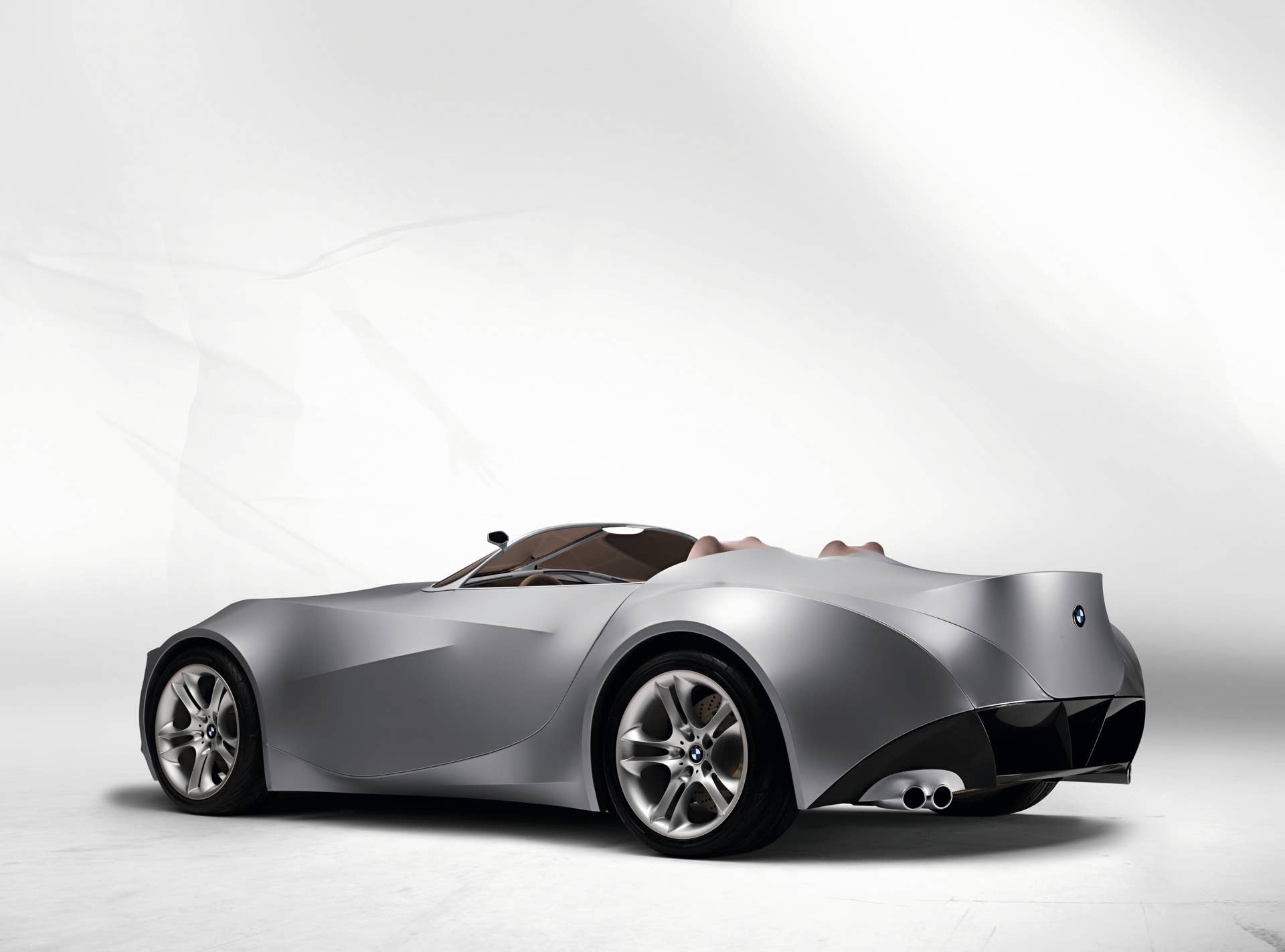
The concept featured a nearly seamless outer skin (BMY called it a textile cover) that covered a movable sub-structure. The idea was that functional elements of the car’s design were only revealed when needed, like the headlights. In a futuristic version of pop-up headlights from decades before, these “closed” like eyelids. As for the textile itself, BMW didn’t elaborate on what it was made of, saying only that the fabric was expansion-resistant. It needed to be, as BMW had designed the car to be as adaptable as its outer skin. The brand said drivers could reposition the car’s sub-structures to expand and transform the car to better adapt to the situation at hand. In theory, the driver could contort the bodywork to fit a larger object in the trunk or alter the look of the vehicle. Headlights aside, BMW also used the rear end and quarter panels as an example, stating both could change the shape of the skin to create more aerodynamically-friendly surfaces for more aggressive driving. The same applied to the rear ducktail spoiler.
BMW
BMW
The list of examples, all of which could have very easily changed automotive design, continued. The rear wing didn’t protrude from the bodywork because the wing was part of the rest of the rear end. The lights at the rear mimicked the front, presenting a sleek silhouette when not in use. The light was emitted through translucent fabric instead, just as modern designers use a darker lightbar to hide today’s taillights.
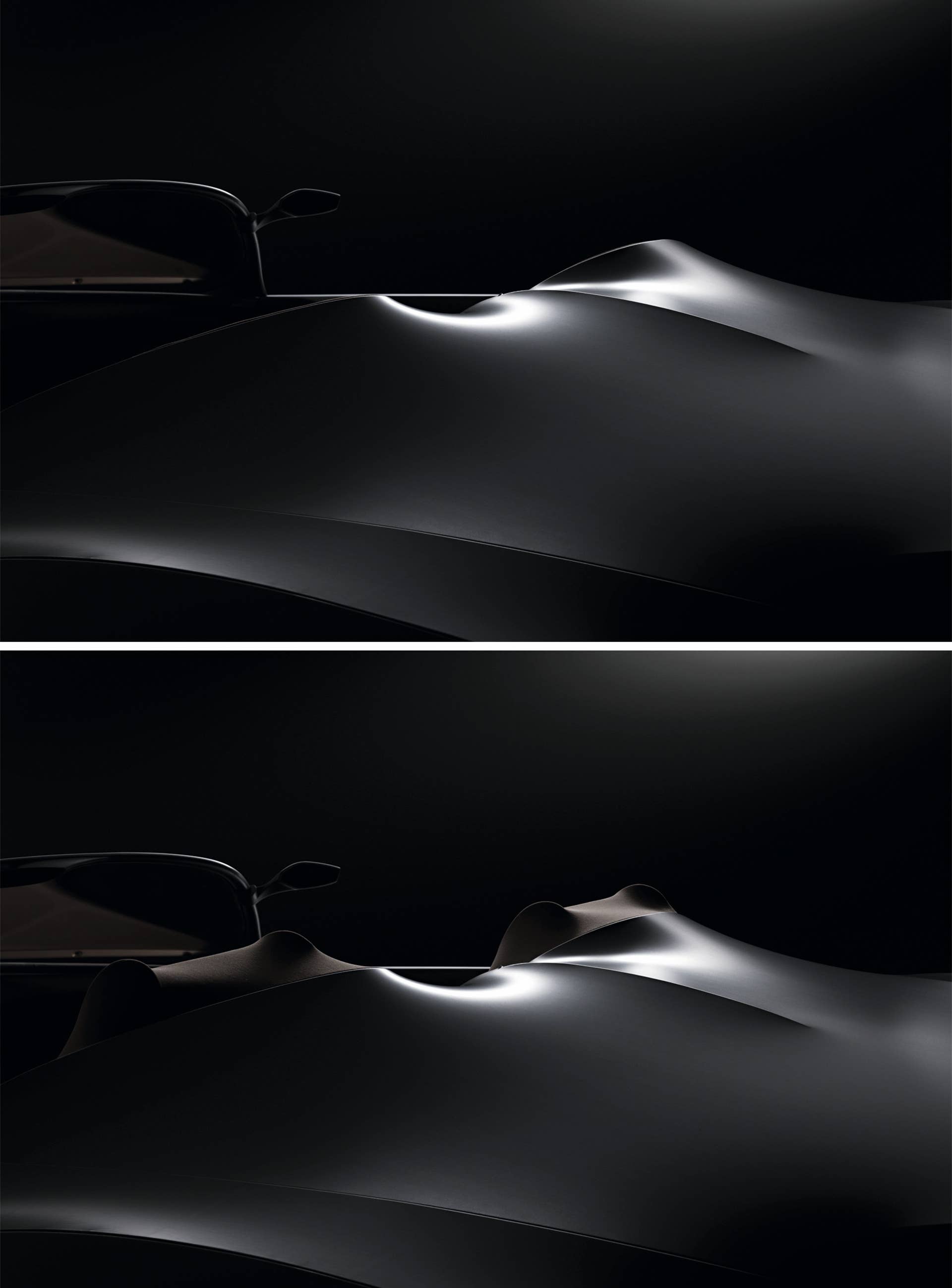
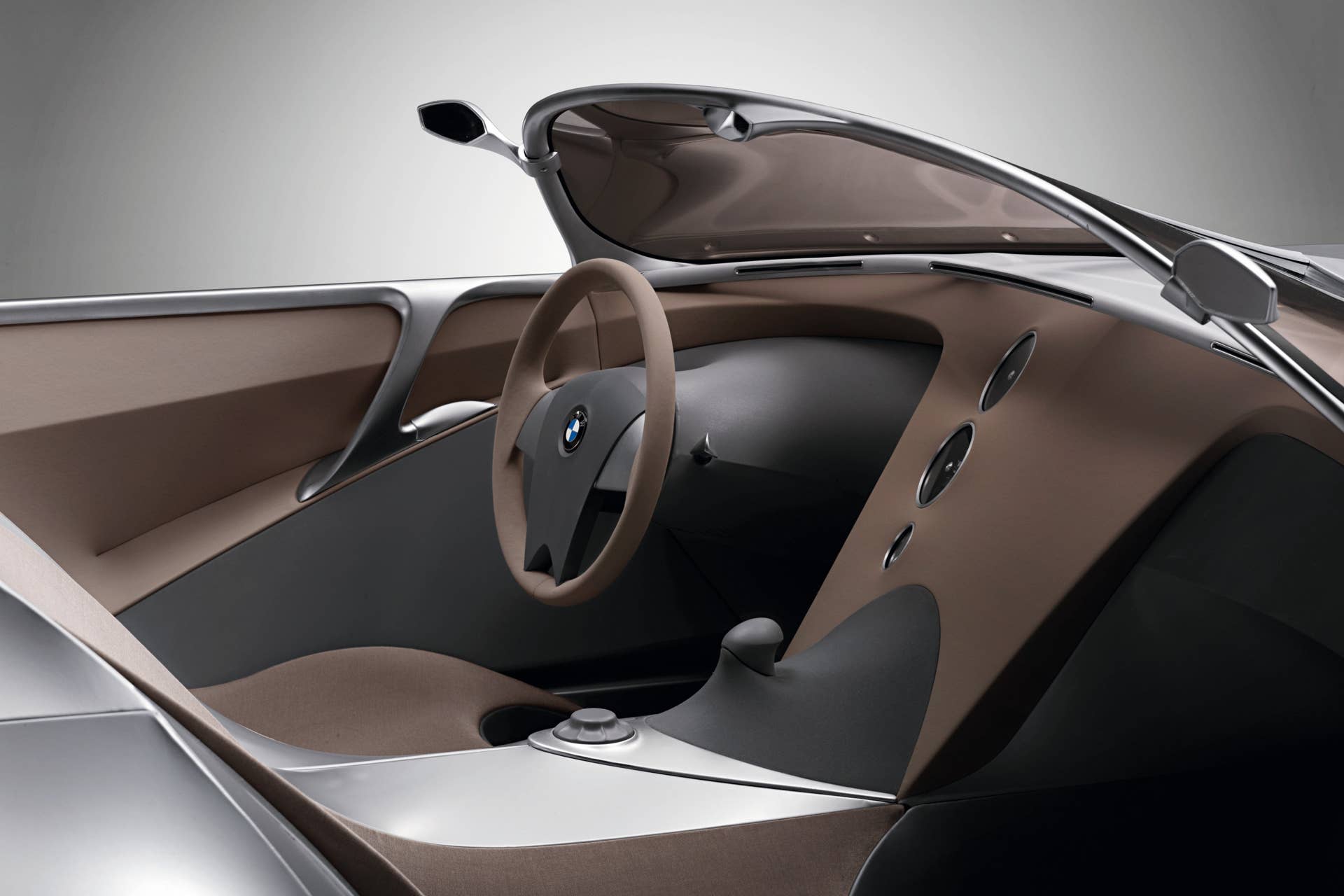
The fabric itself is arguably the most fascinating aspect of the car’s design. BMW never specifically names the stuff, but says the “hybrid fabric” was made from “stabilizing mesh netting support and an outer layer that is both water-repellent and resistant to high and low temperatures.” It also needed to be stable enough so as not to warp when moved repeatedly and to stay the same shape under various weather conditions. Its seats were also cut from the stuff, with the headrest integrated into the bodywork. Again, the car shifted itself to suit the driver organically, moving the headrest out of the bodywork and the instruments towards the driver when seated. The same fabric used on the outside is deployed within, covering nearly every inch of the interior, including the shifter.
BMW
Speaking of shifting, in spite of all the fanfare and new materials and ideas, the GINA’s underpinnings are decidedly antiquated, even for 2008. A big V8 sat at the front, under another clever opening, where drivers can access basics like an oil feed tube and wiper fluid reservoir. The car was rear-drive, equipped with a V8 likely derived from the aesthetically similar Z8 roadster. Undoubtedly, it was the least forward-looking part of a car that, in BMW’s own words, was intended to “challenge conventional and previously pursued solutions.” At a bare minimum, the GINA’s incredible bodywork did that, though very little ever came of the revolutionary take on bodywork.
About the author

Chase Bierenkoven
Senior Editor, Autoblog