
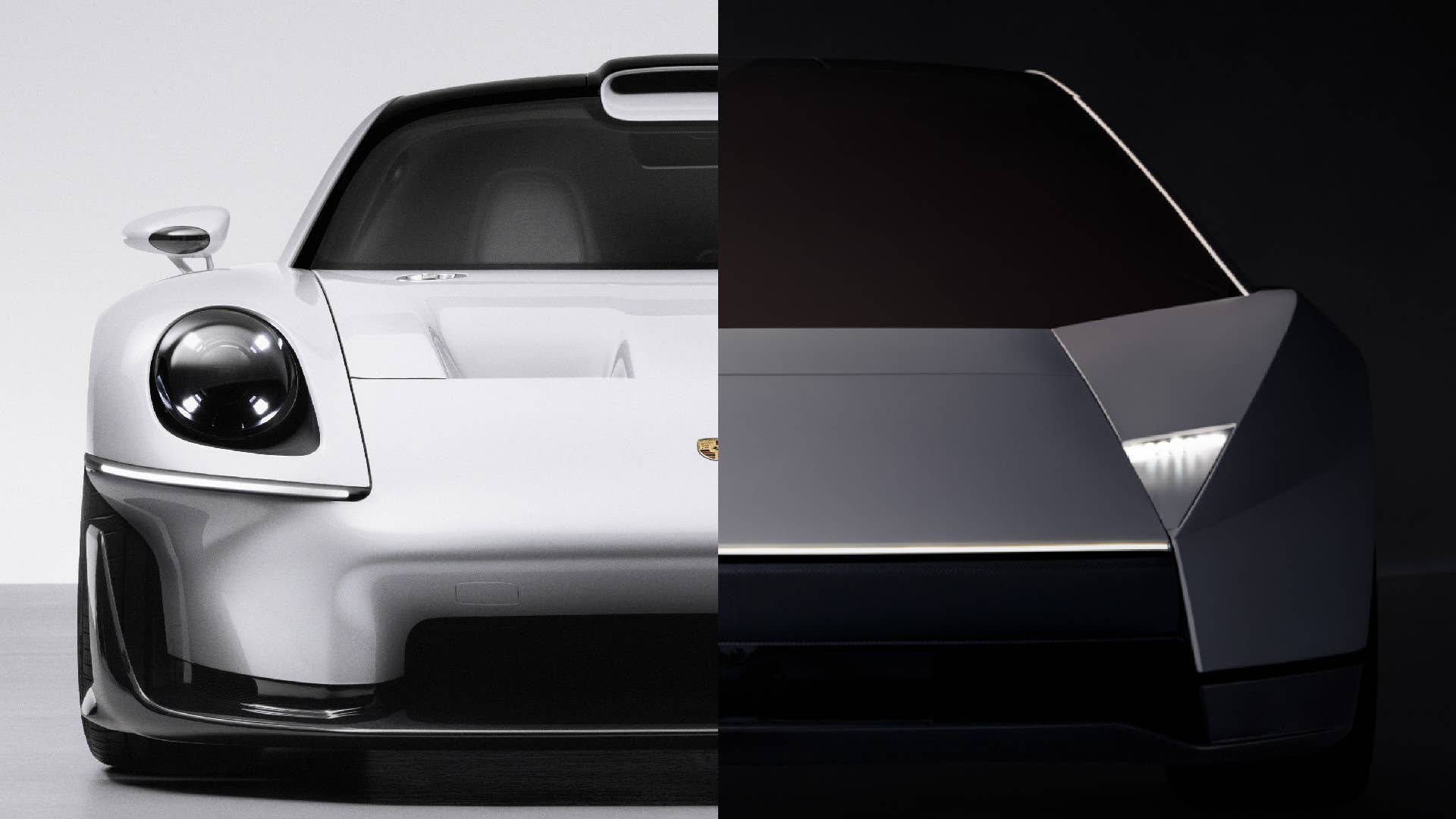
On the same day that the Porsche Mission S was revealed, the Tesla Roadster and its wild stunts hit the internet. Social media was awash with memes from spirited Tesla fanboys who mocked the German automaker, saying the Roadster stole its thunder – though many used more colorful language better suited to a certain black-and-orange website – and laughing at the fact that a young EV company got more attention than a legacy sports car manufacturer. They’re targeting completely different buyers, but some comparisons can be made: both are six-figure high-performance machines designed for no more than two occupants, both will take years to arrive, and both highlight what each respective company is supposed to be good at. Both the Mission S and the Roadster are concepts designed to show where the world of high-performance motoring is headed, but they take very different approaches. So which is a better preview of what the moneyed buyer really wants?
Porsche vs Tesla Supercars: Cautionary Tales Abound

Porsche/Tesla
We know that Porsche is capable of developing an extreme electric hypercar, which is why the Mission X concept appeared three years ago. But even the pioneer of the experience, Rimac, has openly admitted that sales of the extraordinary Nevera were sluggish, to say the least. This is despite the fact that all who drove the Croatian hypercar came away astonished by what true torque vectoring can do. Therefore, it would appear that the high-dollar buyer doesn’t care about raw acceleration, outright speed, unbeatable handling, or, frankly, almost anything associated with a big, heavy battery that cannot be refilled as easily as a gas tank. In the same vein, we can look at Koenigsegg. It developed the absurdly clever Tiny Friendly Giant three-cylinder engine without camshafts, a physical throttle body, or traditional valves, and in a stunning four-seater hybrid megacar, this piece of incredible engineering was meant to stand in the Gemera as a symbol of what can be achieved when ultimate efficiency is the goal. Yet, when Koenigsegg figured out how to shoehorn its V8 into the same package, almost every buyer opted for the pricier, thirstier, heavier, less advanced eight-cylinder, rendering further development of the TFG engine unfeasible. The point is this: innovation doesn’t equal attraction, and that’s where Tesla’s gimmicks will ultimately fall short. Allow me to explain.
A Perfect Tesla Roadster Is Still Fundamentally Flawed
Tesla
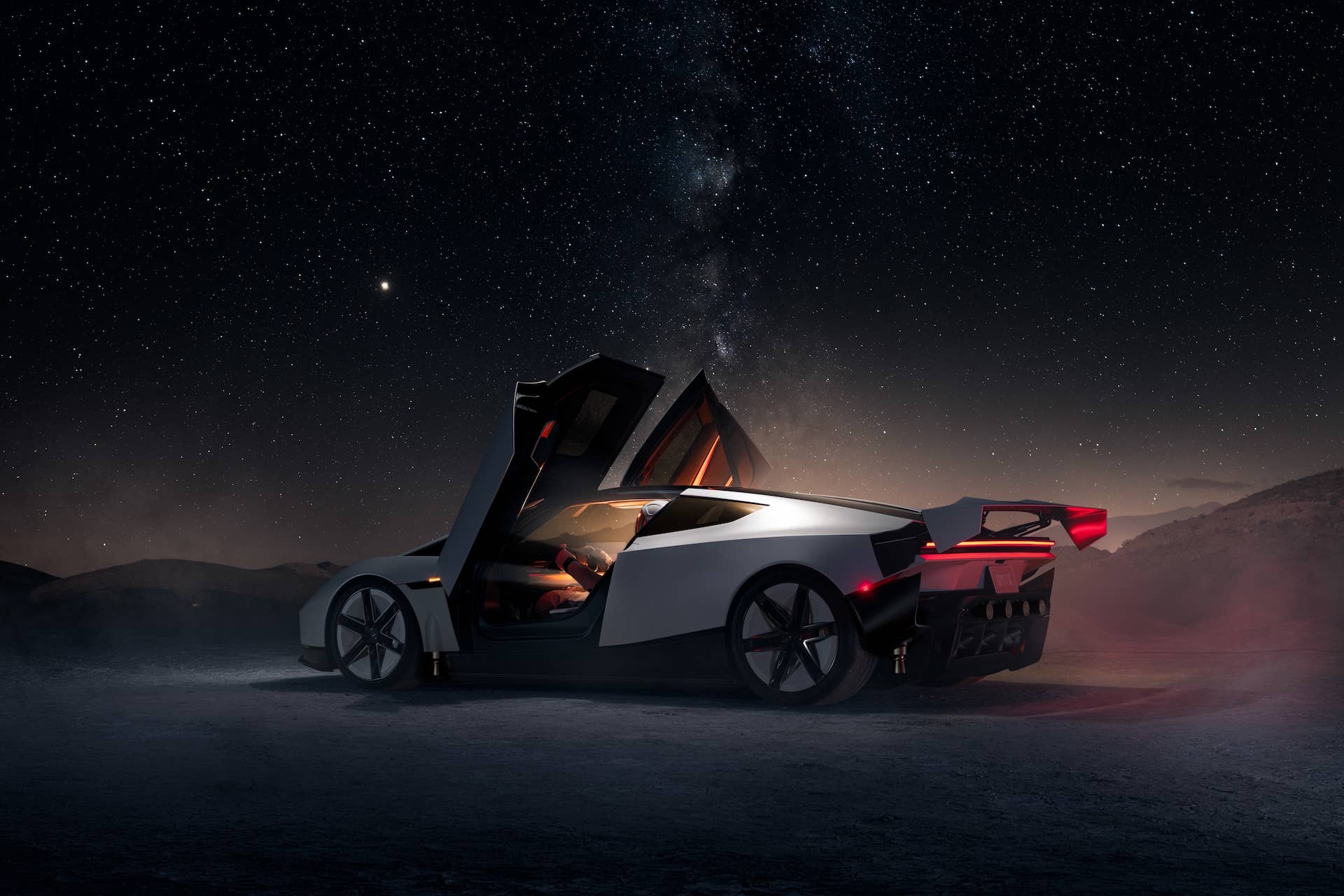
This argument won’t take long. Assuming that every single stunt the Tesla Roadster is claimed to be capable of becomes reality, and assuming Tesla provides a bespoke track on which to enjoy them, and assuming Tesla figures out how to refill the carbon-overlaid pressure vessel containing the compressed nitrogen that feeds the thrusters in the targeted half-hour it expects should be possible, so what? Due to the nature of containing and expelling a pressurized gas, those stunts are all single-use novelties. I and a buddy can go from 0-60 mph in half a second, and then I have to wait at least 30 minutes before I can show off my Tesla’s true potential to another friend – not exactly the kind of wait times those who have six figures to blow on a car are accustomed to. Assuming the range-topping flying-and-flipping Rocket version ever gets made, it will also be able to perform a gravity-defying jump/flip only once before needing a refill, and that version would require the deletion of the passenger seat, so it becomes a one-person affair. Deplete all the gas (or even a large volume of it), and you’re stuck with an EV only you can enjoy, likely without much room for luggage. Thus, the Roadster is a marketing stunt designed to keep the Tesla brand front of mind. But is Porsche doing things any better? Is there a demand for something well above the already expensive 911 range but below the status of era-defining hypercar? It all depends on whether you think Porsche has the brand presence to rival other exotics.
Porsche’s Mission S Asks What Customers Want
Porsche
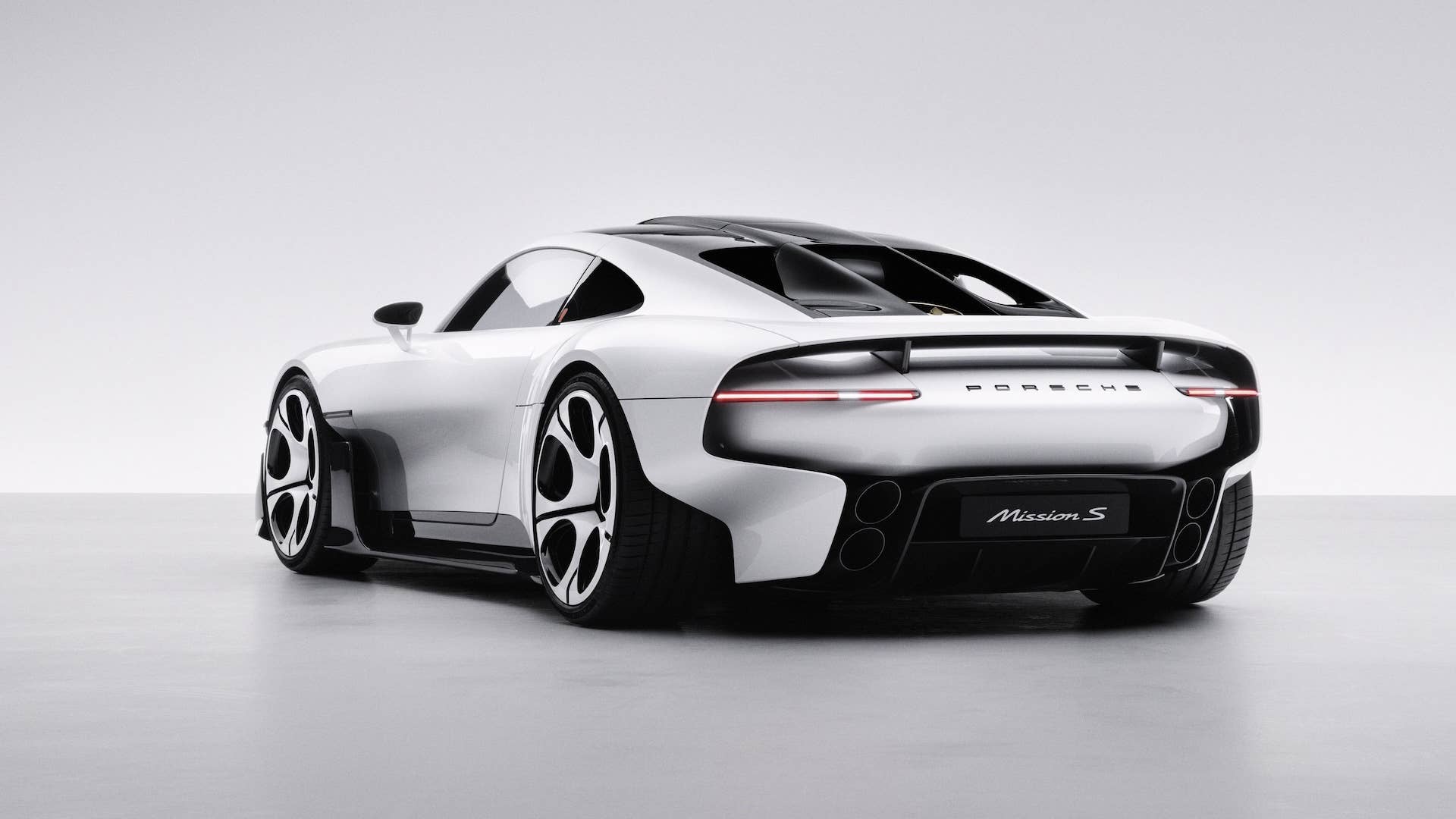
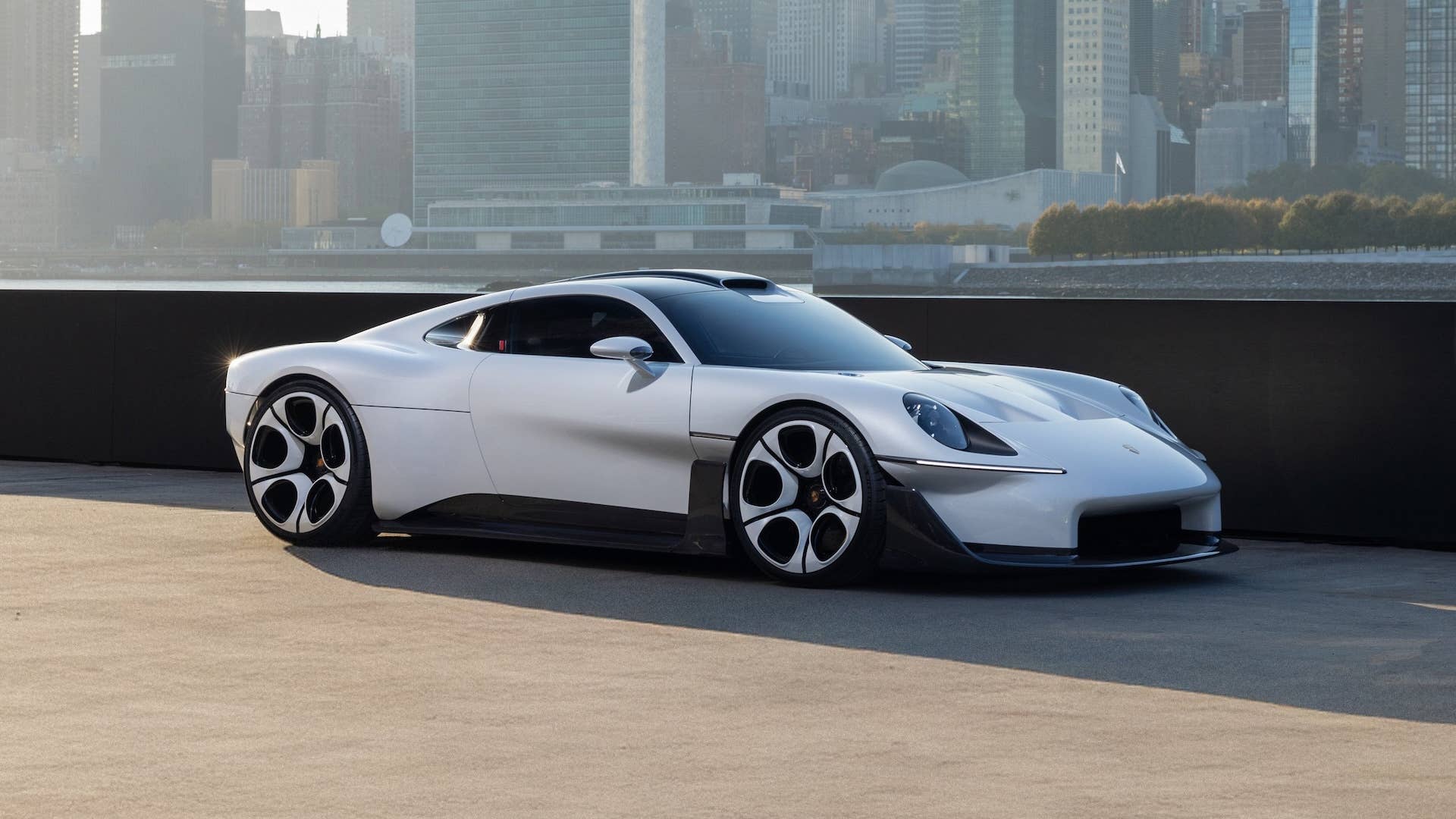
The Mission S serves multiple purposes for Porsche, besides the obvious of attracting customers willing to spend over half a million dollars on a car with unlimited production, otherwise known in these circles as a daily driver. Just as McLaren did with the McL 6GT, creating a one-off concept from which to gauge interest and adapt to any criticisms, Porsche is using the Mission S to take advantage of the market’s apparent love of experiences that, just half a decade ago, appeared to be headed for extinction, like manually shifting a combustion car with several cylinders. It’s like McLaren and Porsche are making their own retro-mods, just from scratch. In addition, because the shape and lighting elements of the 911 are too iconic and too recognizable to fiddle with much, the Mission S gives Porsche room to expand its design envelope while still paying tribute to icons of the past, which it does inside too. Being mid-engined, the Mission S makes it easier for Porsche to justify killing off the similarly laid-out gas-powered Cayman and Boxster in favor of EVs, but it also allows Porsche’s engineers to fully express themselves.
Despite hamstringing the most extreme 718 Cayman variants to ensure they didn’t overshadow the 911 in price or performance, some at Porsche begrudgingly admitted that the cheaper mid-engine(!) sports car was the best they had ever made. Now that they have the freedom and time to work with a platform that isn’t cramming everything above the rear axle, Weissach’s geniuses are going to produce something that buyers and motoring journalists the world over will hail for years to come. In fact, while Porsche will take time to build its supercar image, the production version of the Mission S should make Ferrari sweat, but remember, this is not an all-conquering hypercar to replace the 918 Spyder, but a series-production supercar that may accommodate a manual transmission. That means it’ll be excellent dynamically, but the pleasure of flinging it sideways and extracting 90 percent of its performance won’t necessarily be restricted to a track.
Porsche vs Tesla: Pros and Cons
Porsche
Tesla
For the purposes of the following lists, we’re assuming that Tesla keeps all its promises and that Porsche goes ahead with producing the Mission S. For the record, what engine the latter will have has not been confirmed, but a flat-eight seems likely, and we wouldn’t be surprised if Porsche started the eight-cylinder rumors itself.
Tesla Roadster Pros and Cons
Pros:
- Otherworldly feats of physics-defying engineering
- Incredibly straight-line performance
- Rear-drive layout should be fun in the corners
- Futuristic (albeit derivative) design
- Moving body panels add to alien-like theater
- The only car of its kind to combine fan suction and thrusters
- Looping track could provide unique rollercoaster experience
- Invite-only Rocket version will be rare
- “Last” human-driven Tesla could appreciate
Cons:
- Stunts are single-use
- Long refilling times
- Most stunts will be illegal on public roads
- Minimal storage/cargo for road trips
- Base version targeting 2028, Rocket version unknown
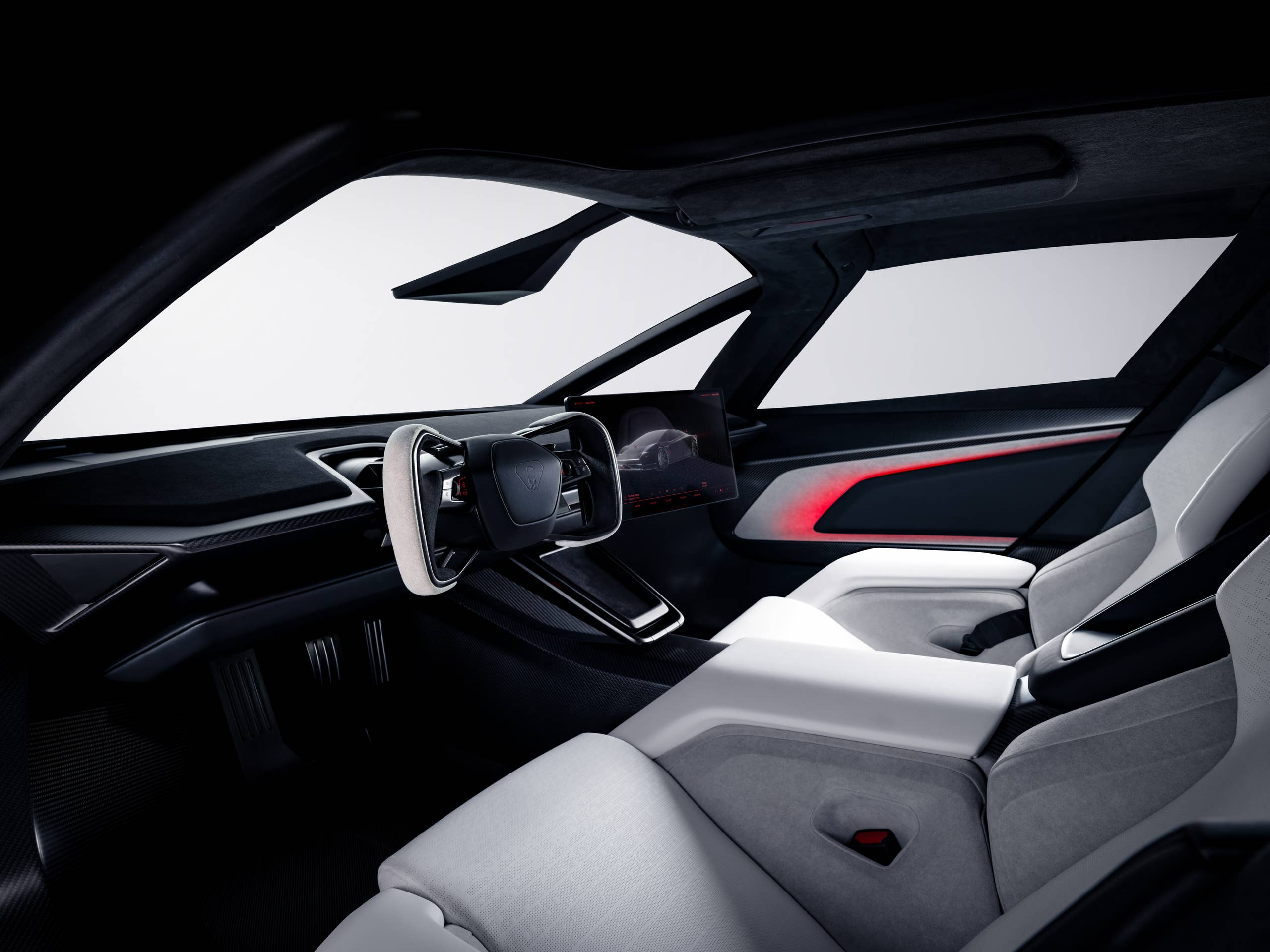
- Interior design is minimalistic but ultimately bland and heavily digitized
Porsche Mission S Pros and Cons
Pros:
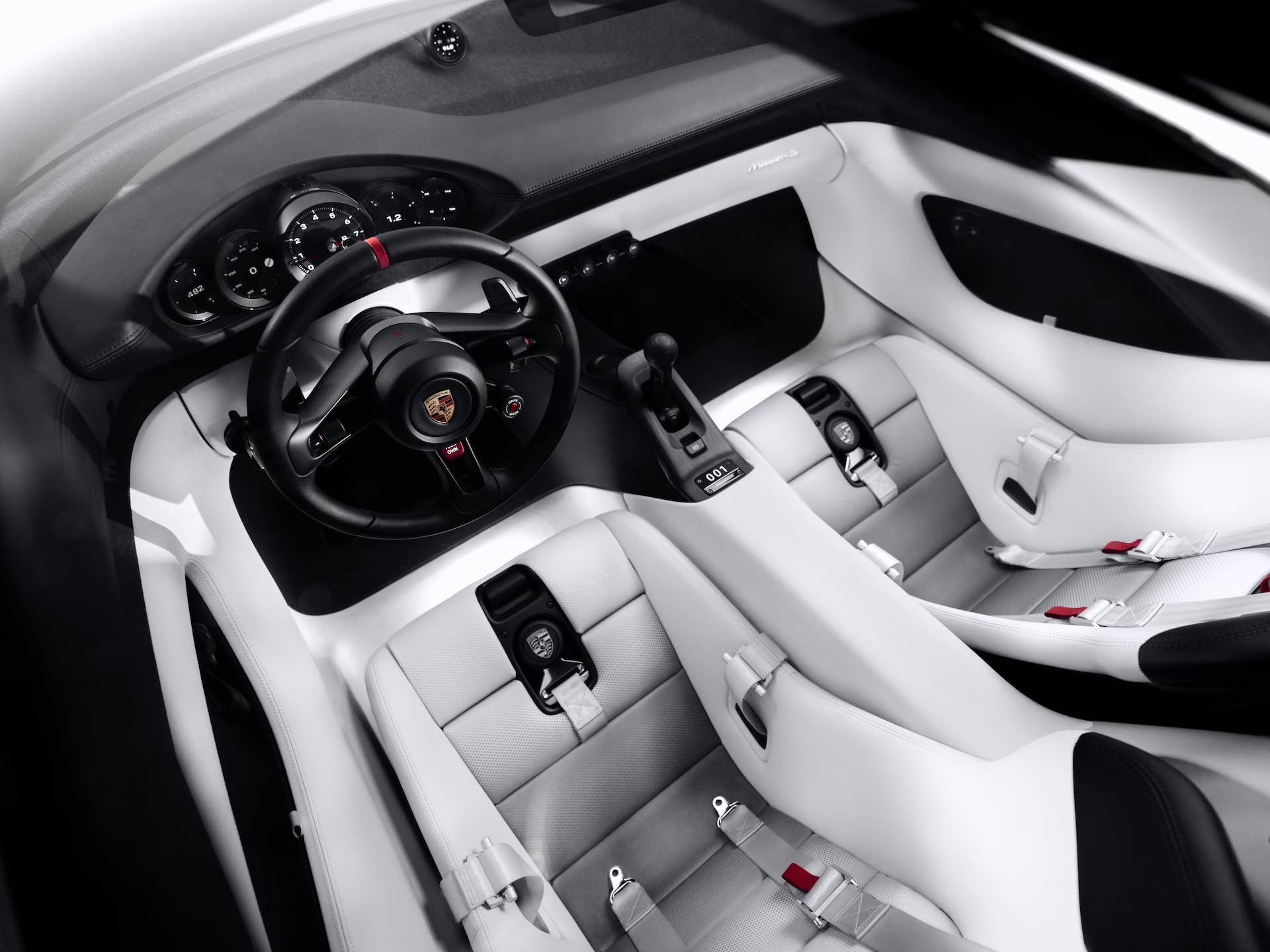
- Potential for manual transmission, flat-eight engine boosting engagement
- Minimized digital interfaces with a moving analog gauge cluster
- Physical switchgear
- One button to deactivate all driver aids
- Outstanding driving dynamics (predicted)
- Porsche quality and craftsmanship
- Usable performance dependent on driver, not car
- Mission S will not have limited production, increasing accessibility
- As Porsche’s first sub-halo supercar, residual values should hold strong
- Leaves room for a true 918 Spyder/Carrera GT hypercar successor
Cons:
- Porsche is entering a competitive market against Ferrari, McLaren, Lamborghini, etc
- Rumored sub-$500,000 pricing may be scoffed at
- Investment in a new platform/engine may prove costly if future regulations kill combustion prematurely
- German supercars are often too sanitized, lacking fun factor
- Design evolution may not be appreciated by all
Final Thoughts
Porsche

Tesla
Both Tesla and Porsche have presented unique visions for the future of high-performance recreational vehicles, and each stands above anything currently produced by either. If Tesla’s talented engineers meet CEO Elon Musk’s targets, they will have achieved something monumental, but ultimately forgettable. With all due respect, single-use, non-road-legal features that take dozens of minutes to repeat are gimmicks, and besides bringing more attention to Tesla, it all seems a little pointless. Tesla constantly misses self-imposed production targets, and the Roadster’s 2028 goal is the company’s most ambitious yet, but assuming Tesla breaks its tardiness habit, the product will be epic for a few moments and just like any other EV most of the time. By the time it arrives, achieving similarly nauseating acceleration may be relatively commonplace, while progress with actual flying cars will have advanced beyond its already impressive state. Porsche, to its credit, goes the opposite route.
Porsche is looking to the past to save its future, leaning into classic design and analog interfaces. Developing a totally new supercar without stealing Lamborghini and Audi’s homework will be challenging and expensive, but if Porsche is right about what its target audience wants – engagement, impeccable quality, emotion, vibration, and characterful noise – then the Mission S could help not only improve Porsche’s balance sheet, but also expand the brand’s appeal to a wider audience. And with the supercar intended to occupy a permanent place in the Porsche lineup rather than being offered as a limited edition, it’s something the average person might someday be able to own. In a nutshell, the Mission S offers us the chance to experience a new type of Porsche supercar, while the Tesla Roadster gives us an insight into how crazy engineering can be if you don’t care about what’s road-legal or rational. Both products are designed to distract you from the challenges each company faces, but while the Mission S will evolve to meet customer desires before reaching production, the Roadster can only go backwards as Tesla tries to meet its own deadlines.
About the author

Sebastian Cenizo
Senior Editor, Autoblog