
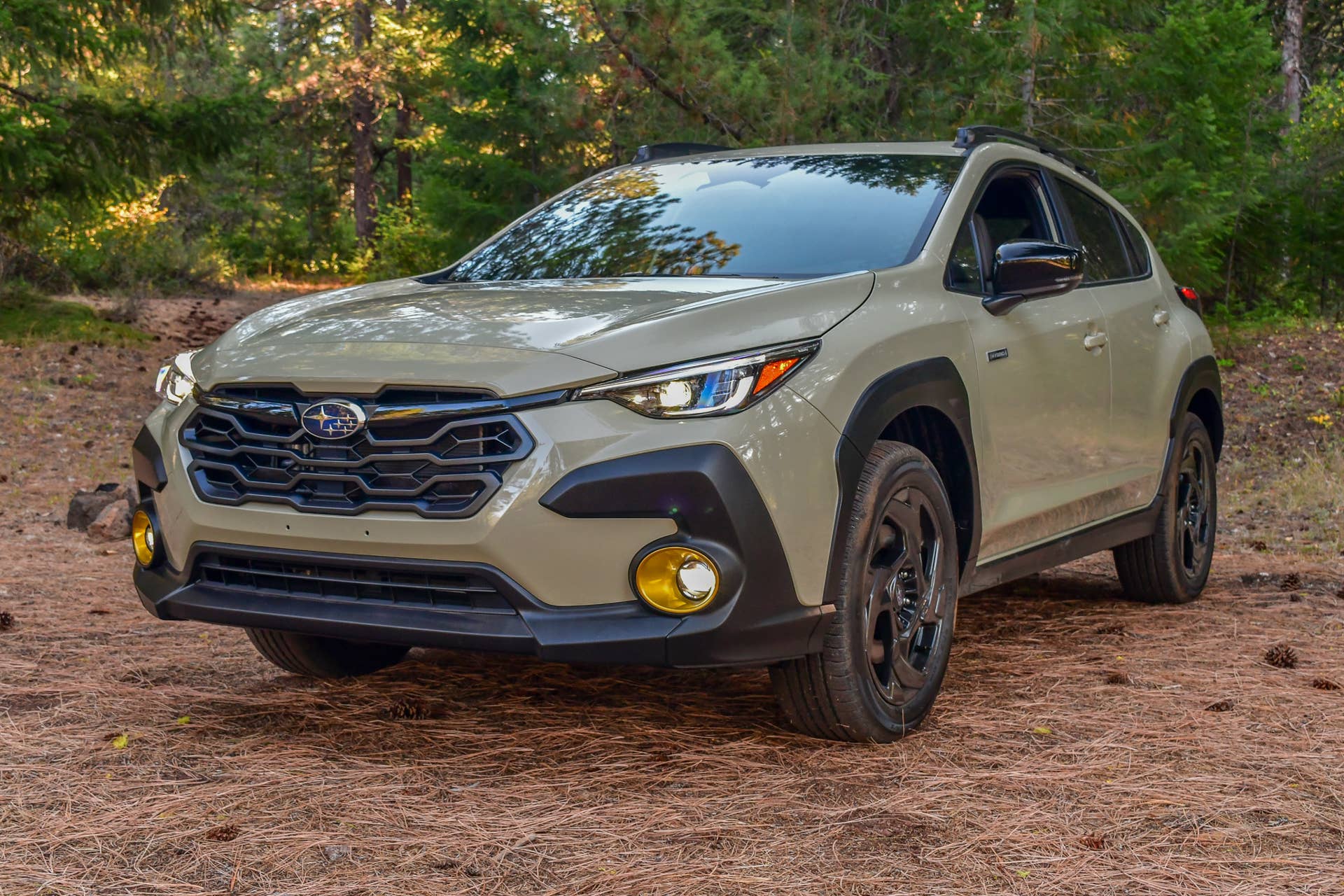
The Crosstrek Hybrid has had a rocky past
The Subaru Crosstrek has consistently been an excellent value, particularly considering its feature-to-price ratio. As we all know by now, the last two attempts at a Crosstrek Hybrid were a bit messy. The first generation was a mild hybrid that was incredibly costly and was marginally more efficient than the gas-powered version. The second try, a PHEV that utilized Toyota’s leftover hybrid technology, was great–but it was well over $40,000, which, for a Crosstrek, is a huge price increase. So, exactly no one was surprised when it only lasted a few model years before it was quietly withdrawn from production.
Cole Attisha
Alongside the new Forester Hybrid (which is excellent, by the way, and uses mostly Subaru’s hybrid technology with influence from Toyota), Subaru announced it’d be producing a third iteration of the Crosstrek Hybrid. This time, they said, the third time really is the charm. There are two trims to choose from: the Sport, which starts at $33,995, and the Limited, which starts at $34,995. If they’re so close in price, is it worth it to jump to the Limited trim? Is the Sport trim that big of a downgrade? Here’s what I think.
They both have a lot to offer for the price, no matter the trim
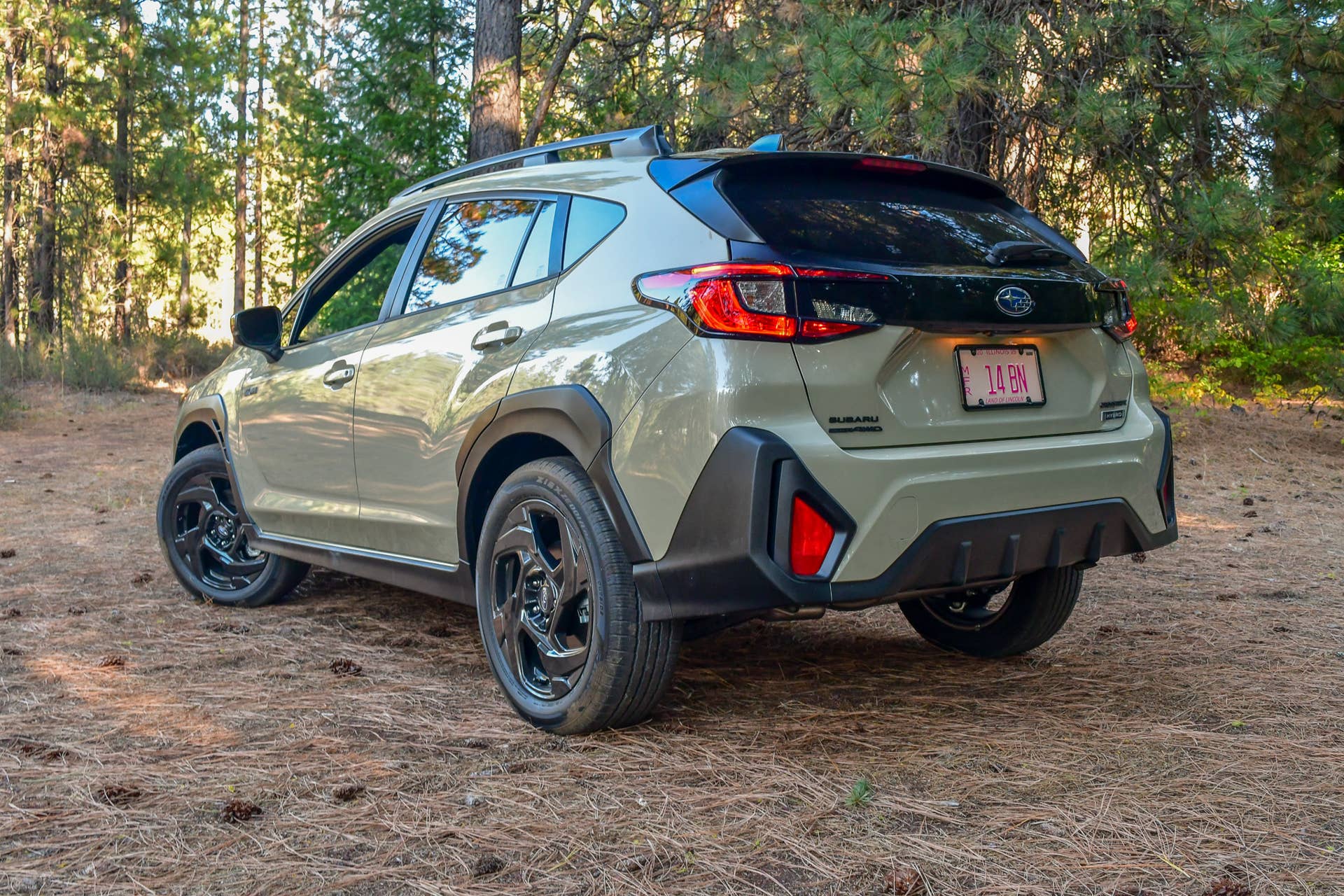
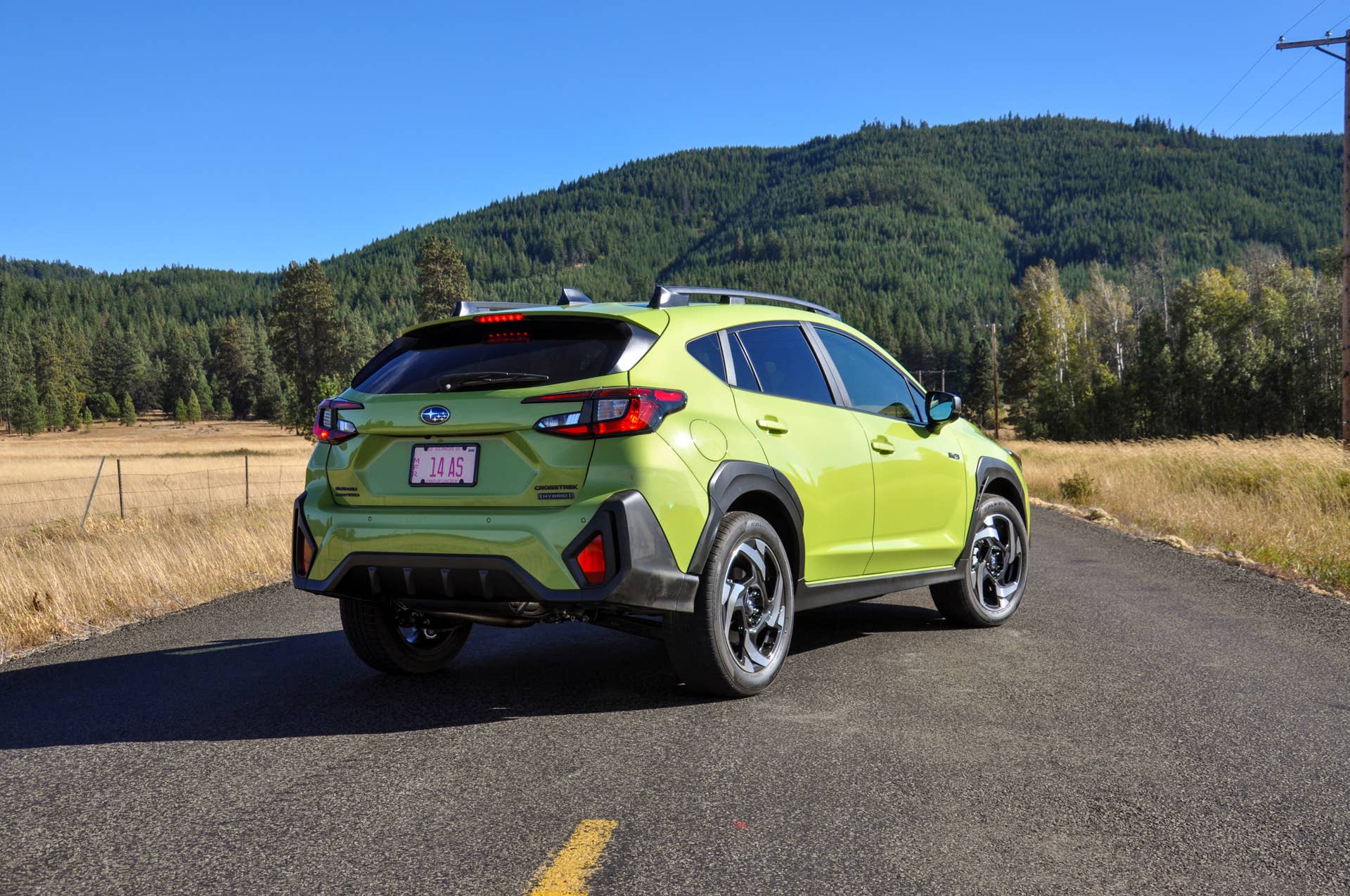
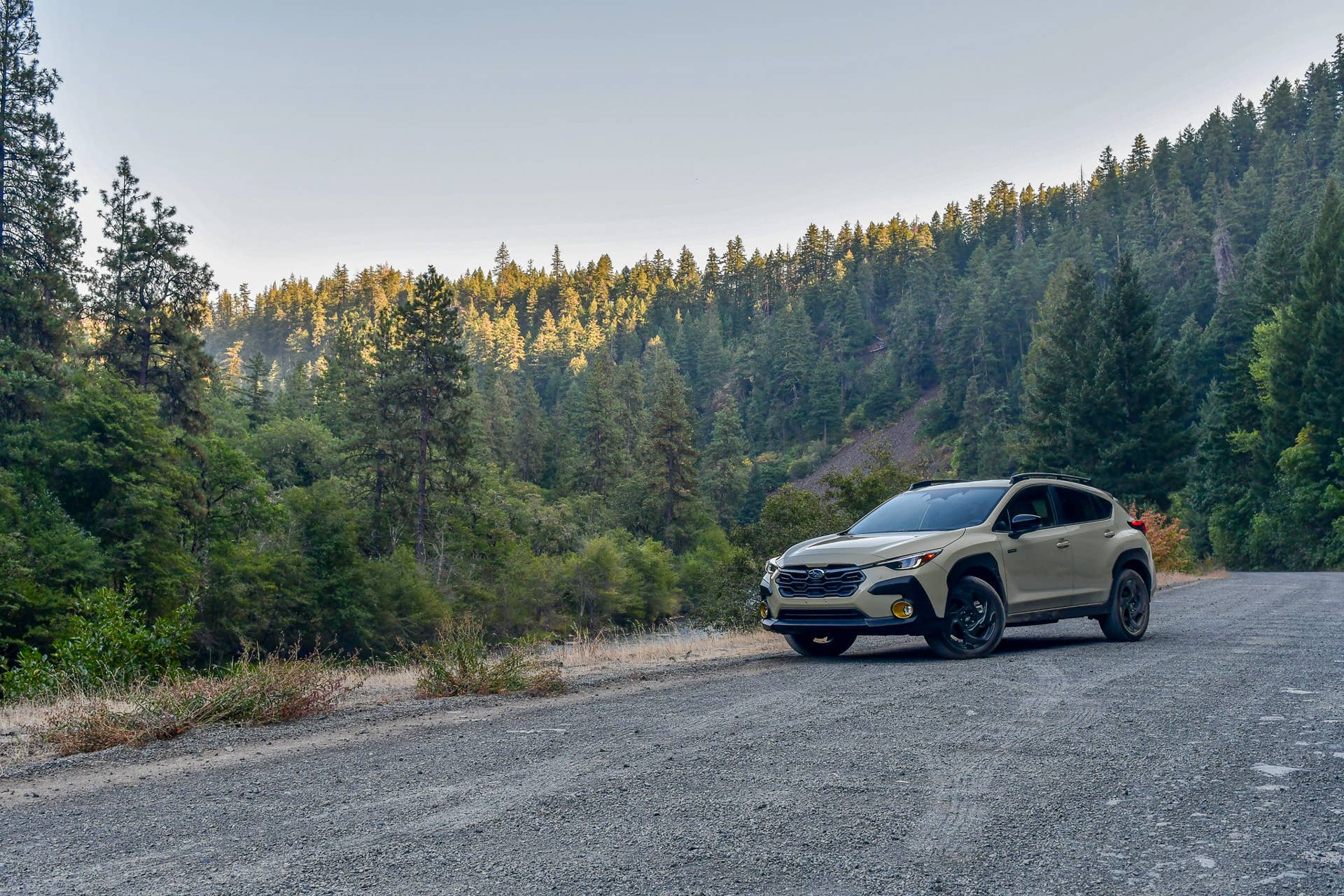
The Sport Hybrid is the “lower” trim on the hybrid totem pole, and even though it’s the “cheaper” trim, it still has a lot to offer. First, both can come in two model-exclusive colors: Sand Dune Pearl and Citron Yellow Pearl, which are incredibly handsome. I loved the Sand Dune Pearl on the 18-inch grayish-black wheels that come with the Sport over the chrome-accented wheels that come with the Limited, though (both of which cost an extra $395, but it’s worth it).
Since both trims are on the higher end of the entire Crosstrek lineup, the interiors feel more mature. They both have a large 12.3-inch infotainment system, and they’re both bursting with the company’s laundry list of safety features, including Subaru’s award-winning, tri-camera EyeSight system, comfortable front seats with excellent visibility, a comfortable steering wheel, and a clear, responsive, and customizable fully-digital gauge cluster. So, with either trim, you’re getting a lot for under $40,000.

Kristen Brown
Since they both feature the same hybrid system, they both get excellent mileage for the segment despite a mechanical AWD system: 36 mpg in the city, 36 mpg on the highway, and about 36 mpg combined. Those aren’t RAV4 hybrid numbers, or even Honda CR-V numbers, but they’re a vast improvement over the gas-powered Crosstrek’s numbers. In this economy, it makes it a very attractive option for those with a sense of adventure.
So, what makes the Sport Hybrid “lesser than”?
That all comes down to interior materials and standard equipment. The Limited Hybrid comes with a 10-speaker Harmon Kardon sound system with a subwoofer and amplifier, while the Sport doesn’t–and from the looks of it, you can’t pay extra to have that sound system installed when you’re building it online. So, for audiophiles, that’s a downgrade. But I can confirm the factory system is still pretty decent. If you live somewhere with snowy or icy winters, the Limited comes with a heated steering wheel (the Sport doesn’t) and the company’s water-resistant StarTex seats in black with red accent stitching. The Sport Hybrid has black cloth with yellow accent stitching.

Subaru
There’s also a difference in safety features. The Sport does have automatic emergency braking, but it lacks automatic emergency braking in the rear. So, you’ll have a camera when reversing, and you’ll get alerted if there’s another car, a person, or an obstacle (like your trash can you forgot to bring up the driveway), but it won’t stop for you. The Limited will. It also doesn’t feature Subaru’s DriverFocus technology, which helps curb distracted driving, or automatic emergency steering like the Limited.
Who would benefit from the Sport, then?
With the difference of only $1,000 in MSRPs, it’s really difficult for me to recommend the Sport over the Limited. They’re so close in price, in my opinion, you get more bang for your buck going with the Limited (it’s better for resale value, too). But, in my mind, the ideal buyer for both is two different people. One is a customer who doesn’t want or need anything fancy–they just want something small, efficient, safe, and affordable to get them to and from work. They likely would buy it in silver or something boring, too, because none of that matters–all that matters is the value for the money (after all, over 40 mpg on the highway is very attractive in this economy).
Kristen Brown
The ideal customer for the Limited is the one who wants a little bit of flair to their daily commute. Sure, you could downgrade to cloth seats with yellow accent stitching over the leather-esque StarTex material, but upgrading to red accent stitching is so much nicer. Plus, they wouldn’t be able to enjoy their podcasts completely if there weren’t a true subwoofer to amplify the bass or treble. The Limited is for the buyer who not only wants, but needs more out of their purchase, and they’d certainly get that by buying the Limited.
Final thoughts
Both trims stay true to Subaru’s mission of offering quality products for an excellent value. The Crosstrek is one of my favorite new cars for that reason, and I’m absolutely rooting for the Crosstrek Hybrid. Either trim is a solid choice, no matter who’s buying it–but if it were me, I’d go with the Limited trim just because of how close it is in price to the Sport and the upgrades that come with that extra $1,000 in the MSRP. When it comes to actually buying it, though, it would heavily depend on how much my dealership is trying to upcharge me for the Limited over the Sport. But, yes, I’d recommend the Limited almost every time. The only other time I’d recommend the Sport is if someone’s budget is incredibly tight.
About the author

Kristen Brown
Contributing Writer, Autoblog