F-35 won't be fully capable of close-air support until 2022

Supporting the continued service of the A-10 Warthog, a new report indicates that the F-35 won’t be able to carry the USAF’s premier CAS bomb until 2022.

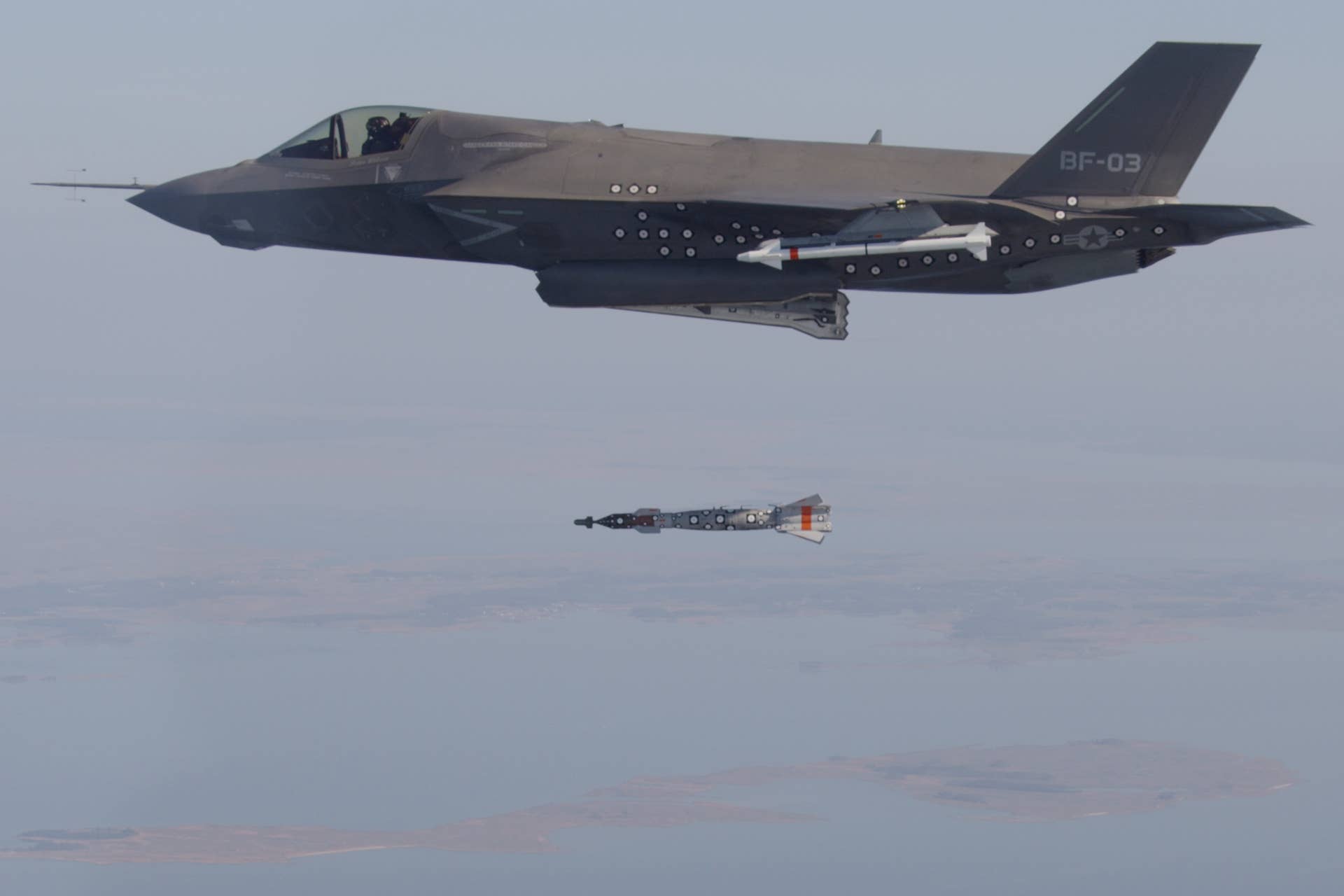
F-35B test aircraft BF-3, flown by Lt. Cmdr. Michael Burks, completes the first aerial weapons release of an inert 500-pound GBU-12 Paveway II laser-guided bomb by any variant of the F-35 Lightning II aircraft. BF-3 dropped the GBU-12 over the Atlantic Test Ranges from an internal weapons bay. The F-35B is the variant of the Lightning II designed for use by the U.S. Marine Corps, as well as F-35 international partners in the United Kingdom and Italy. The F-35B is capable of short takeoffs and vertical landings to enable air power projection from amphibious ships, ski-jump aircraft carriers and expeditionary airfields. The F-35B is undergoing flight test and evaluation at NAS Patuxent River, Md., prior to delivery to the fleet. (U.S. Navy photo courtesy of Lockheed Martin by Layne Laughter)
Get Autoblog in your Google feed

Remember the Read This we posted last week? It was an op-ed from an Army Major about the flaws in the US Air Force’s position about the venerable A-10 Thunderbolt II (or, as it’s better known, the Warthog). The gist of Maj. Benjamin Fernandes’ argument was that the USAF was looking at the wrong factors in its retirement of the A-10, saying “the number of missions flown and tons of ordnance dropped have no relevance because they measure activity not impact.“

Now, a new report from Military.com delivers more support to A-10 fans lke Maj. Fernandes. It turns out that the plane that’s to pick up much the soon-to-be-retired A-10’s slack, the F-35, won’t be able to drop the USAF’s new (and soon to be preferred) close-air-support bomb until 2022… despite the new precision-guided weapon’s arrival in 2017.

The Small Diameter Bomb II has a lot of potential – it can hit a moving target from 40 miles away, which would be a huge asset in the survivability of CAS aircraft – but as it stands, it won’t fit in the weapons bay of the CAS-oriented version of the F-35, the US Marine Corps’ STOVL-capable B model. And even if it did, the plane’s software won’t play nice with the bomb.

Military.com has the full story, which goes into far deeper detail than we can here. It’s certainly worth checking out, particularly if you’re a fan of the A-10.