
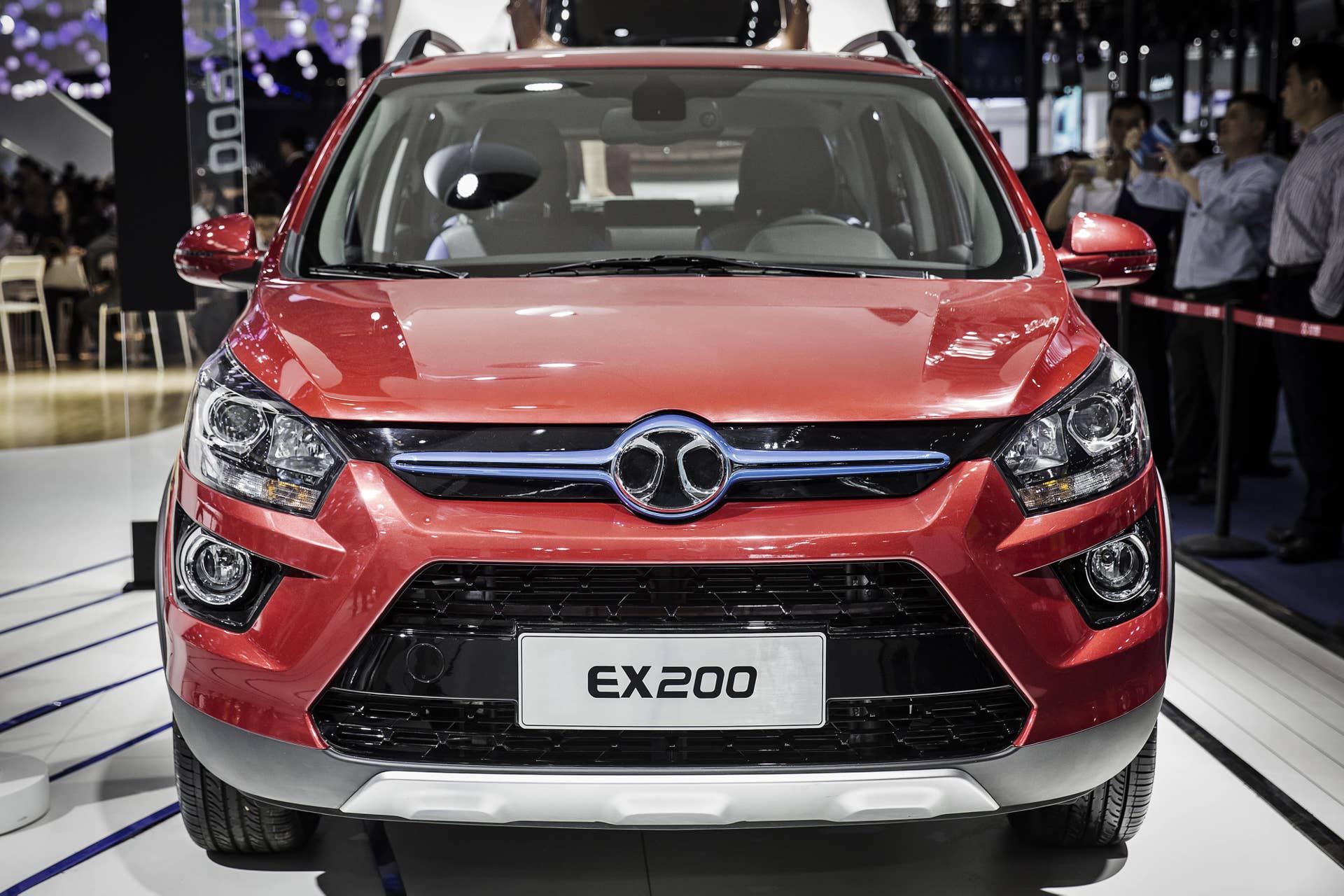
Fiat Chrysler Automobiles and the Chrysler Group have used the LX platform to great effect over the years. Based on a collection of old Mercedes-Benz parts, the LX spawned the 300, Charger, and Challenger, not to mention the late Magnum station wagon. Now, China’s BAIC is taking a similar approach, attempting to squeeze life out of an old Mercedes E-Class platform.
Automotive News China, which cites Beijing-based automotive news website Internet Info Agency, doesn’t mention the specific E-Class platform BAIC is using. But it will reportedly spawn a midsize sedan in 2018, with an SUV and MPV to follow. BAIC will sell the sedan and SUV under its Senova brand. Van-maker Weiwang gets the MPV.
ANC reports BAIC is borrowing Daimer gas engines – a 1.8-liter turbo and a naturally aspirated 3.0-liter, presumably with four and six cylinders, respectively – and a six-speed automatic transmission. All of the powertrain bits will be locally built in Beijing as part of a joint-venture agreement between the two automakers. It’s not clear which engines are going in which models, but we’d bet BAIC will end up fitting the 1.8-liter as a base engine and the 3.0-liter as a higher-end offering, regardless of body style.
FCA has seen a lot of success with old Mercedes parts – doubtless BAIC is trying to mimic that. If the company succeeds, we wonder if we’ll be hearing about a Chinese Hellcat in a few years. Probably not, but hey, stranger things have happened, right?