

Acura SUV sibling rivalry
Acura plans to discontinue its compact luxury crossover, the RDX, later in 2026. It will make way for an all-new model between the ADX and MDX, but for now, the RDX as we know it is still available. As with many automakers’ SUV lineups in 2026, it can be a bit of a maze deciding on the right one. The RDX and MDX are two of Acura’s most popular crossovers, but which one is for you? Here, we’ll unpack five differences between them.
1. RDX Is Smaller And Seats Fewer Passengers
Acura
Acura

Acura
Acura
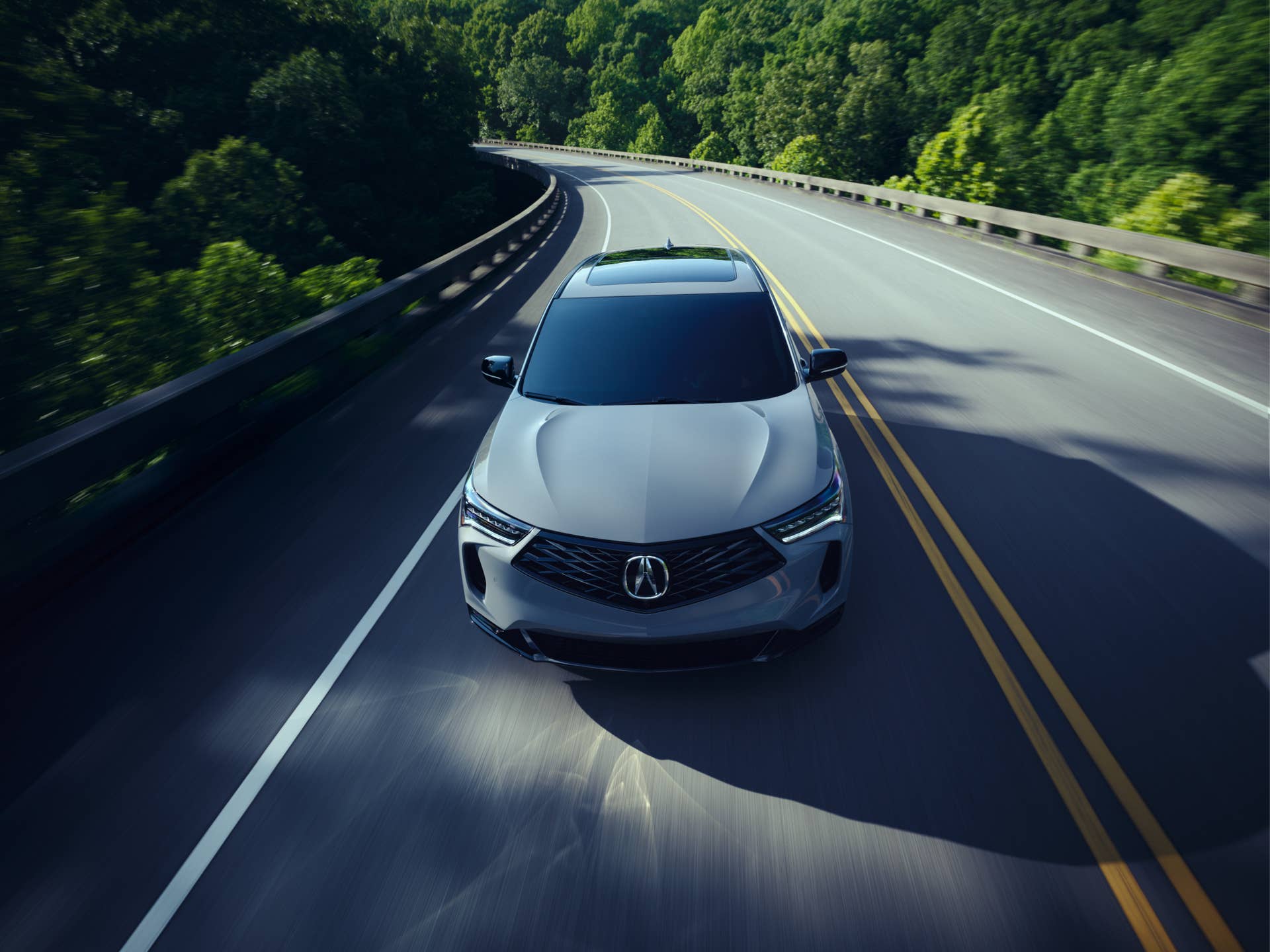
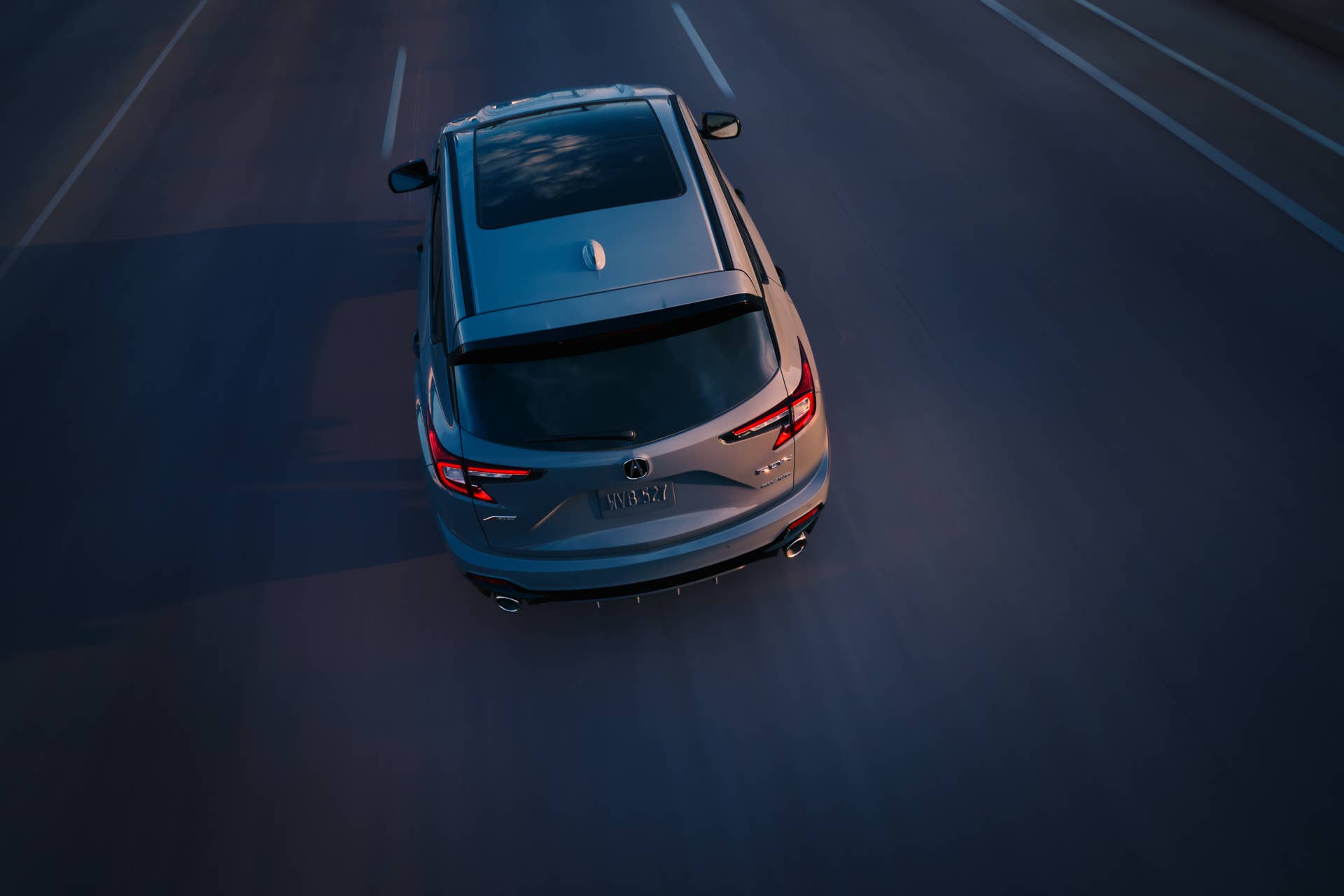
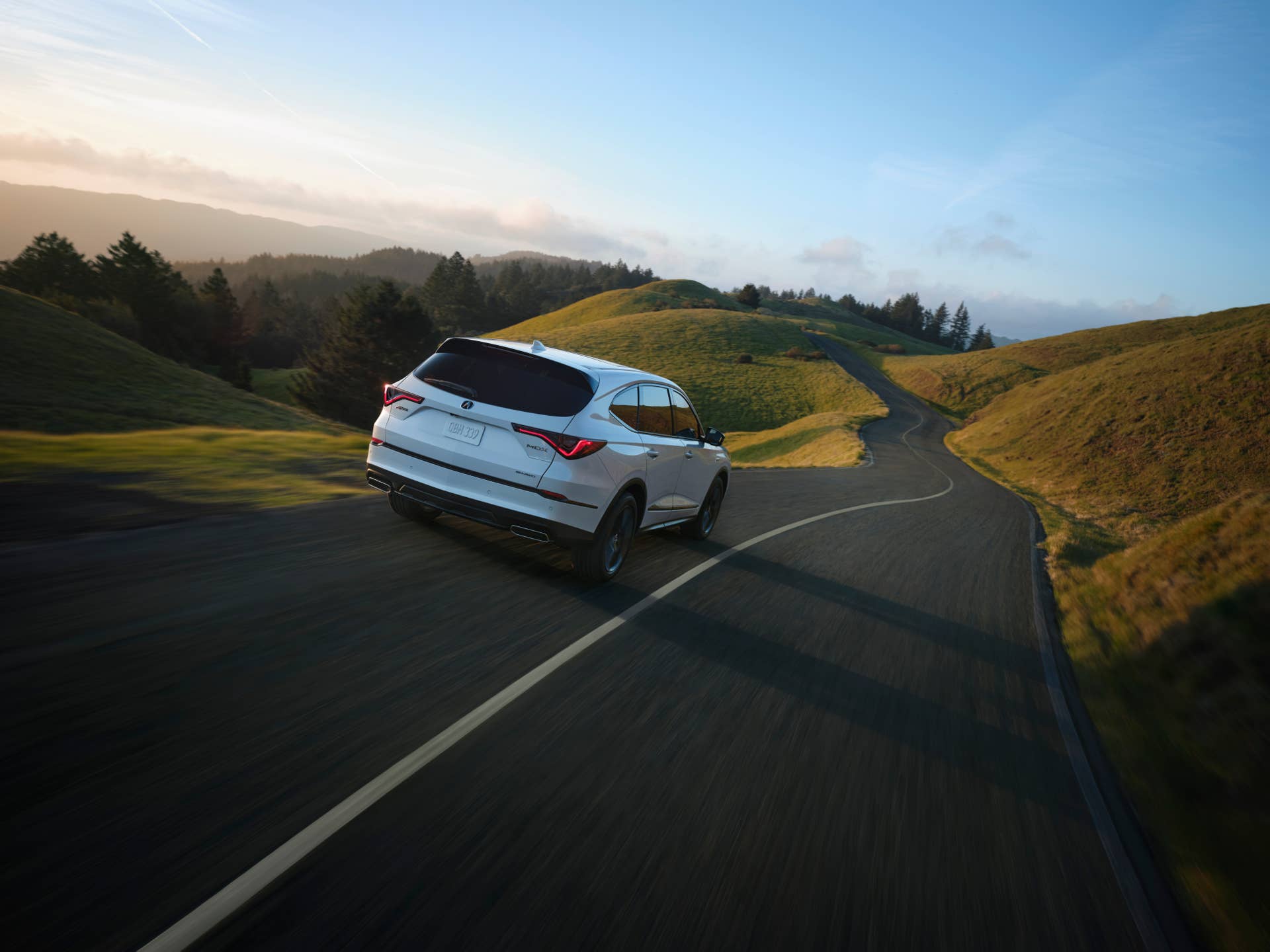
The main difference between the Acura MDX and RDX relates to size. The RDX is a smaller, more agile compact crossover and the MDX is a three-row model with more space. Here’s how their dimensions match up.
| Acura RDX Vs. MDX Size Comparison | ||
| Acura RDX | Acura MDX | |
| Length | 187.4 | 198.4 |
| Width | 74.8 | 78.7 |
| Height | 65.7 | 67.9 |
| Wheelbase | 108.3 | 113.8 |
| Base curb weight | 4,014 lbs | 4,268 lbs |
| *All dimensions in inches | ||
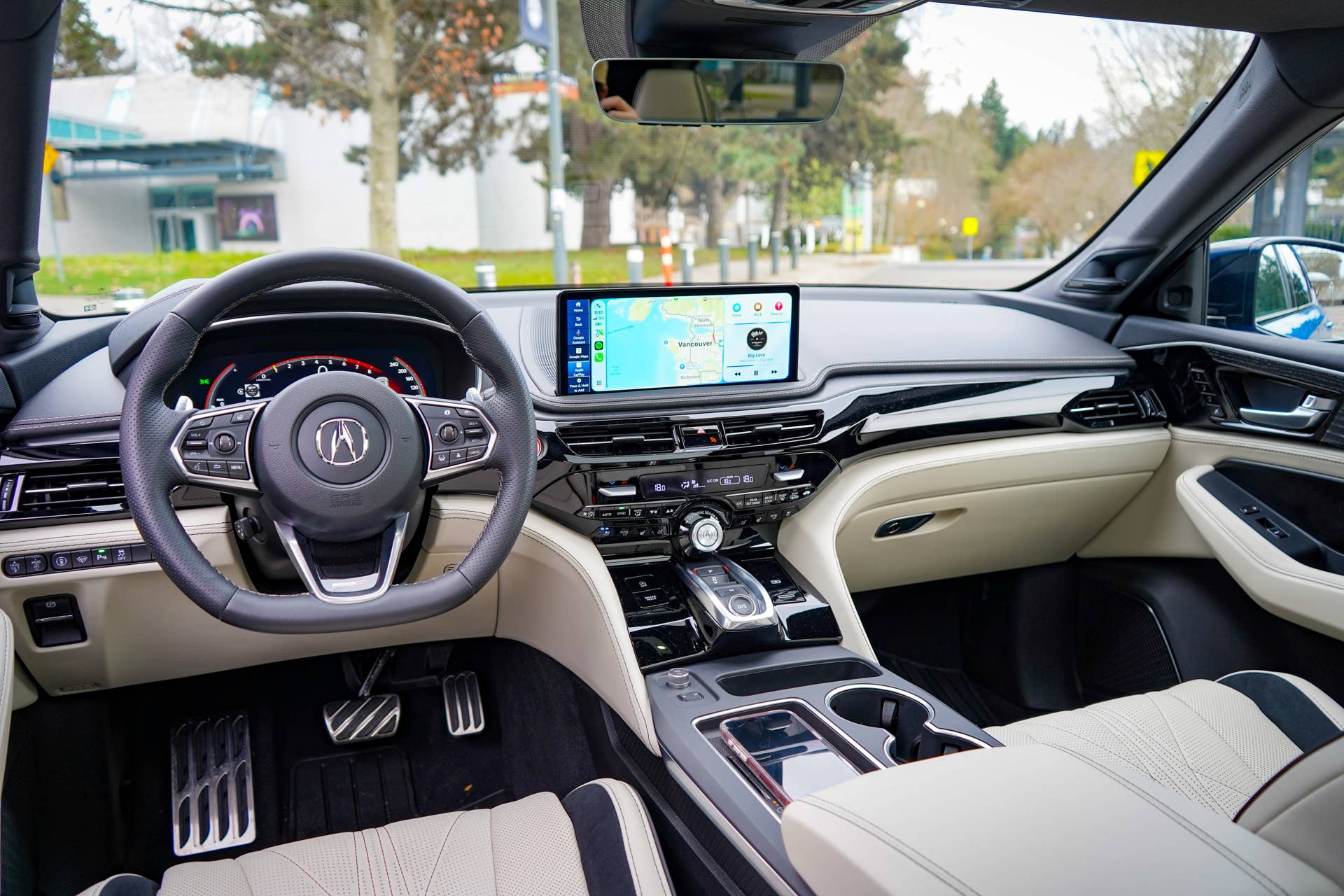
When comparing the Acura MDX vs. RDX interiors, you immediately notice the former’s extra space and ability to seat up to seven. The MDX’s third row isn’t massive, but at least you can carry another two people when needed. Its second row generally has more legroom, headroom, and hip room than the RDX’s, too.
Cole Attisha
The RDX has an acceptable 31.5 cubic feet of cargo space behind its second row, but the MDX dwarfs it with up to 48.4 cubic feet when its third row is folded.
2. Acura MDX Vs. RDX Engines: Only One Has A V6
Acura
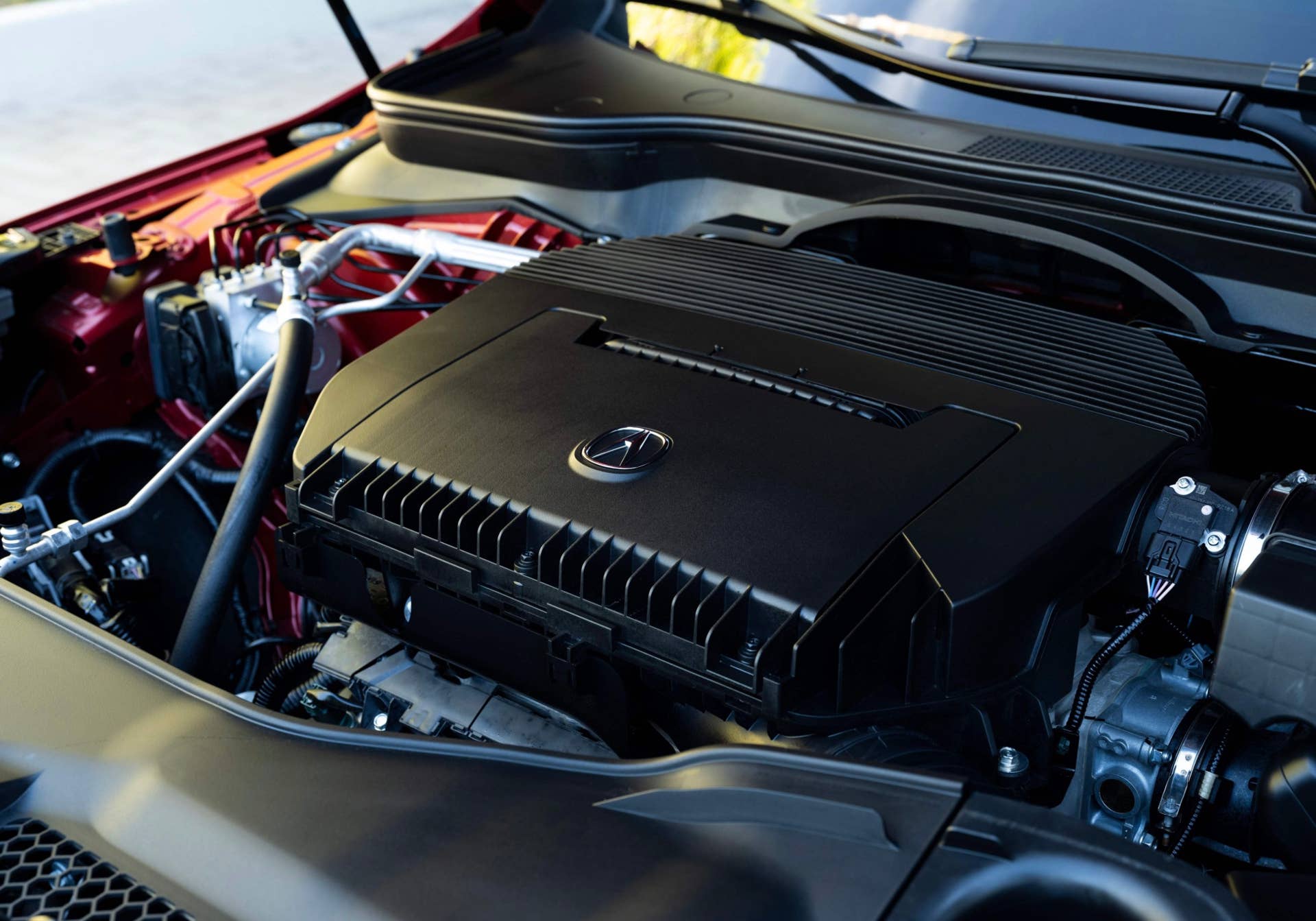
Both SUVs are fun to drive and quick enough for most; they benefit from Honda’s typically balanced chassis tuning and sharp steering. But the MDX is ultimately more powerful thanks to a pair of V6s. The base 3.5-liter V6 produces 290 horsepower and 267 lb-ft of torque. A 10-speed automatic transmission is standard and allows for a 0-60 time of around 6.4 seconds. But the real fun comes when upgrading to the MDX Type S. This derivative has a 3.0L turbocharged V6 with 355 hp and 354 lb-ft, dropping the 0-60 sprint time into the mid-five-second range.
The RDX has only one engine option. This is a 2.0-liter turbocharged four-cylinder with 272 hp and 280 lb-ft. It’ll keep up with the standard MDX V6 off the mark, but it’s not as quick as the MDX Type S.
The RDX’s smaller engine doesn’t necessarily mean much better efficiency. It gets up to 21/27/23 mpg combined, while the MDX with the standard engine has best figures of 19/26/22 mpg.
3. All RDX Trims Have All-Wheel Drive
Acura
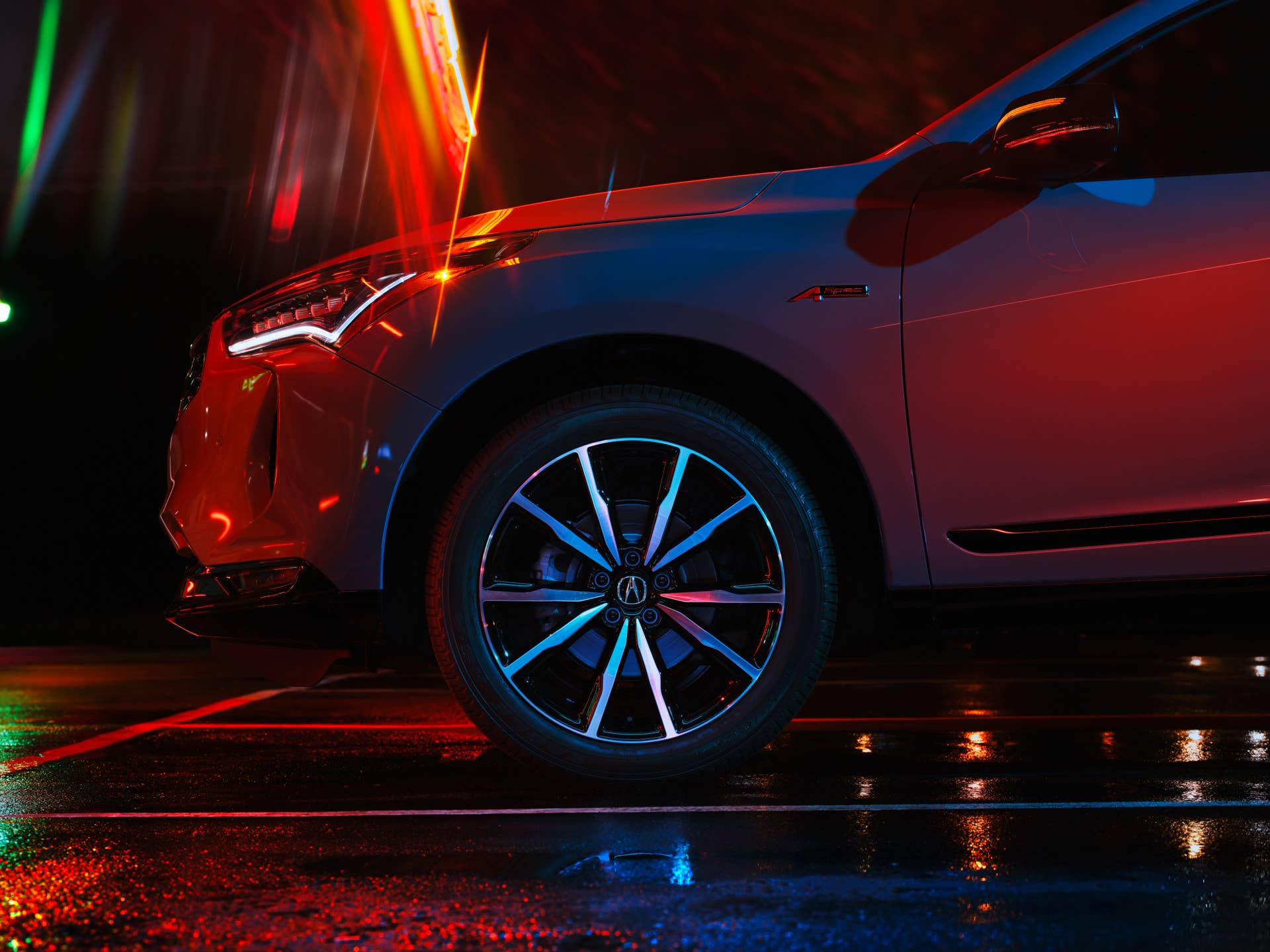
The smaller RDX gets Acura’s Super Handling All-Wheel-Drive (SH-AWD) system across the lineup, even if you opt for the cheapest trim. The two lower MDX trims come with standard front-wheel drive, although they can be upgraded to AWD for $2,200; all other MDXs have the SH-AWD system as standard.
Because the MDX has a lighter FWD system, its efficiency figures are close to the AWD RDX, despite the fact that it has a much larger V6 engine.
4. MDX Has A More Sophisticated Suspension
Acura
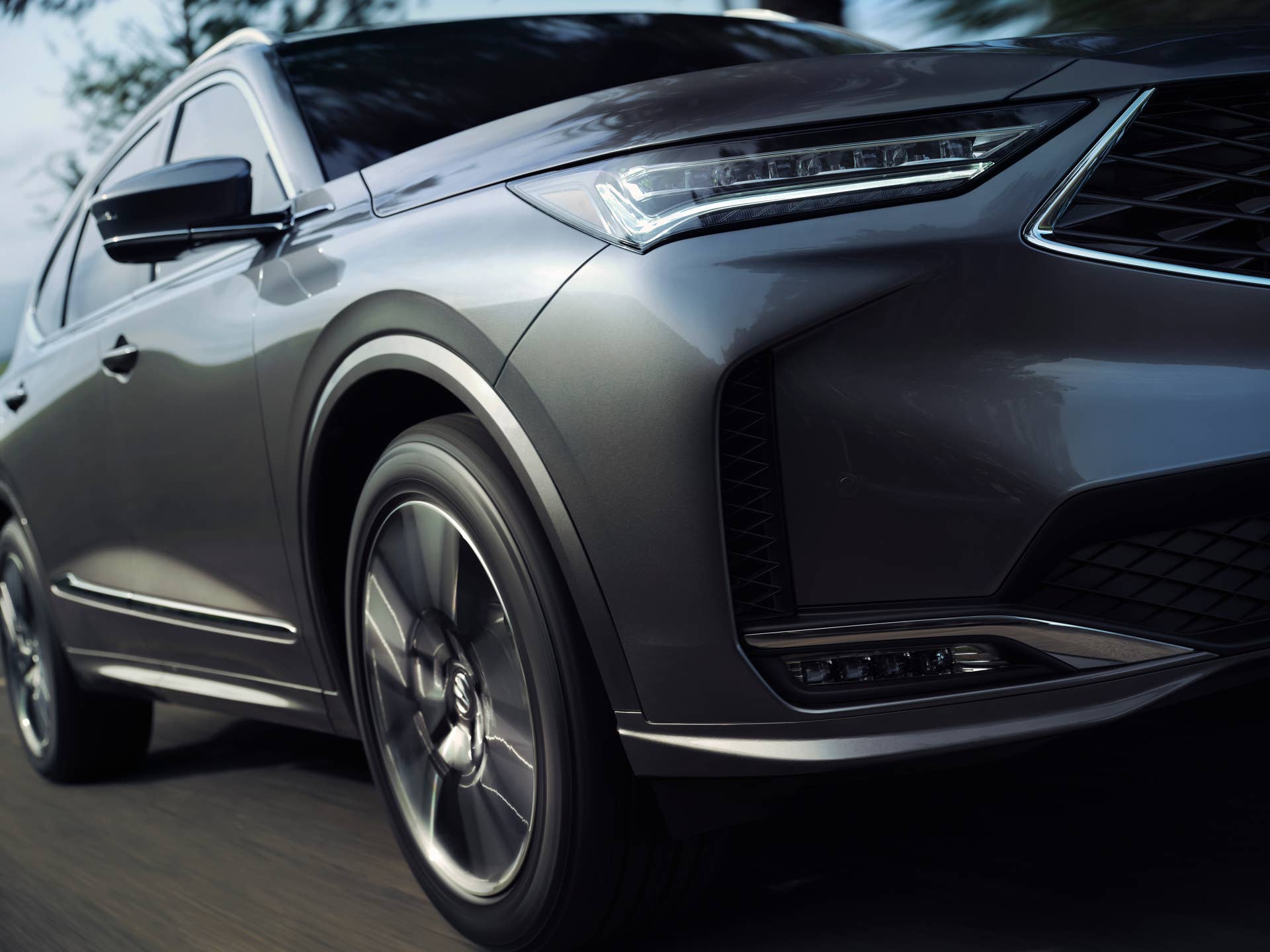
The MDX isn’t only bigger and more luxurious to look at and sit in, but it’s got some meaningful enhancements over the RDX under the skin, too. The RDX has a MacPherson strut front suspension and multi-link rear suspension, along with adaptive dampers on the top two trims. In a recent back-to-back drive of the RDX and Audi Q5, we found the Acura to have sharper steering and a sportier overall feel—the German exhibited a smoother, quieter ride, though.
That’s where the MDX’s more advanced suspension comes in. It has a double-wishbone front suspension, a costlier and more complex design but one that generally enhances handling. That wasn’t lost on us when driving the MDX Type S, which additionally has an adaptive air suspension with auto leveling. It resists understeer brilliantly and stays flat through the corners, despite weighing over 4,700 lbs. Get out of Sport+ mode, though, and it showcases an impressive duality; the ride is controlled and absorbent.
The RDX is a fun, playful compact crossover, but the MDX has a broader spread of capabilities thanks to its more advanced suspension.
5. RDX Is More Affordable
Joe Santos
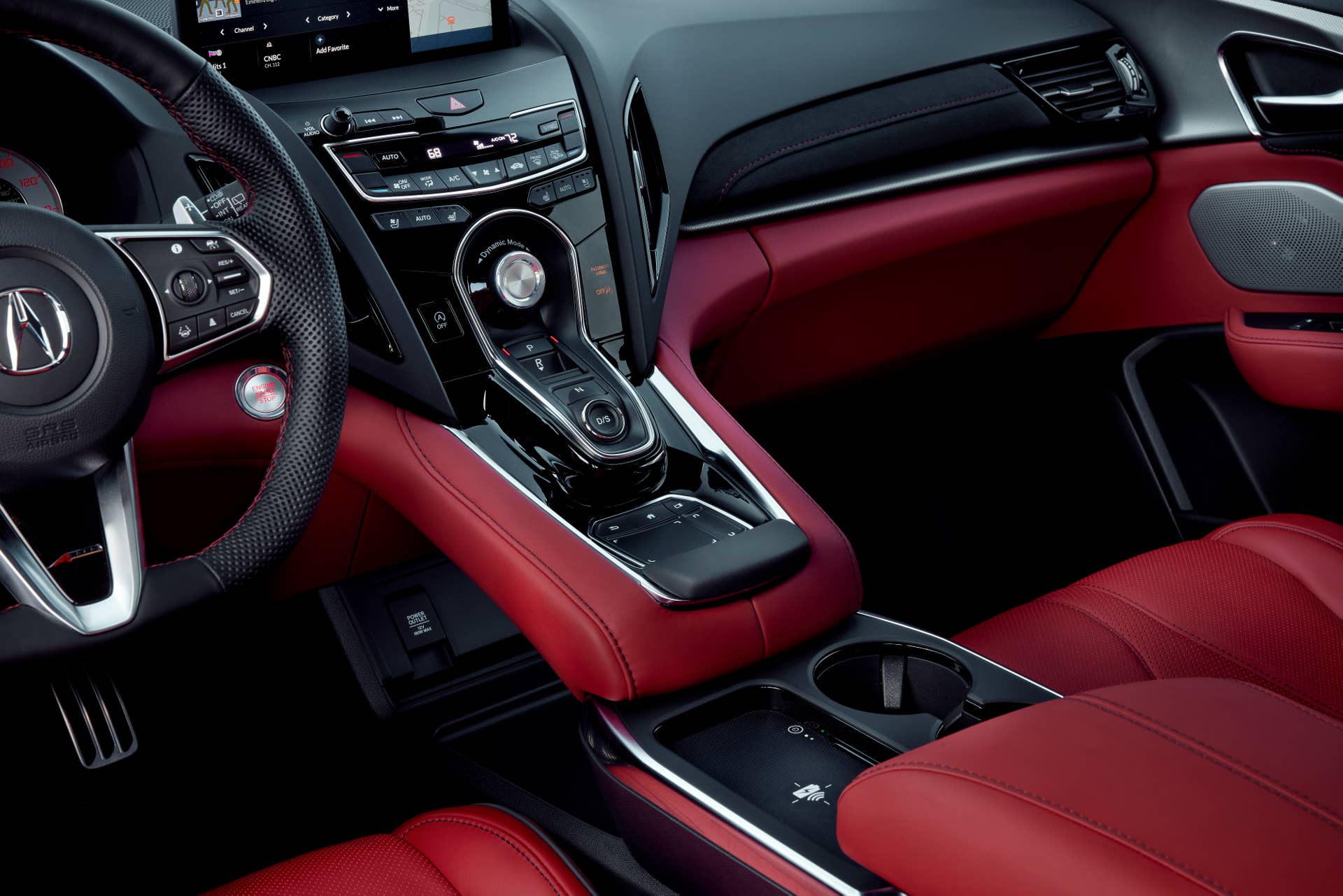
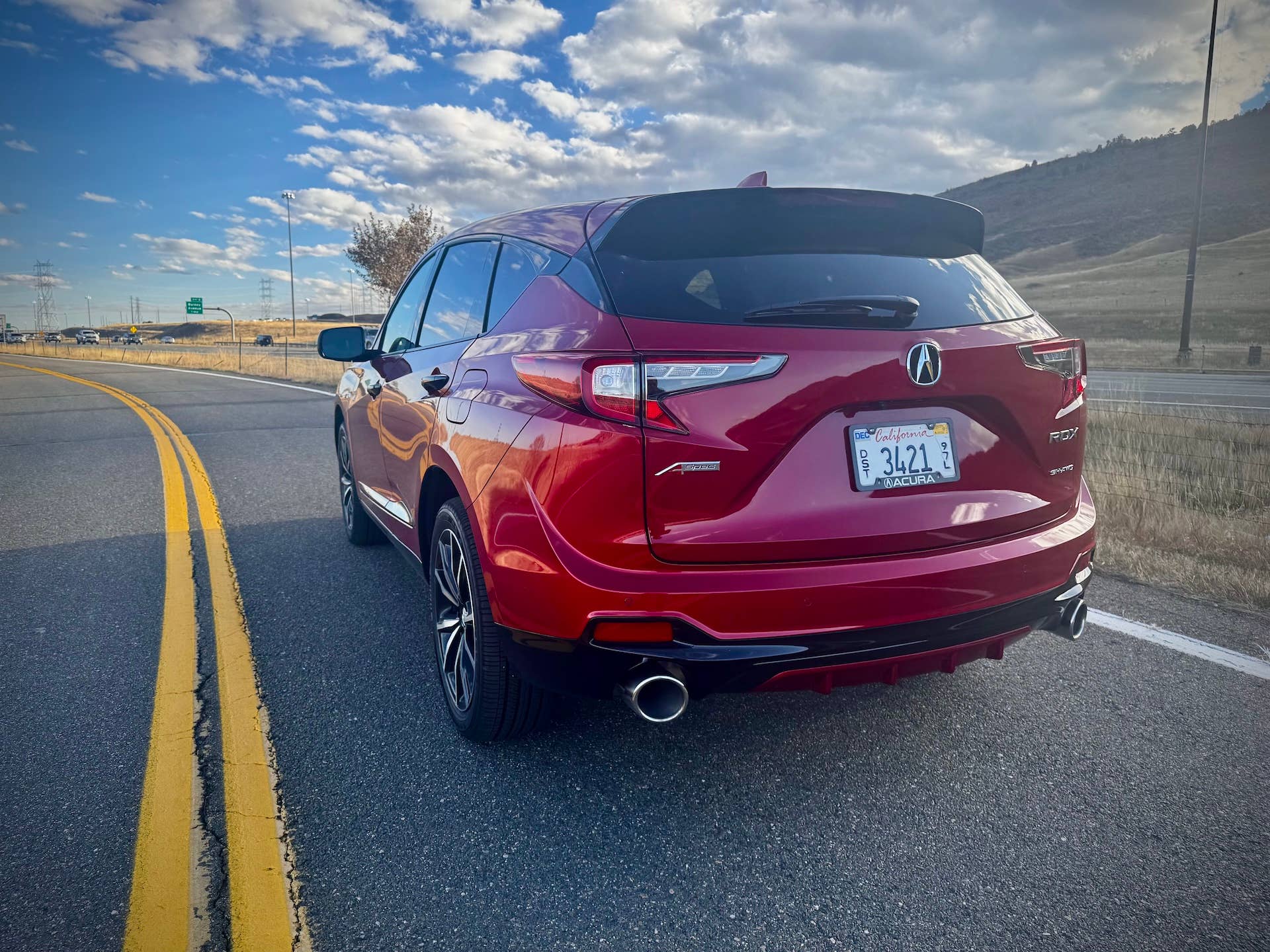
The MDX’s greater refinement, extra space, and better power come at a price. The cheapest FWD model costs $51,800, and that MSRP rises all the way to $75,850 for the Type S. The RDX, meanwhile, starts at $45,100, increasing through the trim levels until the range-topping A-Spec Advance, which costs $54,850.
The MDX has nicer materials and more equipment, even though both vehicles are specified to a high standard. Dual-zone climate control in the RDX makes way for a tri-zone system in the MDX, and while the smaller SUV has up to 16 speakers, the MDX’s available 31-speaker Bang & Olufsen system will impress audiophiles.
Final Thoughts
It’ll be sad to see the RDX go, although at least there’s a replacement to look forward to. In the meantime, it’s a swift, sporty, and well-equipped crossover. If you appreciate lots of gizmos but don’t want to spend more on a German SUV—and if you don’t need the extra seating capacity—it’s a solid option.
The MDX justifies its higher price point with more power, better refinement, and a lot more space. The Type S is expensive, but it’s a genuinely sporty and potent three-row SUV. If you have over $50,000 to spend on an SUV, the MDX is the one we’d choose between these two, as the RDX makes more sense below that price point.
About the author

Karl Furlong
Senior Editor, Autoblog