
Key Points
- The 2027 Hyundai Palisade offers a more luxurious cabin, greater passenger space, and superior comfort features.
- The Kia Telluride provides more cargo capacity, practical family features, and vehicle-to-load functionality.
- The Palisade suits adult comfort, while the Telluride better serves families hauling children, luggage, and supplies.
Two Fresh and Practical Cabins
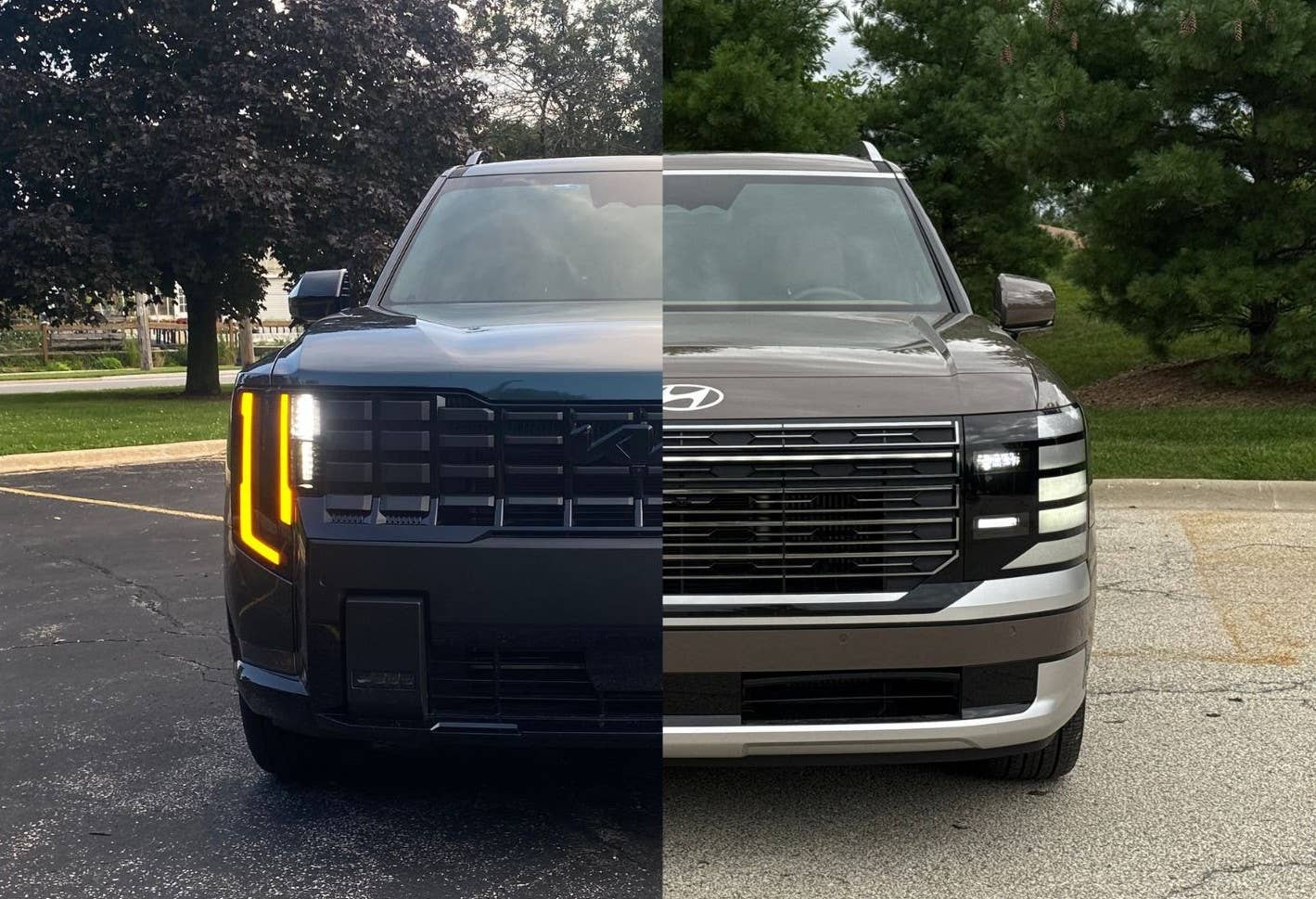
The 2027 Kia Telluride and Hyundai Palisade are closely related three-row SUV built on the same platform and share the same wheelbase, but their exteriors and cabins may appeal to different buyers. The two three-row midsize SUVs look more distinct from one another in their second generation redesigns. Neither one of them, especially in top trim form, hold anything back in terms of space, comfort, technology, and cutting-edge styling.
Amos Kwon
Both can seat up to eight with a second-row bench or seven with captain’s chairs, and both have genuinely useful third rows by midsize-SUV standards. The important distinction is not whether either cabin is good—they are—but whether “better” means more pampering or more practical. Each one approaches their craft differently, and one may suit you better than the other. It’s hard to go wrong with either model, and I got to drive both of them in top trim hybrid form. I drove both the 2027 Kia Telluride X-Line SX Prestige AWD ($57,590 base MSRP) and the 2027 Hyundai Palisade Calligraphy AWD ($58,790) and found out which interior comes out on top.
The Palisade Feels Special and More Luxurious
Amos Kwon
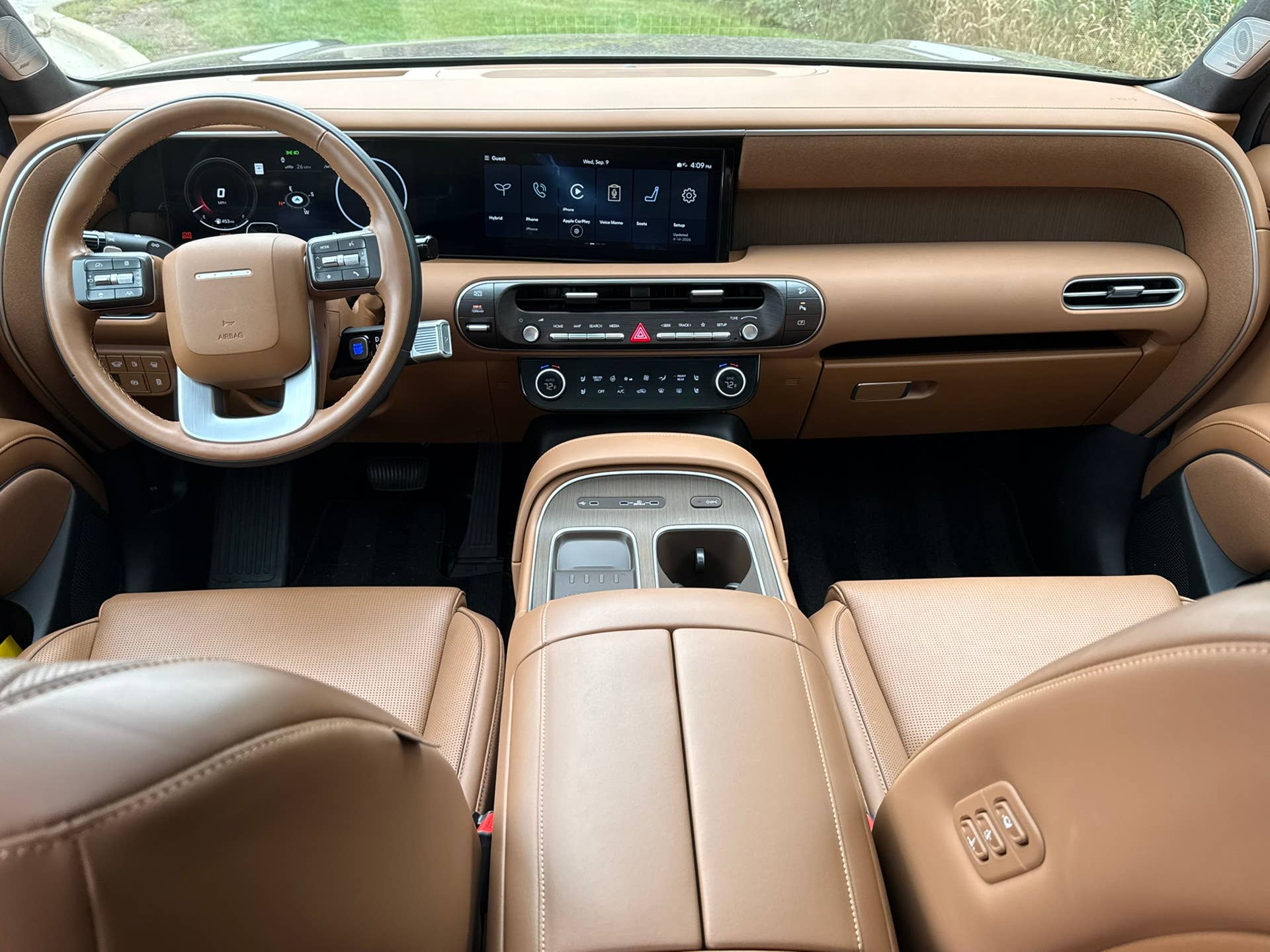
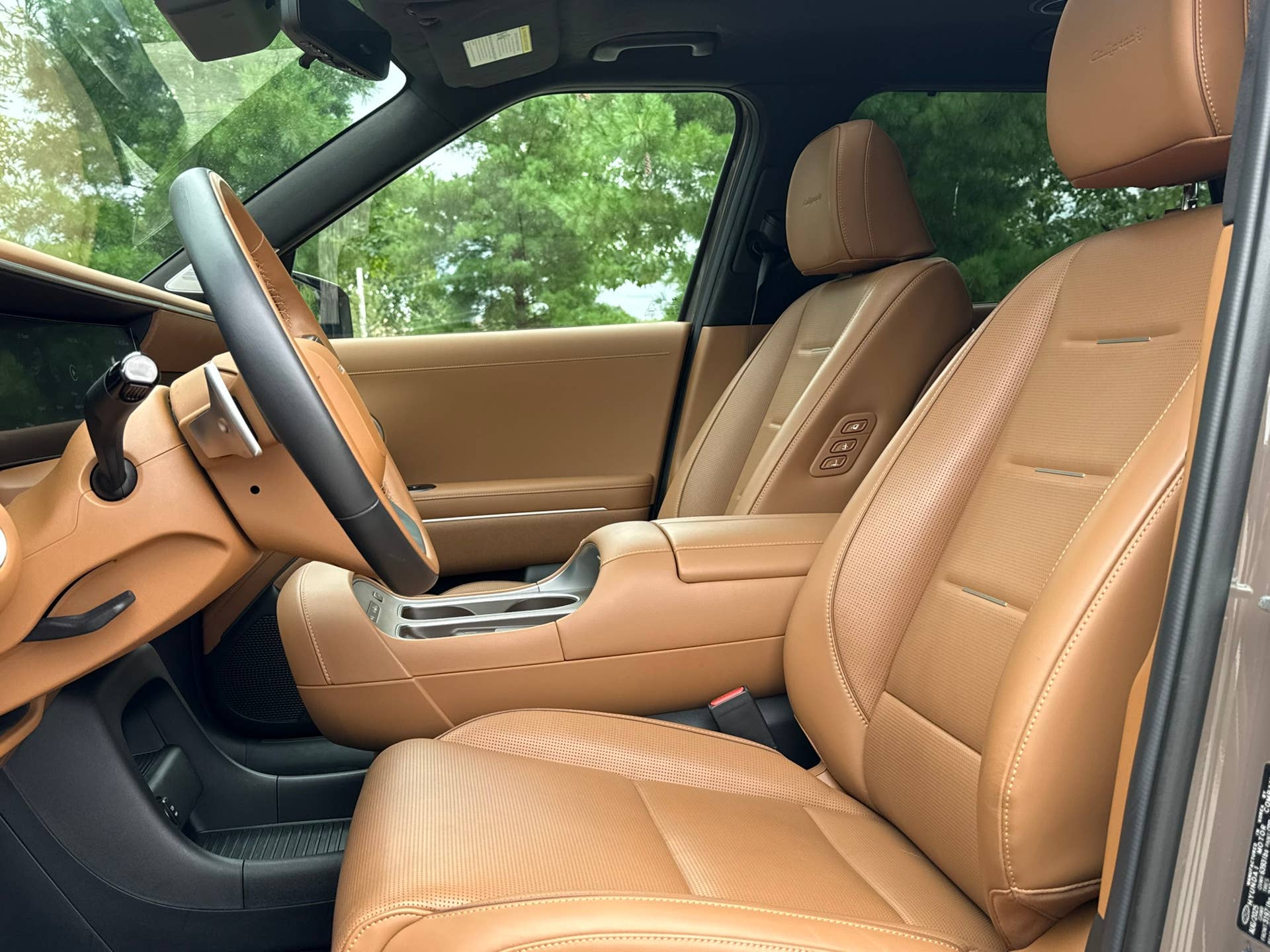
There isn’t an SUV cabin made like this today thanks to its original styling and largely monochromatic coloring. The new Palisade’s dashboard design, materials quality, and emphasis on passenger amenities give it the more luxury-minded cabin overall. It redefines what a luxury interior should be.
There’s no overwhelmingly huge tech, no haptic feedback controls, and no overdependence on touchscreen controls. But it’s not just the absence of certain things that make the interior special, there’s also superb switchgear, a capsule-shaped center console, and high-end features such as sconce-like ambient lighting, reclining function with legrests for the first two rows, heated third-row seats, and even a UV-light sterilizing center armrest compartment.
Amos Kwon
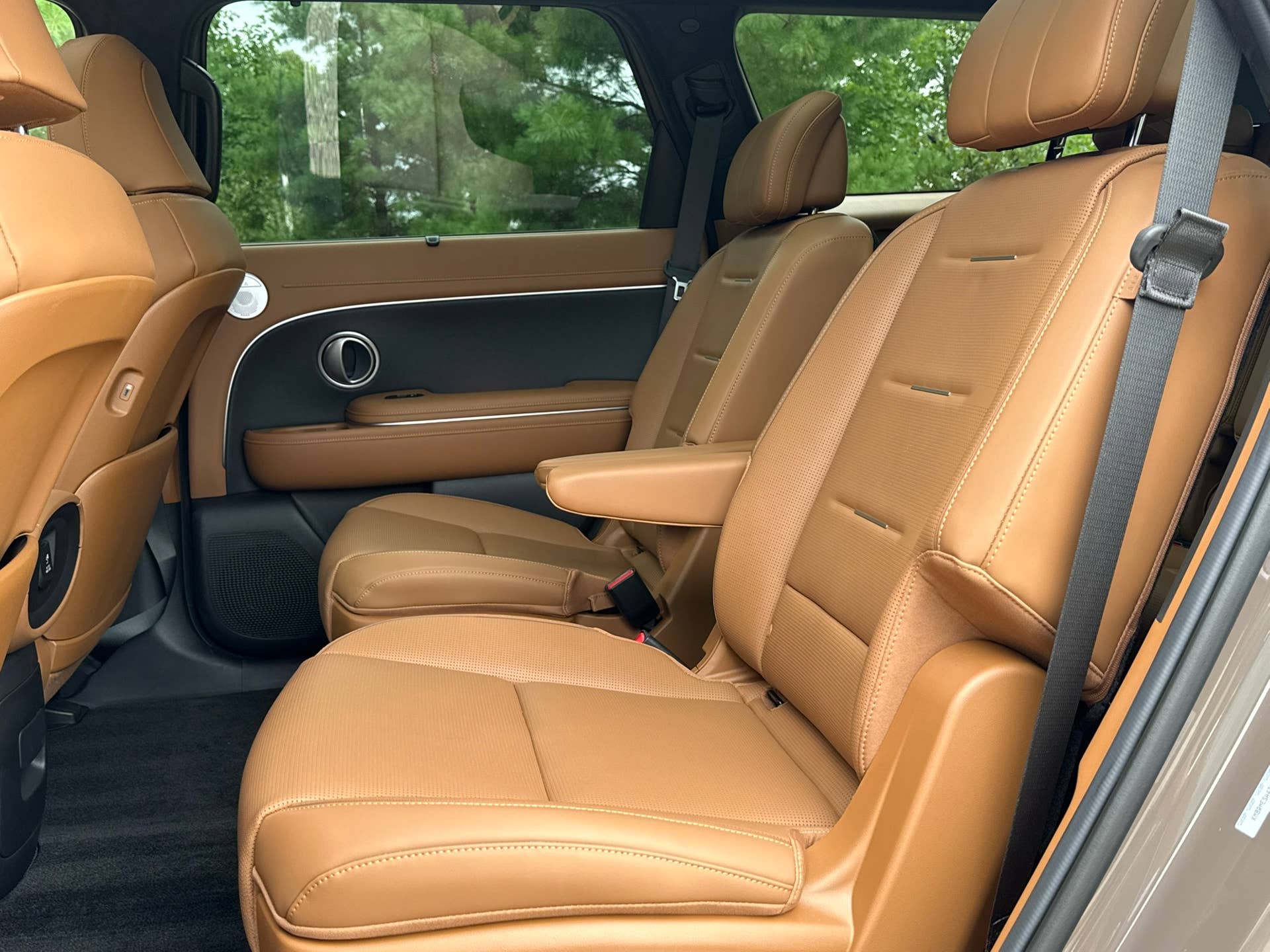
The Palisade’s available equipment helps make the case. Depending on trim, Hyundai offers features such as a massaging driver’s seat, integrated front and rear dashcams, power adjustment for all three seating rows, and a second-row household-style outlet. Those are the sorts of details that matter on long family trips: the driver gets more relief, passengers have more ways to charge and use devices, and the cabin is easier to reconfigure without climbing around the vehicle.
Amos Kwon
It is also slightly roomier where front-seat occupants will notice it. The Palisade has 44.2 inches of front legroom, compared with 41.4 inches in the Telluride, and its passenger volume is 162 cubic feet versus 158 cubic feet for the Kia. Its third-row headroom, hip room, and shoulder room are also marginally better. That does not mean the Palisade is dramatically larger inside. Rather, it tends to feel more generous and lounge-like, particularly in higher trims with captain’s chairs, upscale upholstery, and available comfort upgrades. The back two rows can power fold, power recline, and row two also has ventilation in addition to heating.
The Telluride Is More Practical
Amos Kwon
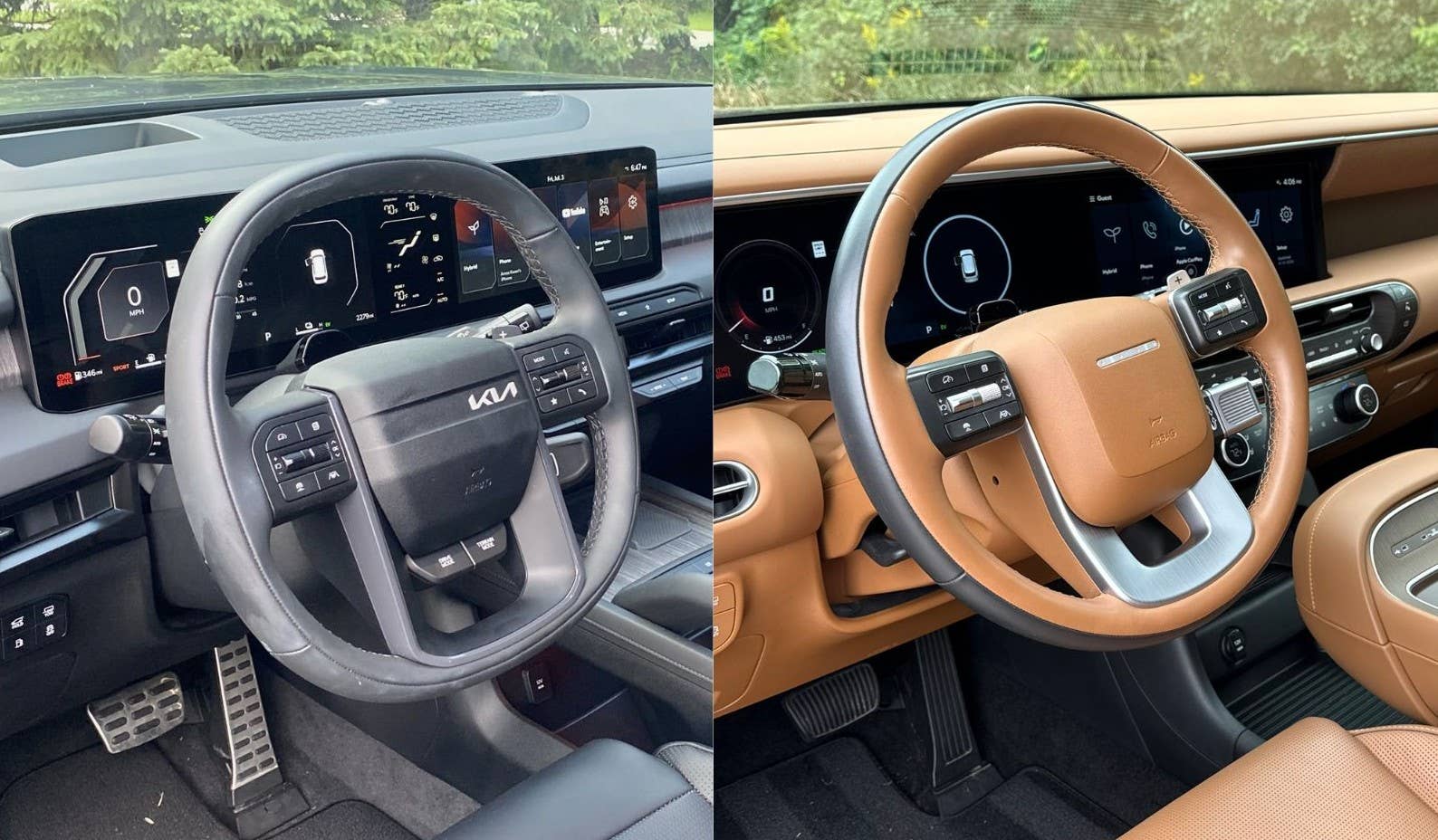
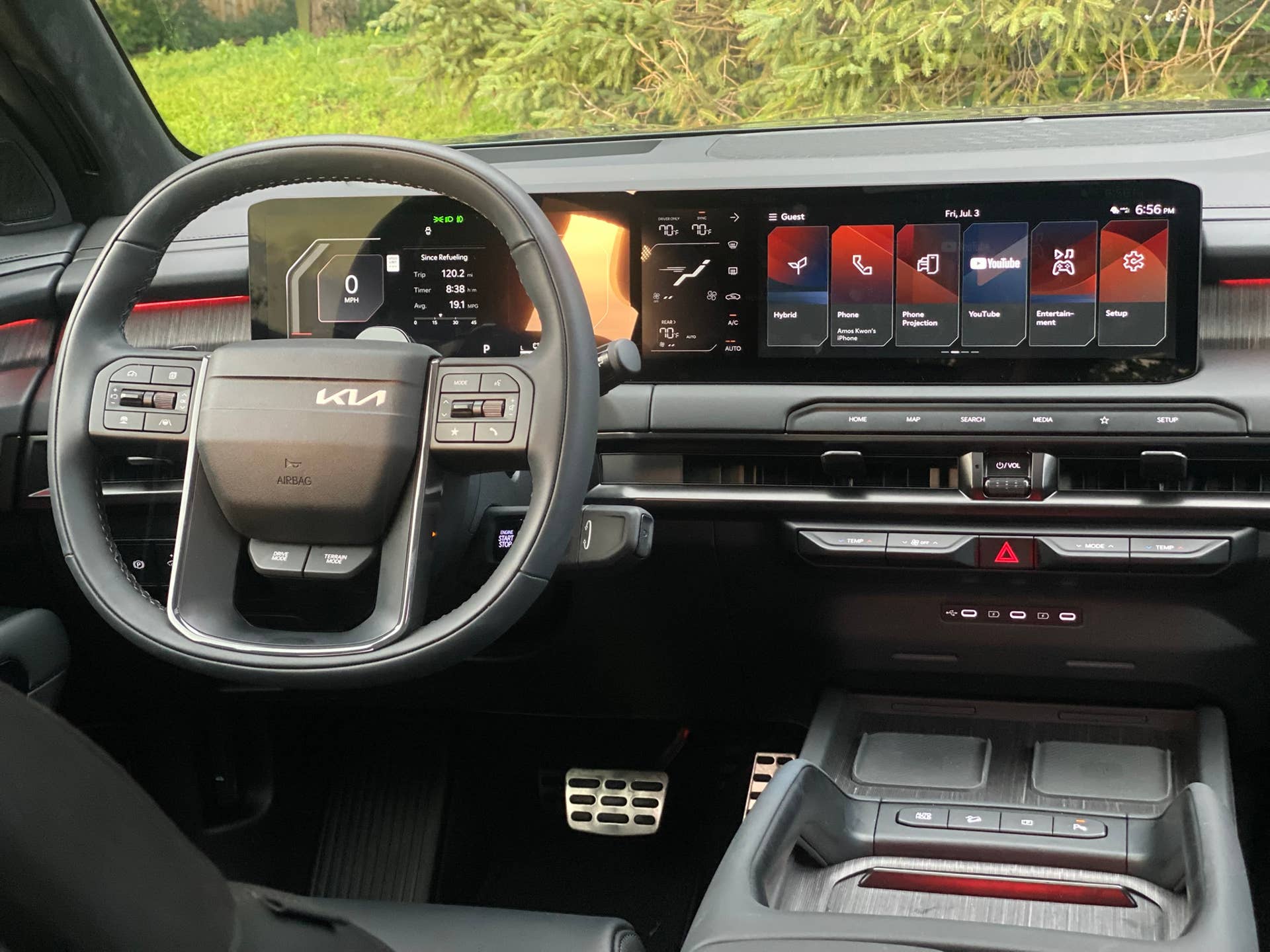
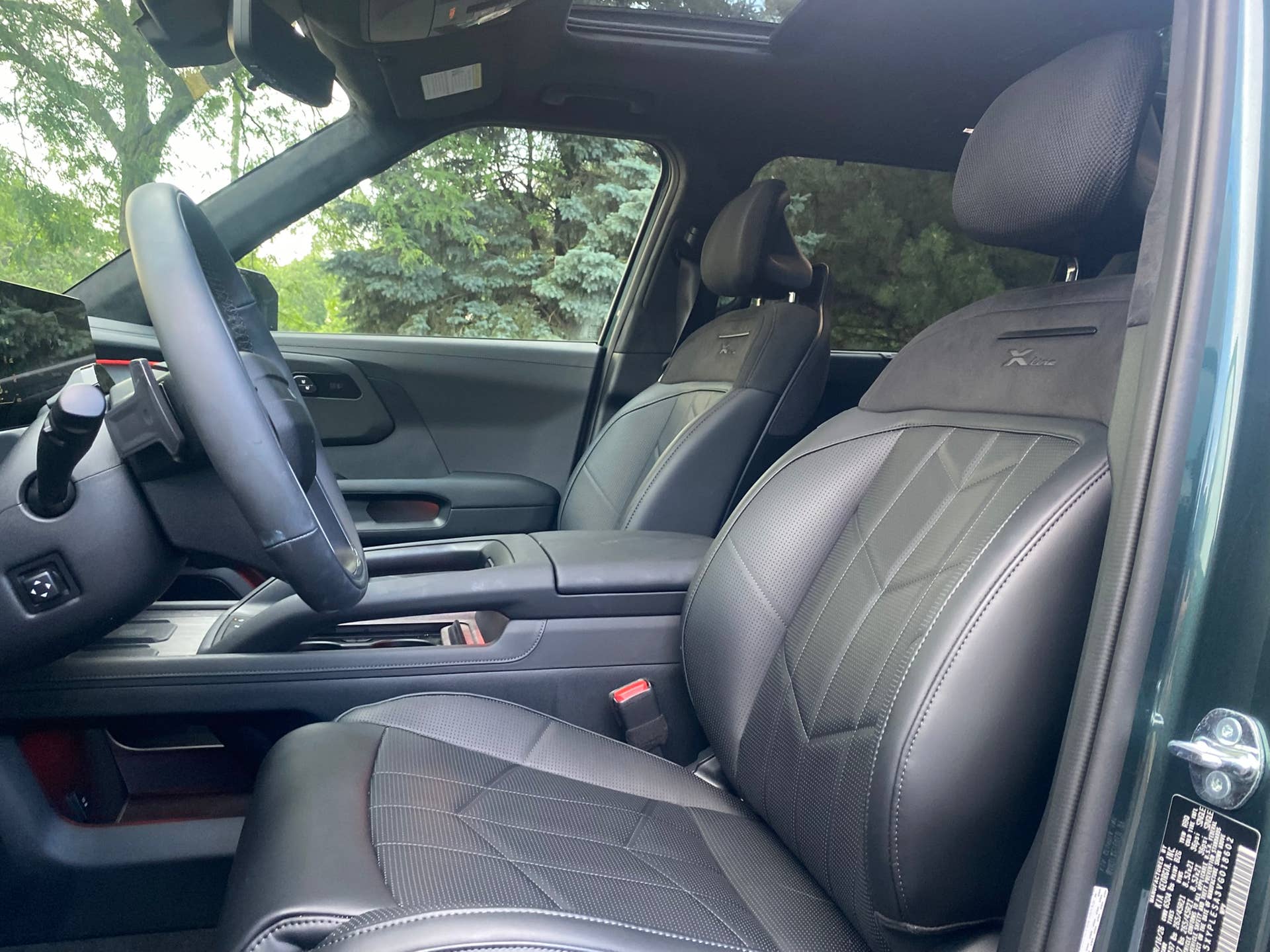
The Kia Telluride’s interior plays a different game but it’s no less impressive when it comes to carving out a niche in the segment. It still offers a modern dashboard, wide digital displays, three rows, and plenty of family-oriented storage. There are special details like dual wireless chargers (something the Telluride doesn’t offer), a futuristic squircle steering wheel, textured engineered matte wood trim, dual center console grab bars, office chair-like mesh headrests, and sueded seat inserts.
In terms of amenities, the top trim Telluride provides Stay Mode, which uses the high-voltage battery to keep the climate system, cabin lights, and audio operating while the SUV is parked—eliminating the need for the engine to idle. It can run for roughly 20 minutes to as long as an hour before automatically switching off once the battery level drops to 20 percent. It also offers vehicle-to-load capability, allowing owners to power accessories or small appliances directly from the traction battery. That added flexibility could be especially useful for families at campsites, tailgates, or other outdoor events.
Amos Kwon
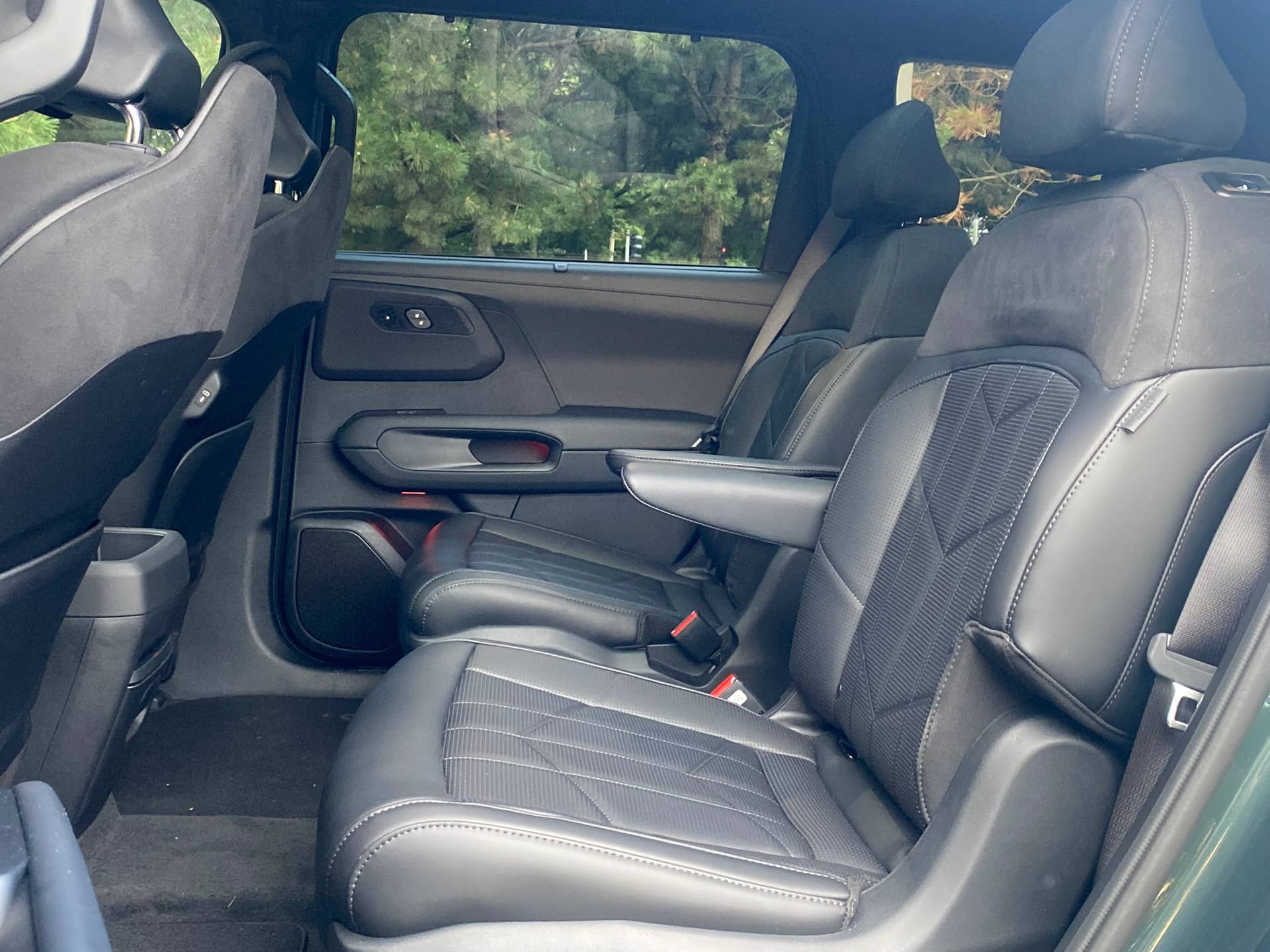
With all three rows in use, the Telluride has 22.3 cubic feet of cargo volume, compared with 19.1 cubic feet in the Palisade. Fold the third row, and the Kia provides 48.7 cubic feet versus 46.3 cubic feet in the Hyundai. Maximum cargo room is also greater in the Telluride, at 89.3 cubic feet compared with 86.7 cubic feet. The Telluride doesn’t have power folding or power reclining for the back two rows, nor does the third row have heat.
Amos Kwon
Those differences may not seem like a big deal, but the Telluride provides more usable cargo space in a pinch. When all seats are occupied, an extra three cubic feet behind the third row can be the difference between carrying a week’s groceries, a stroller, a few backpacks, or having to use the roof rack. Families who regularly travel with seven or eight people should pay particular attention to the dimensions.
The Kia also retains very competitive second-row room, with 43.0 inches of legroom, and it provides a third row that is less roomy. In fact, the latest Telluride includes useful third-row details such as USB-C charging ports, cupholders, dedicated heated-seat controls, and overhead HVAC vents.
Space and Cargo Comparison
| Interior measure | 2027 Kia Telluride | 2027 Hyundai Palisade | Advantage |
|---|---|---|---|
| Seating capacity | Up to 8 | Up to 8 | Tie |
| Passenger volume | 158 cu. ft. | 162 cu. ft. | Palisade |
| Front legroom | 41.4 in. | 44.2 in. | Palisade |
| Second-row legroom | 43.0 in. | 43.0 in. | Tie |
| Cargo room behind third row | 22.3 cu. ft. | 19.1 cu. ft. | Telluride |
| Cargo room behind second row | 48.7 cu. ft. | 46.3 cu. ft. | Telluride |
| Maximum cargo room | 89.3 cu. ft. | 86.7 cu. ft. | Telluride |
The two SUVs share a 116.9-inch wheelbase and nearly identical overall length, so neither delivers a radical packaging advantage over the other. The Palisade uses its space slightly more in favor of occupants, especially those in the first row; the Telluride devotes a bit more of its footprint to cargo capacity. Some might make their decision based on styling and tech, but the occupant and cargo differences might push buyers in one direction or another.
Technology and Family Comfort
Amos Kwon
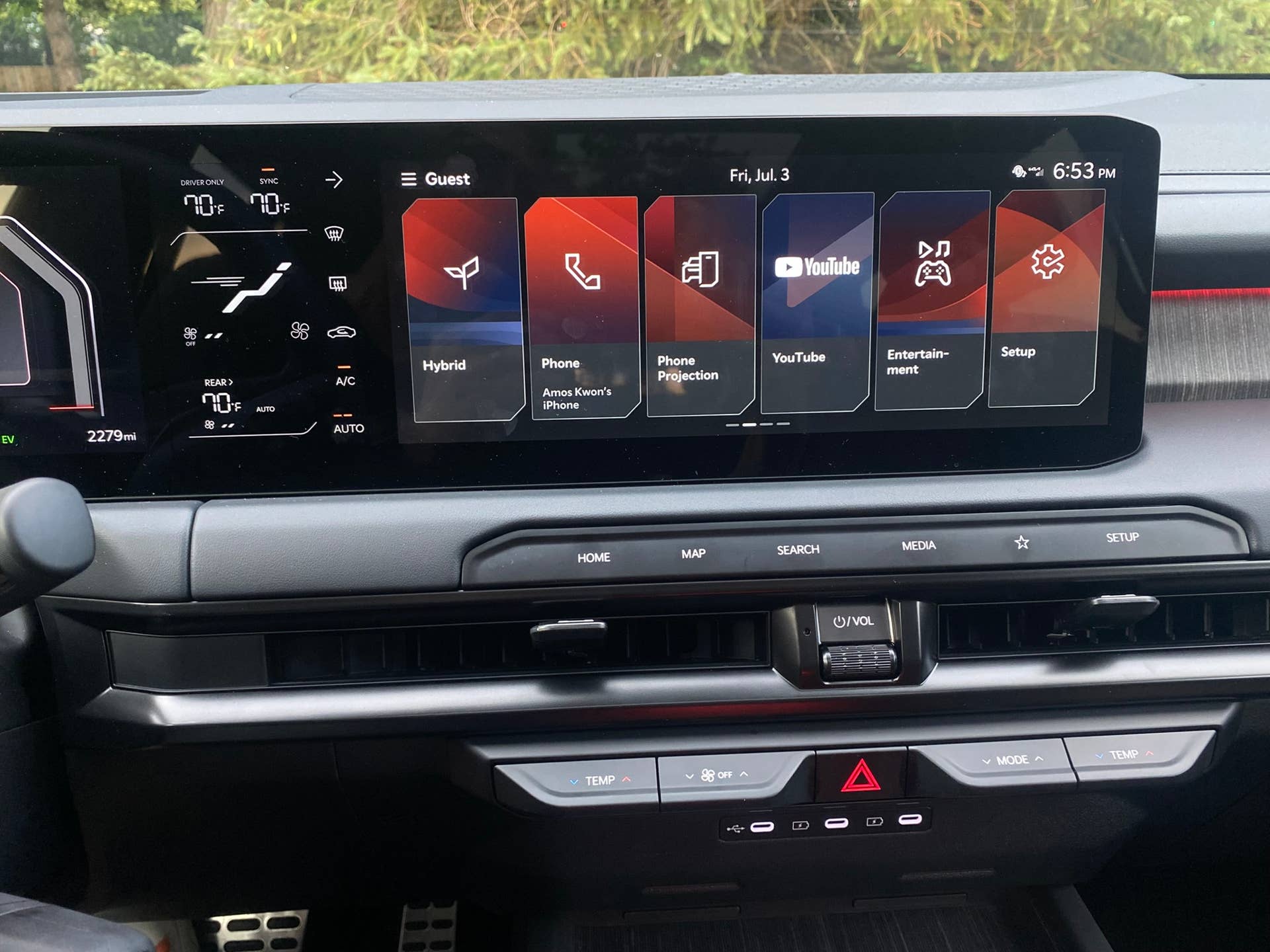
The tech setups inside both the Telluride and the Palisade result in largely a draw, and their core functionality remains easy, responsive, and simple. Both SUVs are modern three-row family haulers with big twin 12.3″ screens, smartphone integration, multiple charging solutions, premium audio, driver-assistance technology, and a choice of bench or captain’s-chair second-row configurations.
Amos Kwon
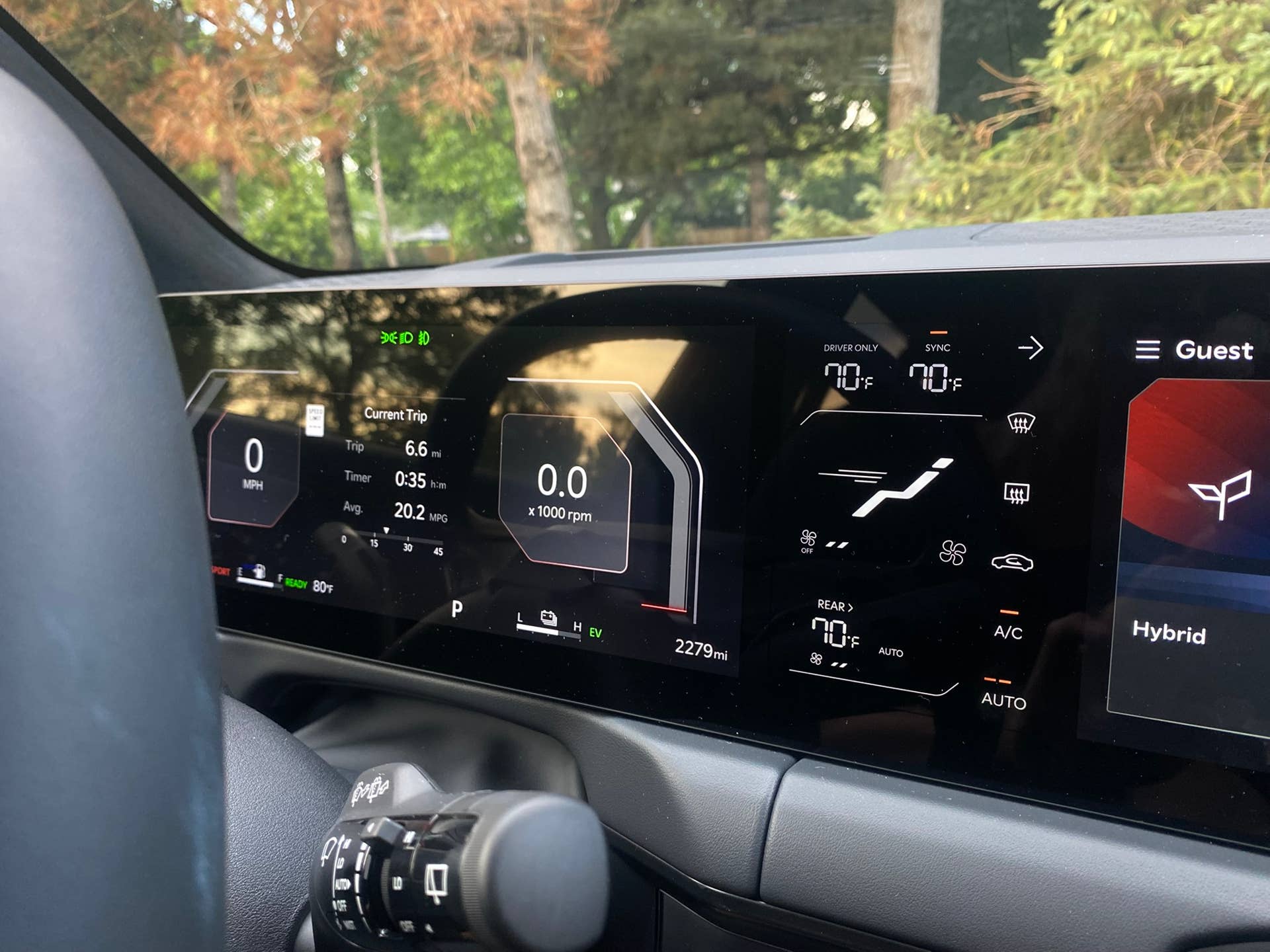
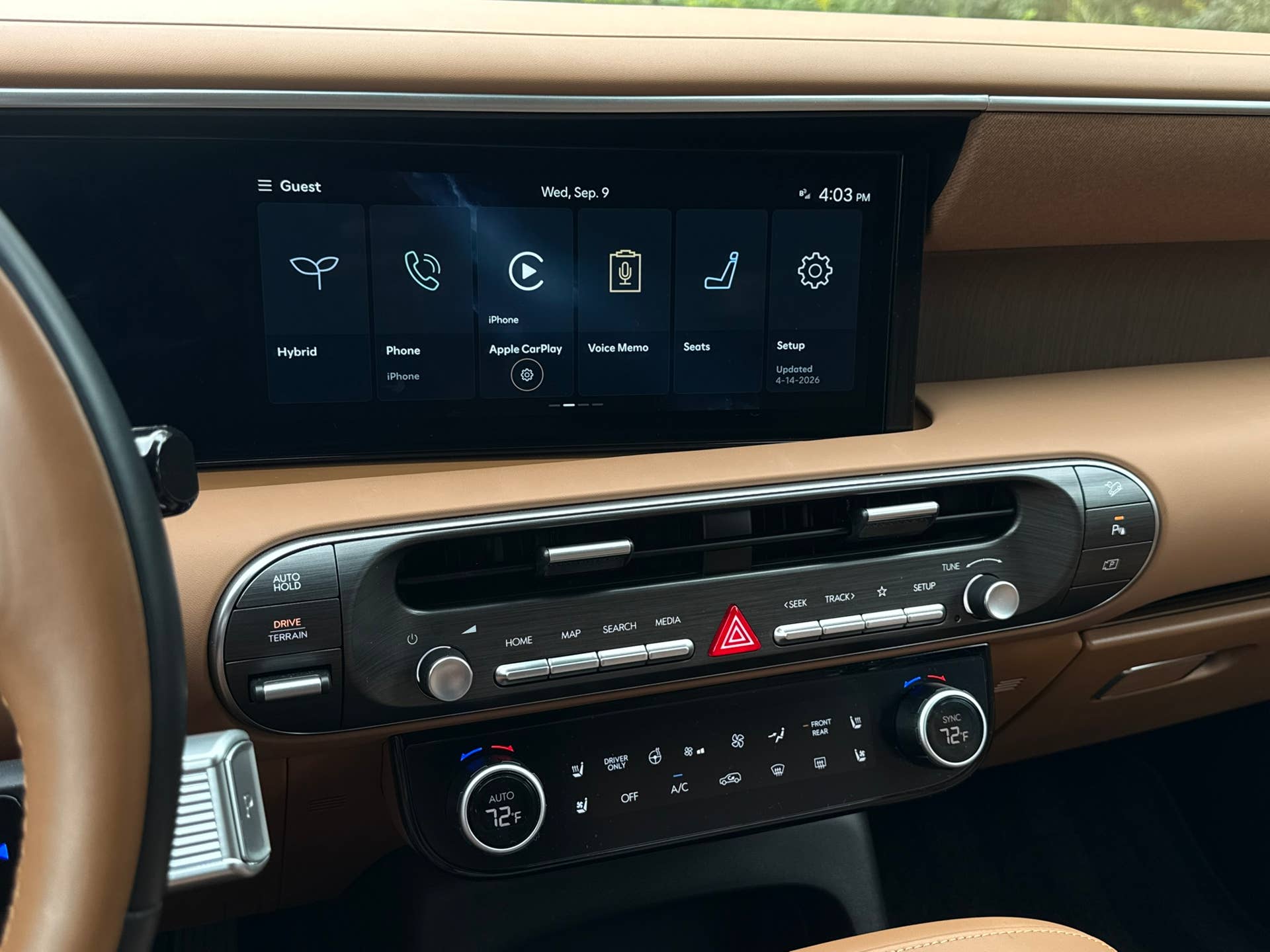
The Telluride’s screens are set atop the dash, while the Palisade’s are sandwiched between dashboard layers. The Telluride’s screen looks less integrated because of it’s positioning, and the graphics are sportier rather than the elegant look of the Palisade’s interface. The Palisade’s infotainment screen is noticeably canted toward the driver, a nice touch that sets it apart from most in the segment, not just the Telluride.
Amos Kwon
Both models offer great physical controls. The stalk shifter and engine start/stop button are essentially the same and work seamlessly once you get used to the configuration. Both have excellent steering wheel controls in the form of actual buttons and switches, versus haptic feedback versions.
Amos Kwon
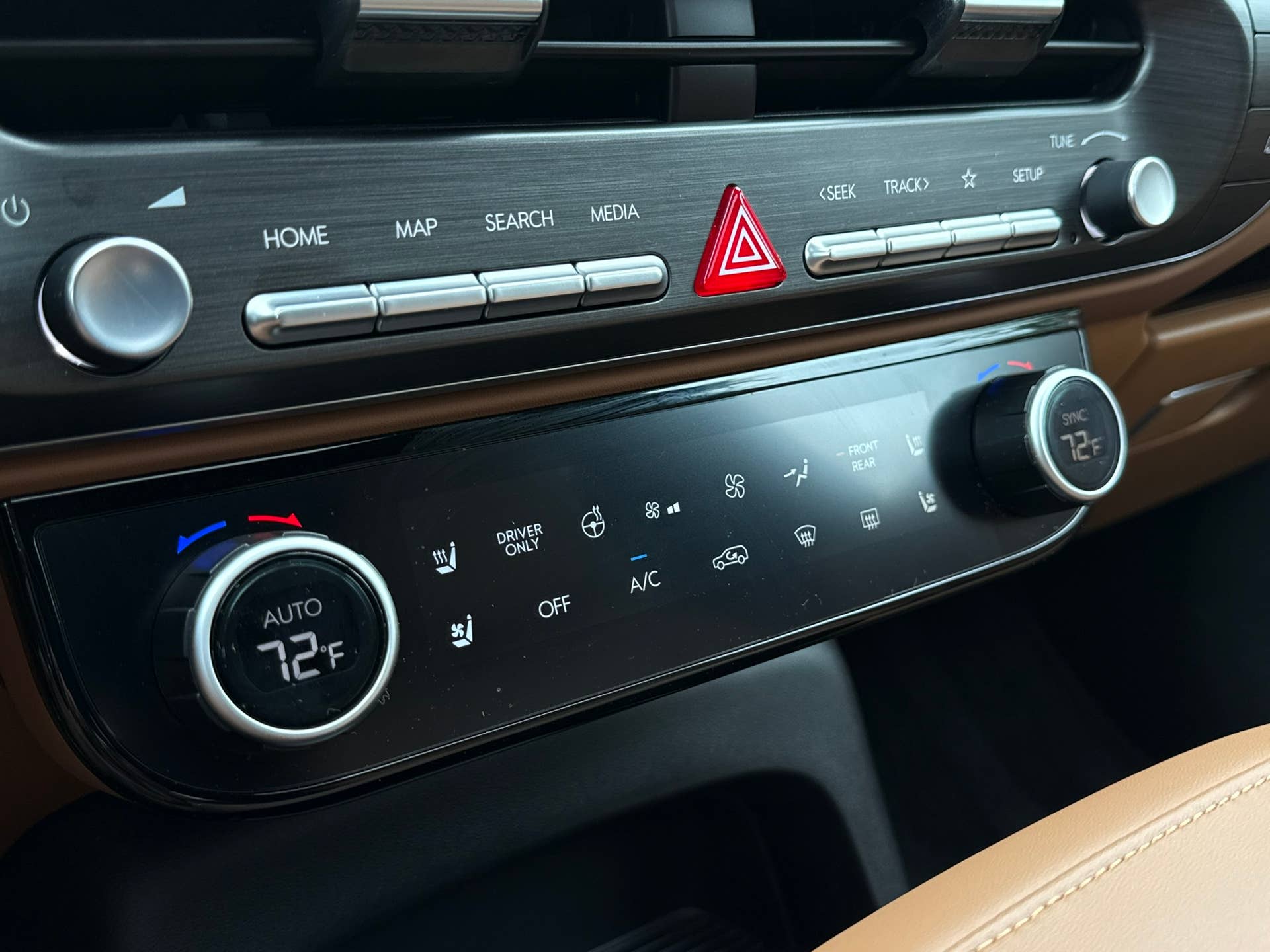
The Telluride’s climate control buttons and audio scroll wheel aren’t as easy to use as the knobs and buttons on the Palisade. The Telluride has a separate climate control touch panel in between the two main screens. Adjusting the temperature is done with the center stack switches, but you have to view the temperature selected on the touch panel. The Palisade goes with old school round knobs and clean line of audio buttons. Directly below are the large temperature adjustment knobs with digital readouts, and the touch panel climate controls have to well-spaced rows of icons.
Both vehicles do the right thing by avoiding the touchscreen-heavy operation of the most critical functions, and they’re cohesive with their respective designs. The Palisade, however, is functionally easier to use while driving. It’s both more intuitive and can be operated largely by muscle memory, whereas the Telluride’s climate and audio controls require eyes off the road more frequently.
Final Thoughts
The 2027 Hyundai Palisade has the better interior overall because it offers the more upscale atmosphere, slightly greater passenger space, and more distinctive available comfort and convenience features. It is the better pick for a buyer who wants a mainstream three-row SUV that feels closest to a luxury vehicle. The Palisade is the right choice when adults in the vehicle are the priority, while the Telluride is the best selection when you’re regularly doing kid-hauling, luggage-hauling, and road-trip duties. It’s hard to go wrong with either one because they’re two of the most impressive SUVs made today.
About the author
Amos Kwon
Contributing Writer, Autoblog