
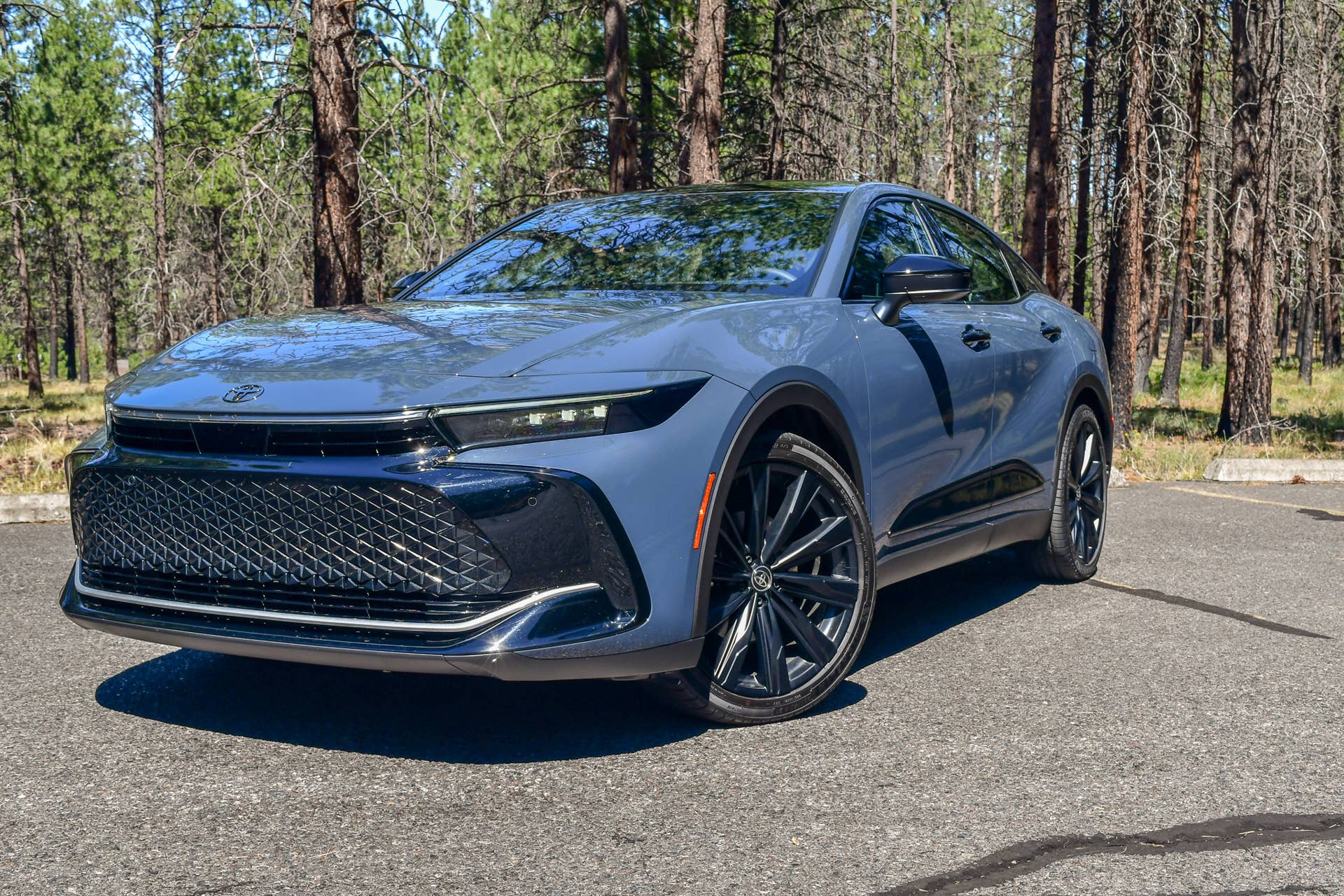
The Toyota Crown has a fascinating history in the United States. It was first brought across the Pond in the 1950s as the “Toyopet Crown,” and it was the first Japanese car ever sold in America. It was also the company’s first passenger car after World War II. It was a charming, rounded headlight-having competitor against Lincoln, Chevy, Ford, Mercury, and even Cadillac, with its updated interior, comfortable ride, vibrant color options, and quiet drive. Since they were slightly smaller (and thus a little cheaper) than their American land yacht competitors without compromising on style, the Crown was a favorite among the wealthy, or, strangely enough, as taxis, company vehicles, or as government cars.
By the 1960s, though, sales for the Crown slowed. Compared to other cars it competed against, the Crown was relatively underpowered and overpriced. Additionally, by this point, SUVs were becoming popular thanks to the Ford Bronco, and they decided to shift their efforts to the Land Cruiser. The Toyopet Crown was withdrawn from American markets in 1972 but remained a top seller in Japan.
Kristen Brown
We wouldn’t see the Crown again until 2023, when it was redesigned and repurposed, set to fill the gap made by the discontinued Avalon. In today’s market, sedans are a dying breed–the only sedan Toyota sells is the compact Corolla. The Camry was introduced in 1983, and it caught on like wildfire because it was affordable, reliable, and remarkably efficient – not much different from why it remains so popular today. Is bringing the larger, fancier, and chic Crown back after 50 years posing a threat to the Camry’s sales? After driving a 2026 Toyota Crown Limited Nightshade, here are my thoughts.
The Crown is notably more expensive than the Camry
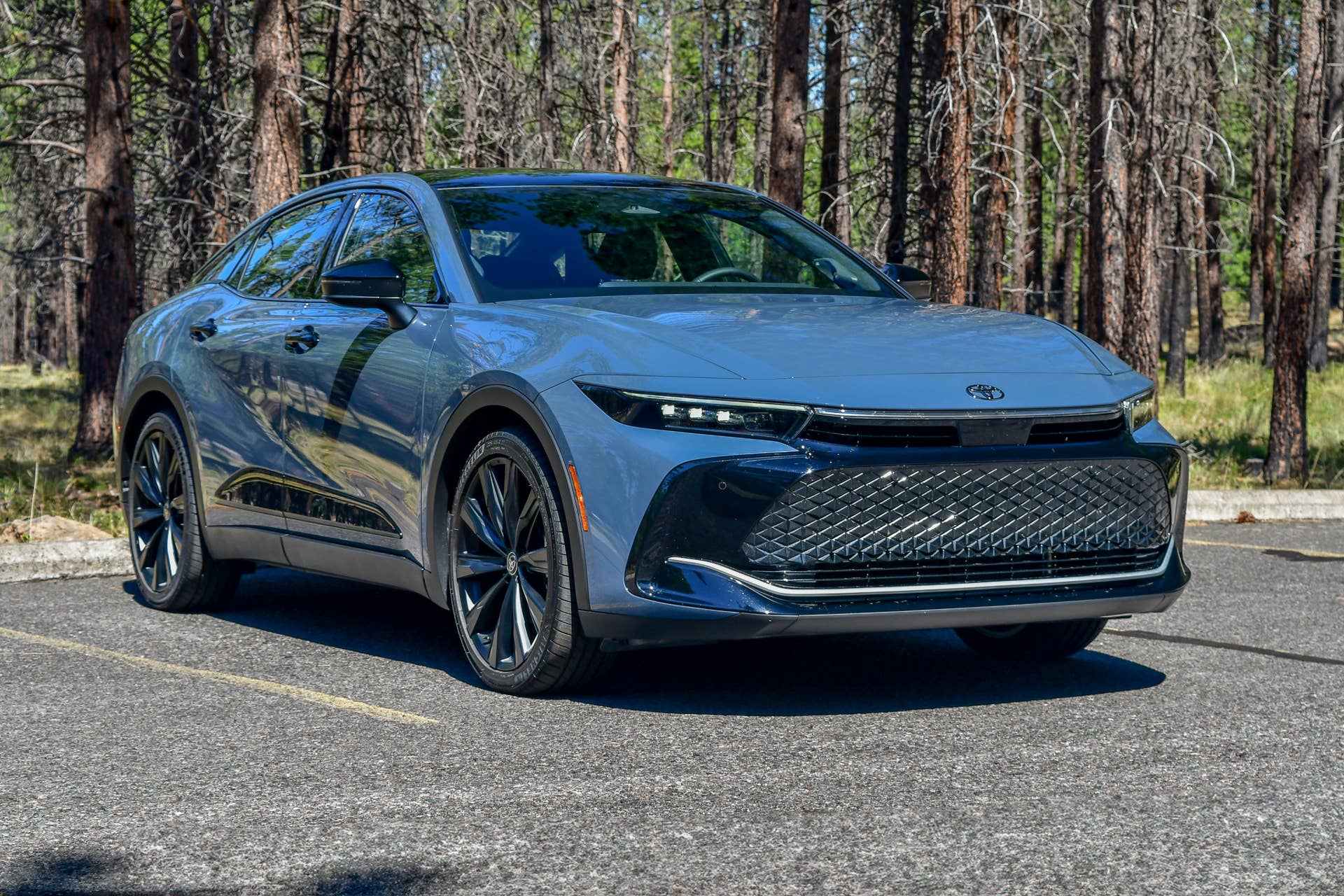
Both full-sized sedans are available in four different trims, and both are hybrid-only models. The Camry is available with two-wheel drive from the factory, prioritizing fuel mileage, but all four trims can be configured with Toyota’s electronic on-demand AWD system. For the Crown, it’s standard with AWD. The Camry’s base model, the LE, starts at $28,700 and goes up to $34,900 for the XSE. Add around $1,525 if you want AWD. The Crown, by contrast, has a much higher base and top-tier price. The XLE starts at $41,440 and goes up to $54,990 for the Platinum model. The model I reviewed was the Nightshade trim, which is one step below the Platinum. With all the bells and whistles added, the final price, including the destination fee, was $49,900.
Kristen Brown
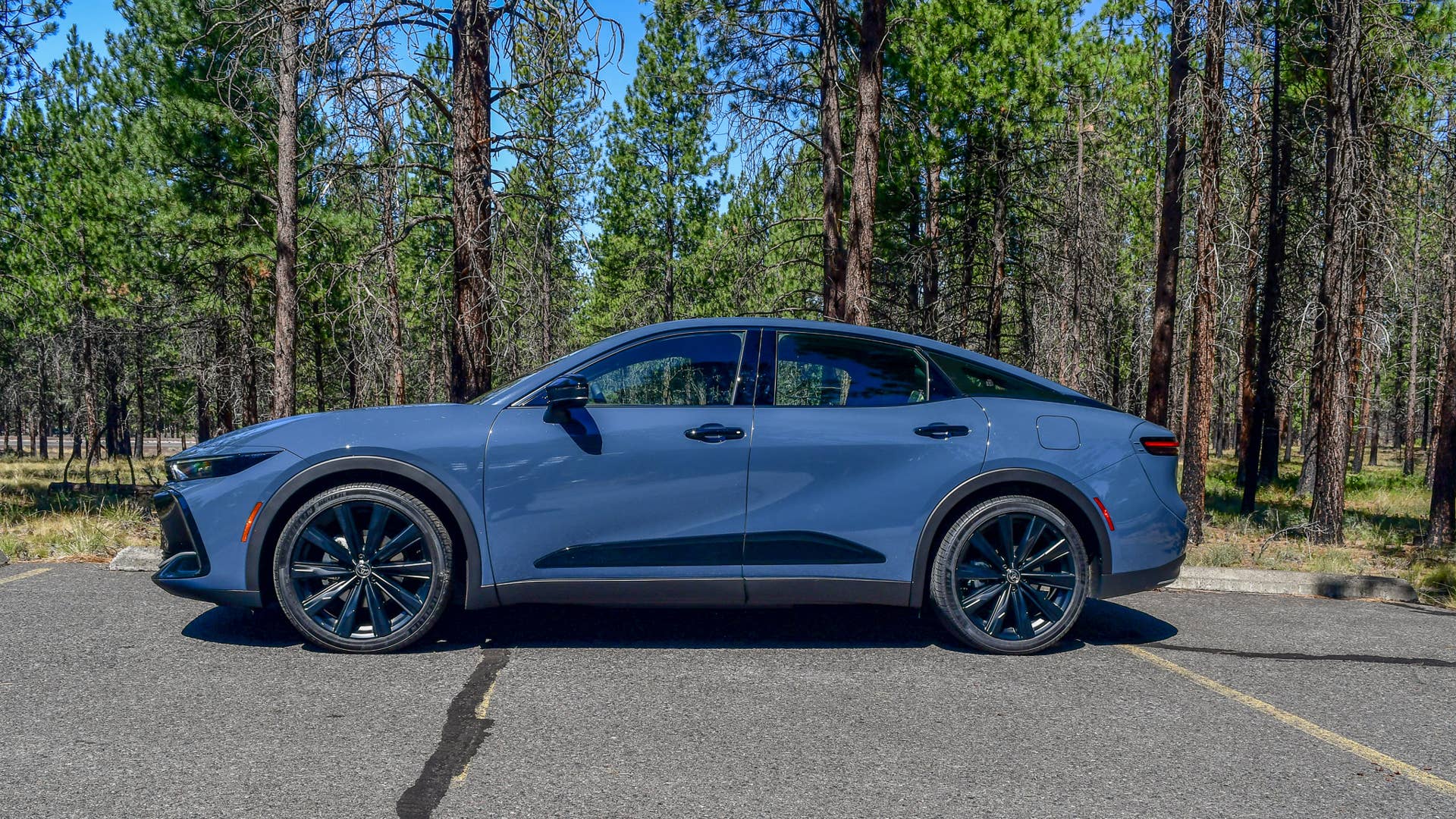
How much more car do you get for $7,300 to a whopping $20,090 more? Dimensions-wise, not much. The Crown is 2.6 inches longer, 3.7 inches taller, and both are 72.4 inches wide, with an identical wheelbase length of 111.2 inches. Toyota heavily markets the “increased ground clearance” of the Crown over the Camry, but a 5.8-inch difference compared to 5.4 inches isn’t that noticeable. Despite the Crown being taller, both sedans have nearly identical figures for headspace; the Crown has 38.2 inches in the front compared to the Camry’s 38.3. As far as legroom in the front, both rock a roomy 42.1 inches, and their figures for front shoulder room are close, at 57.1 inches in the Crown and 57.7 inches in the Camry.
Legroom in the rear is also incredibly close, with 38.9 inches for the Crown and 38.0 inches in the Camry. The Camry takes the crown (see what I did there?) for shoulder room in the rear, too, but barely–the Camry has 55.7 inches of space while the Crown has 55.1. Interestingly, the trunk space remains the same at 15.2 cubic inches. So, what differences aside from styling justify the price difference?
Interior designs are similar, but more posh in the Crown
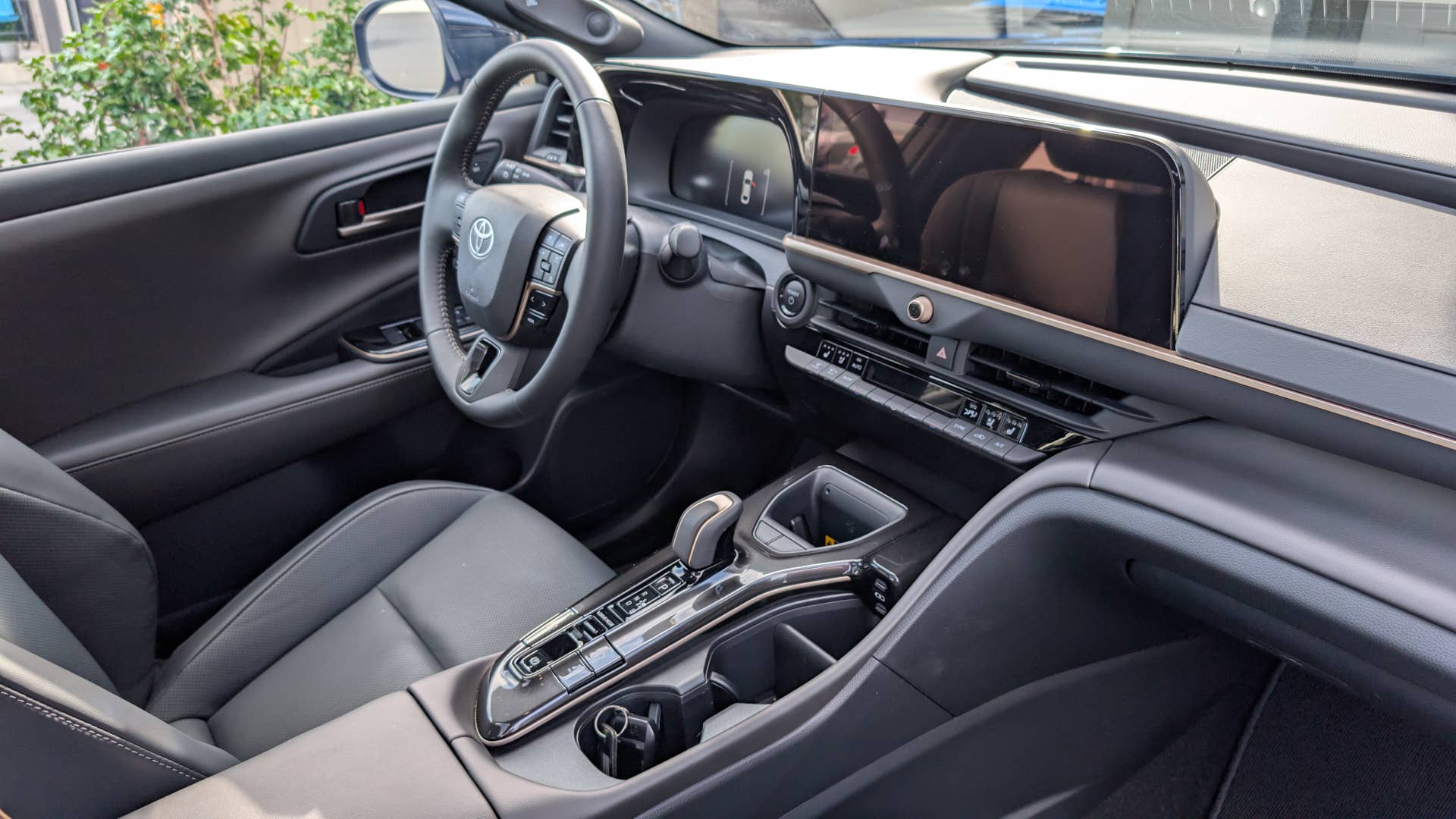
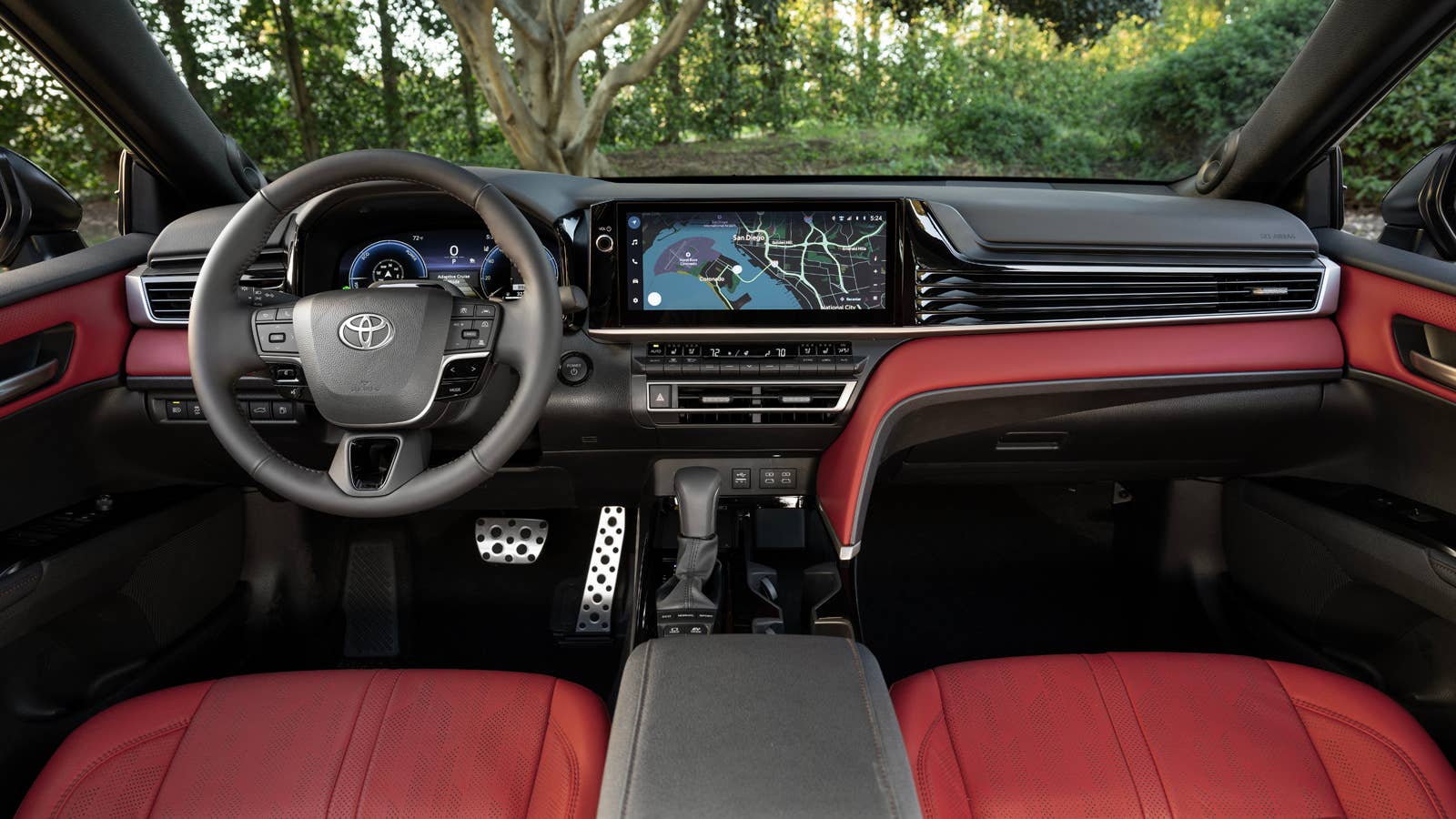
Since the Crown is designed to appeal to those who want something closer to a Lexus without paying the Lexus price, the interior is significantly more posh and stylish. It’s the closest to a Lexus interior I’ve seen in a Toyota–down to the shifter, which I recognized immediately after having driven the RX 450h and UX 300h. The Camry has a standard, more familiar shifter. The black leather seats (also available in the Camry) are incredibly cozy, and the dashboard is accented with subtle copper trim pieces, breaking away from the all-black scheme that I typically critique Toyota for. The steering wheel is wrapped in leather, and the seating position is low without compromising on visibility too much. I usually adjust my seat to be slightly raised so that I can see over the hood, for my own peace of mind, but the standard seat setting was just fine.
Toyota
Both models feature a large touchscreen and a vibrant digital gauge cluster, which are easily customizable through intuitive steering wheel controls. In the Crown, however, you get the larger 12.3-inch media screen as standard equipment across all four trims, while the Camry offers an 8-inch screen unless you opt for the XLE or XSE. The JBL sound system in the Crown was excellent, with a dedicated subwoofer in the rear.
As a passenger, though, I noticed that my legroom, while pretty vast, was also fairly restrictive. I told my husband that the trim pieces that hang over the footwell reminded me of the entrance to a water slide, and he agreed. It’s unfortunately the same way in the Camry. It makes the Crown feel more luxurious, but depending on how tall or big you are, the design can be limiting and frustrating. The center console is raised, making the cupholders and wireless charger easier to access, but also making the interior feel a bit tighter than the lower-positioned, more subtle interior of the Camry. In the Camry, though, you can get a red interior if you want to, but the Crown only comes with black leather across all four trims unless you get the Limited, which can be white, black, or a handsome black and tan.
Both are hybrid only, but the Crown has a more powerful optional system
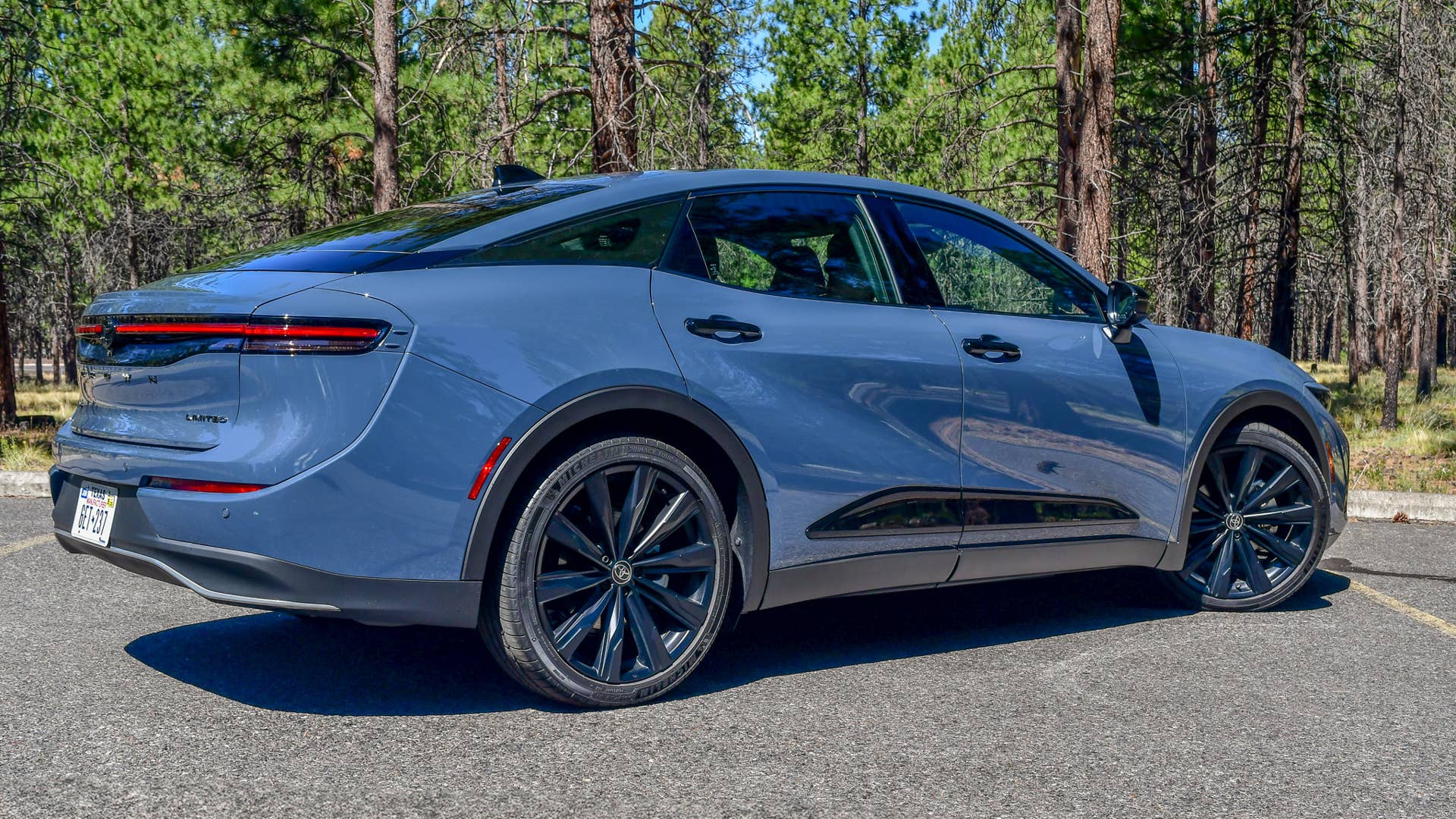
For 2025, Toyota axed the 3.5-liter V6 in the Camry and made it hybrid-only. The base engine setup is a 2.5-liter four-cylinder engine mated to the company’s legendary fifth-generation hybrid battery, making a combined 232 horsepower. That engine is also the standard engine in the Crown. However, if you want the most bang for your buck, you can opt for the Hybrid Max system in the Platinum trim of the Crown. Instead of the 2.5-liter engine, it has a 2.4-liter turbocharged four-cylinder engine paired with the hybrid battery, making for a combined horsepower figure of 340. You can’t configure the Camry with the Hybrid Max system; instead, the Platinum Crown is set up to attract those with a need for speed, rather than budget-conscious commuters or families.
Kristen Brown
The Nightshade I drove had the 2.5-liter engine in it, and it was plenty powerful. In Sport mode, it had plenty of pull and a pleasant exhaust note. Unless you really want the extra 108 horsepower, I don’t think it’s worth the additional $4,000, as the main difference between the Platinum and the Nightshade is the black accent trim pieces on the exterior and the performance-oriented hybrid system.
The Crown comes with adaptive suspension, while the Camry’s is fixed
The Camry has always been famous for its ride quality, despite having a fixed suspension system. In recent years, Toyota has been careful to tune the Camry’s ride to be more balanced, whereas it used to be more squishy. In the SE and XSE, Toyota advertises a “sport-tuned” suspension system with sportier springs and shocks, made to bring more color into the daily driving experience. In the higher trim levels, the ride quality is more balanced, providing enough feedback to feel a bit more lively, but soft enough not to wake the sleeping baby in the back seat.
Kristen Brown
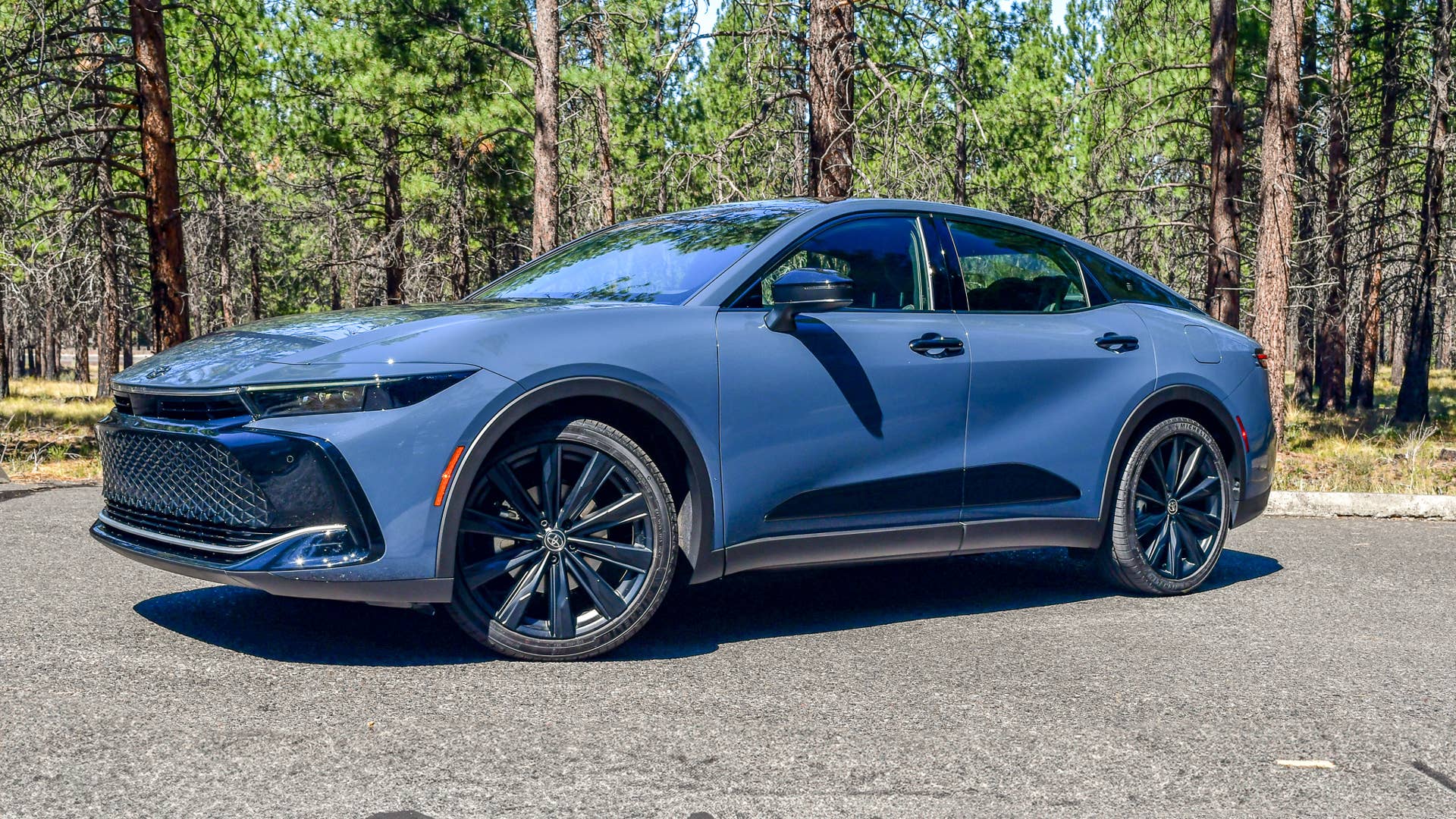
The Crown, on the other hand, boasts Toyota’s Adaptive Variable Suspension (AVS) system that provides real-time damping adjustments to minimize translation from bumpy roads into the interior, help tighten things up when the system detects higher g-forces in turns, and help reduce body pitch and roll when things get a little spirited. It also comes with active cornering assist in the higher trims, which works with the traction control system to help reduce understeer when cornering. This means, despite its size, it’s meant to handle much more than your daily commute, which I determined when I noticed my Nightshade was equipped with Michelin Primacy Touring tires on matte black 21-inch wheels.
Final thoughts
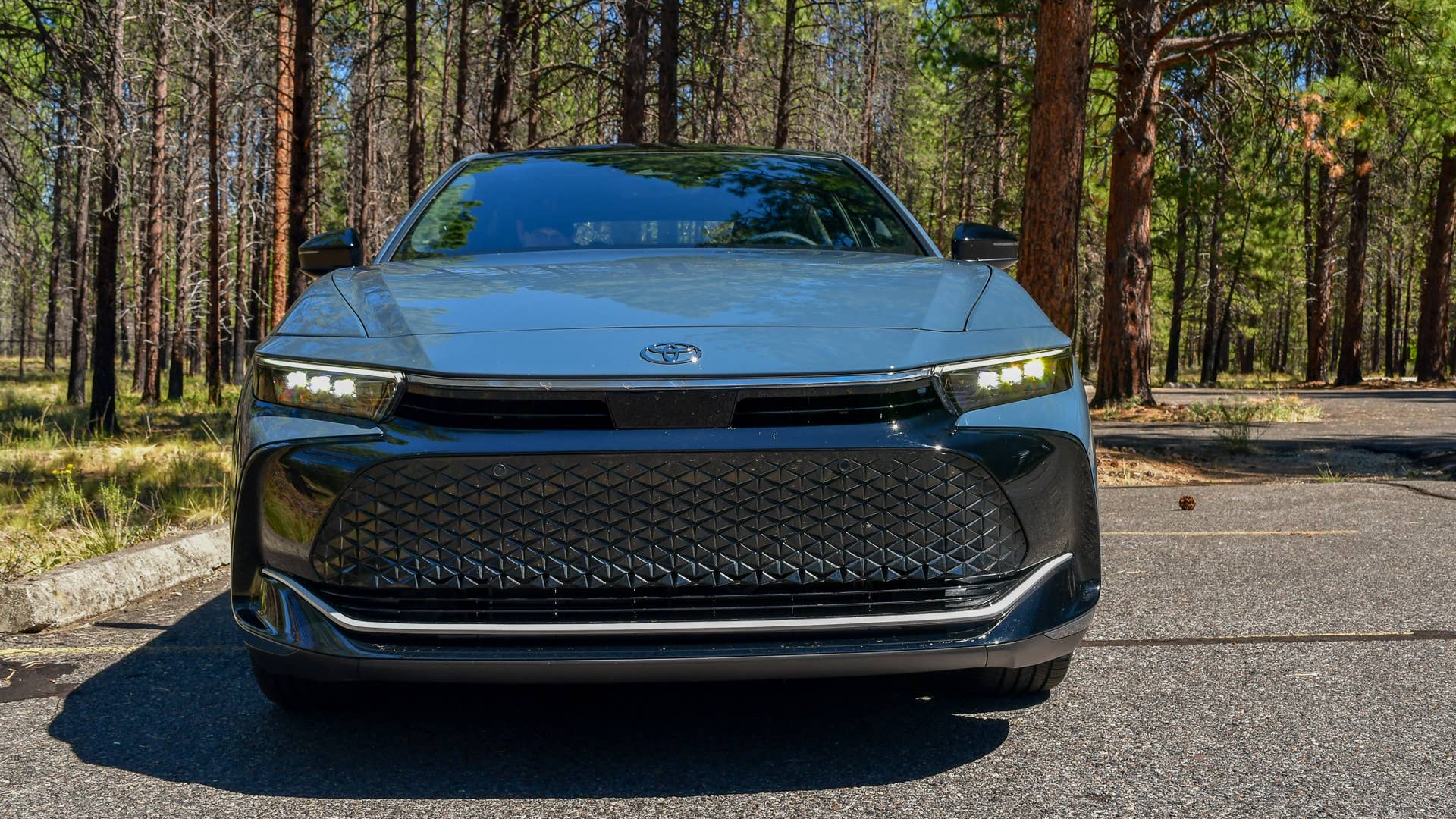
After driving the Crown, I don’t think the Camry has much to worry about. The Camry is a much more affordable option to the Crown, with all the space and amenities for families or business professionals who commute to work, but want something with a touch of poshness without breaking the bank. The Crown, however, poses a greater threat to the upcoming 2026 Lexus ES. Being similar in size, power, hybridization, exterior styling, and sharing an ideal buyer profile, I believe those curious about the Lexus ES will be drawn to the similarities in luxuriousness and features at a more affordable price. The main difference is the updated interior in the Lexus, which is much more tech-forward and futuristic, thanks to Lexus’s new design language.
Kristen Brown
More than anything, I feel like the Crown may meet the same fate it did when it was first introduced in the States. Compared to its competition, it’s pretty expensive for what it is, especially since sedans are becoming less and less appealing to the majority of Americans.
About the author

Kristen Brown
Contributing Writer, Autoblog