
MSRP: From $61,250
Use the table of contents to jump to a section
Overview
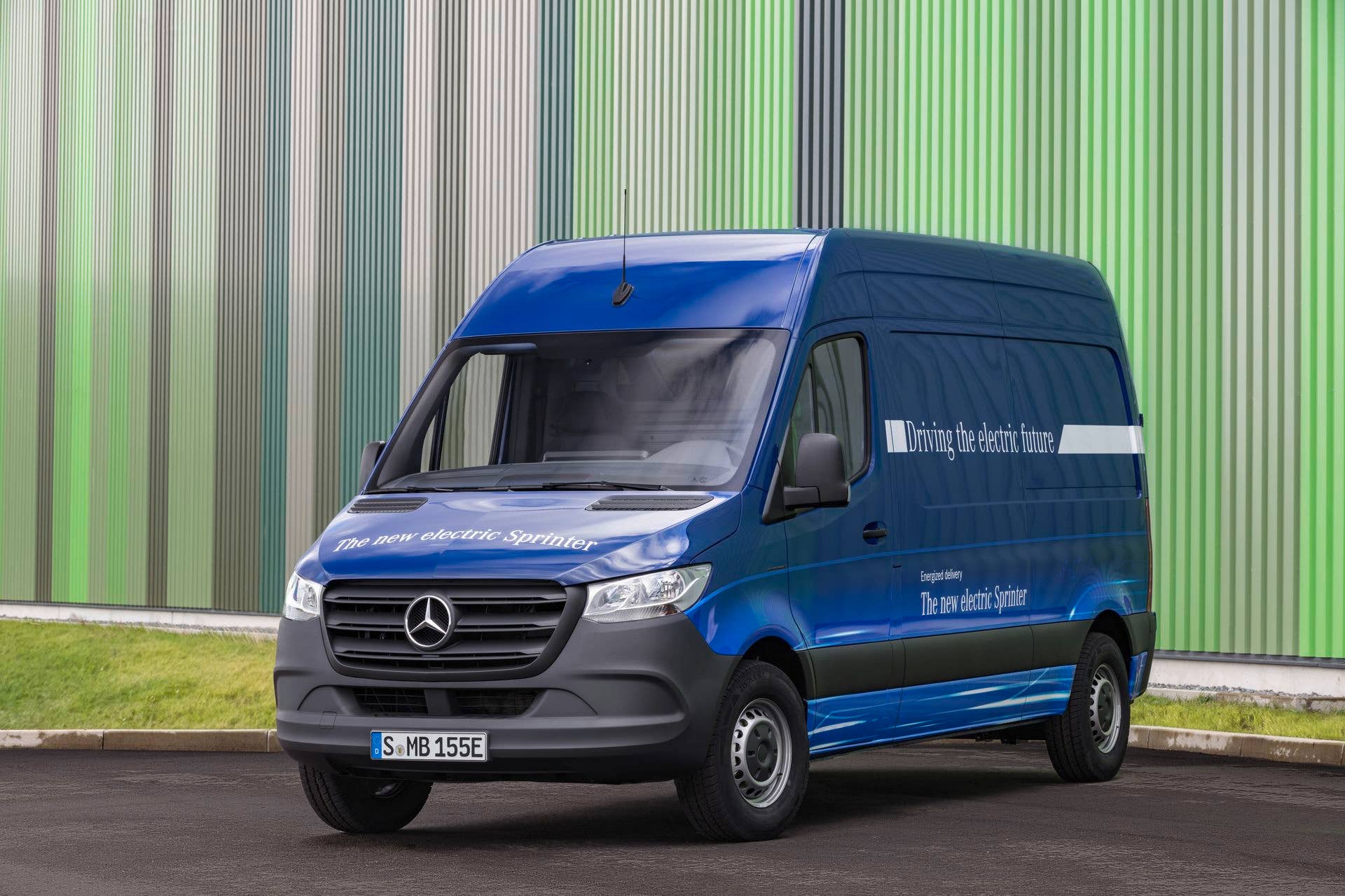
Urban delivery fleets and local tradespeople are the core target audience for the 2025 Mercedes-Benz eSprinter full-size electric cargo van, built on the same platform as the diesel Sprinter. Two body configurations and two battery options are offered in the lineup, giving operators a choice between a compact short-wheelbase van and the original high-roof, full-size variant. The eSprinter concedes some cargo volume and payload to its diesel sibling, but compensates for those whose daily routes stay within a predictable range on fixed urban or suburban circuits.
Mercedes
What’s New for 2025
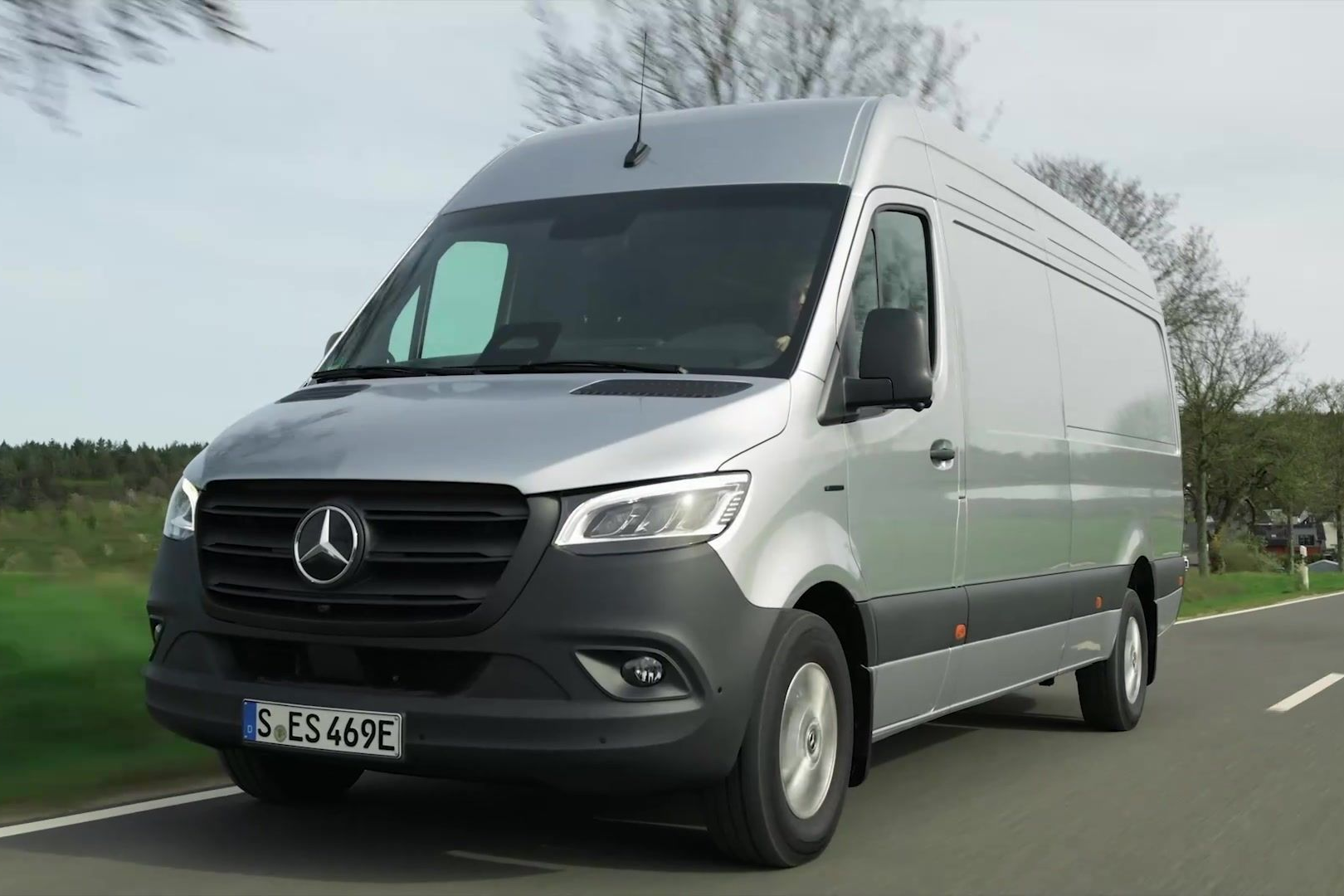
A new 81-kWh battery option joins the original 113-kWh pack for the 2025 eSprinter, and it comes with a new 144-inch-wheelbase, standard-roof body that sits 11.4 inches lower and roughly 40 inches shorter than the long-wheelbase high-roof variant. Active safety technology expands with Active Distance Assist Distronic (adaptive cruise control), traffic-sign assist, and active lane-keeping assist that are now optional through a new Drive Assist package, while active brake assist adds an intersection function as standard.
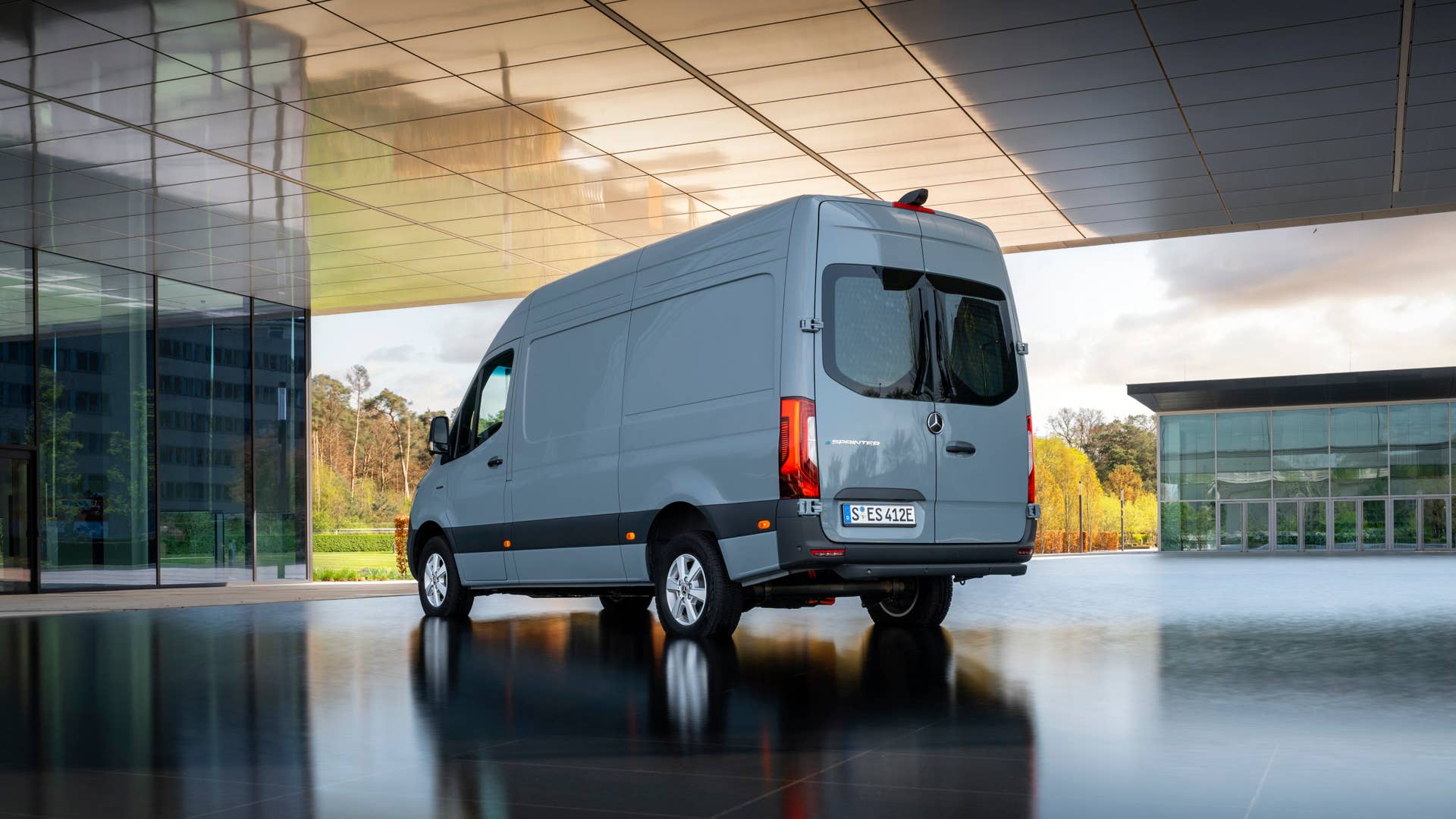
The standard multifunction steering wheel gains capacitive sensors, rain-sensing wipers and tire pressure monitoring on dual-rear-wheel models are newly added as standard. HighTech Silver (below) joins the exterior color palette.
Exterior
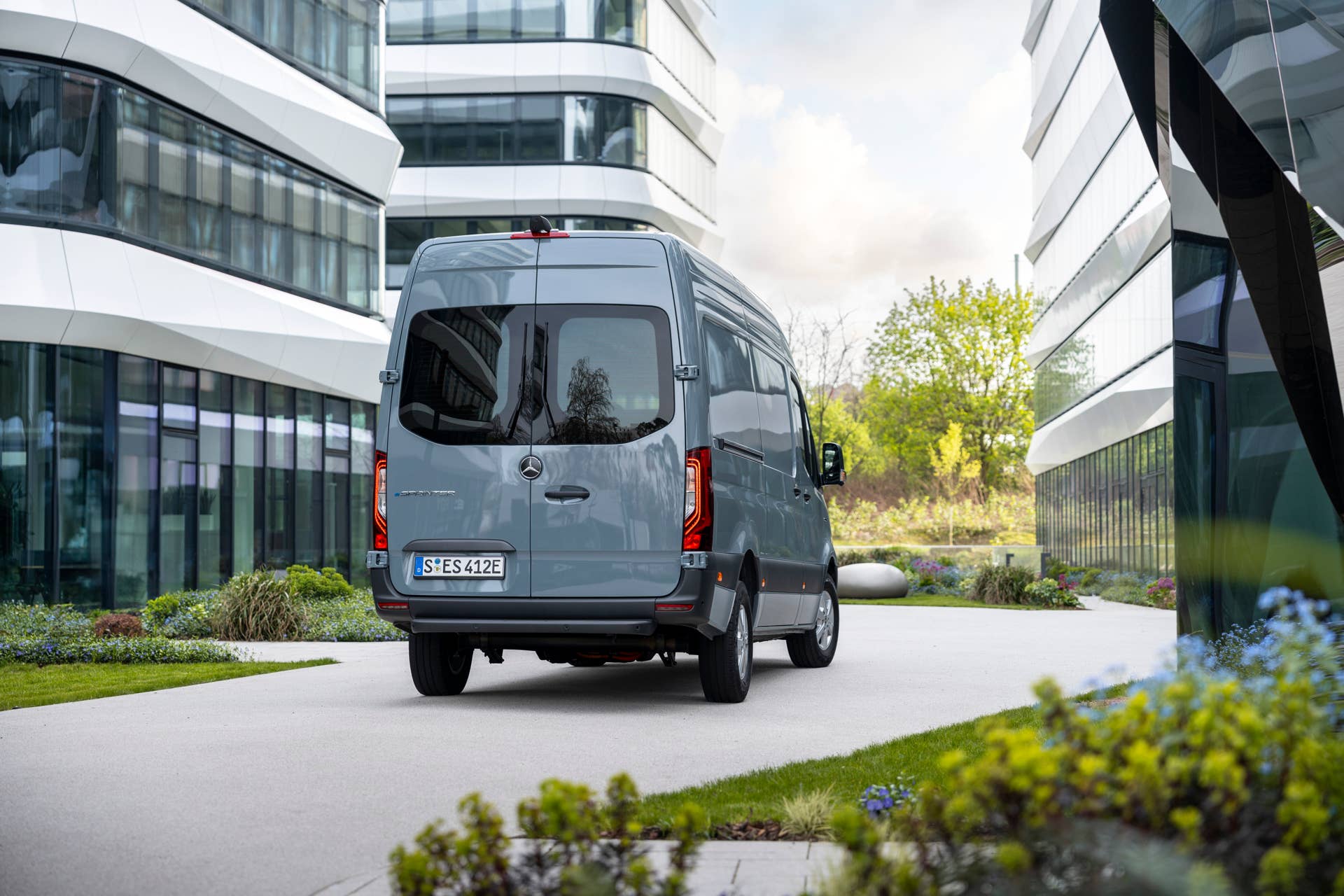
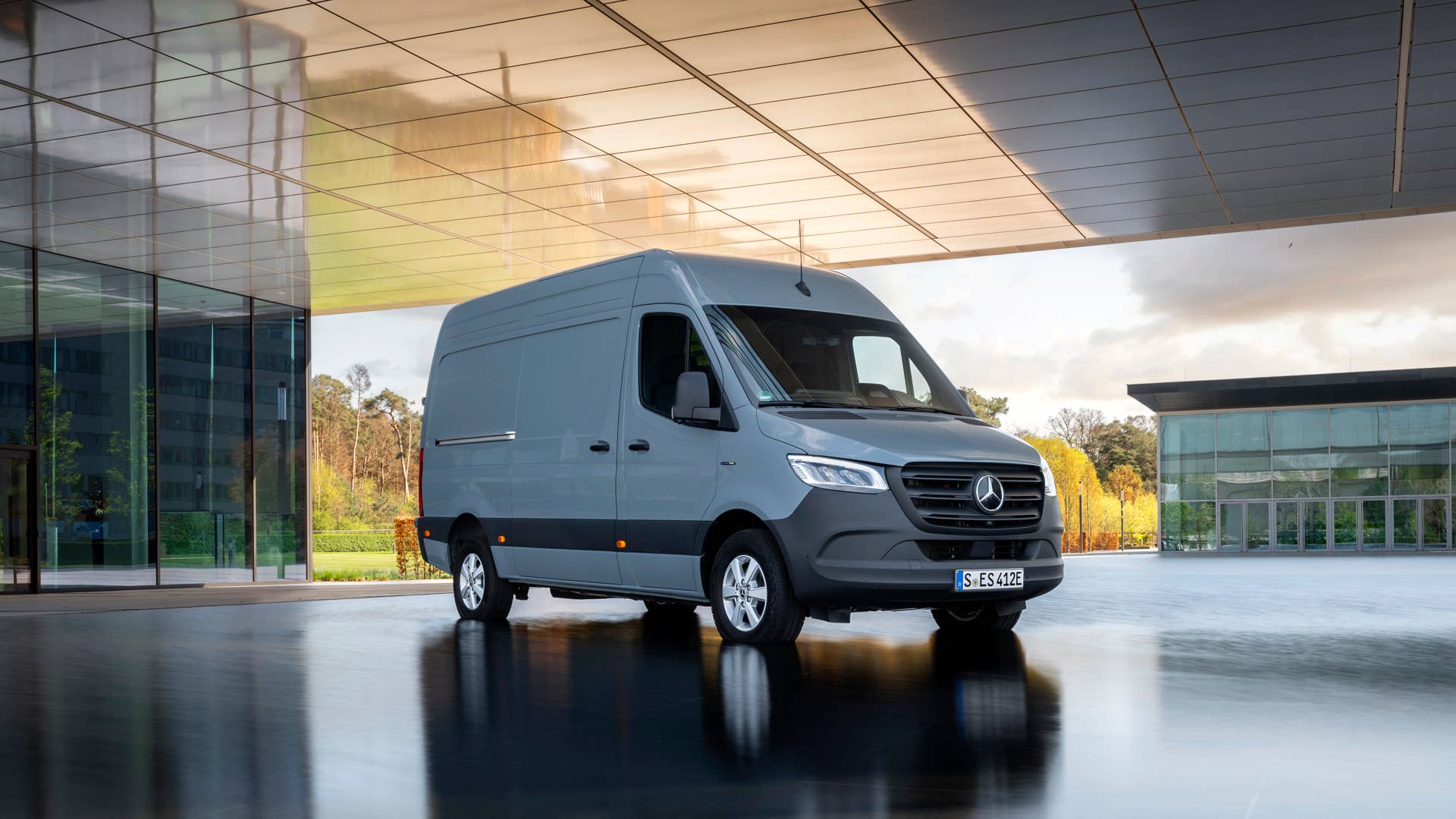
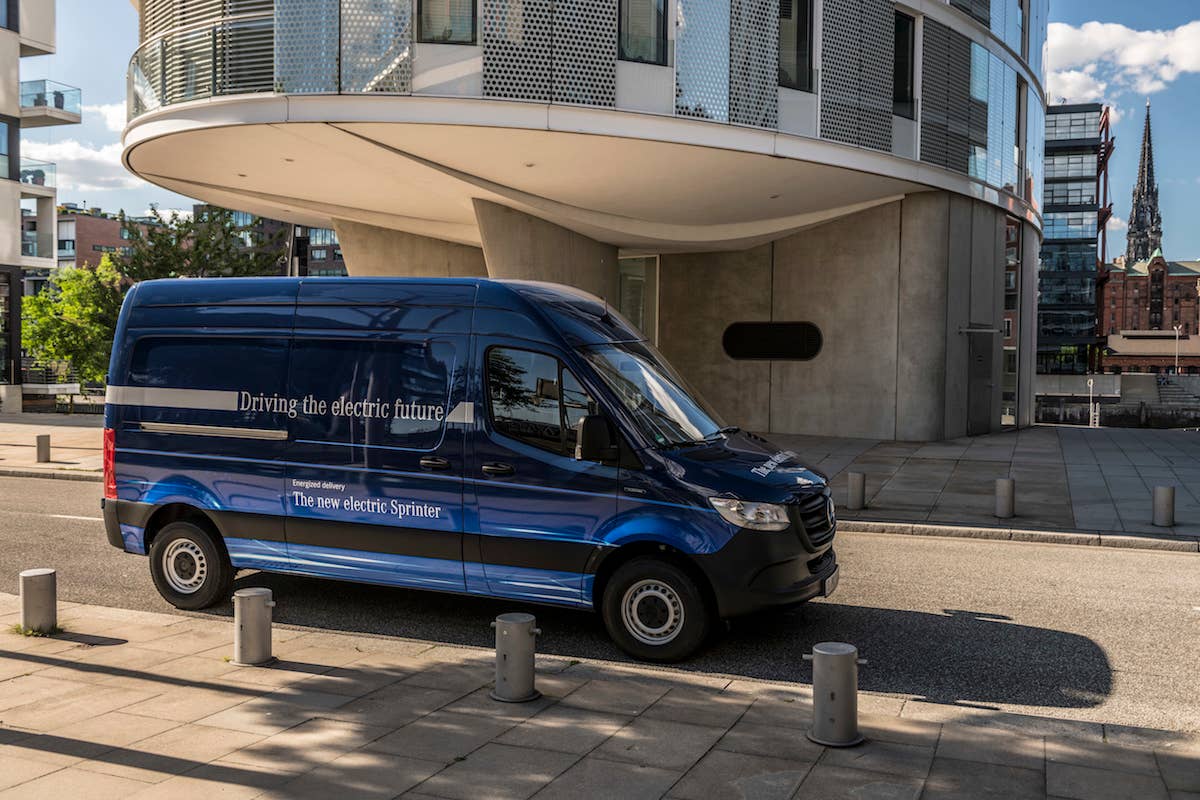
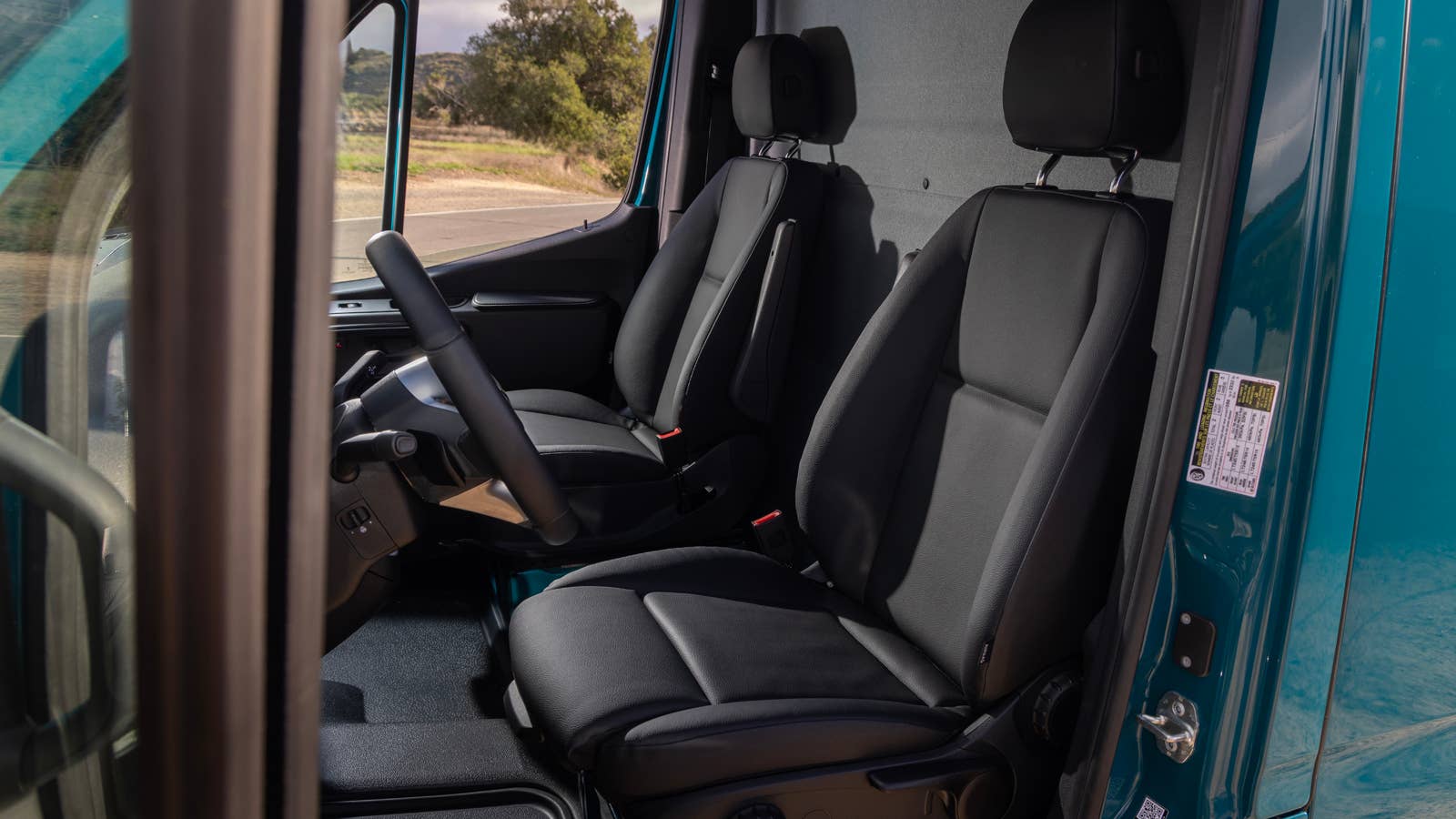
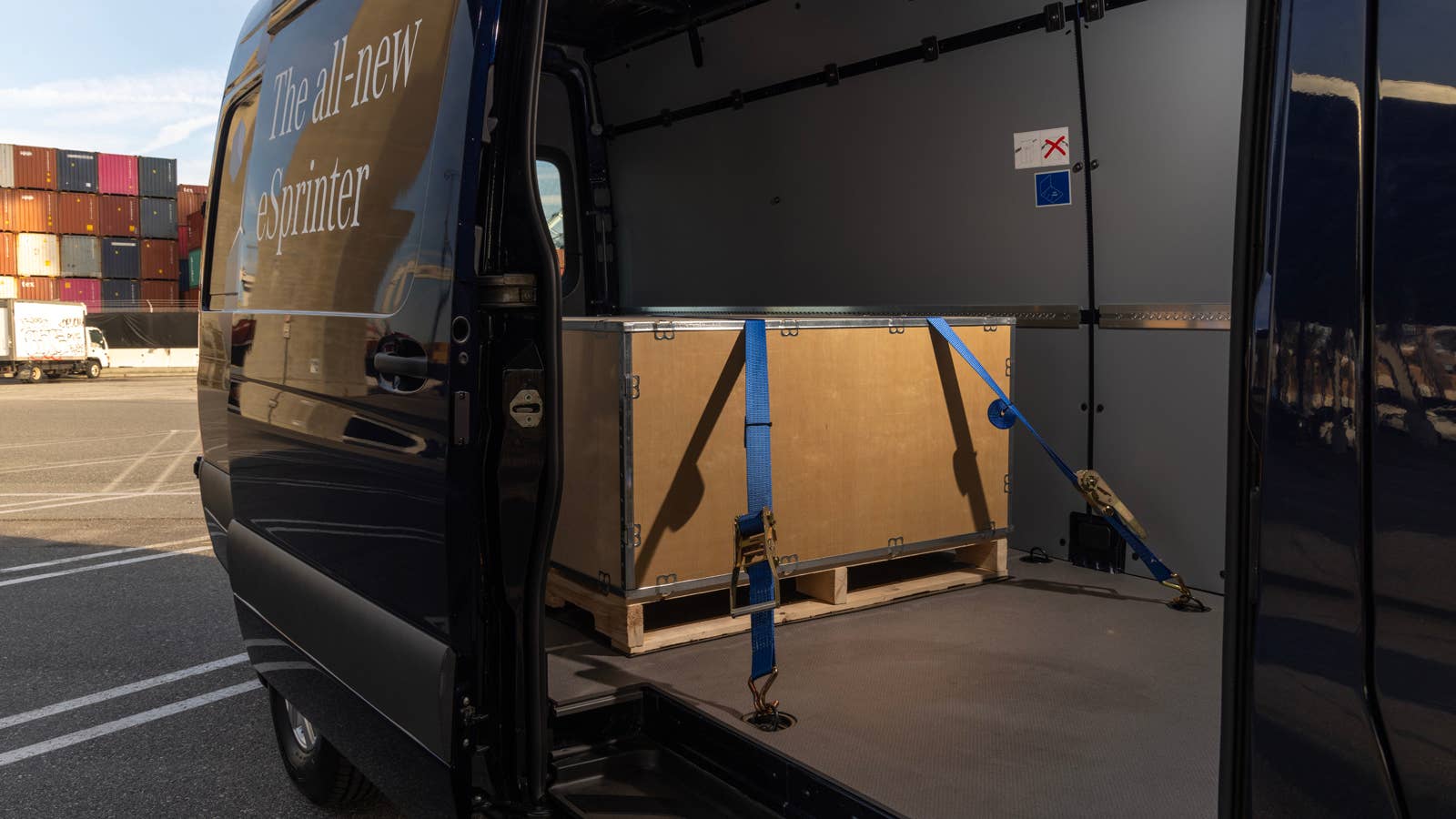
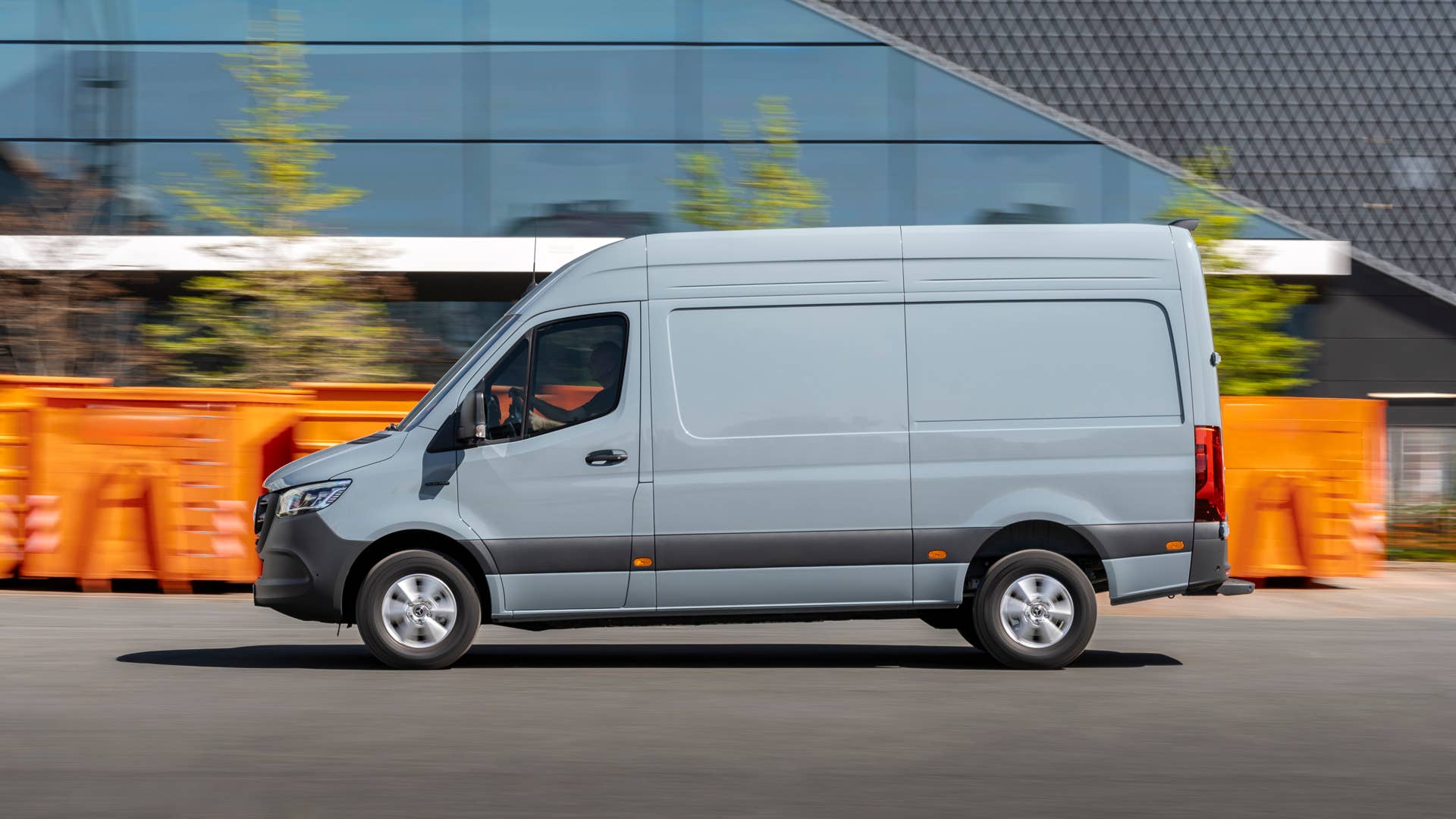
Two bodies are now available for the eSprinter. The 144-inch-wheelbase variant with a standard roof makes it notably easier to maneuver in tight urban environments than the longer, high-roof 170-inch-wheelbase version. Both share the same snub-nosed, slab-sided commercial profile with no styling differentiation between battery or motor grades. The eSprinter is offered exclusively as a two-seat cargo van, and no crew van, passenger van, or cab chassis body style is offered.
Mercedes
Mercedes
Interior
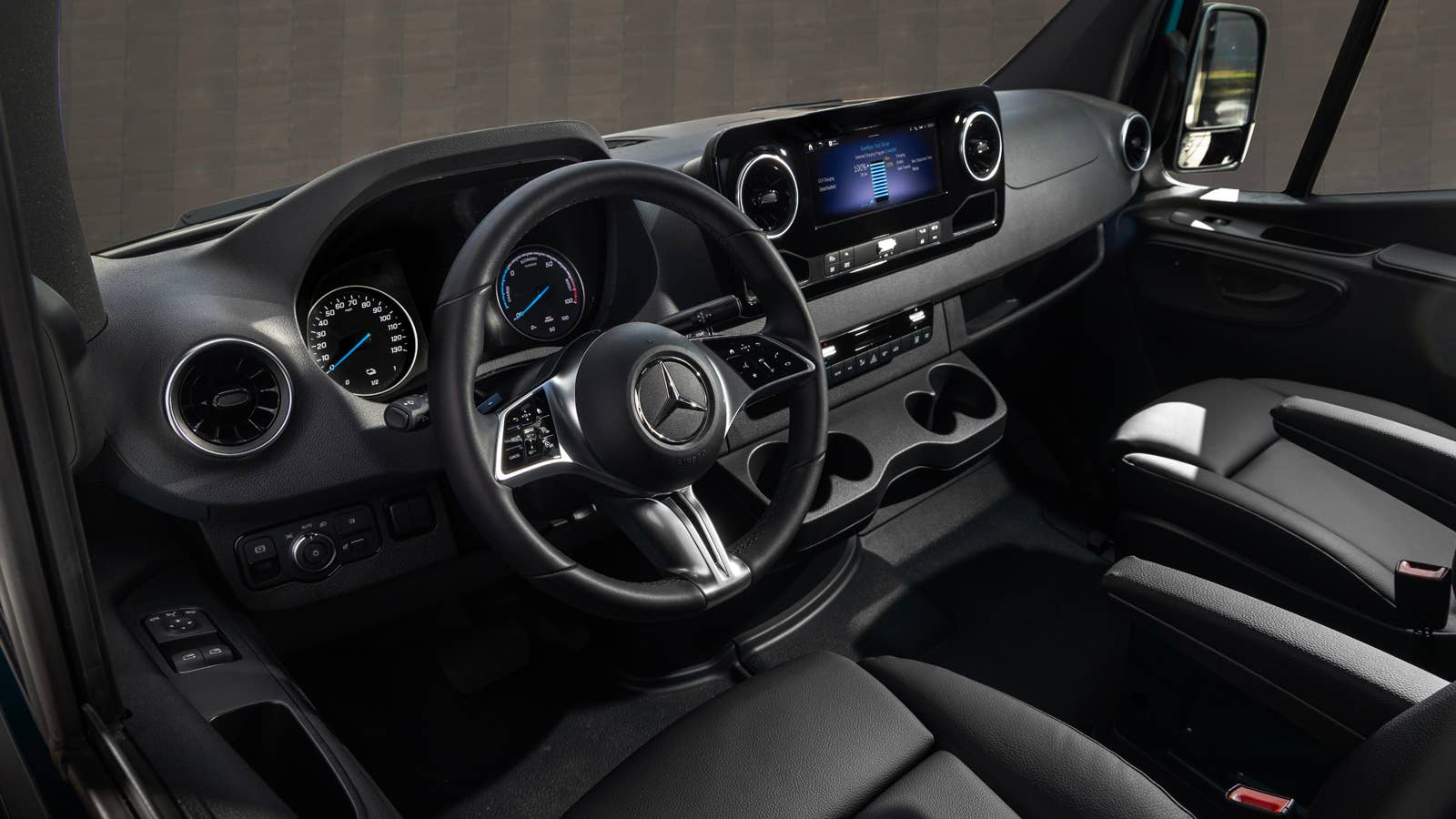
Standard equipment on every eSprinter includes the MBUX multimedia system with a 10.25-inch touchscreen, instrument cluster with color display, heated driver’s seat, multifunction steering wheel with capacitive sensors, electronic parking brake, auto brake hold, and push-button start. The system supports wireless Apple CarPlay and Android Auto.
Navigation with Live Traffic capability is standard too. Optional comfort additions include a heated steering wheel via the Comfort Plus package, automatic climate control, a digital rearview mirror, power-folding exterior mirrors, a power sliding side door with step, and a smartphone tray with wireless charging. Fleet operators can even add a telematics suite for remote access, vehicle monitoring, and charging management through the Mercedes MeConnect app.
Price Range and Best Value Trim
eSprinter’s price range spans four configurations.
| Trim Level | Configuration | MSRP |
| Base | 2500 144″ WB Cargo | $61,250 |
| Best Value | 2500 170″ WB Cargo High Roof | $67,690 |
| Top | 2500 170″ WB Cargo High Roof High Output | $71,460 |
The 170-inch-wheelbase Standard Output offers a better balance of range and cargo volume.
2025 Mercedes-Benz eSprinter Key Specs
Powertrain Options
| Motor | HP | Torque | Drivetrain |
| Electric (Standard Output) | 134 hp (100 kW) | 295 lb-ft | RWD |
| Electric (High Output) | 201 hp (150 kW) | 295 lb-ft | RWD |
Efficiency and Range (MPGe)
The eSprinter is a heavy commercial vehicle and falls outside EPA rating requirements. EPA MPGe figures are not available; however, Mercedes-Benz estimates approximately 150 miles of range for the 81-kWh battery and approximately 206 miles for the 113-kWh battery under U.S. operating conditions.
Dimensions and Capacity
| Specification | Measurement |
| Length | 239.7 – 280.0 in |
| Wheelbase | 144.0 – 170.0 in |
| Cargo Volume | 319.0 – 488.1 cu ft |
| Max Payload | Up to 3,516 lb |
| GVWR | 9,370 lb |
| GCWR | 11,023 lb |
| Battery Capacity | 81.0 kWh / 113.0 kWh |
| AC Charging | 9.6 kW / 0 – 100% in 12 – 13 hrs |
| DC Fast Charging (10 – 80%) | 32 min (110 kW, 81-kWh) / 42 min (110 kW, 113-kWh) |
| Max Towing | 4,277 lb |
Warranty
| Coverage | Duration |
| Basic Warranty | 3 years / 36,000 miles |
| EV Battery / Electrical Components | 8 years / 100,000 miles |
| Complimentary Maintenance | 4 years / 100,000 miles (first four services) |
Pros and Cons
Pros:
- New 144-inch-wheelbase body lowers entry price
- 113-kWh battery offers an estimated 206 miles of U.S.-spec range
- Standard MBUX 10.25-inch touchscreen with wireless CarPlay and Android Auto
Cons:
- Top speed is limited to 75 mph regardless of motor
- No all-wheel drive offered in any configuration
- 110-kW charging speed requires an upgrade
Verdict
The 170-inch-wheelbase eSprinter’s payload drops to 2,624 pounds with the 113-kWh battery, less than half of what the diesel Sprinter can carry, which limits the electric van’s case for some operators, but makes it ideal for transporters of less dense boxed goods that weigh less but take up more space. The new 144-inch-wheelbase configuration directly addresses the prior lineup’s missing lower base price, a higher 3,516-pound payload ceiling, and a shorter footprint that suits tighter urban environments. Against the Ford E-Transit’s 159-mile range estimate and the Ram ProMaster EV’s 174-mile figure, the 113-kWh eSprinter holds a range advantage at 206 miles, though both rivals undercut it substantially on price.
Mercedes
Competitors
- Ford E-Transit
- Ram ProMaster EV
- Rivian EDV
- Rivian Commercial Van
About the author

Cobus F. Potgieter
Reviews and Features Editor