
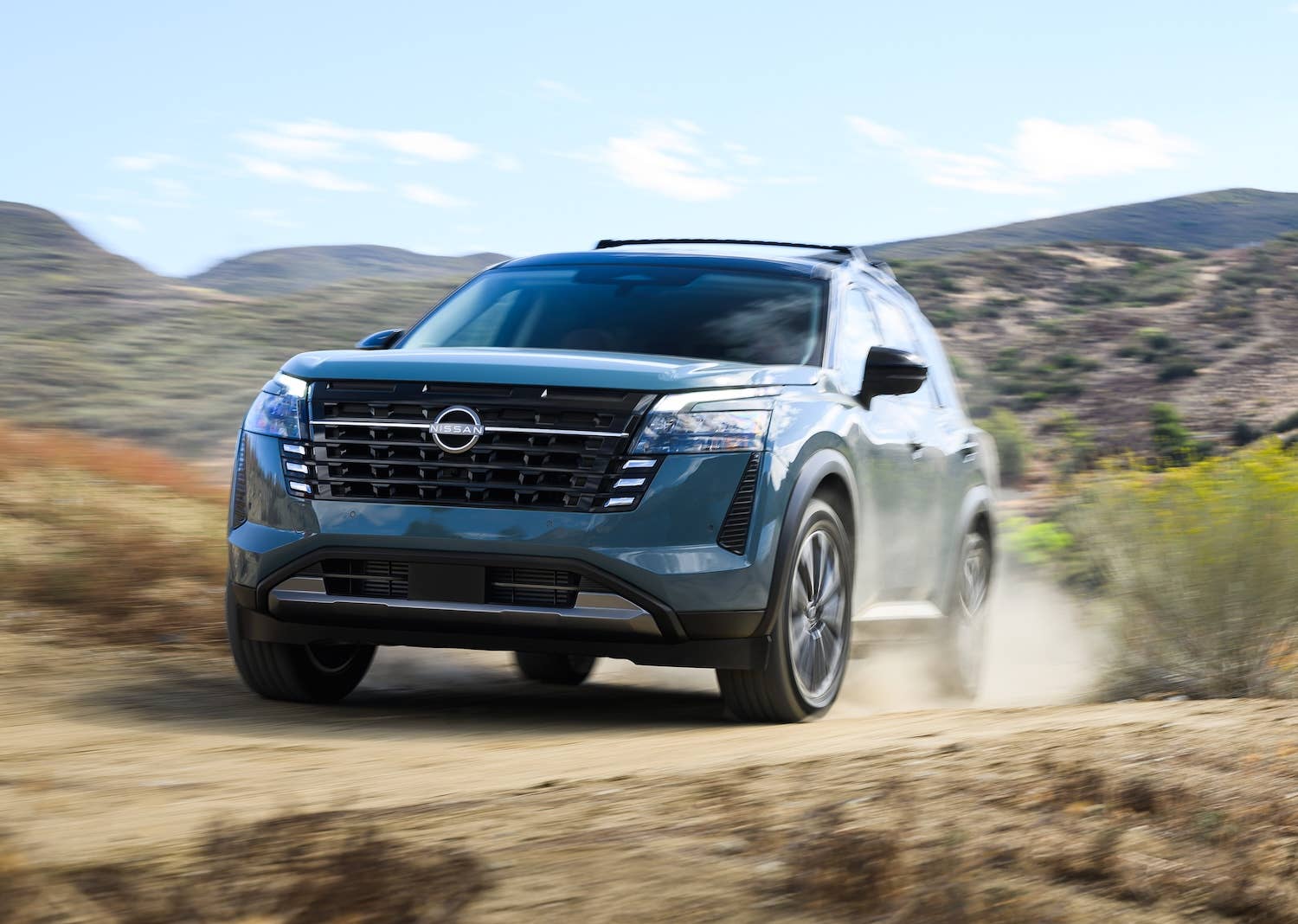
Where each dollar actually goes for two of the market’s leading mid-size SUVs
You may be among the many drivers eyeing a Nissan Pathfinder or Hyundai Santa Fe as your next mid-size, three-row SUV. While these vehicles hold similar price points, they embody different personalities. On the surface, the Pathfinder presents itself as blending ruggedness and refinement, while its Hyundai counterpart leans more fully into modernity with its boxy exterior. However, understanding which model is the better buy requires examining space, comfort, tech, capability, and more. Below you’ll find a comparison of the 2026 Nissan Pathfinder and the 2026 Hyundai Santa Fe, prioritizing features and in-cabin amenities, to help inform your buying decision.
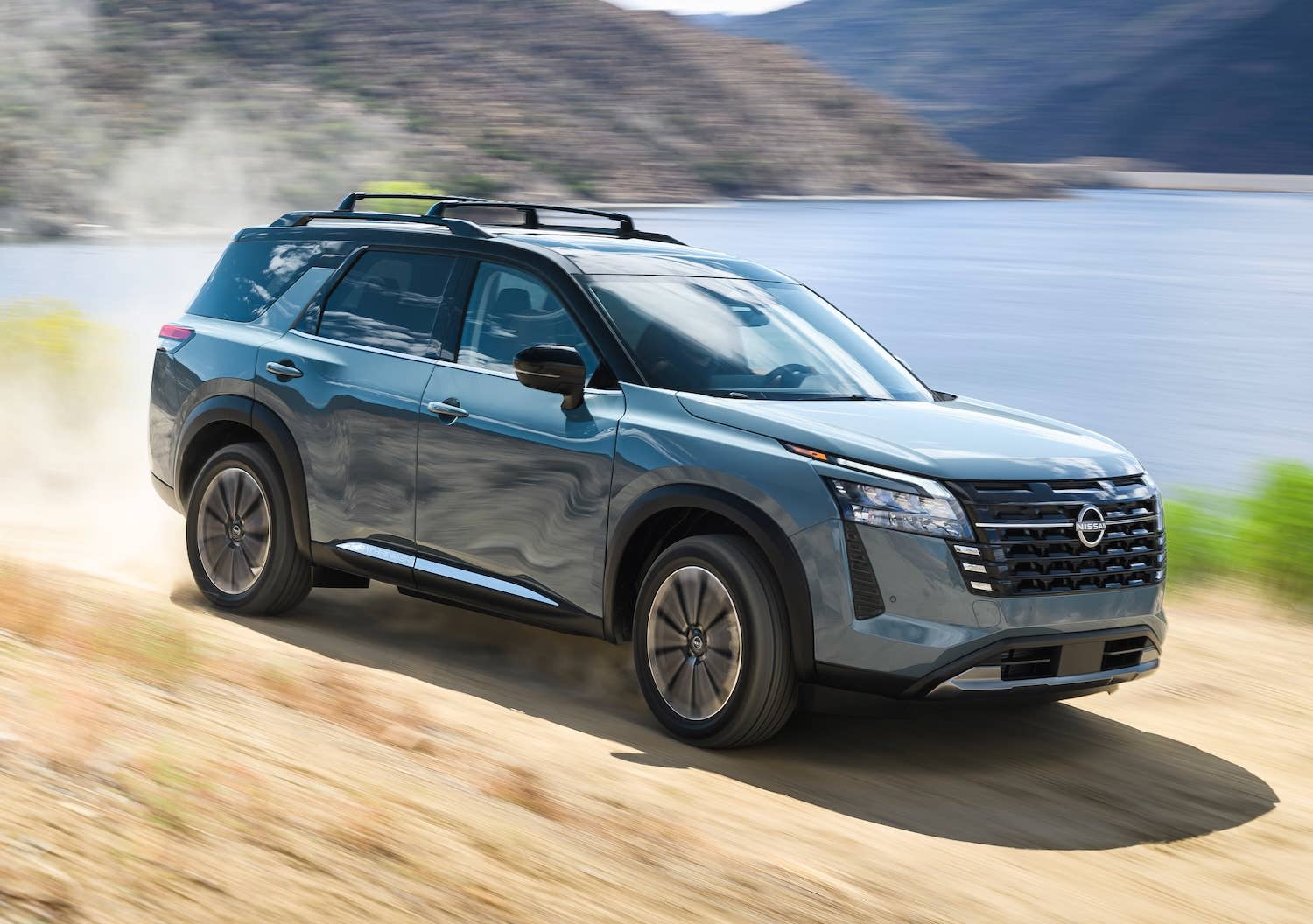
Nissan
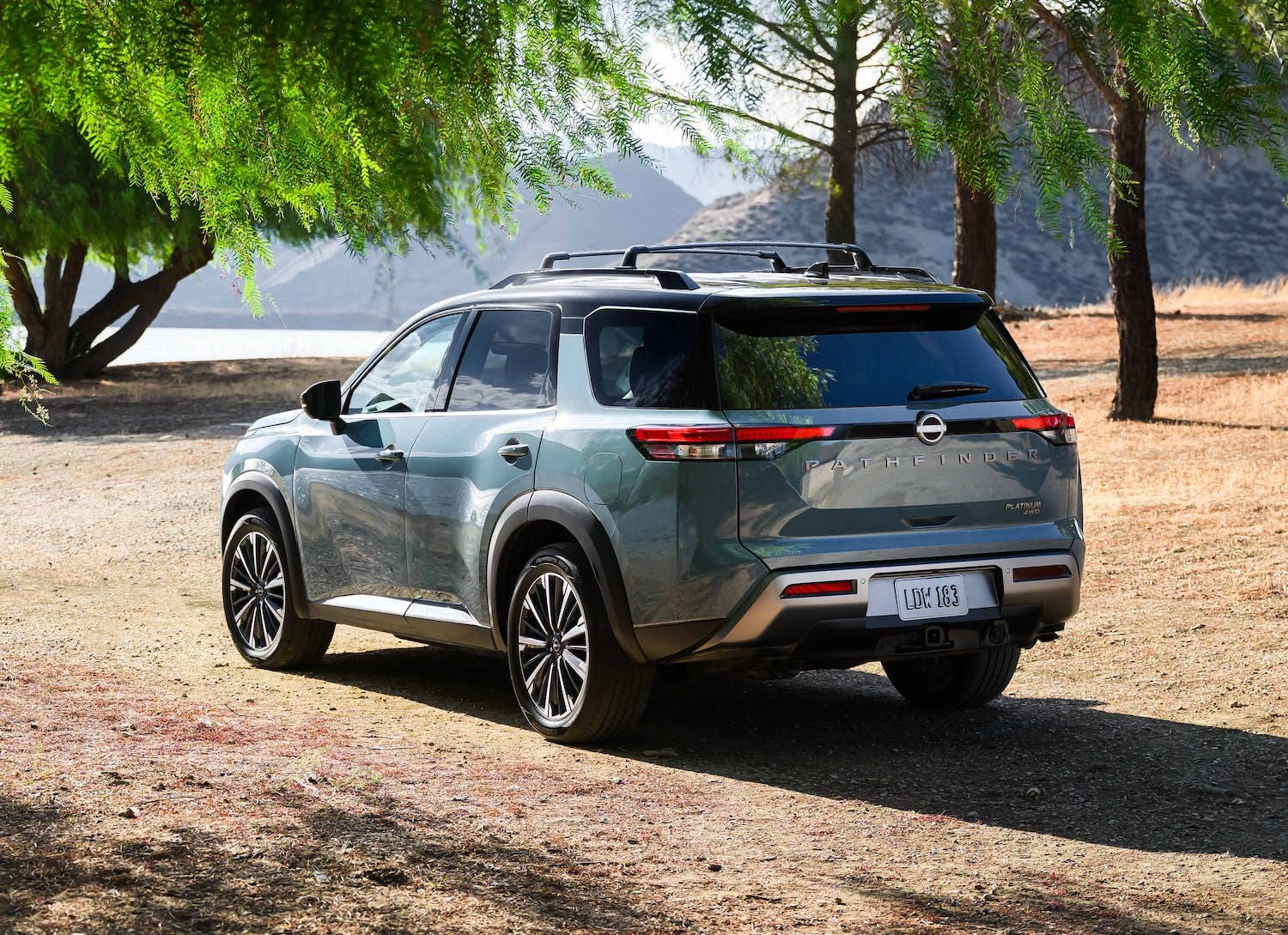
Families shouldn’t overlook the Pathfinder’s LATCH edge
One of the Pathfinder’s most significant strengths, the EZ Flex Seating System with LATCH and Glide, is easy to overlook despite streamlining third-row access for families. This feature allows Pathfinder owners to tilt and slide forward the second-row seats with a single button press, even with an unoccupied child seat installed. The 2026 Hyundai Santa Fe also has power-folding third-row access, but Hyundai doesn’t have LATCH seat compatibility with the feature.
Powertrain, performance, and towing spotlight
For performance, we’ll focus on the Santa Fe’s pure-gas lineup, since the 2026 Pathfinder doesn’t offer a hybrid variant. However, those seeking greater efficiency may still want to consider the Santa Fe Hybrid. All pure gas 2026 Santa Fe trims produce 277 horsepower and 311 lb-ft of torque via a 2.5L turbocharged 4-cylinder engine. In comparison, each Pathfinder trim except the Rock Creek (which offers 295 horsepower and 270 lb-ft of torque) delivers 284 horsepower and 259 lb-ft of torque with a 3.5-liter V6.
Drivers prioritizing towing should consider the Pathfinder over the Santa Fe, as this Nissan’s 6,000-lb maximum capacity significantly exceeds its Hyundai counterpart’s 4,500-lb maximum towing. In contrast, where the Santa Fe lacks grunt, it makes up for it with smooth city driving and slightly more efficiency. The Santa Fe’s combined mileage ranges from 21-24 mpg, while the Pathfinder’s is 21-23 mpg. Both models offer front-wheel drive (FWD) and available all-wheel drive (AWD), with the Pathfinder’s being a 4×4 system.
Space, comfort, and kid-hauling duty
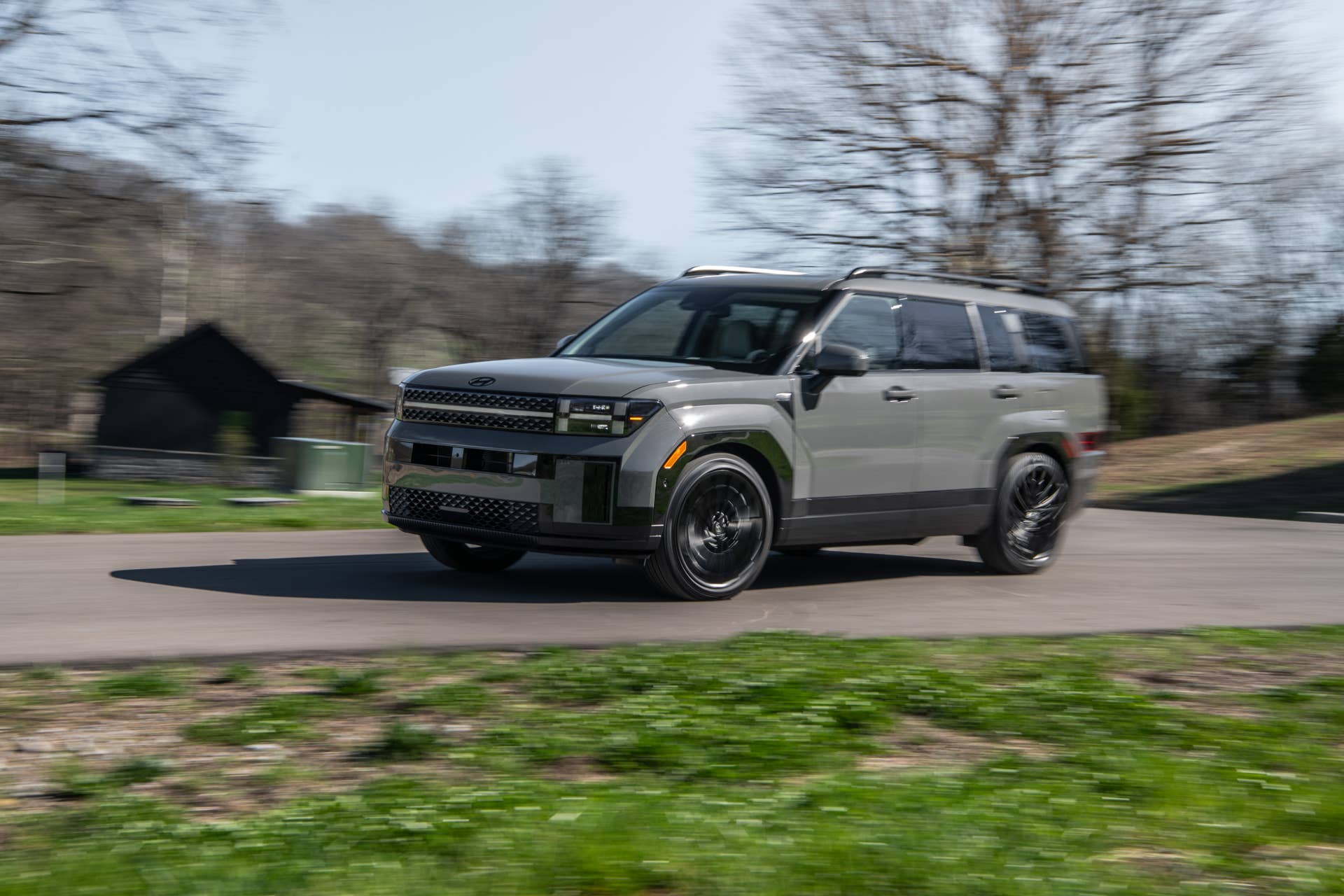
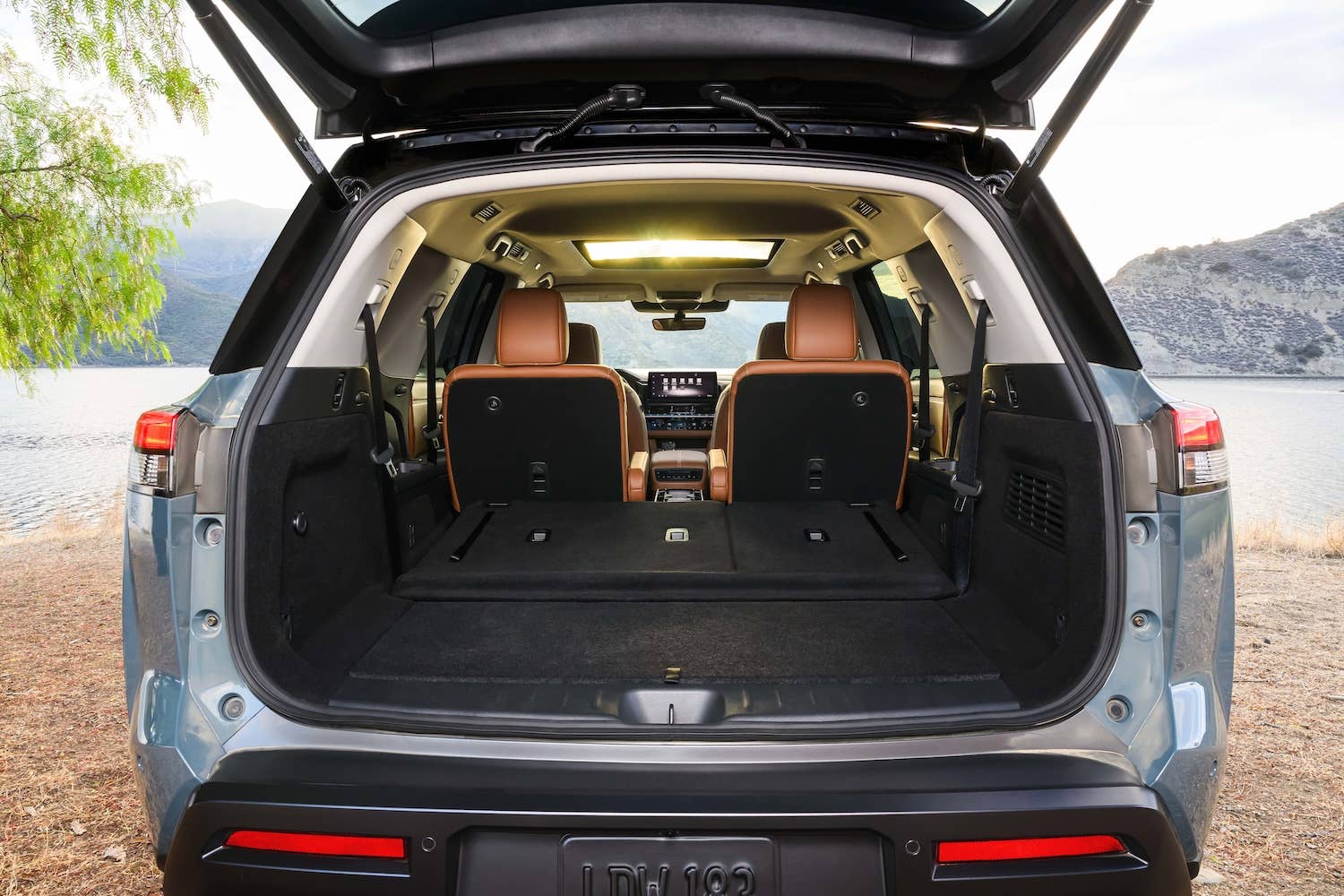
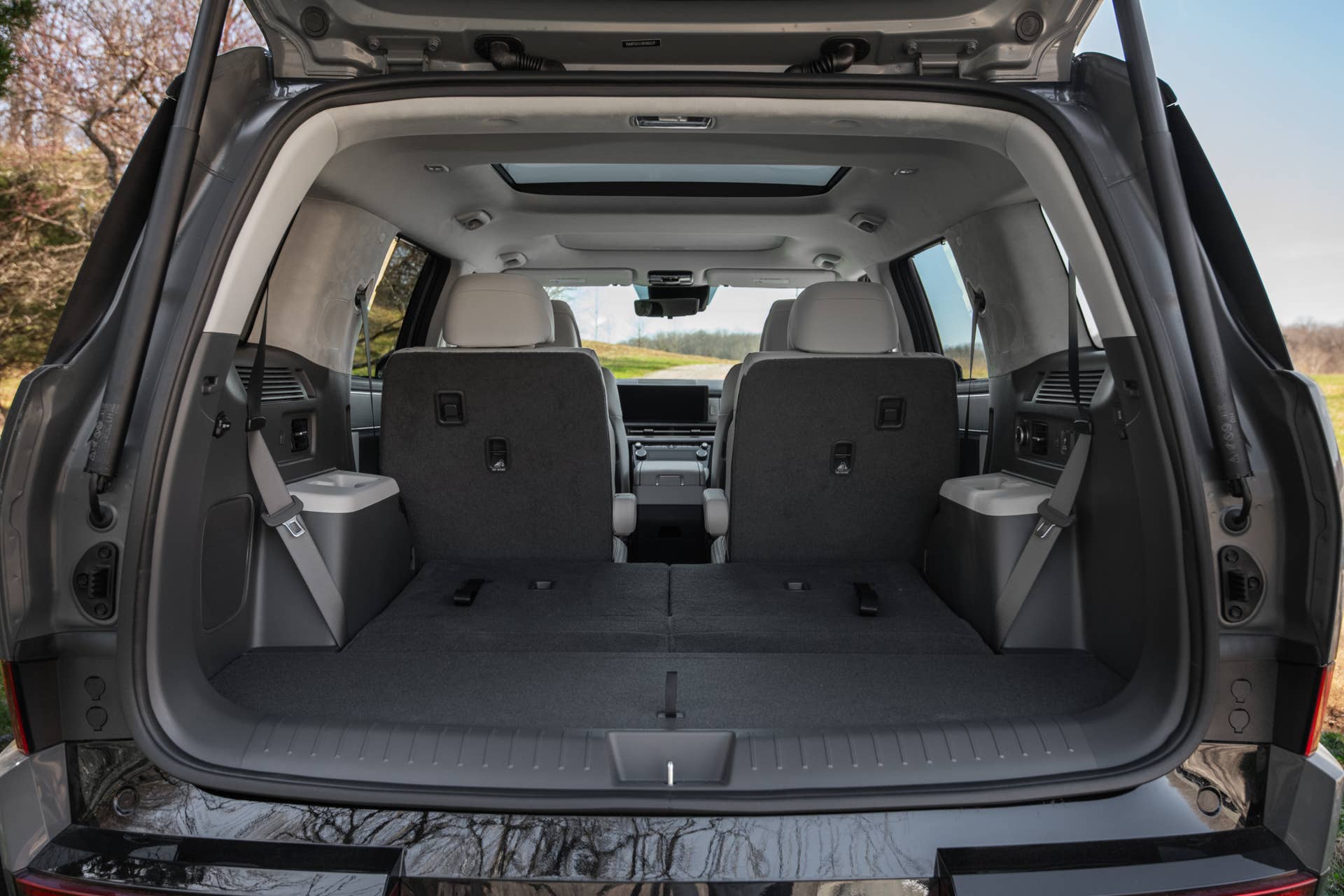
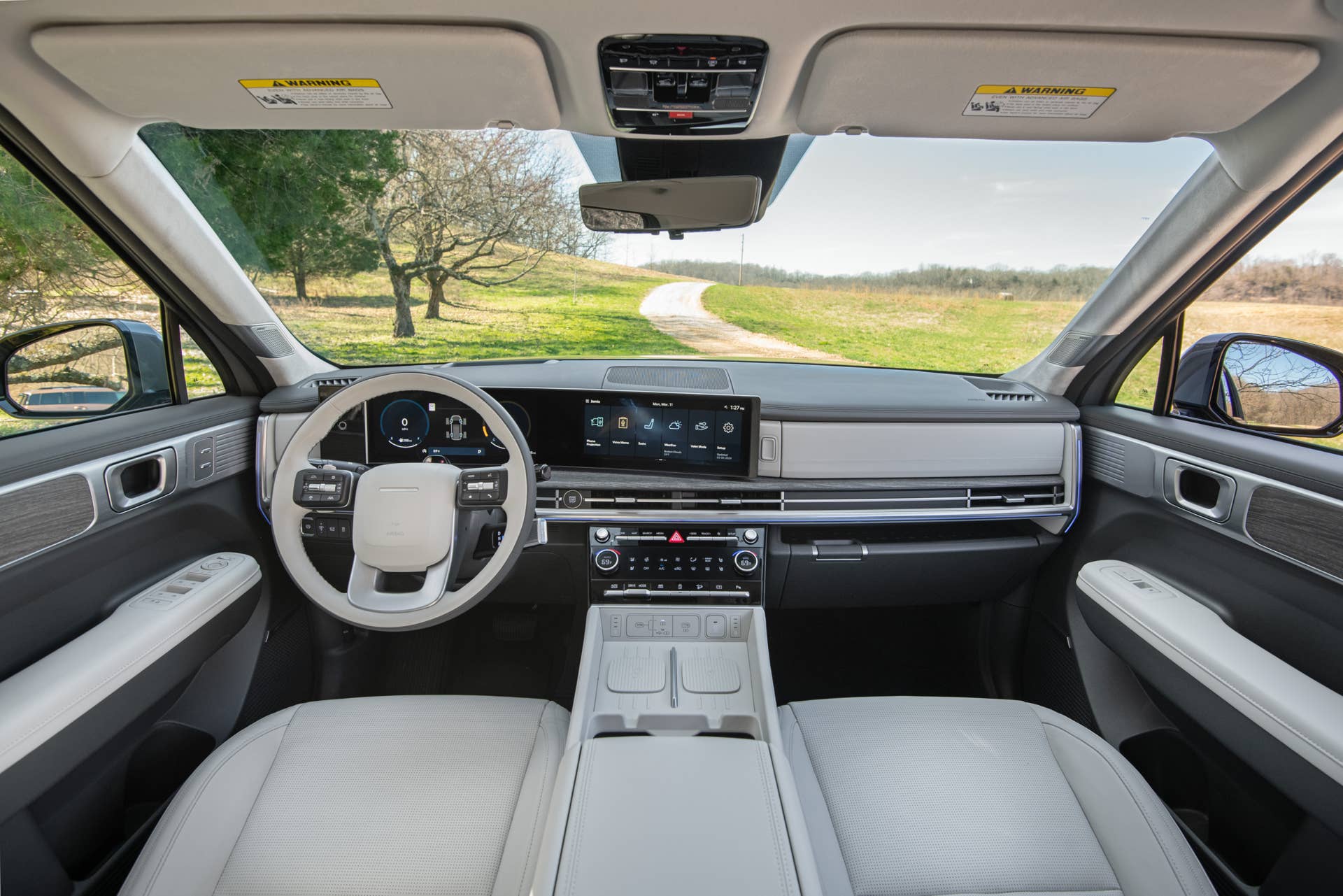
The Hyundai Santa Fe has solidified its reputation for a spacious interior thanks to its redesign’s boxier dimensions, but how does it compare to the Pathfinder? Front-row legroom is neck-and-neck, with the Santa Fe at 44.4 inches and the Pathfinder at 44.3 inches. The second and third rows are where things swing more significantly in favor of the Santa Fe, especially the second row.
Legroom in the second and third rows of the Santa Fe measures 42.3 inches and 30 inches, respectively, whereas the Pathfinder’s measures 35.5 inches and 28 inches. While the Pathfinder has the LATCH edge mentioned above, its greater second-row space can ease child seat installation and improve passenger comfort. Still, some might be willing to sacrifice the Santa Fe’s additional second-row legroom for more storage in the Pathfinder. The Nissan Pathfinder’s cargo volume behind the second and third rows measures 45 cu ft and 16.6 cu ft, respectively, while its competitor lags behind slightly at 40.5 cu ft and 14.6 cu ft.
Nissan
Hyundai
Defining the Pathfinder’s off-road edge past the Rock Creek trim
Competing SUVs at similar price points, such as the Pathfinder and Santa Fe, can often mirror each other’s tech, safety, and driver-assist features, making value judgments more difficult. Situations like these are where knowing each vehicle’s strengths comes in handy. The Nissan Pathfinder’s ruggedness doesn’t just mean higher towing capacity. When selecting a Pathfinder with 4×4, you’ll receive more specialized terrain modes, such as Auto, Eco, Tow, Sport, Sand, Mud, and Rut. The Santa Fe has similar modes, like Normal, Sport, My Mode, Snow, Mud, Sand, and Rock, but how you select them is less seamless.
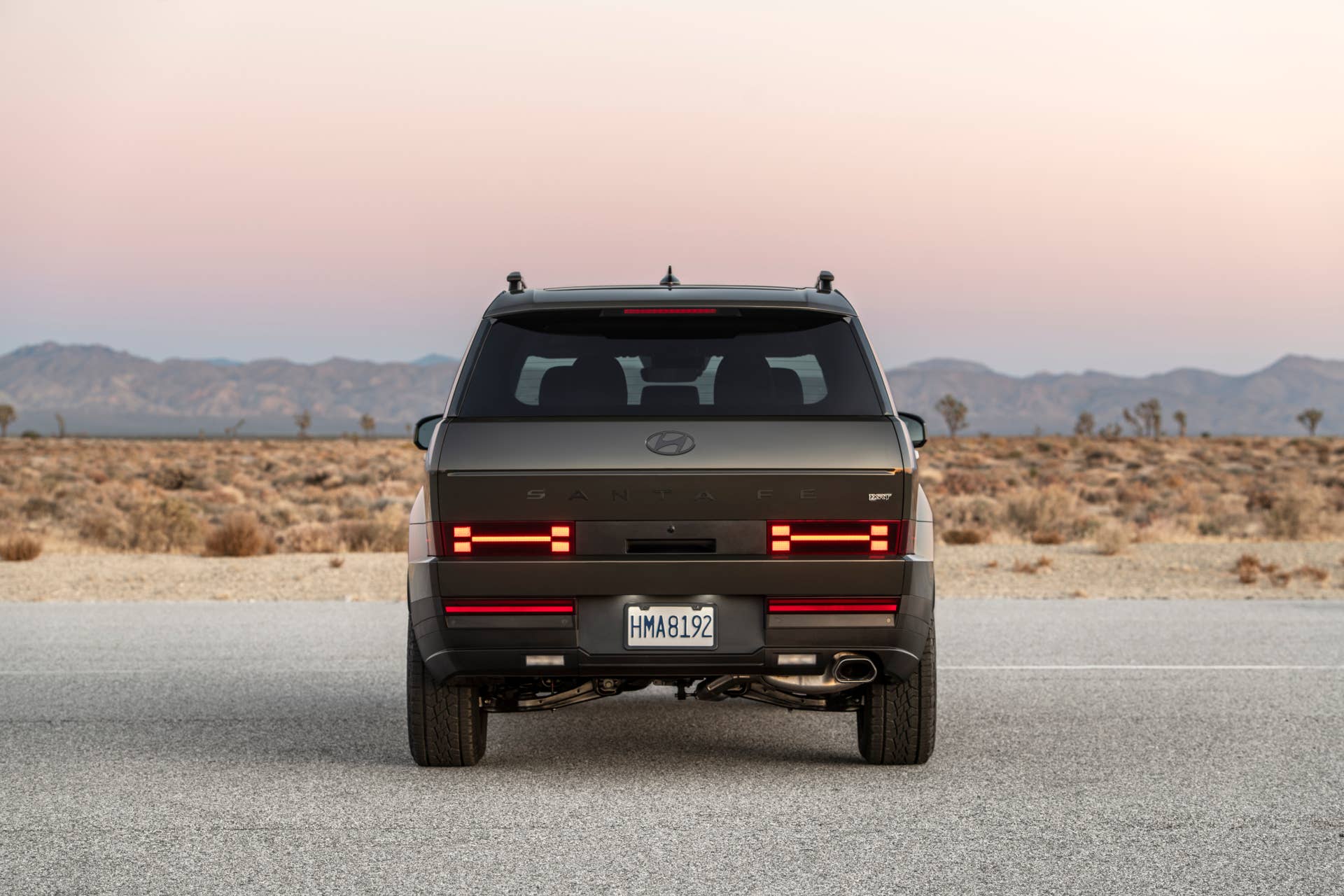
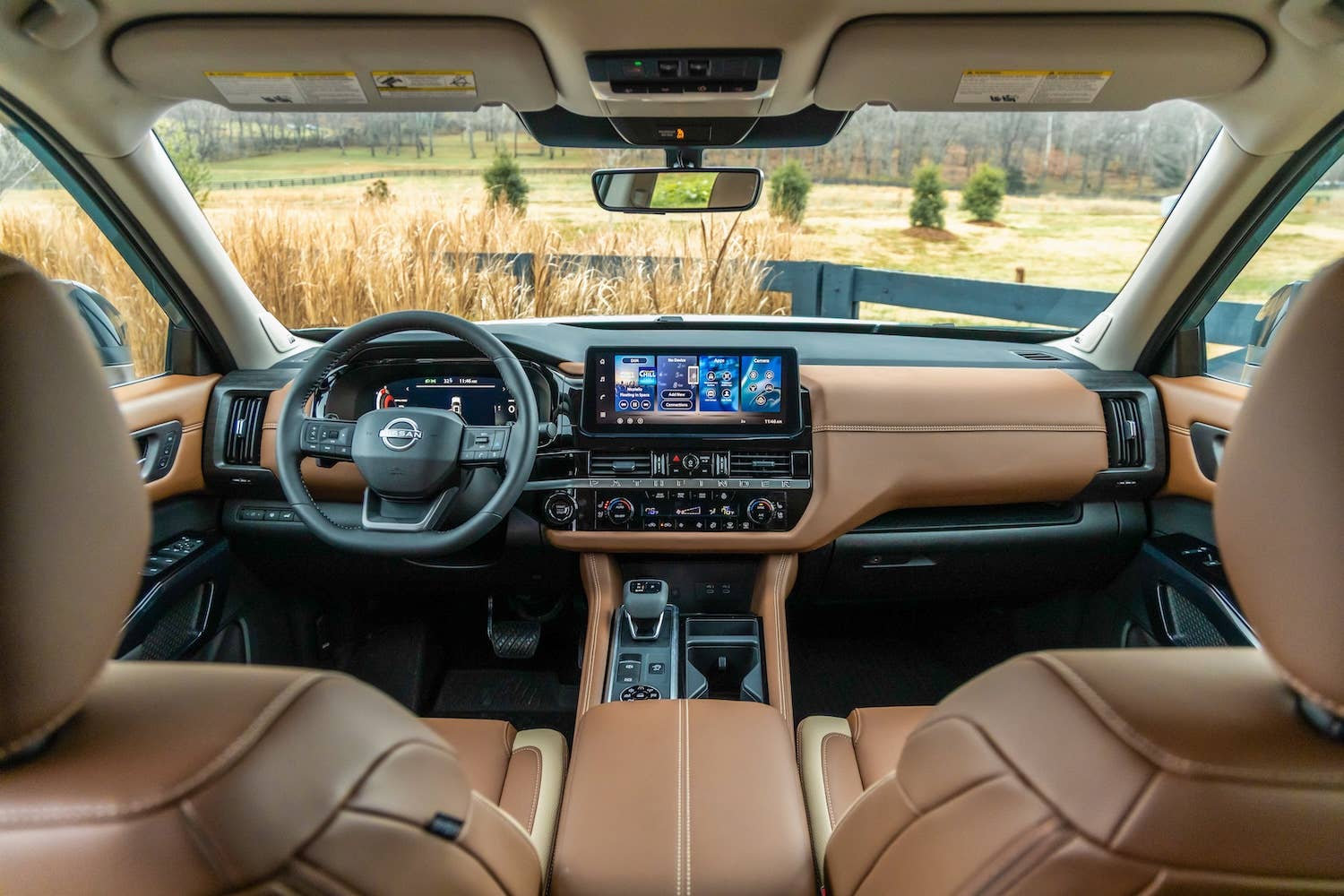
Pathfinders equipped with a 4×4 system use a rotary dial to shift between these mentioned modes, whereas the Santa Fe’s basic drive modes are controlled with a drive mode button, and its AWD modes are configured with a dial. Both models also offer standard 12.3-inch infotainment touchscreens and available 12.3-inch digital instrument displays, giving the Pathfinder’s drive mode ergonomics more significance. Additionally, the Pathfinder’s specialty off-road variant, Rock Creek, pulls ahead of the more adventurous Santa Fe XRT’s off-road capabilities with trail-tuned damping, despite having a 7.7-inch ground clearance that’s 0.6 inches lower than the XRT.
Final thoughts
It’s time for a curveball. While the Pathfinder’s mentioned advantages may stand out compared to the Santa Fe’s, they’re still more niche, and that’s why the Santa Fe is the better buy. Generally speaking, there’s a broader appeal to the Santa Fe’s increased second-row legroom than the Pathfinder’s second-row ergonomics, which is more flexible for LATCH power folds. The Pathfinder’s drive mode integration is less relevant if you’re focusing on casual road travel, and despite exterior design tastes being subjective, the Santa Fe’s redesign boasts a fresher, more premium profile despite costing less. The 2026 Santa Fe Starts at $34,800, which is $4,195 cheaper than the 2026 Pathfinder’s starting price of $38,995. Drivers targeting this segment also prioritize efficiency, and the Santa Fe’s availability of a hybrid variant increases its appeal. Be sure to test drive the 2026 Hyundai Santa Fe and the 2026 Nissan Pathfinder before making a purchase.
About the author

Cody Carlson
Contributing Writer, Autoblog