
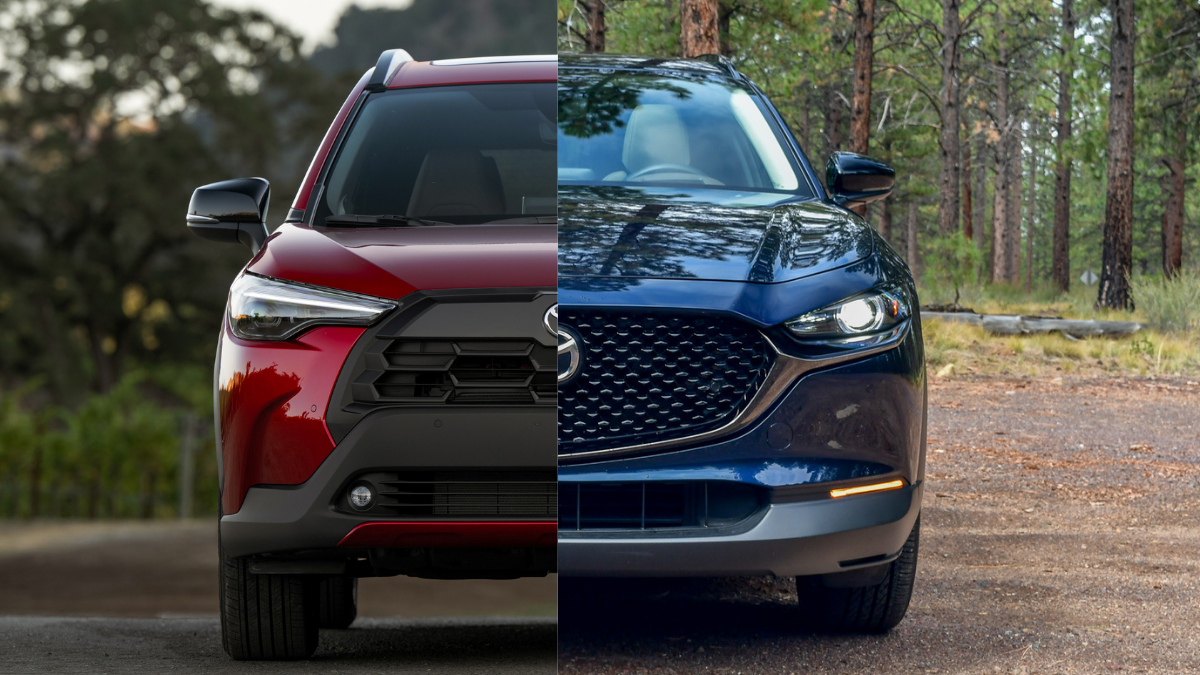
Affordable doesn’t mean lacking in quality
Affordable cars aren’t necessarily hard to come by. In fact, there are more than a few brand new cars with an MSRP below $30,000. However, most times, that low price means a major cut to creature comforts, interior design and quality, technology, and cargo space. Many affordable models don’t have premium sound systems as an option, nor leather or fun exterior colors. Many don’t offer all-wheel drive, either. That’s not the case with the 2025 Mazda CX-30 or the Toyota Corolla Cross. Both have incredibly approachable starting prices, with the Corolla Cross starting at $24,635 and the Mazda CX-30 starting at $25,975.
Kristen Brown
Kristen Brown
Even at the top of the line for the gas-only model, the Corolla Cross XLE starts at $29,560. The Mazda CX-30’s top-shelf model is the 2.5 Turbo Premium Plus, and that starts at $37,900. With both offering a long list of features and style for the price, which is best? Here are my thoughts after driving both.
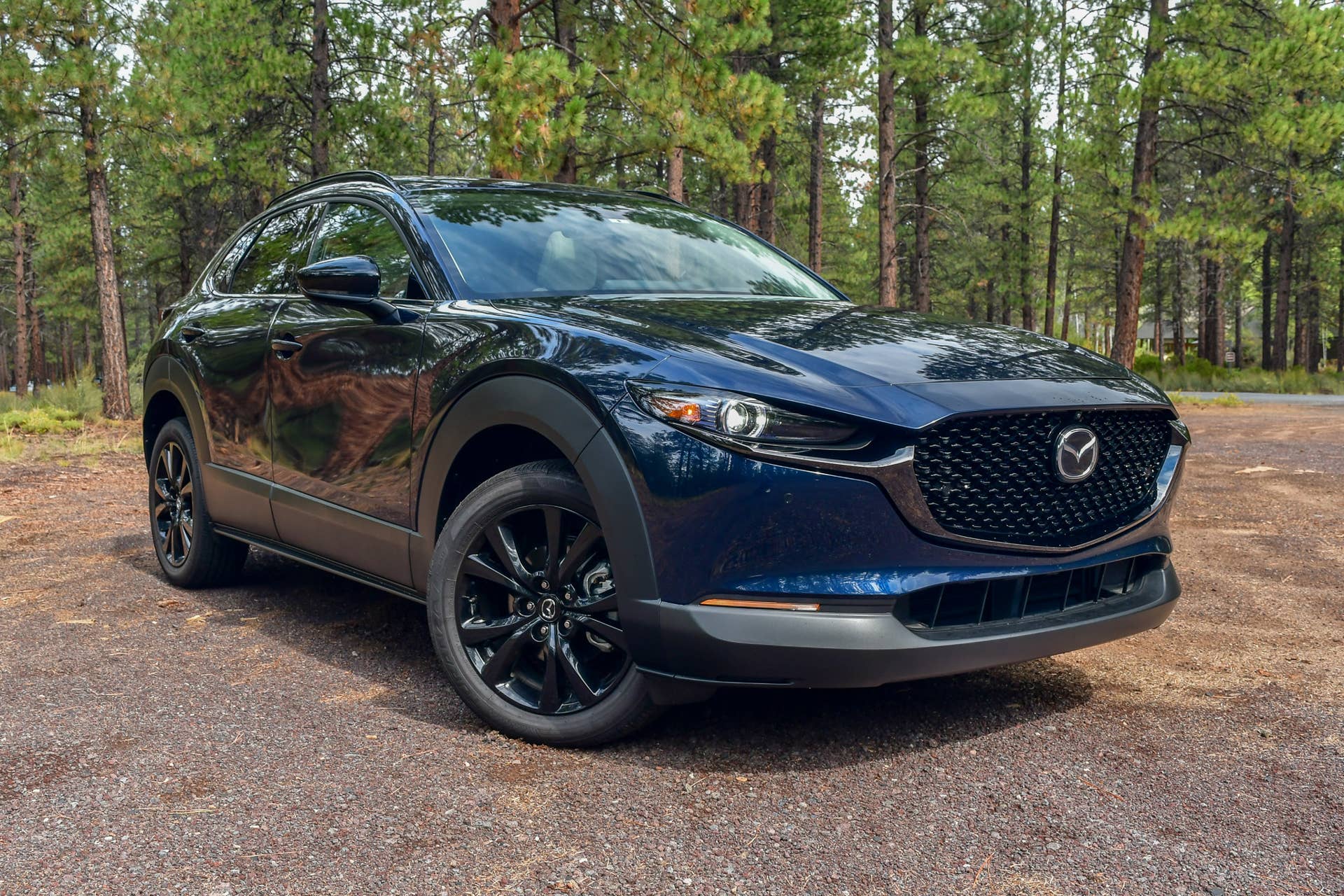
All trim levels of the CX-30 come with all-wheel drive, while it’s optional for the Corolla Cross
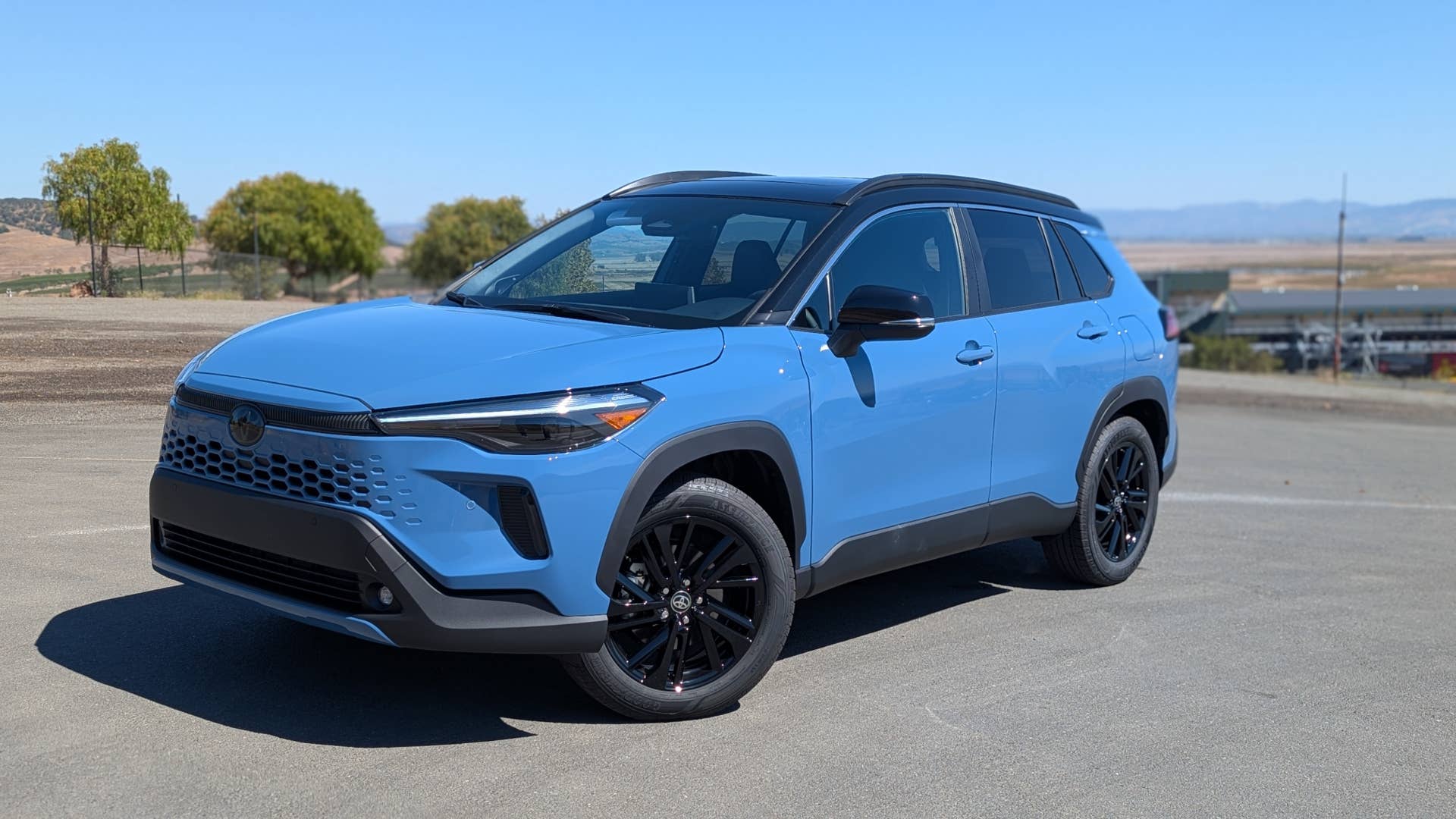
If you’re going with the gas-only version of the Corolla Cross, it comes standard with front-wheel drive, with all-wheel drive being an option for all gas-only trims. Front-wheel drive not only keeps the cost down (AWD adds about $1,300 to the sticker price), but it translates to better mileage. If you don’t need all-wheel drive, the Corolla Cross is the better buy, since the CX-30 can’t be bought as a two-wheel drive SUV.
Kristen Brown
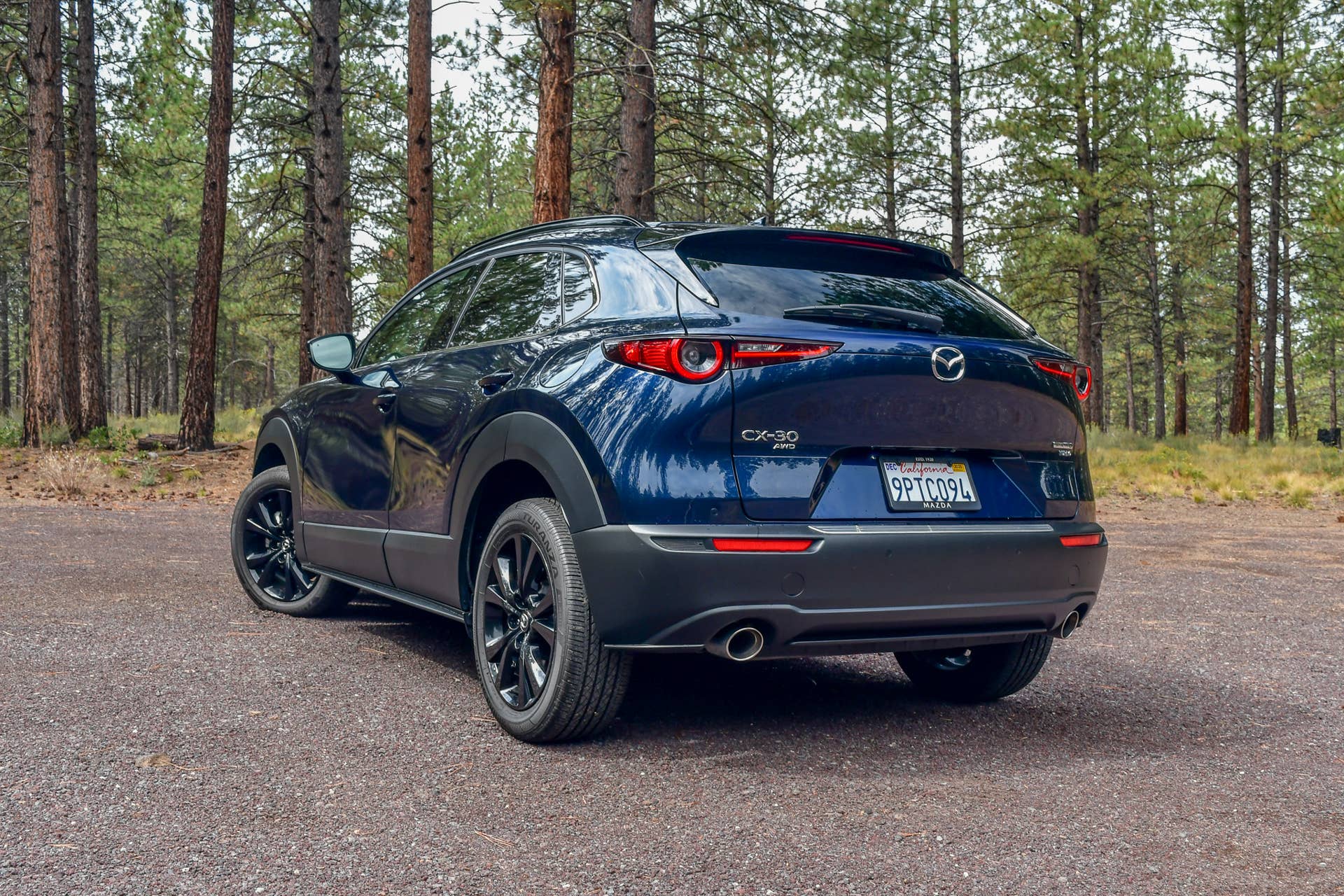
While that means it doesn’t get better mileage than the front-wheel drive version of the Toyota, it’s still remarkably efficient. During my week with it, I achieved a combined average of 25 mpg, which is partly due to the AWD system not always maintaining a 50/50 split. When there isn’t slipping detected and it’s not in Sport mode, the system biases the front wheels, so mileage isn’t as bad as other AWD SUVs (looking at you, Subaru). In case you didn’t know, AWD isn’t only good for the snow, but also for rain and performance.
Speaking of mileage…there’s no hybrid version of the CX-30.
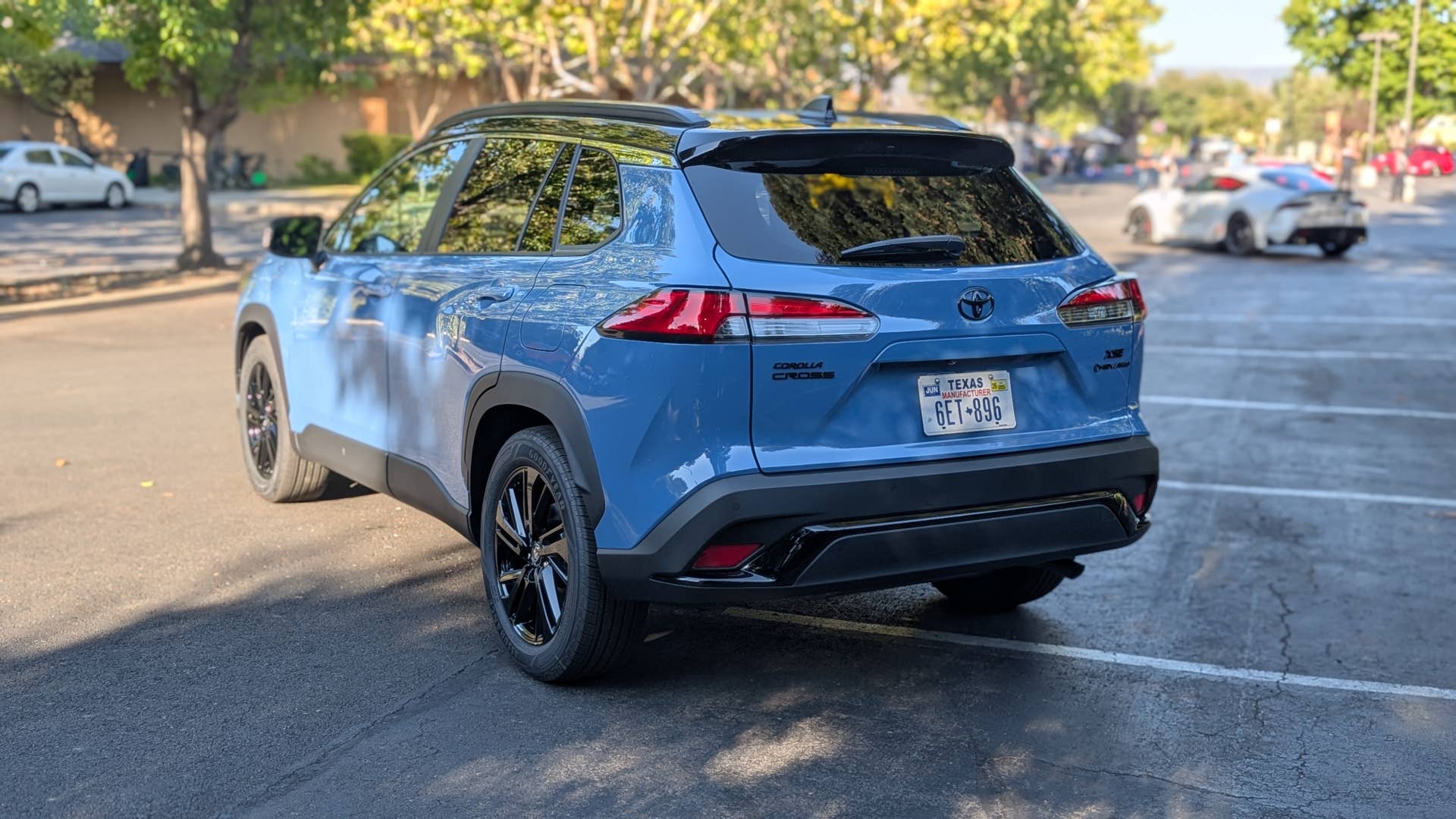
The only time the Corolla Cross crosses over into $30k+ territory is when it’s hybridized, with the hybrid version ranging from $28,995 to $33,030. Adding options like the convenience package, optional sound system, and technology package brings it up to $37,449. There’s no hybrid version of the CX-30, though one will be coming out later this year with Mazda’s new e-Skyactiv hybrid system (unlike the CX-50 hybrid, which is a copy and paste of Toyota’s hybrid system in the RAV4). There’s already a hybrid version in Europe, so it’s about time a hybrid version makes it to the States.
Kristen Brown
Since the Corolla Cross Hybrid features Toyota’s fifth-generation hybrid system, all-wheel drive is standard for all hybrid trims. Each model has the company’s on-demand all-wheel drive system, which only activates the rear e-axle when slipping is detected. Otherwise, it’s front-wheel drive. Since I’ve reviewed the RAV4 hybrid, I wasn’t shocked to see a combined average of 38 mpg for the Corolla Cross Hybrid. So, if mileage is your top choice, especially on a budget, look closely at the Corolla Cross.
If you want something with more power, the CX-30 can be fitted with a turbocharged engine
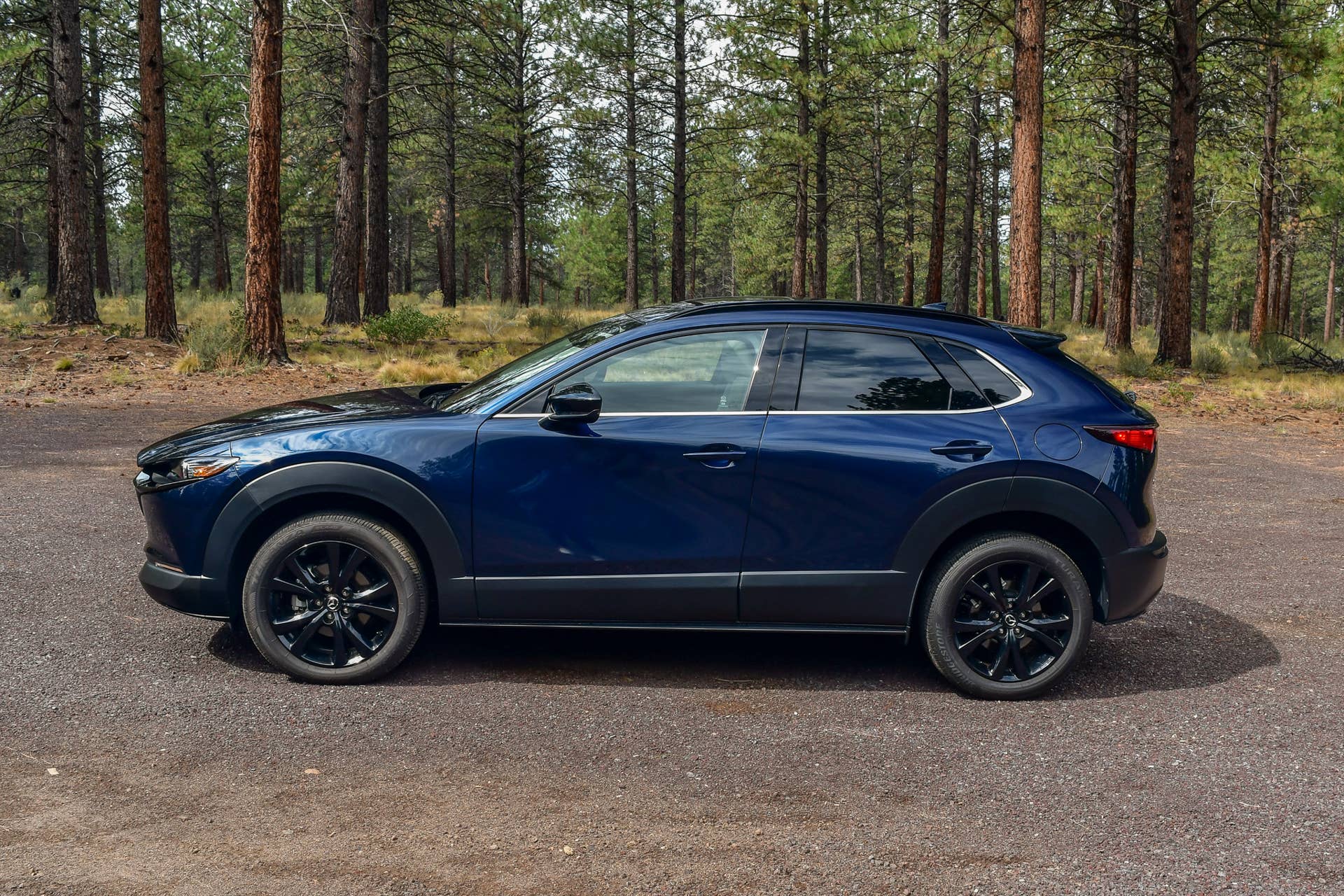
In the interest of mileage, the Corolla Cross doesn’t come with a lot of power. Even as a gas-only model, it uses a 2.0-liter naturally aspirated engine that produces around 169 horsepower paired with a CVT. The hybrid version also uses a 2.0-liter four-cylinder engine, but it’s paired with a hybrid battery and Toyota’s e-CVT, which brings the power up to 194 combined horsepower.
Kristen Brown
The Mazda CX-30, sans turbo, comes with a 2.5-liter four-cylinder engine that makes 191 horsepower–a noticeable jump from the Corolla Cross’s standard gas engine. In the higher trims, though, it comes with a turbocharged 2.5-liter engine that makes a respectable 227 horsepower, and it can be boosted to 250 horsepower when you use premium fuel. Since both the naturally aspirated and the turbocharged engine are mated to a traditional automatic transmission, it’s much more responsive in my opinion.
Cargo space is more plentiful in the Corolla Cross
The Mazda CX-30 has a decent trunk for its size at 20.2 cubic feet behind the second row, but the Corolla Cross has it beat with 24 cubic feet behind the second row. The hybrid version has a slightly smaller trunk with 21.5 cubic feet of space, but it’s still more than the Mazda. This can be attributed to their size, too, since the Corolla Cross is 3.1 inches longer, 1.2 inches wider, and 3.2 inches taller than the Mazda.

Kristen Brown
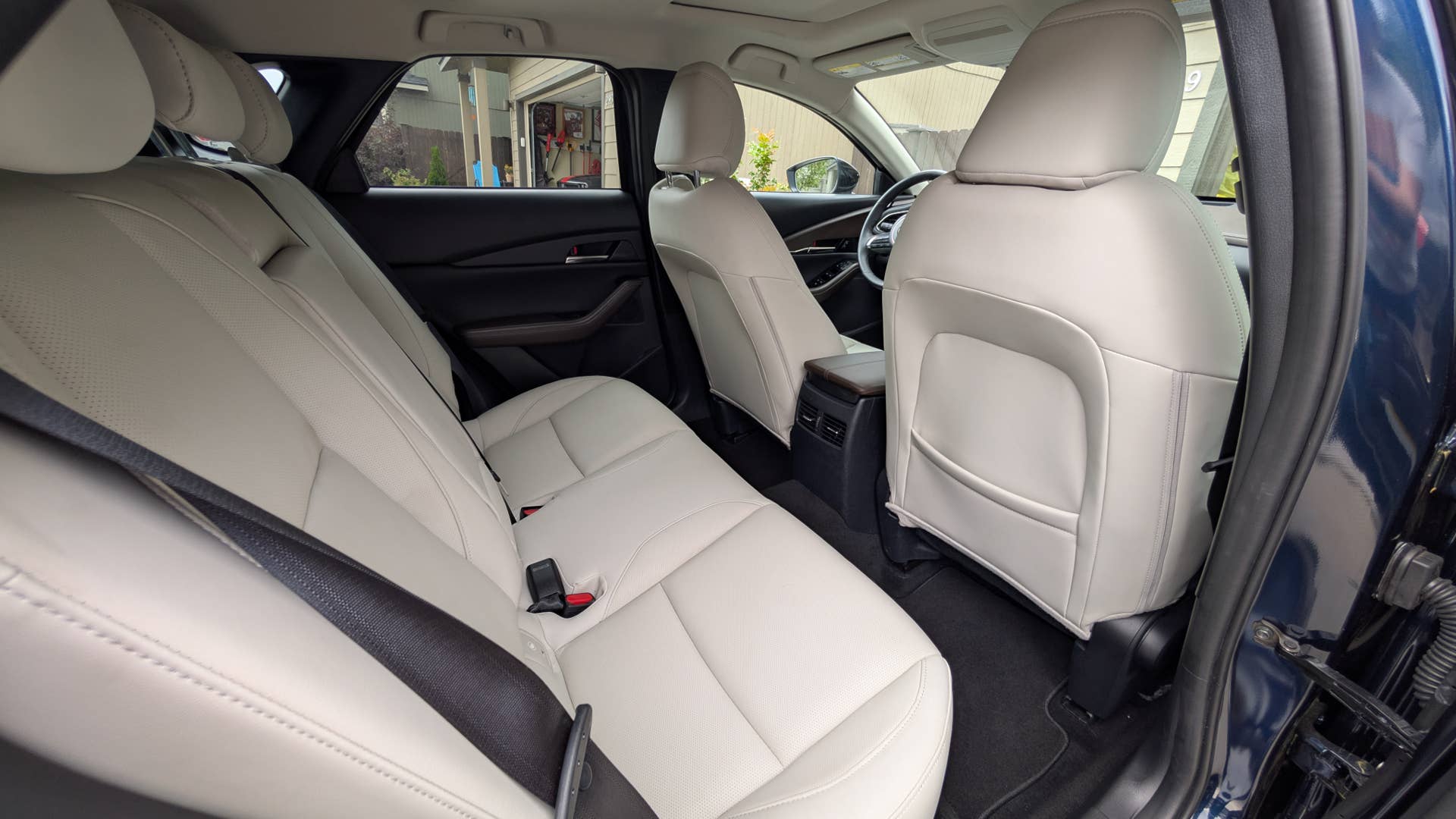
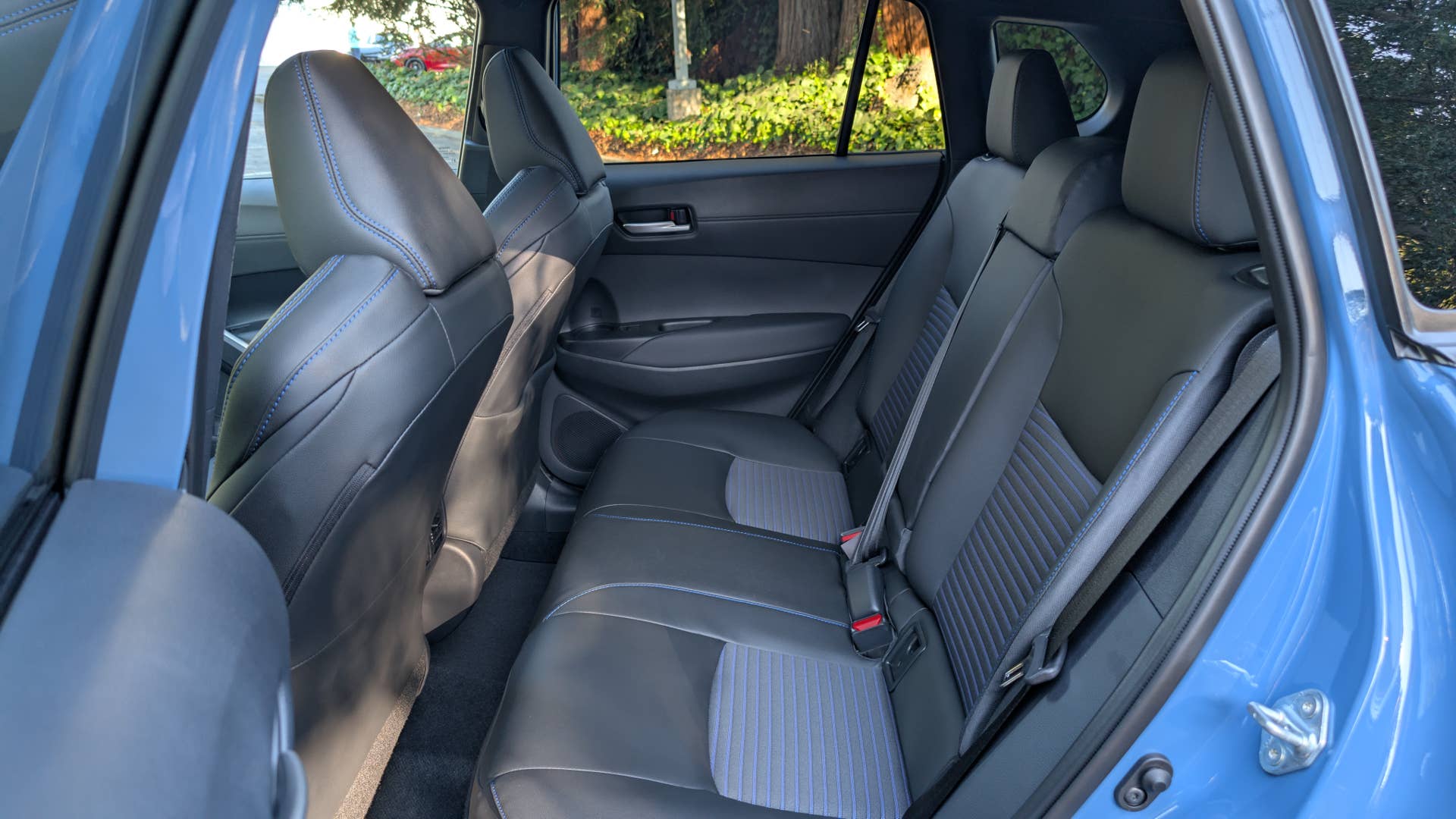
However, the CX-30’s smaller trunk means more space for the rear passengers. The Mazda’s legroom measures 36.3 inches compared to the Toyota’s 32 inches. The Mazda’s hatchback-esque design, compared to the crossover design of the Corolla Cross, also means less headroom. The CX-30 offers 38.3 inches of headroom, which is also less than the Toyota’s 39 inches of headroom. The Corolla Cross even features larger rear windows, which are more convenient for rear passengers on long drives.
Interior-wise, the Mazda has the Toyota beat
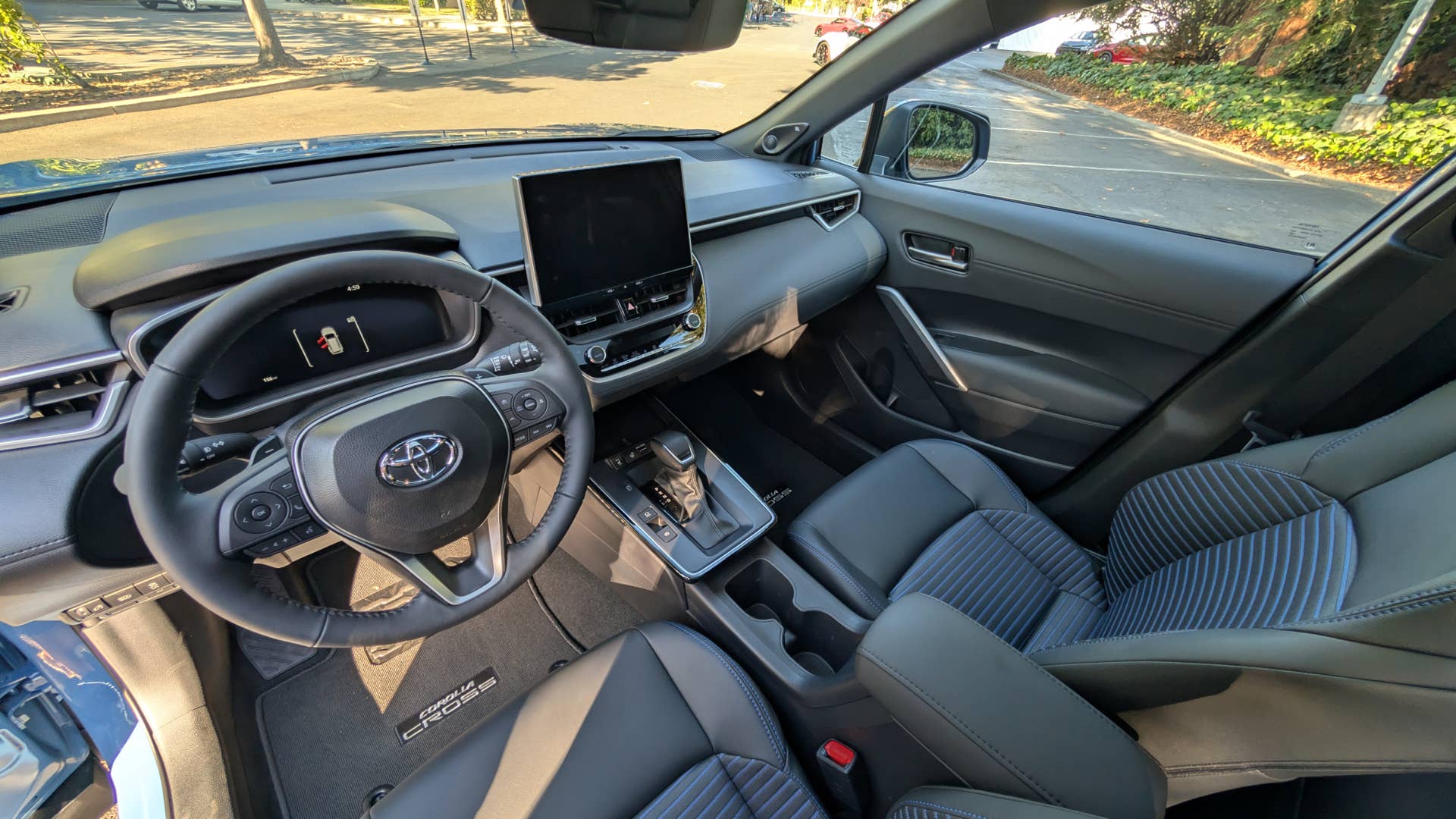
Toyota’s never impressed me with their interiors (save for the 4Runner TRD Pro), and I was very unimpressed with the Corolla Cross’s interior layout and design. The XSE Hybrid model had nice contrast stitching to break up the all-black plastic and leatherette materials, with your choices in the base model being black or light grey cloth. The XSE gas-only model can have light-brown (Toyota calls it “Portobello”) leatherette seats, but it doesn’t distract from how chintzy it felt, even with dual wireless chargers, the 10.5-inch infotainment center, and 12.3-inch digital gauge cluster. I liked the visibility the most, as it was easy to see out of, regardless of where I was sitting.
Kristen Brown
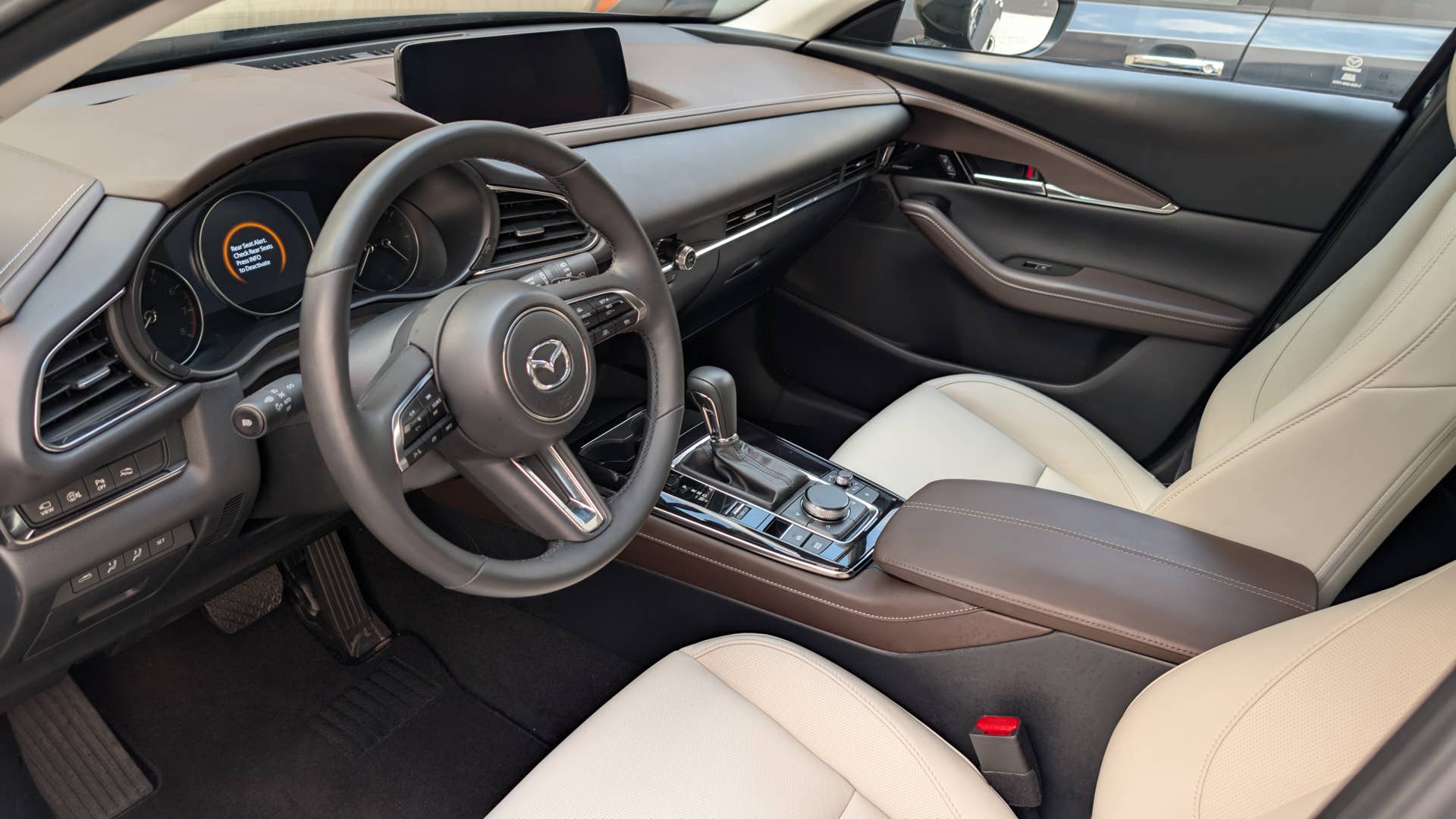
The Mazda’s interior is much more minimalistic with an 8.8-inch screen in the base models and a 10.3 to 10.25-inch display in the higher trims. There’s no digital gauge cluster behind the steering wheel, save for a very small driver information display, which I kind of liked. It was tastefully done, and, of course, it brings the cost down. Aside from that, the interior colors of the Mazda’s base model are black-on-black, with cloth seats and leatherette accents on the steering wheel and the dashboard. In higher trims, you can choose between gorgeous red leather, greige leather, white leather, brown leather, or black and tan leather. It had a single wireless phone charger, which I liked because the angle kept the phone from sliding around.
For families, both are limited on space, but the Corolla Cross’s large windows are better for kids who get queasy
Since they’re both compact SUVs, neither has very high scores concerning rear space, so naturally, toting small children in car seats was a challenge due to the lack of space between the front and rear headrests. A rear-facing seat would be a struggle, but with my front-facing toddler daughters, they fit fine. However, getting the seats into the CX-30 proved more challenging due to the lower ceiling and entry point. The seats were easy to install in either one, but the Corolla Cross’s taller ceiling and entry point made it easier to get their seats in and out.
Kristen Brown
Kristen Brown
As I mentioned earlier, though, both have limited legroom, so kids will quickly outgrow both the Corolla Cross and the Mazda CX-30, especially as they get older and want to have their friends over or need more space for their sports equipment.
Final thoughts
Both are exceptional values, but when it comes to which one is best, it depends on what you’re looking to get out of a new, economical car. The Toyota Corolla Cross has a hybrid option, which, even at the top-of-the-line and fully loaded, has a fantastic MSRP, especially considering how much you’d save in fuel. If you don’t mind a small sacrifice to style on the inside, the Corolla Cross will fit right in for you. On the other hand, the Mazda CX-30 is great for those who prefer a fun car to drive, with power, a premium-feeling interior, and a sleek exterior design.
About the author

Kristen Brown
Contributing Writer, Autoblog