

13B-MSP Renesis Mazda Rotary Engine in Detail
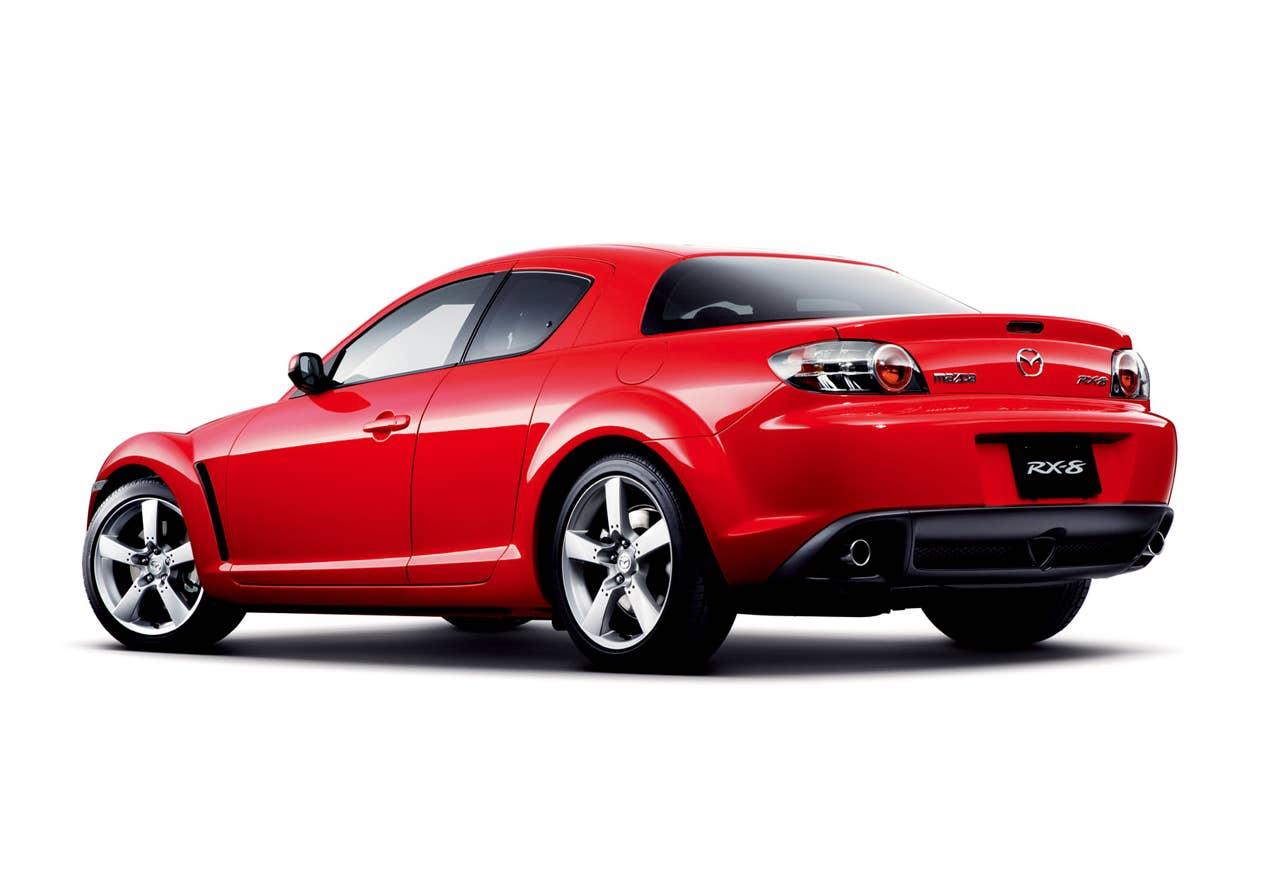
Mazda’s new rotary engine made its appearance in the range-extender Mazda MX-30 PHEV in 2023 and is due in the US shortly. It’s the first new rotary engine produced by the company since the discontinuation of the 13B-MSP Renesis rotary engine – the subject of this article. As the last mass-produced Mazda Wankel engine of the modern era, the Renesis engine was found under the hood of the nearly 200,000 RX-8 sports cars produced over a decade in the 2000s. Let’s examine its technical features, specifications, and potential issues.

Development and Timeline: 13B-MSP Renesis
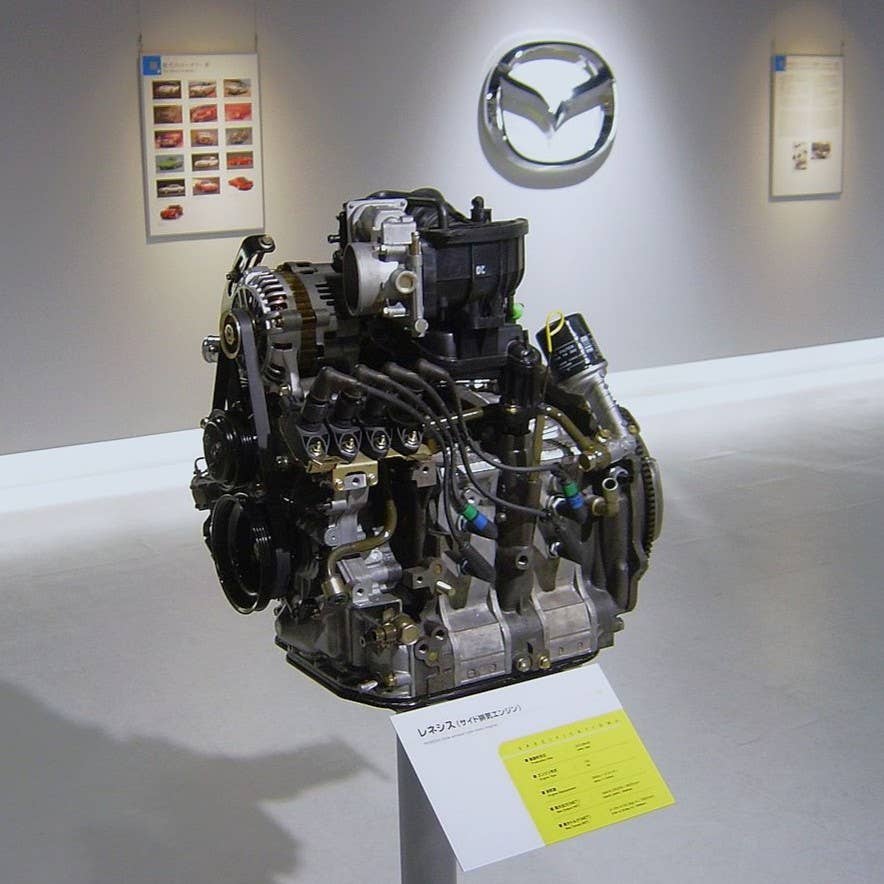
The Renesis (a combination of “RE” – for Rotary Engine – and “Genesis”) was a thorough development of the 13B engine family, launched in 2003. It had two exhaust ports on the side of each rotor instead of a single peripheral port like its predecessor, which is where the “MSP” – or Multi Side Port – nomenclature comes from. This almost doubled the exhaust port area over the old 13B-REW engine, increased power and thermal efficiency, eliminated intake/exhaust overlap, and improved fuel consumption.
There were two basic versions – a Standard and High Output engine. The Standard 4-port engine had 2 intake ports per rotor, and the 6-port had 3 intake ports per rotor. A Sequential Dynamic Intake System (S-DAIS) optimizes the intake charge, lengthening the intake ducts for better low-speed torque, of which there is already very little on these engines. The Renesis 13B-MSP was the International Engine of the Year in 2003, and remained on the Ward’s Best Engines list for 2004 and 2005.


In 2006, the automatic models’ 4-speed transmission was replaced with a 6-speed automatic, and by 2008, the engine received several updates: An extra oil injector port in each of the rotor housings, an improved oil pump, a modified oil filter, and a reduction from 3 to 2 fuel injectors per rotor. These changes improved lubrication and reliability, and the updated engine is far preferable over the old one. The design of the catalytic converter was also changed to reduce the risk of clogging.
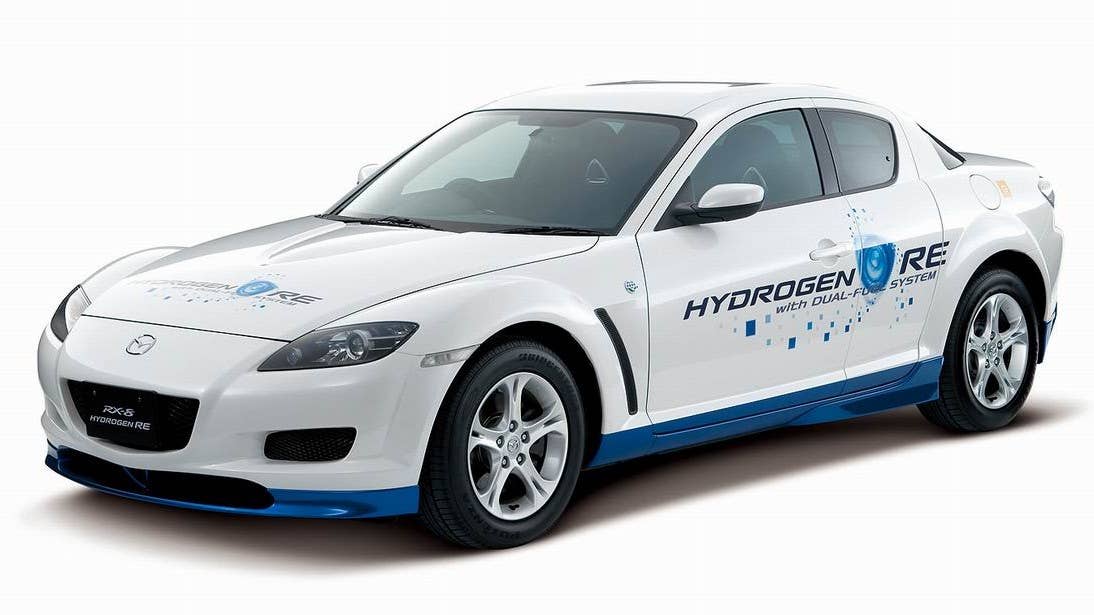
Mazda made a single RX-8 Hydrogen RE with a dual-fuel Renesis engine that can run on either gas or hydrogen.
| 4-port Standard Variant | 6-port High-output Variant | Renesis R2 Variant on Gas / Hydrogen | |
| Introduced | 2003 | 2003 | 2003 |
| Displacement | 1,308 cc (2x 654 cc rotors) | 1,308 cc (2x 654 cc rotors) | 1,308 cc (2x 654 cc rotors) |
| Aspiration | Natural | Natural | Natural |
| Horsepower | 189-207 hp | 212-247 hp | 206 / 107 hp |
| Torque | 162-164 lb-ft | 156-159 lb-ft | 164 / 103 lb-ft |
| Engine Block Material | Aluminum | Aluminum | Aluminum |
The Stillborn 16X
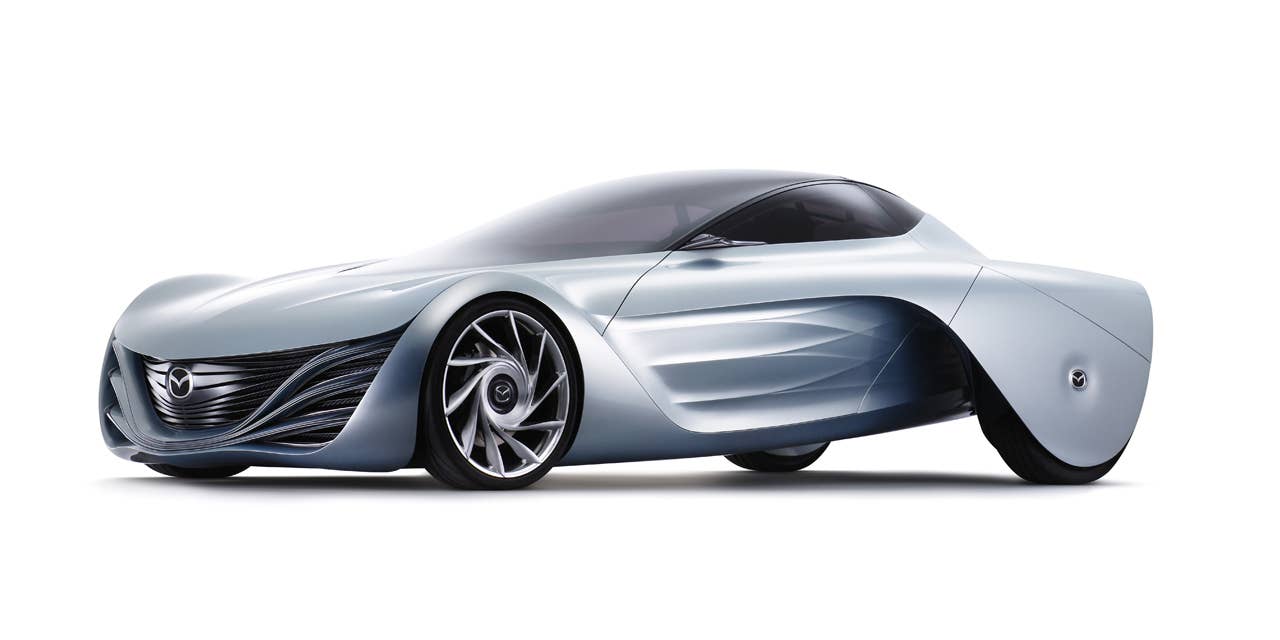
The 2007 Mazda Taiki concept (photo below) showcased a new 16X rotary engine, its name alluding to its 1.6L capacity. It was mated to a 7-speed dual-clutch automatic transmission. The engine featured direct fuel injection and was intended to replace the Renesis, but little is known about it, as it never reached production in a road car. It featured a trochoid-shaped combustion chamber to improve torque and thermal efficiency
| Introduced | 2007 |
| Displacement | 1,600 cc (2x 800 cc rotors) |
| Aspiration | Natural |
| Horsepower | Up to 300 hp |
The New 8C
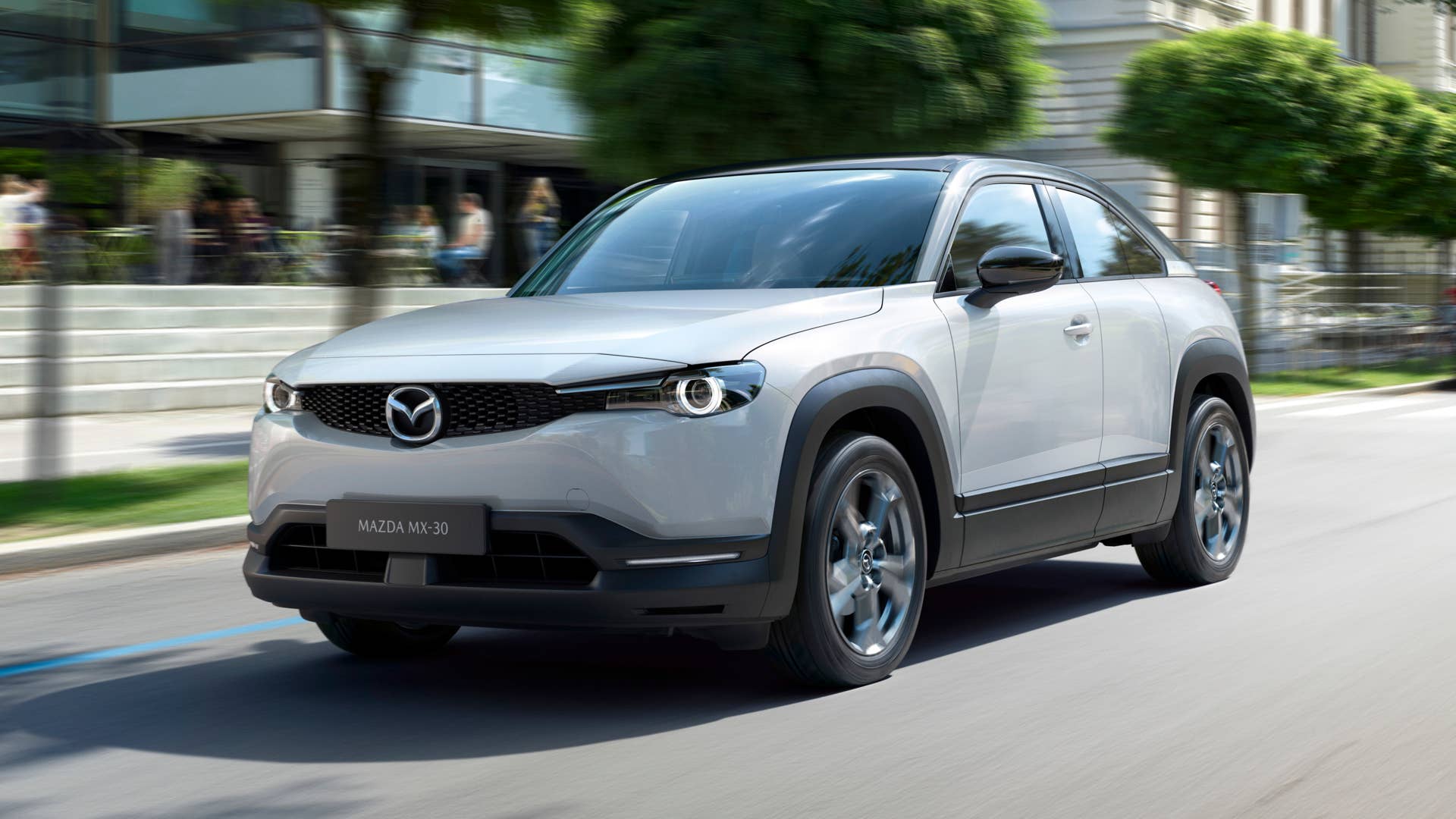
The next generation of Mazda rotary engine finally reached production in 2023, but fans will lament the fact that it’s not used to drive the wheels in any Mazda car, never mind a sporty one. No, Mazda’s new rotary car is the electric Mazda MX-30 PHEV, and the rotary engine is used as its range-extender generator. Other new features include a cooled EGR system and the direct fuel injection first seen on the 16X, allowing a higher compression ratio.
Mazda
This brand-new Mazda rotary engine has only a single rotor, and it’s been optimized to develop its power and torque over a narrow rev band, and at far lower revs than traditional rotaries, because its only job is to charge a battery at constant revs. It also achieves the ideal Lambda 1 air-fuel ratio across all its operating ranges.
| Introduced | 2023 |
| Displacement | 830 cc single-rotor |
| Aspiration | Natural |
| Horsepower | 75 hp at 4,700 rpm |
| Torque | 85 lb-ft at 4,000 rpm |
Renesis Engine Problems
The Renesis can suffer from various reliability issues:
- Apex seal leaks and wear. Apex seals on the rotor tips are wear items, and they wear faster if oil changes and top-ups are not on point. Worn seals reduce compression, cause hard starting, and lead to heavier oil consumption.
- Oil consumption. Oil consumption is a given with any Renesis, especially if you use a thin synthetic oil. Many owners prefer 10W-40 or 15W-40 mineral oil over Mazda’s 5W-30 recommendation to reduce oil consumption and residue buildup.
- Fuel flooding. Excessive cranking can cause the engine to flood before it starts, making it almost impossible to start. Also, shutting off the engine before it has properly warmed up exacerbates the flooding problem on the next start. This is not the right car for short shopping trips.
- Catalytic converter failure. Fuel flooding dumping too much fuel into the cat can cause it to fail, which is an especially big risk on the Renesis engine due to its propensity to flood. Worn coils and plugs will also lead to rich mixtures and accelerated cat failure.
- Starting problems. Apex seal wear and carbon deposits can reduce the compression ratio and lead to hard starting on cold mornings. RX-8 owners are advised to learn how to start their cars directly, because the incorrect procedure can cause fuel flooding, which makes it even harder to start the engine, and increases wear. The starter motor is apparently not very robust, and coupled to protracted cranking, the starter may also give up the ghost fairly soon.

- Overheating. Like many old cars, neglected cooling systems may allow overheating, so replace parts as necessary, replace the coolant periodically, and stick the the correct water/antifreeze blend. Deteriorating water seals can also cause leaks and overheating.
- Exhaust problems. Exhaust leaks are fairly common on the Renesis engine.
- Spark plug and ignition coil failure. These parts wear quickly and have to be replaced frequently to avoid running problems and consequent engine damage. They work twice as hard as in piston engines, because they fire twice as frequently.
- Main bearing and eccentric shaft wear. The shaft spins three times faster than the rotors, and it’s apparently prone to premature wear, also partly because of the uneven heating between the intake and exhaust sides of the rotor housing. Housing deformation can apparently become a problem on highly modified engines approaching 500 hp.
Some owners have reported failure of the water seals, especially on the hot side of the engine, greatly exacerbated by aftermarket turbocharging. Meticulous, religious maintenance is of critical importance on these engines, and you have to check the oil very frequently, as the Renesis drinks a lot of it. If there isn’t abundant evidence of the most lavish and loving care and of frequent servicing and top-ups, you buy at your own risk.

Experts recommend 3,000-mile oil-change intervals with mineral oil, not synthetic. Reports indicate that synthetic oils can leave residue on the apex seals, reducing the compression ratio and blocking the stator’s oil nozzles. Mineral oils burn off more cleanly. You also can’t get all the oil out via the oil drain plug, as some of it stays behind in the oil cooler circuit, so you have to drain that oil cooler too, or do a regular oil change at least twice at a time.
Furthermore, premium gasoline is recommended, as well as frequently replacing the spark plugs – at least every 10,000 miles. Ignition coils require frequent replacement too – at least every 30,000 miles. Poor-quality gas can cause the spark plugs to deteriorate even more quickly. Even with the best care, few 13B Renesis engines make it to 100,000 miles without an engine rebuild.
Cars Using 13B Renesis Engine
The Renesis engine was only used in the RX-8 production car, specifically:
- 2003-2012 Mazda RX-8
- 2003 Mazda RX-8 Hydrogen RE
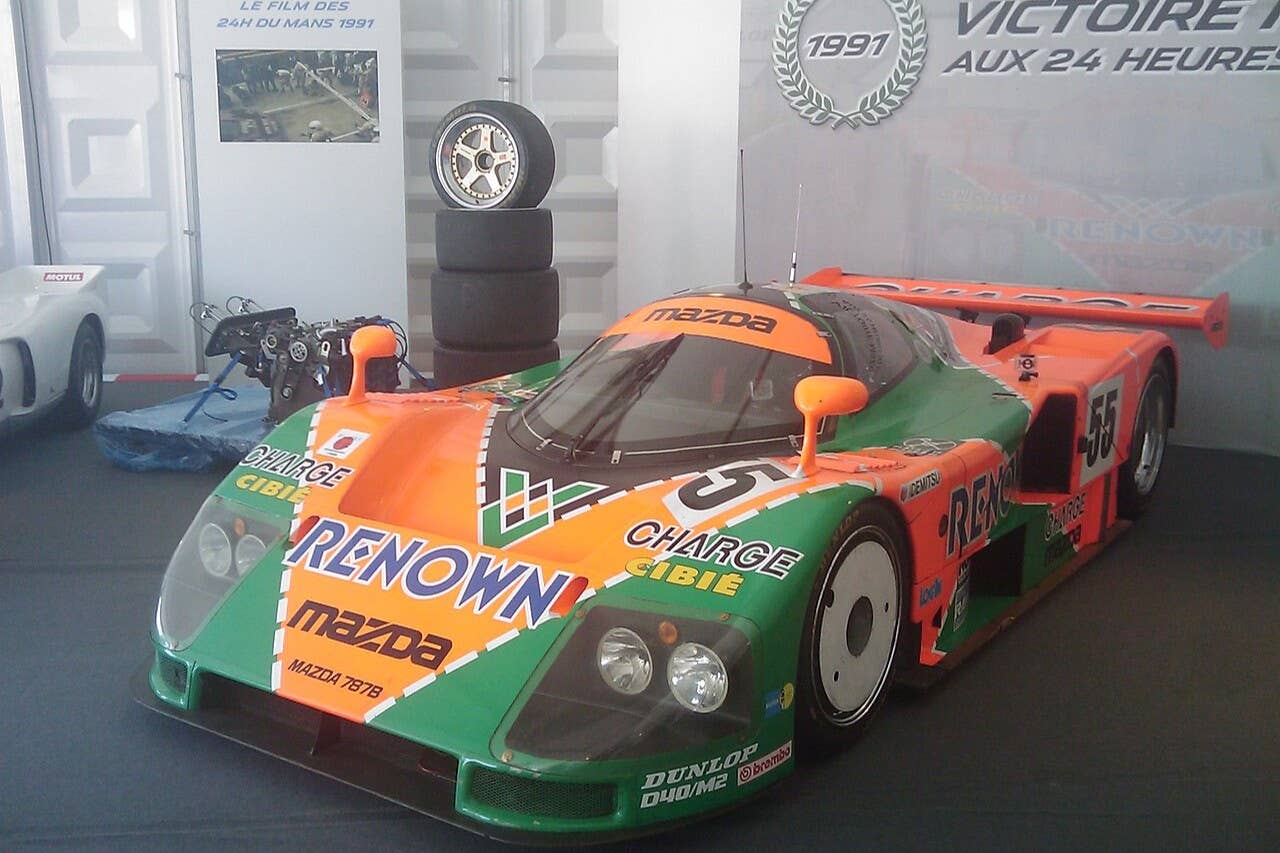
It was also used in motorsports series by privateer racers, getting GT-class wins in the 2008 and 2010 editions of the 24 Hours of Daytona and the 2010 SCCA World Challenge Mid-Ohio Grand Prix (touring car class), among others. The most famous Mazda rotary engine in motor racing was arguably the R26B, displacing the same 654 cc per rotor as the Renesis engine, but doubled up to 2.6L capacity with 4 rotors. Fitted with this engine, the 1991 Mazda 787B became the first Japanese car (and the first car with any other type of engine other than a piston engine) to win the 24 Hours of Le Mans. In race form, the R26B developed 700 hp at 9,000 rpm.
FAQs
Q: Is Mazda still a rotary engine manufacturer?
A: Yes, Mazda has resumed manufacturing a rotary engine in 2023 with the single-rotor range-extender rotary engine used in the Mazda MX-30 PHEV.
Q: Is the Mazda RX-7’s a rotary engine?
A: Yes, every Mazda RX-7 sports car from the first generation in 1978 to the Series 8 variant of the 3rd generation in 2002 used nothing other than rotary engines.
Q: Is the Mazda 787B a rotary engine?
A: Yes, the Mazda 787B, which won the 1991 24 Hours of Le Mans, had a rotary engine, notably a 4-rotor R26B with 700 hp.
Q: Does the Mazda RX-8 have a rotary engine?
A: Yes, the Mazda RX-8 exclusively used the 13B-MSP Renesis rotary engine for its entire production run from 2003 to 2012.
Final Thoughts
With the 13B-MSP Genesis engine now long dead and the latest rotary charging an EV’s batteries, will there be a new Mazda rotary sports car anytime soon? We finally have the Wankel engine back in production in the MX-30 PHEV, but Mazda hopes to bring us a proper rotary-powered sports car in the future, perhaps calling it an RX-9, and basing it on the 2023 Iconic SP concept car. But after many false starts, we won’t get our hopes up until it actually happens. We’re certainly holding thumbs.
About the author

Cobus F. Potgieter
Reviews and Features Editor