
Close competition
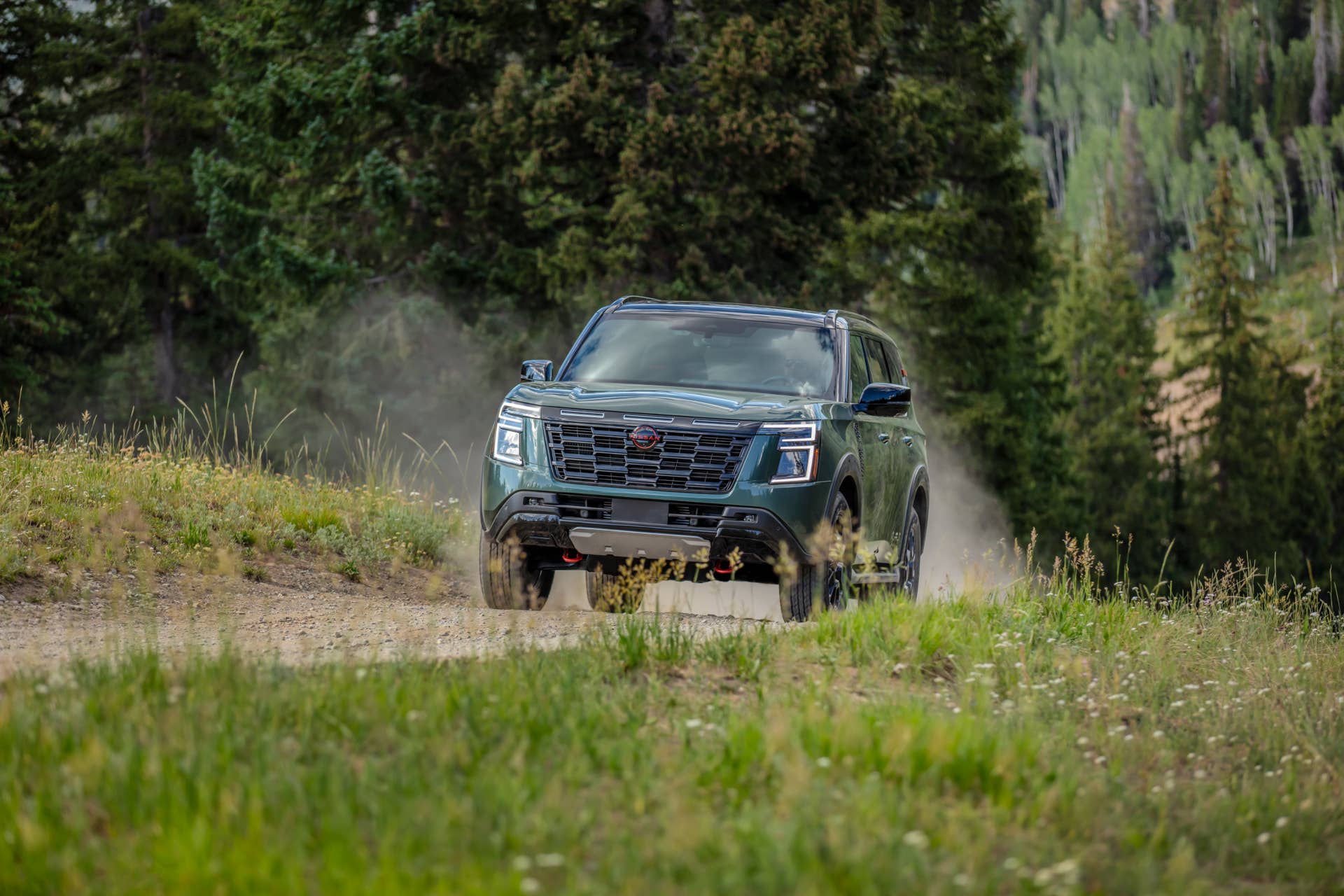
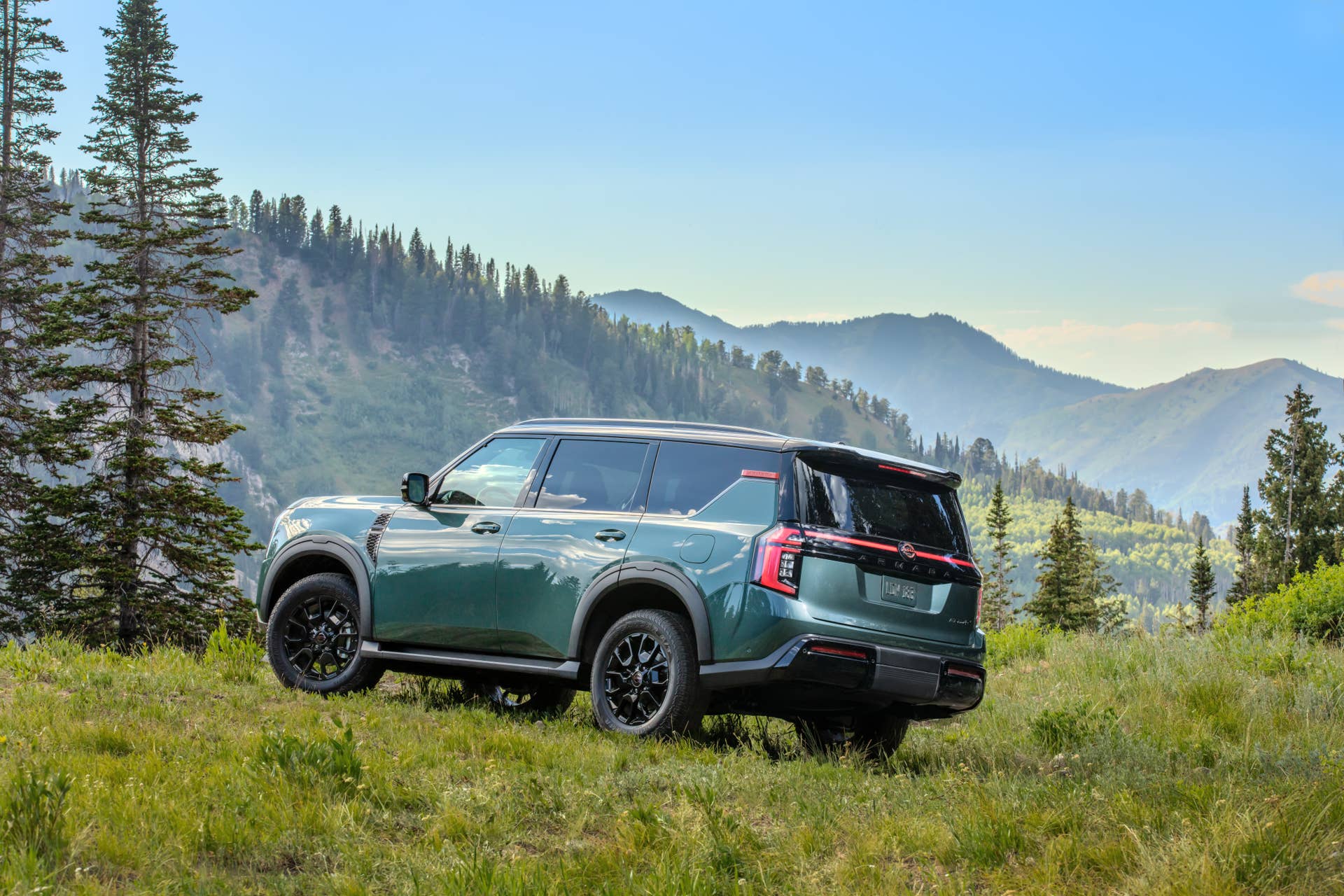
Nissan recently updated the Armada, making it much more competitive against all large SUVs. A few years back, Toyota did something similar with its Sequoia. In doing so, both automakers have built trucks that are more popular and capable than the SUVs they replaced. Indeed, both vehicles can hold their own against equivalent models from GM and Ford.
Toyota
Toyota
Nissan
Nissan
Both SUVs use twin turbocharged V6s, and both are pretty close in size. That’s where the similarities begin to diverge. While Toyota gave the Sequoia a hybrid powertrain and a solid rear axle, Nissan gave the Armada an independent rear suspension but did not offer a hybrid powertrain. Because of that, they drive and feel different.
I took both off-road versions— the Sequoia TRD Pro and Armada PRO-4X —on different off-road excursions, and I was stunned by how different these two SUVs actually were. By the end of my adventures, I came away with the impression that one was simply better than the other. Can you guess which one?
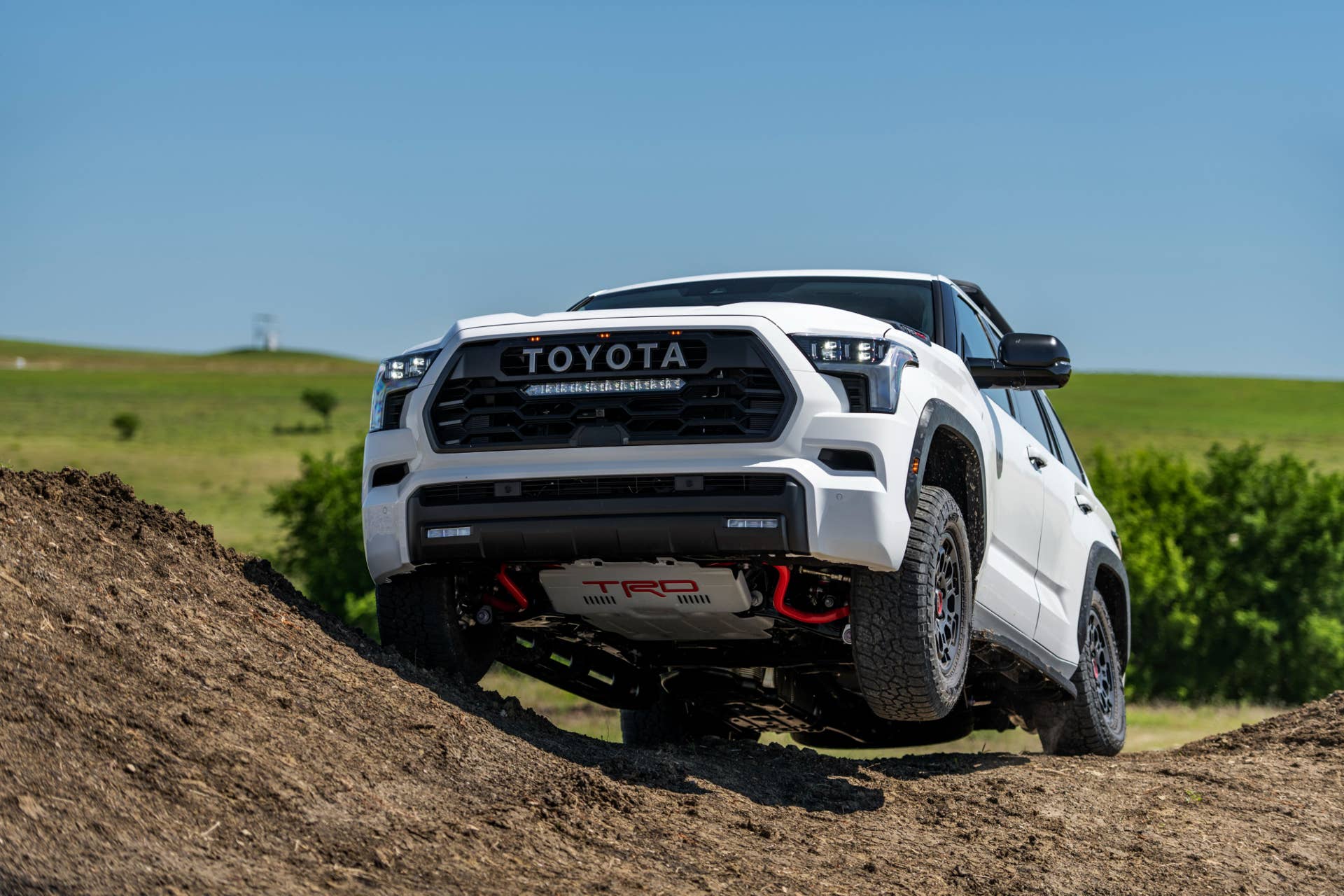
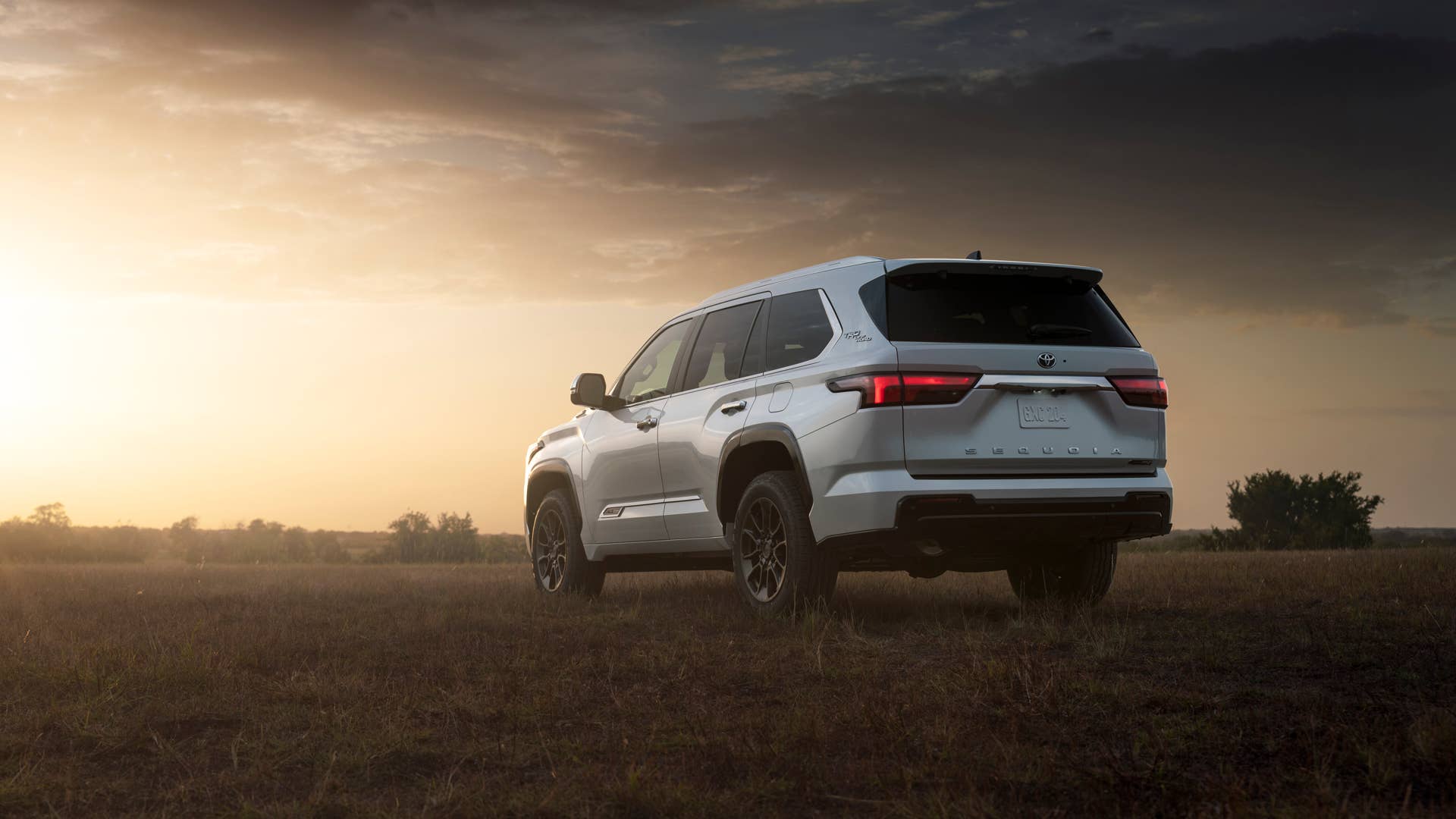
The 2025 Toyota Sequoia TRD Pro is a story of perseverance
Toyota
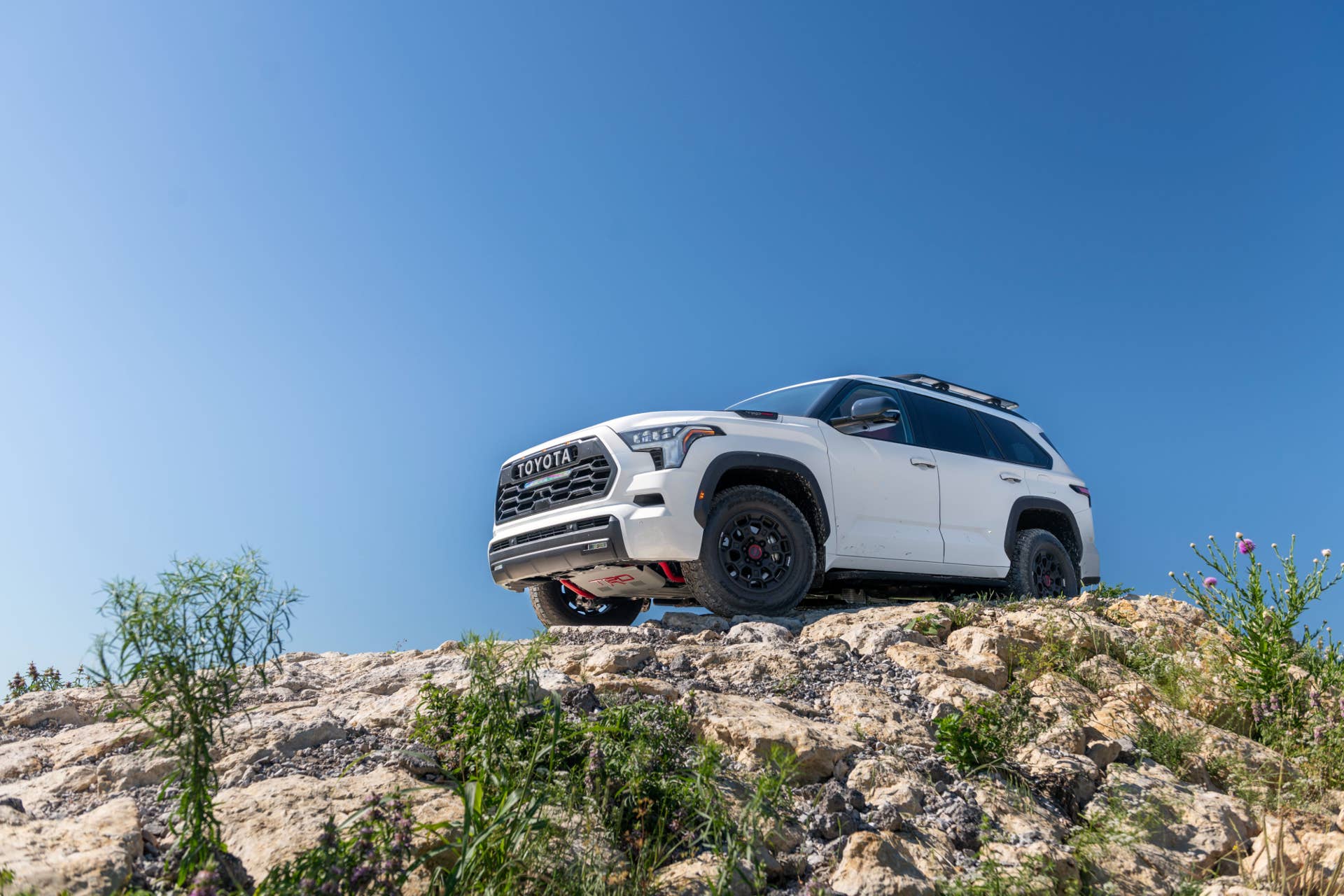
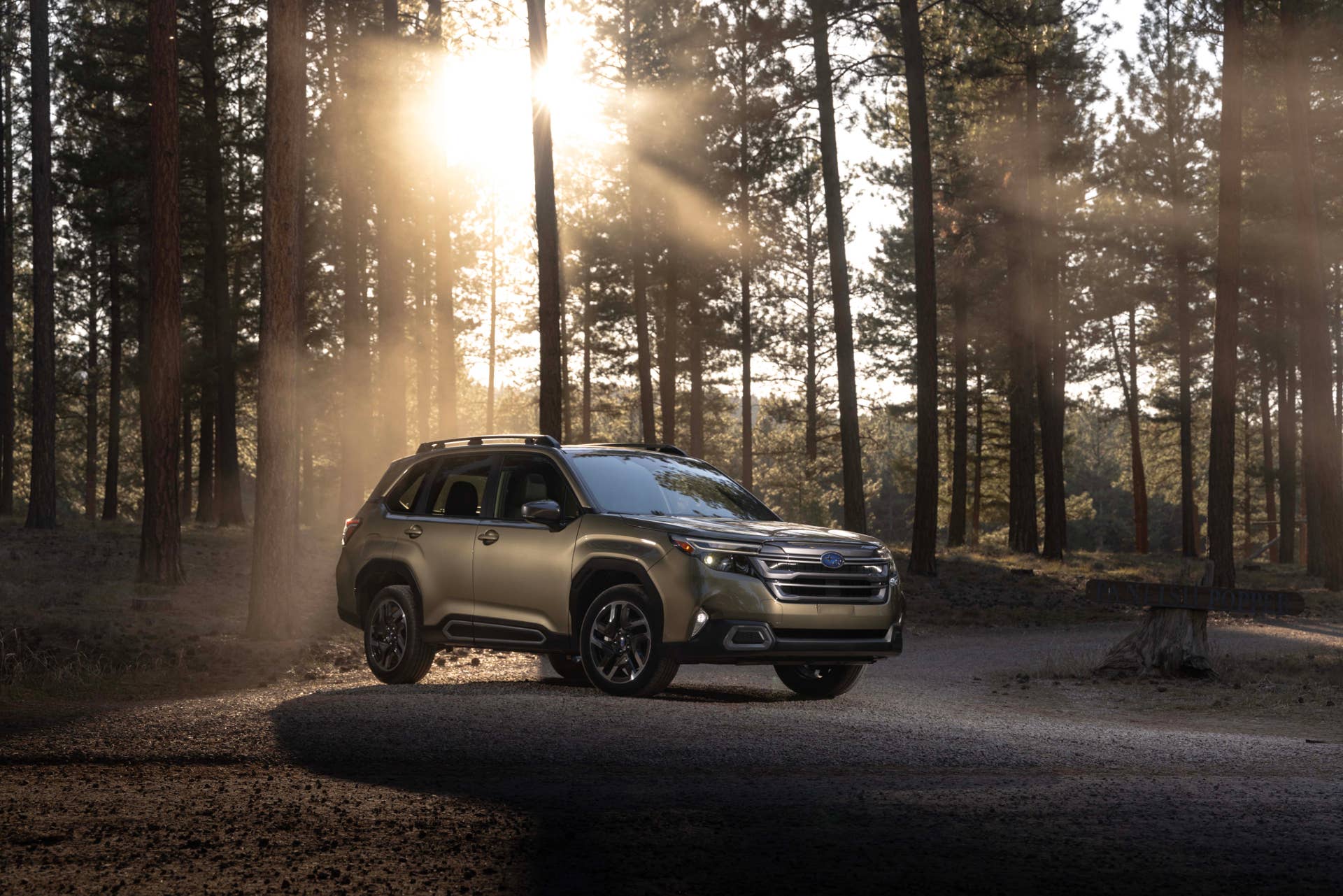
If you don’t know the story of the recently reinvigorated Toyota Sequoia, the model was saved from being decommissioned by changing its underpinnings. By using many of the same bits used by the Tundra, Toyota was able to bring consumers an all-new Sequoia, which comes standard with a hybrid powertrain and retains the same solid rear axle that the Tundra uses.
This all-new Tundra starts off with a base MSRP of $62,425, but that jumps to $80,295 for the TRD Pro. The few that I sampled came in just under $84,000, which is competitive in this bracket, but still on the higher end. I do love the way it looks, and feel the Sequoia is better looking than the equivalent Tundra it’s based on in its TRD Pro trim.
Toyota
The 2025 Toyota Sequoia comes with a twin-turbocharged 3.4-liter V6 engine paired with an electric motor that produces 437 horsepower and 583 lb-ft of torque. It’s bolted to a 10-speed automatic transmission, and it’s offered with either rear-wheel drive or four-wheel drive. The Sequoia can tow up to 9,520 lbs when properly equipped. The TRD Pro version of the Sequoia is capable of getting 19 mpg city and 22 mpg highway, with a combined 20 mpg.
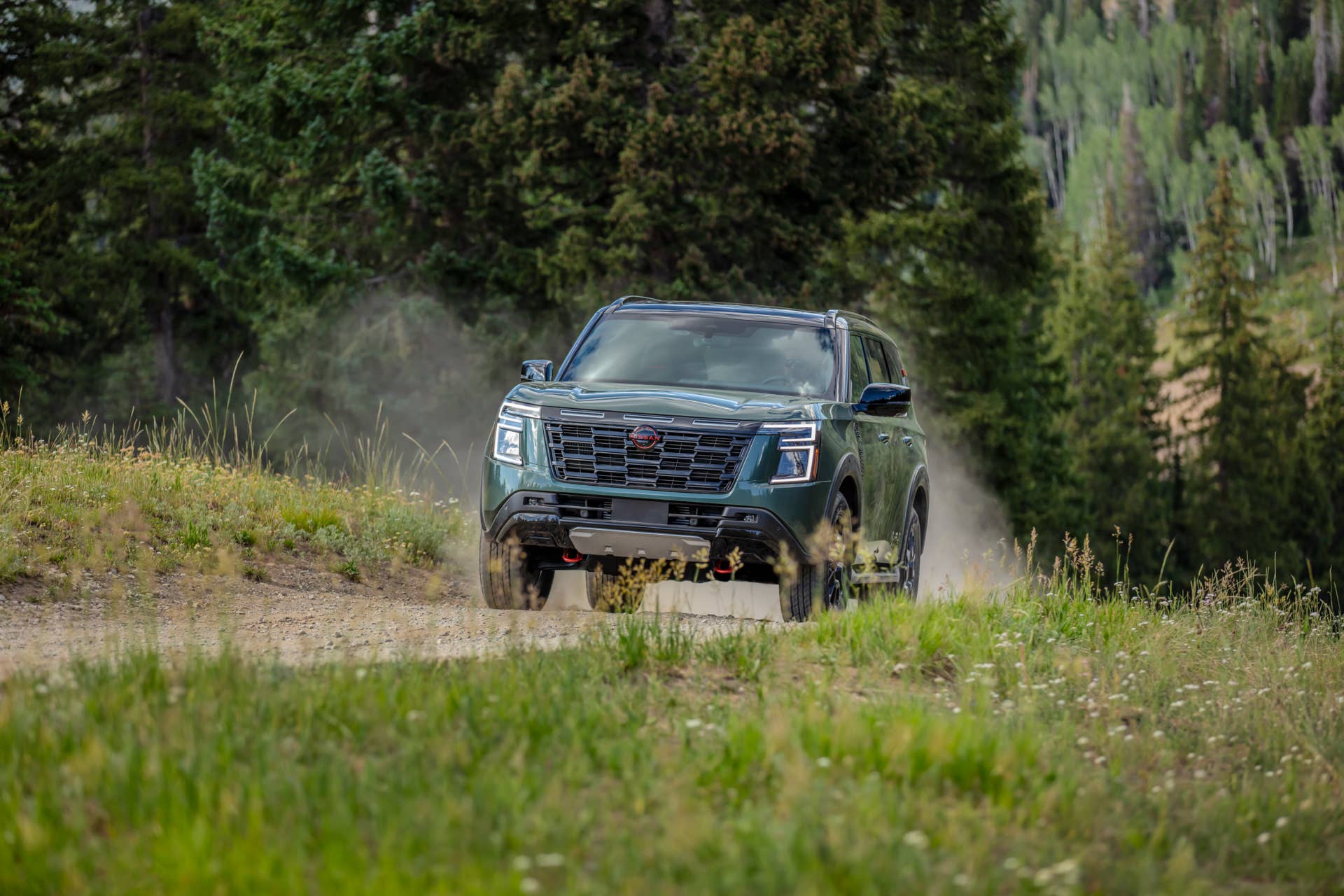
The 2025 Nissan Armada PRO-4X
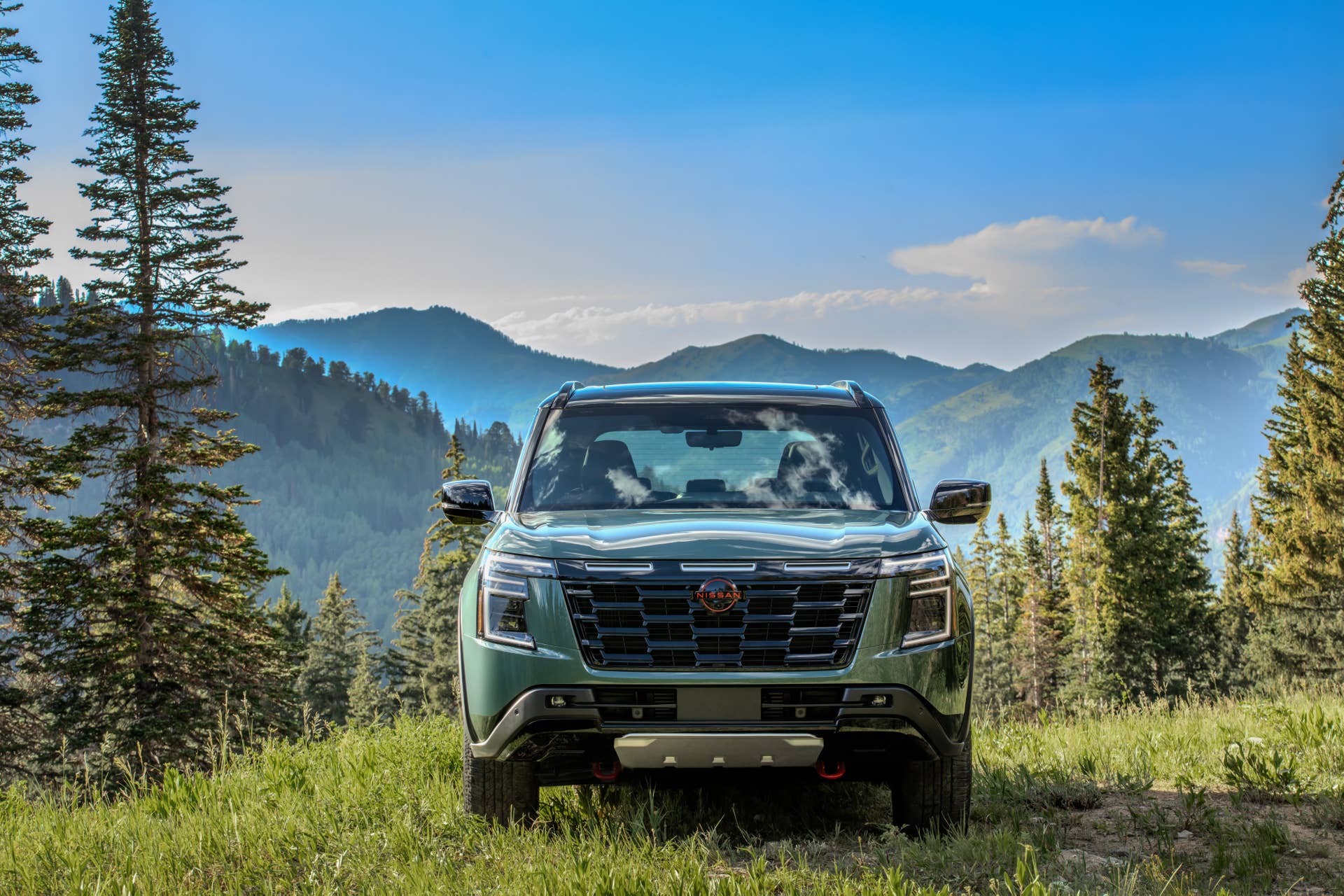
Like all of the previous Armadas and its cousin, the Infiniti QX80, the platform and running gear are based on the Nissan Patrol. That is to say, it has a beefy undercarriage, similar to the Sequoia. The big difference here is Nissan’s desire to make the Armada more upscale and capable. This means an independent rear suspension, which is good for ride quality, and an air suspension, which helps with off-road performance.
With a base MSRP of $57,520, the Armada significantly undercuts the Sequoia. Its off-road variant, the PRO-4X, comes in at well under $80,000 for a similarly equipped model. Despite the price disparity, Nissan manages to meet or beat the Sequoia in terms of content. Still, the Sequoia offers a lot more muscle.
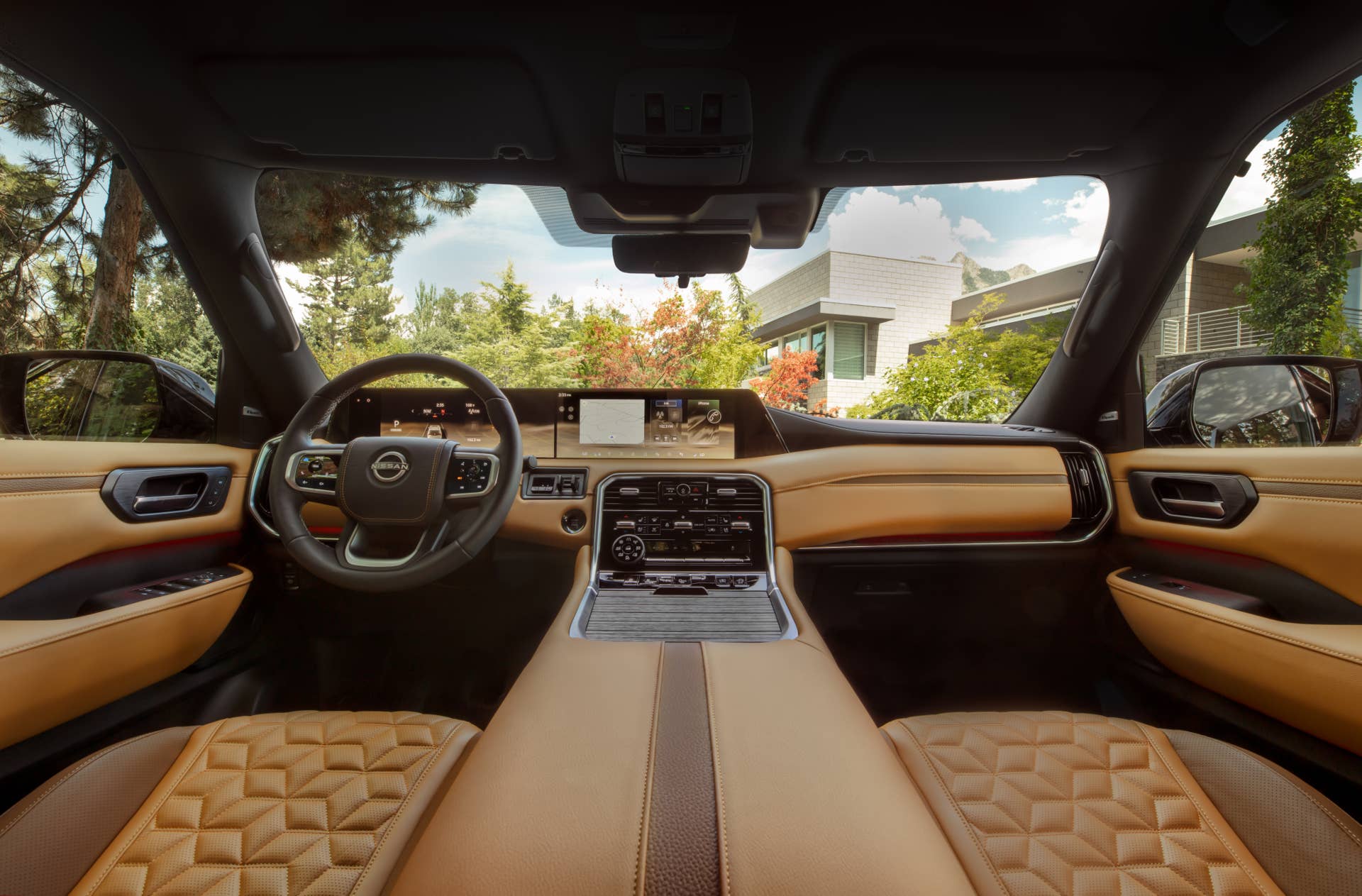
Nissan ditched the V8, much like Toyota, and built a derivative of the GT-R’s 3.5-liter, twin-turbocharged V6 that makes 425 hp and 516 lb-ft of torque. While this is a leap over the old V8, it trails Toyota’s numbers. The Armada uses a nine-speed automatic transmission with either rear- or four-wheel drive. When properly equipped, it has a maximum tow rating of 8,500 lbs. The Armada PRO-4X is EPA rated at 15 mpg city, 18 mpg highway, and 16 mpg combined.
On and off-road, back-to-back
On paper, the Toyota comes out on top. It is more powerful, tows more, is more efficient, and maintains Toyota’s reputation for quality and reliability. Many people also feel that it’s the better-looking of the two. The thing is: all of that goes out the window when you drive them.
Both SUVs weigh over 6,000 lbs, but the Sequoia weighs about 100 lbs more. You won’t notice it accelerating, as the Sequoia is very quick. That hybrid powertrain mitigates some turbo lag and can get the SUV from 0 to 60 mph in less than 6 seconds. It’s only a hair quicker than the Nissan, but even after that, all of the advantage goes to the Nissan.
Toyota
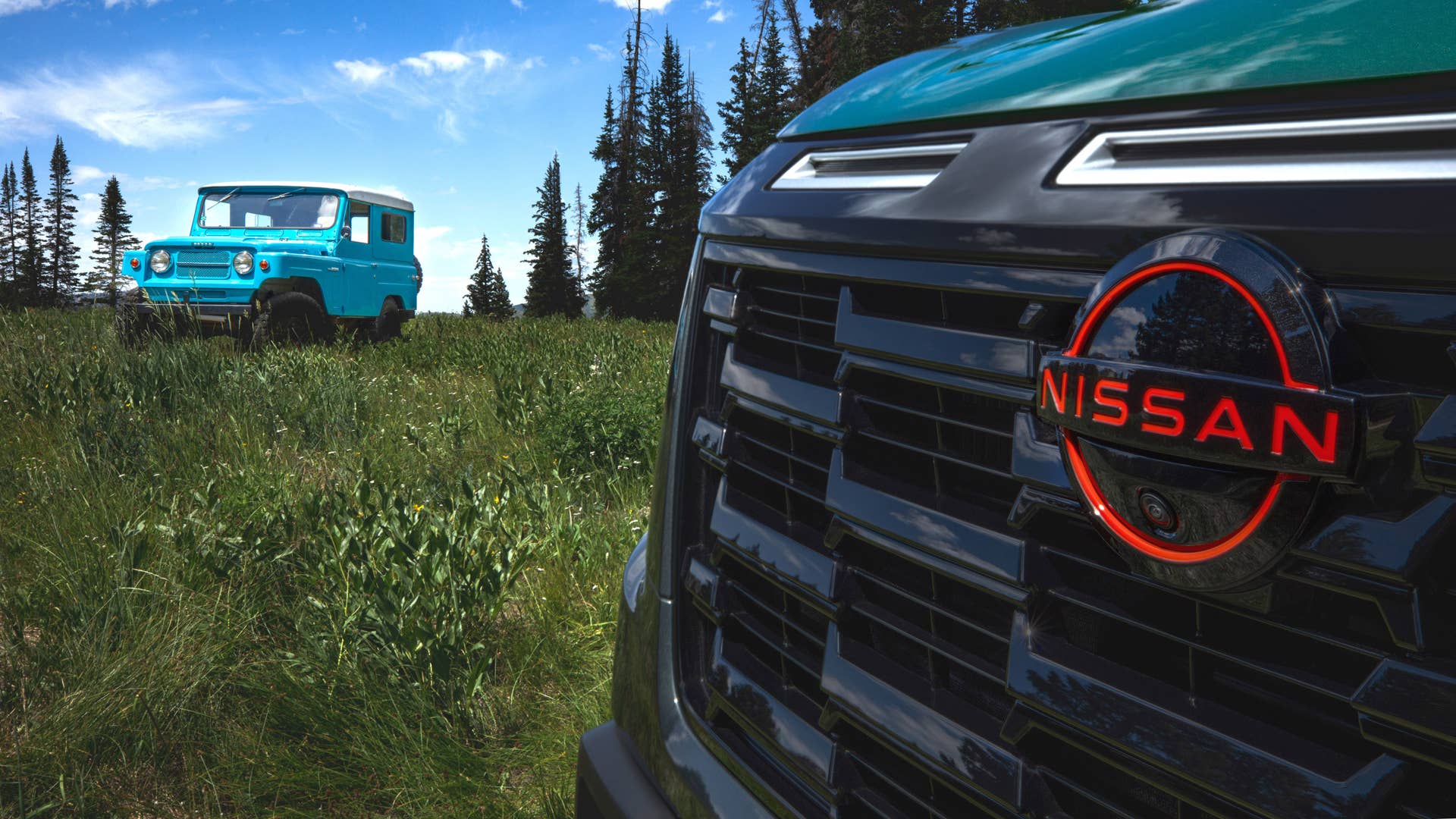
Thanks to the adaptive air suspension and four-wheel independent suspension, the Armada can go from a low car-like ride to a full 11.6 inches of ground clearance off-road. It’s a much more sophisticated suspension system than the Toyota’s and it works well. While the Sequoia has a maximum ground clearance of 9.1 inches, its 23-degree approach angle is just too shallow compared to the Nissan’s 33-degree approach angle.
Both are well armored underneath, but the Nissan will clip fewer obstacles with that added height. The Armada PRO-4X’s 25.5-degree breakover angle and 24.5-degree departure angle beat the Sequoia’s 24-degree breakover angle and 20-degree departure angle.
Nissan
In practice, the Nissan Armada PRO 4X is more capable off-road. The Sequoia is faster and offers a smooth ride, but the Nissan matches it, providing better overall performance on the street. Honestly, it’s like an old-school boxing match, with two opponents going back and forth, blow-to-blow.
Final thoughts
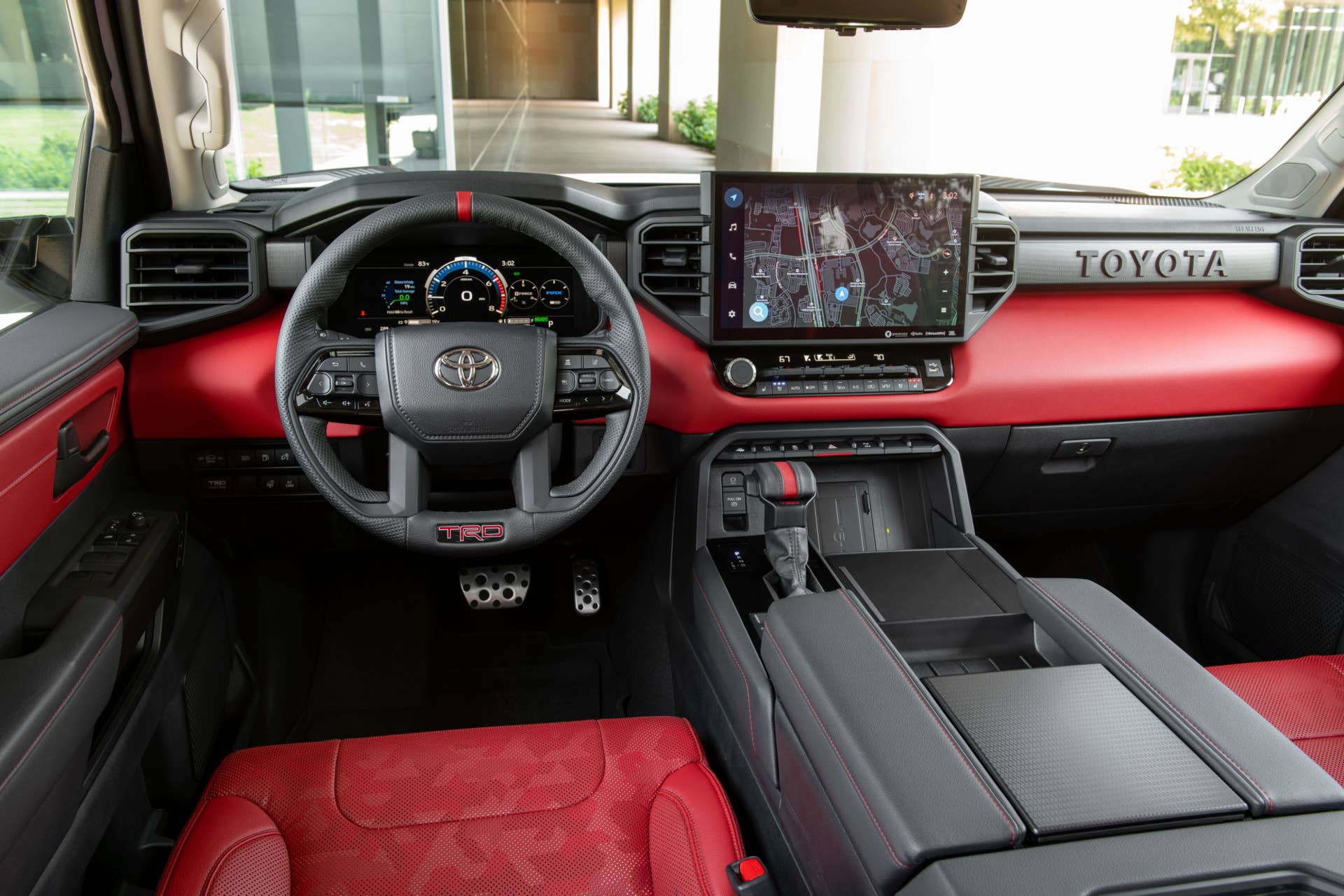
One thing I didn’t mention was the interior, since it’s a bit of a toss-up. Nissan has a much better third row, with more usable space that also looks a bit more luxurious. I feel that Toyota has a higher quality infotainment setup and a more cohesive visual design. Nissan’s seats are more comfortable, almost like sitting on a sofa in the front.
Here’s the bottom line: if you need to tow, and you want the most efficient of these two, the Toyota Sequoia TRD Pro is the way to go. In no way do I wish to diminish its power and capability, but I feel compelled by the Nissan Armada PRO-4X. By the seat of your pants feel and overall off-road capability, it’s simply better. So much so that it would be my pick if it were my money.
About the author

Nathan Adlen
Contributing Writer, Autoblog