
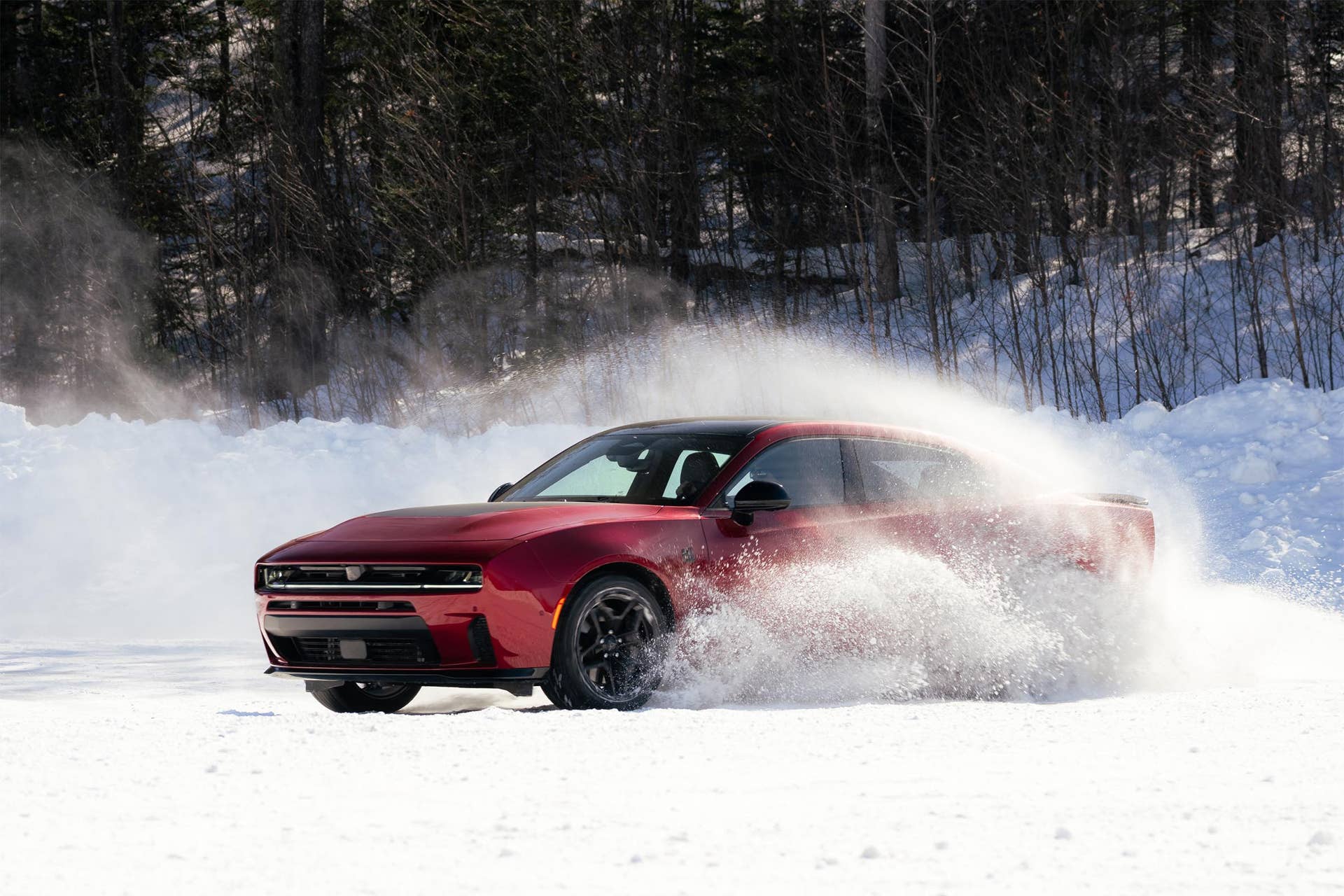
If you’re looking to move fast in Stowe, Vermont, you’ll likely want to get a pair of skis…which left me wondering why I’d been invited to the trendy little town in Northern Vermont earlier this month for a chance to get a first drive in the 2026 Dodge Charger R/T sedan.
Most muscle cars are sold in the so-called “smile belt,” where folks are wont to pull out their parkas when the weather drops below 50 degrees. But on a crisp March morning, with the roads only partially cleared after a couple inches of fresh powder, I headed out on a long, winding route that would eventually take me to the Team O’Neil Rally School in neighboring New Hampshire. There, I learned, I would get the chance to go the next step in foolishness, testing the R/T’s metal on a snow-covered rally course.
Setting off the Alarms
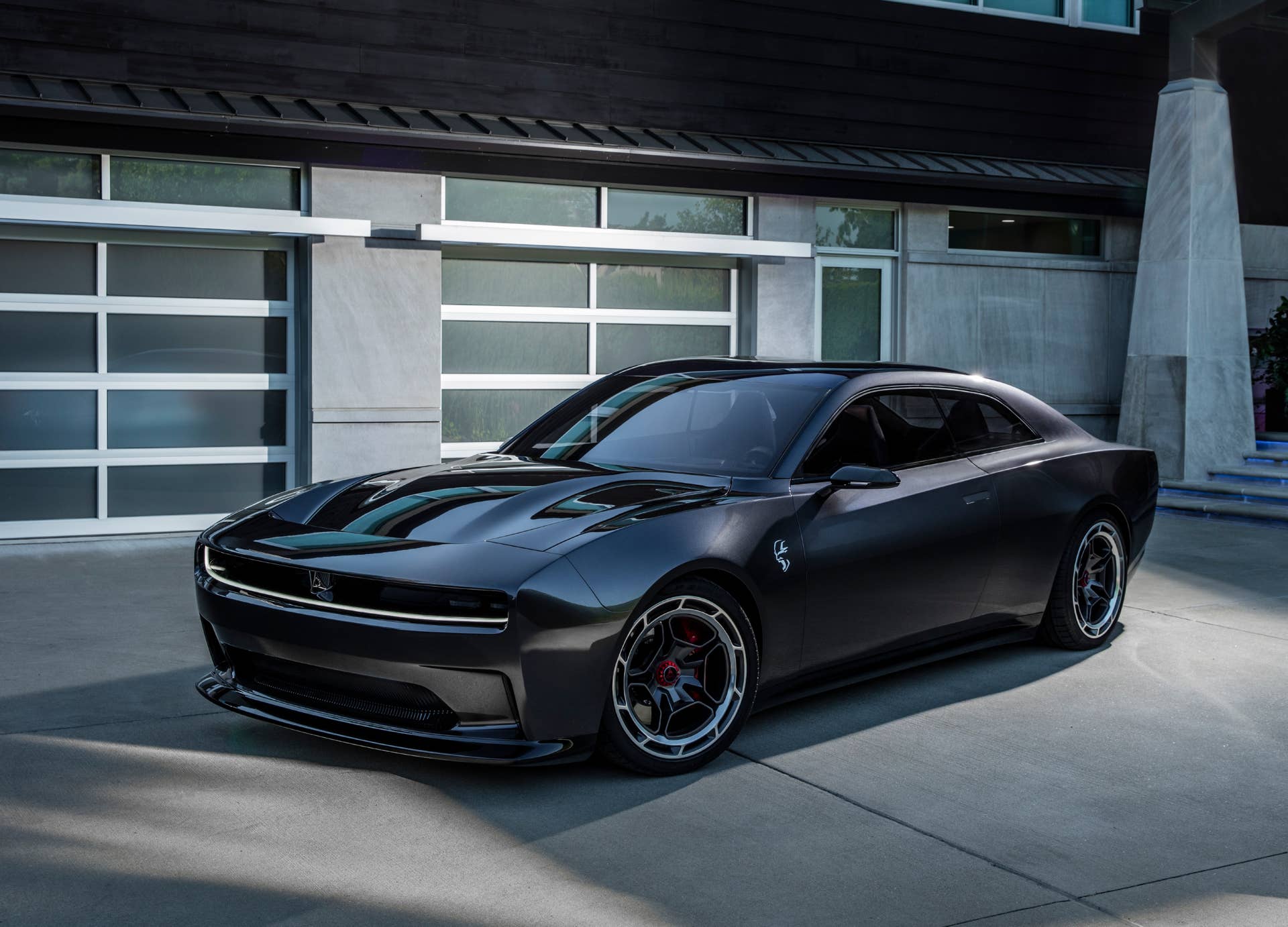
When Dodge announced plans to roll out its first all-new muscle car in decades it generated plenty of controversy. The decision to go all-electric triggered panic among fans of the long-lived Charger and Challenger models – all the more so when it revealed that the Challenger badge would be put in storage.
D
In reality, the battery-powered Charger Daytona was an impressive accomplishment, in Scat Pack configuration delivering a blistering 630 hp – 670 in PowerShot mode – and 627 lb-ft. of torque, enough to hit 60 in just 3.3 seconds and makes the quarter-mile run in 11.5 seconds. But for a sizable share of muscle car traditionalists, it was a bridge too far.
A Sigh of Relief
Just before crowds of performance fans descended on the brand’s headquarters carrying pitchforks and torches, Dodge revealed that it had made good use of the new STLA Large platform underpinning the new Daytona. The new EV, it turns out, would be offered in both coupe and sedan configurations. But the news didn’t stop there. Sans “Daytona,” Charger would be offered in more traditional, gas-powered form, powered by two versions of the new Hurricane Inline-6.
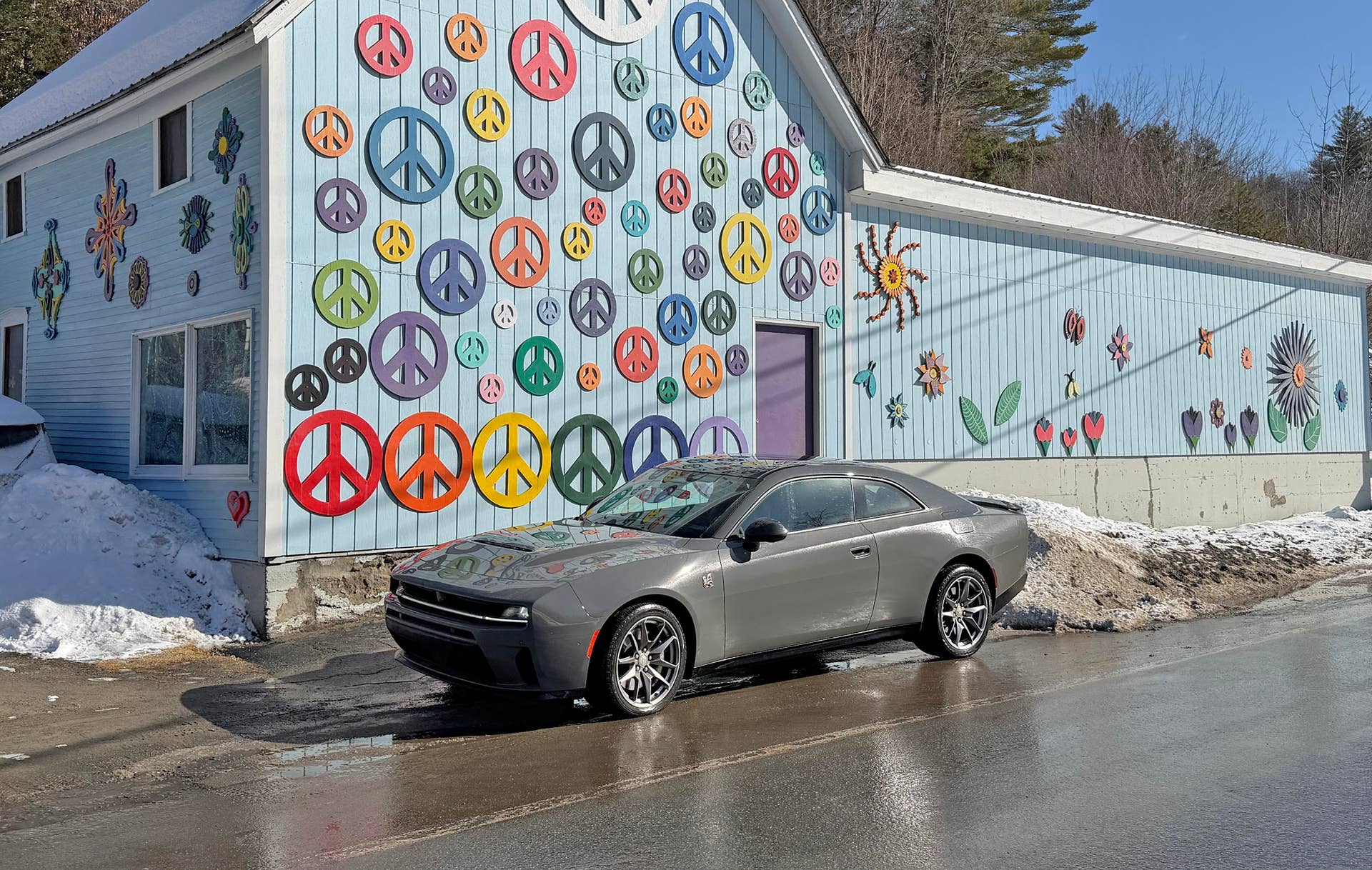
Over the last 16 months or so, the Stellantis performance brand has been rolling out one new variant after another. The latest: the Charger R/T sedan, with a Standard Output version of the 3.0-liter twin-turbo version of the Hurricane, rated for 420 hp and 468 lb-ft of torque. By comparison, that’s 130 hp and 71 lb-ft less than the beefier Scat Pack, due to a number of revisions, including smaller turbochargers. To lay out the performance hierarchy of the Charger line-up, in ascending order
- The 2026 Dodge Charger R/T hits 60 in 4.6 seconds;
- The gas-powered Scat Pack cuts that to 3.9 seconds;
- The all-electric Charger Daytona Scat Pack gets you there in 3.3 seconds.

Why Vermont
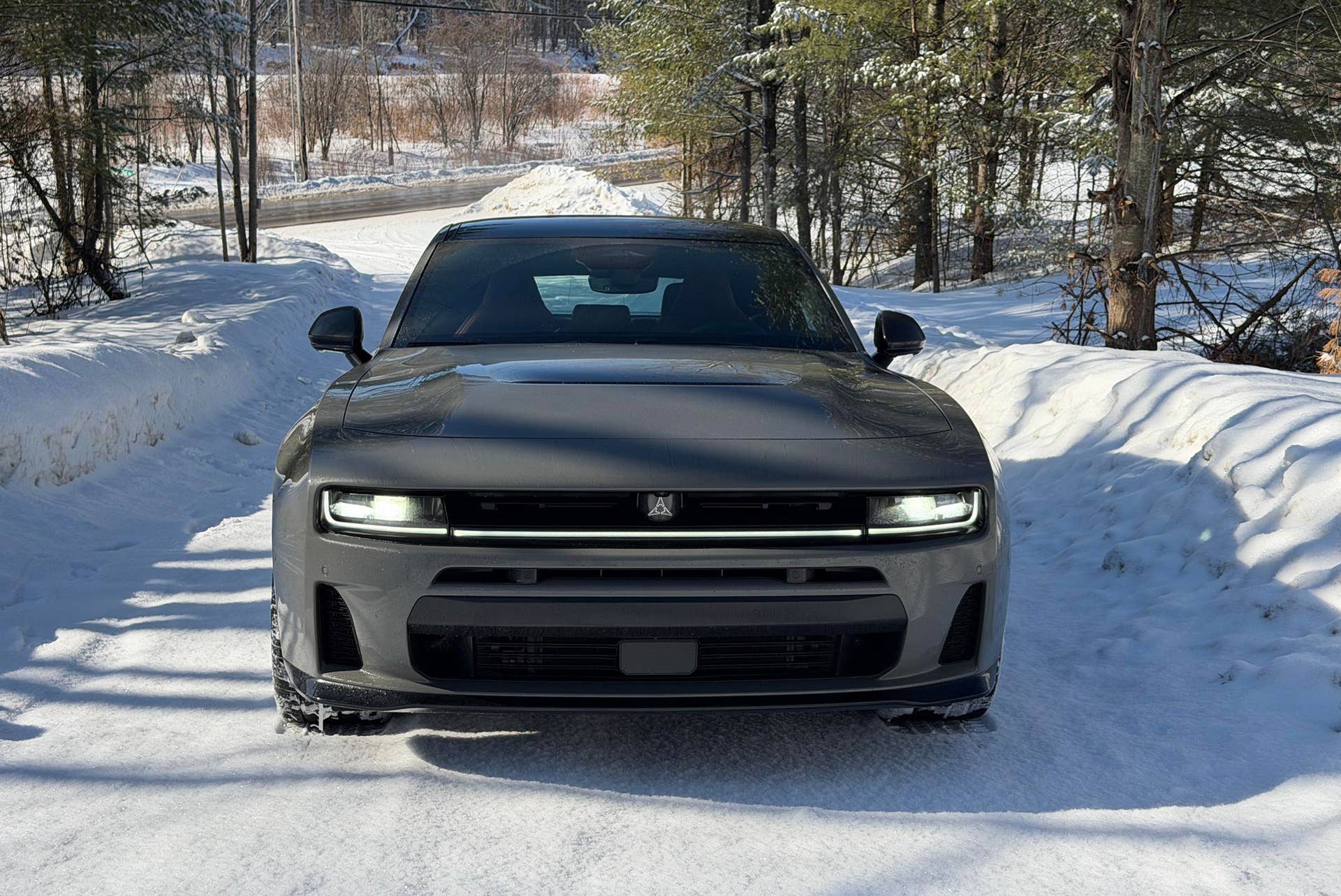
That all sounds good. But I still couldn’t figure out why we were in Vermont. Simple, explained Dodge CEO Matt McAlear: “We want to prove you can use Charger for everyday driving, wherever you live.”

There’s good reason to take him seriously. The new STLA Large architecture is a much more modern and well-engineered platform, as I’d already discovered testing out both the all-electric Daytona and gas-powered Charger Scat Pack models. An inch longer than the old Dodge muscle cars, and two inches wider, they’re also a good bit roomier — adding further flexibility with what Dodge likes to call its “hidden” hatchback. The sedan takes things still further by adding the two rear doors, making it easier for family buyers to handle the mundane chores of everyday life, like buckling the kids into child safety seats.
That all sounds fine – at least on dry pavement. But Stowe? On marginally plowed roads in near-zero temperatures? Dodge pulled a few more rabbits out of its hat, it turns out. All versions of the new muscle car – whether all-electric Daytona or gas-powered Charger – feature all-wheel-drive. And both Hurricane packages feature mechanical limited-slip differentials to better move torque to where it’s needed most. Owners will get a say in that by shifting between various drive modes. On dry pavement, looking to smoke the kid revving up his Mustang GT? Set it to rear-wheel-drive, disconnecting the front axle. For my time in Vermont I stuck with Wet/Snow mode which starts out with a 50/50 front-to-back torque split.
On the Road Again
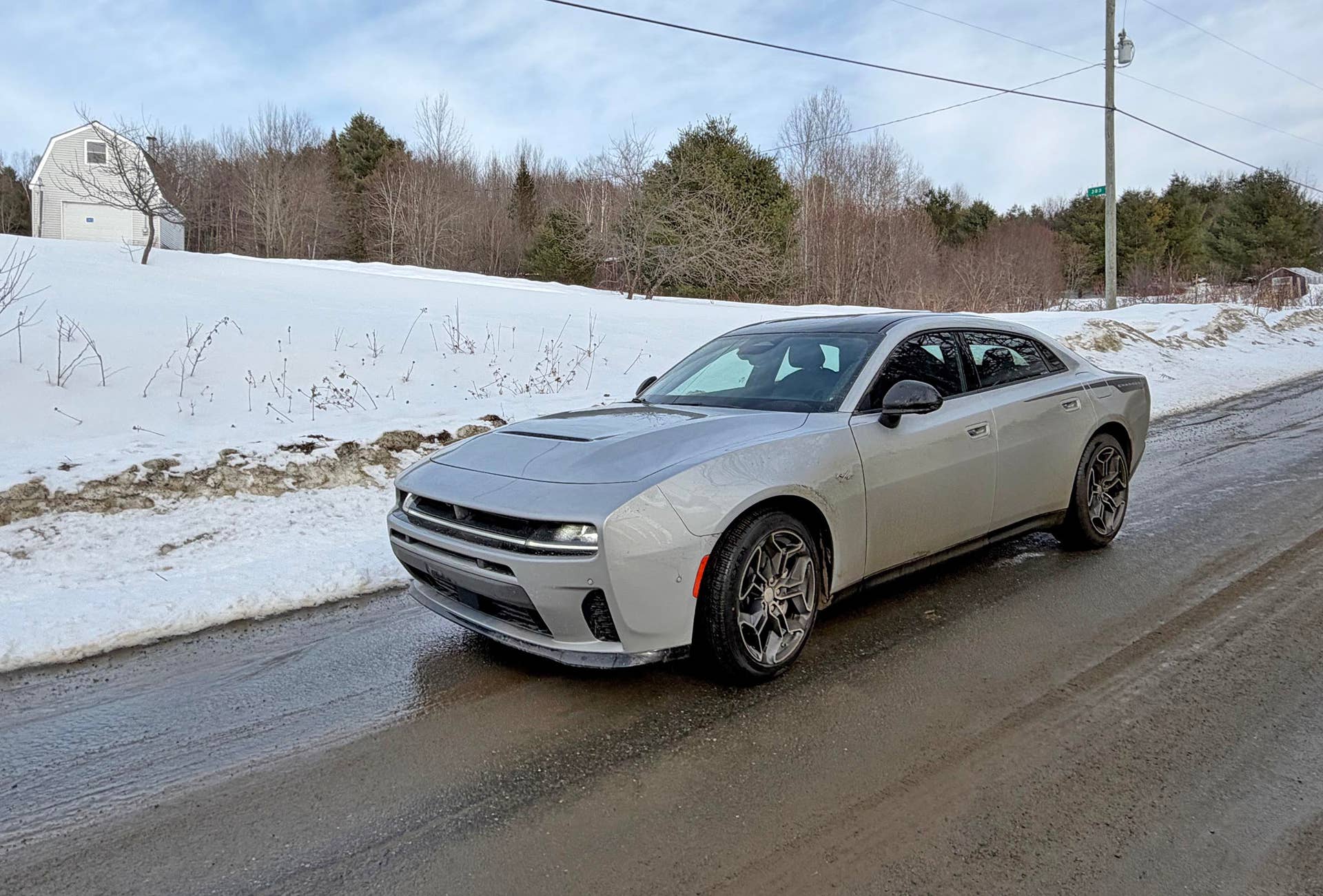
I have to admit I took things rather gingerly as I pulled out of the hotel parking lot and onto roads that the plows had only partially cleared. But even with all-season tires, my Charger felt well-planted and easy to handle, mile by mile encouraging me to pick up my pace. As I found a few well-cleared stretches I was able to exercise the Hurricane I-6, the engine delivering me plenty of power, responding almost intuitively to the most subtle moves of my right foot. My sedan was outfitted with a number of welcome options, starting with the Performance Handling Group featuring niceties like sport seats, a rear spoiler and Launch Control. More relevant to the drive, I also got bigger Brembo brakes, 275/40ZR-20 wheels and tires, and a sport suspension.
The suspension did deliver a bit more jounce on some of Vermont’s more poorly maintained roads, but it added a more general sense of control, especially whenever I did get the chance to open it up a bit. If there was one weakness, steering felt a little numb, though I found I got just the right amount of boost through the unique Charger steering wheel, flattened on both top and bottom. And the Hurricane delivered the sort of exhaust note that reminded me of the power it was ready to unleash at any moment.
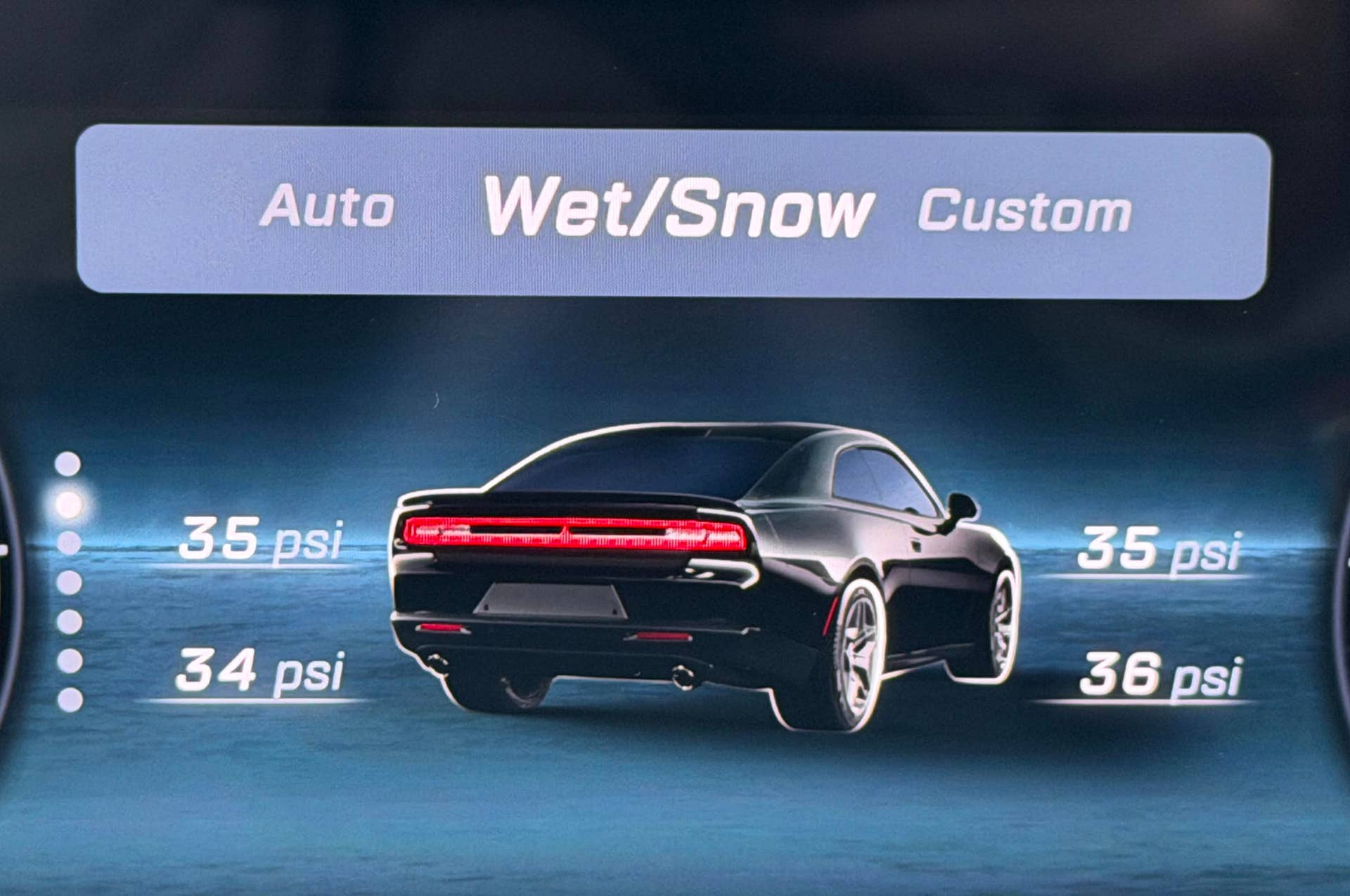
I should note that I also had some time behind the wheel of the Charger Scat Pack while in Vermont. As with the “base” model, I stuck with Wet/Snow mode and only had brief opportunities to open it up. There’s no question the High Output version of the Hurricane would leave the R/T fading away in the rearview mirror. But for all but the most demanding performance drivers, the 420-hp package is plenty for the money.
Rallying
If you’re going to take the new Charger out on the snow, why not take things to the (il)logical limit? With that in mind, I accepted Dodge’s invitation to spent a few hours at the Team O’Neil Rally School in Dalton, New Hampshire. It features an array of courses cut through 583 acres of alpine forest.
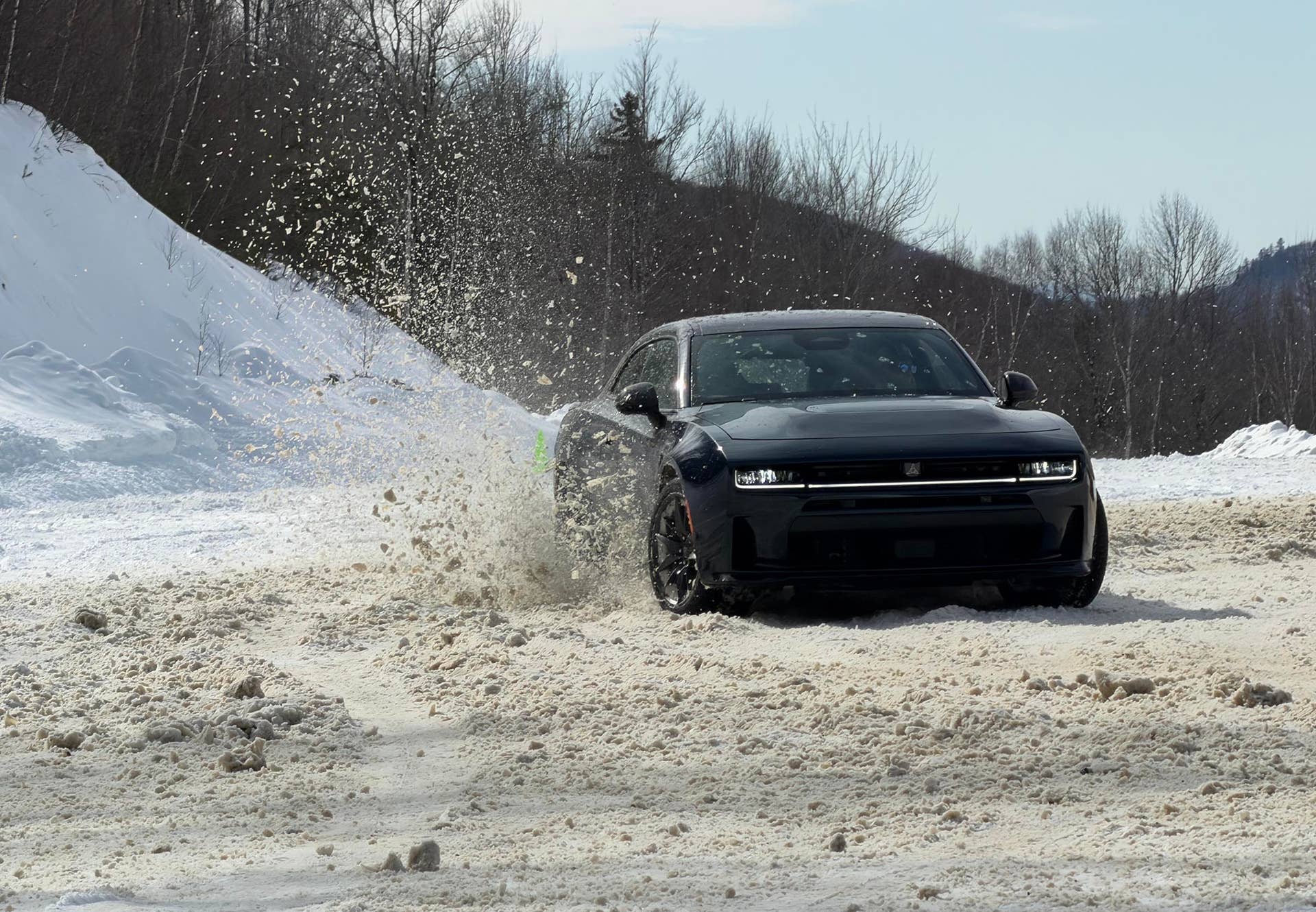
Did I mention none of them get plowed? I was grateful to learn the Chargers we’d drive there would be fitted with winter tires. One could immediately see the difference setting off on the all-but-glazed-ice skid pad that my instructor wisely had me start out on. To my surprise, I was able to keep my Charger pointed more or less precisely where I wanted using throttle and steering wheel, each lap picking up a little speed. At that point, we moved out onto a slalom course and finally, one of the school’s rally tracks. Frankly, I couldn’t imagine doing this in the old Charger, even the AWD package. Yet the new sedan proved surprisingly easy to maneuver around the course.
Day-to-Day
By the end of my day’s driving, I clearly understood why Dodge had invited me up to Vermont. It’s one thing to talk about a vehicle’s capabilities, it’s another matter entirely to prove it, especially in a place you’d be least likely to believe that pitch.
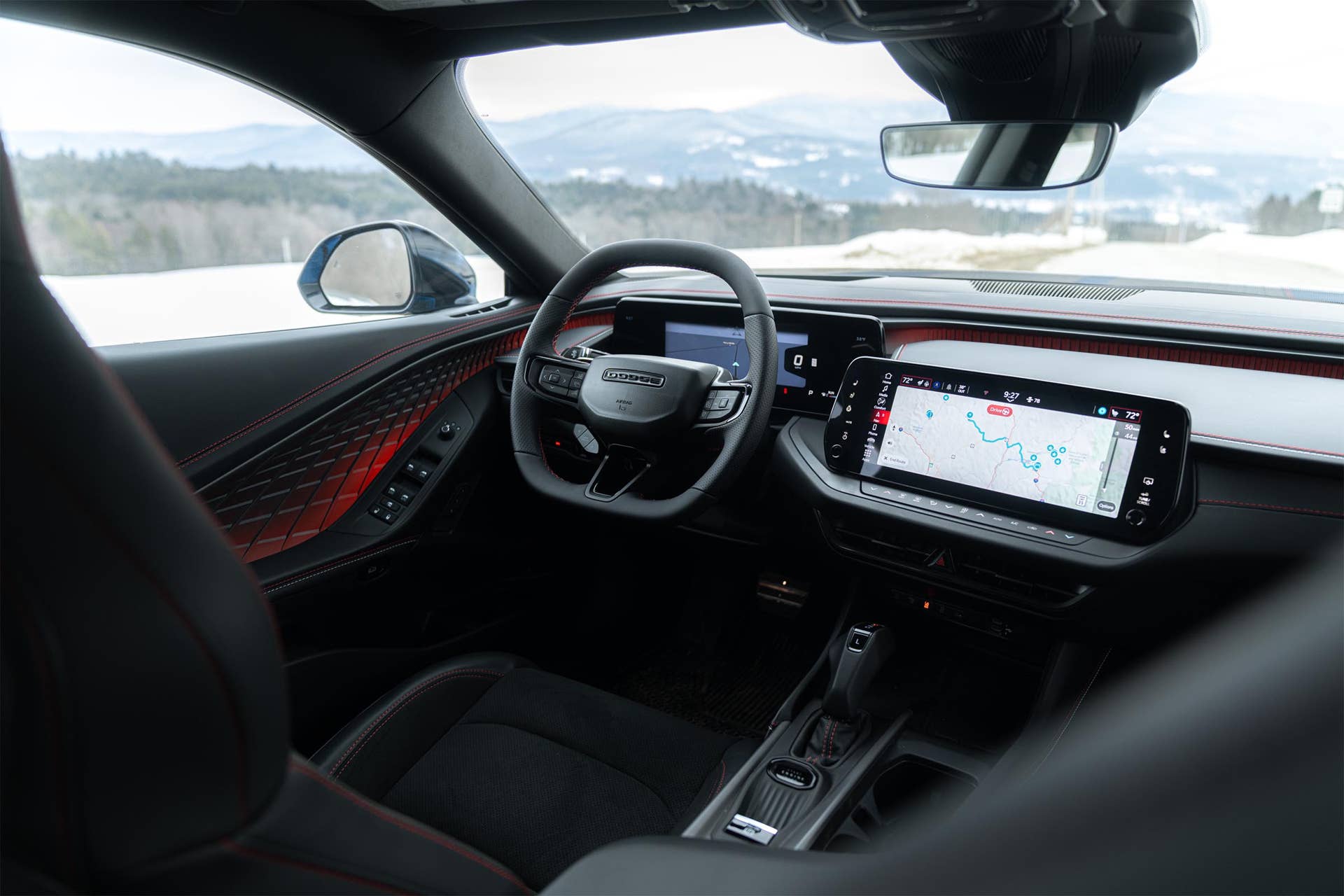
Of course, you’re not going to buy a muscle car specifically to drive in the snow. The obvious question is what’s the Charger R/T sedan like to live with every day. I’d already had time with the coupe in less inclement weather and was impressed with it on a day-to-day basis. If you’ve not drunk the SUV Kool-Aid, you’ll find a handsome, coupe-like sedan that offers a roomy, well-appointed cabin, even in the base trim package. The R/T sedan I drove in Vermont featured the Driver Convenience Group and boasted the larger 16-inch gauge cluster and 12.3-inch touchscreen, as well as a useful head-up display. The good news is that key climate control can be operated by manual buttons just below the display – though you have to use the touchscreen for seat and steering wheel heaters.
Add to the package an assortment of passive and high-tech safety features that should prove particularly appealing to family buyers. That includes forward collision warnings with automatic emergency braking, as well as active cruise control. For now, at least, Charger does not offer the hands-free driving system available in the Dodge Daytona.
Pricing
The base price for the 2026 Dodge Charger R/T comes in at $53,990, including destination fees. True, that’s more $7,000 over the old R/T, but you’re getting substantially more power and features and a much more competent vehicle overall. Fully loaded, however, you’re pushing into the $70,000 range, and that is likely to be a stretch for many traditional muscle car buyers.
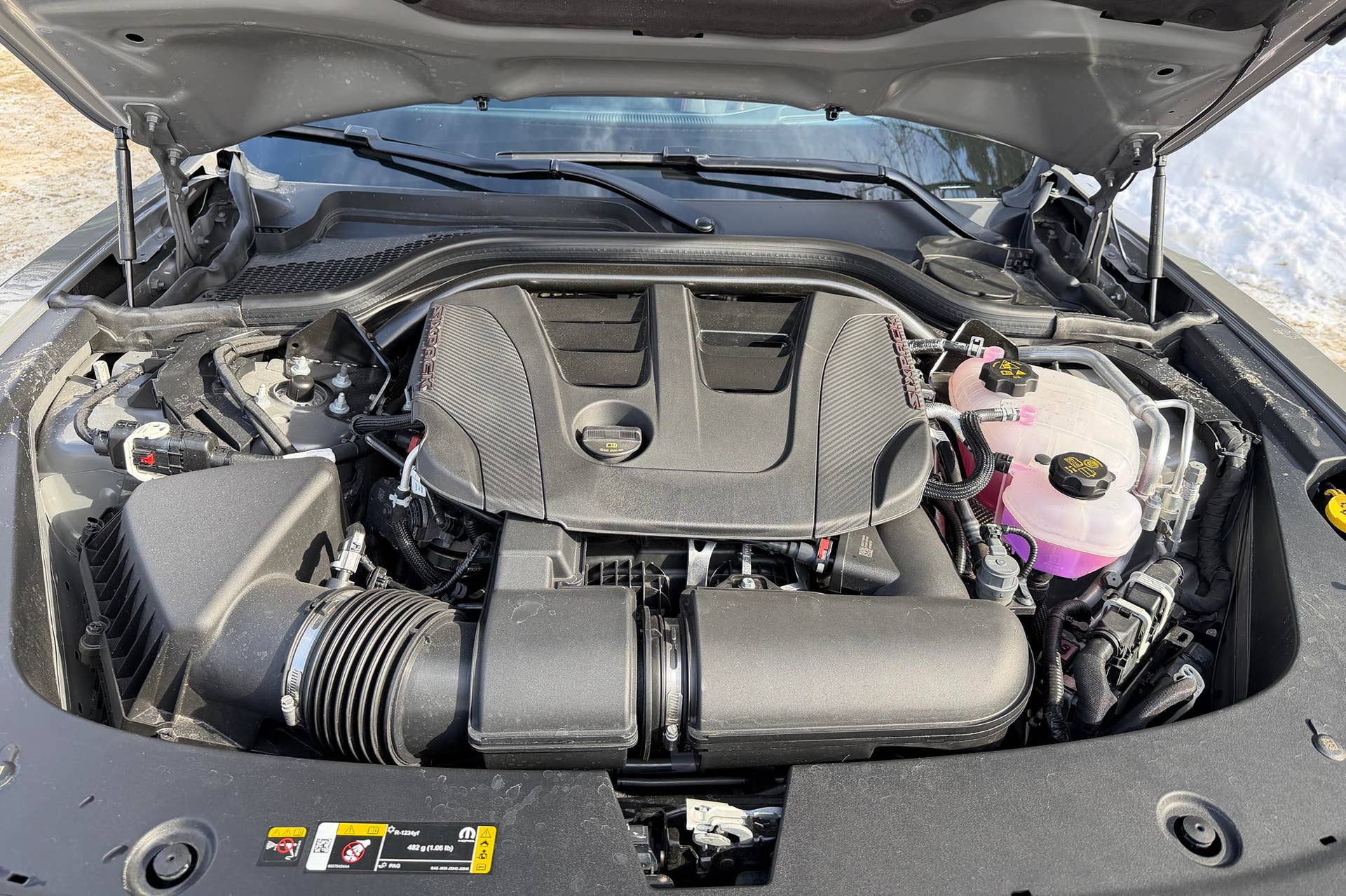
As for the Hurricane engine – which is marketed as the “Sixpack” for both Scat Pack and R/T versions of the Charger, it’s a massive upgrade from the old 5.7 and 6.4-liter mills Dodge previously offered. But there are still plenty of V-8 loyalists, as sibling brand Ram discovered when it launched an all-new Ram 1500 with its own Hurricane-6. The truck brand has been struggling to keep up with demand since reviving the Hemi V-8 last summer. So, the much-asked question: might Dodge bring back the Hemi? Kevin Hellman, the senior VP of Dodge performance products avoided the question beyond suggesting there might be room under the new Charger’s long hood. If it does come back it would be in the form of a next-generation Hellcat. Considering the 2026 Scat Pack-powered sedan starts at $58,990 – with delivery included – you can expect a next-generation Hellcat won’t come cheap.
About the author

Paul Eisenstein
Editor-at-Large, Autoblog