
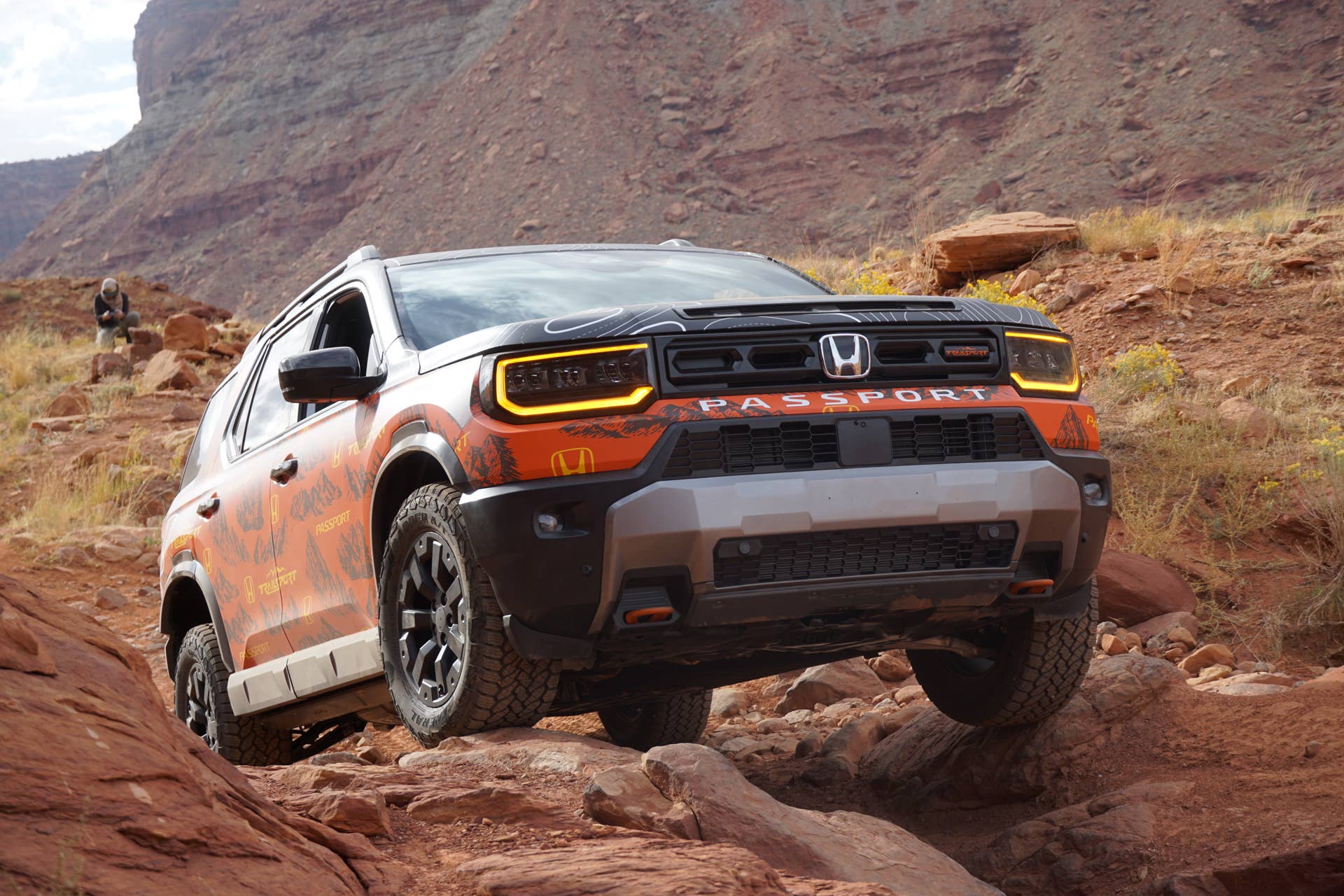
Like many automakers leaning into the trend of beefed-up “soft-roaders,” the 2026 Honda Passport TrailSport brings some added muscle. Now, while there are plenty of specifics I’m not privy to (think all the key numbers), and I’m holding off on too much speculation, this is, for the most part, a seat-of-the-pants review of this nearly all-new crossover.
Honda
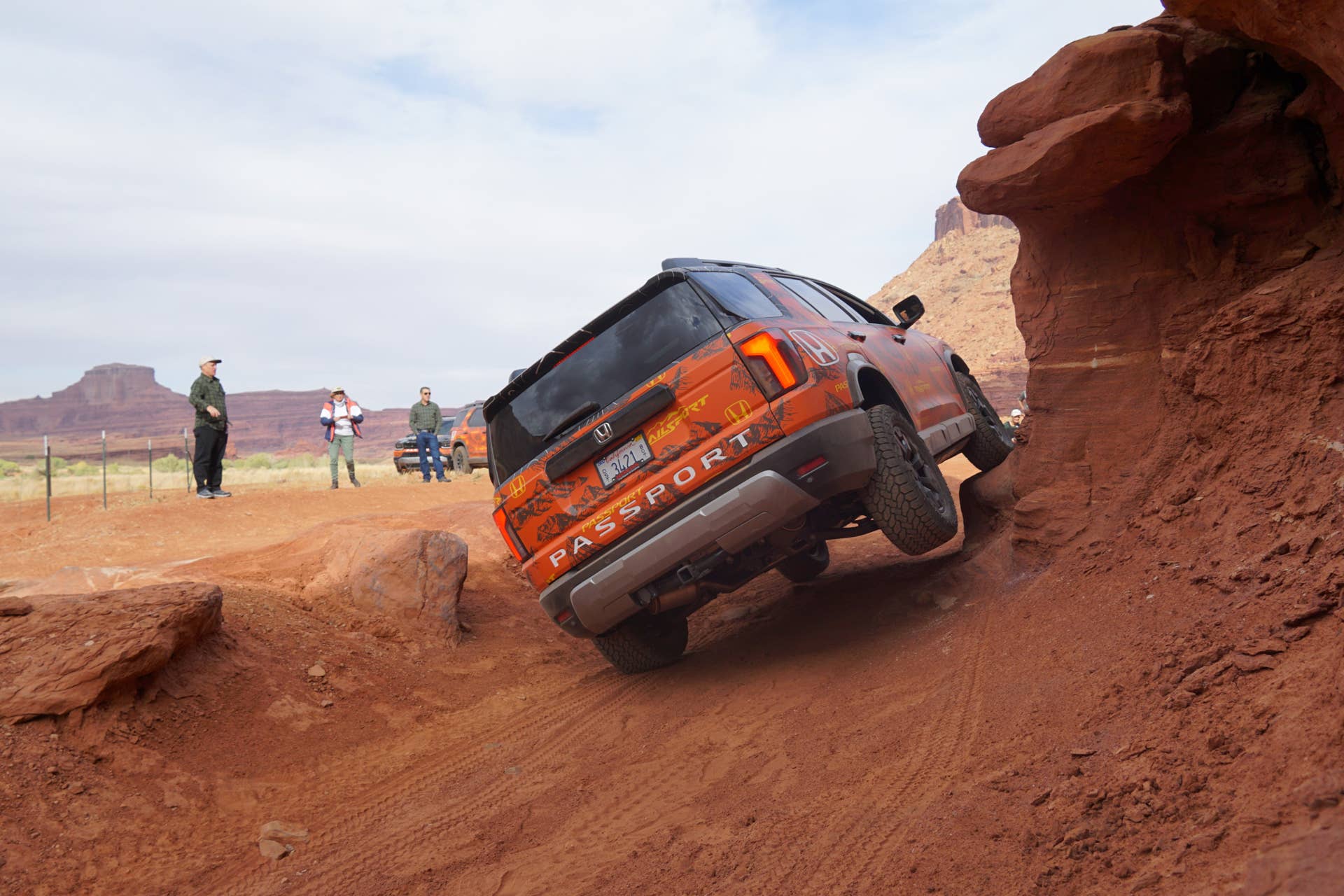
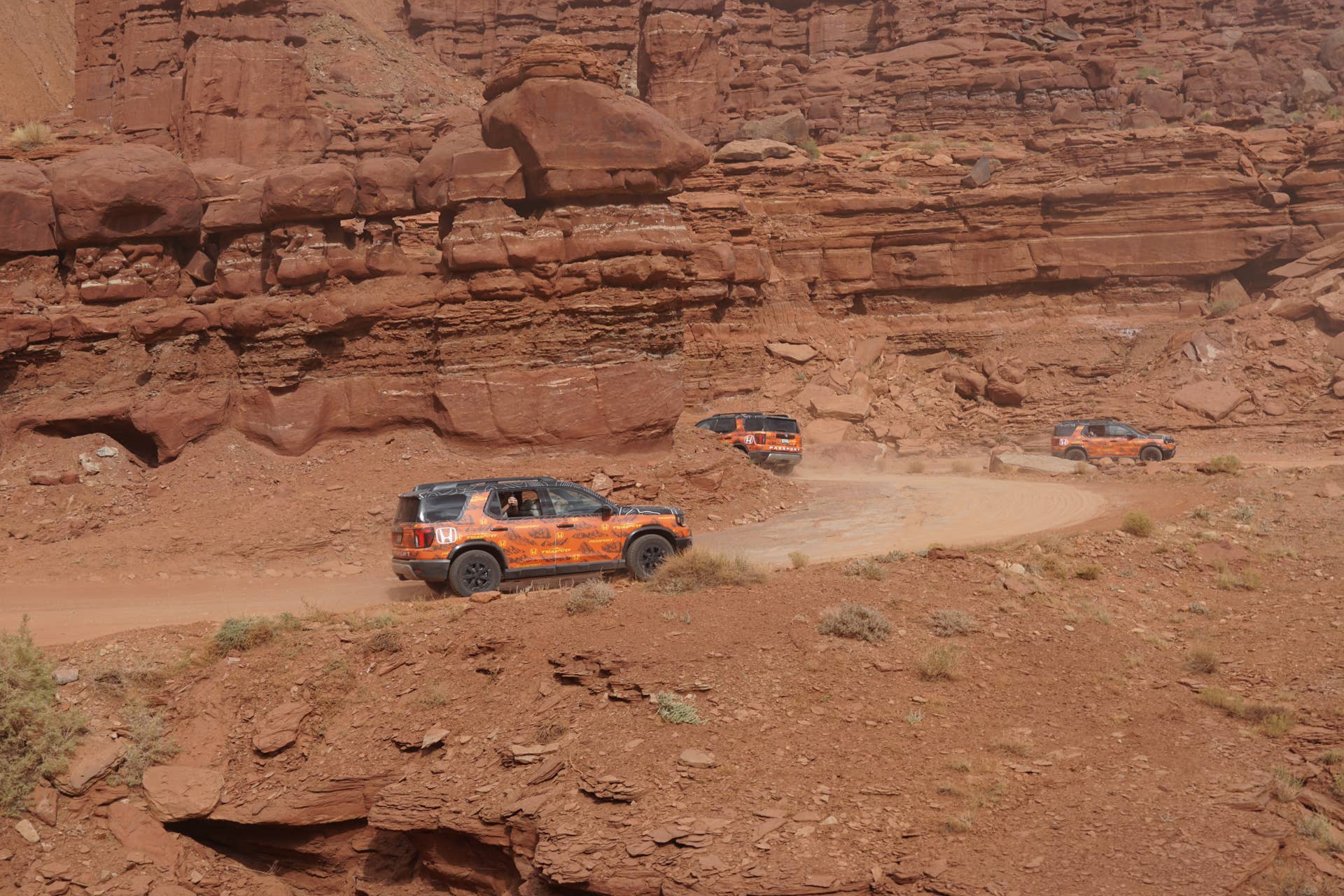
Honda brought a handful of journalist to Moab, Utah to go on a lead-follow journey through off-road trails. Already quite capable on rough trails, Honda wanted to prove that they built something even more capable.
Two box design – looking nothing like its old self
Based on the new PF7 platform, shared with the new MDX, the interior and exterior of the 2026 Honda Passport TrailSport look all-new.
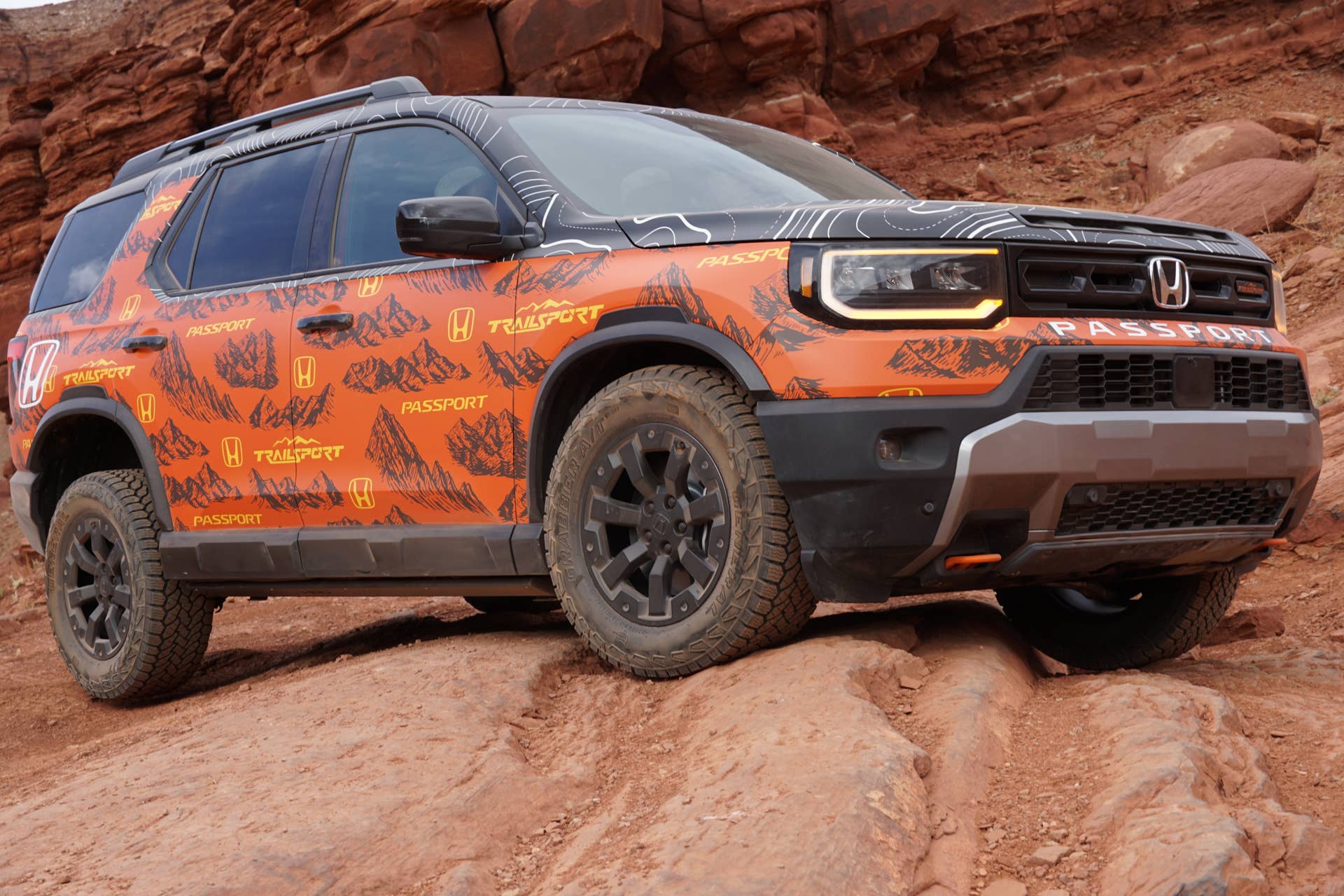
It gains 50-percent better rear torsion rigidity and 72-percent front lateral rigidity over the previous model. The silhouette looks much boxier, like a Bronco Sport, or even a Defender 90. Overhangs are shorter, and the wheel-wells hold more tire – which is a good thing.
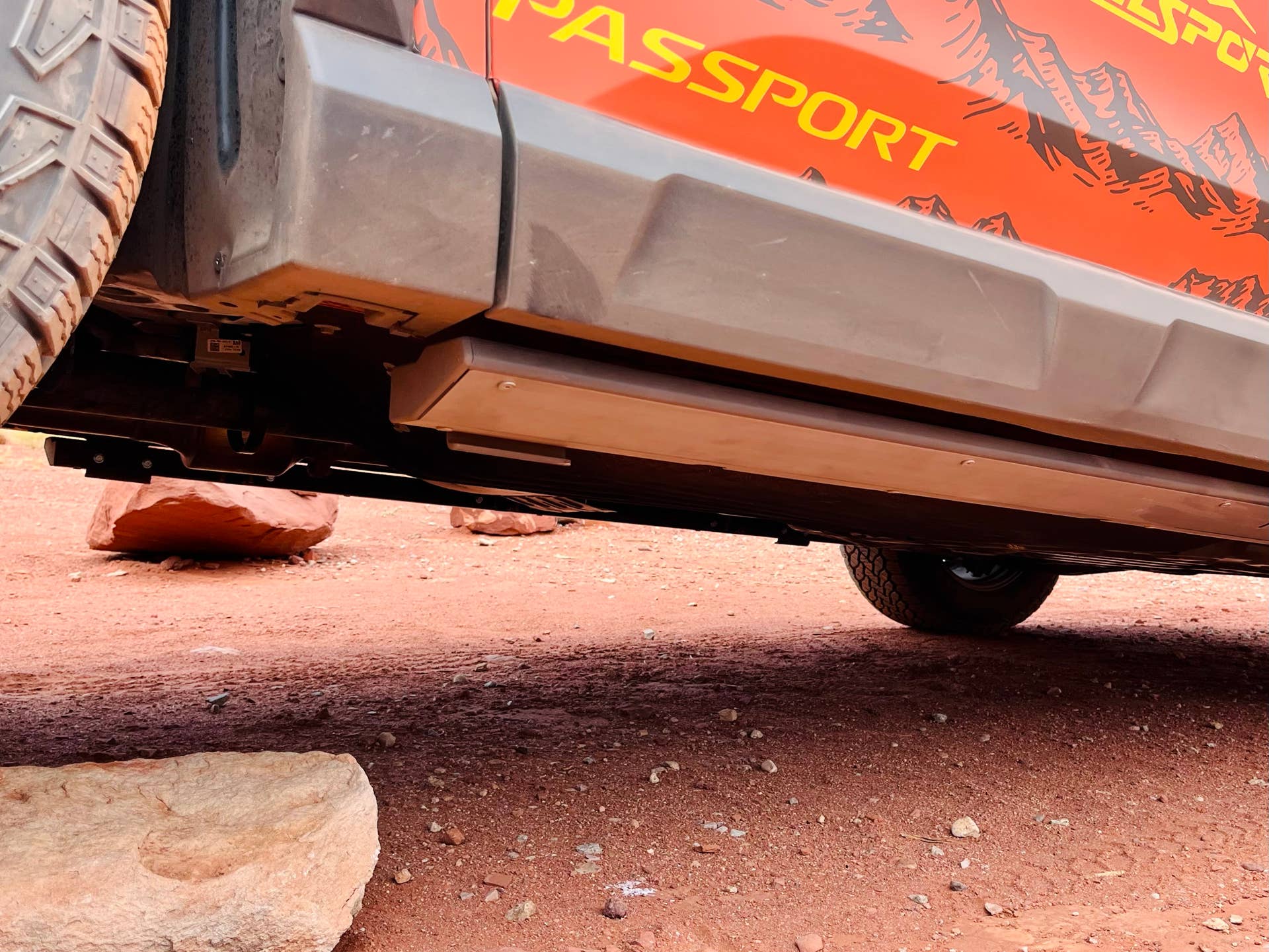
Equipped with 31-inch General Grabber ATs, mounted on 18-inch aluminum alloy wheels, it sure looks capable. In addition, new skid-plates abound. The one under the nose protects everything from the radiator, to part of the transmission. There’s an additional armor plate under the fuel tank too.
Honda
The most notable part (from my prospective) was the addition of body-length sliders. They can be dealer-installed and consist of extruded aluminum covered by steel. In my off-road sojourn, I hit every skid-plate and slider dozens of times – hard. Other than light scuffs, there was no noticeable damage.
A bit too low-slung for some
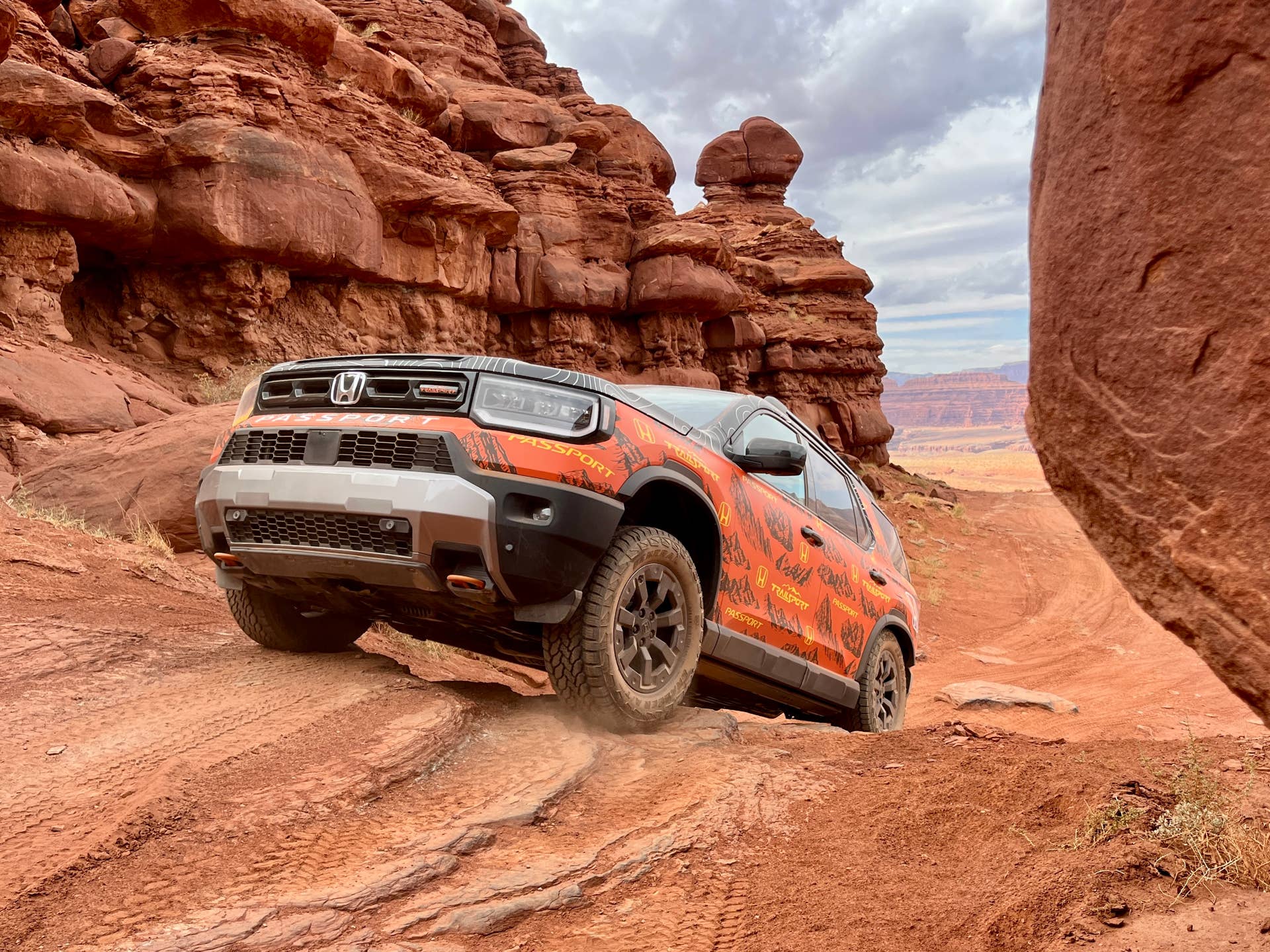
Once again, no numbers were made available, but it looks like the 2026 Honda Passport TrailSport has around 8-inches of ground clearance. That’s not ideal for bouncing over rocky obstacles; however, it does have that armor. It’s a tradeoff.
In order to make this boxy vehicle efficient, it can’t be too tall; nore can it be too heavy. Larger tires, heavier suspension, lockers, a frame… all heavy. Killing aerodynamics, and adding parasitic drag would make for a less efficient vehicle. Adhering to EPA rules tends to force automakers to compromise. That’s one reason it’s so low.
Honda
In addition, its low-slug stance has a lot to do with the consumer using this vehicle as a commuter. It’s built for day-to-day driving comfort, efficiency and utility. Yet, it has the feel of something more macho.
That’s the whole point: packing in a family, their gear and hitting the trail to a rugged campsite. That’s the image so many automakers want to impart with these types of vehicles.
Driving the 2026 Honda Passport TrailSport in the rough
I’m fortunate enough to have driven many of the trails we explored many times in the past. Those previous drives were in Jeeps, Land Cruisers, Land Rovers, Subarus and Hyundais – among others. As such, I have a deep pool of past vehicles to measure the Honda’s performance against.
First: the i-VTM4 all-wheel drive (AWD) system has been improved. It can now handle more torque sent to the rear wheels. The system was already impressive, it sends up to 70-percent of the power to the rear clutches, then up to 100-percent of that power can be vectored to the rear wheel needing it. In its off-road mode, it simply needs more right pedal to get over obstacles that would confound many others.
Honda
The hill-descent mode is new and simple to use. Once active, touch to brake to slow and tap the accelerator to descend up to 12-mph. Easy-peasy.
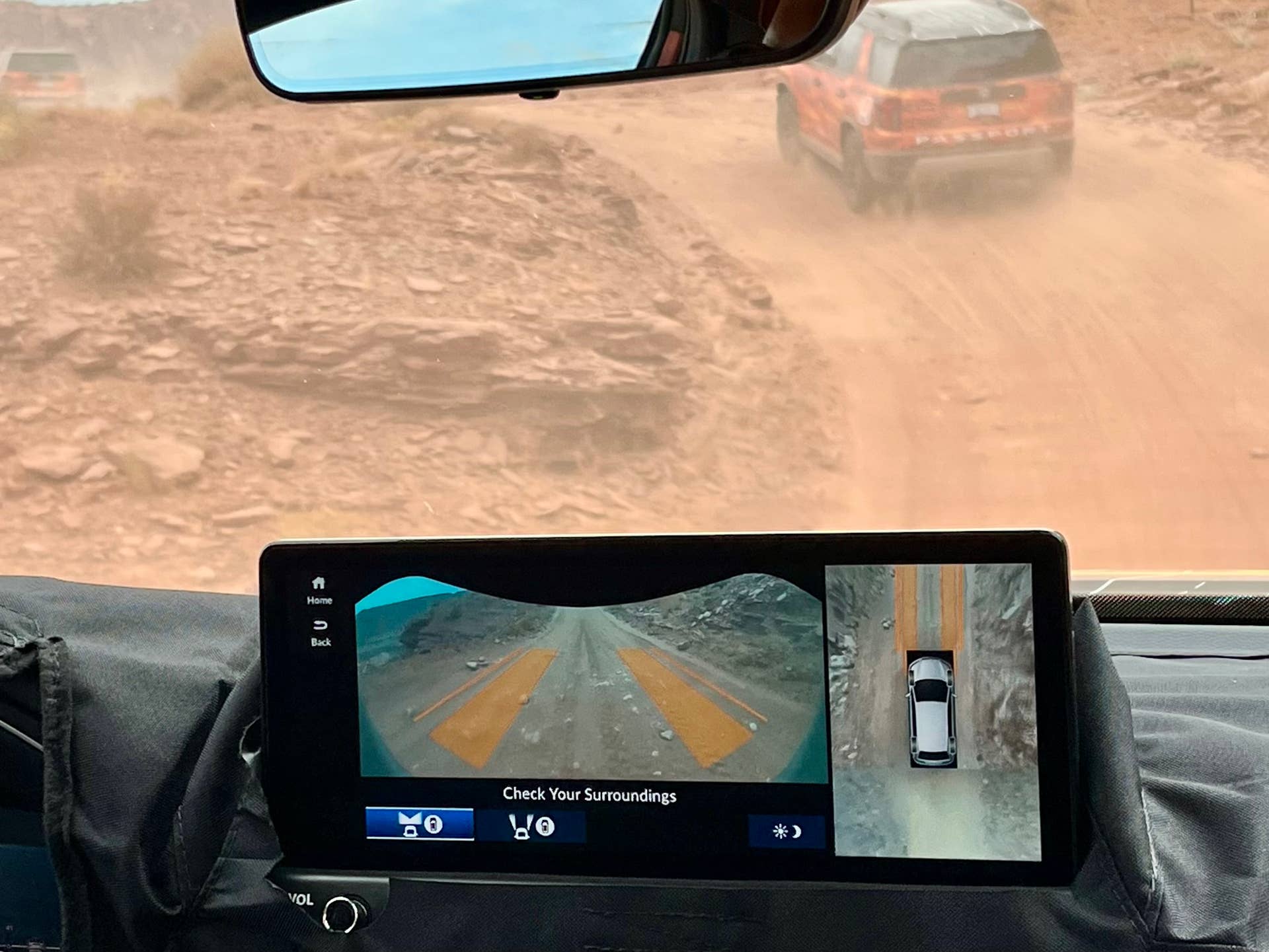
The TrailWatch active camera system works at low speeds to help you pick your way through obstacles. It has an invisible hood, allowing you to peek over an obstacle you’re scaling. This is handy for those who have no spotter outside.
Honda
Crack, boom, bang!
No, Honda did not have us air-down the tire pressure – which I approve of. Why? Three reasons:
- We didn’t need the extra traction with the terrain we were dealing with. Honda wanted to simulate the way most consumers’ hit the trails – right off the street. No prep, and no way to re-inflate their tires afterwards.
- Lowering this already low vehicle by dropping air pressure is a bad idea. Any lower, I fear those beefy skid-plates might have been pushed too far. I banged and smashed over many rocks for hours.
- Driving with low-pressure in your tires on the street is a terrible idea. Many miles were driven on the road by our Honda “minders” who sat with us over the entirety of the drive, I was only permitted to drive off-pavement, they did all of the street driving.
The grip from those General Grabber A/Ts wasn’t perfect, but it felt like a good tradeoff. I have no complaints about their overall performance.
Power? Yes it has some
Annoyingly, we weren’t privy to any mechanical information. In fact, EPA numbers, pricing, weights, dimensions, colors – just about everything was off the table. This was just an off-road preview.
With that being said, we all knew it had a version of the previous vehicle’s 3.5-liter V6, and a 10-speed automatic transmission. Despite widespread speculation, there was no hybrid on the off-road journey.
It should be more powerful than the previous model, and it may be more efficient. Despite its boxy shape, beefier off-road components, stronger structure, the overall vehicle appears to be more advanced throughout. It’s safe to say: it should have equivariant, if not better numbers.
Honda
Final Thoughts
I’m one of those weirdos who gets a kick out of taking soft-road vehicles (no frames, no solid axles, no low-range) into the rough. I feel it’s a great way to hold the automaker’s feet over the fire. In my estimation: if they dare to make a vehicle look like it can hit the trails, let’s put them to the test.
Nearly every automaker has built a macho-looking soft-roader – but few can handle anything more than a trench, or maybe a few ruts and snow. These vehicles allow the owner to use their imagination about their actual capability.
There are exceptions, and this 2026 Honda Passport TrailSport straddles both sides. It’s packaged as, and presented as a capable light-duty off-road vehicle. Hell, it even has removable Molle panels (they hold 11-lbs each) inside. Mucho macho!
Still, it has limitations. Most of its issues off-road came from its low ground clearance. With that being said: its remarkably capable, utilitarian and should fit that rugged so many consumers love.
Bottom line: it’s even better than its forebearer, and many competitors off-road.
About the author

Nathan Adlen
Contributing Writer, Autoblog