
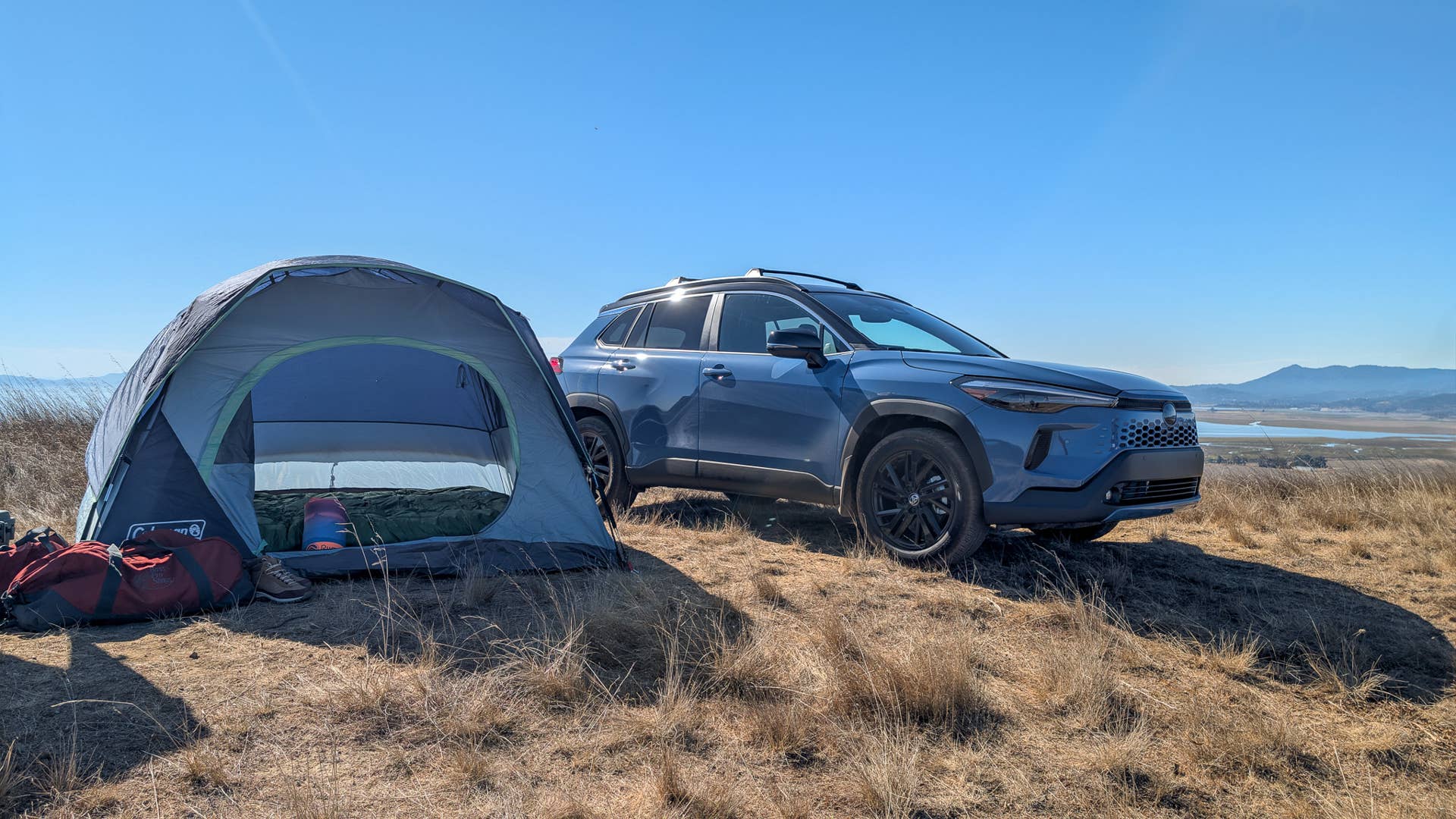
Key Points
- The 2026 Toyota Corolla Cross Hybrid offers affordable pricing, strong fuel economy, and compact SUV practicality.
- Easy car-seat installation, wide doors, rear air vents, and USB-C ports support family use.
- Limited rear legroom and cargo space make it less suitable for growing families or teenagers.
When the Toyota Corolla Cross debuted in 2022, it was heavily marketed as an affordable, efficient, and perfectly sized SUV for those who live in larger cities that require tight parking. Like its namesake, the Corolla Cross does, in fact, share a platform with the Corolla, so it’s smaller than the RAV4 by quite a bit: it’s shorter by 6 inches, 4 inches shorter, and narrower by an inch. So, if someone wanted something the size of a Corolla but not a compact sedan, the Corolla Cross happily bridges that gap. And with a starting price of $22,195 and a max price of $26,352 back in 2022, it made itself perfect for first car buyers, college students, or as a first car for teens.
Kristen Brown
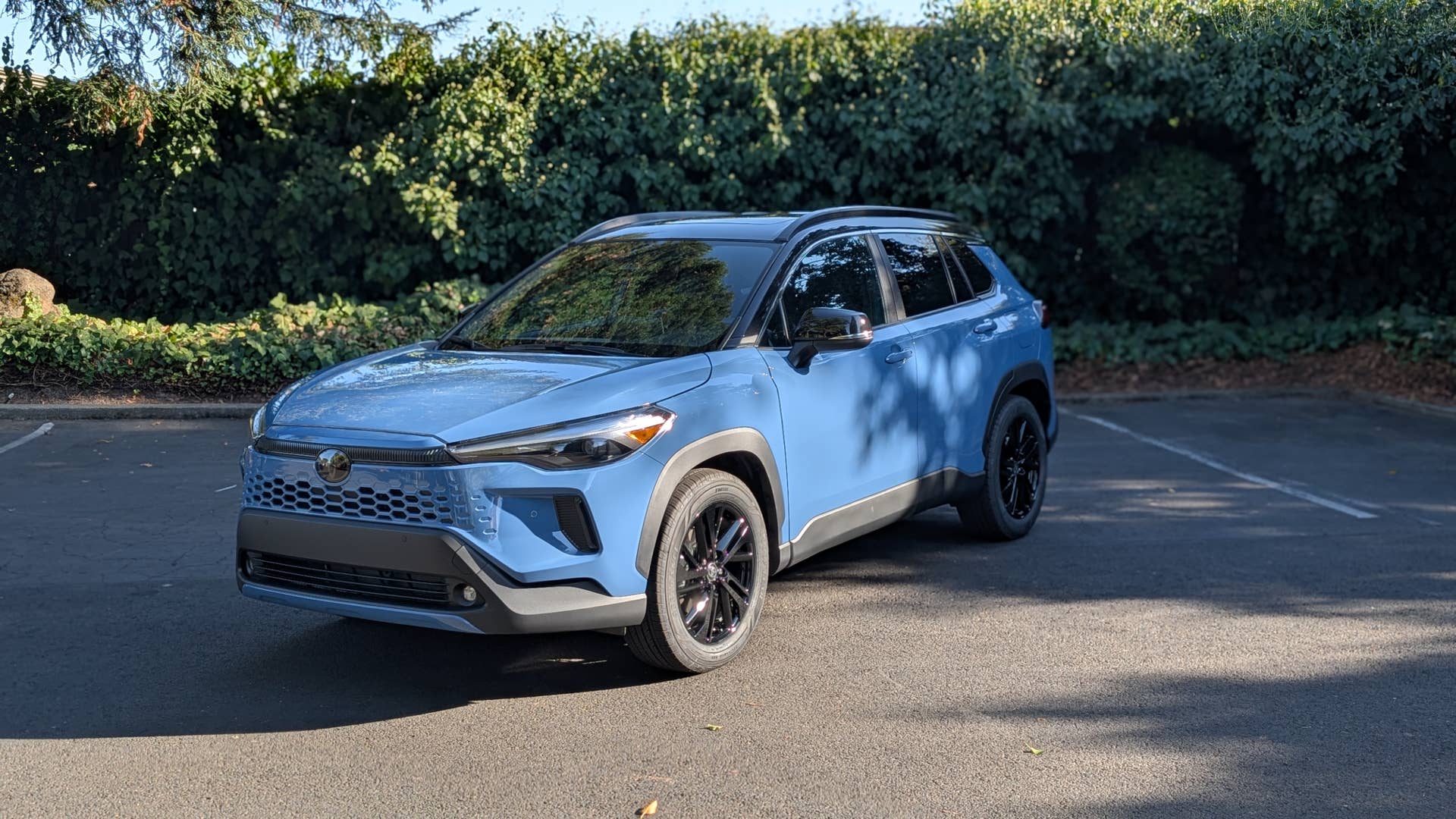
The same mantra is sung in 2026. Though thanks to a hybrid option (brought to us in 2023) and some technological advances, the Corolla Cross is a bit more expensive—though still quite affordable. As a gas-only SUV, the price ranges from $25,335 to $30,260, while the hybrid starts at $29,795 and tops out at $33,830. This time around, though, Toyota’s been meticulous about mentioning that the Corolla Cross hybrid is especially attractive to young families who don’t want something as big as the RAV4 or Highlander. So, when I saw that a Corolla Cross Hybrid XSE was on my schedule, I was excited to test its family-friendliness.
Car seats were blissfully easy to install
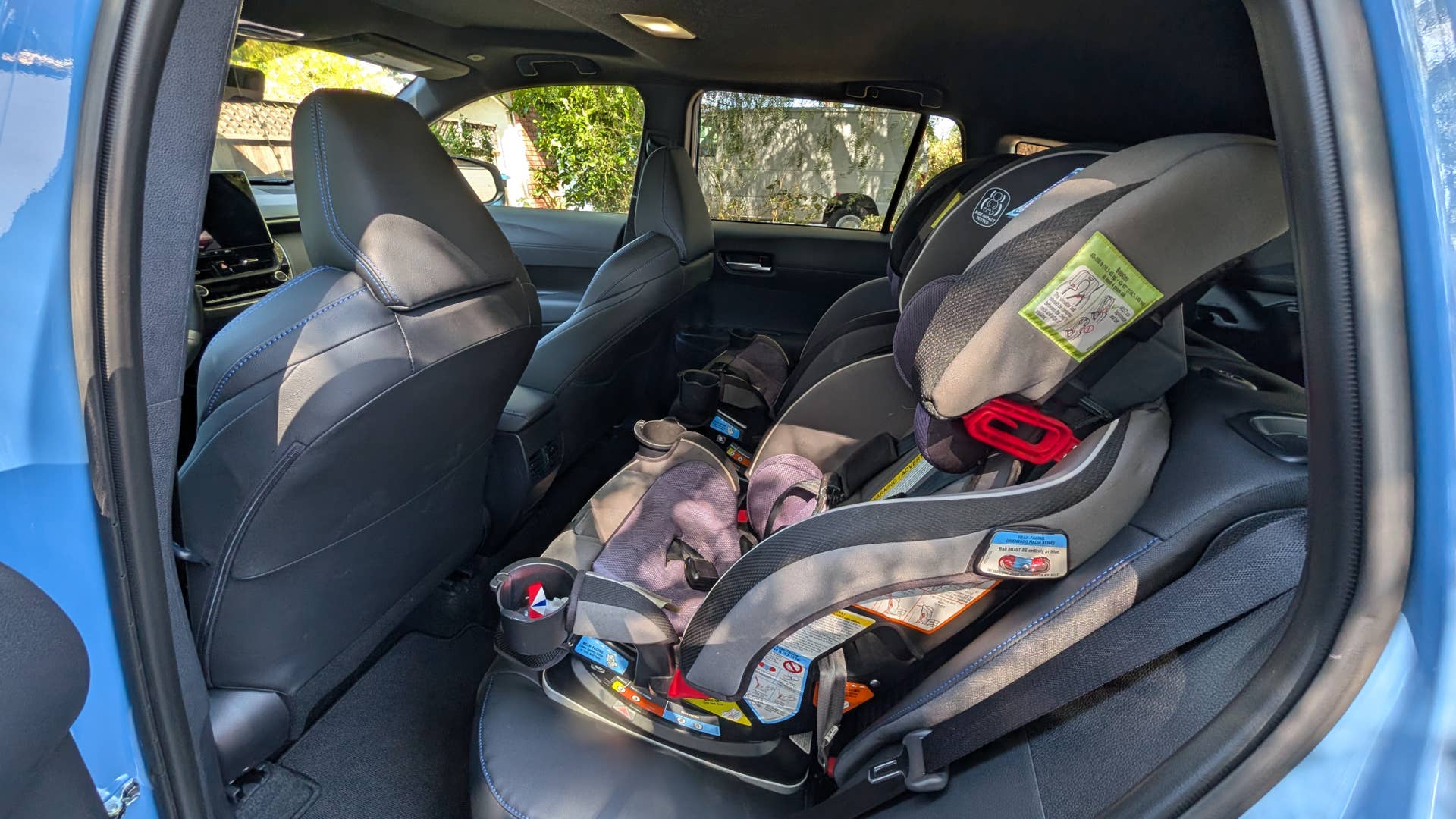
One of the first things I put under a microscope when it comes to family-friendliness is whether or not my daughters’ car seats are easy to install. And the Corolla Cross Hybrid XSE certainly delivered. The ISOFIX lower LATCH anchor points are very easy to access behind removable plastic covers instead of being buried deep under the seat bight. I usually just put the covers in the door panel pocket to avoid losing them. And, thankfully, the headrests are easily removable, so my daughters’ front-facing car seats sat flush against the seat back. The top tether point was a breeze, just on the back of the seat, and I did have to go through the trunk to tighten the top tether. But it was quick and easy, because my tester came with the optional power lift gate. And since the trunk isn’t humongous, I didn’t have to crawl into it to tighten it all up.
Kristen Brown
It took me easily 2-3 minutes to get both of their car seats installed without a hassle. The doors open wide, they’re lightweight, the entry point is at the perfect height, and the ride height makes getting the car seat in and out simple. I didn’t have to bend over or contort myself to get the seats in and out, and my toddlers loved how easy it was for them to climb in and out of it, too. They weren’t fans of the fairly small windows, though. The windows sit higher on the door, so they didn’t have the best outward visibility. Usually a large sunroof helps appease my gremlins, but the optional sunroof is underwhelming. Otherwise, though, they loved it.
Toyota traded cargo space for legroom, so it’s a bit cramped back there
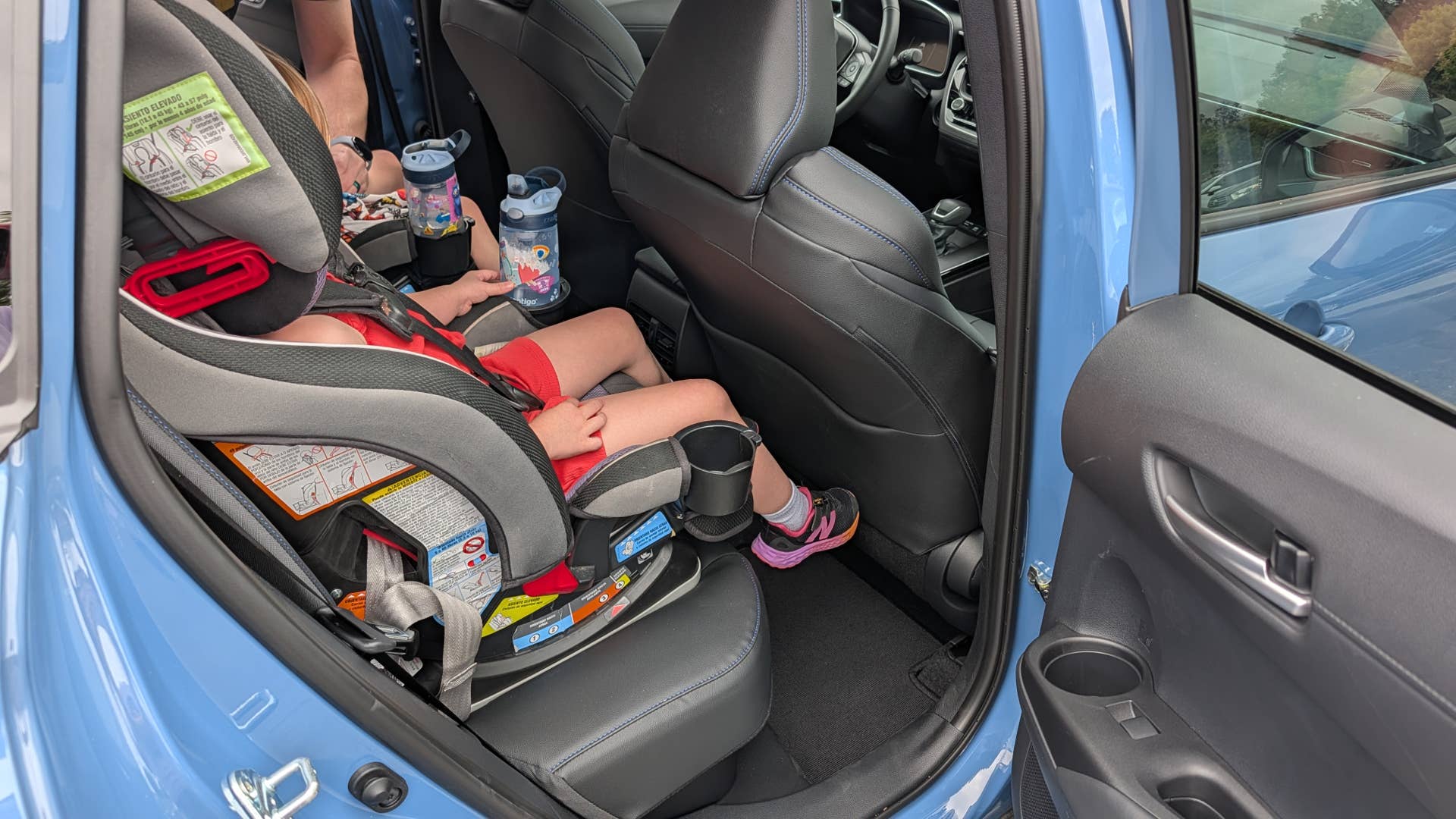
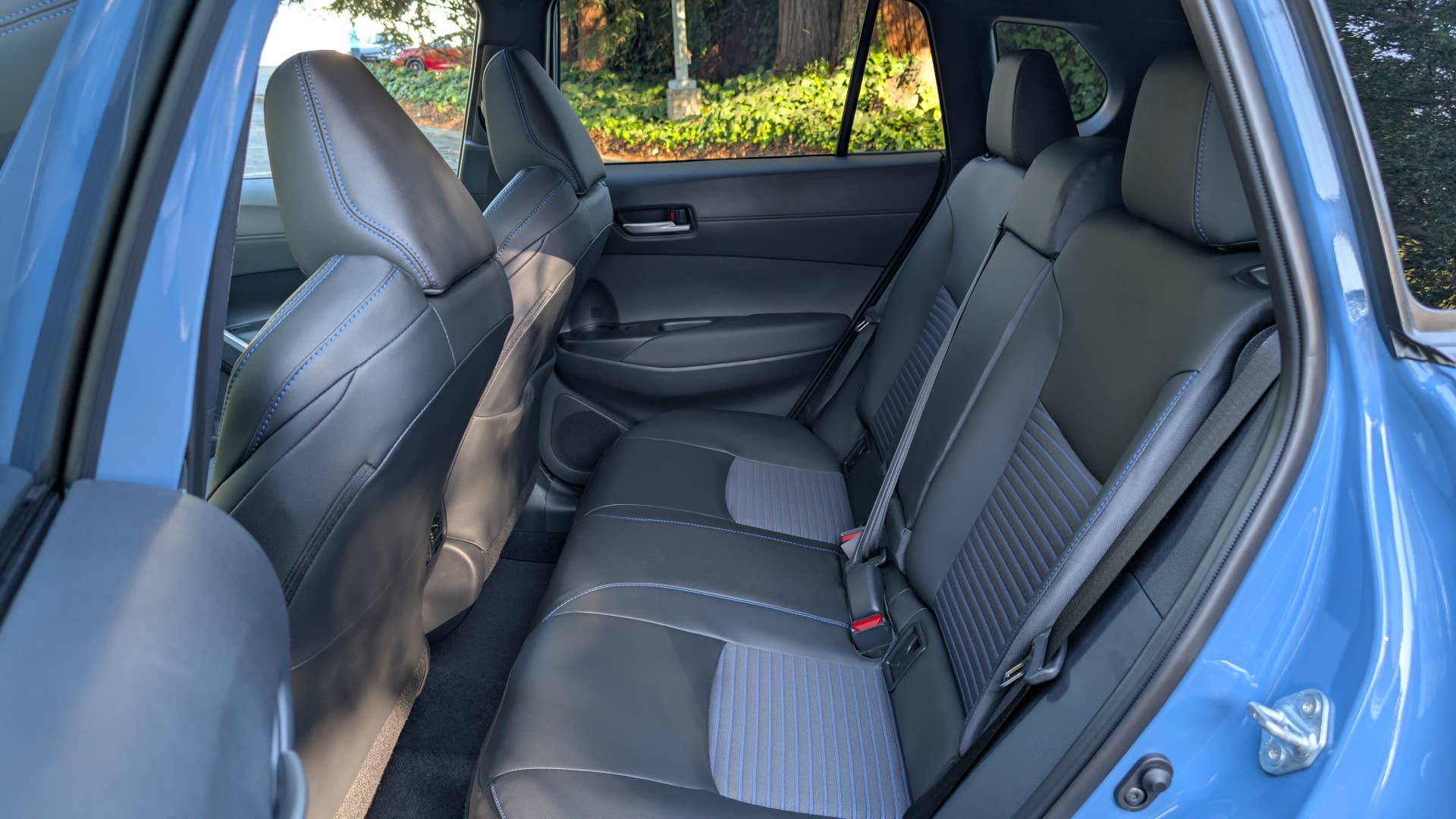
The Toyota Corolla Cross Hybrid’s compactness truly shows in the rear seats. There’s just 32.0 inches of legroom back there, so while it worked fairly well for car seats, the lack of space for their little legs to move was noticeably cramped. My husband and I were regularly frustrated by the near-constant kicks and pushes on the back of our seats. For kids in booster seats or elementary-aged kids that don’t require boosters, it’s not likely to be as big of an issue for them. However, when they sprout into lanky teenagers, they will feel incredibly cramped back there. Since the seats don’t recline or slide on tracks, there’s no flexibility, either. For front-facing seats, they’ll fit, but someone will have to compromise on legroom and slide forward.
Everyone, though, is pretty well taken care of. Dedicated A/C vents in the rear are pretty hard to come by at this price range and vehicle size, so I was very surprised to see them and two USB-C charging ports. So, older kids will be kept cool and happy on longer drives as needed.
Kristen Brown
Kristen Brown
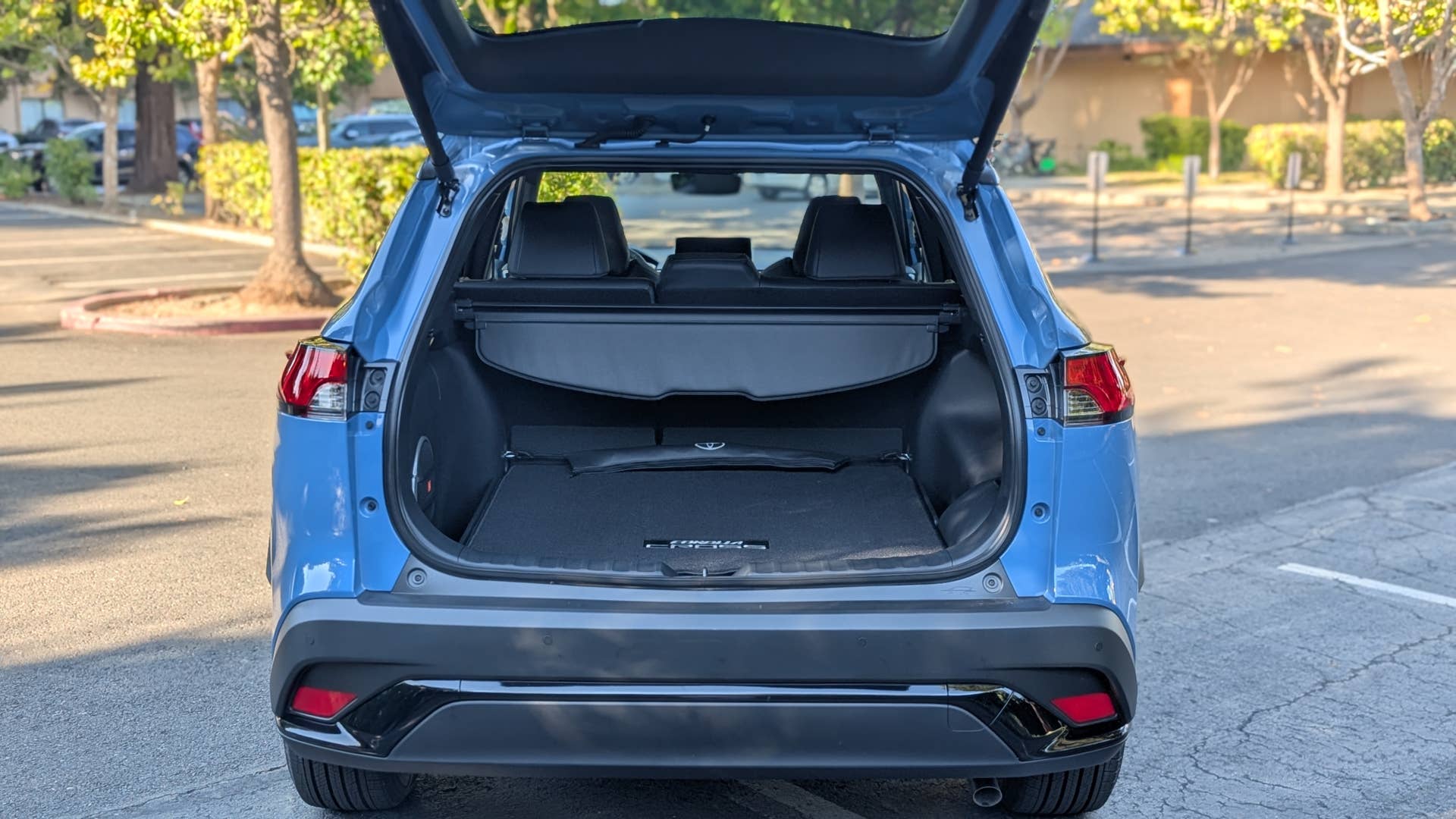
And let’s say your lanky teenager is now invested in sports. The Corolla Cross Hybrid has a rear cargo space capacity of 21.5 cubic feet. And while that may be enough for a single stroller, groceries, and enough gear for a weekend getaway, you will absolutely be wishing you spent the extra money on the larger RAV4 when your kids’ extracurricular activities require the extra space. Now, when that teen starts driving, the Corolla Cross Hybrid is the efficient, safe, and reliable little car that’s perfect for getting them to and from school, sports practice, and then back home—but that’s a conversation for a later time.
Kristen Brown
As for adults, the rear seats aren’t the coziest, but they’re not the worst, either. I stand a little above 5’8”, and there was just enough room for my knees and elbows. For fun, I looked into the rear legroom specs of my 2011 Subaru Forester, which is roughly the same size as the Corolla Cross. One thing became clear: the rear cargo space was prioritized over rear legroom. And that’s not a bad thing if you don’t have kids, but if you do, it can be a tricky thing to compromise on.
Mileage, unsurprisingly, was excellent
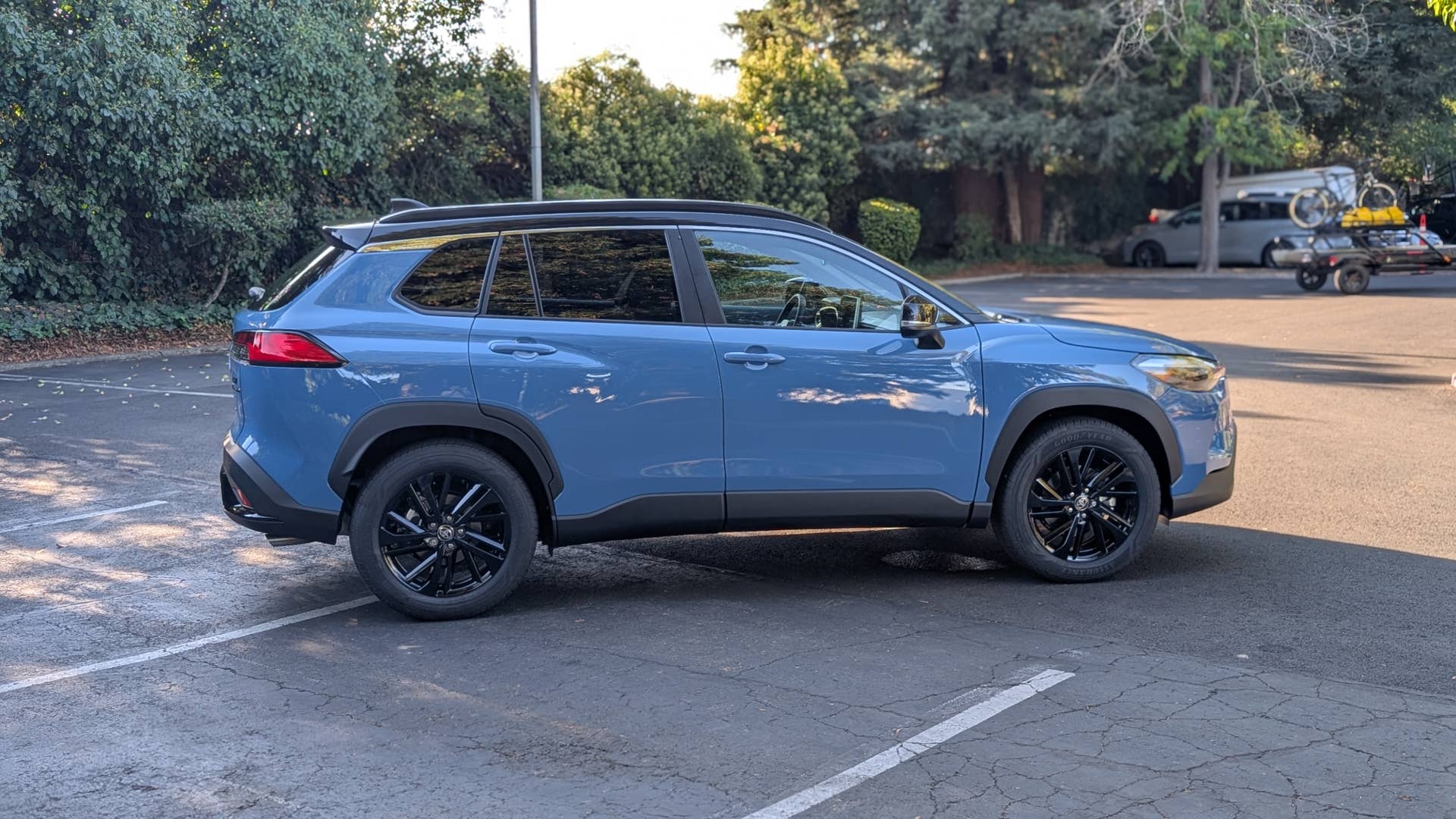
Toyota, arguably, is the only correct answer when it comes to hybrids, just because they’ve been at it for so long. The Corolla Cross Hybrid has the company’s fifth-generation hybrid system, pairing three electric motors with a 2.0-liter four-cylinder engine that makes 196 horsepower combined. It’s plenty of gusto to get you through town, though it’s a bit sluggish if you have to pass a slow-moving truck (ask me how I know). But let’s be honest—no one is going to be purchasing a Corolla Cross Hybrid for the horsepower. They’re on the lot for the mileage and sticker price.
Kristen Brown
Even with all-wheel drive, I averaged 41 MPG. And that was between being stuck in traffic, dropping my kids off at my sister-in-law’s house, the gym, the grocery store, and back home. With a maximum range of 445 miles on a full tank, that kind of math means you wouldn’t have to fill up but maybe once a month, and for families, that kind of longevity can be a lifesaver. Especially in this economy, with regular gas being closer to $7 per gallon where I live.
And then, of course, there’s the price
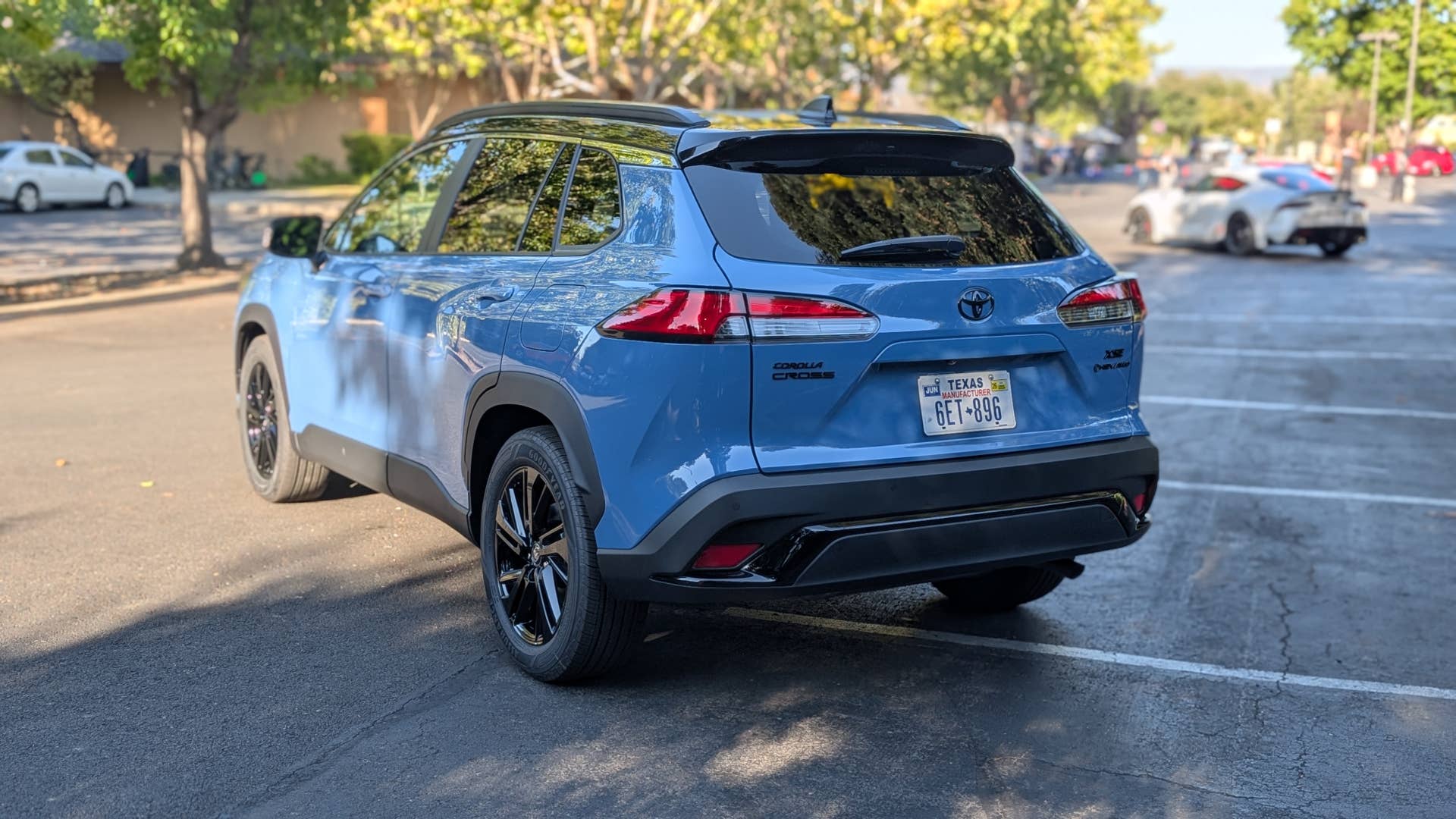
Sure, the mileage is one of the stronger selling points, but what got them there in the first place is the price. The price range is $29,795 to $33,830, which is plenty affordable. But where Toyota gets you is the available packages. The base XSE is $33,830, but if you add the Calvary Blue color mine had ($500), the Convenience Package that adds the sunroof and power lift gate ($1,250), then $800 for the JBL sound system, that’s what drives the price up to $37,975. And that doesn’t include the destination fees or taxes.
Kristen Brown
That’s even more impressive when we look at what the Corolla Cross Hybrid competes against. The Subaru Crosstrek Hybrid is the closest in terms of size, technology, and cost ($33,995–$34,995), and even then, the Subie is more expensive. It has more legroom in the rear, but a notably smaller trunk, and the mileage is a lot less thanks to a mechanical all-wheel drive system. The Kia Niro hybrid beats it mileage-wise with a city rating of 53 MPG and a similar price range of $27,390–$35,790, and the rear is a lot more spacious, and the trunk is larger—but you don’t get all-wheel drive, even as an option. The 2027 Kia Seltos will be hybrid with all-wheel drive, but we don’t know the pricing yet, so it’s worth a mention but not a full comparison.
Final thoughts
While the Corolla Cross Hybrid exceeded my expectations, its interior feels very basic in comparison to rivals like the Kia Niro Hybrid or Subaru Crosstrek Hybrid. Nevertheless, it prioritizes simplicity, delivering a reliable, safe, and fuel-efficient vehicle for under $40,000. It arrives at an ideal moment for drivers in my age group who are ready to transition from their old college beater to a more… Contemporary option.
That said, I wouldn’t choose it as a long-term vehicle for my own kids. The rear seating and cargo area are simply too tight, particularly if you plan to keep the car for a decade or more (I mean, it’s a Toyota, so that’s very likely). However, I did recommend it to my child-free younger sister, who lives with her husband and their Shiba Inu. As I explained to her, while it’s tight for everyday family duty, it makes babysitting effortless if she ever needs to haul a niece or nephew around for the day.
About the author

Kristen Brown
Contributing Writer, Autoblog