

When it comes to affordability, the 2025 Hyundai Venue is a tough model to beat. Available in three trim levels, the Korean automaker’s smallest crossover brings a pretty impressive spec sheet for its price range. While it may be a great pick for drivers on a budget, the Hyundai Venue has a few major downsides as well.

The Venue doesn’t see anything new outside of a new paint color for the 2025 model year. The Korean crossover didn’t see many updates for the 2024 model year, either. Last year, the Venue SEL and Limited trims gained second-row USB ports, and the SE trim added a six-speaker audio system to its spec sheet.

Reason to love it #1: One of the most affordable crossovers
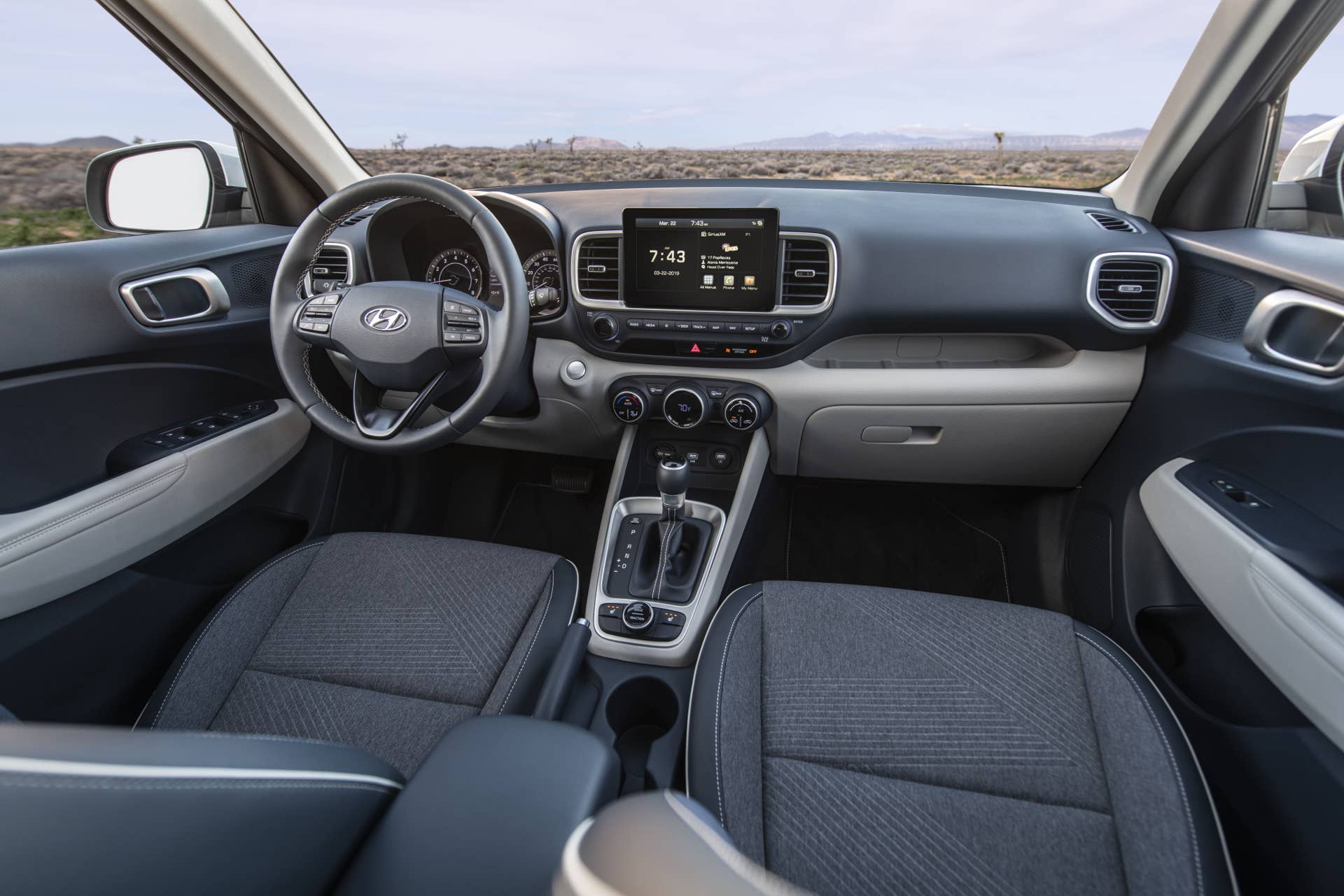
Starting at $20,200, the 2025 Hyundai Venue is a true bargain. At that price, you’ll get a small crossover equipped with tech usually reserved for more expensive vehicles, like an eight-inch touchscreen display and wireless Apple CarPlay and Android Auto compatibility.

Upgrading to the range-topping Limited trim for $23,450, you’ll get some pretty sweet amenities, including LED exterior lighting and 17-inch alloy wheels. Wireless device charging comes standard in the Limited trim, and you’ll get heated front seats as well.
Reason to love it #2: Spacious interior for a small crossover
The Hyundai Venue has a wheelbase that measures in under 100 inches, or 99.2 inches to be exact. Inside, however, the Korean crossover is especially spacious in both passenger space and cargo capacity.
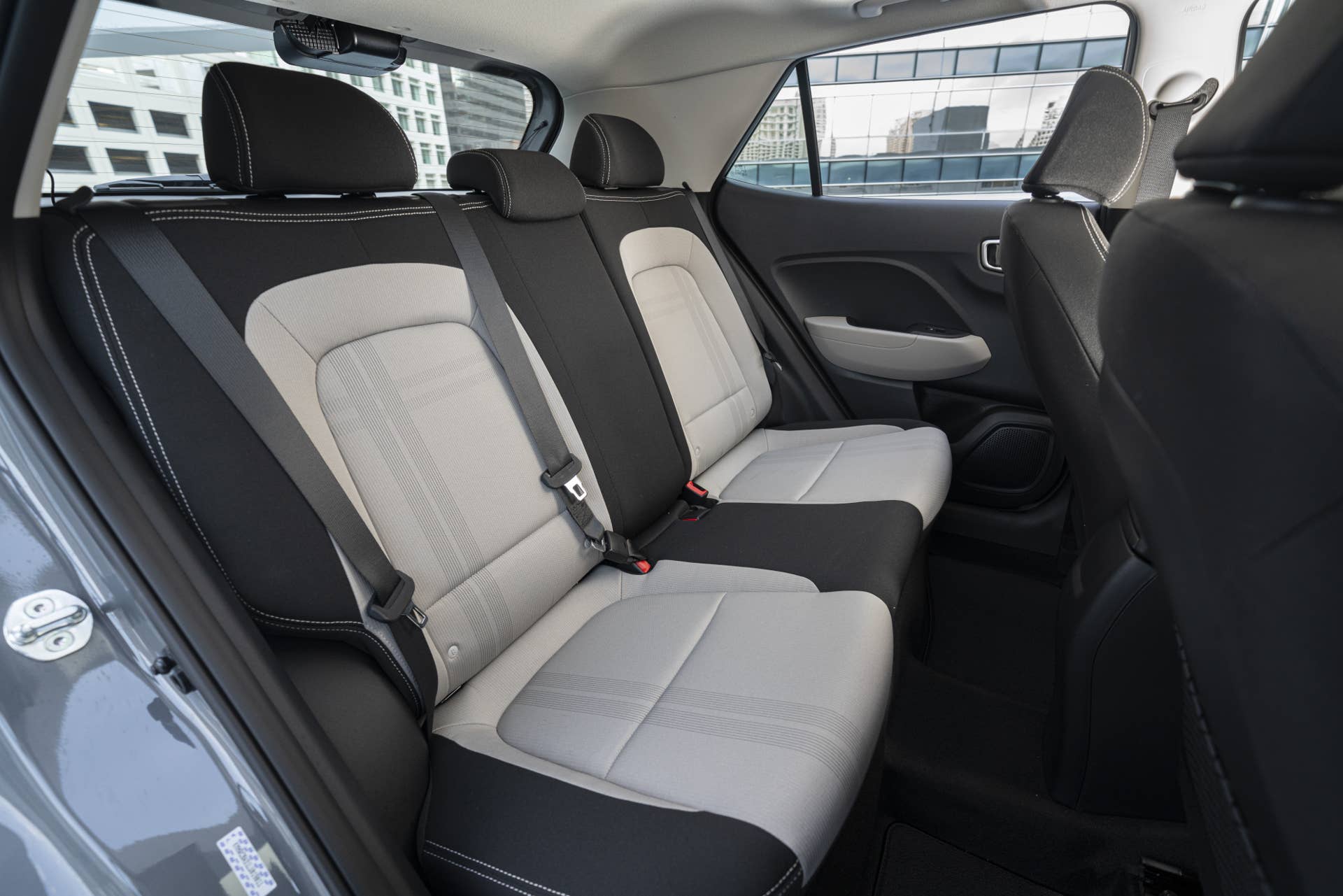
The 2025 Hyundai Venue features 39.4 and 38.6 inches of headroom in the front and rear respectively. There’s a generous amount of shoulder room as well, with 53.9 inches in the front and 53.7 inches in the rear. With the rear seats upright, the Venue offers 18.7 cu. ft. of cargo space. With the rear seats folded down, the crossover offers up to 31.9 cu. ft.
Reason to love it #3: Assistive safety systems come standard
Hyundai does particularly well in stacking each of its vehicles with safety systems, and the Venue is no different. The base model arrives with a list of assistive safety systems that include Lane Keeping Assist, Rear Occupant Alert, and Forward Collision-Avoidance Assist with Pedestrian Detection.
Upgrading to the mid-range SEL trim, available from $22,200, will net you Rear Cross-Traffic Collision Warning and Blind-Spot Collision Warning.
Reason to think twice #1: Performance is lacking
The 2025 Hyundai Venue has a lot going for it, but performance isn’t an area it excels in. All Venue models come equipped with a 1.6-liter four-cylinder engine paired with a CVT and front-wheel drive. That powertrain generates 121 horsepower and 113 lb-ft of torque. Notably, there’s no all-wheel drive option available.

If you’re in the market for a model with higher performance at a similar price, the Nissan Kicks is a solid alternative. The 2.0-liter four-cylinder engine comes mated to a CVT and front-wheel drive that pumps out 141 horsepower and 140 lb-ft of torque. The 2025 Nissan Kicks is also available with all-wheel drive.
Reason to think twice #2: Could be more efficient
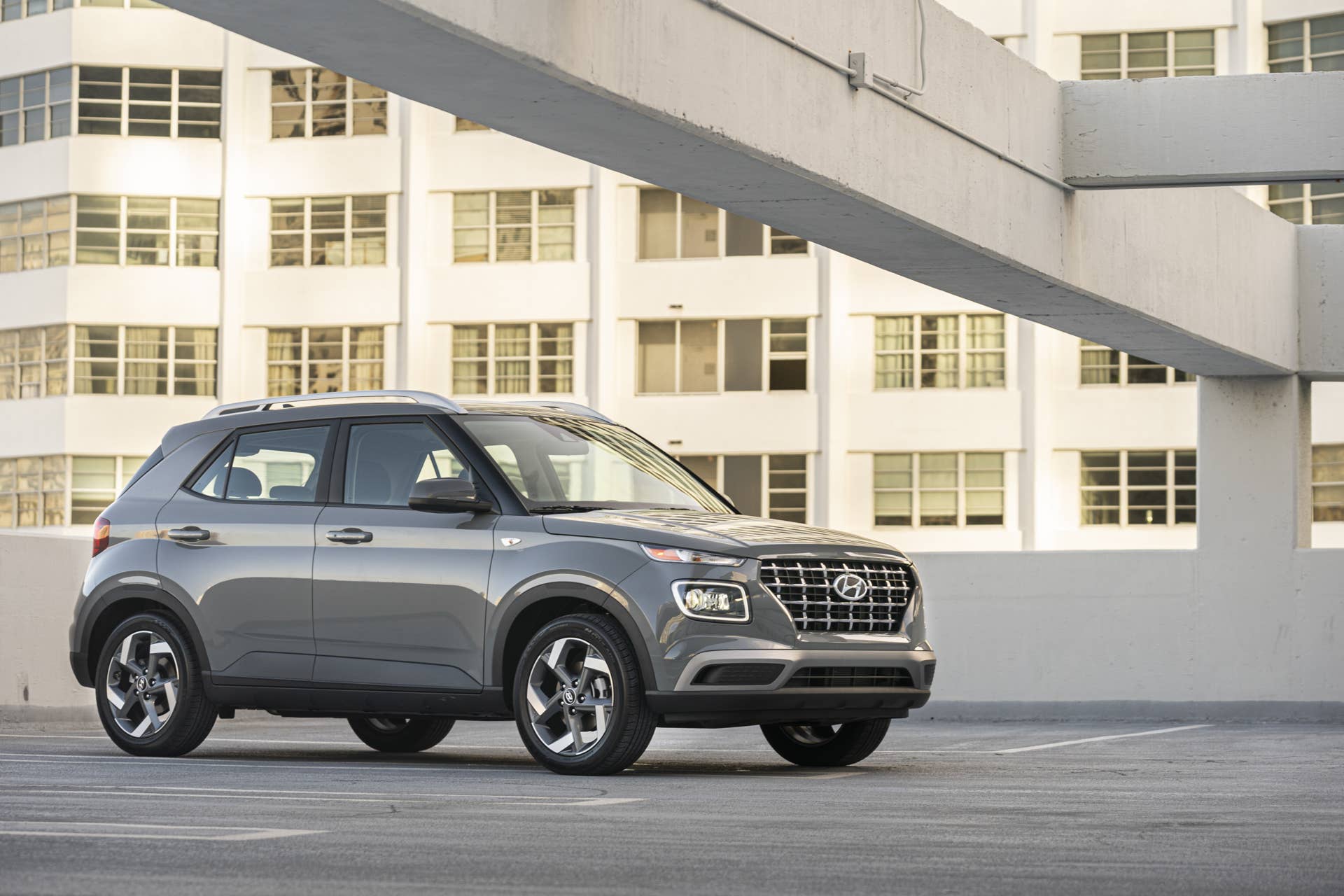
While the Hyundai Venue is a small crossover, it could still be a little more efficient. It earns up to 29 city mpg, 33 highway mpg, and 31 combined mpg. That’s not bad, but some competitors do better.
The Nissan Kicks is rated for 28 city mpg, 35 highway mpg, and 31 combined mpg, putting it a touch above the Venue. The Volkswagen Taos follows suit, earning up to 28 city mpg and 36 highway mpg when equipped with front-wheel drive.
Final thoughts
The old adage of “you get what you pay for” is right at home when talking about the Hyundai Venue. While it is a relative bargain of a crossover, there are comparable models in the same price range. Before you hit the road in the Hyundai Venue, give the Nissan Kicks and Volkswagen Taos a shot.
Love reading Autoblog? Sign up for our weekly newsletter to get exclusive articles, insider insights, and the latest updates delivered right to your inbox. Click here to sign up now!
About the author

Joseph Pudlewski
Contributing Writer, Autoblog