Sewer-clogging fatbergs are disgusting, but they can be useful biofuel

Canadian researchers say they’ve found a better way to transform these monstrosities.

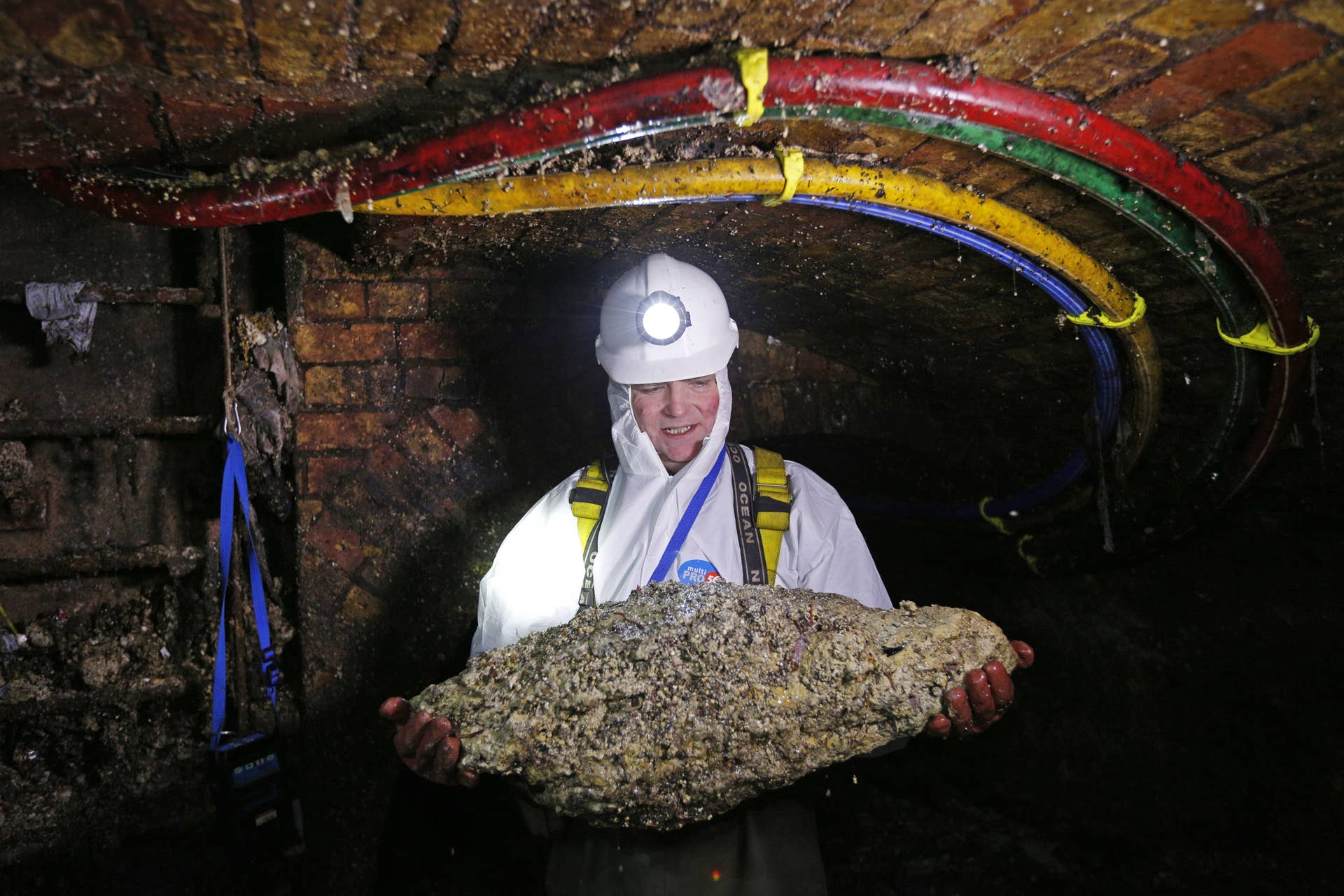
TO GO WITH AFP STORY BY ROBIN MILLARD Tim Henderson, a 'flusher' or trunk sewer technician holds a 'fatberg' as he works in the intersection of the Regent Street and Victoria sewer in London on December 11, 2014. Every day beneath the streets of London, sewer cleaners are fighting a grim war against giant 'fatbergs' clogging the system. Congealed fat is blocking up the Victorian sewers and the problem is to get worse at Christmas. An extra two Olympic-sized swimming pools of turkey fat will be tipped down the drains during the festive season. There are 80,000 fatberg blockages a year, costing Thames Water customers �1 million ($1.6 million, 1.3 million euros) each month to tackle. The company urges people people to dispose of their cooking oil and fat properly. 'Bin it, don't block it' is their message. AFP PHOTO / ADRIAN DENNIS (Photo credit should read ADRIAN DENNIS/AFP/Getty Images)
Get Autoblog in your Google feed

Maybe you’ve heard of fatbergs. Maybe you’ve forgotten that you’ve heard of them — and if you did that on purpose, we can’t blame you. They’re disgusting globs of fats, oils and greases that wreak havoc on sewer systems around the world. We were reminded of fatbergs today when we came across an article from the
Smithsonian, called “
Turning Fatbergs Into Biofuel.” Luckily, as the title suggests, researchers are finding ways to turn these abominations into something useful.


Scientists at the University of British Columbia say they have discovered a method to process the fatbergs in order to create
methane. Their method begins right in the sewer, applying heat and hydrogen peroxide to break down the fatbergs and release fatty acids, which can then be broken down further using bacteria to produce useful methane fuel.


The team sees their method as an easy way to pre-treat fats without having to move the fatbergs. They are working with sewage treatment plants and dairy farms to pre-treat fats before they’re added to manure in biogas digesters to produce methane.


The UBC researchers aren’t the first to convert fatbergs into fuel (though their method could be an improvement). Much of the 143-ton fatberg clogging a London sewer was
turned into biodiesel last year.


Ideally, though, people and businesses should refrain from putting fats — often cooking oil and grease — into sewer systems in the first place. In addition to the congealed fat, the fatbergs also include solids like wet wipes, food waste, condoms and other unmentionables.


Related Video:

Video ID:
5bb81758-159c-3265-9834-f63b55f11217

Playlist ID:

Autoplay:
false

Mute:
false

Continuous:
false

Ad Key:

Ad Value: